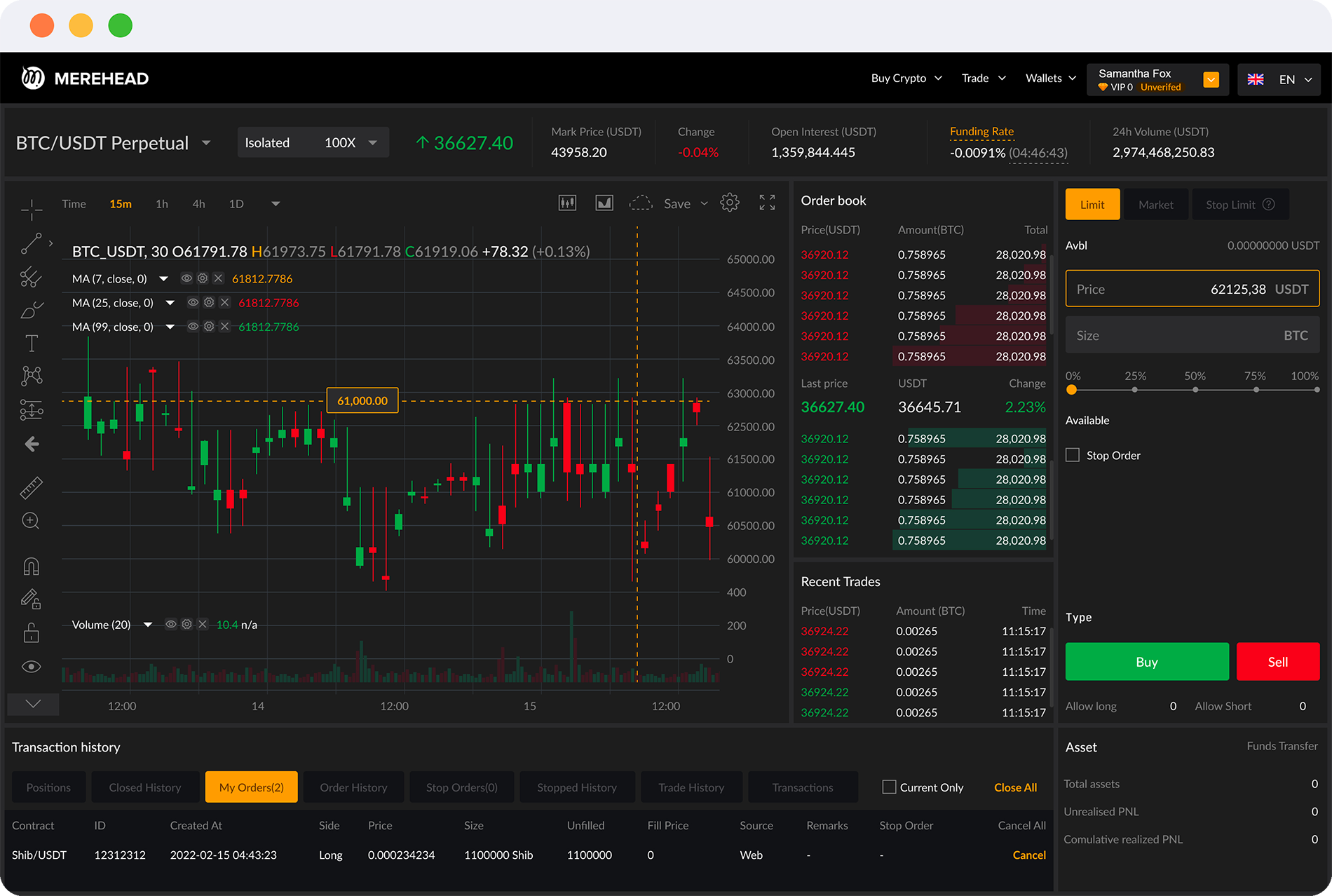
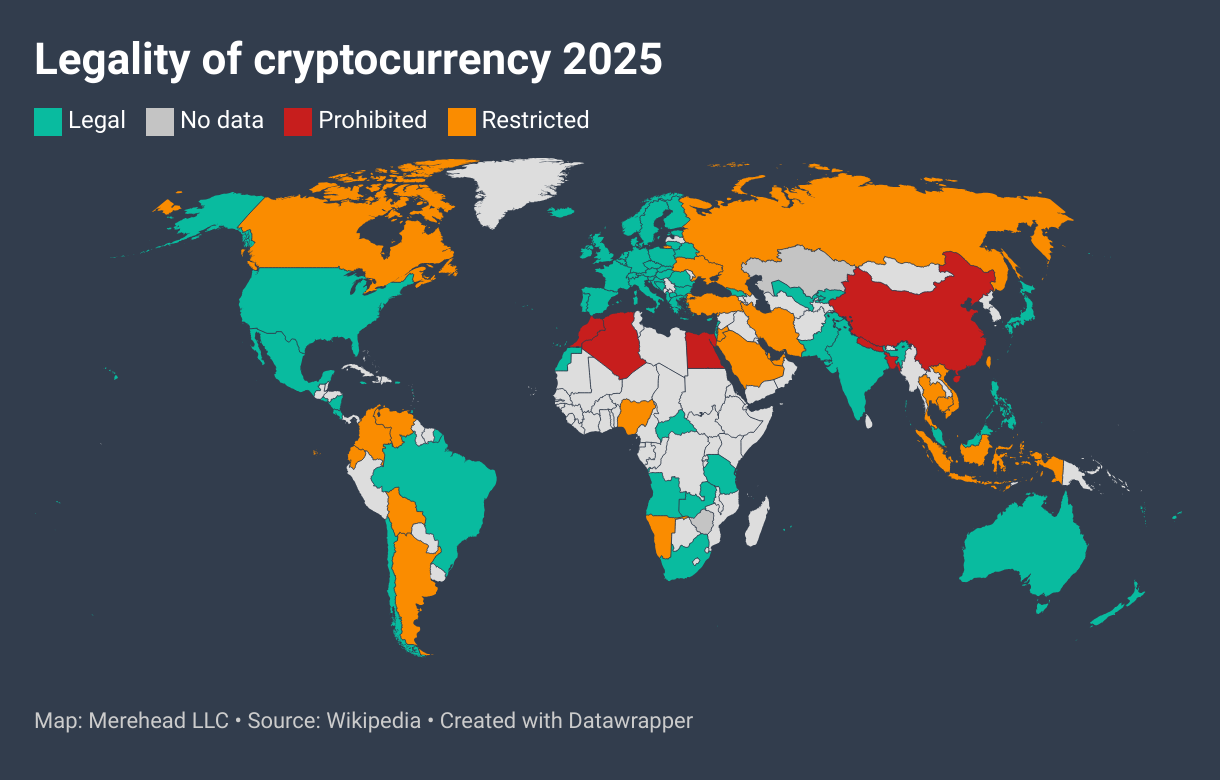
The last few years have transformed crypto exchanges from niche experiments into a global industry. Bitcoin, Ethereum, and thousands of altcoins are no longer just speculative assets—they’re part of everyday finance. Businesses and entrepreneurs are racing to launch trading platforms that cater to this growing demand.
But building a crypto exchange is not the same as launching any regular website. Between MiCA regulations in Europe, FATF recommendations worldwide, and rising user expectations for security and liquidity, getting to market requires careful planning.
This is where cryptocurrency exchange scripts come in. They offer a faster path to launching your platform, with pre-built modules for trading, KYC compliance, fiat integration, and more. Yet not all scripts are created equal—some are outdated, others lack critical features, and a few require more customization than you’d expect.
In this guide, you’ll learn:
- How modern exchange scripts work
- Which modules and architecture you need in 2024
- What to look for in security, compliance, and liquidity
- How to estimate development costs without hidden surprises
Let’s dive in and see how you can build a crypto exchange that’s not only functional—but ready to grow.
What Is a Cryptocurrency Exchange Script?
A
cryptocurrency exchange script is pre-built software that gives you a working exchange platform without writing everything from scratch. At minimum it includes a trading engine, user wallets, order book, admin dashboard, and KYC/AML hooks. You configure it, brand it, and deploy it.
A bitcoin exchange script specifically refers to exchange software centered on Bitcoin markets — typically a CEX-style platform that handles BTC/USDT and BTC/fiat pairs, with a matching engine optimized for Bitcoin's UTXO model, multi-signature cold wallets, and node integration. Most modern scripts extend this to full multi-asset support, but the BTC infrastructure remains the performance-critical core.
The market for exchange scripts divides sharply into two segments — and understanding which one you're actually buying matters more than any feature list:
| Tier |
What you get |
Who it's for |
Typical cost |
| Commodity clone scripts |
Forked code from Indian dev shops. Basic features, no HFT, poor documentation, limited support after sale. |
MVPs, demos, testing ideas |
$500–$8,000 |
| White-label exchange platforms |
Managed SaaS or licensed platform. Faster to deploy, ongoing fees, limited code access. |
Startups that want speed over ownership |
$20,000–$60,000 + monthly fees |
| Enterprise exchange script (Merehead) |
Custom microservices architecture, HFT-grade matching engine, full source code delivered. Built for production volume. |
Serious operators, institutional-grade platforms |
$30,000–$150,000, one-time |
The commodity tier dominates Google search results for 'cryptocurrency exchange script' — dozens of Indian dev shops compete on price. If you're building a real business, the relevant question isn't 'which clone script is cheapest' but 'which script will still be running reliably at 10x your current volume with an audit trail that satisfies regulators.'
Types of Cryptocurrency & Bitcoin Exchange Scripts
The type of exchange script you need determines the architecture, regulatory requirements, and realistic launch timeline. Here are the main models and what each one requires in 2026:
1. Centralized Exchange Script (CEX) — Including Bitcoin Exchange Script
A CEX cryptocurrency exchange script is the most common type: a central operator controls the order book, user funds, and matching logic. The bitcoin exchange script variant focuses on BTC markets with a high-performance UTXO-compatible matching engine, multi-signature cold storage, and Proof of Reserves capability.
Technical requirements: In-memory matching engine capable of 10,000+ orders/second, hot/cold wallet separation, full KYC/AML pipeline, WebSocket API for real-time data, admin panel with risk controls.
Who it's for: Operators targeting retail and professional traders who want the speed and liquidity of a centralized platform.
Merehead CEX script: Microservices architecture, Go-based matching engine with sub-millisecond latency, horizontal scaling, full source code delivered. Built for operators who need production performance from day one — not a demo that breaks under real load.
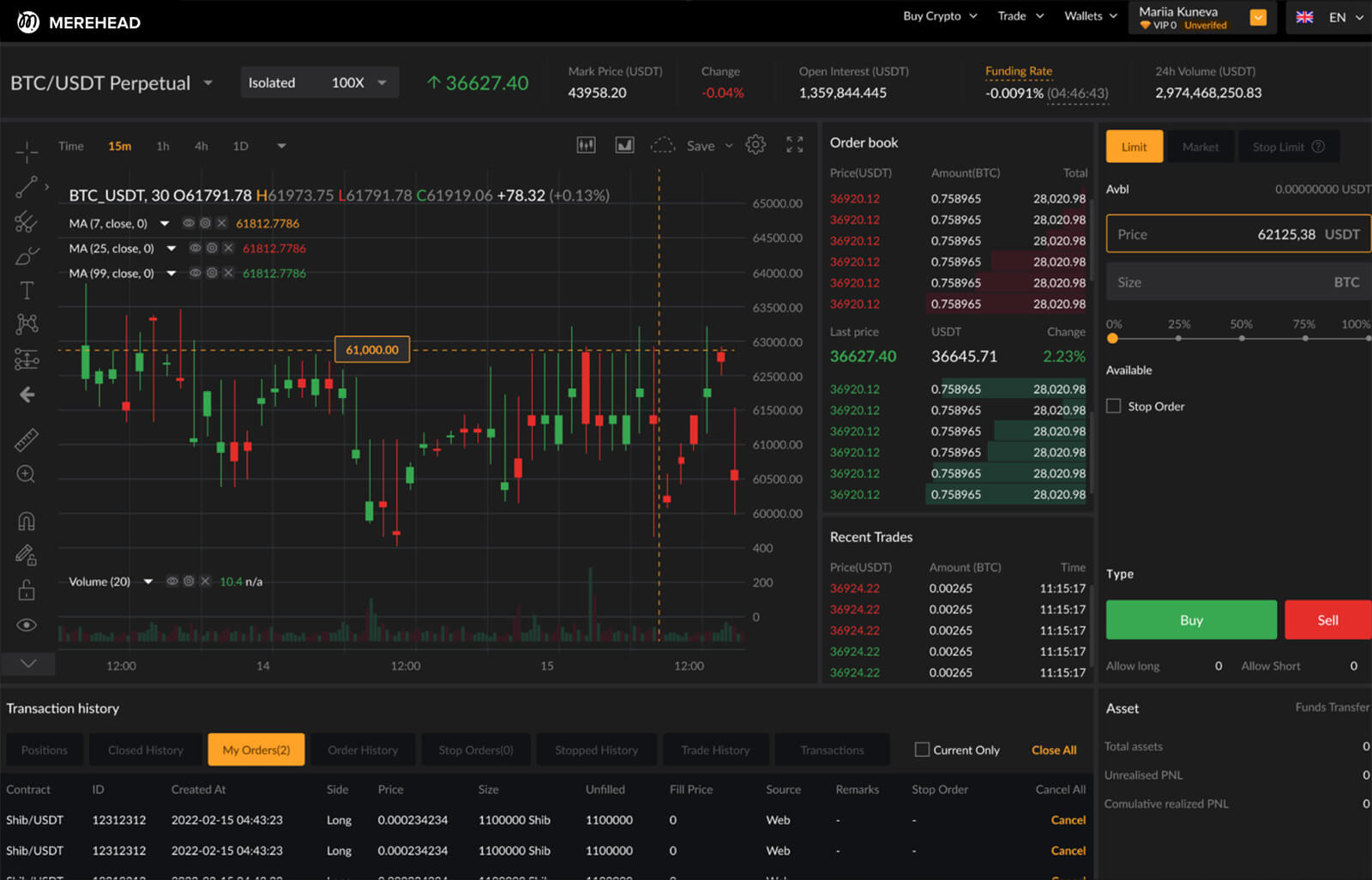
Merehead white-label crypto exchange
2. DEX Exchange Script — Decentralized
A DEX exchange script runs on smart contracts — no central custodian, users trade directly from their wallets via AMM pools or an off-chain order book with on-chain settlement. Uniswap v3-style concentrated liquidity is the current standard for AMM-based DEX scripts.
Technical requirements: Solidity smart contracts (Ethereum/EVM), or Rust programs (Solana), liquidity pool contracts, frontend wallet integration (MetaMask, WalletConnect), subgraph indexer.
Who it's for: DeFi-native audiences, projects launching governance tokens, operators who want non-custodial architecture to reduce regulatory exposure.
3. P2P Exchange Script — Peer-to-Peer Bitcoin Trading
A P2P bitcoin exchange script connects buyers and sellers directly via an escrow mechanism — no central order book, no custodial wallet. Users post offers, negotiate terms, and the script holds funds in escrow until both parties confirm. LocalBitcoins popularized this model.
Technical requirements: Escrow smart contracts or programmatic wallet locks, dispute resolution logic, reputation/rating system, flexible payment method support (bank transfer, PayPal, cash).
Who it's for: Markets with banking access limitations, operators targeting fiat-to-crypto on-ramps, privacy-focused user bases.
4. White Label Bitcoin Exchange Script
A white label bitcoin exchange script is a pre-built, rebrandable exchange platform sold under licensing terms — you get the product but typically not the underlying source code. HollaEx Kit, OpenDAX, and dozens of smaller vendors operate in this space. The advantage is speed; the risk is vendor dependency.
Key question to ask: Do you receive full source code, or are you licensing access to a hosted platform? The answer determines whether you own your technology or rent it.
5. Hybrid Exchange Script
Hybrid exchange scripts combine CEX performance with DEX custody — off-chain order matching for speed, on-chain settlement for security. This model is standard for perpetual futures DEXs in 2026 (dYdX, Hyperliquid). It requires the most complex architecture but offers the best balance of performance and trust for institutional traders.
Architecture and Scalability
Architecture is where
cryptocurrency exchange scripts diverge most dramatically — and where the difference between a €500 clone script and a €50,000 enterprise build becomes concrete. The trading engine alone determines whether your platform handles 100 simultaneous users or 100,000.
Most commodity crypto exchange scripts use a single-process matching engine written in PHP or Python. This works for demos. Under real trading volume — thousands of orders per second during a Bitcoin price spike — these architectures fail. Latency spikes from milliseconds to seconds. Orders queue. Users experience 'order stuck' errors. Withdrawals slow down. The platform loses trust at exactly the moment it needs to retain it.
A high-frequency trading exchange script built on microservices architecture solves this at the design level, not as an afterthought. The key components:
| Component |
Commodity Script |
HFT Microservices Script (Merehead) |
| Matching engine |
PHP/Python, single process |
Go or C++, in-memory, 10K-100K orders/sec |
| Latency |
50-500ms typical |
Sub-millisecond (<1ms) |
| Architecture |
Monolithic |
Microservices — each module scales independently |
| Failure isolation |
One bug can crash everything |
Failed module doesn't affect others |
| Horizontal scaling |
Rebuild required |
Add nodes without downtime |
| Audit trail |
Basic logs |
Immutable event log, full state reconstruction |
This is why Merehead's bitcoin exchange script is positioned for operators who expect real volume — not just founders testing whether a market exists. The microservices design means you can scale the matching engine independently from wallet services, add a new trading pair without touching settlement logic, and run a security audit on one module without freezing the platform.
Your exchange’s architecture determines how well it performs under real-world load. As the number of users and transactions grows, poorly designed systems slow down—or fail altogether.
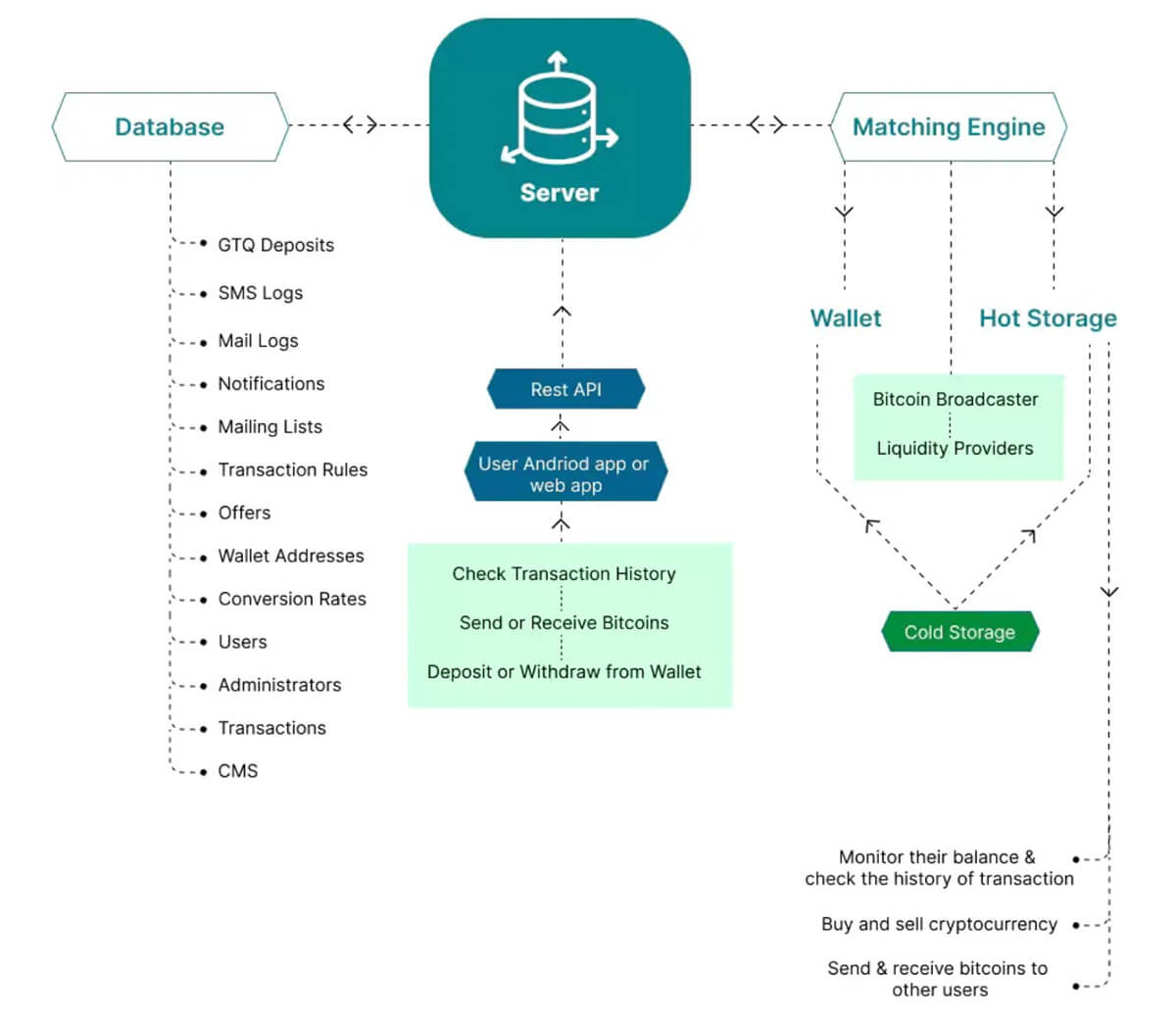
Crypto exchange architecture
Modern crypto exchange architecture typically uses microservices. Instead of relying on a single monolithic app, the platform is split into independent modules that handle specific functions:
- Trading Engine: Matches buy and sell orders in real time.
- Wallet Service: Manages hot and cold wallets securely.
- User Service: Handles authentication, KYC status, and profiles.
- Notification Service: Sends alerts, confirmations, and updates.
- API Gateway: Connects your platform with liquidity providers, payment processors, and partners.
This modular design helps you:
- Scale individual components independently.
- Update or replace parts without downtime.
- Improve security by isolating sensitive services.
Beyond microservices, top exchanges now implement horizontal scaling — adding more servers as traffic grows. Many also integrate MPC (Multi-Party Computation) and HSMs (Hardware Security Modules) to protect private keys and sensitive data.
Finally, consider your cross-chain capabilities. If you plan to support assets beyond Bitcoin and Ethereum, look for scripts with built-in or easily integrated cross-chain protocols (LayerZero, Axelar, etc.).
A solid architecture is not just a technical detail—it’s what lets your exchange stay online and reliable while competitors struggle.
Security and Compliance
Security isn’t optional in the crypto exchange business — it’s the foundation your reputation depends on. A single breach can wipe out funds and destroy trust overnight.
Today’s best exchanges combine multiple layers of protection:
- Cold and Hot Wallet Separation: Most funds are held offline in cold storage. Hot wallets only keep enough liquidity for daily operations.
- MPC and HSMs: Multi-Party Computation and Hardware Security Modules protect private keys and critical credentials.
- DDoS Protection and WAF: Modern firewalls and anti-DDoS solutions mitigate attacks before they reach your servers.
- Role-Based Access Control: Staff permissions are strictly limited and monitored.
But security doesn’t stop at infrastructure. Compliance is just as critical:
- KYC (Know Your Customer): Verifying user identity with IDs, proof of address, and biometric checks.
- AML (Anti-Money Laundering): Monitoring transactions, setting risk rules, and reporting suspicious activity.
- FATF and MiCA Compliance: In 2024, the EU’s MiCA regulations and FATF standards set clearer expectations. Non-compliance isn’t an option if you want to operate legally.
Scripts vary widely in how much compliance tooling they include. Before choosing one, confirm it has:
- KYC workflows ready to connect with providers (Sumsub, Onfido).
- AML transaction monitoring dashboards.
- Audit logs and reporting features.
- Support for KYT (Know Your Transaction) integrations like Chainalysis or Elliptic.
When it comes to security, shortcuts cost more later. Choose a solution built for compliance from the start.
Liquidity Management
No matter how sleek your exchange looks, without liquidity, traders will go elsewhere. Empty order books and wide spreads make even the best platforms feel unreliable.
Liquidity is what ensures:
- Fast order execution.
- Tight bid-ask spreads.
- Higher trading volume (which attracts more users).
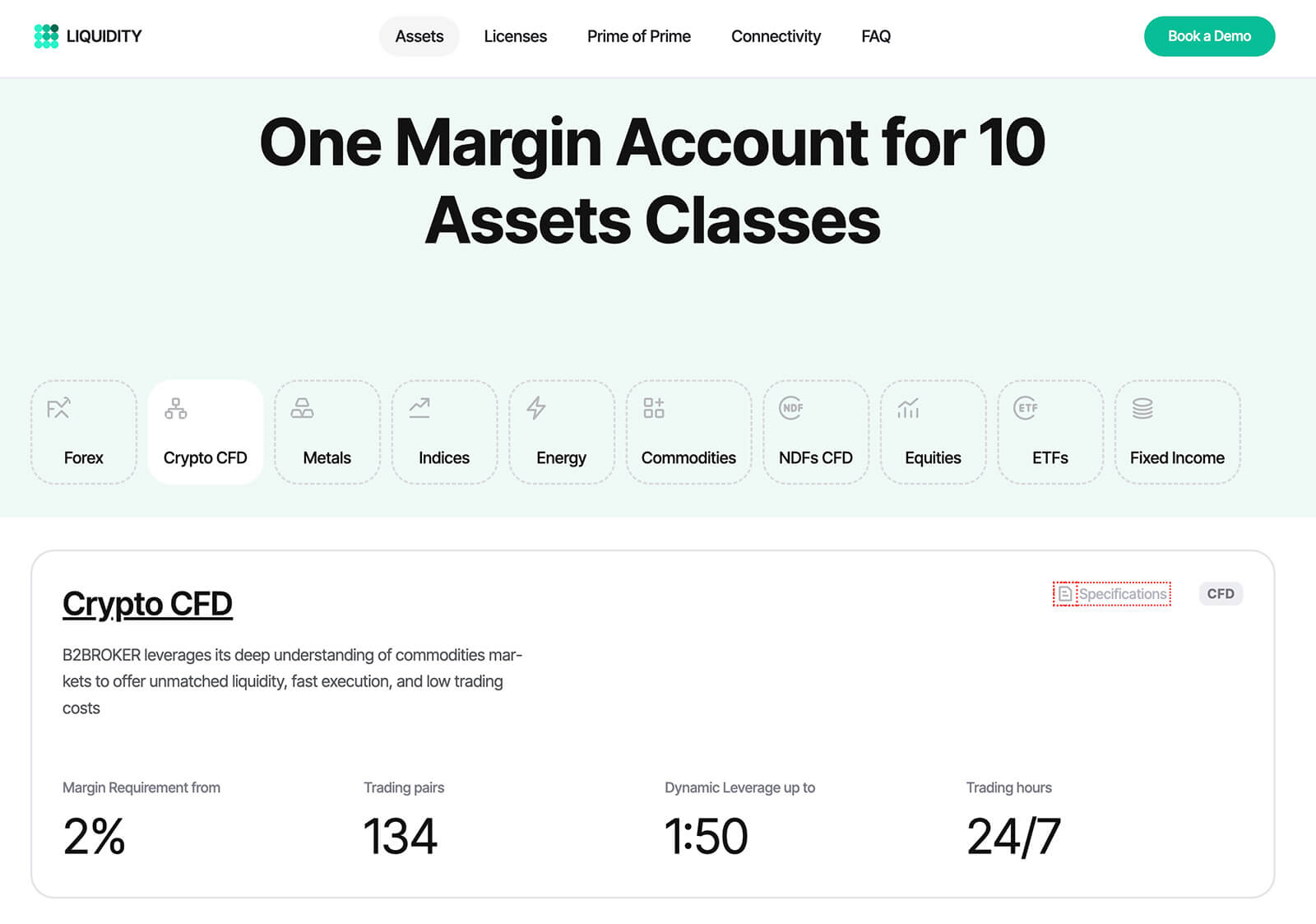
B2broker: crypto liquidity provider
There are three main strategies to build liquidity:
- Local Market Makers. Your platform automatically places buy and sell orders using algorithms that mirror broader market conditions. This approach gives you baseline liquidity from day one.
- External Liquidity Providers. Integrate with major exchanges like Binance, Kraken, or Bitfinex via APIs. Your users’ orders are routed to these partners, ensuring deep liquidity even if your platform is new.
- Hybrid Model. Combining internal market-making bots with external liquidity pools is often the most effective. It helps you remain resilient in volatile markets.
When evaluating a script, check:
- Does it support external liquidity APIs?
- Are there built-in tools for configuring spreads and order depth?
- Can you adjust trading parameters dynamically?
Also, consider compliance: regulators increasingly expect transparency around liquidity sourcing to prevent manipulation.
A robust liquidity strategy isn’t just about volume—it’s about credibility. If users trust that orders will fill fast, they’ll come back again and again.
Supported Currencies and Fiat Integrations
A successful exchange doesn’t just list Bitcoin and call it a day. Traders expect a wide range of digital assets and fiat on-ramps that make deposits and withdrawals seamless.
Cryptocurrencies:
Start by including the most liquid and trusted coins:
- Bitcoin (BTC)
- Ethereum (ETH)
- Tether (USDT)
- BNB
- Litecoin (LTC)
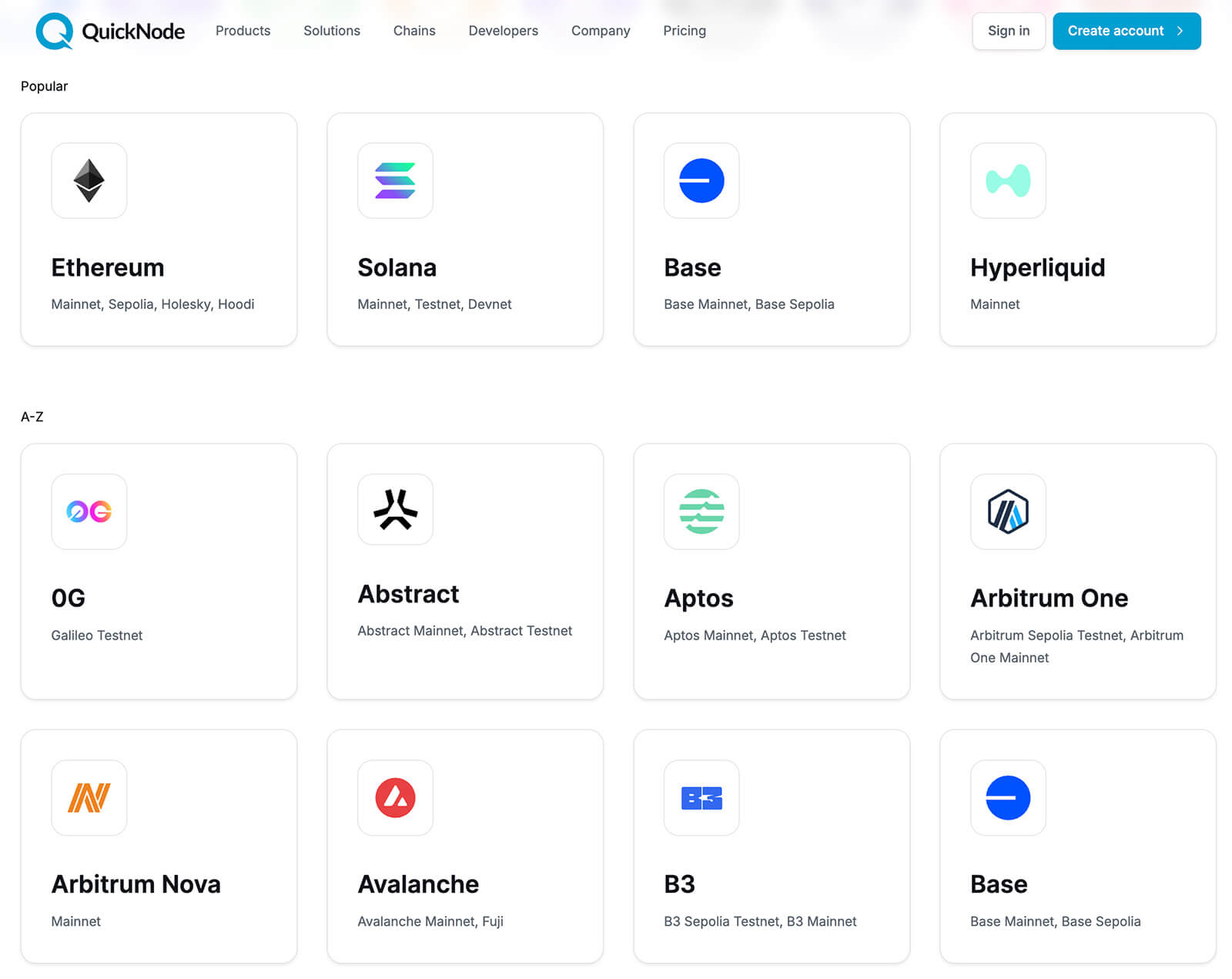
Crypto nodes provider
Then consider adding:
- Popular ERC-20 tokens
- Emerging Layer 1 chains (Solana, Avalanche)
- Stablecoins beyond USDT (USDC, DAI)
Tip: Use market data from CoinMarketCap or CoinGecko to track which assets have strong demand in your target regions.
Fiat Gateways:
- Integrate fiat payment providers (Mercuryo, MoonPay, Simplex) so users can buy crypto with credit cards or bank transfers.
- Ensure your script supports fiat wallets, KYC verification, and compliance reporting.
- If you operate in Europe, MiCA regulations now set clear rules for fiat-crypto transactions.
Cross-Chain Support:
If your vision includes cross-chain swaps, verify your platform can connect with protocols like:
- Axelar
- LayerZero
- THORChain
Key Questions When Choosing a Script:
- Does it have modules for fiat deposits and withdrawals?
- Can you customize which coins and tokens to list?
- Are integrations with liquidity and payment providers included?
The broader your asset offering and the simpler the fiat on-ramps, the more users you’ll attract—and keep.
Trading Types and User Features
Your exchange’s success depends on what you offer traders—and how easy it is to use. Today’s users expect more than a basic buy/sell interface.
Trading Types:
- Spot Trading:. The foundation of any exchange. Users place market and limit orders to trade crypto instantly.
- Margin Trading:. Lets traders borrow funds to increase position size. This feature requires extra risk controls and liquidation mechanisms.
- Futures and Derivatives:. Advanced traders look for perpetual contracts and leverage. Not all scripts support this, so confirm compatibility early.
- Staking and Yield Products:. More exchanges now offer staking rewards or DeFi yield strategies to attract long-term users.
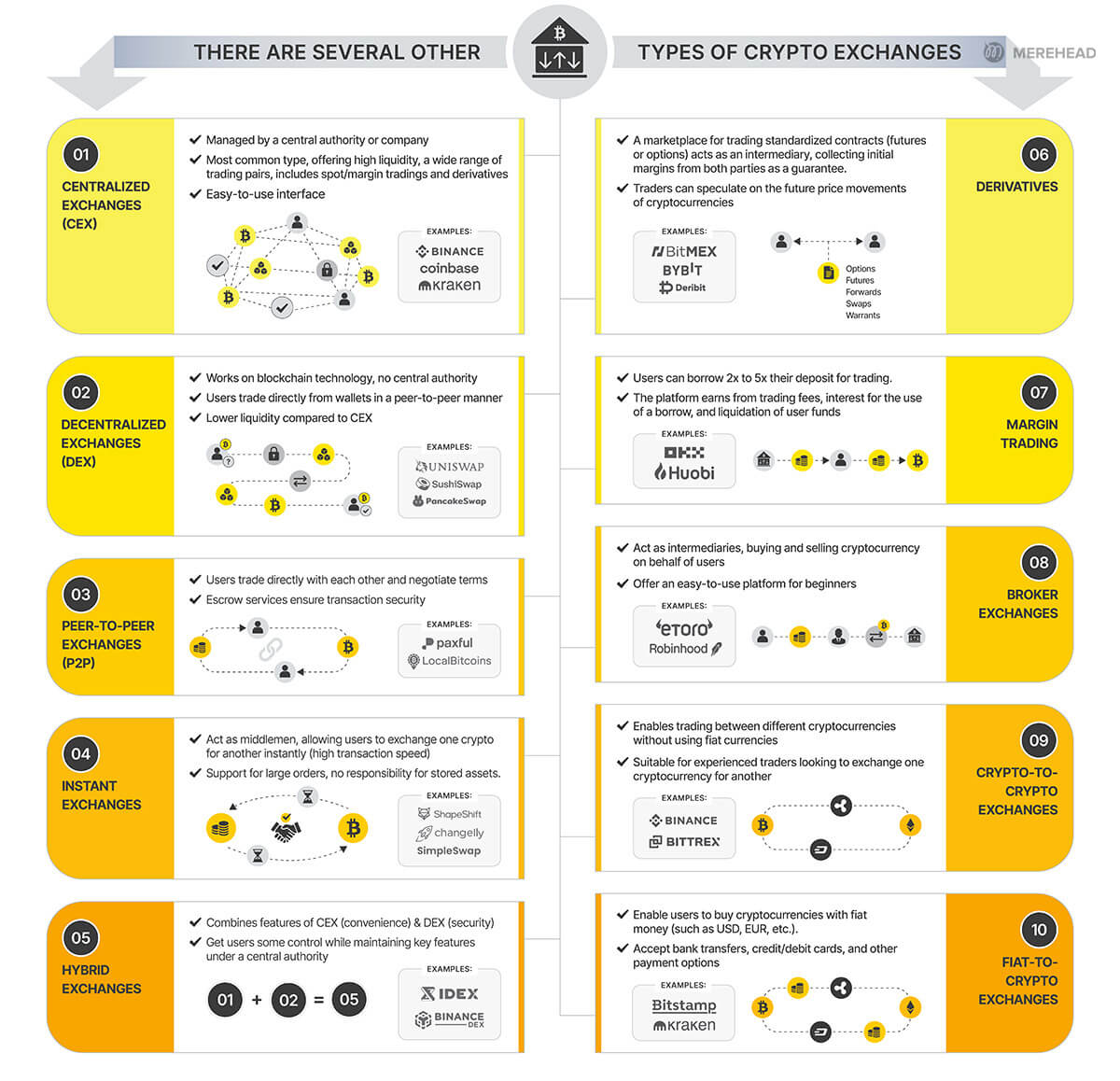
Type of crypto exchanges
User Features:
- Intuitive Interface: Clean dashboards, real-time charts, and fast order placement. A confusing UI kills engagement.
- Advanced Orders: Stop-loss, take-profit, and trailing stops to help manage risk.
- Mobile Apps: Responsive web apps are good, but dedicated iOS and Android apps drive higher retention.
- Notifications: Real-time alerts on order fills, price moves, and security events.
- 2FA and Security Controls: Essential for account protection—ideally with options like Google Authenticator or hardware keys.
When you compare exchange scripts, make sure the core trading engine can scale as volume grows—and that the user experience feels polished, not like an afterthought.
Dashboard and Admin Tools
Even the most advanced trading engine is useless without robust admin controls. Your back office is where you’ll monitor the platform, enforce compliance, and handle user issues.
Key Admin Features:
- User Management: View profiles, verify KYC documents, freeze or unfreeze accounts, and adjust limits.
- Transaction Monitoring: Track deposits, withdrawals, and trades in real time. Use smart filters to detect suspicious activity.
- Liquidity and Market Control: Manage trading pairs, configure fees, and adjust spread settings. This is especially important if you use internal market makers.
- Role-Based Access: Assign permissions to staff. For example, compliance teams should not have access to wallet keys.
- Reporting and Audit Logs: Generate reports for regulators and tax authorities. Detailed logs also help investigate disputes.
- Wallet Management: Oversee hot and cold wallets, set withdrawal thresholds, and trigger manual approval flows if needed.
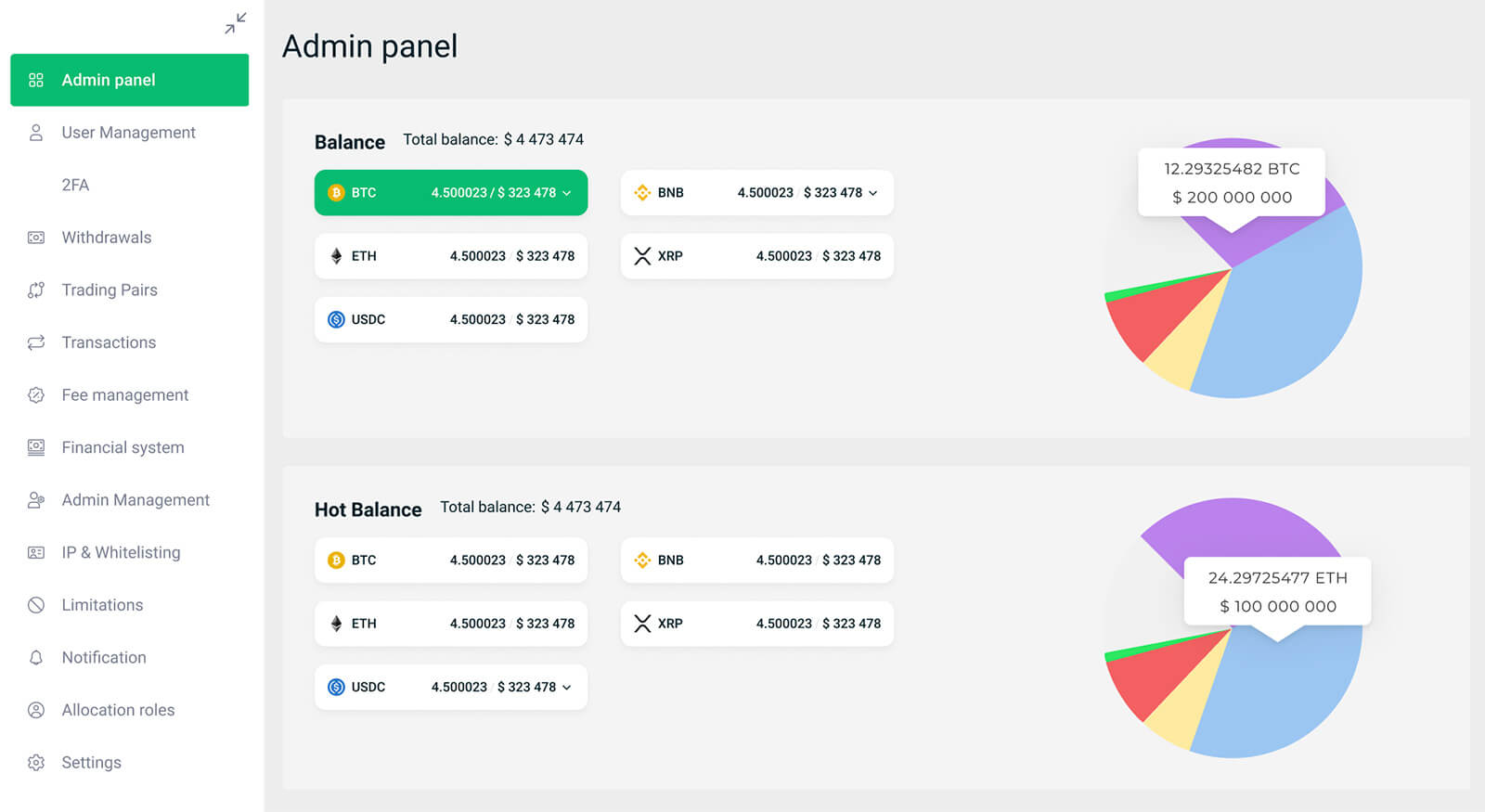
Crypto exchange dashboard
Tip: Some scripts offer Zendesk or Intercom integrations to centralize customer support. This can save you time and improve user satisfaction.
When you choose a crypto exchange script, don’t overlook the admin panel. A professional dashboard doesn’t just help you operate—it keeps your exchange secure and compliant.
How to Choose the Right Script
With dozens of crypto exchange scripts on the market, picking the right one can feel overwhelming. Here’s a simple framework to guide your decision:
- Define Your Priorities
- Do you need to launch quickly or are you building for scale?
- Will you support fiat transactions or only crypto?
- Is your target audience beginners, professional traders, or institutions?
- Compare Script Types
- Open-Source Solutions: Best for learning and prototypes; Risky for production (poor security, no support)
- Cheap Templates: Quick start, basic features; Limited customization, not scalable
- White Label Solutions: Fast deployment, pre-integrated modules; Less flexibility, monthly fees
- Custom Development: Full control, unique features; Higher cost and longer timelines
- Check Critical Features
- Security modules (2FA, cold wallets, DDoS protection)
- KYC/AML workflows
- Liquidity integrations
- Fiat payment gateways
- Mobile responsiveness
- Evaluate Support and Updates
- Who maintains the script?
- Are updates included?
- Is there 24/7 support?
- Look for Real Reviews
- Explore GitHub repos, Capterra listings, and crypto communities.
- Ask for client references.
Checklist Before You Decide:
- Can the script scale if you grow 10x?
- Are you legally compliant in your target markets?
- Will it integrate with your liquidity and payment providers?
- Is the cost transparent (setup, license, support)?
Merehead Exchange Script — Enterprise Tier
If you're building for serious trading volume — institutional clients, professional traders, or a platform that needs to handle a Bitcoin price spike without degrading — Merehead's cryptocurrency exchange script is built for that use case. It's not a fork of someone else's codebase. It's a purpose-built platform with microservices architecture and a
high-frequency trading matching engine, delivered with full source code.
- Matching engine: Go-based, sub-millisecond latency, 10,000–100,000 orders/second sustained throughput
- Architecture: Microservices — trading engine, wallet service, user service, notification service scale independently
- Source code: Full ownership — PHP/React/Solidity/Go stack, GitLab CI/CD, VPS deployment, no vendor lock-in
- Support: CEX, DEX, P2P, hybrid — built to your exact trading model and regulatory environment
- Who it's for: Operators who've outgrown demo-grade scripts, or who know from the start they're building for scale
Invest time upfront. Choosing the wrong script can cost you more in rework and downtime than building properly from the start.
Development Costs: Bitcoin & Cryptocurrency Exchange Script Pricing in 2026
The
cost of a cryptocurrency exchange script spans four orders of magnitude — from free GitHub clones to $250,000+ custom builds. Understanding why that range exists helps you identify where your project actually belongs.
| Script Type |
Upfront Cost |
Timeline |
Source Code |
Best For |
| Open-source GitHub clone |
$0 + $10K-$40K dev time |
2-4 months to production |
Full (MIT) |
Learning, prototyping |
| Commodity clone script (Indian dev shops) |
$500–$8,000 |
1-4 weeks (demo quality) |
Usually included |
MVP testing only |
| White-label SaaS platform |
$20,000–$60,000 + fees |
2-6 weeks live |
No code access |
Fast launch, no customization |
| Enterprise script (Merehead) |
$30,000–$150,000 |
2-6 months |
Full source code |
Production-grade, scale-ready |
| Fully custom from scratch |
$150,000–$400,000+ |
6-12 months |
Full source code |
Novel protocol, unique requirements |
Why commodity bitcoin exchange scripts are cheap — and what that costs you later
A
bitcoin exchange script priced at $2,000 is cheap for a reason. The matching engine is typically a PHP script that processes orders synchronously — one at a time. Under load, this creates queuing. The first time your platform sees 500 concurrent traders during a BTC price move, orders back up and users see 'pending' for minutes. Support tickets flood in. Users withdraw and don't return.
The secondary cost is security. Commodity scripts are sold to hundreds of operators with minimal customization. Known vulnerabilities are public knowledge among attackers. Several exchanges running unmodified clone scripts have been drained within months of launch — not through sophisticated attacks, but through vulnerabilities that the original script shipped with.
What an enterprise-grade exchange script costs and why
Merehead's
cryptocurrency exchange script starts at $30,000 for a single-chain CEX MVP and scales to $150,000 for a full multi-chain platform with margin trading, governance, and mobile apps. The price reflects what's actually being built: a Go-based in-memory matching engine that processes orders in under 1 millisecond, a
microservices crypto architecture where the wallet service and trading engine are isolated (so a payment gateway issue doesn't affect order matching), and full source code delivery with documentation.
The audit and compliance layer adds $15,000–$50,000 depending on jurisdictions and the depth of KYC/AML integration required. This is not optional for any exchange planning to handle fiat or operate in regulated markets — budget it from the start.
Hidden costs to plan for regardless of script choice
- Security audit: $5,000–$50,000 — required before mainnet launch; often skipped by operators of commodity scripts, which is why they get exploited
- Liquidity setup: $5,000–$20,000 upfront + ongoing fees for external liquidity provider API integration
- KYC/AML providers: $0.50–$2 per verification (Sumsub, Onfido, Jumio) — estimate based on expected user volume
- Regulatory compliance: $10,000–$80,000 depending on jurisdiction — US MSB registration, EU MiCA CASP, Singapore MAS, etc.
- Infrastructure: $500–$5,000/month for dedicated servers, CDN, DDoS protection, backup systems
- Ongoing maintenance: 15–25% of build cost annually for security patches, blockchain node updates, feature development
Conclusion & Next Steps
Choosing the right crypto exchange script is a decision that shapes your platform’s future. Whether you aim for a niche audience or dream of building the next global marketplace, your foundation matters.
Here’s what to do next:
Define your goals
Are you prioritizing speed to market, scalability, or unique features?
Make a shortlist
Compare scripts,
white-label solutions, and custom builds side by side.
Validate compliance
Ensure the solution supports KYC, AML, and meets regulations in your region.
Plan liquidity
Decide whether you’ll rely on internal market makers, external providers, or both.
Budget realistically
Factor in licensing, integrations, security, and ongoing support—not just setup fees.
Talk to experts
Even if you’re tech-savvy, experienced advisors can help you avoid costly mistakes.
If you’re exploring crypto exchange development, we’re here to help. Our team has launched platforms across Europe, Asia, and North America, combining robust architecture, enterprise-grade security, and intuitive design.
Ready to build?
Contact us for a consultation. Let’s turn your idea into a real,
scalable crypto business.
FAQ: Cryptocurrency Exchange Script & Bitcoin Exchange Script
What is a cryptocurrency exchange script?
A cryptocurrency exchange script is pre-built exchange platform software that includes the core components you need to run a trading platform: a matching engine, user wallets, order book, KYC/AML integration, and admin panel. Scripts range from basic clone-script packages priced at a few thousand dollars to enterprise-grade platforms with microservices architecture and high-frequency trading engines. The defining question is always source code ownership: do you receive the full codebase, or are you licensing access to a hosted product?
What is a bitcoin exchange script specifically?
A bitcoin exchange script is exchange software built around Bitcoin markets — CEX-style platforms handling BTC/USDT, BTC/ETH, and BTC/fiat pairs. Technically, this means the matching engine must handle Bitcoin's UTXO model, the wallet system needs multi-signature cold storage with proper key management, and the platform should support Proof of Reserves for regulatory compliance. Most modern bitcoin exchange scripts extend to full multi-asset support, but the BTC infrastructure is the performance and security-critical foundation.
How much does a cryptocurrency exchange script cost?
The cost of a cryptocurrency exchange script ranges from $500 for commodity clone scripts (demo quality, not suitable for production) to $150,000+ for enterprise-grade platforms with HFT matching engines and full source code delivery. White-label SaaS solutions fall in the $20,000–$60,000 range but typically don't include source code access. For a serious production platform, budget $30,000–$150,000 for the script itself, plus $15,000–$50,000 for security audit and compliance integration.
What separates an enterprise exchange script from a cheap clone script?
The difference is architectural, not cosmetic. A commodity crypto exchange script typically runs a single-process PHP or Python matching engine that processes orders sequentially. Under real trading volume it queues, lags, and fails. An enterprise cryptocurrency exchange script uses a microservices architecture where each component — matching engine, wallet service, KYC pipeline — runs independently and scales horizontally. Merehead's matching engine processes 10,000–100,000 orders per second with sub-millisecond latency. Commodity scripts measure latency in hundreds of milliseconds. For a Bitcoin trading platform expecting professional traders, that difference is the product.
Do I get the source code when I buy a cryptocurrency exchange script?
It depends on the provider. Commodity clone scripts usually include source code — often PHP or Node.js — but with minimal documentation and no support for customization. White-label SaaS platforms typically do not provide source code access; you're licensing a hosted product. With Merehead, full source code delivery is standard — you receive all backend services, smart contracts, frontend code, and deployment scripts. No vendor dependency, no ongoing licensing fees, and no restriction on modifying or redeploying the platform. Source code ownership is the most important factor when evaluating any bitcoin exchange script or cryptocurrency exchange script for a production business.