×
Services
Exchange & Trading Infrastructure
DeFi & Web3 Core
NFT Ecosystem & Multi-Chain
Tokenization & Fundraising
Crypto Banking & Fintech
AI Development
Custom Development
Exchange & Trading Infrastructure
Create a centralized crypto exchange (spot, margin and futures trading)
Decentralized Exchange
Development of decentralized exchanges based on smart contracts
Stock Trading App
Build Secure, Compliant Stock Trading Apps for Real-World Brokerage Operations
Custom Trading Software
We build proprietary trading systems from the order management layer to the signal engine
P2P Crypto Exchange
Build a P2P crypto exchange based on a flexible escrow system
Centralized Exchange
Build Secure, High-Performance Centralized Crypto Exchanges
Crypto Trading Bot
Build Reliable Crypto Trading Bots with Real Risk Controls
Crypto Launchpad Development
Build crypto launchpad platforms that handle the full token launch lifecycle
DeFi & Web3 Core
Web3 Development
Build Production-Ready Web3 Products with Secure Architecture
Web3 App Development
Build Web3 Mobile and Web Apps with Embedded Wallets and Token Mechanics
DeFi Wallet Development
Scale with DeFi Wallet Development: from DEX and lending to staking systems
DeFi Lending and Borrowing Platform
Build DeFi Lending Protocols — Overcollateralized Pools, Flash Loans, and Credit Delegation
DeFi Platform Development
Build DeFi projects from DEX and lending platforms to staking solutions
DeFi Exchange Development
Build DeFi Exchanges — AMM, Order Book, Aggregator, and Hybrid Protocols
DeFi Lottery Platform
Build DeFi Lottery Platforms — Provably Fair Jackpots, No-Loss Savings, and NFT Raffle Protocols
DeFi Yield Farming
Build DeFi yield farming platforms with sustainable emission models and multi-protocol yield aggregation
NFT Ecosystem & Multi-Chain
NFT Marketplace Development
Build NFT marketplaces from minting and listing to auctions and launchpads
NFT Music Marketplace
Build NFT music marketplaces where artists mint, sell, and license music as tokens
NFT Wallet Development
Build non-custodial NFT wallets with multi-chain asset support, smart contract integration
NFT Launchpad Development
Build NFT launchpads where projects raise capital, mint tokens, and onboard communities
Tokenization & Fundraising
Real Estate Tokenization
Real estate tokenization for private investors or automated property tokenization marketplaces
Crypto Banking & Fintech
Build crypto banking platforms with wallets, compliance, fiat rails, and payment services
Build Secure Crypto Wallet Apps with a Production-Ready Custody Model
Crypto Payment Gateway
Create a crypto payment gateway with the installation of your nodes
Mobile Banking App
We build secure, regulation-ready mobile banking applications for fintech startups and financial institutions
AI Development
AI Development
We build production-ready AI systems that automate workflows, improve decisions, and scale
LLM Development Company
We design and build production-grade large language model solutions
Enterprise AI Development
We build enterprise AI systems - agents, LLM integration, and predictive analytics
AI Chatbot Development
We build AI chatbots powered by LLM agents, RAG pipelines, and multi-agent orchestration
Custom Development
CRM Software Development
We build custom CRM systems from scratch — multi-role architecture, automated workflows
Marketplace Development
We build two-sided marketplaces from scratch — with multi-role architecture and payment escrow

  Algorithmic & AI Trading Systems

Custom Trading Software Development

We build proprietary trading systems from the order management layer to the signal engine — algorithmic platforms, AI-driven signal generators, CEX/DEX execution infrastructure, and white-label trading software engineered for real transaction volume.


130+ projects
Experience
since 2015
Experience
blockchain expert
image

  Services

Custom Trading Software Development Services

Our custom trading software development services cover the complete platform stack — from data pipelines and signal generation to order execution, risk management, and operator dashboards. Each module is built to production standards and engineered to operate under the load and latency constraints that real trading environments impose.

01

Algorithmic Trading Platform Development

We build custom algorithmic trading platforms with configurable strategy modules: rule-based signal logic, technical indicator pipelines (RSI, MACD, Bollinger Bands, multi-timeframe EMAs via pandas-ta), and automated order execution against exchange APIs.
02

AI Trading Signal System Development

We architect multi-agent LLM systems for trading signal generation, combining specialized agents (technical, sentiment, on-chain, macro, news) with ML direction predictors and vector memory for historical pattern retrieval.
03

CEX & Order Management System Development

We build centralized exchange platforms with custom matching engines, full order type support (market, limit, stop-limit, conditional), and multi-module trading architecture: spot, margin with leverage, futures (B-book model), options pricing (Black-Scholes).
04

DEX & Perpetual Futures Platform Development

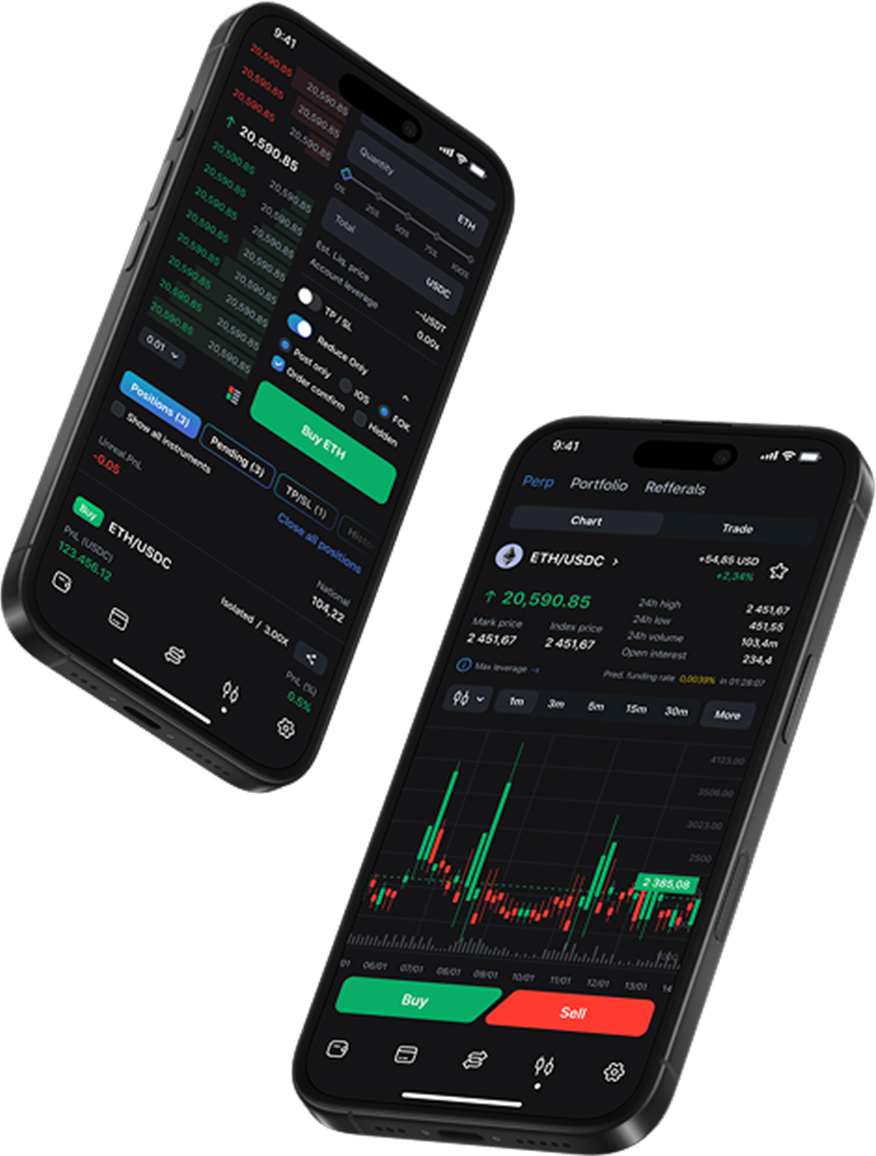
We develop decentralized exchange platforms and integrate perpetual futures trading into existing applications — mobile wallets, web platforms, or standalone DEX UIs. HyperLiquid API integration, dYdX v4 AppChain deployment are all within our delivery scope.
05

Crypto Trading Bot Development

We build production-grade crypto trading bots for arbitrage, market making, grid trading, and signal-driven execution. Bots connect to exchange APIs via WebSocket for real-time order book data and REST for order management, with automatic reconnection logic and alert pipelines for monitoring.
06

White-Label Trading Software Development

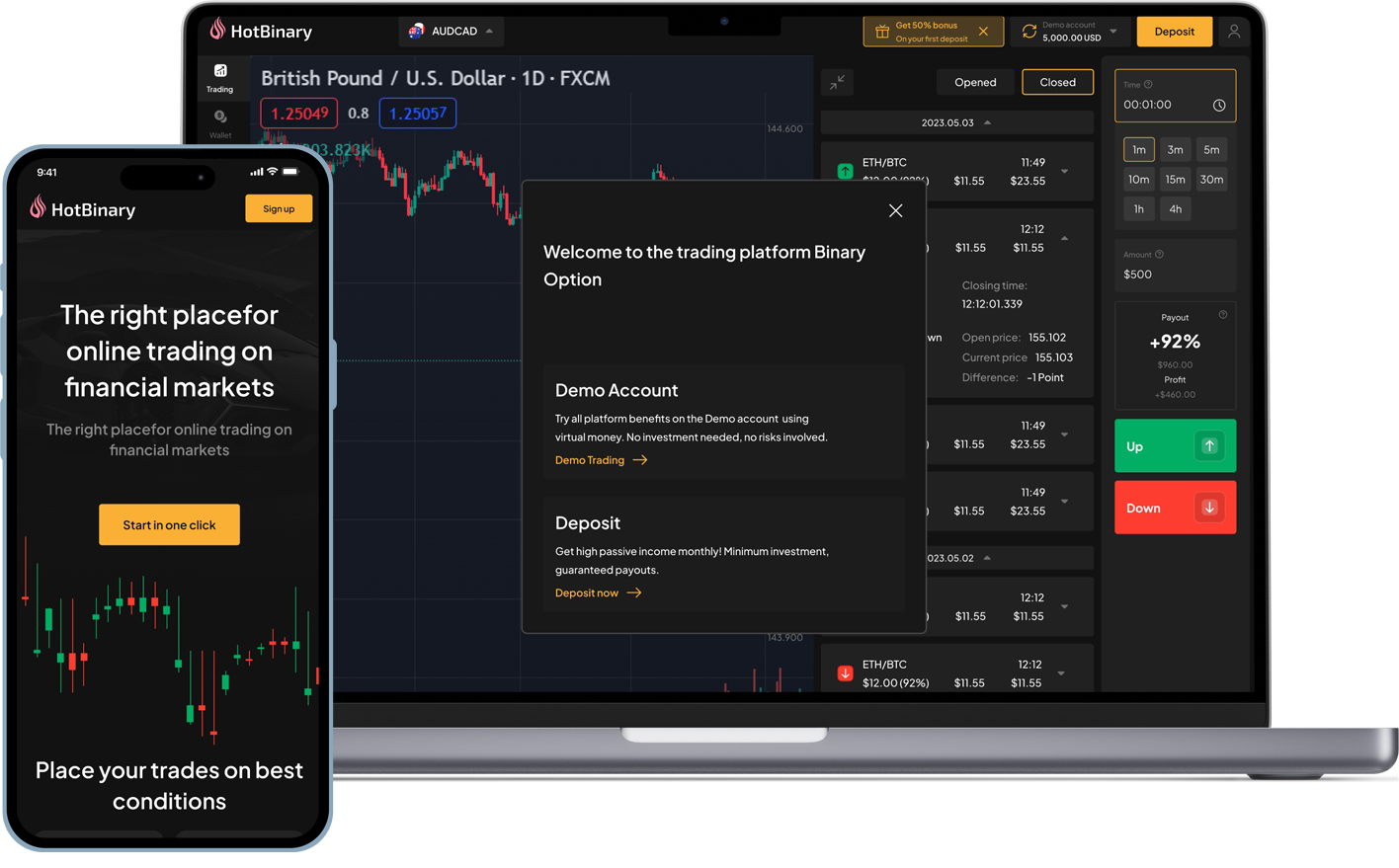
We deploy white-label trading platforms — binary options, futures, spot, forex — with client branding, payment gateway configuration, and domain setup. The base platform covers trading logic, affiliate program portal, admin panel, and demo account flows. Clients save 60–80% compared to building from scratch, with near-zero risk on core trading mechanics.
07

Trading Platform API & Integration Services
We build exchange connectivity layers, liquidity aggregation modules, and CEX/DEX bridge integrations. Real-time data synchronization via WebSocket, dual fee transparency (exchange fee + platform markup displayed pre-trade), and partial fill handling are standard in our integration work.

  About

What Is Custom Trading Software Development?

Custom trading software development is the process of designing and building proprietary trading systems tailored to a specific strategy, asset class, and operational model — as opposed to licensing a generic platform that imposes its architecture on your product. The scope ranges from a single component (a signal generation engine, a custom matching engine, a risk management module) to a complete trading platform delivered as a production system. The defining characteristic is ownership: you control the execution logic, the data architecture, the risk parameters, and the deployment environment.
The technical distinction that matters for buyers: off-the-shelf trading software forces your strategy into its execution model. Custom software inverts that relationship — the execution model is built around your strategy. For a prop firm running an AI-driven regime-adaptive signal system, that means the architecture supports walk-forward retraining, per-agent accuracy tracking, and dynamic weight recalculation. For an exchange operator, it means the matching engine handles your specific order type matrix and margin accounting rules. For a fintech startup, it means the platform is architecturally clean enough to extend — adding a fiat staking module, a new trading pair category, or a second liquidity provider without rewriting core services.
The custom trading software market in 2026 is moving in three directions simultaneously: AI signal generation (LLM agents + ML models replacing purely rule-based strategies), DEX/perp infrastructure (perpetual futures and on-chain order books challenging CEX dominance for specific strategies), and white-label deployment (proven platform bases deployed quickly for new operators). Merehead has active production experience across all three — the engineering patterns transfer directly from project to project.
1/3

  Step-by-Step

How We Build Custom Trading Software

Our delivery process for custom trading software follows a defined sequence: architecture before code, data layer before signal logic, execution infrastructure before UI. The sequence is non-negotiable because trading systems have hard dependencies — a signal engine built without a validated data layer produces results you cannot trust.

Discovery & Architecture Design
We map your trading strategy, target asset class, execution model (CEX, DEX, hybrid), and data requirements. The output is a system architecture document: component boundaries, data flow, latency targets, and technology selections — agreed before development begins.
Core Engine Development
Depending on scope: matching engine implementation, ML model training with walk-forward validation, LLM agent implementation and prompt engineering, order management system build, or DEX integration. Each component is unit-tested and integration-tested before the next phase begins.
Dashboard, Monitoring & Alert Infrastructure
Signal dashboard (Next.js + Recharts), Telegram notification delivery, Grafana system monitoring, and Sentry error tracking are deployed. The admin panel covers per-strategy performance, per-agent accuracy by regime, and full decision audit trail.
Data Infrastructure Build
We deploy the time-series and vector database layer, connect market data providers (exchange WebSocket APIs, on-chain data feeds, sentiment APIs, macro data sources), run historical backfill, and validate data quality. Signal logic built on bad data produces bad signals — this phase is non-skippable.
Execution Layer & Risk Controls
Exchange API connectors, WebSocket order book synchronization, position management, margin accounting, and automated risk controls (drawdown limits, regime-triggered position sizing adjustments) are implemented and tested against live market conditions in paper-trading mode.
Hardening, Validation & Handover
Live observation period (minimum 2–3 weeks paper trading). Walk-forward backtest report finalized. Production deployment completed with CI/CD pipelines. Technical documentation (architecture diagrams, API contracts, deployment runbooks) delivered. Knowledge transfer session completed.
The non-obvious engineering challenge in custom trading software is the interaction between market regime and system architecture. A signal system that performs at 60% directional accuracy in a trending market will perform at 41% in a sideways market — if the architecture does not include a regime classifier to route between strategies. This is not a model problem; it is an architecture problem. We solve it at design time, not after delivery. Similarly, CEX matching engines built without explicit horizontal scaling policies for stateful services (order book, wallet manager) create production incidents that are expensive to fix post-launch. Our architecture reviews address both failure modes before the first line of code is written.

  Features

Core Features of Custom Trading Software

Intro
The features that distinguish custom-built trading software from generic platforms are not cosmetic — they are architectural. These are the capabilities that determine whether a system performs under real market conditions.
Multi-Exchange Liquidity Connectivity
We connect platforms to multiple liquidity sources simultaneously — Binance, Bybit, OKX, Kraken — with admin-configurable routing per trading pair. OKX order book mirroring for spot market cold-start liquidity is a pattern we have deployed in production: users see a populated order book from day one backed by OKX's depth.
Regime-Aware Signal Weighting
A Regime Classifier (Random Forest) labels the current market state as trending up, trending down, ranging, or high-volatility. Signal agent weights are recalculated automatically based on their demonstrated accuracy in each regime — preventing trending-market strategies from being applied during sideways periods.
Walk-Forward Validation
All ML models are trained and evaluated using walk-forward validation on 2–3 years of historical data. This methodology honestly simulates live deployment by testing only on data the model has never seen. Realistic directional accuracy targets for BTC/ETH on a 24-hour horizon: 54–58%. Any vendor quoting 70%+ has a methodology problem.
Real-Time WebSocket Order
Order statuses, partial fills, cancellations, and balance updates are synchronized in real time via WebSocket connections to exchange APIs. User interfaces reflect order state changes immediately — not on polling intervals. Fee structures (exchange fee + platform markup) are displayed before order placement.
Adaptive Learning Loop
The system evaluates signal outcomes daily (24h, 48h, 72h lookback), updates per-agent and per-regime accuracy statistics, and retrains ML models weekly on new data. The result is a system that demonstrably improves over time rather than degrading silently as market conditions shift.

  Architecture

Custom Trading Software Architecture We Build

Our trading software architectures are designed with explicit separation between the AI/signal layer and the business/execution layer. This separation allows each component to scale independently, be replaced or upgraded without system-wide changes, and be audited independently by strategy teams and engineering teams.


01
Data & Time-Series Layer
PostgreSQL 16 with TimescaleDB handles all time-series workloads: hypertables with automatic time partitioning, continuous aggregates for pre-computed rollups, 10–20× disk compression on historical data, and sub-millisecond aggregation on years of OHLCV data. pgvector extension handles semantic similarity search for historical pattern retrieval and agent memory — no separate vector database infrastructure required.
02
Signal Generation & AI Layer (Python)
Python 3.11 + FastAPI + Celery handles all AI and ML workloads: multi-agent LLM orchestration (six specialized agents running in parallel via the Claude API or OpenAI), XGBoost direction predictor, Random Forest regime classifier, pandas-ta technical indicator computation, and adaptive learning loop with weekly retraining. n8n orchestrates pipeline scheduling. The AI layer is deployed as an independent service.
03
Execution & Business Logic Layer (Node.js / microservices)
The execution layer handles order management, exchange API connectivity (Binance, MEXC, OKX, HyperLiquid), WebSocket market data synchronization, wallet accounting, and fee calculation. In full CEX deployments, this layer runs as 17+ microservices containerized in Docker, orchestrated via Kubernetes with Helm charts, Horizontal Pod Autoscaler configured per service.
04
Frontend & Operator Dashboard (Next.js)
Signal dashboards and trading UIs are built in Next.js 15 with React 19, shadcn/ui components, and Recharts for data visualization. TradingView integration (standard embed or paid Business/Enterprise plan for 1-second timeframes, cluster charts, and real volume oscillator) is included per project requirements. The admin panel and operator dashboard share a single backend API.
Infrastructure & Monitoring. Production deployments run on Hetzner or AWS with documented migration paths between environments. Grafana covers system health monitoring; Sentry handles error tracking and alerting. Telegram Bot API delivers real-time signal and incident notifications. HashiCorp Vault manages secrets with GitLab CI pipeline integration.

  Cost

Cost of Custom Trading Software Development

The primary cost drivers in custom trading software development are system complexity (number of trading modules, asset classes, and order types), AI/ML scope (rule-based strategies vs. multi-agent LLM systems), exchange connectivity requirements (number of integrated exchanges, custom matching engine vs. API mirroring), and infrastructure model (single-server deployment vs. full Kubernetes cluster). A detailed cost breakdown for trading platform development covering team composition, module pricing, and timeline by complexity tier is available in our published guide.
Cost Estimates
AI Signal System POC: $40,000 – $70,000
Custom Algorithmic Trading Platform: $70,000 – $120,000
Full CEX Platform (Multi-Module): $120,000 – $300,000
White-Label Platform Deployment: $15,000 – $40,000
Recurring infrastructure costs for AI trading systems run $270–400/month post-delivery: LLM API usage ($50–100), embeddings ($20–50), VPS/database ($50–100), and data API subscriptions including paid tiers for on-chain data providers (~$150). Budget 25–30% of maintenance effort for data resilience work — exchange APIs change, on-chain data providers update methodologies, sentiment APIs adjust scoring models. This operational overhead is real and should be in the budget from day one.

Our development process follows a sequence-enforced approach: data layer validated before signal logic begins, execution infrastructure deployed before UI work starts. We deliver unit tests and integration tests alongside every core module, structured so the code review and QA processes run in parallel rather than sequentially. This reduces end-to-end delivery time and ensures production readiness rather than demo readiness at handover.

Our team has shipped hybrid AI signal systems, full multi-module CEX platforms, perpetual DEX integrations in mobile wallets, and white-label deployments in under two weeks. We scope accurately from discovery and maintain transparent milestone tracking throughout delivery.
Contact Expert  

  From Our Experience

Custom Trading System Engineering
Building a trading system that performs in production requires solving the same problems in the same sequence every time: data integrity before signal logic, regime awareness before strategy deployment, stateless/stateful service separation before Kubernetes scaling. The engineering patterns we developed across multiple trading platform projects are now standard in our delivery process.
In one AI-based trading signals project, the client’s primary requirement was a system that would generate BTC and ETH signals. A critical architectural decision was to treat the mode classifier as a routing layer for the entire system. The sentiment agent, which achieves 67% accuracy in trending markets, automatically receives a reduced weight when the mode classifier reports a ranging environment. This mechanism prevents the application of the wrong strategy. Delivered as a fully functional POC in 6 weeks.
Technical architecture from our AI trading signal system delivery:

5-layer hybrid architecture: Layer 1 — PostgreSQL 16 + TimescaleDB + pgvector (unified time-series and vector search, no separate infrastructure); Layer 2 — 6 specialized LLM agents running in parallel (Technical, Sentiment, On-Chain, News, Macro, Synthesizer); Layer 3 — XGBoost Direction Predictor + Random Forest Regime Classifier, retrained weekly via walk-forward validation; Layer 4 — pgvector memory for historical pattern retrieval and agent decision logging; Layer 5 — adaptive learning loop with hourly pipeline execution, daily outcome evaluation, weekly model retraining.

Data sources integrated: Binance + Bybit (WebSocket, 1h OHLCV), Glassnode + CryptoQuant (exchange flows, whale transactions, funding rates, open interest), LunarCrush + Santiment (sentiment scores, social volume), CryptoPanic (news with importance ranking), Yahoo Finance (DXY, S&P 500, VIX for macro context).

Validated accuracy: 54–58% directional accuracy on 24-hour BTC/ETH horizon under walk-forward validation on 2–3 years of historical data. Walk-forward numbers are lower than random split numbers — and they are the ones that matter in live deployment.

Technology stack: Python 3.11, FastAPI, Celery, PostgreSQL 16 + TimescaleDB + pgvector, Claude API (Sonnet for analytical agents, Haiku for classification), XGBoost, scikit-learn, pandas-ta, n8n, Next.js 15, React 19, shadcn/ui, Recharts, Telegram Bot API, Grafana, Sentry. Full case study: How We Built an AI Crypto Trading System.
From our CEX and mirrored execution deployments:

MEXC mirrored execution architecture: User places an order on the platform → order is instantly replicated to MEXC via API → execution, partial fills, and cancellations are synchronized back in real time via WebSocket. Balance calculation uses available = Total − reserved, updated continuously. Fee display combines exchange fee + platform markup shown to the user before order placement — a transparency requirement that eliminates post-trade disputes.

Kubernetes scaling policy for trading microservices: In one production CEX deployment, 17 services were containerized with Helm charts and Horizontal Pod Autoscaler. The critical policy distinction: stateless services (API gateway, notification service) autoscale horizontally without constraint. Stateful services (wallet manager, matching engine) have state dependencies that make horizontal scaling non-trivial — their HPA policies require explicit coordination logic. Defining this separation before writing Helm charts prevents expensive rework. Infrastructure secrets managed via HashiCorp Vault integrated with GitLab CI pipelines.
Discuss a Similar Project

Who Should Build Custom Trading Software

prop trading firms building proprietary execution infrastructure
crypto exchanges launching multi-module trading platforms
fintech startups entering the algorithmic or AI trading market
hedge funds and family offices building internal signal systems

  Reason

Why Choose Merehead as Your Custom Trading Software Development Company

Merehead engineers trading systems at every layer of the stack — from the data ingestion pipeline and order execution logic to the signal generation engine and the analytics dashboard. Our team has delivered a 5-layer hybrid AI trading signal system combining six specialized LLM agents with XGBoost and Random Forest models, a full CEX platform covering spot, margin, futures (B-book), options (Black-Scholes), and instant conversion in a single production deployment, and a perpetual DEX integration embedded into a non-custodial mobile wallet — all built with production-grade architecture, not prototype code. The breadth of that experience means we can scope your project accurately on day one, identify the architectural constraints that matter for your strategy, and deliver working software — not proof-of-concept demos. For teams evaluating the cost and timeline of an AI trading bot development, our published breakdown covers architecture patterns, build vs. buy decisions, and realistic pricing across complexity tiers.
0+ years on the market
0+ completed projects
We build for the engineering reality of trading markets: 24/7 uptime requirements, regime changes that invalidate static strategies, and execution flows where milliseconds of latency determine fill quality. Our microservices architecture separates trading logic (Python AI/ML layer) from business logic (Node.js API layer) by design, so each scales independently and neither becomes a bottleneck for the other. We have deployed 17-service Kubernetes clusters with Redpanda (Kafka) message buses, HPA policies that correctly distinguish stateless services from stateful order book and wallet managers, and CEX liquidity mirroring via OKX API — operational patterns that only come from shipping real trading infrastructure at scale.
Write to an expert  
Full-Stack Trading Architecture Ownership
We design and build every layer — data infrastructure, order management, execution connectors, signal logic, and analytics. No handoffs between separate frontend and blockchain teams. One team owns the complete system.
Production Experience with AI/ML Signal Systems
We have built hybrid LLM + ML trading systems with multi-agent architectures, vector memory for historical pattern retrieval, adaptive learning loops, and regime-aware signal weighting — not chatbot wrappers over a price feed.
CEX, DEX, and Hybrid Execution Infrastructure
From full CEX platform development with custom matching engines to HyperLiquid perp DEX integrations and MEXC mirrored execution — we build execution infrastructure for any market structure.
White-Label Deployment in Under 2 Weeks
For clients who need a proven trading platform live quickly, our white-label base covers binary options, futures, spot, and affiliate systems. The fastest deployment we have executed — from contract to live platform — took under two weeks.

Delivered 5-layer hybrid AI signal systems (54–58% walk-forward accuracy), full CEX platforms with 6 trading modules, and perp DEX integrations in non-custodial mobile wallets. Architecture-first approach: data layer, execution engine, and signal logic designed in sequence — not bolted together after the fact.

  FAQ

Have questions in mind?

Answers to the most frequently asked questions about custom trading software development

Custom trading software development is the process of building a proprietary trading system — algorithmic engine, signal generator, order management system, matching engine, or full exchange platform — designed specifically for your trading strategy, asset class, and operational model. Unlike off-the-shelf platforms, custom software gives you full control over execution logic, data architecture, and risk parameters.

Costs vary significantly by scope. An AI trading signal system POC starts at $40,000–$70,000. A custom algorithmic trading platform with exchange connectivity runs $70,000–$120,000. A full multi-module CEX platform with Kubernetes infrastructure is $120,000–$300,000. White-label trading platform deployment starts at $15,000. The primary drivers are AI/ML complexity, number of trading modules, and exchange connectivity requirements.

An AI trading signal system POC takes 4–6 weeks. A custom algorithmic trading platform with exchange API connectivity takes 10–16 weeks. A full CEX with multiple trading modules takes 4–6 months. White-label trading platform deployment can be completed in under 2 weeks. Timelines depend primarily on scope, not team size — adding engineers to a trading project with unvalidated architecture does not accelerate delivery.

Under walk-forward validation — the only methodology that honestly simulates live deployment — a well-built hybrid LLM + ML system achieves 54–58% directional accuracy on a 24-hour BTC/ETH horizon. Backtests showing 70%+ almost always contain look-ahead bias, overfitting, or random train/test split instead of walk-forward methodology. Lower numbers from honest validation are more useful than inflated numbers from flawed methodology.

For AI/ML systems: Python 3.11, FastAPI, Celery, PostgreSQL 16 + TimescaleDB + pgvector, XGBoost, scikit-learn, pandas-ta, Claude API or OpenAI, n8n for orchestration. For frontend and dashboards: Next.js 15, React 19, shadcn/ui, Recharts, TradingView. For infrastructure: Docker, Kubernetes, Helm, Redpanda (Kafka), HashiCorp Vault, Grafana, Sentry. Stack is selected per project requirements — we do not impose a single stack on every engagement.

A custom matching engine gives you full control over order book logic, priority rules, and execution semantics — required when your product has proprietary order types or specific latency targets. API mirroring replicates user orders to an existing exchange (Binance, MEXC, OKX) and synchronizes results back in real time — faster to deploy and immediately liquid, but dependent on the external exchange's availability and rules. The right choice depends on whether execution logic is your competitive differentiator.

Yes. We have delivered perpetual futures trading modules integrated into non-custodial mobile wallets built on TrustWalletCore, using HyperLiquid as the underlying DEX infrastructure. Full feature set: TradingView charting, order book display, limit/market/stop-limit orders, TP/SL, cross and isolated margin, and leverage selection — all within the wallet app. Timeline: approximately 3 months for the complete module.

Data quality is the first thing we validate, not the last. We connect multiple data sources per category (e.g., Binance + Bybit for OHLCV, Glassnode + CryptoQuant for on-chain), run 2-year historical backfill with integrity checks, and implement provider failover logic in the data ingestion layer. Approximately 25–30% of ongoing maintenance effort in AI trading systems is data resilience work — handling provider outages, API changes, and methodology shifts. We budget for this explicitly in every project.
Talk to an expert
We are ready to answer all your questions
Top expert
10 years of experience

  AI & ML Systems

AI & Machine Learning Architecture for Trading Systems

Multi-Agent LLM Signal Generation
Six specialized LLM agents — Technical, Sentiment, On-Chain, News, Macro, and Synthesizer — each with a narrow domain, each returning a structured confidence score with explicit reasoning. The Synthesizer weights agents dynamically based on demonstrated accuracy in the current market regime, not equally across all conditions.
ML Direction Predictor & Regime Classifier
XGBoost Direction Predictor trained on 40–60 engineered features across technical, on-chain, sentiment, macro, and cross-asset categories. Random Forest Regime Classifier labels market state (trending up/down, ranging, high-volatility) to route strategy weighting. Both models retrain weekly via walk-forward validation.
Vector Memory & Historical Pattern Retrieval
pgvector enables the Synthesizer agent to query historical market situations semantically similar to the current configuration and retrieve what happened afterward. This grounds every signal decision in concrete precedent rather than inference from frozen model weights. Same infrastructure handles news deduplication and agent decision logging.
Manual analysis cannot monitor 5+ data streams simultaneously on a 24/7 market. Single-model ML systems learn on numerical data but are blind to regulatory news, sentiment shifts, and whale movements — and degrade silently when the market regime changes. LLM-only systems have no memory between API calls and no mechanism to learn from outcomes. The hybrid architecture we deploy assigns each component to the workload it handles best: ML models quantify numerical patterns, LLM agents reason about unstructured signals, and the regime classifier routes between them. Each component compensates for the others' blind spots. This is the architecture that produces 54–58% walk-forward accuracy on a 24h BTC/ETH horizon — lower than inflated backtest numbers, and real.

  Execution Infrastructure

Trading Execution Infrastructure & Order Management

Custom Matching Engine Development
We build custom matching engines for platforms that require full control over order book logic and execution semantics — including proprietary order types, custom priority rules, and sub-millisecond latency targets. For teams evaluating matching engine complexity and performance benchmarks, our technical breakdown covers matching engine architecture from Rust code to 1M+ TPS.
Exchange API Mirroring & Liquidity Aggregation
For platforms that need a populated order book without building matching engine infrastructure, we implement exchange API mirroring: user orders are replicated to a primary exchange (Binance, MEXC, OKX) via API and synchronized back in real time. OKX order book mirroring via margin borrowing is a production-tested pattern for cold-start liquidity.
DEX & Perpetual Futures Integration
We integrate perpetual futures trading into existing applications — mobile wallets, web platforms — using HyperLiquid API (deep liquidity, competitive latency, well-documented integration) or dYdX v4 AppChain (sovereign infrastructure, higher complexity). Full order type support: limit, market, stop-limit, TP/SL, cross and isolated margin, configurable leverage.
Production considerations for execution infrastructure
The three infrastructure blockers we encounter most often in trading platform projects are not code problems — they are infrastructure timing and architectural policy problems. First: blockchain node synchronization. Bitcoin full node sync takes 5–10 days on modern hardware; if it is not started on project day one, it becomes the critical path item blocking launch. Second: stateful service scaling policy. Not all microservices should autoscale horizontally.

Order book services and wallet managers have state dependencies that require coordination logic — defining this policy before writing Helm charts saves weeks of rework. Third: production access delays. We now include infrastructure readiness milestones as client deliverables with dates in all project contracts, because underprovided production environments have delayed otherwise-finished projects by two to three weeks.

  White-Label

White-Label Trading Software: Rapid Deployment Model

White-label deployment is the right choice when the core trading mechanics are standard (binary options, spot trading, futures) and competitive differentiation comes from branding, marketing, and geographic focus — not proprietary execution logic. Custom development is the right choice when the trading strategy itself is the differentiator: a specific signal logic, a non-standard order type matrix, a proprietary risk model, or an AI-driven regime-adaptive system that the platform is built around. We have delivered both in production. The honest answer for most new operators: start with white-label to validate the market, then extend to custom modules once revenue justifies the investment. Our architecture supports that transition — the white-label base is modular, and custom extensions are addable without rewriting the core.
Write to an expert  
Binary Options & Futures White-Label
Our white-label binary options platform includes futures trading up to 100x leverage, TradingView integration, affiliate program portal, demo accounts, and admin panel. The affiliate interface tracks visitors, registrations, FTD, deposit volume, and revenue share per campaign — it functions as an independent product, not a reporting view.
Market Maker Module for Forex Pairs
For forex pairs that are illiquid on weekends, the market maker module generates synthetic price movement within configured parameters (frequency, amplitude, directional bias) per pair. The admin switches between live data and market-maker mode per pair. Without this, forex binary options platforms effectively shut down on Saturday and Sunday.
Sub-2-Week Deployment Process
From contract to live platform: deploy to dedicated server, configure domain with SSL, replace API credentials (payment processor, SMS, email, trading data), apply brand tokens (logo, color scheme), run smoke tests across critical user flows, hand over admin credentials. The 60–80% cost reduction vs. build-from-scratch comes from reusing production-tested trading logic, affiliate system, and compliance flows.
Do you have a project idea?
Send
Yuri Musienko
Business Development Manager
Yuri Musienko specializes in the development and optimization of crypto exchanges, binary options platforms, P2P solutions, crypto payment gateways, and asset tokenization systems. Since 2018, he has been consulting companies on strategic planning, entering international markets, and scaling technology businesses. More details