Your teams already use AI
Find out which tools have access to company or customer data and who owns each use case.
You know where your data goes
Services
Our company has been building blockchain-based financial projects for over 10 years. Our scope of activity includes the development of centralized and decentralized crypto exchanges, crypto bots, payment gateways, real estate tokenization, DeFi and NFT projects.
AI & ML
Since 2023 we have been building AI for business: custom AI and LLM development, AI agents, chatbots and enterprise AI that connect to your data, products and processes.

Decide what your AI can do before it does it
Before an AI assistant can read a customer record, draft a reply, or send it, someone has to decide what it can access and who approves the action. Merehead helps you make those decisions and put them into practice.
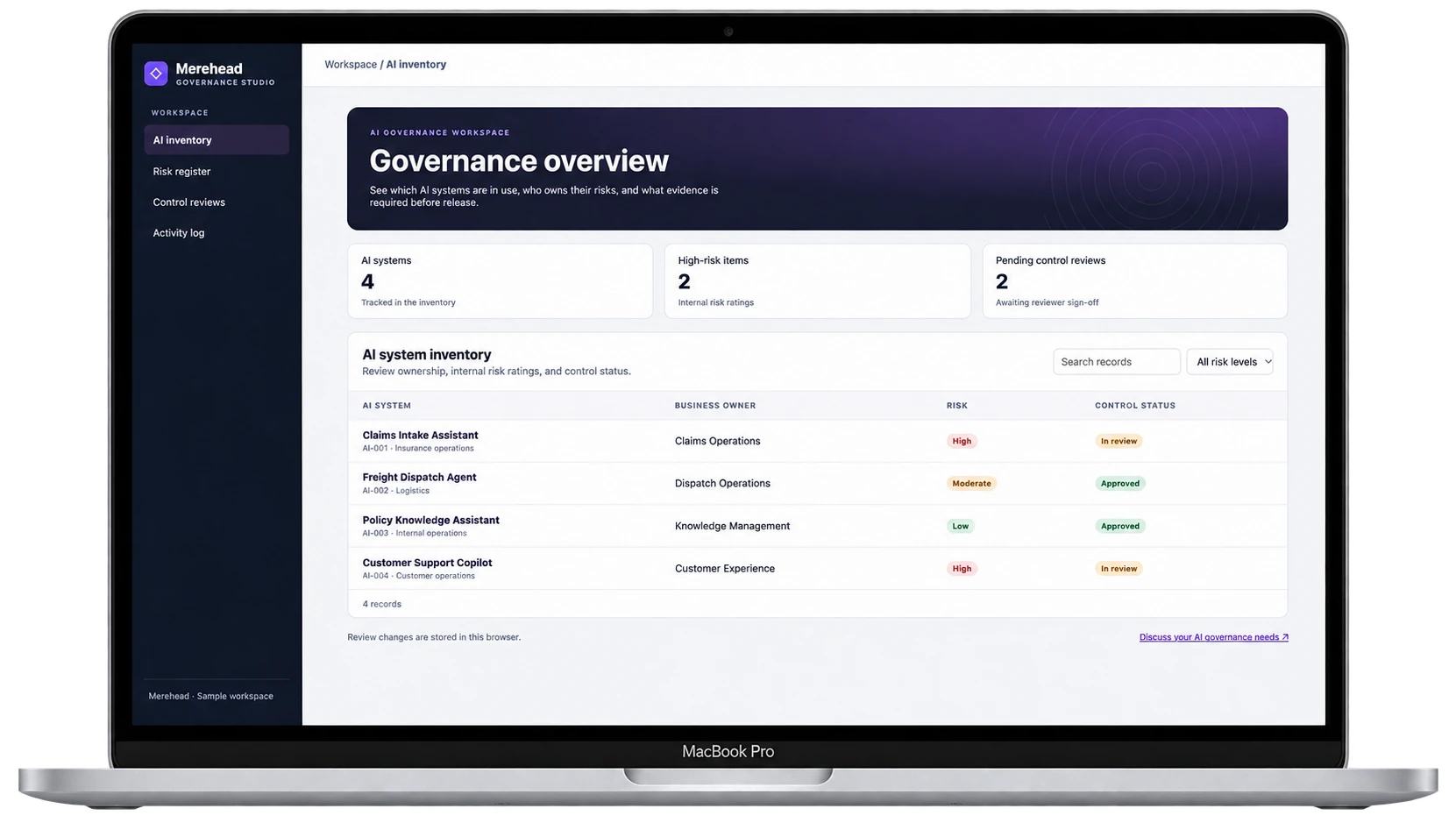
Governance pays off at three moments: when AI is already in use, when a product is about to launch, and when it is about to reach a new market.
Find out which tools have access to company or customer data and who owns each use case.
Decide which actions the system can take, which need approval, and what happens when it cannot complete a task safely.
Check which obligations apply to the product and what needs to change in the system or its documentation.
Five services, from the first inventory to safeguards running in your product. Each shows a typical timeline. Start with one or combine them.
Typical timeline: 2–4 weeks for one workflow or a small set of related use cases.
We trace each use case from the data it receives to the decisions or actions it affects. For an internal assistant, that might mean checking whether a user can retrieve a document they cannot open in the source system.
Typical timeline: 3–6 weeks to draft the policy and agree on roles, approvals, and escalation procedures.
We write the rules your teams need for approving new AI uses, granting access, and responding to incidents.
Typical timeline: 2–4 weeks to assess one AI system and document applicable obligations and gaps.
Our AI lawyer reviews the intended use of your system and your organization's role to determine which obligations apply. Engineers compare those findings with what the system does today.
Typical timeline: 1–3 weeks for one vendor or model, depending on documentation and vendor response times.
We check what data you send to each provider, what the provider says it retains, and how it handles model changes or incidents.
Typical timeline: 3–8 weeks to implement and test a defined set of controls in one application.
We build the agreed safeguards into the product. Our AI agent development services cover tool permissions, integrations, and limits on autonomous actions. For example, an agent can prepare an invoice while the application requires an authorized person to approve it before sending.
Each reference shapes a different part of the work: how risk is owned, how the management system is checked, and which legal obligations apply.
We use Govern, Map, Measure, and Manage to assign risk owners, document how the system is used, decide what to test, and track how each risk is handled.
We compare your AI management system with the standard and identify gaps in policies, responsibilities, records, and review procedures.
You get a gap assessment and a plan to address it
Our AI lawyer assesses applicability and relevant obligations. We map the findings to the changes and evidence your team needs for the systems in scope.
Findings become changes and evidence
Here is an example of how we would document a human approval requirement for an AI assistant.
A staff member must approve an AI-drafted reply before it goes to a customer.
The assistant saves a draft. Only an authorized user can approve it for sending.
Try to send without approval. The attempt should fail.
Try to approve with an unauthorized account. The attempt should fail.
Approve with an authorized account and check that the log records the approval and the send.
We built a private knowledge hub and two AI assistants for a property and casualty insurance administrator. The assistants retrieve documents according to the employee's access permissions. When a claim arrives without required information, the claims assistant flags the missing fields and drafts a request from an approved template. The claims handler makes the coverage decision.
Read the insurance case study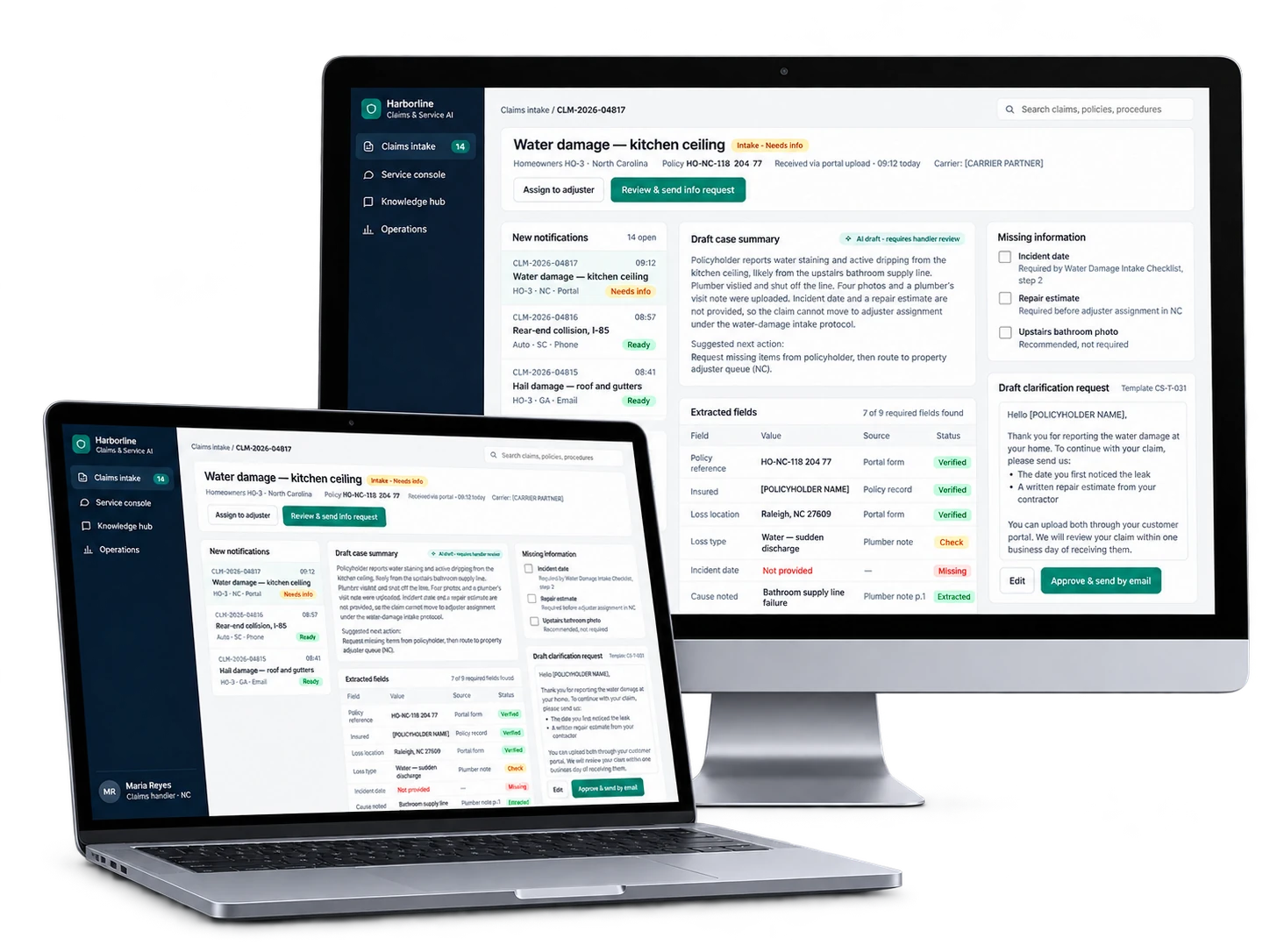
Claims intake time fell from 14.5 to 9.1 minutes.
The agent fits into our daily work, and our people stay in control of the decisions.
Legal and engineering review the same system side by side, so findings turn into changes your team can act on.
Reviews the system's intended use, your organization's role, and the requirements that apply.
Reviews data flows, permissions, and actions the AI can trigger.
Together, they turn findings into changes your team can prioritize and verify. If you hire us to implement those changes, we agree on acceptance tests before development starts.
Discuss your AI systemYes. We start with the available documentation, a walkthrough, and access to relevant settings or logs. The findings distinguish what we verified from what still needs evidence. Our guide to building an end-to-end AI system covers how to test the full workflow before release.
Yes. We can scope the work around one system or workflow, such as an agent that drafts replies using customer account data.
A focused assessment typically takes 1–4 weeks, depending on what we're reviewing. Once we know which systems are in scope, what documentation is available, and whether you need legal review or implementation, we can give you a timeline and cost estimate. The timelines above assume we have access to the relevant materials and people when work starts.
Tell us what your AI system does, who uses it, and which decision you need to make before launch or expansion.