Generative AI Development

Generative AI Development Company

We build generative AI applications that help people find information, prepare documents, and complete work across business systems. From internal assistants to AI features for SaaS products, we handle development, integrations, testing, and deployment.

Bring us a defined project or a process you want to improve. We'll help you establish the scope, assess your data, and choose a practical starting point.

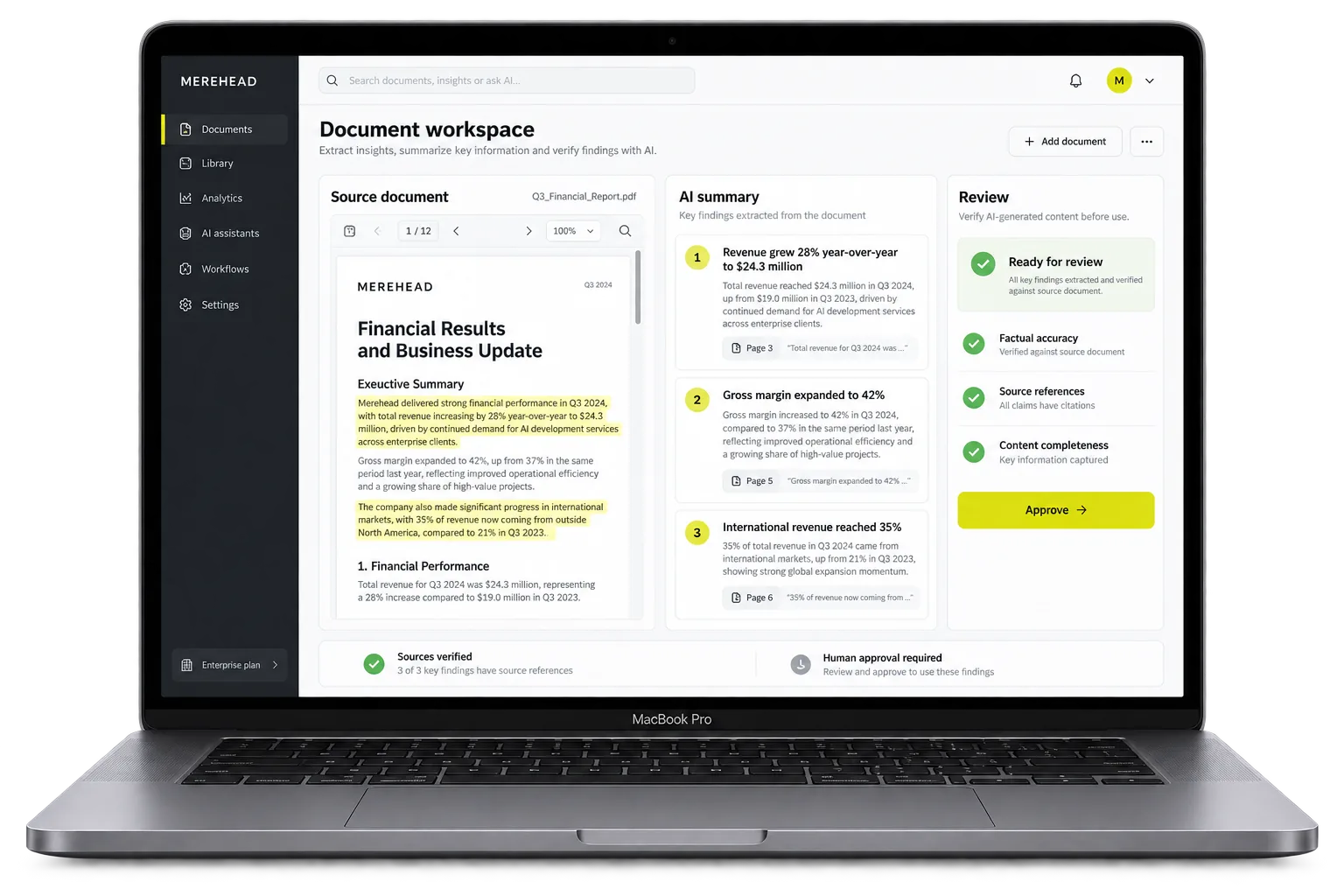
Document workspace: a source financial report with highlighted passages, an AI summary of three key findings each linked to its page, and a review panel with accuracy checks and an Approve button
2015Building software since 2015.
2023Developing AI solutions since 2023.
131Projects delivered since 2015.
18AI projects delivered.
Services

Our Generative AI Development Services

Discovery and Prototyping

We review the workflow, available data, and expected result before committing to a full build. Discovery defines what the system should do, which actions require human approval, and how its performance will be evaluated. A focused prototype tests the assumptions that matter most to the investment.
Custom Generative AI Application Development

We develop applications around your users and business processes. Our work covers the interface, backend, model integration, data access, and administration tools. The scope can range from an internal document assistant to a customer-facing product with accounts, subscriptions, and multiple user roles.

AI development services

RAG and Enterprise Knowledge Systems

We connect AI applications to company documents and databases through retrieval-augmented generation. The work includes preparing content, configuring search, preserving source references, and applying access rules. We also define how information is updated so the application can distinguish current guidance from outdated material.

AI Copilot and Agent Development

We build copilots that assist employees and agents that perform defined tasks through approved tools. They can retrieve records, prepare responses, populate fields, and coordinate steps across applications. Permissions, review points, and exception handling are part of the workflow.

AI agent development

Model Adaptation and Fine-Tuning

We assess whether the task needs better instructions, stronger retrieval, a different model, or fine-tuning. When fine-tuning is justified, we define the required dataset and evaluation process. The choice depends on the behavior you need and the evidence available to test it.

LLM development

Integration, Deployment, and Support

We connect generative AI to existing products and operational systems. This includes authentication, APIs, background processing, monitoring, and deployment. After launch, support can cover errors, data-source changes, model updates, and improvements based on actual usage.

Solutions

Generative AI Solutions We Build

Answer routine questions using approved product information, policies, and support documentation. Connect authenticated requests to customer systems where appropriate, and hand conversations to employees when the available information is insufficient or the issue requires review.

Help employees search company information and prepare answers with references to the underlying sources. Access can follow team responsibilities and user permissions, so employees receive information relevant to their work.

Extract information from incoming files, identify missing fields, and prepare summaries or draft documents. Employees can review the source alongside the result before accepting it or sending it to the next stage.

Assist with work such as preparing customer replies, summarizing account activity, and drafting reports. The copilot brings together relevant information inside the tools employees already use, with review before consequential actions.

Add search, generation, document analysis, or conversational features to your product. We develop the supporting interface, permissions, usage controls, and backend services so the feature fits your application and commercial model.

Case studies

Selected Generative AI Projects

LogisticsAI agent · Document processing

AI Agent for a 40-Truck Carrier

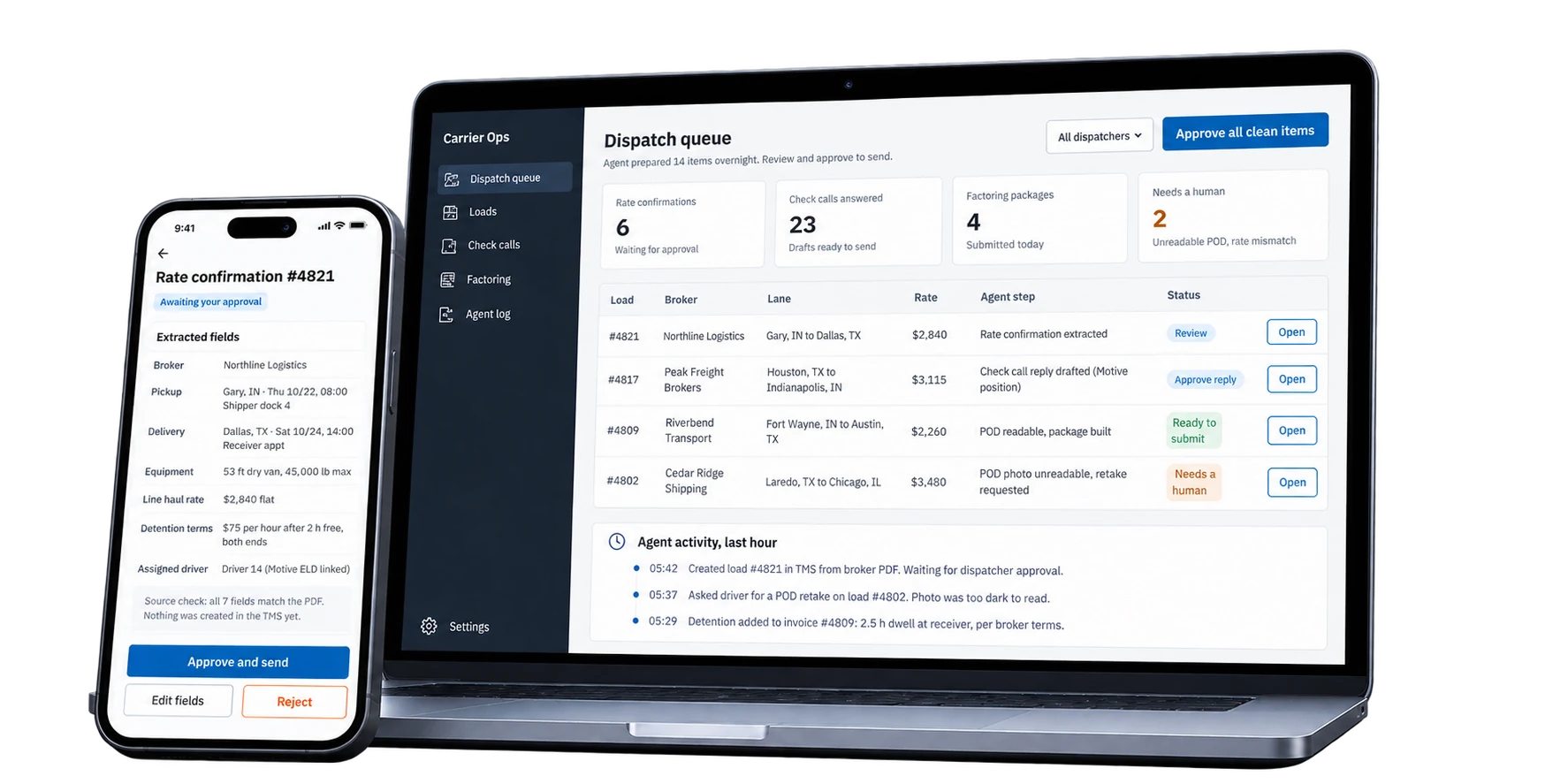
We built an assistant for a carrier’s dispatch and invoicing workflow. It reads rate confirmations, gathers delivery documents, retrieves vehicle positions, and prepares records and messages for dispatcher approval.

40trucks
4-weekpilot
22 hoursrecovered weekly

During the four-week pilot, delivery-to-invoice time fell from three to five days to one day. The dispatch team recovered 22 hours per week. Outbound actions remained subject to human approval.

Read the trucking AI case study
Carrier Ops on a laptop and phone: a dispatch queue of loads prepared by the agent, each waiting for dispatcher approval, and a rate confirmation with extracted fields
Crypto marketsDecision support

Hybrid AI Research System for Crypto Markets

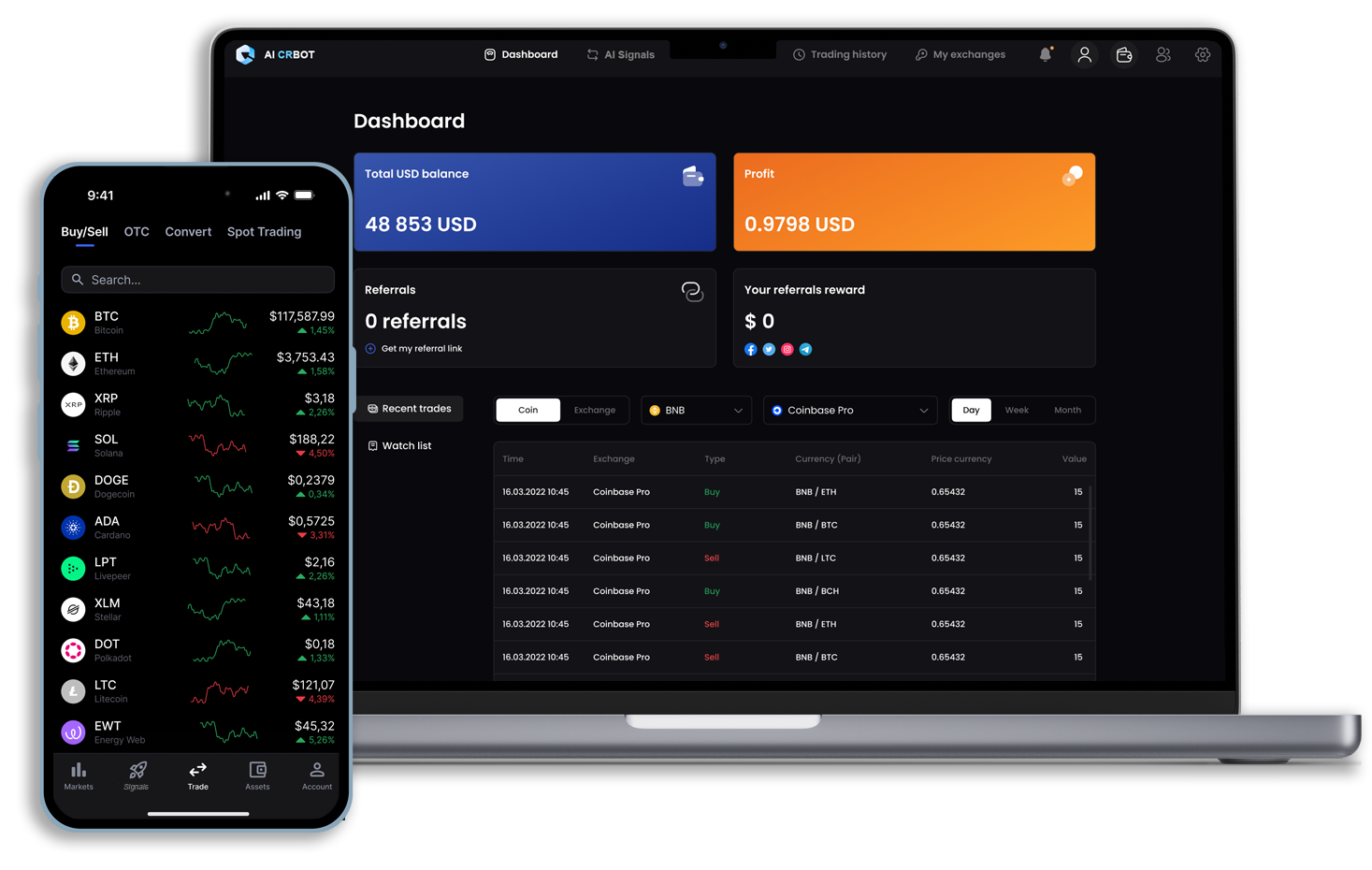
We developed a decision-support POC combining six specialized LLM agents, numerical models, and vector memory. The system brings together market information and presents signals with supporting analysis through a dashboard and Telegram notifications.

6specialized LLM agents
POCdecision support
Papertrading observation

The scope included decision history, evaluation tools, and paper-trading observation. Automated execution remained outside the initial scope.

Read the AI trading system case study
AI trading research system on a laptop and phone: a dashboard with balance, AI signals and recent trades, and a mobile market list with price charts
How it works

How Your Generative AI Solution Works

  1. Data sources

    Your Data Provides the Context

    The application connects to the documents, records, and external sources needed for its task. We define which information belongs in a searchable knowledge base and which requests need current data from a business system.

  2. Model and retrieval

    Models Handle Defined Tasks

    We assign language generation, retrieval, calculations, and other operations to the appropriate components. This allows the team to evaluate the underlying result separately from the wording presented to the user.

  3. Business systems

    Integrations Connect the Work

    APIs and background services let the application retrieve information and prepare or update records. Each integration needs defined permissions, validated inputs, and a response to failures.

    ExampleIn our trucking project, the agent worked across email, WhatsApp Business, vehicle-location data, and the transport management workflow. Dispatchers reviewed prepared work before releasing it.
  4. User review

    People Retain the Required Authority

    We establish which outputs need review and which actions the system may perform independently. Review screens should show enough context for employees to approve, correct, or reject the result.

Quality and security

Quality, Security, and Operating Costs

Test Against Your Actual Work

We build evaluation scenarios from the tasks the application will encounter. Testing covers incomplete information, conflicting sources, unexpected inputs, and integration failures. Acceptance criteria are agreed around the use case.

Control Access to Data and Actions

We define what each user and AI component may access. Sensitive information, tool permissions, credentials, and retention requirements influence the architecture and deployment choices.

Make Uncertainty Visible

The application needs a defined response when evidence is missing or a task falls outside its scope. Depending on the workflow, it can request clarification, show supporting sources, or route the work to an employee.

Track Performance and Usage

We monitor response times, failures, model usage, and operating costs. For a subscription product, the cost of completing a typical user task also informs usage limits and pricing.

Process

Our Generative AI Development Process

1

Define the Workflow

We speak with the people doing the work, review representative inputs, and identify the steps the application will support. Together, we establish the scope, constraints, and success criteria.

2

Validate the Core Scenario

We build a prototype to test the most important technical and product assumptions. This stage helps determine whether the available data and selected approach can produce a useful result.

3

Develop and Integrate

We build the application, connect the required systems, and implement permissions and review workflows. Demonstrations give your team an opportunity to assess progress and resolve questions during development.

4

Evaluate and Launch

We test against the agreed scenarios, address issues, and prepare deployment and operational documentation. A staged rollout lets users review the system in a controlled setting before broader adoption.

5

Support and Improve

After launch, we review errors, user corrections, source changes, and performance. These findings guide updates to retrieval, prompts, integrations, and application behavior.

In our trucking pilot, we measured the existing process before development and repeated the measurements in week four. That gave the client a direct comparison using the same operational metrics.
Cost and timeline

Generative AI Development Cost and Timeline

The estimate depends on the workflow, data readiness, integrations, and requirements for deployment and review. We break the scope into deliverables so you can see what each stage includes.

Project scopeTypical work includedMain factors affecting the estimate
Focused prototypeOne core scenario, sample data, basic interface, evaluationInput quality, model suitability, complexity of the task
Business applicationUser interface, permissions, integrations, testing, deploymentNumber of workflows, system access, review requirements
Broader implementationMultiple teams or processes, shared services, operational controlsData ownership, integration dependencies, rollout and support needs
For reference, the carrier project ran as a four-week pilot. The trading research POC was scoped around four to six weeks. These examples had different requirements and do not establish a standard delivery time for every project.
We estimate development separately from recurring expenses such as model usage, hosting, storage, external data services, and support.
Technologies

Technologies We Use

We select the stack around your existing environment, data requirements, and expected workload.

Anthropic Claude API
Python
FastAPI
Celery
PostgreSQL
pgvector
TimescaleDB
React
Next.js
scikit-learn
XGBoost
pandas
n8n
Grafana
Sentry
APIsBackground jobs
A project does not need every component listed here. We explain the proposed stack and its operating requirements during technical planning.
Client feedback

What Our Clients Say

4.9Read reviews on Clutch
“Merehead took the time to understand how our team handles insurance claims before building the AI agent. It helps us review incoming documents, find policy details, and prepare responses for our staff to check. We appreciated that the team asked practical questions early and worked through the exceptions with us. The agent fits into our daily work, and our people stay in control of the decisions.”
Michael BennettCo-founder · Insurance company, US
FAQ

Frequently Asked Questions

The cost depends on the scope, condition of the data, integrations, and deployment requirements. We prepare an estimate around specific deliverables and identify recurring expenses separately. If important assumptions remain untested, a focused discovery or prototype stage can help establish the full scope.

A narrow pilot and a business application have different requirements. Data cleanup, access approvals, and integrations can affect the schedule as much as development. We propose a timeline after reviewing these dependencies and the acceptance criteria.

Yes. We first review the application's architecture, available APIs, authentication, and data access. The AI functionality can be introduced through a separate service or integrated into existing components, depending on the product.

Many applications can use existing models with instructions and retrieval from company information. Fine-tuning is a separate decision. What we need initially is a representative set of tasks, relevant source material, and examples of acceptable results.

RAG provides relevant source information at the time of a request. Fine-tuning changes model behavior using training examples. We assess the problem first: missing knowledge, inconsistent output, and specialized behavior can require different solutions.

We establish which data the system uses, where it is processed, who may access it, and which external services receive it. Access controls, retention, logging, and deployment requirements are then reflected in the implementation.

Ownership, repository access, documentation, and handover terms are defined in the agreement. The proposal also identifies third-party services and software dependencies required to operate the application.

Yes. Support can cover monitoring, incident investigation, integration changes, model updates, and planned improvements. We agree on the scope and responsibilities before the support period begins.

Contact

Discuss Your Generative AI Project

Tell us what you want to build or which process needs improvement. Include the systems involved, the data available, and any requirements for timing or deployment.

We'll review the request and discuss the scope, technical options, and questions that need to be resolved before an estimate.

Do you want to start your own project?

Discuss your idea with our business development expert.

Describe your idea or request and our expert will contact you within a couple of hours. Or contact us directly via Telegram or WhatsApp.