Fintech Software Development Services

Fintech software that keeps every transaction accounted for

We build payment platforms, digital wallets, trading systems, and investment software. Bring us a product idea, an integration you need to ship, or a part of your existing platform you need to replace.

2015Building software since
134Projects delivered
4.9Client rating on Clutch
Two phones with a mobile crypto trading app: an ETH/USDC perpetual chart with buy and sell buttons, and an order form with positions, take-profit and stop-loss settings
What we do

Fintech Software Development Services We Offer

From the first architecture decision to the incident you investigate after launch. Pick one service or take the full cycle.

Product Discovery and Architecture

Before development starts, we map how money moves, where balances are recorded, and which systems can approve a transaction. You get a defined first release, a list of integration dependencies, and a build plan your team can review.

A build plan before the first line of code

Custom Fintech Software Development

We build customer-facing web and mobile apps, transaction backends, and admin tools. We scope the customer journey and the operational work together. If a customer can request a withdrawal, your team also needs a way to review it, see its status, and handle an exception.

Customer app and back office built as one

Fintech API Integration

We connect your software to payment providers, identity verification services, liquidity providers, and other systems your product depends on. The work includes mapping transaction statuses, handling retries and duplicate callbacks, and deciding how your team will reconcile records when providers report different outcomes.

Every provider status mapped and traceable

Platform Modernization

We can replace a module, migrate data, or move an integration off a legacy service. We start with the dependencies around the component and agree on how to validate balances, transactions, and permissions before switching traffic.

Validated before any traffic switches

Post-Launch Engineering

After launch, we can investigate failed transactions, maintain provider integrations, and build the next set of features. We agree on who monitors the system, who handles incidents, and what the support scope covers before handover.

Clear incident ownership from day one
Not sure where to start?

Tell us what you have and what has to work by launch

We will suggest which service fits first and what can wait for a later release.

Discuss your fintech project
What we build

Fintech Products We Build

Four product types, one rule: whatever the customer can do, your operations team can see, review and fix.

01

Payment platforms

Payment initiation and status tracking, provider integrations, transaction review, and reconciliation tools. For products that accept digital assets, see our crypto payment gateway development services.

02

Digital wallets

Customer balances, deposits and withdrawals, transaction history, and an operator interface for reviewing exceptions. We define custody and approval rules around the assets your product supports.

03

Trading platforms

Order entry and execution workflows, market data, liquidity integrations, and operational dashboards. Our custom trading software services cover work on individual components as well as complete platforms.

04

Investment platforms

Investor onboarding, funding, investment records, and distributions. We build the investor experience alongside the admin tools needed to manage assets and track activity.

A mobile trading app on an orange iPhone: BTC/USDT margin trading with a candlestick chart, buy and sell buttons, and wallet, trading and account tabs
Case studies

Fintech Software Development Case Studies

Three platforms where money, data and operations had to work together from launch.

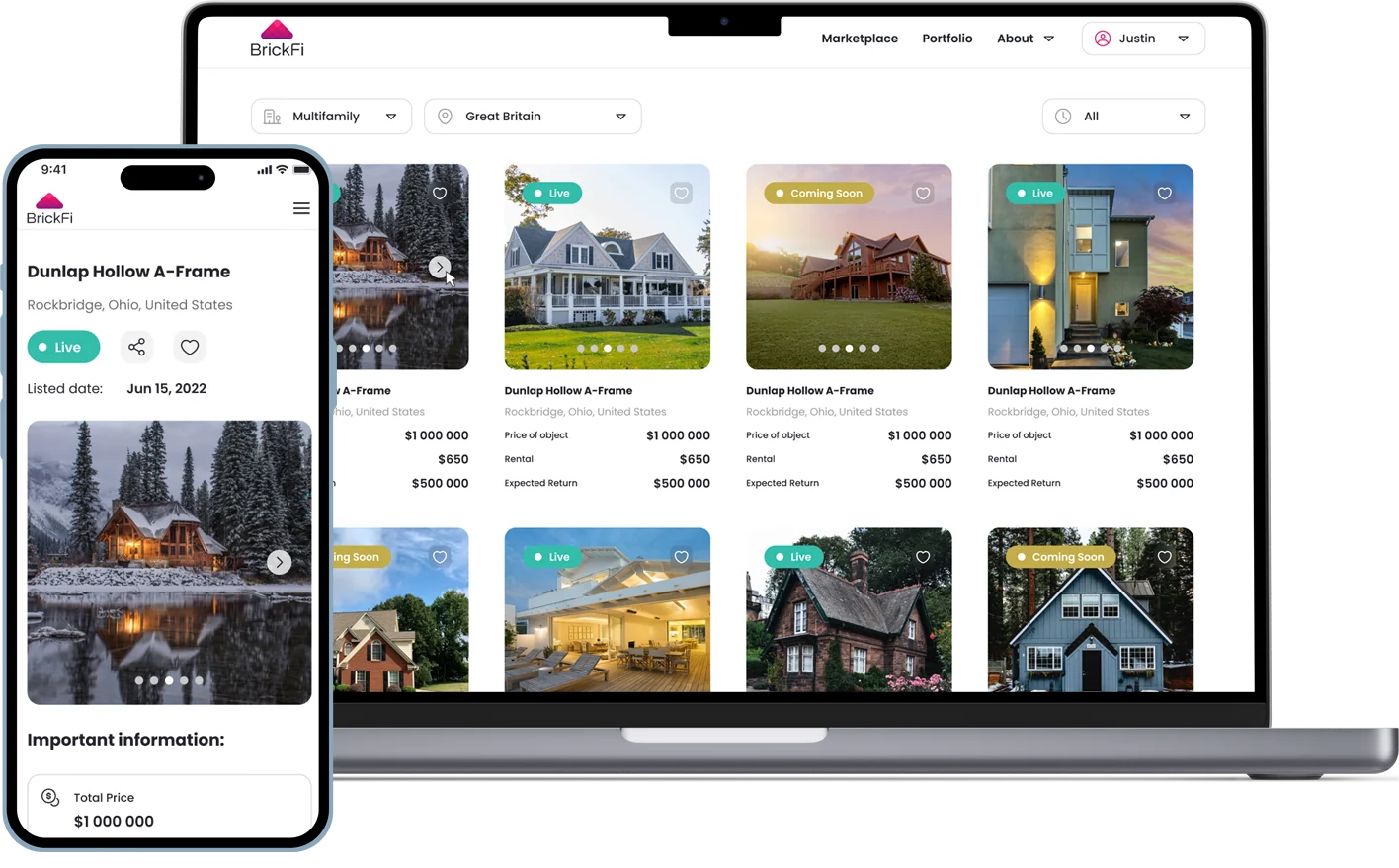
BrickFi on a MacBook and a phone: a marketplace of fractional property listings with price, rental income and expected return, and a property page on mobile
01 / 03 · Real estate investment

BrickFi: Fractional Real Estate Investment Platform

BrickFi needed a way for investors to verify their identity, fund an account, buy a fractional interest in a property, and receive distributions. We built the investor portal, admin console, and iOS and Android apps, with KYC, USD and USDC wallets, and dividend distribution.

3 monthsto deliver the platform. Investments started at $100.
Read the BrickFi case study
Client feedback

What Our Fintech Clients Say

Founders and owners of crypto exchanges on what it was like to build with a team that already knows the domain.

Clutch
4.9

Client rating on Clutch, the B2B platform where clients review their software partners.

Read reviews on Clutch
01 / 02
The Merehead team understood how a crypto exchange works. When we discussed placing spot orders from chat, they knew which details a trader needed to see before confirming: the pair, quantity, limit price, and total before fees. They also made sure withdrawals went only to approved addresses and required a second confirmation. We didn’t have to explain why those details mattered.
Owner, crypto exchangeCanada
Security and compliance

Security, Compliance, and Fintech Integrations

Three layers that decide whether a fintech product holds up on its worst day. We design all three before the first release.

Financial Integrations

Provider failures are part of the design. A payment can remain pending after a customer closes the app. A provider can send the same confirmation twice. We define which system owns each transaction state, what can safely be retried, and how operators can trace a discrepancy.

Designed inOne owner per transaction stateSafe retriesDuplicate callbacks handledTraceable discrepancies

Security and Operational Controls

We define permissions around actions that affect money and sensitive data. That includes who can request a withdrawal, who can approve it, and which actions are recorded for review. We also plan how to restore the system and verify transaction records after an interruption.

Designed inSeparate request and approval rightsRecorded actions for reviewRestore planRecord verification after interruption

Compliance Workflows

Your business and compliance teams define the requirements for your product and markets. We turn those requirements into software workflows, such as identity verification, transaction screening, and manual review queues. We agree on what evidence the system needs to retain and who can access it.

Designed inIdentity verificationTransaction screeningManual review queuesEvidence retention and access
How it works

How We Develop Fintech Software

Four stages, each ending with something your team can review before the next one starts.

1

Discovery and scope

We walk through the main customer and operator workflows, identify dependencies, and agree on what belongs in the first release.

You getA scoped delivery plan
2

Architecture and integration planning

We define how balances and transaction states are recorded, which systems need to connect, and where approvals happen.

You getAn architecture and integration plan before implementation
3

Development and testing

We build in reviewable releases and test both successful flows and exceptions. For a payment flow, that can include timeouts, duplicate callbacks, and refunds.

You getWorking software to review as the build progresses
4

Launch and handover

We agree on launch checks, monitoring, and who owns incidents.

You getDeployment and operating documentation covered by the project scope

Already have a platform? We start with the module or integration you want to change. We review its dependencies and agree on how to release it alongside the rest of your system.

Discuss your fintech project
FAQ

Fintech Software Development FAQs

Cost, timeline, providers, code ownership. If your question is not here, bring it to the first call.

Ask your question

The estimate depends on the first release, the number of integrations, and the workflows your operations team needs. A single integration has a different scope from a platform with customer apps, internal balances, and an admin console. Share your requirements and we can separate the launch scope from later work before estimating.

The timeline depends on the features you need at launch, the availability of provider sandboxes, and any external approvals or migrations. BrickFi took three months to deliver across web, admin, iOS, and Android. For your product, we estimate engineering milestones and identify provider dependencies separately.

Yes. We review the provider's API, sandbox access, and supported workflows before scoping the integration. We also check how it handles status updates, errors, retries, and reconciliation so your team knows what to expect in production.

Yes. We can start with one component, such as a payment integration or an internal admin tool. We agree on how to validate data and how to roll back the change if the new component fails during rollout.

We review the requirements with your team during discovery and map them to engineering tasks and acceptance checks. Those tasks can include approval rules, access permissions, audit logs, or identity and transaction screening.

We define code ownership, licenses for any pre-existing components, and access to repositories and deployment accounts in the project agreement. Post-launch support can cover incident investigation, integration updates, and ongoing development under an agreed scope.

Contact

Discuss Your Fintech Project

Tell us what you're building, where the project stands, and what you need help with first. On the first call, we can discuss the scope, the systems you need to connect, and any technical questions that could affect the estimate.

On the first call
  • What belongs in the first release
  • Which providers and systems you need to connect
  • Technical questions that could change the estimate

Do you want to start your own project?

Discuss your idea with our business development expert.

Describe your idea or request and our expert will contact you within a couple of hours. Or contact us directly via Telegram or WhatsApp.