×
Services
Exchange & Trading Infrastructure
DeFi & Web3 Core
NFT Ecosystem & Multi-Chain
Tokenization & Fundraising
Crypto Banking & Fintech
AI Development
Exchange & Trading Infrastructure
Create a centralized crypto exchange (spot, margin and futures trading)
Decentralized Exchange
Development of decentralized exchanges based on smart contracts
Stock Trading App
Build Secure, Compliant Stock Trading Apps for Real-World Brokerage Operations
P2P Crypto Exchange
Build a P2P crypto exchange based on a flexible escrow system
Centralized Exchange
Build Secure, High-Performance Centralized Crypto Exchanges
Crypto Trading Bot
Build Reliable Crypto Trading Bots with Real Risk Controls
DeFi & Web3 Core
Web3 Development
Build Production-Ready Web3 Products with Secure Architecture
Web3 App Development
Build Web3 Mobile and Web Apps with Embedded Wallets and Token Mechanics
DeFi Wallet Development
Scale with DeFi Wallet Development: from DEX and lending to staking systems
DeFi Lending and Borrowing Platform
Build DeFi Lending Protocols — Overcollateralized Pools, Flash Loans, and Credit Delegation
DeFi Platform Development
Build DeFi projects from DEX and lending platforms to staking solutions
DeFi Exchange Development
Build DeFi Exchanges — AMM, Order Book, Aggregator, and Hybrid Protocols
DeFi Lottery Platform
Build DeFi Lottery Platforms — Provably Fair Jackpots, No-Loss Savings, and NFT Raffle Protocols
DeFi Yield Farming
Build DeFi yield farming platforms with sustainable emission models and multi-protocol yield aggregation
NFT Ecosystem & Multi-Chain
NFT Marketplace
Build NFT marketplaces from minting and listing to auctions and launchpads
NFT Wallet Development
Build non-custodial NFT wallets with multi-chain asset support, smart contract integration
Tokenization & Fundraising
Real Estate Tokenization
Real estate tokenization for private investors or automated property tokenization marketplaces
Crypto Banking & Fintech
Build crypto banking platforms with wallets, compliance, fiat rails, and payment services
Build Secure Crypto Wallet Apps with a Production-Ready Custody Model
Crypto Payment Gateway
Create a crypto payment gateway with the installation of your nodes
AI Development
AI Development
We build production-ready AI systems that automate workflows, improve decisions, and scale
Enterprise AI Development
We build enterprise AI systems - agents, LLM integration, and predictive analytics

  Multi-Chain NFT Wallets

NFT Wallet Development Services

We build non-custodial NFT wallets with multi-chain asset support, smart contract integration, and production-grade security. From mobile-first architecture to embedded DeFi modules — end-to-end engineering.

130+ projects
Experience
since 2015
Experience
blockchain expert
image

  Services

NFT Wallet Development Services

Our NFT wallet development services cover the full technical stack — from smart contract layer to mobile UI. Each service is scoped to your specific chain, user base, and product roadmap.

01

Custom NFT Wallet App Development

We build custom NFT wallet applications for iOS and Android with non-custodial key management, multi-chain asset support, and native NFT display. Architecture is designed for long-term extensibility — not just initial launch.
02

NFT Minting & Smart Contract Integration

We develop ERC-721 and ERC-1155 smart contracts for NFT minting, with configurable royalty logic, batch operations, and admin controls. Contracts are structured to pass independent security audits.
03

Multi-Chain NFT Wallet Architecture

We architect wallets that support Ethereum, BNB Smart Chain, Solana, Polygon, and other EVM-compatible networks from a single interface. Cross-chain asset visibility is built into the data layer, not bolted on.
04

NFT Marketplace Wallet Integration

We integrate NFT marketplace functionality directly into the wallet — listings, bids, purchases, and transfer flows — without requiring users to leave the app. Supports both primary sales and secondary market mechanics.
05

NFT Portfolio & Metadata Display

We implement on-chain NFT portfolio views with real-time metadata fetching, collection grouping, rarity data, and price history. Display logic handles IPFS, Arweave, and centralized metadata sources.
06

Fiat & Crypto On-Ramp Integration

We integrate payment gateways for fiat deposits alongside native crypto flows — enabling users to fund their NFT purchases without leaving the wallet. Supports credit card, bank transfer, and instant crypto swap.
07

NFT Wallet Security & Compliance Layer
We implement KYC/AML flows, 2FA, anti-phishing controls, and secure key backup mechanisms. For platforms with SEC or regulatory exposure, compliance modules are built into the architecture from the start.

  About

What Is an NFT Wallet?

An NFT wallet is a non-custodial application that allows users to store, manage, send, and receive non-fungible tokens alongside standard crypto assets. Unlike exchange wallets where the platform holds private keys, a non-custodial NFT wallet generates and stores key material on the user's device — typically using a BIP-39 mnemonic and HD derivation paths per supported network. The wallet signs transactions locally before broadcasting, meaning the user retains full control of their assets at all times.
The technical complexity of an NFT wallet scales significantly beyond a standard crypto wallet. NFT storage requires fetching and rendering token metadata from IPFS, Arweave, or centralized APIs; displaying media assets (images, video, 3D models) tied to token URIs; and handling collection-level data structures across multiple contract standards (ERC-721, ERC-1155, SPL on Solana). A production NFT wallet must also manage gas estimation for NFT-specific operations — minting, approvals, batch transfers — which behave differently from standard ERC-20 token transfers and require custom fee logic per network.
Today's NFT wallet ecosystem extends far beyond simple token storage. The highest-value wallets integrate directly with DeFi protocols — enabling users to collateralize NFTs for loans, stake NFT positions in yield strategies, or trade fractional NFT ownership directly from the wallet interface. At Merehead, we've built platforms where NFTs represent fractional equity in real-world assets, with rental income distributed to token holders on-chain — a pattern that requires the wallet to function as both a financial instrument and a compliance-aware custody layer.
1/3

  Step-by-Step

How NFT Wallets Work

An NFT wallet manages the complete lifecycle of non-fungible token ownership — from key generation to on-chain interactions with NFT smart contracts.

Wallet Creation & Key Management
The user generates a new wallet or imports an existing one via BIP-39 mnemonic. Private keys are derived locally using HD derivation paths and stored in the device's secure enclave — never transmitted to any server.
NFT Metadata Resolution
For each NFT, the wallet fetches token URI data from the smart contract and resolves the metadata — name, image, attributes — from IPFS, Arweave, or HTTP sources. Media is cached locally to minimize latency on subsequent opens.
Smart Contract Interaction
Marketplace purchases, NFT approvals, collection mints, and DeFi interactions are executed by calling smart contract functions directly from the wallet. The wallet parses contract ABIs to display human-readable transaction summaries before the user confirms.
Multi-Chain Network Connection
The wallet connects to supported blockchain networks via RPC endpoints and indexes the user's NFT holdings across all connected chains. Asset discovery runs against contract event logs to find all NFTs associated with the wallet address.
Transaction Signing & Broadcast
When the user initiates a transfer, mint, or marketplace interaction, the wallet constructs the transaction, estimates gas, and prompts for signature confirmation. Signing happens on-device; the signed transaction is broadcast to the network without exposing key material.
Portfolio Tracking & History
The wallet maintains a live view of NFT holdings, recent transactions, floor prices (via marketplace APIs), and asset value history. All data is indexed from on-chain events and displayed without requiring the user to leave the app.
Building a production NFT wallet means operating at every layer of the stack simultaneously. At the cryptographic base, TrustWalletCore handles key derivation and signing across chains — but integrating it correctly means understanding network-specific derivation paths, signing algorithms (secp256k1 vs ed25519 for Solana), and how each chain handles transaction nonce management. Above that, the metadata layer must handle IPFS gateway failures gracefully — a common source of blank NFT thumbnails that undermines user trust. Our approach: implement fallback metadata resolution with local caching, so the wallet renders collection assets even when the primary IPFS gateway is slow or unresponsive.

  Features

Core Features of NFT Wallet Applications

Intro
Production NFT wallets require a specific feature set that distinguishes them from generic crypto wallets. These are the capabilities that define user trust, retention, and platform value.
DeFi Module Extensibility
The wallet architecture supports the addition of DeFi modules — DEX trading, NFT collateralized lending, staking, yield farming — as isolated feature sections. New modules integrate without modifying the core key management or NFT display layers.
Non-Custodial Key Storage
Private keys are generated and stored exclusively on the user's device using OS-level secure storage. The wallet never transmits key material to any backend — ensuring users retain full custody.
Multi-Chain NFT Support
The wallet aggregates NFT holdings across Ethereum, BNB Smart Chain, Solana, Polygon, and other networks in a single interface. Cross-chain portfolio view is built on indexed on-chain event data, not third-party aggregator APIs.
In-App NFT Marketplace
Listing, bidding, purchasing, and transferring NFTs are available directly within the wallet — no external browser or dApp required. Marketplace logic integrates with major protocols (OpenSea, Blur, Magic Eden) via their APIs or direct smart contract calls.
Fiat & Crypto On-Ramp
Users can fund NFT purchases with credit cards, bank transfers, or crypto swaps without leaving the wallet. Payment gateway integration supports multiple fiat currencies with instant conversion to the target chain's native token.

  Architecture

NFT Wallet Architecture We Build

Our NFT wallet architectures are layered for security, extensibility, and multi-chain scale. Each component is designed to be independently auditable and upgradeable.


01
Cryptographic Key Layer
The key layer handles wallet generation, BIP-39 mnemonic management, and HD derivation across all supported networks. We build on TrustWalletCore for cross-chain signing primitives, with secure enclave integration on both iOS (Secure Enclave) and Android (Keystore). This layer never touches the network — its only function is signing.
02
Smart Contract & NFT Logic Layer
ERC-721, ERC-1155, and network-specific NFT standards (SPL, Metaplex) are handled at this layer. We implement minting contracts, transfer approval management, royalty enforcement, and collection factory patterns. Contracts are written for audit readiness and gas efficiency — not just functional correctness.
03
Metadata & Indexing Layer
Token metadata resolution, IPFS/Arweave fetching, and on-chain event indexing live here. We implement fallback metadata resolution strategies to handle gateway failures, and build local caching to ensure NFT assets render without network round-trips on each app open.
04
Mobile Application Layer (iOS & Android)
The mobile layer presents the wallet UI — portfolio view, NFT gallery, transaction flows, and marketplace integrations. We build native iOS (Swift) and Android (Kotlin) applications in parallel, sharing blockchain logic via TrustWalletCore and common API clients.
Compliance & Security Layer. KYC verification, AML transaction monitoring, 2FA, and anti-phishing controls are implemented as a discrete layer that can be enabled or disabled per market. This allows the same wallet codebase to serve both compliance-required regulated markets and permissionless Web3 use cases.

  Cost

Cost of NFT Wallet Development

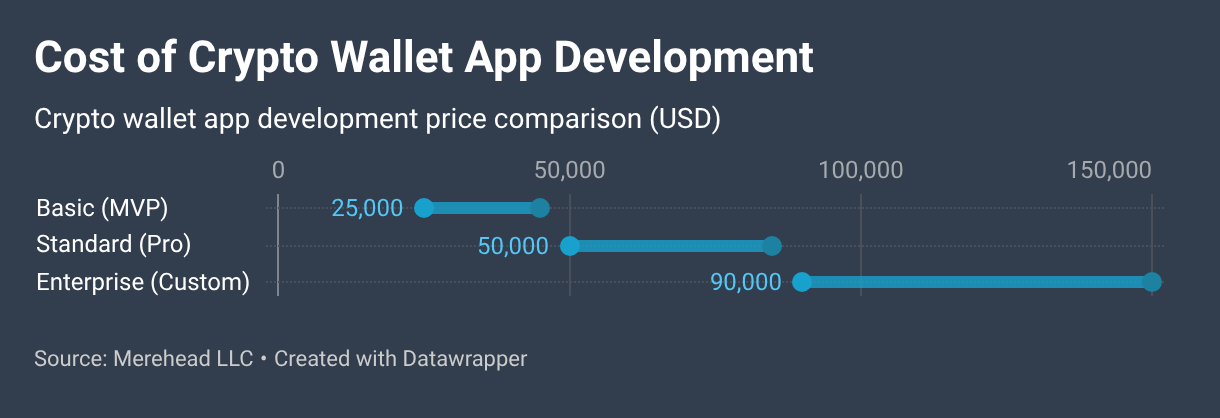
NFT wallet development cost is driven by three primary variables: the number of supported networks, the depth of marketplace integration, and whether DeFi modules (trading, lending, staking) are part of the initial scope. A single-chain non-custodial wallet with basic NFT display and transfer is the minimum viable product — it establishes the cryptographic foundation and mobile architecture. Every additional network adds indexing infrastructure, node or RPC endpoint management, and chain-specific signing logic. Every DeFi module adds a discrete smart contract integration surface that requires independent security review.
Cost Estimates
Basic NFT Wallet (Single Chain): $25,000 – $40,000
Multi-Chain NFT Wallet: $40,000 – $60,000
NFT Wallet + Marketplace: $55,000 – $80,000
NFT Wallet + DeFi Modules: $80,000 – $150,000
The most commonly underestimated cost in NFT wallet development is the compliance layer. For platforms that handle fiat payments, NFT-as-security structures (such as fractional real estate tokens), or operate in SEC-regulated markets, KYC/AML integration is not optional — it's a prerequisite for payment processor partnerships and app store approval. We've built dual-path KYC systems supporting both government identity apps and international document upload flows. The backend cost of maintaining two parallel verification state machines with different webhook payloads and status transitions is real, and should be budgeted from the start — not added post-launch.

Our standard practice: final testing always includes mainnet transactions with real assets on every supported chain. Testnet behavior differs from mainnet in fee estimation, confirmation timing, and minimum transfer thresholds. We don't sign off on a wallet release until real deposit → transfer → withdrawal cycles have passed on each integrated network.
Merehead delivers NFT wallet projects on fixed timelines with clearly defined milestones. A production non-custodial wallet for iOS and Android — including NFT portfolio display, multi-chain support, and marketplace integration — ships in 3–4 months. DeFi module additions (DEX trading, lending protocols) add 6–8 weeks per module depending on the target protocol's API maturity.

Our team has over 10 years of experience building production crypto and NFT applications. We are ready to scope your NFT wallet project and provide a detailed technical estimate.
Contact Expert  

Who Should Build an NFT Wallet

NFT marketplace founders
blockchain gaming studios
RWA tokenization platforms
DeFi protocols with NFT assets

  Reason

Why Choose Us as Your NFT Wallet Development Company

Merehead engineers have built production non-custodial wallet applications on TrustWalletCore — the same cryptographic foundation used by the most widely deployed mobile wallets. We understand the full depth of what that means: HD wallet derivation paths per network, secure enclave key storage on iOS and Android, and the integration surface between wallet infrastructure and third-party on-chain modules. When clients need to extend a working wallet with new capabilities — perpetual DEX trading, NFT portfolio management, or cross-chain bridging — we do it without disrupting the existing codebase or exposing private key material.
0+ years on the market
0+ completed projects
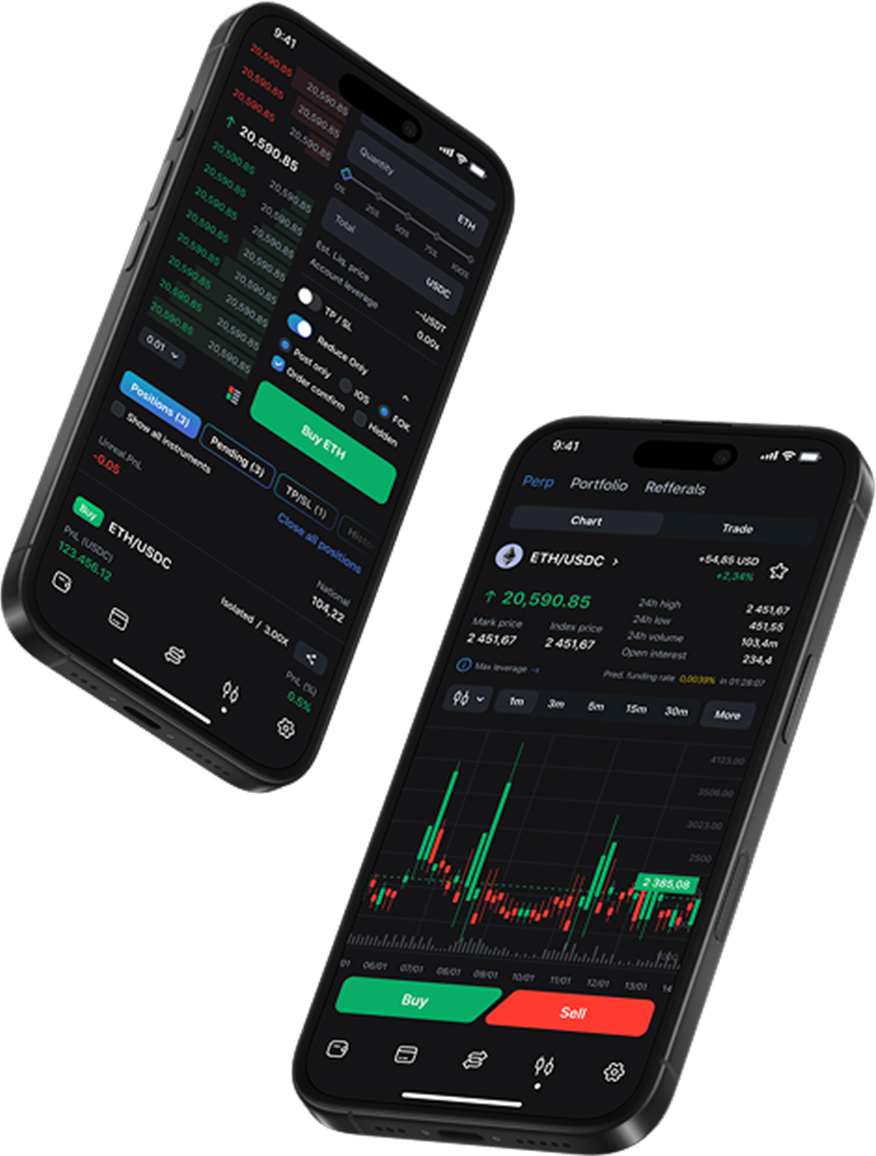
Our NFT wallet development practice is built on real project delivery, not theoretical architecture. In one recent engagement, we integrated a full perpetual futures trading module into a live non-custodial mobile wallet — working from a private fork of the client's repository, submitting pull requests reviewed and merged by their tech lead. The entire module — TradingView charts, order book display, limit/market/stop-limit orders, TP/SL, cross/isolated margin, leverage selection — shipped in three months without touching wallet security logic.

For NFT-specific workflows, we've built tokenization platforms on Binance Smart Chain handling complete property-to-token pipelines: smart contract deployment per asset, fractional ownership mechanics, fiat/crypto deposit flows, and rental income distribution to token holders — all within a single non-custodial architecture. We design for real-world audit requirements from day one, and we test with mainnet assets before any production release.
Write to an expert  
Non-Custodial Engineering Depth
We work at the cryptographic layer — HD derivation, secure enclave storage, network-specific signing. Your users' keys stay on their devices.
NFT-Native Smart Contract Design
Minting contracts, fractional ownership, royalty enforcement, and transfer logic are built for production volume, not demo environments.
Mobile-First Delivery
iOS and Android development runs in parallel on a shared codebase where possible. We ship both platforms simultaneously.
Mainnet-Tested Before Launch
We don't consider an NFT wallet ready until deposit, mint, transfer, and withdrawal flows are verified with real assets on mainnet.

Built 3+ production non-custodial wallets. TrustWalletCore integration expertise. Mobile NFT wallet delivery — iOS + Android — in 3 months.

  FAQ

Have questions in mind?

Answers to the most frequently asked questions from our clients

NFT wallet development is the engineering of non-custodial applications that store, display, and manage non-fungible tokens alongside standard crypto assets. It includes smart contract integration, mobile key management, metadata resolution, and optionally marketplace and DeFi module development.

A standard crypto wallet manages fungible tokens (ETH, USDT, BTC). An NFT wallet adds NFT-specific functionality: token metadata fetching from IPFS/Arweave, collection-level asset display, NFT transfer and approval management, and integration with NFT marketplace smart contracts. The underlying key management is the same; the application and data layers are significantly more complex.

We build NFT wallets for Ethereum (ERC-721, ERC-1155), BNB Smart Chain, Polygon, Solana (SPL, Metaplex), Avalanche, and other EVM-compatible networks. Multi-chain support is architected from the data layer — not patched in after initial launch.

A production non-custodial NFT wallet for iOS and Android ships in 3–4 months for a single-chain build. Multi-chain wallets with marketplace integration typically require 4–6 months. Adding DeFi modules (DEX trading, NFT lending) adds 6–8 weeks per module. These are mainnet-tested, app store-ready timelines — not prototype timelines.

Basic single-chain NFT wallets start from $25,000. Multi-chain wallets with marketplace integration range from $40,000–$80,000. Wallets with embedded DeFi modules (trading, lending, staking) start from $80,000. Final cost depends on chain count, feature scope, and compliance requirements.

Yes. We have direct experience integrating new feature modules — including perpetual DEX trading and NFT management — into live production wallets built on TrustWalletCore. We work from a private fork of the client's repository, submitting pull requests for their team to review and merge. The integration does not touch core key management logic.

Yes. For platforms handling fiat payments, NFT securities (fractional real estate tokens, investment NFTs), or operating in SEC-regulated markets, we implement KYC/AML layers, payment gateway compliance, and geo-fencing. We've built platforms fully compliant with SEC regulations for real-world asset tokenization.
Talk to an expert
We are ready to answer all your questions
Top expert
10 years of experience

  Security

Security in NFT Wallet Development

Non-Custodial Key Architecture
Private keys are derived and stored exclusively on the user's device using OS-level secure storage (iOS Secure Enclave, Android Keystore). No key material is transmitted to or stored on any backend infrastructure.
Smart Contract Audit Readiness
NFT minting contracts, transfer approval logic, and marketplace integration contracts are written to pass independent security audits. We follow established patterns for access control, reentrancy protection, and upgrade safety.
Phishing & Transaction Spoofing Prevention
We implement anti-phishing address verification, human-readable transaction summaries (parsed from contract ABIs), and domain binding for dApp connections. Users see what they're signing before confirming any transaction.
NFT wallets are higher-value targets than standard crypto wallets because they combine financial assets with identity-linked digital property. The attack surface includes contract approval exploits (unlimited ERC-20 approvals granted during NFT marketplace interactions), metadata phishing (malicious contract URIs that trigger wallet interactions), and private key extraction via insecure backup flows. Our security stack includes static analysis of all smart contracts pre-audit, mandatory transaction simulation before user confirmation, and secure key backup via encrypted cloud or hardware wallet pairing — not plaintext mnemonic export.

  Multi-Chain

Multi-Chain NFT Wallet Architecture

Chain-Agnostic Key Derivation
HD wallet derivation paths are configured per network (BIP-44 coin types) so a single mnemonic controls addresses across Ethereum, Solana, BNB Chain, and others. TrustWalletCore handles the cryptographic primitives per chain.
Unified NFT Indexing Layer
We build a chain-agnostic indexing layer that ingests NFT transfer events across all supported networks and presents a unified portfolio view. No dependency on third-party NFT aggregator APIs for core asset display.
RPC Node Management
Each supported chain requires reliable RPC access for transaction broadcast and contract queries. We configure primary and fallback RPC endpoints per network, with health monitoring and automatic failover.
Why is this important?
Multi-chain is where most NFT wallet projects underestimate engineering complexity. Each chain has its own NFT standard (ERC-721 on EVM chains, SPL/Metaplex on Solana), its own metadata conventions, its own gas model, and its own transaction finality characteristics. Bolt-on multi-chain support after a single-chain launch is expensive and architecturally fragile. We design the indexing, metadata, and signing layers for multi-chain from the first sprint — even if only one chain ships at launch — so that adding Solana or Polygon later is a configuration task, not a refactor.

  DeFi Modules

DeFi Module Integration in NFT Wallets

The most successful NFT wallets in 2025–2026 are not storage apps — they are financial platforms where the NFT is the user's primary identity and asset type. We've built platforms where NFTs represent fractional equity in rental properties, with on-chain rental income distributed monthly to token holders. The wallet in that context must handle income claim transactions, fiat withdrawal flows, and investor-grade reporting alongside standard NFT display. Designing the DeFi module layer as isolated, independently auditable components — rather than deeply coupling financial logic with wallet display code — is what makes this extensibility maintainable at production scale.
Write to an expert  
In-Wallet DEX Trading
Swap and perpetual futures trading modules can be embedded directly in the wallet as isolated feature sections. Users access DeFi functionality without leaving the app or connecting to an external dApp.
NFT Collateralized Lending
We integrate NFT lending protocols that allow users to use their NFT holdings as collateral for crypto loans. Loan state, collateral health, and liquidation risk are displayed in the wallet portfolio view.
Fractional NFT & RWA Support
For platforms issuing fractional NFTs representing real-world assets (real estate, commodities), we build the full ownership mechanics: ERC-1155 issuance, income distribution logic, and secondary market trading — all within the wallet.
Do you have a project idea?
Send
Yuri Musienko
Business Development Manager
Yuri Musienko specializes in the development and optimization of crypto exchanges, binary options platforms, P2P solutions, crypto payment gateways, and asset tokenization systems. Since 2018, he has been consulting companies on strategic planning, entering international markets, and scaling technology businesses. More details