
Crypto Exchange Development Company

Crypto Exchanges With Spot, Futures, P2P And Instant Conversion

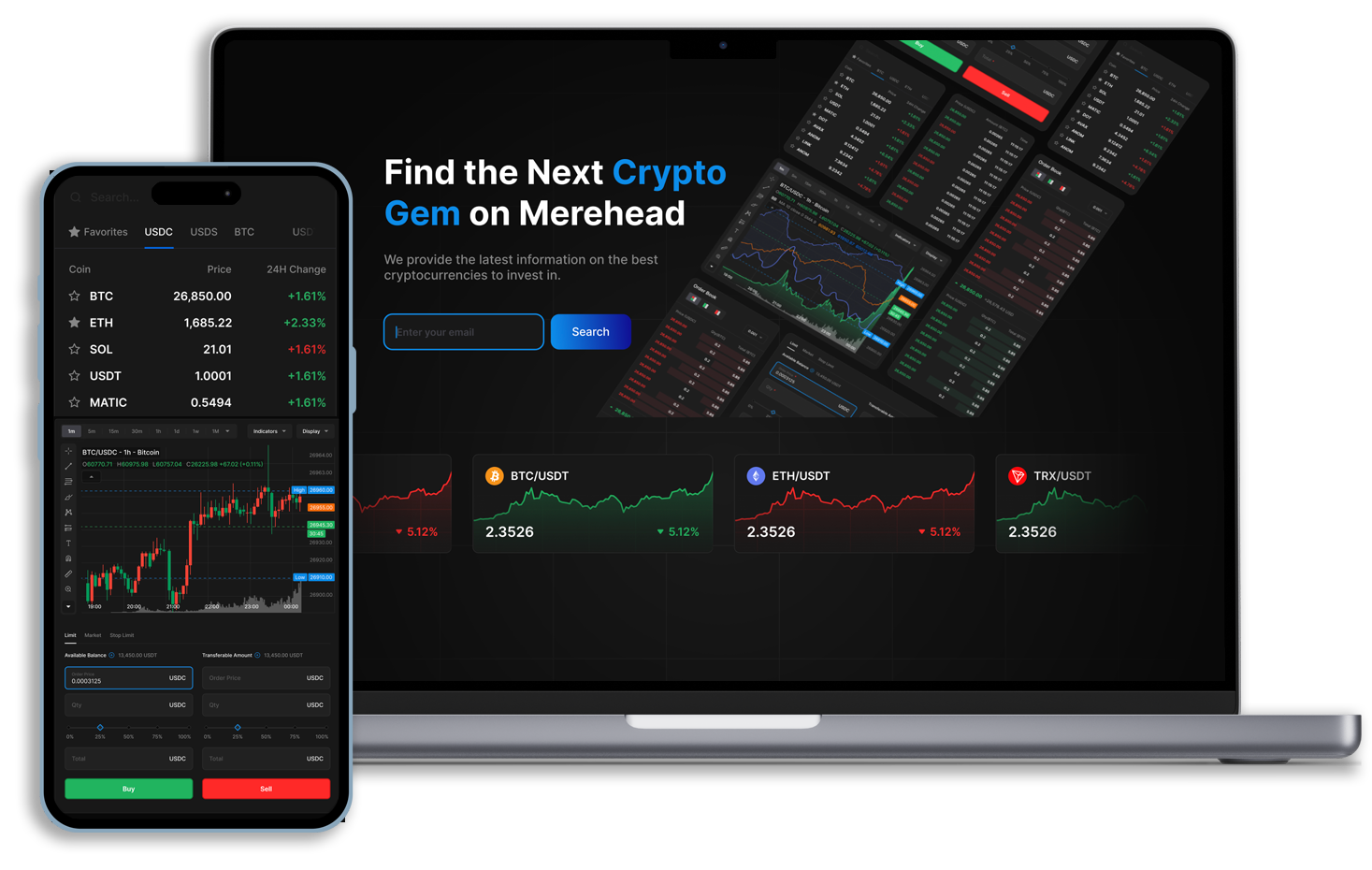
Build a spot or futures exchange, launch a P2P marketplace, or add a trading product to your existing platform. Merehead develops the trading interface, order and balance logic, wallet integrations, and back-office tools your team needs to operate the exchange.

Before development starts, we scope the first release by module so you can see what is included, which providers you need, and what can wait until a later release.

  • Custom or white-label
  • Module-level estimates
  • Source code terms agreed upfront
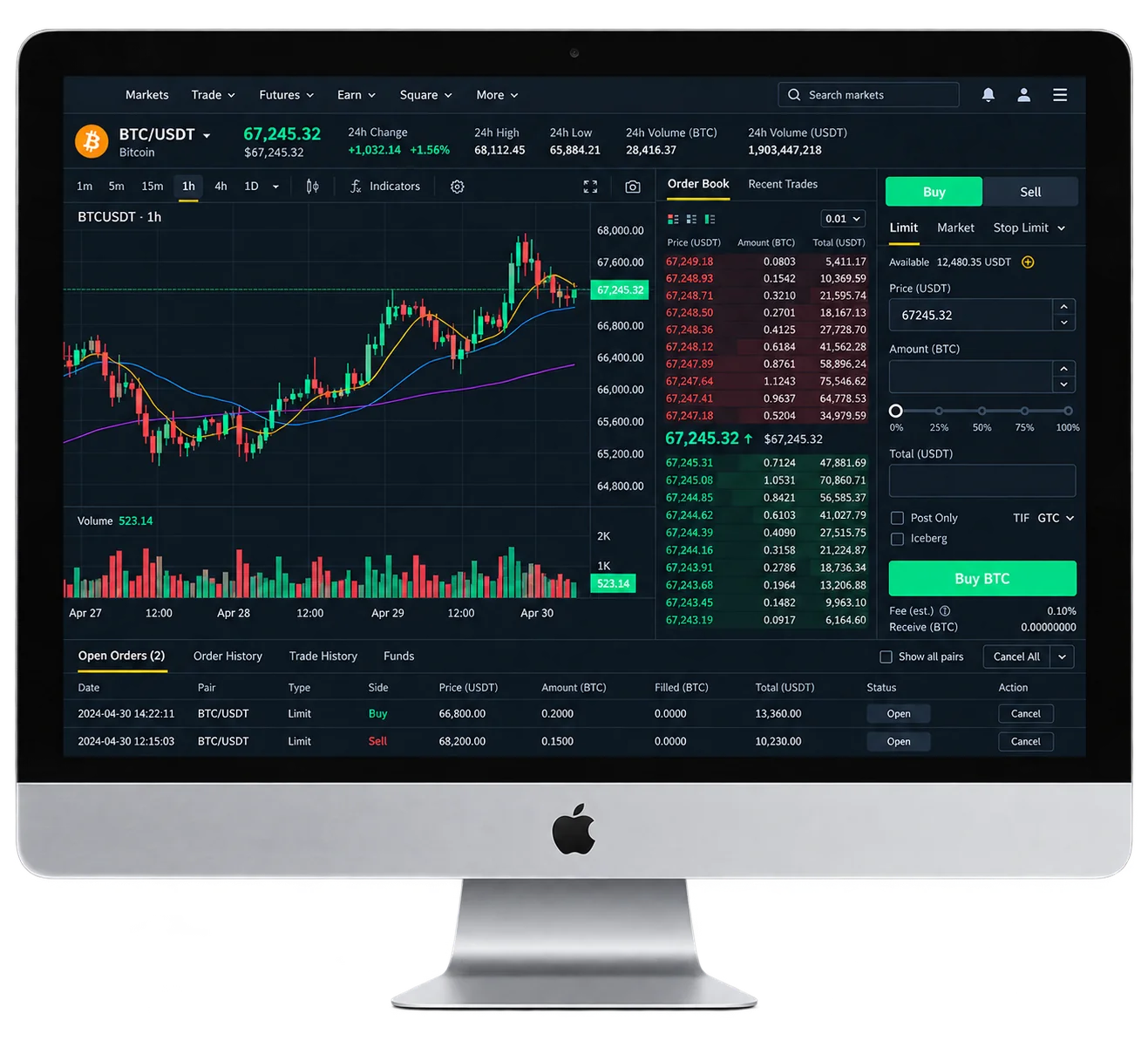
Desktop computer showing a crypto trading terminal
Case studies

Crypto Trading Platforms We've Built

01 / 03

Centralized Exchange with Spot, Futures, and Token Governance

We built a centralized exchange with spot and futures trading, fiat payment gateways, instant swaps, and a governance token. The platform connected to Binance for external liquidity and ran its own blockchain nodes.

An 11-person team delivered the platform in five months. After migrating the infrastructure from AWS to Hetzner, monthly blockchain node hosting costs fell from $4,000 to $700.

Read the centralized exchange case study
02 / 03

OKX Liquidity Integration for a Centralized Exchange

We connected the exchange to OKX to mirror order book depth and execute trades externally. The integration included controls for collateral, borrowed positions, and settlement between the two venues.

The liquidity bridge went live on schedule in the second milestone. The broader engagement was split into nine milestones, each with its own scope and payment.

Read the liquidity mirroring case study
03 / 03

Futures Trading Module for an Existing Platform

We added futures trading to a binary options platform as a separate module. Traders could move funds between the two products, while futures positions used isolated margin.

The work covered position management, profit and loss calculations, market data feeds, and TradingView charts integrated into the existing trading interface.

Read the futures platform case study
Services

Our Crypto Exchange Development Services

1
Plan

Exchange Discovery and Architecture

We define the trading model, custody approach, liquidity sources, supported assets, and operational workflows before development begins.

DeliverablesYou receive a scope organized by modules, an architecture plan, integration dependencies, and a delivery roadmap. This gives your team a basis for budgeting and deciding what belongs in the first release.

What a First Spot Exchange Release Can Include

A first release can cover user accounts and identity verification, a limited set of spot markets, order execution and balance accounting, crypto deposits and withdrawals, an admin panel, and one liquidity integration.

If you also need futures, P2P trading, mobile apps, or additional fiat payment methods, we scope those separately. This gives you a budget for the launch and a clear list of what can follow.

2
Build

Custom Exchange Development

We build exchange software around your trading and operational requirements. The scope can include trading interfaces, order management, balance accounting, wallets, administration, and public or private APIs.

Custom development suits projects that need specific execution logic, workflows, integrations, or control over future product development.

White-Label Exchange Customization

We configure an existing exchange platform and adapt its branding, available modules, integrations, and administration settings.

Before committing to this approach, we compare your requirements with the base product. You can see what is already available, what requires additional development, and where the platform has limitations.

3
Connect

Wallet and Blockchain Integrations

We integrate blockchain networks and wallet infrastructure for deposits, withdrawals, and asset management.

The work covers transaction detection, confirmation handling, network fees, withdrawal processing, and operational monitoring. We can work with self-hosted nodes or third-party infrastructure, depending on your custody model and resources.

Liquidity and Fiat Integrations

We connect exchanges to external liquidity sources and payment providers. The scope depends on how trades execute, where funds are held, and how settlement takes place.

For fiat operations, we define deposit statuses, payment references, reconciliation workflows, and administrator actions. Provider availability and approval remain dependencies in the launch plan.

4
Grow

Exchange Modernization and Support

We extend existing exchanges with new trading modules, integrations, and operational tools.

The engagement can include:

  • Architecture review
  • Performance improvements
  • Infrastructure changes
  • Staged migration

We assess dependencies before modifying live trading and financial workflows.

Already running an exchange? Start at Grow.

Tell us where you are
Exchange types

Types of Crypto Exchanges We Develop

Each model settles differently, so we scope its orders, balances, and exceptions on their own terms.

01

Centralized Crypto Exchanges

Build a platform with user accounts, order management, trading interfaces, wallets, and administrative controls.

We define how orders execute, how balances are reserved and settled, and how your operations team handles deposits, withdrawals, and exceptions.

Explore CEX development
02

Decentralized Exchanges

We develop and integrate decentralized trading functionality based on the execution model, supported networks, and liquidity sources your product needs.

Our experience includes integrating Hyperliquid-based perpetual trading into a non-custodial mobile wallet. The module brought charts, order placement, position management, and margin controls into the existing application.

Explore DeFi exchange development
03

P2P Crypto Exchanges

Create a marketplace where users publish offers and trade crypto through agreed payment methods.

The scope can include asset reservation, payment confirmation, disputes, merchant tools, and moderation. We define these workflows separately from spot trading because P2P settlement depends on actions taken by both parties.

Explore P2P exchange development
04

OTC Trading Platforms

Build workflows for quoted trades, dealer approvals, and settlement.

We define how clients request prices, how quotes expire, who can approve transactions, and which records your operations team needs to resolve settlement questions.

05

Futures and Derivatives Platforms

Add trading products with their own position, margin, and risk logic.

We scope leverage, collateral, profit and loss calculations, liquidation rules, and funding mechanisms according to the product. These components receive separate development and testing plans.

Combining several trading products?

For platforms combining several trading products, we define which balances each product can use and how transfers work between them.

Discuss Your Exchange Project
Development approach

Custom or White-Label Exchange Development

ApproachWhen it fitsWhat to check before committing
Custom developmentYour product needs specific execution rules, balance logic, operational workflows, or integrations.Which modules must be built, what the first release includes, and what your team receives at handover.
White-label customizationThe base platform already supports most of your launch requirements.Which features are available, what requires custom work, which providers are supported, and what the agreement covers for source code and hosting.
Features

Core Features of Your Crypto Exchange

The trading interface your users see, and the accounts, liquidity, administration, and back-office tools behind it.

Discuss Your Exchange Project

Trading and Market Data

Provide trading pairs, charts, order entry, open orders, and trade history in one interface.

Market, limit, and stop-limit orders are scoped according to the execution model. We also define market data updates, order status changes, fees, and API access.

MarketLimitStop-limitPublic and private API

Accounts and Asset Management

Support registration, authentication, verification, balances, deposits, withdrawals, and transaction history.

For platforms combining several trading products, we define which balances each product can use and how transfers work between them. This keeps spot, P2P, and derivatives activity understandable for users and administrators.

Liquidity Connectivity

Connect the trading interface to the execution and liquidity infrastructure behind it.

We account for provider limits, available balances, settlement obligations, and integration failures. External liquidity requires operational monitoring as well as an API connection.

Exchange Administration

Give your team tools to manage users, assets, trading pairs, fees, verification reviews, and withdrawal requests.

Roles and permissions follow operational responsibilities. Logs record relevant actions so support and finance teams can investigate transactions and account changes.

Back-Office Integrations

Connect trading activity with customer management, communications, reporting, and internal systems.

In a trading platform project, we built a CRM with real-time financial and user activity data, department-based permissions, telephony, and administrator logs. This experience informs how we scope the tools an exchange needs behind its trading interface.

Security

Security and Reliability

Controls around funds, clear transaction states, and recovery plans that are tested for your project, not assumed.

Wallet and Withdrawal Controls

We define access to wallet infrastructure, withdrawal permissions, approval rules, and transaction limits.

The implementation follows the custody model and the responsibilities of your operations team. Sensitive actions need traceable records and clear handling when a transaction cannot proceed.

Balance Accounting and Transaction States

We map how funds move through deposits, reservations, trades, fees, withdrawals, and refunds.

Available, reserved, pending, and restricted funds need distinct treatment. Transaction records should explain what changed, when it changed, and which user, administrator, or system action caused it.

Performance and Failure Handling

We agree on load scenarios and acceptance criteria before final testing.

Testing covers normal operation, increased demand, and recovery after disruption. Particular attention goes to order processing, wallet jobs, database connections, and external service failures.

Monitoring and Recovery

We configure monitoring, alerts, backups, and recovery procedures around the agreed infrastructure.

Recovery objectives depend on the architecture and support scope. They are defined and tested for the project rather than assumed from a hosting plan.
Compliance

Compliance Tools for Exchange Operations

We implement technical controls based on requirements agreed with your compliance team and legal advisers.

Identity Verification

Connect KYC or KYB providers and manage verification statuses, resubmissions, and administrator reviews.

We account for incomplete sessions, missing callbacks, and differences between development and production environments.

Transaction Monitoring

Integrate transaction risk checks and route cases through the appropriate review workflow.

Our work has included configurable provider profiles, risk thresholds, review queues, provider-level results, and JSON exports. Rejected transactions could require a recorded reason, giving administrators a traceable decision history.

Provider Outage Handling

A provider timeout should have its own system state.

In one exchange project, we distinguished unavailable AML checks from failed verification by introducing an "AML on hold" status. This kept an infrastructure issue separate from a decision about the user.

Records and Access Controls

Define who can review cases, approve actions, access personal information, and export records.

The exact controls depend on your operating model and applicable requirements.

Technology

Technology Stack and Integrations

We select technologies according to the trading model, existing systems, and maintenance requirements.

We use orchestration where the operational requirements justify it. The project scope identifies which services are included and which require separate commercial agreements.

Backend
Interfaces & On-chain
Data
Deployment
Integrations
  • Blockchain nodes
  • Custody
  • KYC and KYT
  • Liquidity
  • Market data
  • Payments
  • Charting
Process

Our Crypto Exchange Development Process

Working modules in agreed stages, with progress you can see at every step.

1

Discovery and Scope

The outcome is a module-level scope with priorities, assumptions, dependencies, and acceptance criteria.

2

Architecture and Interface Design

We map user journeys, financial flows, service boundaries, and integrations.

Design covers both the trader experience and the tools administrators need to operate the platform.

3

Development and Integration

We deliver working modules in agreed stages and demonstrate progress throughout development.

Changes are assessed against their effect on cost, delivery, and existing functionality.

4

Testing and Release Preparation

We test the complete journey from registration and verification to deposit, trading, and withdrawal.

Our exchange testing practice includes small-value mainnet transactions to check network confirmations, fees, and withdrawal behavior. Fixes are followed by regression testing across affected workflows.

5

Deployment and Handover

We deploy the agreed release, configure monitoring, and provide the documentation and access included in the contract.

Infrastructure, provider accounts, and production credentials are checked before the release window.

6

Support and Further Development

After launch, we handle support and improvements under the agreed arrangement.

New requirements become a separate scope with priorities and estimates, so your team can plan the next release.

Cost and timeline

Crypto Exchange Development Cost and Timeline

Project scopeIndicative development budgetWhat we scope
Spot exchange first release$30,000–$50,000Spot markets, order and balance logic, wallet integrations, and admin tools. The number of assets, providers, and payment methods affects the estimate.
Futures exchange$60,000–$150,000Position and margin logic, liquidation rules, risk controls, and the trading interface. The estimate depends on the execution model and whether the product connects to an existing exchange.

For a delivery reference, our centralized exchange with spot, futures, and token governance took five months with an 11-person team. We estimate your timeline after reviewing the launch scope, existing software, and provider dependencies.

We estimate hosting, provider fees, custody, and ongoing support separately from development. Liquidity capital, licensing, and legal work should have their own budget.

Team

The Team Behind Your Exchange

Your project team is assembled around the agreed scope.

Project managerBusiness analystArchitectBackend developersFrontend developersBlockchain engineersQA engineersDevOps

A defined point of contact

You have a defined point of contact, access to progress updates, and scheduled demonstrations.

Documented decisions

Technical decisions and changes are documented so your team can understand what is being built and why.

Terms agreed before development

The agreement sets out source code access, intellectual property terms, infrastructure responsibilities, documentation, and support. We establish these conditions before development begins.

Client review

What Our Client Says

“One of Merehead's key strengths is their ability to handle complex and non-standard tasks. Their proactive approach, combined with strong brainstorming and problem-solving capabilities in product development, was instrumental in helping us bring several of our initial ideas to life and successfully launch new initiatives.”

Crypto exchange clientMore than three years of partnership

“Their pricing has been reasonable and generally competitive. As with most development environments operating under difficult external conditions, deadlines were not always fully met. However, it is important to note that during periods of force majeure they could have contractually paused operations altogether, yet they chose to continue working. In this context, occasional schedule deviations were understandable.”

“In conclusion, Merehead is a highly responsible and dependable company. They deliver on their commitments and approach challenges with professionalism and persistence.”

FAQ

Crypto Exchange Development FAQs

Cost, timelines, ownership, and how we work with your providers.

Yes. We first review the platform's architecture, balance model, APIs, and trading workflows. The new module is then scoped with its integration points, data changes, and testing requirements.

The implementation depends on the provider and execution model. We define how orders are routed, how balances and settlement are handled, and what happens when the provider becomes unavailable. Commercial access and provider restrictions are checked during planning.

We can assess their APIs and integration requirements during discovery. We check supported workflows, callbacks, rate limits, production access, and exception handling before including the integration in the delivery plan.

Ownership, licensing, repository access, and infrastructure control are specified in the agreement. White-label and custom projects may have different terms. We clarify these before work starts.

The scope defines functional, integration, regression, and load testing, along with any agreed security assessments. For blockchain funding flows, testing can include controlled mainnet deposits and withdrawals.

Support can cover incident investigation, bug fixes, infrastructure monitoring, updates, and further development. Availability, response targets, and responsibilities are defined in the support agreement.

Tell us which trading products you need, your target markets, supported assets, custody preferences, and intended launch date. If you already have a platform, include its stack and the changes you want to make. We will identify the remaining questions before preparing the scope.

Contact

Discuss Your Crypto Exchange Project

Tell us whether you are launching a new exchange or improving an existing platform. Share the trading products, integrations, and timeline you have in mind.

What happens next
  • We review the requirements
  • We discuss architecture options and dependencies
  • We define the next step toward a scoped estimate

Do you want to start your own project?

Discuss your idea with our business development expert.

Describe your idea or request and our expert will contact you within a couple of hours. Or contact us directly via Telegram or WhatsApp.