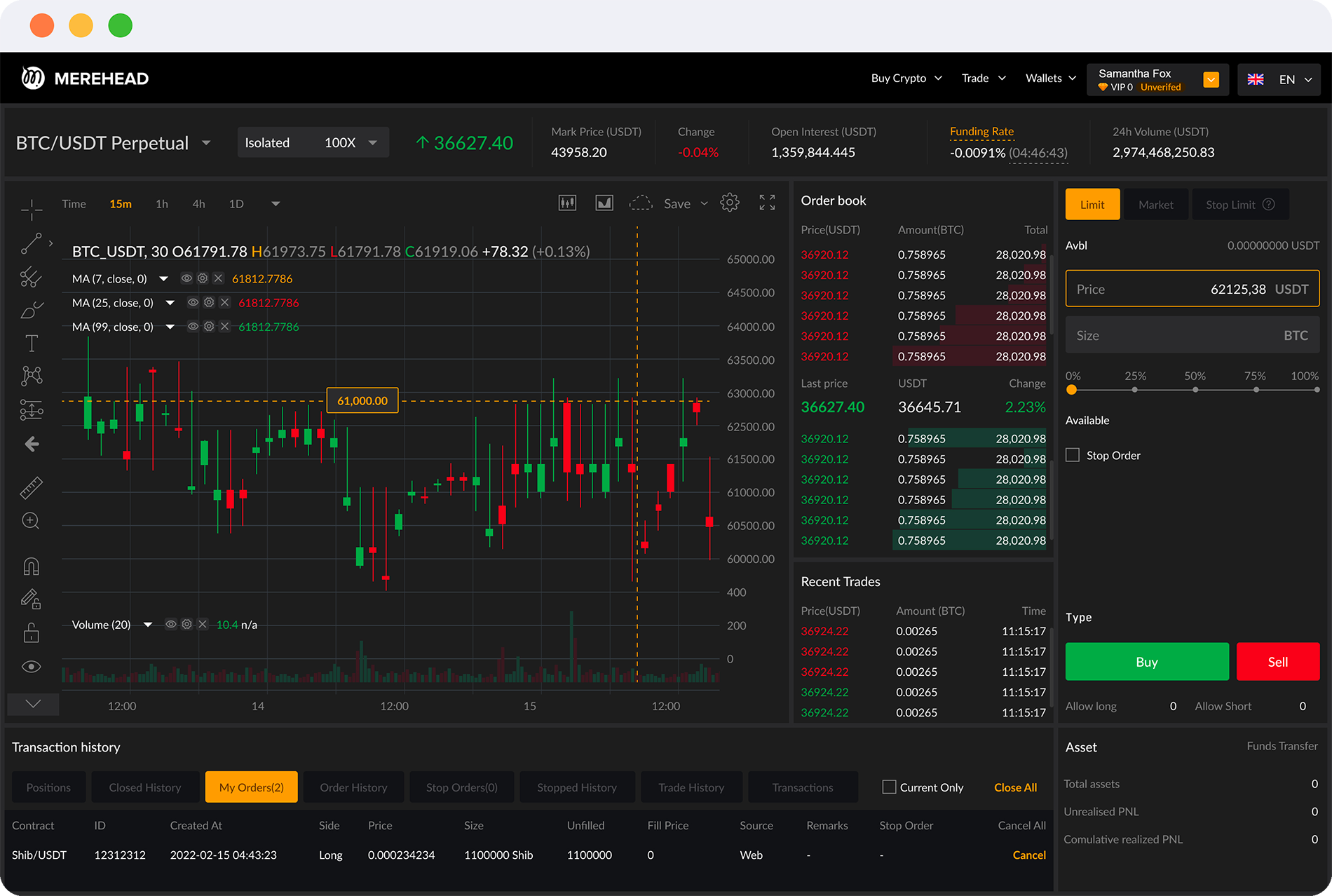
Open-Source Crypto Exchange Software
Ready-Made Open Source Cryptocurrency Exchange Software
A trusted cryptocurrency exchange solution built for top security and full customization
Access to Demo
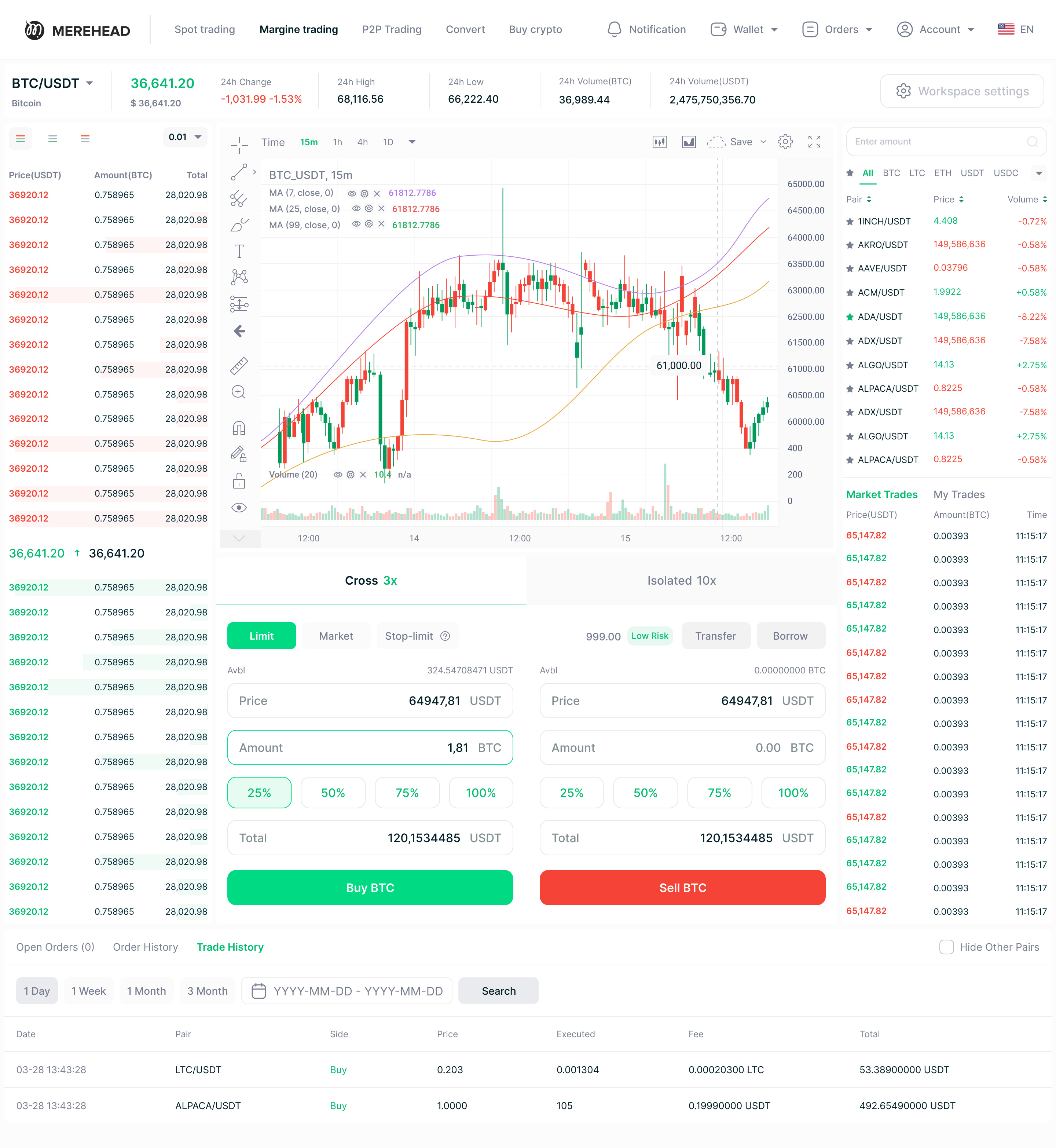
The market for open source cryptocurrency exchange solutions has matured significantly by 2026. A handful of well-maintained projects - Peatio, OpenDAX, HollaEx Kit, OPEX - have each processed billions in trading volume in production environments. Alongside these, development companies like Merehead build and deliver fully custom open source exchange software tailored to specific business requirements: CEX, DEX, P2P, or hybrid models, with complete source code delivered to the client.
The key distinction that matters before you choose a path: are you looking for a self-hosted crypto exchange you deploy yourself from a GitHub repository, or do you need a team to build and hand off a production-ready open-source platform built specifically for your business? Both are valid - but they require different planning, budgets, and teams.
This guide covers both: an honest comparison of the leading open source exchange platforms available today, and what to expect when you commission a custom open-source build.
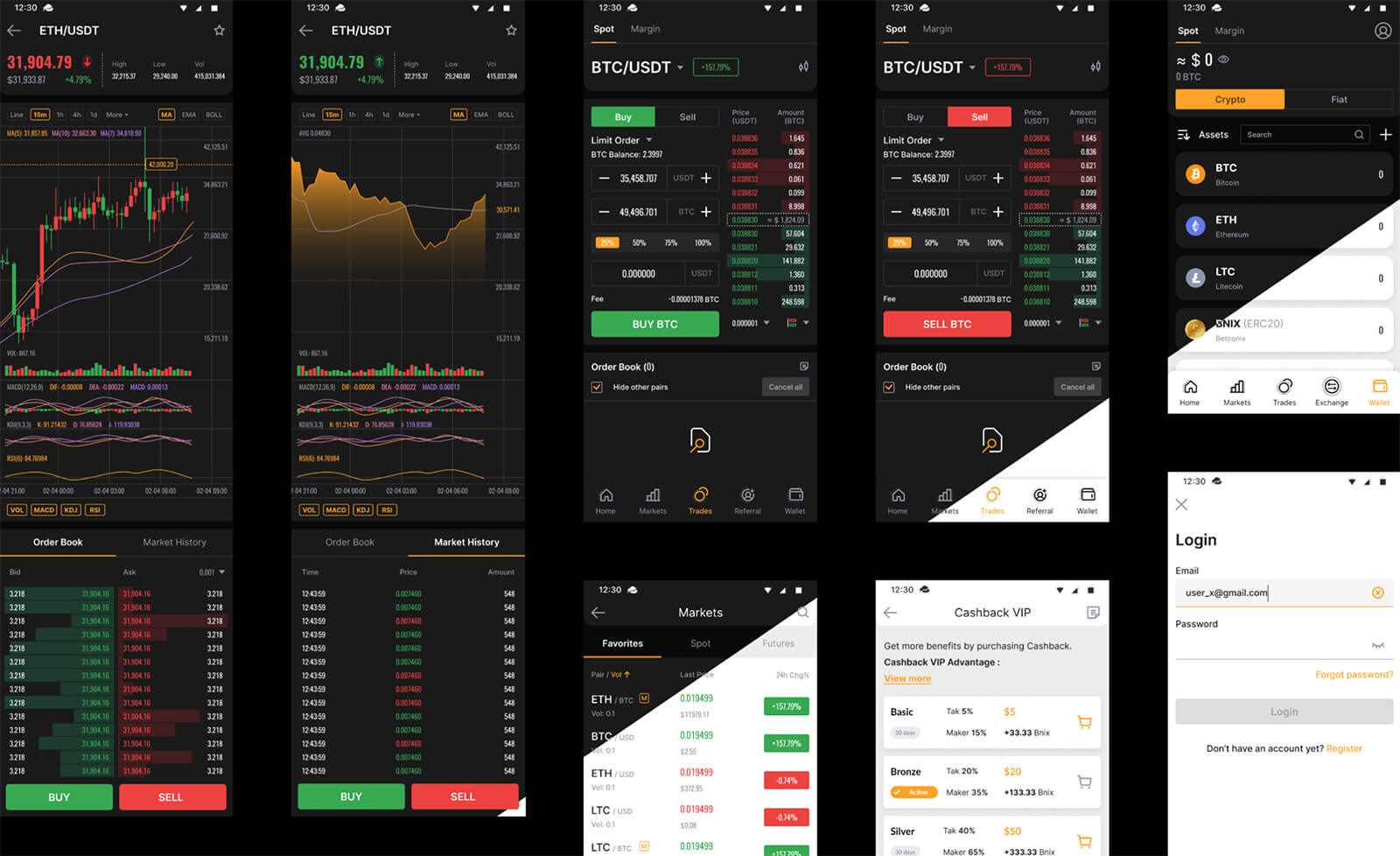
These platforms also provide extensive customization options, allowing businesses to tailor their exchange platform to unique requirements, branding, and user preferences. Another key advantage is the support of an active community of developers who continuously contribute to improving the platform’s security, functionality, and features.
With open source crypto exchange software, businesses gain full control over their own exchange, can efficiently manage digital assets, and deliver a secure, robust trading experience to their users. This collaborative approach not only enhances security but also accelerates the launch and ongoing development of innovative trading solutions.
The most important benefit that's often understated: source code ownership. When you build on proprietary exchange software, the vendor controls what you can and cannot change — and if they raise prices, change terms, or shut down, you have no fallback. With open source crypto exchange software, the code is yours. You can fork it, audit every line, deploy it anywhere, and modify it without restriction. This is particularly important in regulated markets where you may need to demonstrate full technical control of your platform to regulators.
The second underrated advantage is community-driven development. Active open source projects like Peatio and OpenDAX have hundreds of contributors who identify vulnerabilities, propose features, and maintain integrations with new blockchains. A bug found and fixed by the community is a bug you didn't have to pay a vendor to fix. For a self-hosted exchange with a technical team, this community layer is a genuine competitive asset — not just a marketing talking point.
The tech stack reflects proven production choices: PHP/Laravel or Node.js for backend, React for frontend, Solidity for smart contracts, npm ecosystem, VPS/cloud deployment via GitLab CI/CD. On completion, the client receives full source code with no ongoing licensing fees, no vendor lock-in, and no dependencies on Merehead's infrastructure.
Open Source Crypto Exchange Software — Comparison
| Platform | License | Tech Stack | Self-hosted | Best for |
| Peatio | MIT | Ruby, PostgreSQL, Redis | Full | Ruby teams, CEX foundation |
| OpenDAX | MIT / Commercial | Ruby, Go, React, K8s | Full | Production CEX/DEX, startup |
| HollaEx Kit | MIT | Node.js, React | Cloud option | Fast MVP, white label |
| OPEX | MIT | Kotlin, Docker, K8s | Full | Enterprise architecture |
| Merehead Custom | Full ownership | PHP, React, Solidity, npm | Full | Unique requirements, any model |
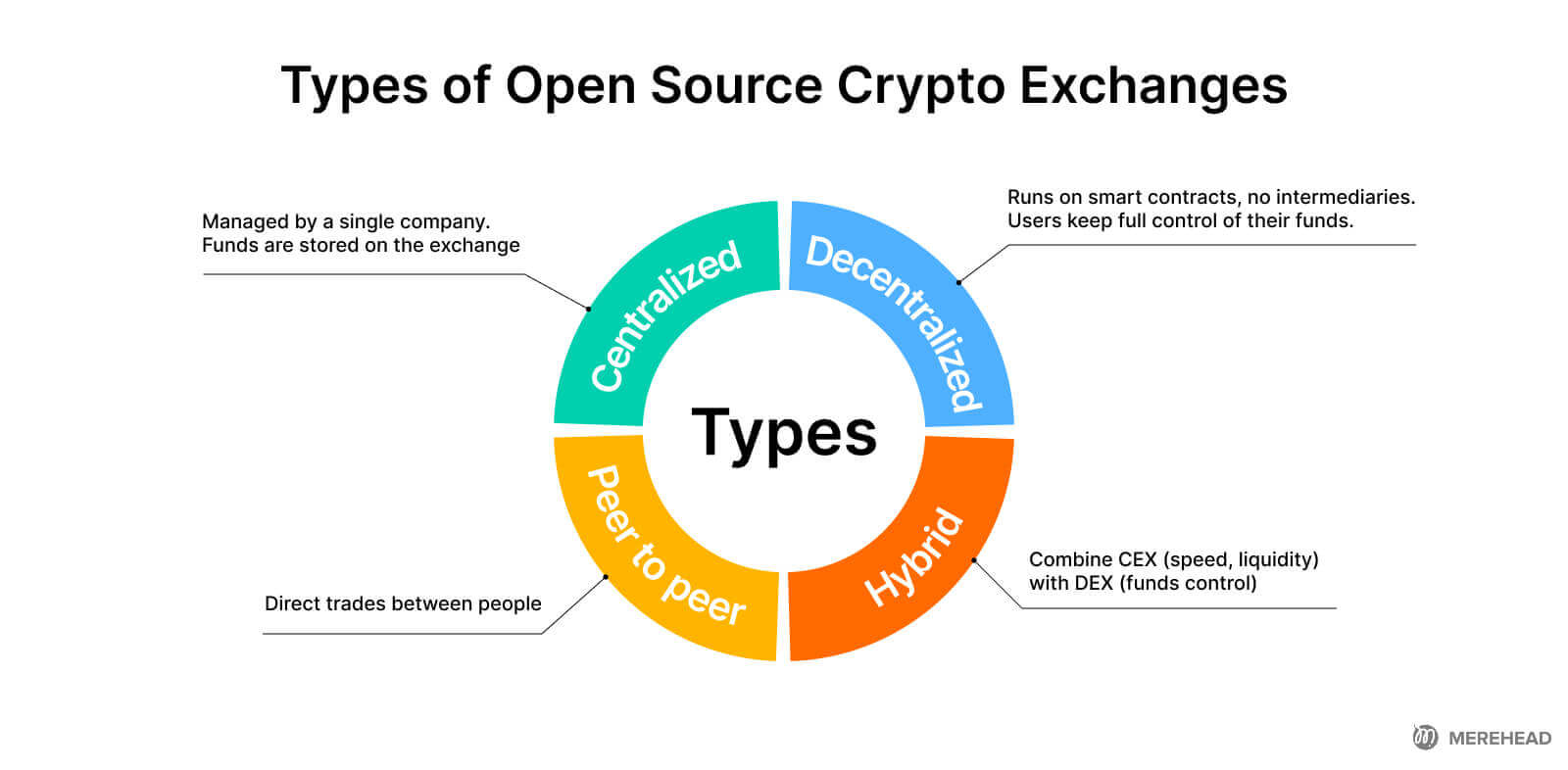
Each model is designed to meet the needs of different customers, such as those who prioritize speed, control, or decentralization. Each works differently and comes with its own pros, limitations, and technical setup. Below, we break them down in plain language so you can decide which one makes the most sense for your project.
However, there's a trade-off: all user funds are stored on the platform’s internal wallets. This centralization makes them attractive targets for hackers, which is why robust security is critical if you’re building a CEX.
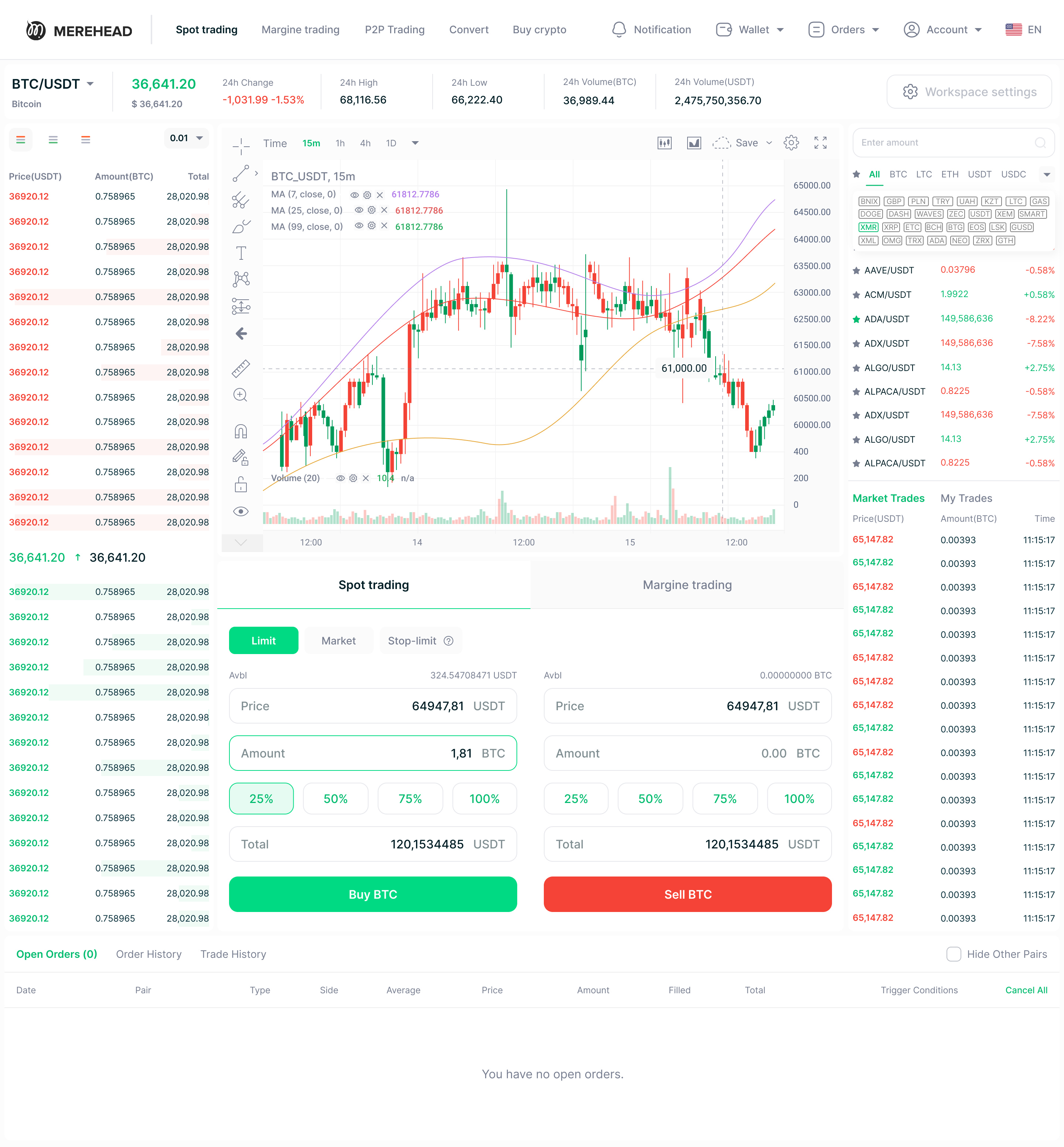
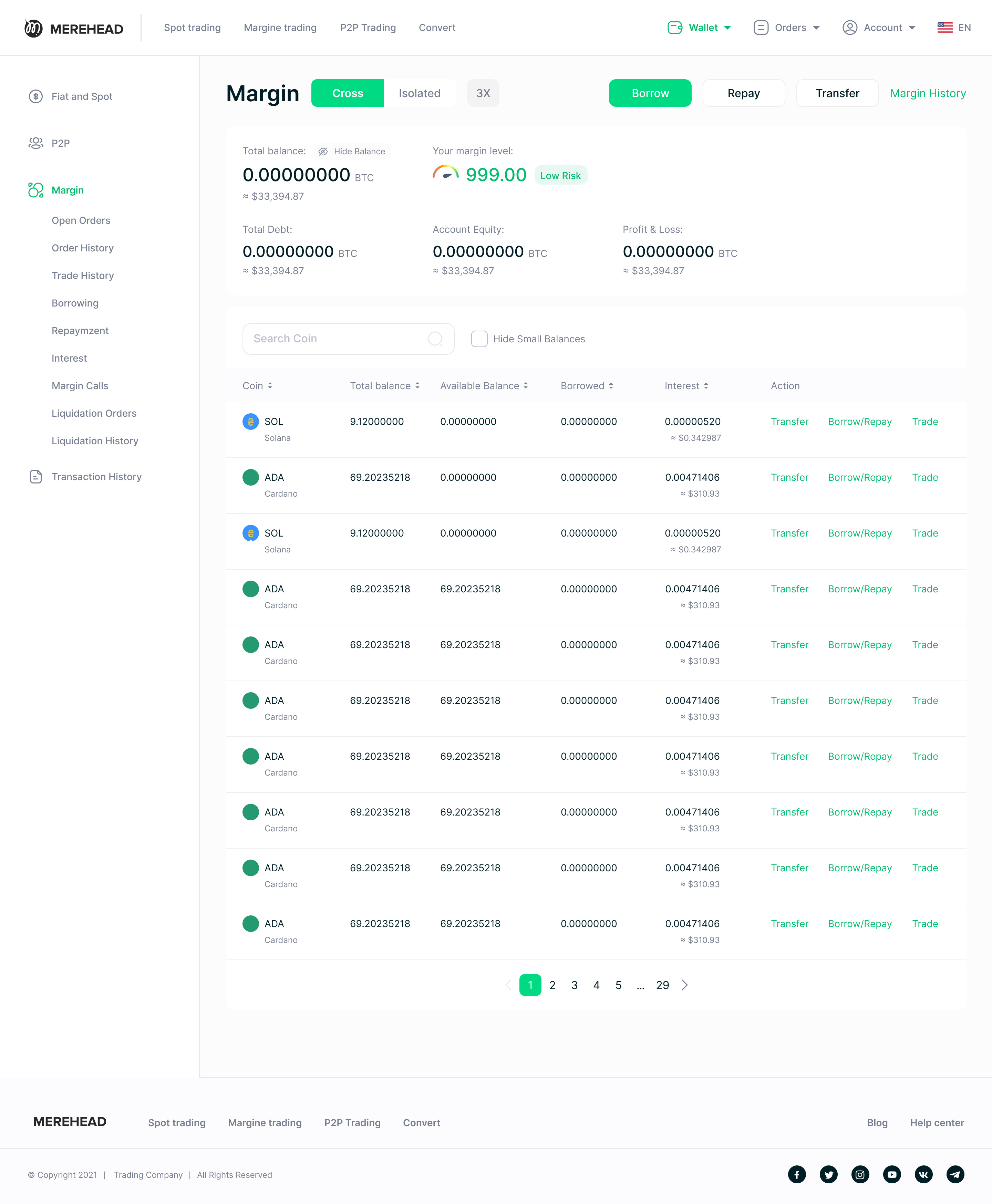
Most open source exchange scripts support spot trading, where users buy and sell crypto directly. More advanced platforms also offer margin trading (borrowed funds with leverage) and derivatives like futures or options. Keep in mind that margin and derivatives require complex backend logic - not all open-source solutions are ready for that out of the box.
These platforms are often built on open source protocols like Uniswap, meaning their open source code is available for anyone to inspect, verify, and contribute to. This openness builds trust, but it also means developers need to be extra careful. If there’s a flaw in the smart contract, it’s visible - and exploitable.
That’s why building a decentralized exchange isn’t just about writing code. You need to make sure it scales, can be updated easily, and has gone through thorough security audits. One overlooked bug can cost users real money.
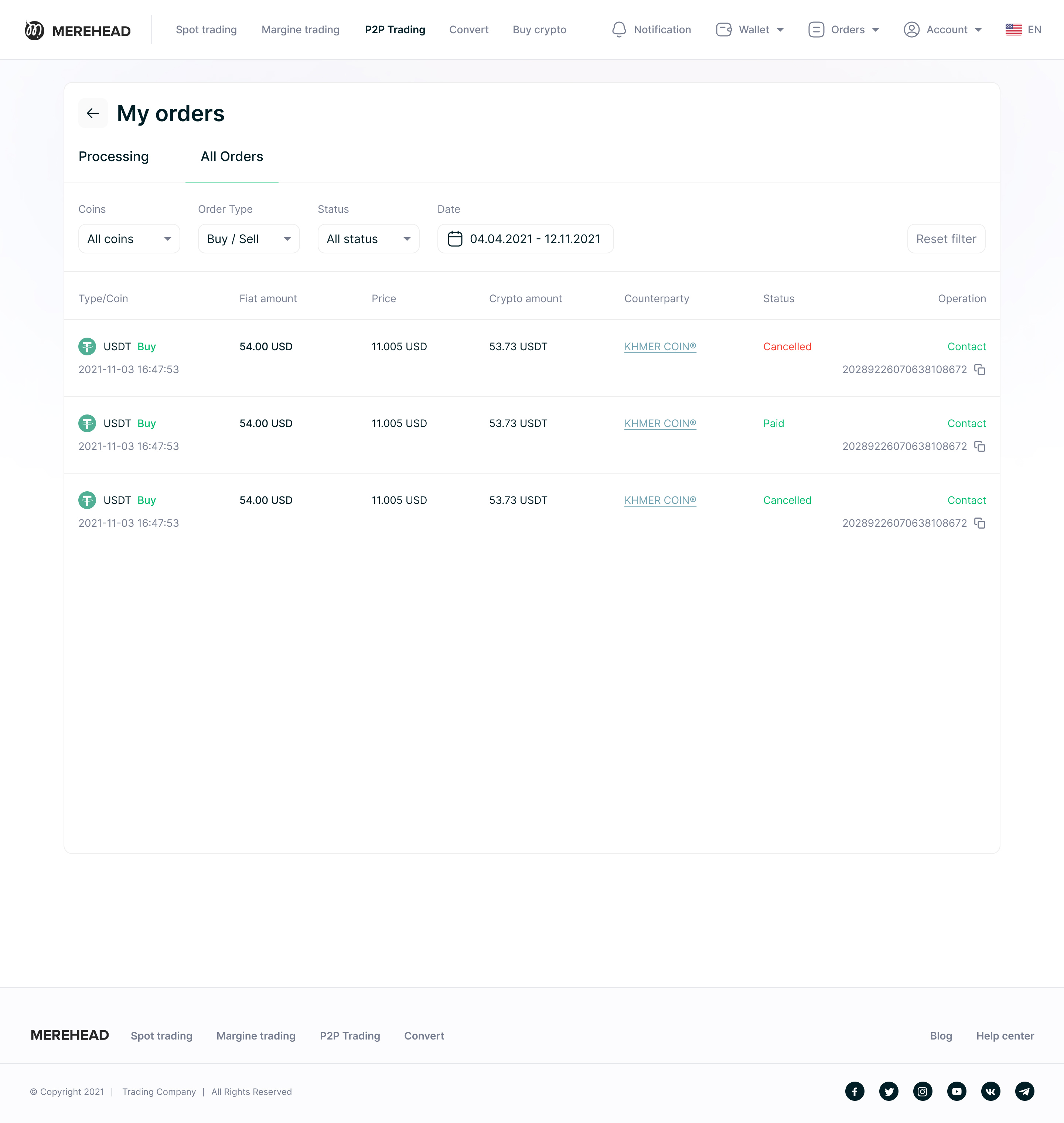
One of the key advantages of P2P is flexibility. Trades aren’t limited to crypto-for-crypto - users can exchange coins for cash, goods, or even services, depending on what both parties are comfortable with. Many platforms offer escrow protection, where funds are held securely until both sides confirm the deal.
However, this freedom also comes with added responsibility. Since there’s no central authority managing transactions, users must be cautious - verifying counterparties, payment methods, and terms before finalizing any exchange. P2P platforms offer control and versatility, but require trust and due diligence from everyone involved.
In a typical hybrid setup, there’s still a central authority overseeing some operations, like user verification or dispute resolution. But trades themselves might be recorded on the blockchain, or handled by smart contracts that add transparency and reduce manipulation risks.
This type of platform is still evolving, and the tech behind it can vary a lot. But for some projects, it offers a good compromise: speed and liquidity from CEXs, plus the trust and openness of DEXs.
A white label exchange solution allows a start up or established business to quickly launch a customizable crypto exchange, reducing time to market and initial development costs.
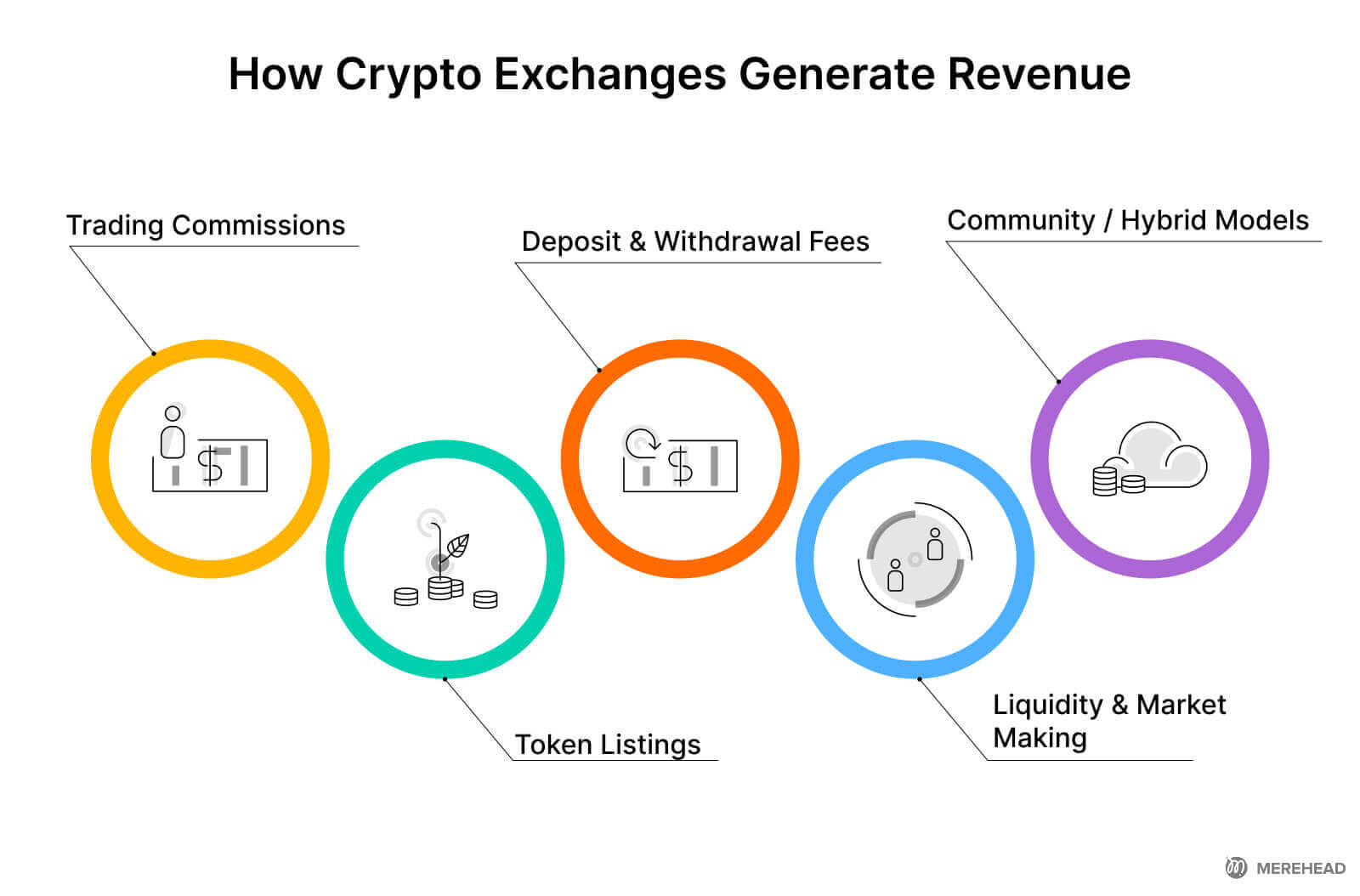
The most common revenue source is trading commissions - a small fee charged on each buy or sell order. Even a 0.1% fee can add up quickly at high volumes. Exchanges may also charge for deposits and withdrawals, depending on the asset type or network conditions.
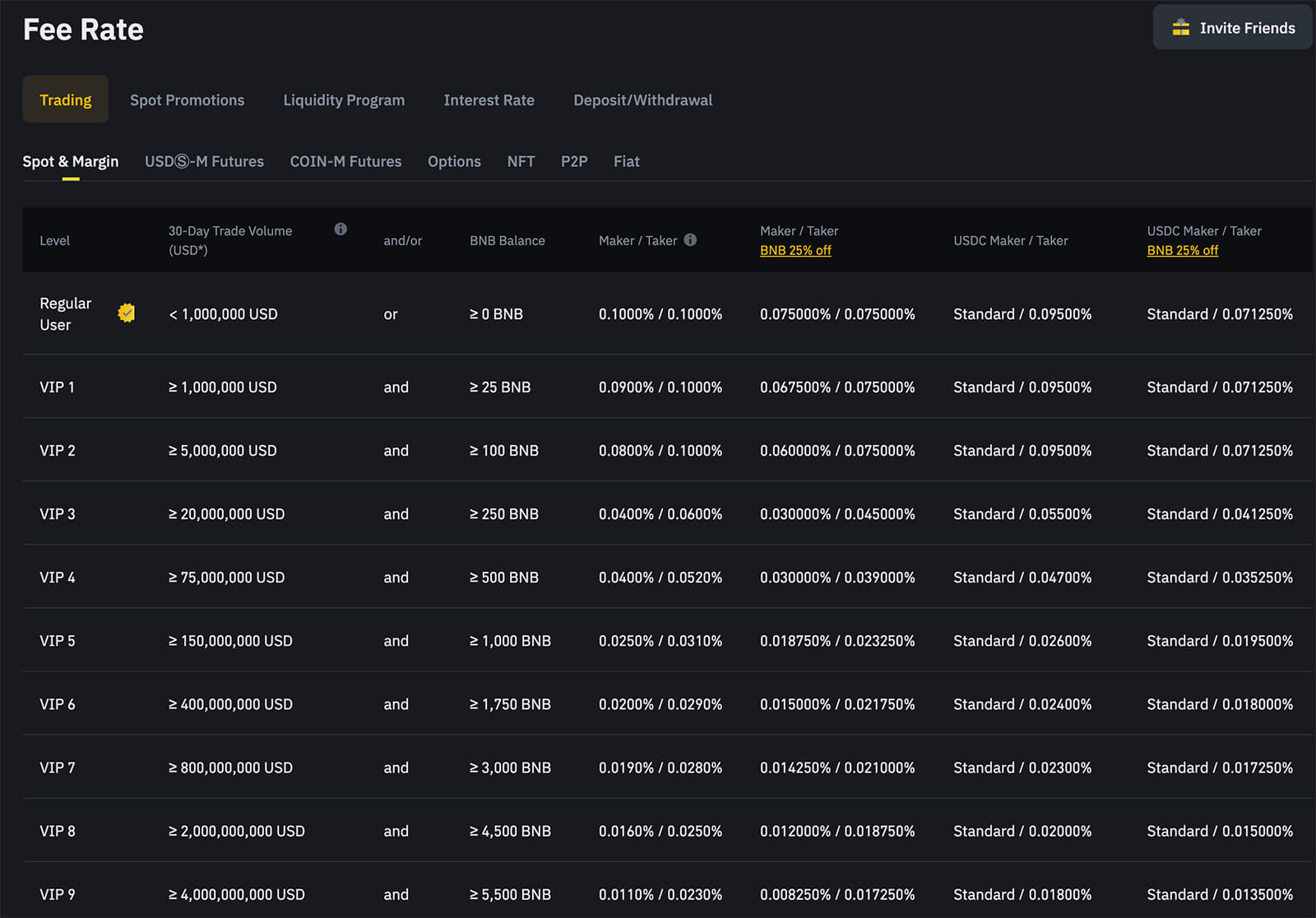
Another income stream is token listings. New projects often pay significant fees to have their tokens listed on reputable exchanges, especially if it comes with marketing support or access to launchpad tools like IEOs.
Some platforms also earn by offering liquidity to other exchanges or running their own market-making operations. In hybrid or community-owned models, revenue can even be redistributed to token holders or used to fund platform development - depending on the governance structure.
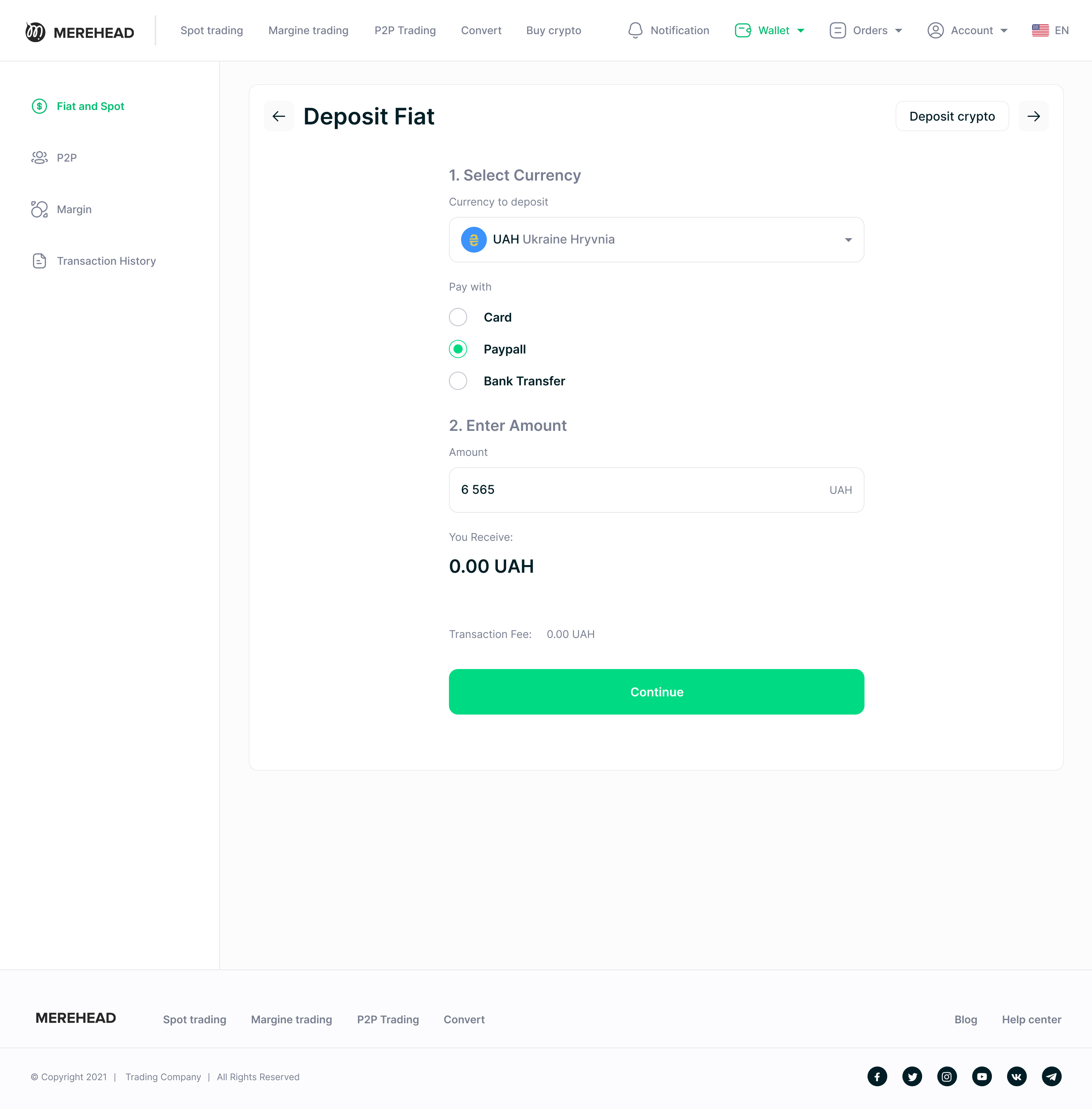
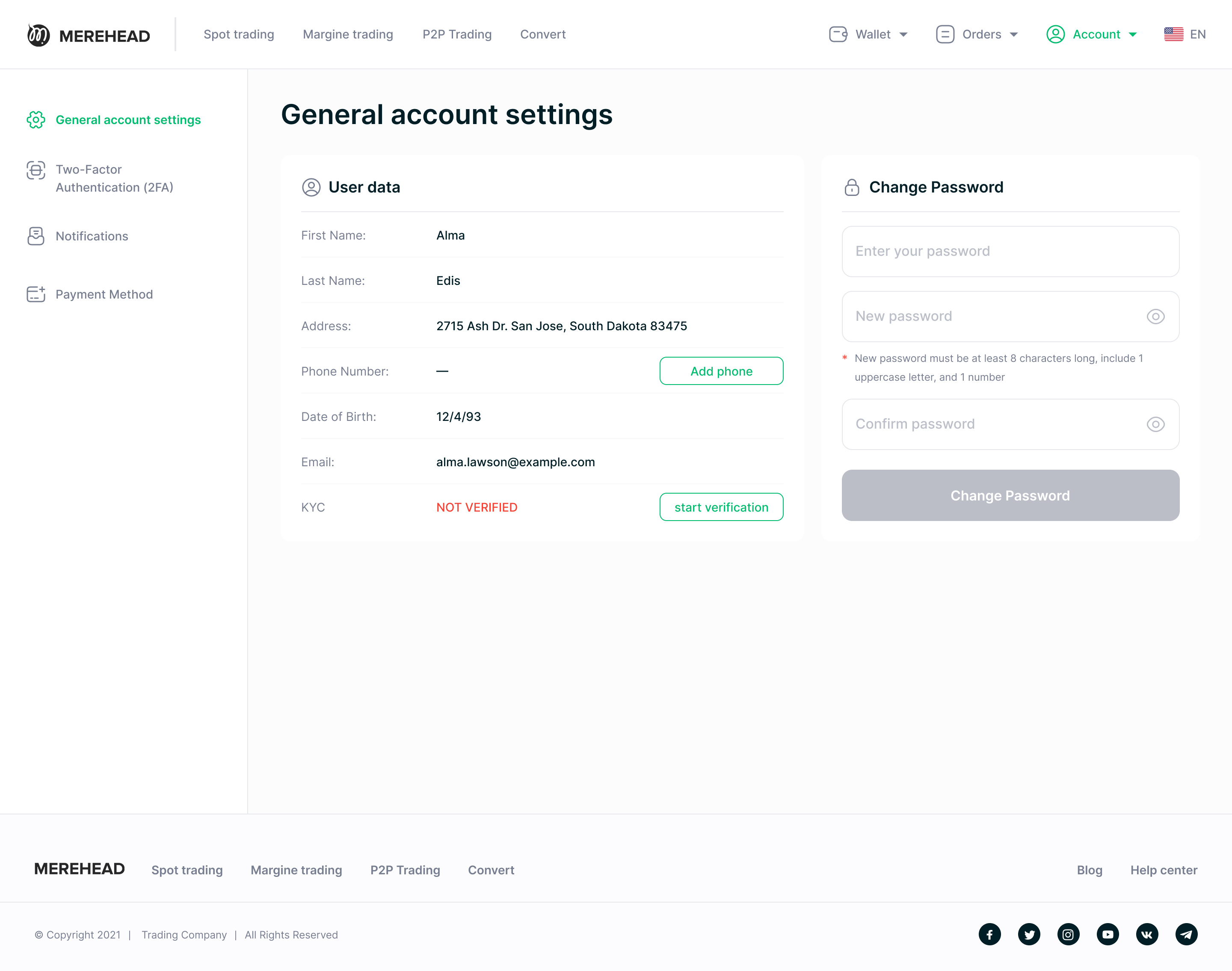
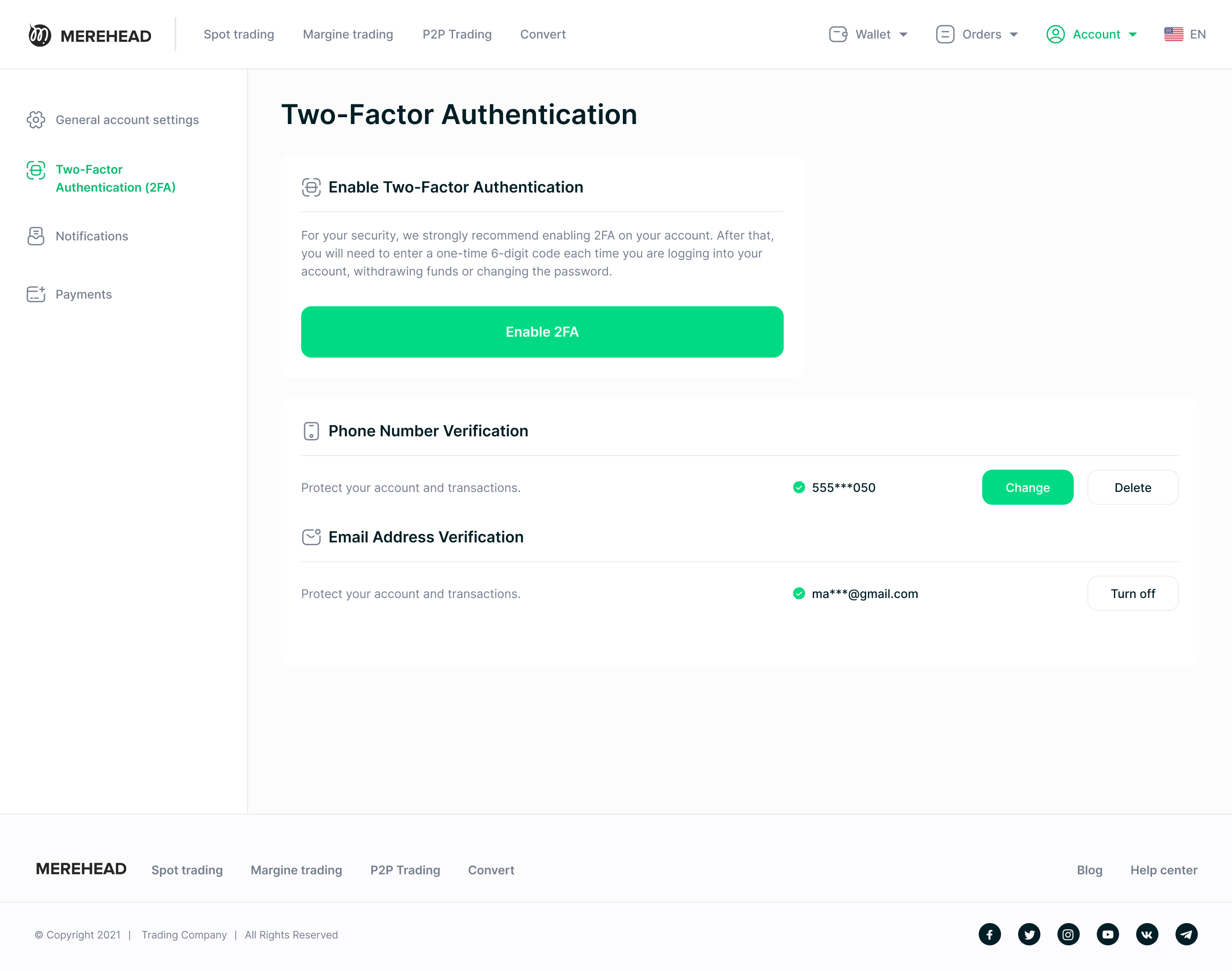
It all starts with authorization and user verification. A modern platform should support multi-factor login and - for regulated markets - proper KYC/AML checks. Many teams now integrate providers like Sumsub or Trulioo to streamline this step.
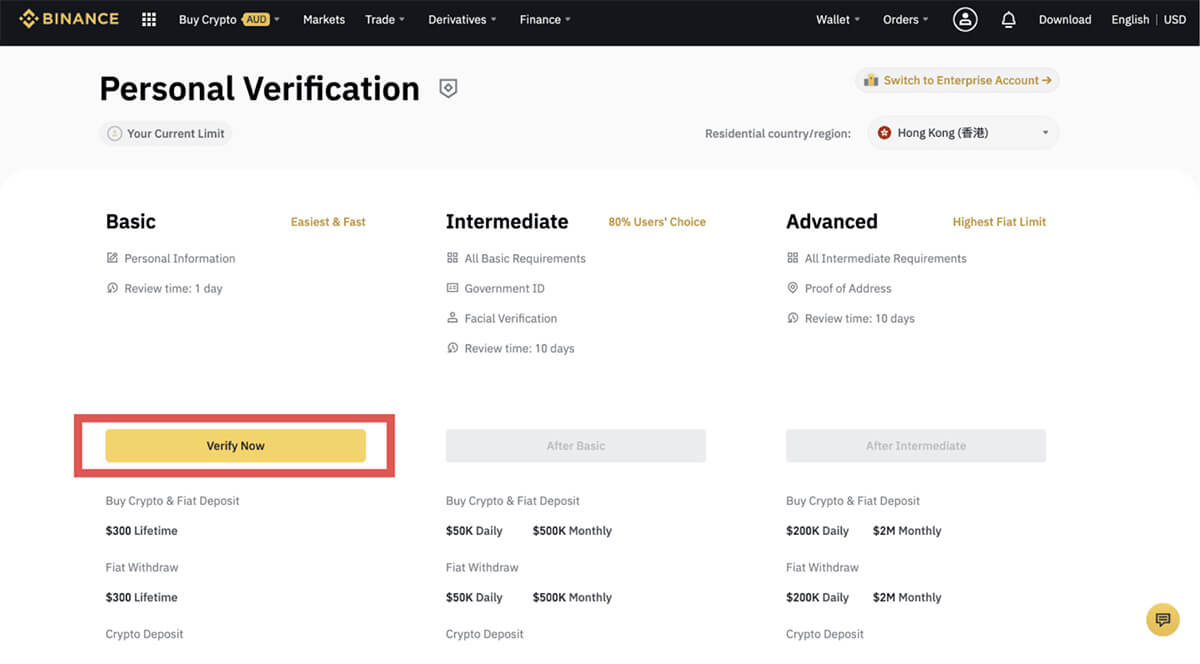
At the heart of the exchange is the trading engine, also known as the matching engine - the core technical component responsible for matching orders, executing trades, and managing liquidity in real time. This is where performance matters most. Latency, error handling, and order book integrity are key.
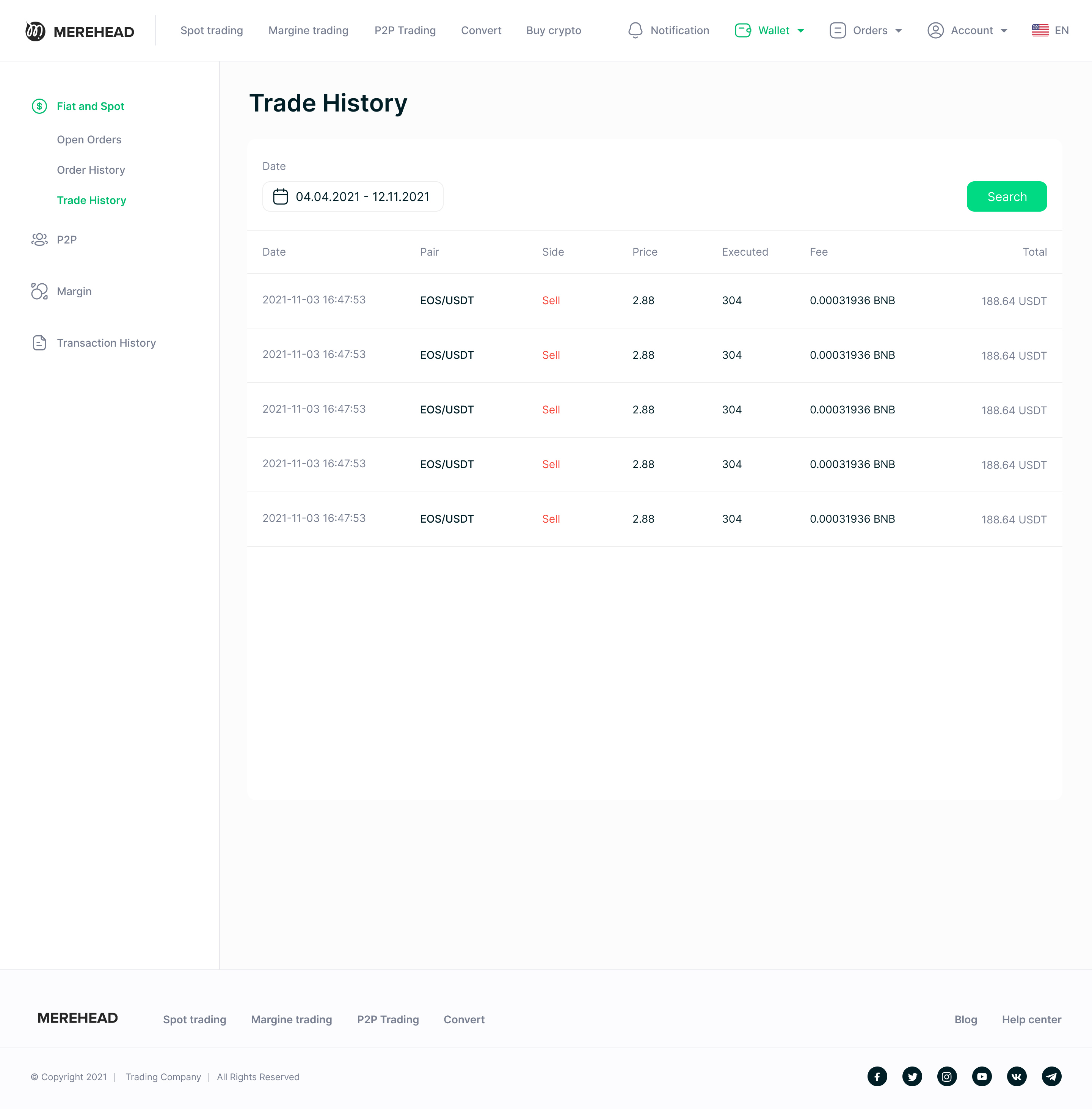
Users also expect a clean, responsive interface, both on desktop and mobile. But under the hood, there needs to be an admin dashboard for operators - to monitor activity, adjust settings, manage listings, and review compliance alerts.
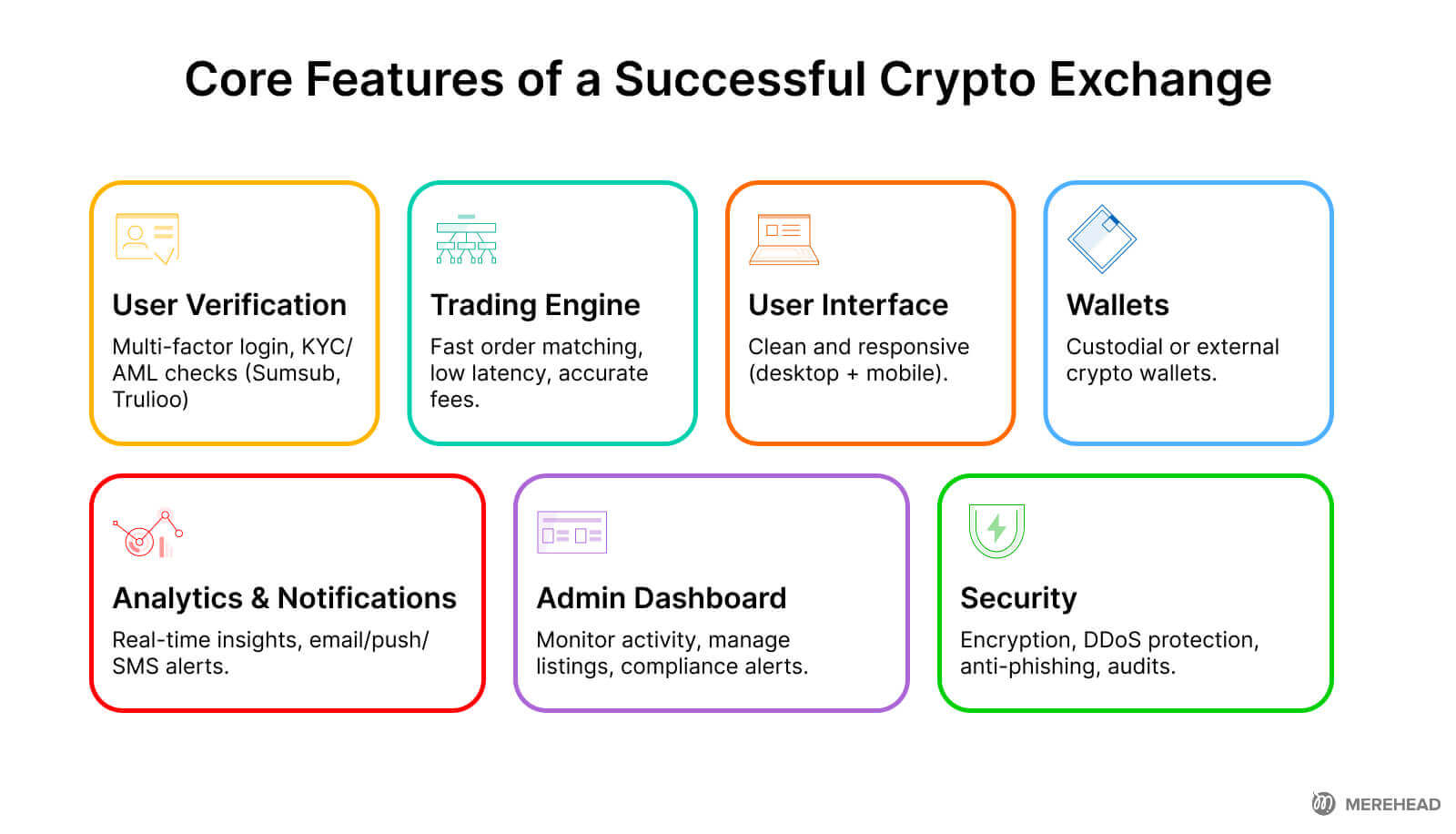
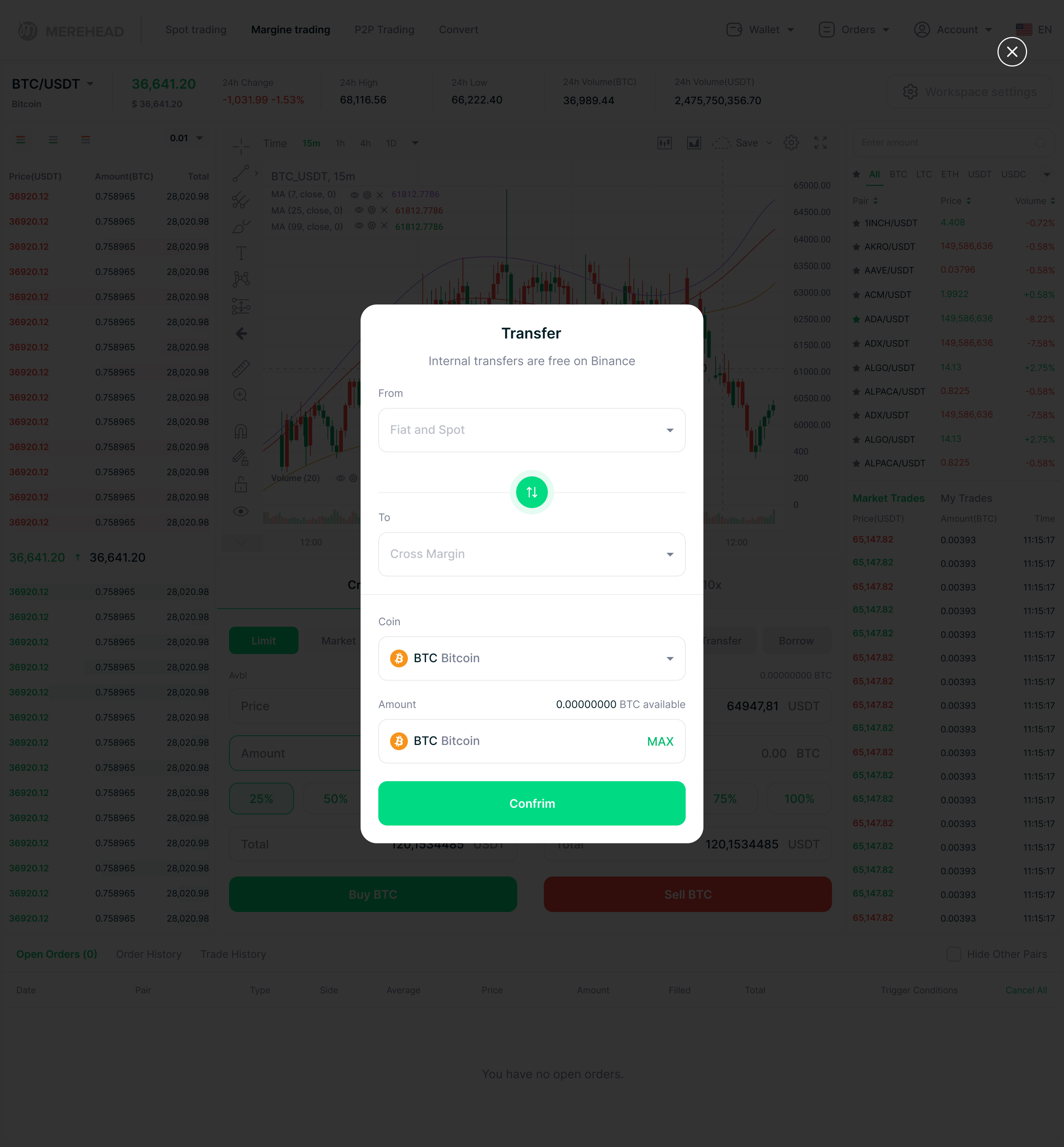
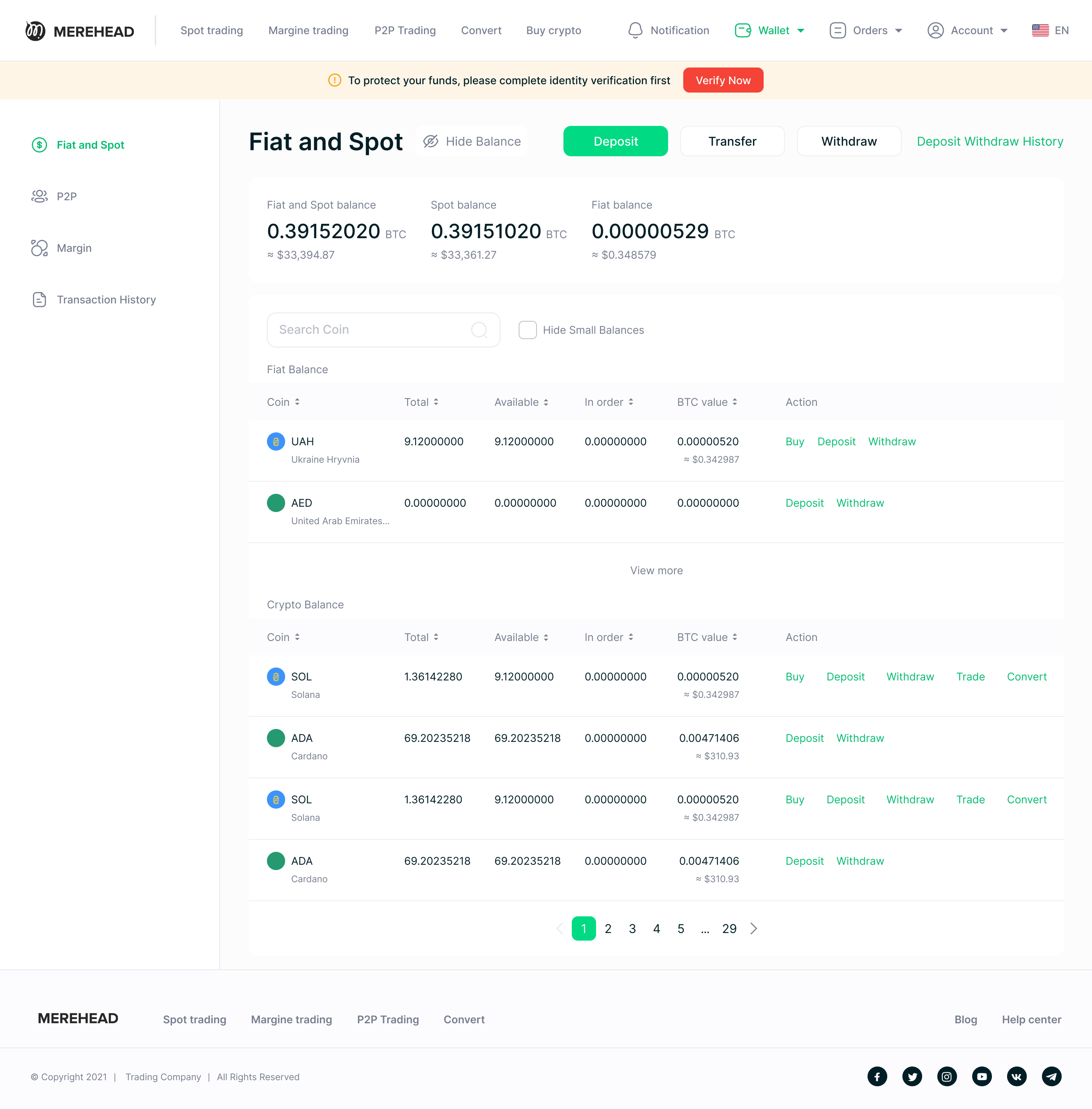
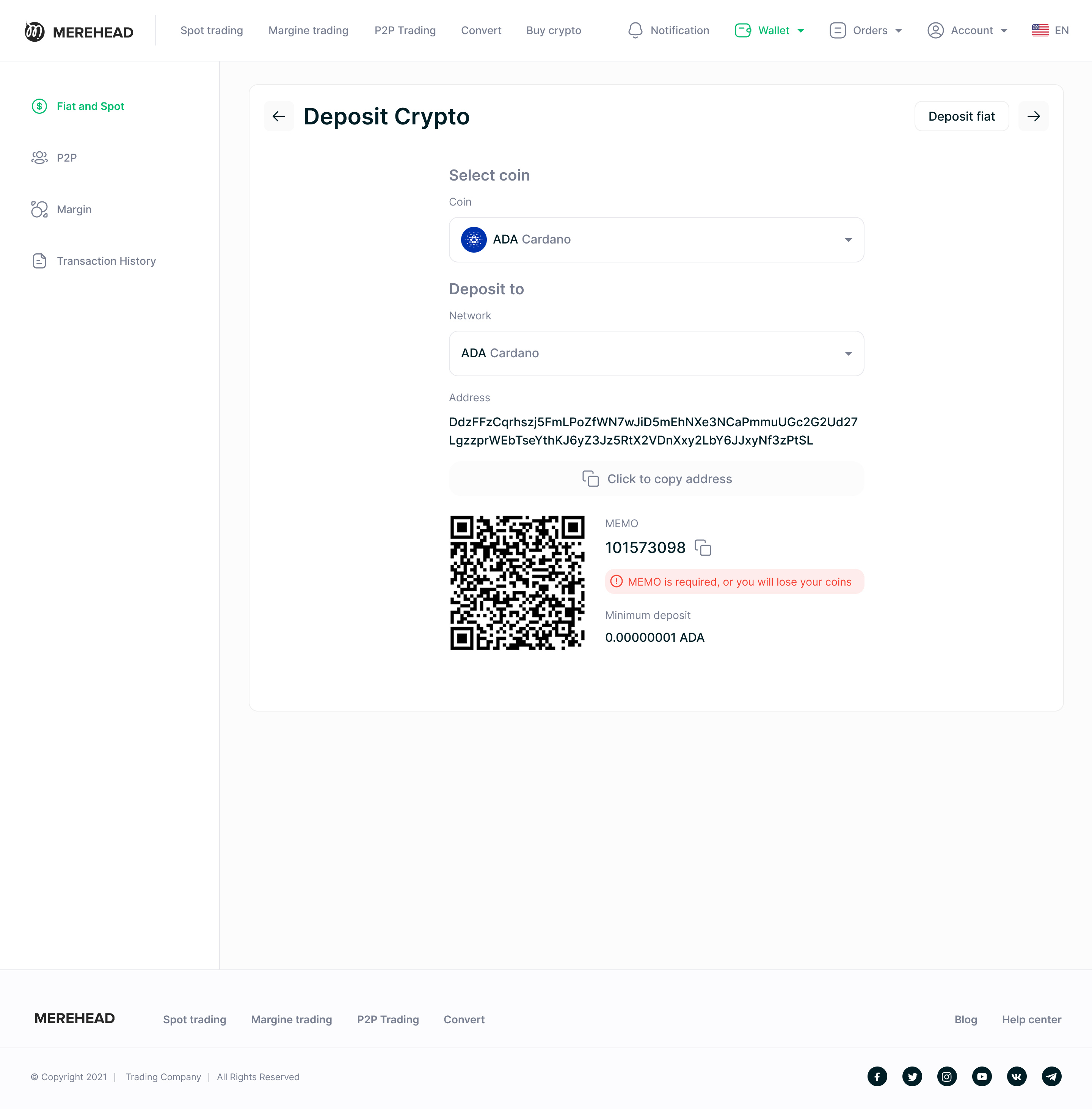
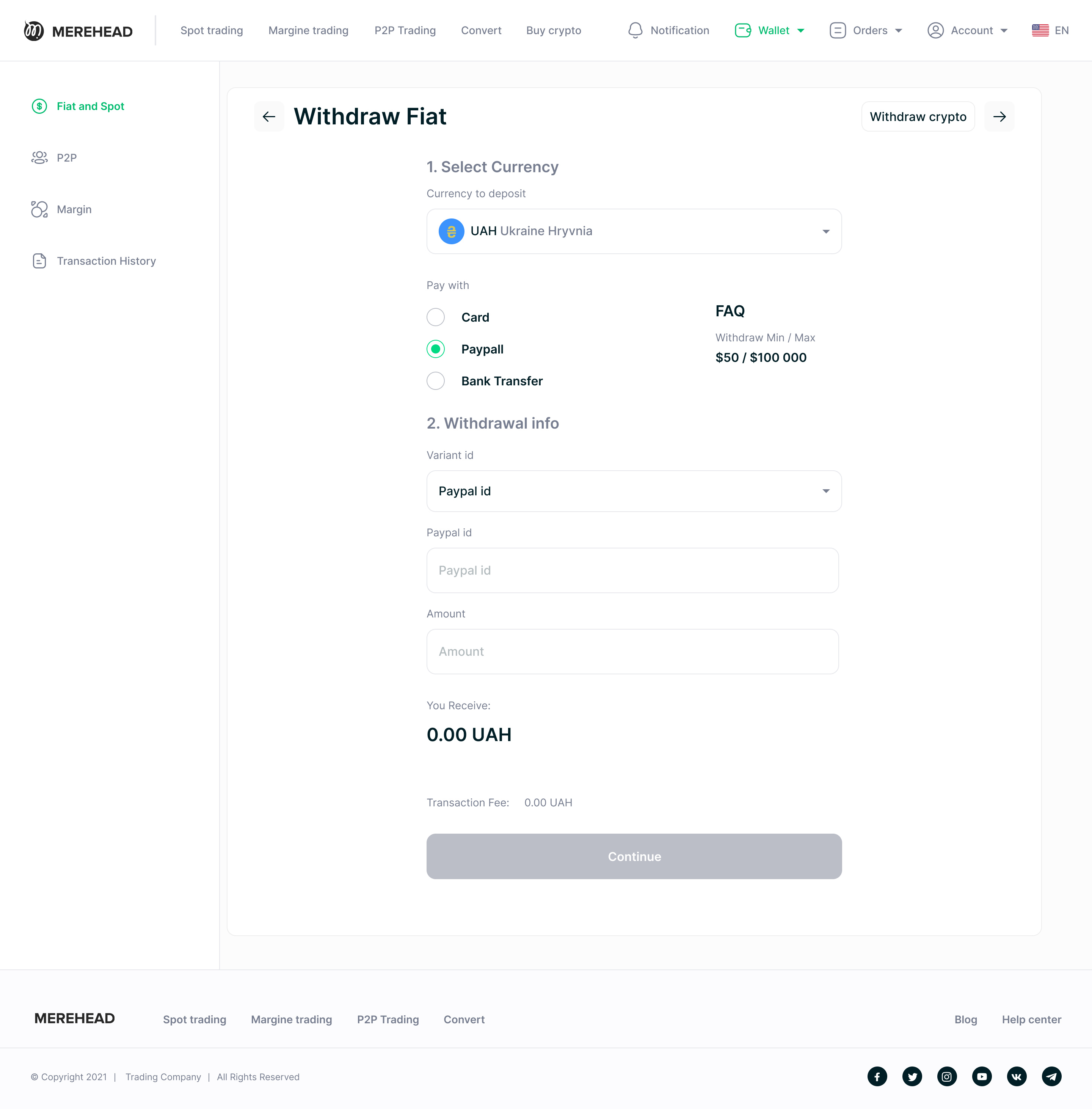
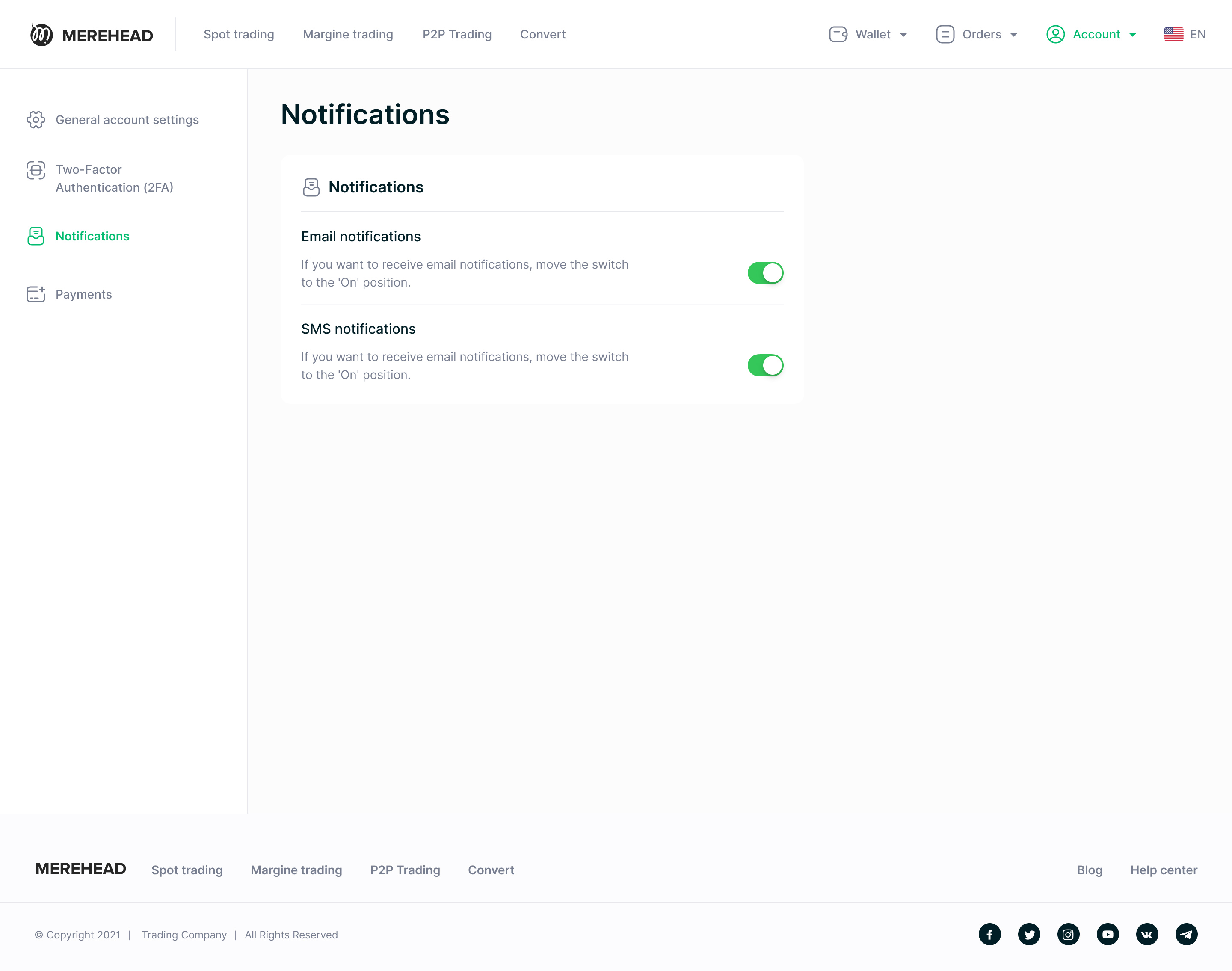
Other essentials include crypto wallets (custodial or external), real-time analytics tools for traders, and notification systems that keep users updated - via email, push, or SMS. Ongoing technical support is crucial for maintaining platform reliability, security, and user trust.
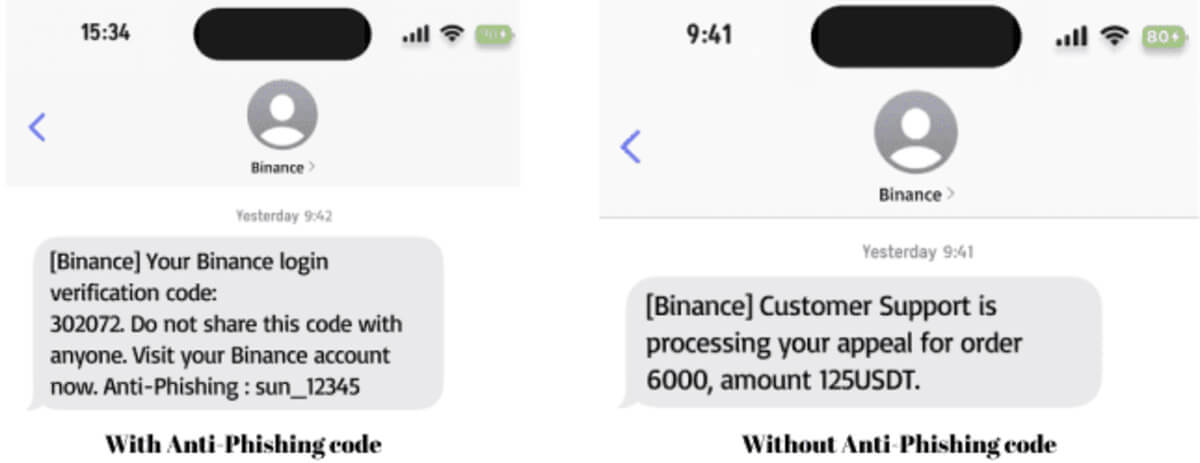
Finally, no exchange survives without strong security: encrypted data, DDoS protection, anti-phishing tools, and regular audits. In open source environments, code transparency is a plus - but also requires disciplined, secure development practices.
The user interface ties everything together, providing an intuitive and responsive experience for traders. Each of these components must be carefully designed and integrated to ensure the platform is secure, reliable, and user-friendly, meeting the high expectations of today’s crypto exchange users.
Open source crypto exchange platforms often come equipped with trading engines that are not only secure and scalable but also highly customizable, allowing businesses to adapt the system to their specific needs. By choosing a platform with a powerful trading engine, businesses can deliver a seamless trading experience, support a wide range of trading pairs, and maintain the trust of their users.
Open source crypto exchange platforms typically offer wallet integration solutions that are robust, scalable, and customizable, enabling businesses to manage digital assets efficiently and securely. With a well-designed wallet integration system, businesses can safeguard user funds, streamline asset management, and build a reputation for reliability and trustworthiness in the competitive world of crypto trading.
At the core, you’ve got the backend: the logic that handles everything from order matching to balance updates. It’s where most of the complexity lives. On top of that sits the frontend, the part users actually interact with - their dashboard, charts, order forms, and account tools.
Supporting both layers is the database, which tracks user accounts, trade history, and wallet balances. And then there’s the blockchain layer, which comes into play when users deposit or withdraw crypto.
Modern exchanges rely on a modular architecture - meaning each part (frontend, backend, wallet engine, analytics, etc.) can be updated or replaced independently. This helps with scaling and maintenance. Open source exchange software provides access to the source code, allowing teams to customize features, verify security, and adapt the platform to their needs.
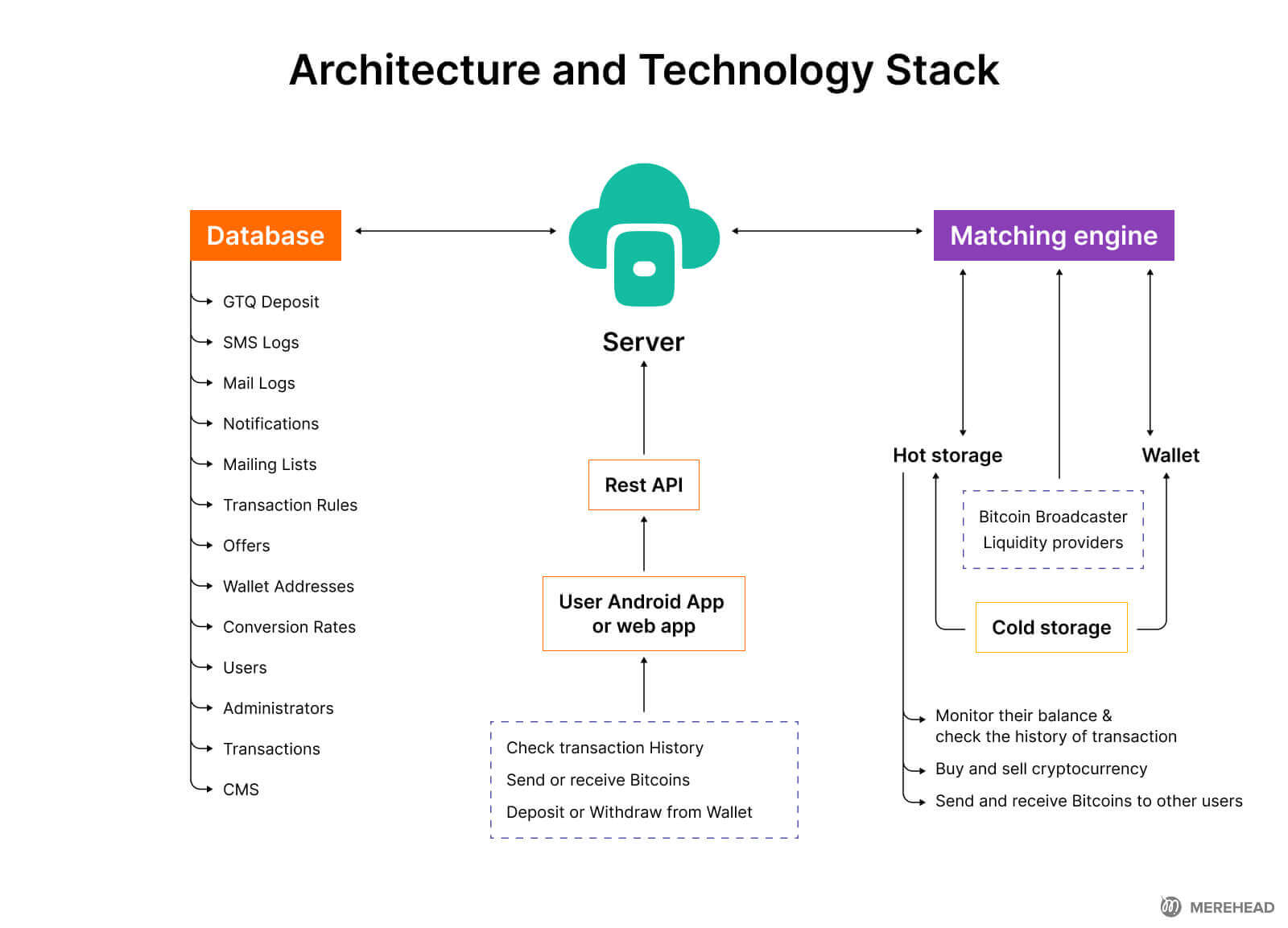
As for the tech stack, it depends on your team's preferences and goals. Some choose Node.js or Go for performance, PostgreSQL for stability, and Docker/Kubernetes for deployment.
Teams can deploy their chosen stack efficiently using modern tools like Docker and Kubernetes, streamlining the process from development to production. Others go full cloud-native or integrate directly with open source frameworks like Peatio or OpenDAX.
The point is - there’s no one-size-fits-all. The best stack is the one that balances performance, flexibility, and long-term support for your specific use case.
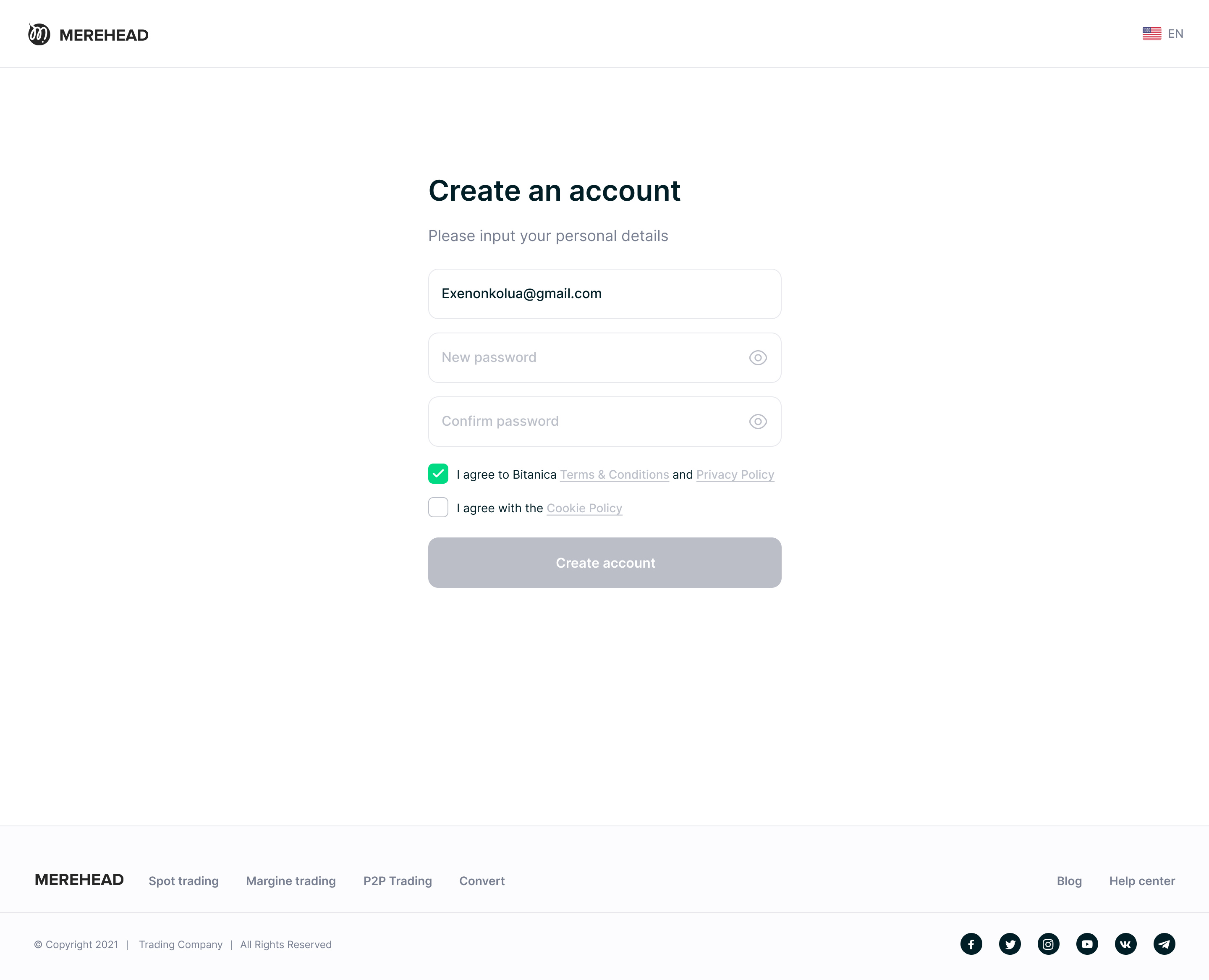
It usually starts with defining the concept: What kind of exchange are you building? CEX, DEX, hybrid? What features do you need? This is the initial stage of the processes involved, including requirement gathering and outlining compliance needs. Once that’s clear, your team can move on to UX design - creating wireframes, user flows, and finally a working UI that traders will actually enjoy using.
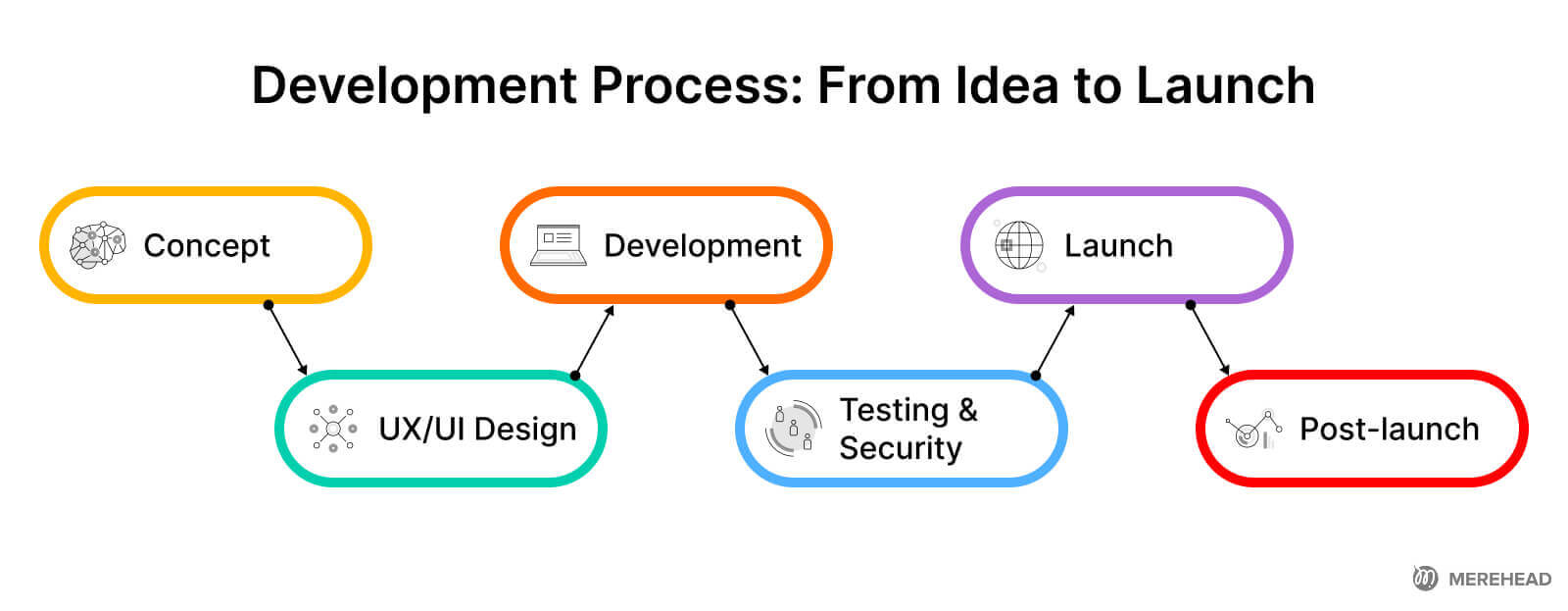
From there, frontend and backend developers take over - coding the trading engine, wallets, dashboards, and API integrations. The platform can be developed using modern programming languages and frameworks such as Kotlin and JavaScript. This is where most of the technical challenges appear: order matching, fee handling, error states, and edge cases.
User management features should allow users to sign up and may include digital signatures as part of the registration process, which is important for both security and compliance.
Testing isn’t just a final step. QA engineers should be involved early, running tests as new features are built. Functional bugs are bad - but security bugs are worse. That’s why exchanges often bring in outside firms for audits before launch.
Once everything checks out, you go live. But that’s not the end - you’ll need monitoring, user support, updates, and a roadmap. Launching is just phase one, and ongoing software development and enhancement are essential for long-term success.
| Approach | Upfront Cost | Time to Launch | Who Owns the Code |
| Self-deploy GitHub project (Peatio/OpenDAX/HollaEx) | $30,000–$80,000 dev time | 2–4 months | You (MIT license) |
| White-label with open source kit (HollaEx cloud) | $6,000–$25,000/year | 2–6 weeks | Vendor (cloud dependency) |
| Custom open source build (Merehead) | $20,000–$150,000 | 2–6 months | You (full source delivery) |
Let’s be honest - the idea of using open source sounds like a cheap way to launch a crypto exchange. But “open source” doesn’t mean “zero cost.” Not if you want the platform to actually work under pressure.
You can find free crypto scripts online, but most of them are either outdated, poorly documented, or not secure enough for production. In reality, even with a ready-made codebase, you’ll need developers to customize it, security audits to verify it, and infrastructure to run it.
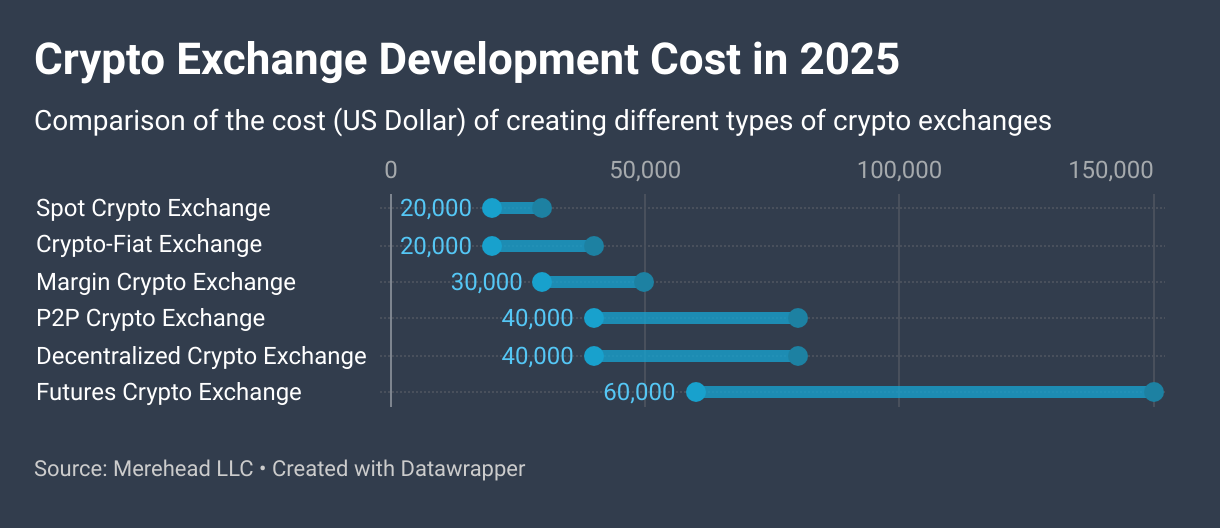
For something functional but basic, startup costs usually start around $20,000–$40,000. If you’re building a more complex platform - with margin trading, advanced KYC, or multi-chain wallets - the number climbs fast. Full custom development with a clean codebase and audit-ready structure often goes well over $100,000–$180,000.
What matters isn’t just the code - it’s the team, the testing, and the long-term support. Ongoing support is crucial for keeping your platform secure, updated, and compliant as the market and regulations evolve. Having full access to support resources, documentation, and training materials can help reduce long-term operational risks and costs.
Saving money up front often leads to bigger costs later. The better question is: what kind of exchange are you trying to run - and what’s the cost of failure?
If you're serious about launching an exchange that can scale, stay secure, and meet real user needs, the groundwork matters. Open code is a tool - not a shortcut.
Need help figuring out the best way forward? We’ve worked with teams across CEX, DEX, and hybrid models - from startup builds to scaling production systems. Let’s talk.
Open source crypto exchange software is exchange platform code that is publicly available for anyone to inspect, fork, modify, and deploy. Unlike proprietary platforms where the code is hidden and access is licensed, open source solutions give you full visibility into how the matching engine, wallet system, and KYC pipeline work — and full rights to customize every component. Popular examples include Peatio, OpenDAX, and HollaEx Kit, all available on GitHub under MIT license. Development companies like Merehead also build and deliver fully custom open source exchanges where the client owns 100% of the resulting codebase.
Costs depend on how you approach it. Deploying a GitHub project like OpenDAX or HollaEx yourself requires primarily developer time: typically $30,000–$80,000 in engineering costs to reach production readiness, plus ongoing DevOps and security audit expenses ($5,000–$25,000). A custom-built open source exchange software platform developed by a team like Merehead runs $20,000–$150,000 depending on features, with the client receiving full source code on delivery. Free to download does not mean free to run — factor in infrastructure ($500–$3,000/month), security audits, and compliance tooling when planning your budget.
The risk profile is different from — not necessarily higher than — proprietary platforms. The main risks with open source crypto exchange deployments are: insufficient security audit before launch, deploying without understanding the codebase, and relying on unmaintained forks. Mitigation is straightforward: choose actively maintained projects (Peatio and OpenDAX have multi-year track records), run at minimum one external smart contract audit, and have in-house or contracted engineers who understand the code. The transparency of open source is actually a security advantage — every researcher in the world can identify and report vulnerabilities, which is why mature open source projects often have better security postures than closed-source alternatives.
Yes. Several open source DEX frameworks are production-ready in 2026. Uniswap's contracts are MIT-licensed and widely forked — a Uniswap v2 or v3 fork is the most common starting point for a new AMM-based DEX. OpenDAX supports both CEX and DEX deployment. For custom DEX architectures — cross-chain, hybrid order book, or perpetuals — a development team builds the smart contracts and frontend from scratch with source code delivered to the client. Merehead has built DEX platforms on Ethereum, Solana, and EVM-compatible chains, with Solidity smart contracts fully owned by the client post-launch.
A white label exchange is a licensed product you rebrand — you don't own the underlying technology, and you're dependent on the vendor's infrastructure and update schedule. Open source exchange software means you receive the full source code with no ongoing licensing dependency. Some solutions blur this line: HollaEx Kit is open source but also offers a cloud hosting option that creates vendor dependency. When Merehead delivers a custom exchange, it's genuinely open source — the client receives all code, can deploy anywhere, and has zero ongoing dependency on Merehead to keep the platform running. That distinction — source code ownership versus access — is the most important factor when evaluating long-term operational risk.