×
Services
Exchange & Trading Infrastructure
DeFi & Web3 Core
NFT Ecosystem & Multi-Chain
Tokenization & Fundraising
Crypto Banking & Fintech
AI Development
Exchange & Trading Infrastructure
Create a centralized crypto exchange (spot, margin and futures trading)
Decentralized Exchange
Development of decentralized exchanges based on smart contracts
Stock Trading App
Build Secure, Compliant Stock Trading Apps for Real-World Brokerage Operations
Crypto Launchpad Development
Build crypto launchpad platforms that handle the full token launch lifecycle
P2P Crypto Exchange
Build a P2P crypto exchange based on a flexible escrow system
Centralized Exchange
Build Secure, High-Performance Centralized Crypto Exchanges
Crypto Trading Bot
Build Reliable Crypto Trading Bots with Real Risk Controls
DeFi & Web3 Core
Web3 Development
Build Production-Ready Web3 Products with Secure Architecture
Web3 App Development
Build Web3 Mobile and Web Apps with Embedded Wallets and Token Mechanics
DeFi Wallet Development
Scale with DeFi Wallet Development: from DEX and lending to staking systems
DeFi Lending and Borrowing Platform
Build DeFi Lending Protocols — Overcollateralized Pools, Flash Loans, and Credit Delegation
DeFi Platform Development
Build DeFi projects from DEX and lending platforms to staking solutions
DeFi Exchange Development
Build DeFi Exchanges — AMM, Order Book, Aggregator, and Hybrid Protocols
DeFi Lottery Platform
Build DeFi Lottery Platforms — Provably Fair Jackpots, No-Loss Savings, and NFT Raffle Protocols
DeFi Yield Farming
Build DeFi yield farming platforms with sustainable emission models and multi-protocol yield aggregation
NFT Ecosystem & Multi-Chain
NFT Marketplace
Build NFT marketplaces from minting and listing to auctions and launchpads
NFT Wallet Development
Build non-custodial NFT wallets with multi-chain asset support, smart contract integration
Tokenization & Fundraising
Real Estate Tokenization
Real estate tokenization for private investors or automated property tokenization marketplaces
Crypto Banking & Fintech
Build crypto banking platforms with wallets, compliance, fiat rails, and payment services
Build Secure Crypto Wallet Apps with a Production-Ready Custody Model
Crypto Payment Gateway
Create a crypto payment gateway with the installation of your nodes
AI Development
AI Development
We build production-ready AI systems that automate workflows, improve decisions, and scale
LLM Development Company
Build production-grade large language model solutions — from model fine-tuning to full LLM-powered application backends
Enterprise AI Development
We build enterprise AI systems - agents, LLM integration, and predictive analytics

  IDO / IEO Launchpads

Crypto Launchpad Development Services

We build crypto launchpad platforms that handle the full token launch lifecycle — from whitelist management and tiered allocation to vesting smart contracts and post-IDO liquidity deployment. Engineering-first, audit-ready, production-tested.


130+ projects
Experience
since 2015
Experience
blockchain expert
image

  Services

Crypto Launchpad Development Services

Our crypto launchpad development services cover the complete token launch stack — from raise mechanism design and smart contract engineering to frontend integration and post-launch liquidity management. Every component is built for the specific business model, raise type, and compliance posture of your project.

01

IDO & IEO Launchpad Platform Development

We build full-stack IDO and IEO launchpad platforms with configurable raise mechanics — FCFS, lottery, tiered allocation, or hybrid models. The raise engine is implemented entirely on-chain, with off-chain orchestration for KYC gating and whitelist management.
02

Token Vesting & Distribution Smart Contracts

We develop modular vesting contracts supporting cliff + linear schedules, milestone-based unlocks, and multi-beneficiary batch distribution. Contracts are built with emergency pause, DAO-governed parameter updates, and full event emission for subgraph indexing.
03

Whitelist Management & Tier System

We implement on-chain whitelist registries with Merkle proof verification for gas-efficient allowlist validation at scale. Tier systems — based on staked token balance, NFT holdings, or snapshot score — are computed off-chain and committed on-chain as signed root hashes.
04

KYC / AML Integration & Geo-Restriction

For US-targeted or compliance-sensitive launches, we integrate KYC providers (SumSub, Fractal ID) at the smart contract level — not just the UI. Verified wallet addresses receive an on-chain attestation; unverified addresses are rejected at the contract call, not the frontend.
05

Post-IDO Liquidity Deployment

We engineer automatic liquidity provisioning flows that execute at raise close: raised funds are split algorithmically between team treasury, liquidity pool seeding (Uniswap V3, PancakeSwap), and locked LP positions. The entire flow is governed by smart contract logic with a configurable timelock.
06

Staking & Governance Token Integration

Launchpad tier access is typically gated by staked token balance. We build the full staking module — lock periods, reward emission, snapshot-based tier calculation — and integrate it with governance contracts (OpenZeppelin Governor or Snapshot) for community-driven parameter control.
07

Launchpad Analytics Dashboard & Web3 Frontend
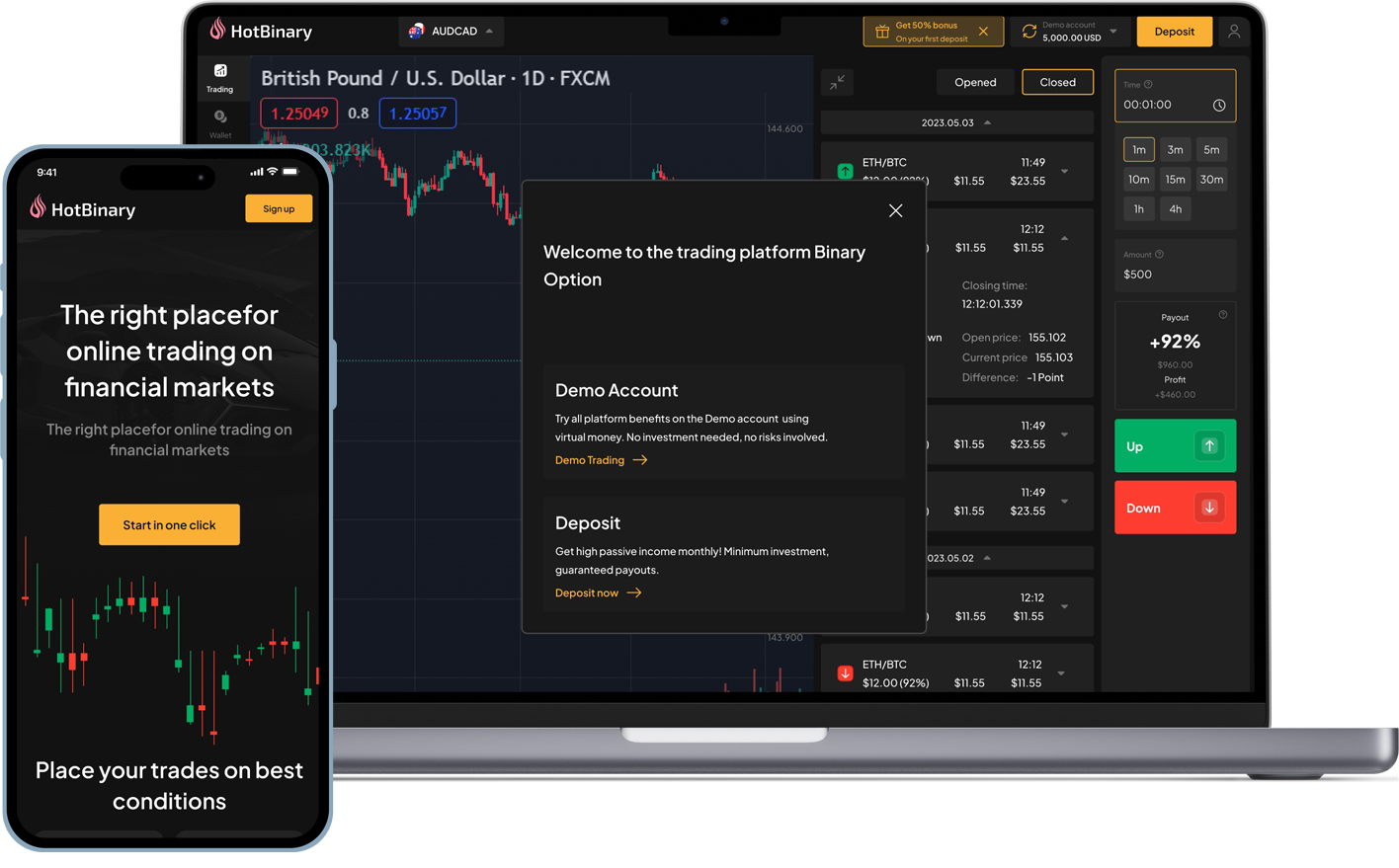
We deliver a full-stack frontend: wallet connection (MetaMask, WalletConnect, Phantom), real-time raise progress via on-chain event indexing, user allocation display, vesting claim interface, and admin panel for raise management, fee configuration, and project onboarding.

  About

What Is a Crypto Launchpad Platform?

A crypto launchpad is the on-chain infrastructure that mediates between token issuers and early-stage investors — replacing the trust assumptions of a traditional pre-sale with auditable smart contract logic. At its core, a launchpad enforces raise rules (hard cap, soft cap, per-wallet limits), manages token distribution (immediate or vested), and handles the post-raise settlement (refunds on soft cap miss, liquidity seeding on success) — all without a centralized operator having custody of funds at any point.
The raise mechanics are only one layer. A production launchpad also needs a project onboarding system (the admin pipeline through which new token sales are configured and approved), a participant qualification layer (KYC verification, tier eligibility, whitelist validation), a vesting engine (cliff + linear schedules for team, seed, and public round allocations), and a liquidity bootstrapping module that executes automatically at raise close. Each of these components has its own attack surface, and each needs independent testing before any of them interact on mainnet.
The current launchpad landscape has shifted toward multi-chain deployment and institutional-grade raise structures. Projects launching on a single EVM chain increasingly lose to competitors with cross-chain allocation — Ethereum for institutional participation, BNB Smart Chain for retail volume, and a Layer 2 (Arbitrum, Base) for gas-sensitive users. In one of our token platform deployments, we built a dual-chain raise architecture where allocation was computed on Ethereum (authoritative tier snapshot) and claimed on BNB Smart Chain, reducing average gas cost per claim by over 80% while maintaining a single source of truth for participant records.
1/3

  Step-by-Step

How a Crypto Launchpad Works

A crypto launchpad executes a structured, rule-enforced token distribution process entirely on-chain. Each step — from registration through vesting — is governed by smart contract logic, not operator discretion.

Project Registration & Configuration
The token issuer submits raise parameters — hard cap, soft cap, token price, allocation per tier, and vesting schedule — which are reviewed by the launchpad admin and committed on-chain as an immutable raise configuration. No parameter changes are permitted after the raise opens.
Tier Qualification Snapshot
A snapshot of staked token balances (or NFT holdings, or a composite score) is taken at a fixed block height before the raise. Allocation tiers are computed off-chain from this snapshot and committed as a signed Merkle root. Users claim their tier status at participation time by providing a Merkle proof.
Settlement & Liquidity Seeding
At raise close, the settlement function executes: raised funds are split between team treasury, automatic LP seeding (Uniswap V3 pool initialization), and a locked LP position with a timelock. Soft cap miss triggers a refund mode — participants can withdraw their contributions directly from the contract.
Participant Registration & KYC
Users register for the raise window by connecting their wallets. KYC verification (where required) happens off-chain; verified wallet addresses are added to a Merkle tree whose root hash is committed on-chain before the raise opens. Unverified addresses cannot interact with the raise contract.
Funding Window
During the raise window, qualified participants send funds (ETH, USDC, or raise-specific currency) directly to the raise contract. The contract enforces per-wallet caps, tier limits, and the hard cap in real time — excess contributions are rejected at the EVM level, not refunded post-close.
Token Vesting & Claim
Tokens are not distributed immediately at raise close. The vesting contract holds the total allocation and releases tokens according to the configured schedule — cliff period, then linear daily/weekly unlocks. Users call the claim function at any point after cliff to receive their accrued allocation.
From an engineering perspective, the launchpad raise is a state machine: REGISTRATION → WHITELIST_LOCK → FUNDING → SETTLEMENT → VESTING. Each state transition is triggered either by a block timestamp (raise window open/close) or an admin action (manual close on hard cap hit). The critical invariant is that the contract's token balance always equals or exceeds the sum of all outstanding vesting obligations — a property we verify using on-chain invariant checks and confirm before any raise opens. Our experience with token distribution platforms — including multi-beneficiary allocation systems with fiat and crypto deposit flows — taught us that settlement logic is where most bugs hide: edge cases around partial fills, refund precision, and simultaneous claim calls.

  Features

Core Features of a Crypto Launchpad Platform

Intro
Production launchpad features are designed around three axes: capital security (funds are protected at every state transition), participation fairness (allocation rules are enforceable on-chain, not just in the UI), and post-launch continuity (vesting and liquidity mechanics that prevent dump-and-exit dynamics).
Automatic Liquidity Bootstrapping
At raise close, the settlement contract automatically seeds the initial DEX liquidity pool using a configurable percentage of raised funds. LP tokens are locked in a timelock contract rather than transferred to the project team, providing investors with on-chain proof of liquidity commitment.
Non-Custodial Raise Mechanics
Contributed funds are held in the raise smart contract — not a multisig wallet, not an EOA. The contract's settlement logic is the only authorized path for fund movement. Neither the launchpad operator nor the project team can withdraw raise funds outside the defined settlement flow.
Verifiable Randomness (Chainlink VRF)
Lottery-based allocation uses Chainlink VRF for on-chain verifiable randomness — winner selection cannot be manipulated by the contract deployer or any miner. The VRF request and fulfillment are logged on-chain, providing a publicly auditable lottery record.
Tiered Allocation System
Allocation tiers are computed from a pre-raise snapshot of staked token balances and committed on-chain before the raise opens. The tier system supports guaranteed allocation (minimum buy), priority windows (early access), and overflow protection (pro-rata refunds if a tier is oversubscribed).
Configurable Vesting Schedules
Vesting contracts support multiple beneficiary categories (seed investors, public round, team, advisors) with independent cliff and linear release parameters per category. All vesting state — allocated, claimed, claimable — is readable on-chain, making it auditable by any third party.

  Architecture

Crypto Launchpad Architecture We Build

Our launchpad architectures are modular, chain-agnostic, and designed for compliance optionality. Each layer is independently testable and auditable.


01
Smart Contract Layer (Raise & Vesting Engine)
The core raise logic, vesting mechanics, and settlement functions are implemented as upgradeable smart contracts using the OpenZeppelin Transparent Proxy or UUPS pattern. Raise parameters are immutable post-deployment; governance-controlled parameters (fee splits, emergency pause) require a timelock. We structure contracts to pass standard audit tools (Slither, Mythril) before engaging external auditors.
02
Qualification & Access Control Layer
Whitelist validation uses Merkle proof verification — gas-efficient at scale compared to on-chain allowlists. KYC attestations are stored as wallet-level flags set by a trusted verifier address (or a decentralized attestation registry like EAS). Tier eligibility is computed from snapshot data and committed as a signed root before raise open.
03
Web3 Frontend & Wallet Integration
The frontend connects to raise and vesting contracts through ethers.js / wagmi, supporting MetaMask, WalletConnect, and mobile wallets. Real-time raise progress (current raised amount, remaining allocation, user's tier and cap) is served via on-chain event indexing — not polling — to minimize latency and RPC load.
04
Indexing, Analytics & Admin Dashboard
On-chain events (contributions, claims, refunds, parameter changes) are indexed via The Graph subgraph or a custom event indexer into a Postgres database. The admin dashboard exposes raise analytics (participation rate by tier, geographic distribution, claim velocity), project management, and emergency controls behind a multi-sig authenticated interface.
Cross-Chain Architecture & Bridge Integration. For multi-chain raises, allocation authority lives on the canonical chain (typically Ethereum); claim contracts are deployed on secondary chains. A cross-chain message bridge (LayerZero, Wormhole) synchronizes claim eligibility. The design ensures a single canonical record of who is entitled to what — even if claims happen across four networks.

  Cost

Cost of Crypto Launchpad Development

The cost of a crypto launchpad platform is driven primarily by three variables: the complexity of the allocation mechanics (FCFS vs. lottery vs. tiered hybrid), the compliance requirements (KYC at UI vs. KYC enforced at contract level), and the number of chains the raise and vesting contracts must be deployed on. A single-chain launchpad with standard FCFS mechanics and a Merkle whitelist is a well-understood engineering problem. A multi-chain launchpad with cross-chain allocation synchronization, on-chain KYC attestation, and institutional compliance modules is a substantially different scope.
Cost Estimates
Basic IDO Launchpad: $30,000 - $50,000
Tiered Launchpad with Staking: $50,000 - $70,000
Full-Stack Launchpad Platform: $70,000 - $100,000
Enterprise / Multi-Chain Launchpad: $100,000 - $200,000
The most underestimated cost line in launchpad development is the smart contract audit. A launchpad handling a $2M–$10M raise requires at minimum one external audit from a recognized firm (Trail of Bits, CertiK, Zellic). For a raise of that size, the audit cost — $15,000–$40,000 depending on contract complexity — is non-negotiable risk management, not an optional line item.

We structure launchpad development around an audit-driven lifecycle: contracts are written to pass automated analysis tools (Slither, Mythril) before any manual review begins, and we deliver a full test suite with Foundry fuzzing and invariant tests alongside the codebase. This reduces audit cycle time and external auditor cost by eliminating known vulnerability classes before the audit engagement starts.

We follow a phased delivery model: core raise and vesting contracts first (independently auditable), then the qualification layer (KYC, whitelist, tiers), then the frontend and admin dashboard. This sequencing means you can engage an external auditor on the core contracts while frontend development continues in parallel — typically saving 3–4 weeks on the critical path to launch.

Our team has delivered token distribution infrastructure across 10+ projects and understands what breaks at scale — gas wars, oracle failures, precision errors in pro-rata calculations. We are happy to review your raise structure and give you a concrete technical assessment before any engagement begins.
Contact Expert  

Who Should Build a Crypto Launchpad

Web3 startups launching tokens
Blockchain native fundraising infrastructure
VC portfolio deal-flow platforms
DAOs community token distribution

  Reason

Why Choose Us as Your Crypto Launchpad Development Company

Merehead builds crypto launchpad platforms at the protocol layer — token allocation logic, vesting schedules, and tier mechanics implemented in auditable Solidity, not front-end wrappers around generic contracts. We have shipped token distribution infrastructure across Ethereum, BNB Smart Chain, and Polygon, with direct experience in the edge cases that matter at scale: front-running during public sales, gas wars on simultaneous claim windows, and oracle risks in price-based raise mechanics.

In one deployment — a non-custodial DEX with a native governance token — we built the full issuance and pool-level allocation tracking layer using microservice architecture, Uniswap V3 as the liquidity reference, and subgraph-based event indexing. That architectural discipline is what we apply to every launchpad we build.
0+ years on the market
0+ completed projects
The differentiator in launchpad development is the correctness of the smart contract allocation engine. We build raise mechanics resistant to whale manipulation — FCFS with per-wallet caps, Chainlink VRF lottery, and guaranteed allocation tiers for stakers — with modular vesting contracts designed to pass a Trail of Bits or CertiK audit without structural rewrites. For US-targeted projects, our architecture supports KYC gating enforced at the contract level, not the UI layer.
Write to an expert  
Real Launchpad Engineering Experience
We have designed and deployed token sale infrastructure across multiple chains and raise models. This means we anticipate the edge cases — front-running, allocation disputes, vesting exploits — before they reach mainnet.
Production-Ready Smart Contract Architecture
Our launchpad contracts are modular, upgradeable through proxy patterns, and structured for external audit. Production readiness means real users and real volume — not just a passing test suite.
Security-First from Contract Design
Security is not a post-launch checklist item. We run Slither static analysis, Foundry fuzz testing, and property-based invariant checks during development — before any external audit engagement.
Multi-Chain & Scalable Architecture
Launchpad deployments span EVM chains, Layer 2 networks, and alt-L1s like Solana. Our architecture separates chain-specific adapters from core raise logic, making multi-chain expansion a configuration task, not a rewrite.

Delivered 8+ custom token distribution platforms. Deep expertise in Solidity vesting mechanics, Chainlink VRF integration, and multi-chain launchpad deployment. Team of senior blockchain engineers with 5,000+ hours in on-chain token infrastructure.

  FAQ

Have questions in mind?

Answers to the most frequently asked questions from our clients

Crypto launchpad development is the engineering of smart contract infrastructure and frontend systems that manage the full lifecycle of a token sale — from participant qualification and allocation enforcement through token distribution and post-raise liquidity provisioning. The key distinction from a traditional crowdfunding platform is that the core mechanics run on-chain: contribution caps, tier allocation, vesting schedules, and settlement logic are all enforced by audited smart contracts, not by the platform operator.

An IDO (Initial DEX Offering) launchpad is fully decentralized — participants interact directly with the raise smart contract using their own wallets, and liquidity is seeded on a DEX at raise close. An IEO (Initial Exchange Offering) launchpad routes participation through a centralized exchange interface; the exchange performs KYC and custody functions. We build both architectures, and for most Web3-native projects, the IDO model is preferable because it preserves non-custodial properties and enables immediate on-chain liquidity.

A production-ready single-chain launchpad with tiered allocation, vesting contracts, and full frontend typically takes 10–16 weeks. The timeline breakdown: smart contract development and internal testing (4–6 weeks), external security audit (3–5 weeks, running in parallel with frontend development), frontend integration and admin panel (4–6 weeks), staging deployment and integration testing (2 weeks). External audit scheduling is the most common timeline risk — top-tier firms book 4–6 weeks in advance.

The choice depends on your target participant profile. Ethereum mainnet provides the highest institutional trust and liquidity access but has prohibitive gas costs for retail participants. BNB Smart Chain offers lower gas and high retail volume. Layer 2 networks (Arbitrum, Base, Optimism) combine Ethereum security with 10–50x lower transaction costs — the right choice for most new launchpad deployments. We have built launchpad infrastructure on all of these networks and can recommend based on your specific tokenomics, raise size, and compliance requirements.

Yes — an external security audit is mandatory for any launchpad handling material funds. The raise contract holds all contributed capital until settlement; a single vulnerability in the allocation or settlement logic can result in total loss of raise funds. We structure our development process to make audits efficient: we run automated analysis tools and deliver a comprehensive Foundry test suite before engaging external auditors, which reduces audit duration and cost.

Yes. We implement on-chain KYC attestation using a trusted verifier model: KYC verification happens off-chain (via SumSub or Fractal ID), and verified wallet addresses receive an on-chain attestation flag set by the verifier address. The raise contract checks this flag before accepting contributions — meaning unverified wallets are rejected at the EVM level, not the frontend. This is meaningful for US-targeted projects where UI-only KYC is insufficient for regulatory compliance.

If the soft cap is not reached by raise close, the contract automatically enters refund mode. Contributors can call the refund function directly on the contract to withdraw their full contribution — no operator action required. The raise contract holds funds in escrow throughout the raise window; neither the project team nor the launchpad operator can access contributions until the settlement condition (soft cap hit or raise window closed) is met.
Talk to an expert
We are ready to answer all your questions
Top expert
10 years of experience

  Security

Security in Crypto Launchpad Development

Raise Contract Security & Invariant Testing
The raise contract's critical invariant — total contributions never exceed hard cap, contract token balance always covers outstanding vesting obligations — is verified through Foundry invariant tests that run thousands of randomized state sequences before any code reaches a testnet.
Front-Running & MEV Resistance
FCFS raises on public chains are vulnerable to front-running: bots monitor the mempool and submit higher-gas transactions to jump the queue. We mitigate this through commit-reveal schemes for allocation registration and private mempool submission (Flashbots Protect) for settlement transactions.
Audit-Ready Contract Architecture
Every launchpad contract we deliver is structured for efficient external audit: single-responsibility contract design, comprehensive NatSpec documentation, full event emission for all state transitions, and a Slither/Mythril clean report delivered before external auditor engagement.
Launchpad contracts are high-value targets: they hold the entire raise capital in escrow between contribution and settlement. The attack surface includes reentrancy in contribution/refund flows, integer overflow in pro-rata allocation calculations, oracle manipulation in price-based raise mechanics, and privilege escalation in admin functions. Our dev stack includes Foundry for property-based fuzzing, Echidna for invariant checking, and Slither for static analysis — all run as part of the CI pipeline, not as a pre-audit checklist. For raises managing $1M+, we require a minimum of one external audit from a recognized firm as a contractual prerequisite to mainnet deployment.

  Tokenomics

Tokenomics & Raise Structure Design

Token Allocation & Supply Design
Token allocation across categories (public sale, team, seed, treasury, ecosystem) determines the raise's capital efficiency and long-term price stability. We model allocation scenarios against vesting unlock schedules to identify cliff-driven sell pressure events before they are baked into the contract.
Raise Mechanics & Tier Design
The raise mechanic — FCFS, lottery, guaranteed allocation, or hybrid — determines who participates and at what price. We design tier systems that balance whale participation (high allocation, high staking requirement) against retail fairness (lottery access for smaller holders) based on your target community profile.
Post-Raise Liquidity Strategy
The percentage of raised funds allocated to initial DEX liquidity, the LP lock duration, and the initial price relative to the raise price determine whether your token has a healthy post-launch market or experiences an immediate death spiral. We model these parameters before the raise contract is written.
Why is this important?
In one of our token platform deployments — a DEX with a native governance token — the client's initial tokenomics model had a 6-month cliff on team tokens with no linear release, and 100% of raise funds going to treasury with no DEX liquidity commitment. This would have resulted in zero on-chain liquidity at TGE and a guaranteed dump when team tokens unlocked. We redesigned the model: 20% of raise funds to initial Uniswap V3 liquidity with 12-month LP lock, linear team token release starting month 3. These are the decisions that determine whether a launchpad project survives its first 90 days.

  Governance

Governance & Launchpad Protocol Management

A launchpad platform that can be unilaterally modified by a 2-of-3 internal multisig is not meaningfully decentralized — it is a centralized platform with a decentralized aesthetic. For launchpads targeting serious Web3 projects, governance credibility matters: the projects that choose your platform are evaluating whether your admin controls can drain their raise or unilaterally change vesting parameters. We implement governance frameworks using audited OpenZeppelin Governor contracts with on-chain proposal, voting, timelock, and execution — giving your platform verifiable trustlessness at the protocol layer.
Write to an expert  
DAO-Controlled Launchpad Parameters
Key launchpad parameters — fee splits, minimum raise thresholds, tier staking requirements, vesting schedule ranges — can be placed under DAO governance, allowing token holders to vote on protocol evolution without requiring a contract upgrade.
Multi-Sig Admin Controls & Timelocks
Privileged admin functions — emergency pause, project approval, fee withdrawal — are protected by Gnosis Safe multi-sig requiring M-of-N signatures. All parameter-changing governance actions are subject to a timelock (minimum 48 hours), giving participants time to react before changes take effect.
Upgrade Governance & Proxy Management
Contract upgrades via the UUPS or Transparent Proxy pattern are gated behind a governance vote and a timelock. We implement upgrade guards that prevent deploying a new implementation without a quorum of token holder approval — eliminating rug-pull vectors through contract upgrade.
Do you have a project idea?
Send
Yuri Musienko
Business Development Manager
Yuri Musienko specializes in the development and optimization of crypto exchanges, binary options platforms, P2P solutions, crypto payment gateways, and asset tokenization systems. Since 2018, he has been consulting companies on strategic planning, entering international markets, and scaling technology businesses. More details