White Label Crypto Exchange Platform
Custom White Label Crypto Exchange Platform
From order book WebSocket design to cold wallet integration - a technical breakdown of white label crypto exchange platforms.
Access to Demo
White label is the right choice when the goal is market entry speed and budget efficiency. A custom build from scratch for a spot + margin exchange takes 6–12 months and costs $150,000–$400,000+. A white label solution reduces that to 1.5–3.5 months and $36,000–$81,000 for the same feature set. The tradeoff is lower architectural flexibility in the early stages — which most startups and regional operators don't actually need at launch.
A production-ready white label crypto exchange covers the following engineering layers:
The white label vs. custom build question usually comes down to three variables: time to first trade, initial budget, and the degree of differentiation you need at launch. Most teams overestimate how much custom architecture they need on day one.
If you're launching in a defined geographic market with standard trading pairs, a white label gives you the same production-grade microservice architecture, the same WebSocket-powered order book, and the same security stack that a custom build would — just faster. The architecture decisions that actually scale (Redis pub/sub for real-time feeds, Kafka for event streaming, Kubernetes for horizontal scaling) are already baked in.
Custom development makes more sense when you need proprietary matching logic, a novel tokenomics model baked into the fee engine, or deep integration with an existing financial system on day one.
| Parameter | White Label (our solution) | Custom from Scratch |
| Web app — Basic tier | $36,000 | $48,000 |
| Web app — Standard tier | $49,000 | $64,000 |
| Web app — Advanced tier | $64,000 | $81,000 |
| Native mobile (2 apps) | $32,000–$54,000 | $32,000–$60,000 |
| Timeline — Basic | 1.5–2 months | 1.5–2 months |
| Timeline — Advanced | 3–3.5 months | 3.5 months |
| Discovery phase | ~1 month | ~1 month |
| Architecture | Microservice | Microservice |
| Source code ownership | Full | Full |
The price difference between white label and custom shrinks significantly at the Standard and Advanced tiers. For Enterprise and Corporation-level platforms (20+ blockchain nodes, 10 languages, native token, full futures + margin stack), building a full-scale exchange starts at $403,000 for the web app alone, with mobile adding $188,000–$263,000 on top. At that level, custom architecture is the default choice.
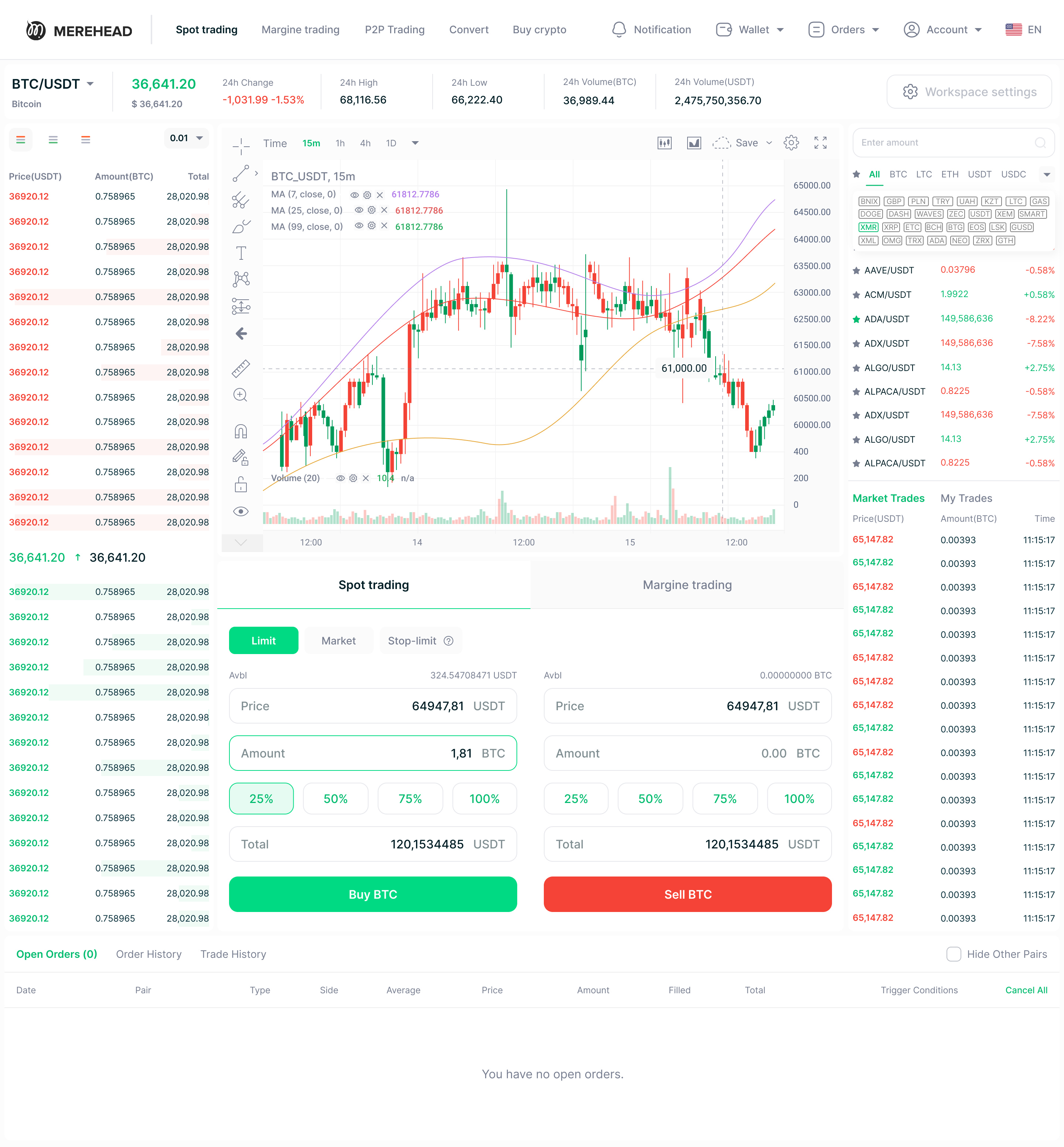
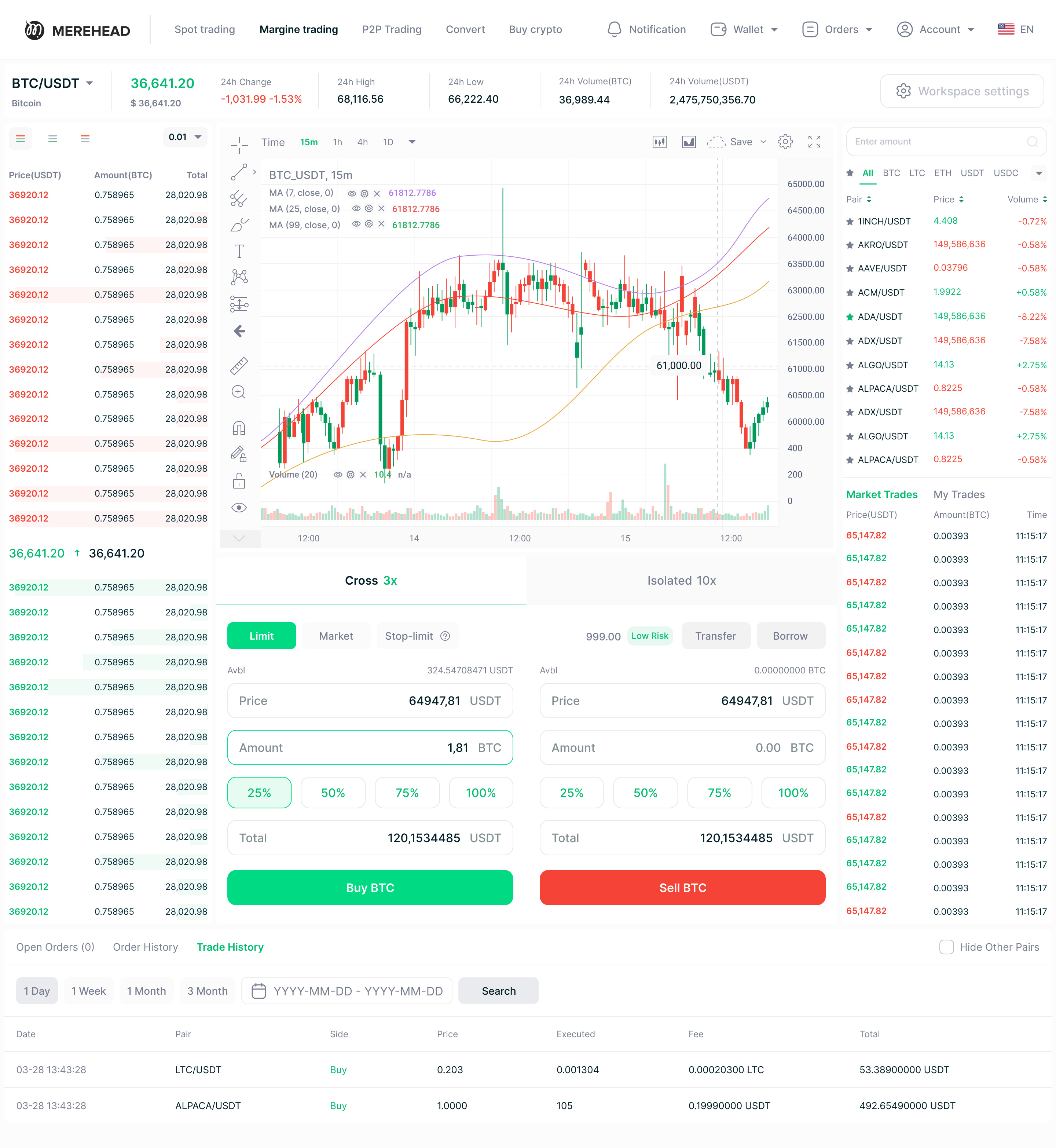
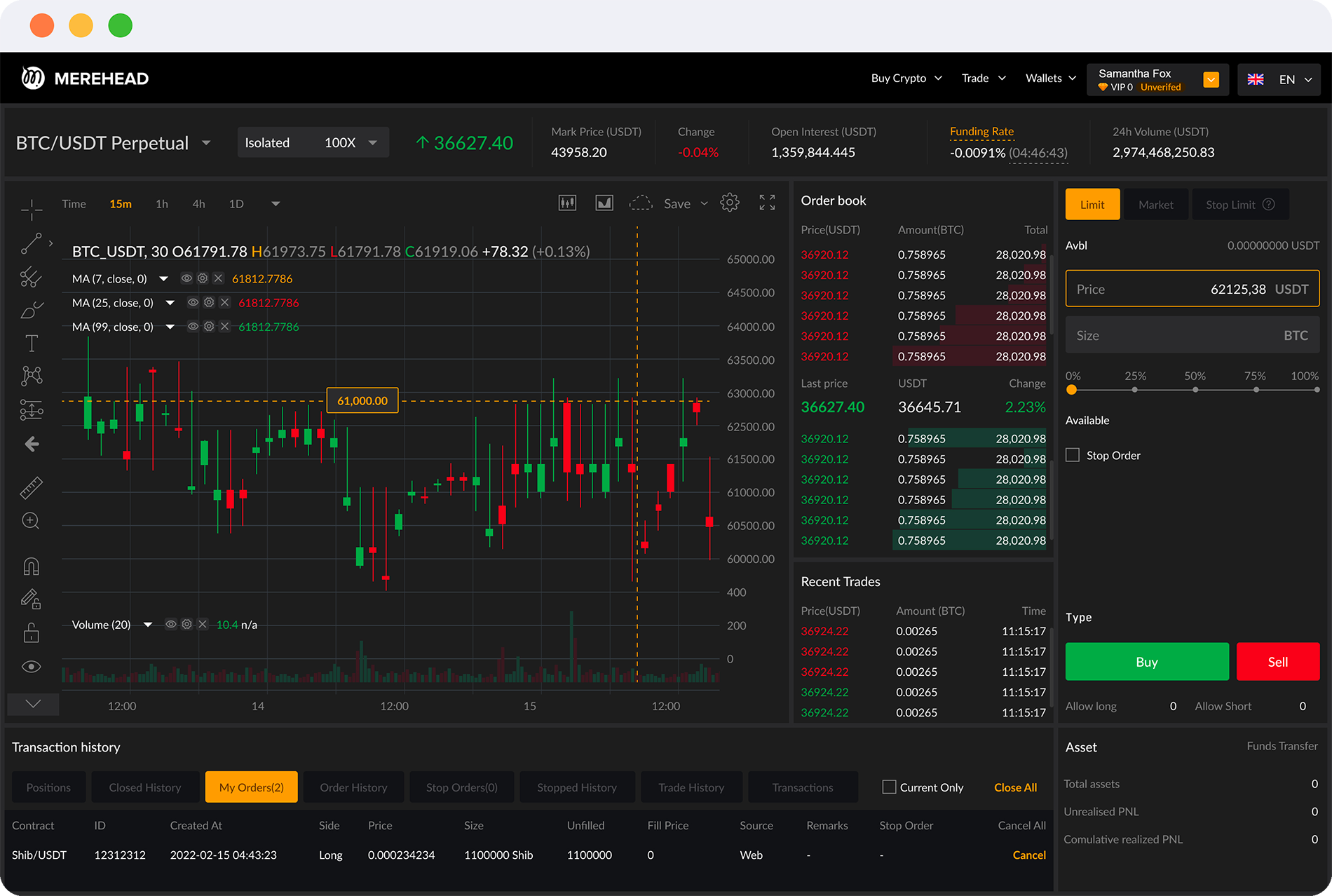
The order book runs on a WebSocket connection — Socket.io or Pusher depending on the infrastructure setup. Every price update pushes to subscribed clients in real time without polling. The matching engine handles three order types: market (instant execution at best available price), limit (execute at a specified price or better), and stop-limit (trigger a limit order when a threshold price is hit).
For platforms that expect meaningful concurrent load from day one, the delivery layer uses Redis pub/sub as a message broker between the matching engine and client WebSocket connections. Each order book update publishes to a Redis channel; the frontend subscribes directly. This eliminates the N×polling problem and keeps latency predictable under load. The matching engine design is the core performance bottleneck in any exchange — the rest of the stack scales horizontally, but matching logic doesn't parallelize trivially.
Node deployment strategy directly affects independence, listing speed, and on-chain data quality. The options break down by tier:
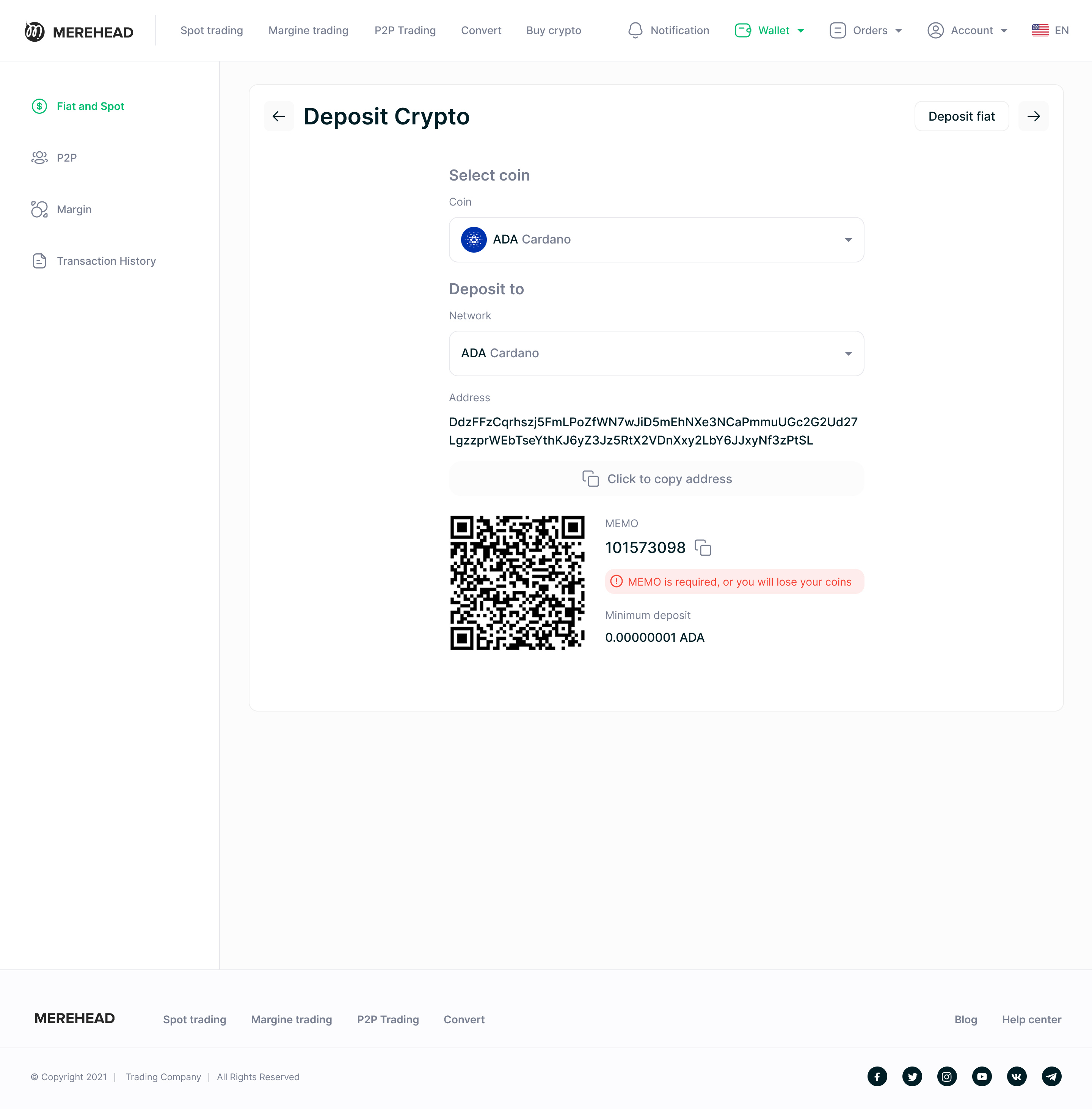
Network (protocol) management lives in the admin panel: operators enable or disable chains and configure deposit confirmations per network without touching the codebase.
An exchange with an empty order book doesn't convert traders — regardless of UI quality or fee structure. Every platform we've shipped includes a liquidity bootstrap strategy as part of the launch plan.
Challenge: A client launched spot + P2P trading on a new regional market. The order book was empty on day one; no organic market makers, no initial liquidity pool. Classic cold-start problem — traders won't come without liquidity, market makers won't seed without traders.
Solution: We integrated an external liquidity provider via REST + WebSocket API (standard integration runs $4,000). Simultaneously, the admin panel's Market-Maker Robot was configured with pair-specific parameters: spread %, order frequency, and volume limits per pair. The robot simulates order book depth on lower-volume pairs while organic trading builds.
Result: The platform opened with a live order book across 12 trading pairs. First organic trading volume appeared on day 3 after launch, without any manual liquidity injection by the client's team.
When evaluating liquidity integrations, the provider selection matters as much as the integration itself. We've written a detailed comparison of the major crypto liquidity providers — the differences in API stability, supported pairs, and pricing models affect operational costs over the platform's lifetime.
The table below reflects what we actually ship per tier — derived from real project estimates across dozens of exchange builds. These are module-level prices, not ballpark ranges.
| Module / Add-on | Cost |
| External liquidity provider integration | $4,000 |
| KYC/AML service integration (single provider) | $1,600 |
| Bank integration (single API) | $2,500 |
| Microservice architecture surcharge | +20% of platform cost |
| Cold wallet — Ledger | $1,300 |
| Cold wallet — Trezor / SecuX / KeepKey | $2,300 each |
| Staking (smart contract + UI) | from $7,000 |
| Copy-trading engine | from $20,000 |
| DEX integration (swap + DEX wallets) | from $20,000 |
| NFT Marketplace module | from $25,000 |
| Crypto payment gateway widget | $30,000–$60,000 |
| ICO/Launchpad platform | $10,000–$20,000 |
| ERC-20 token listing (ETH node exists) | $200 |
| Platform native token (fee system) | $3,500 |
| Security upgrade (white-hat pentest) | from $20,000 |
| Public user chat | $5,000 |
| Portfolio with charts | $8,000 |
| CMS implementation | $8,000–$16,000 |
| Commission by trade volume (dynamic fee tier) | $1,200 |
| Additional language localization | $300 per language |
The items most buyers miss in their initial budget: the microservice surcharge (+20%) and the security pentest. Both are optional on paper; both are effectively required for any platform targeting real trading volume. For detailed pricing across all configuration options, the white label exchange cost breakdown covers every variable.
The base white label covers spot trading and instant exchange. Most operators add at least one or two additional trading modes based on their target market. Here's how the module economics work in practice.
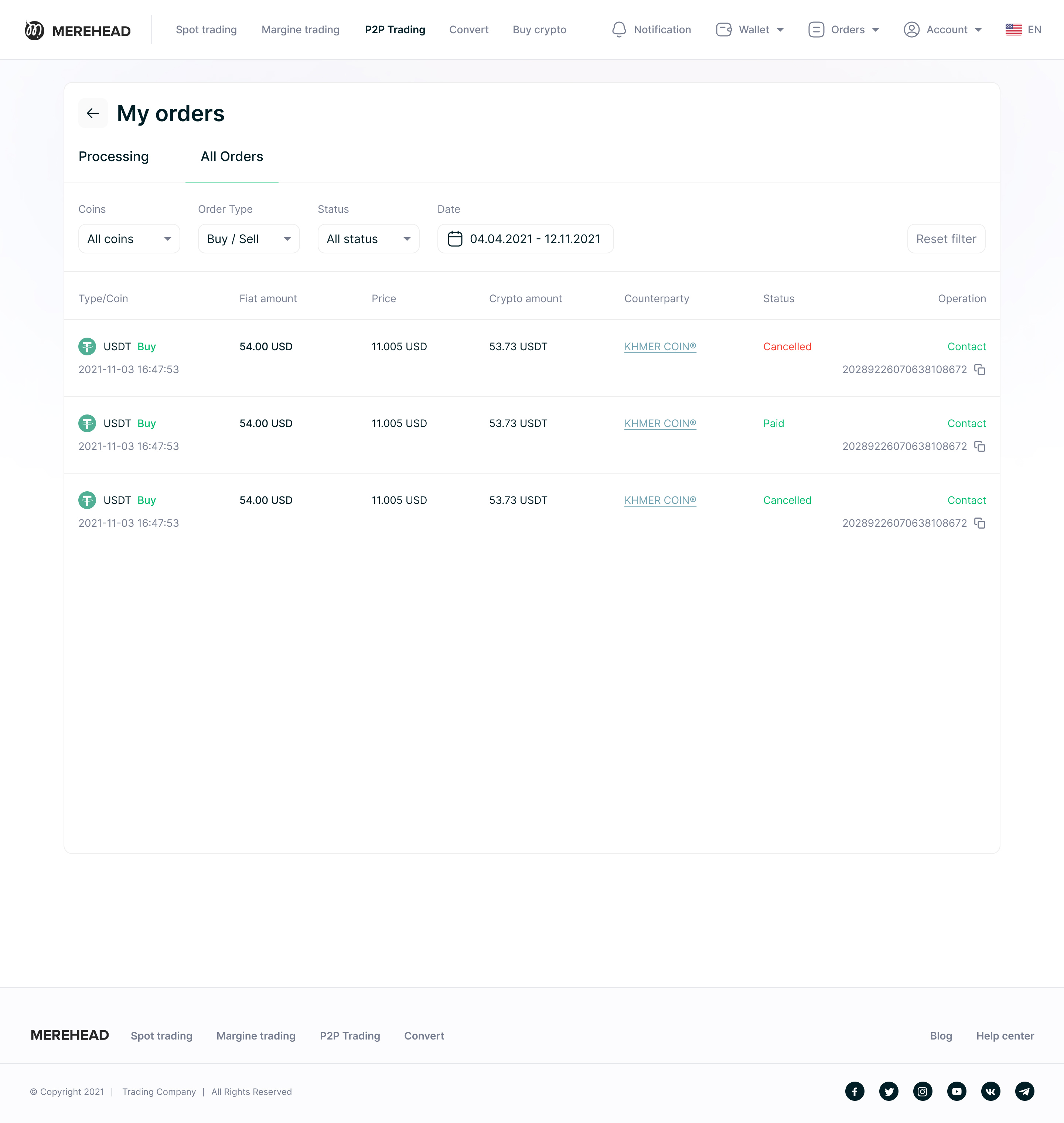
P2P runs as a separate module on top of the spot engine. Users post buy/sell orders with defined payment methods and limits; trades execute through a built-in escrow and dispute system with admin moderation. A white label platform with the P2P layer starts at $56,000 (our solution) or $82,000 from scratch for the Basic tier, scaling up to $93,000/$120,000 at Advanced. Each P2P tier includes a built-in dispute resolution flow and user activity indicators. The P2P exchange module is the single highest-demand add-on we've shipped — roughly 60% of exchange clients include it by the Standard build stage.
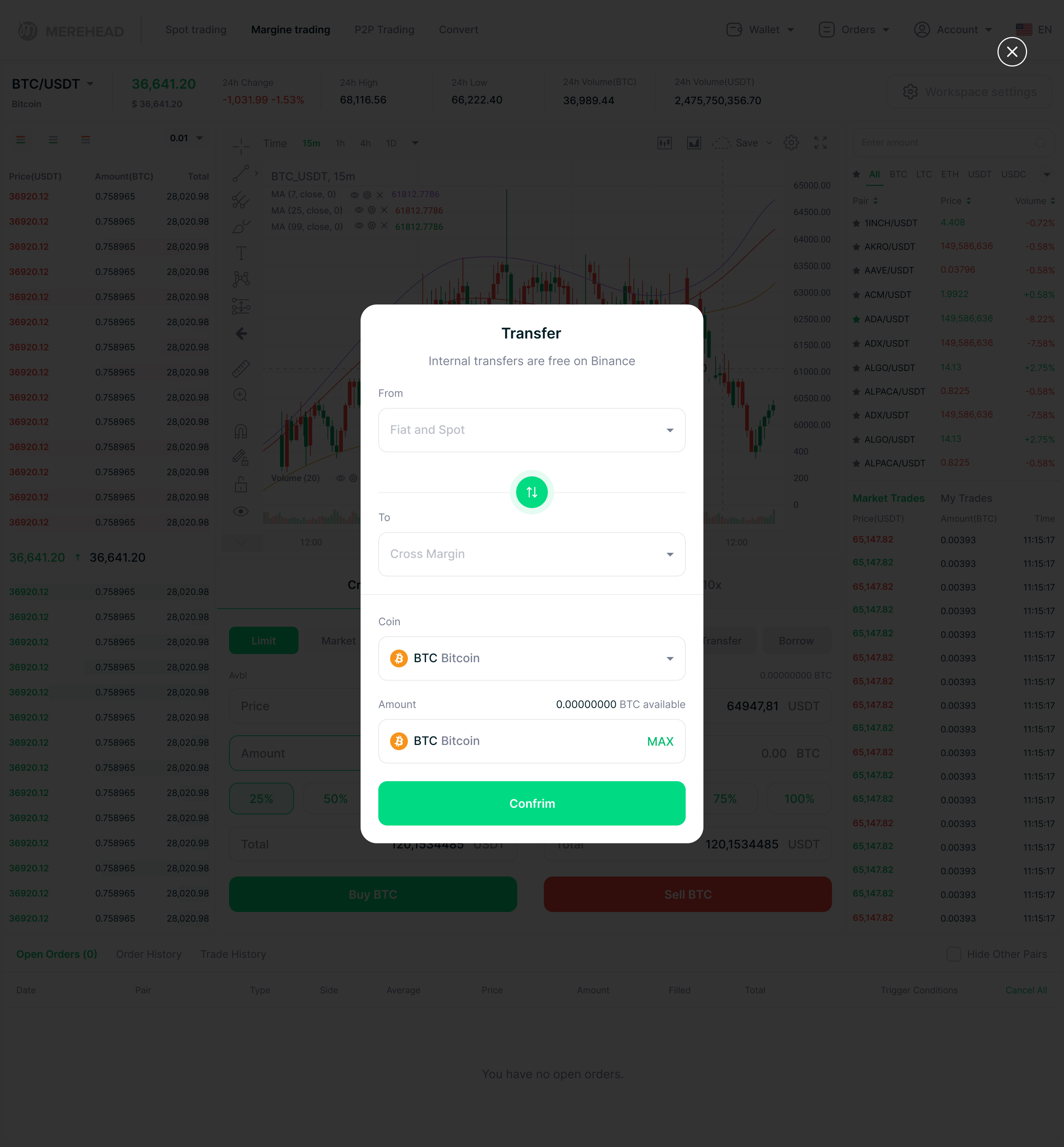
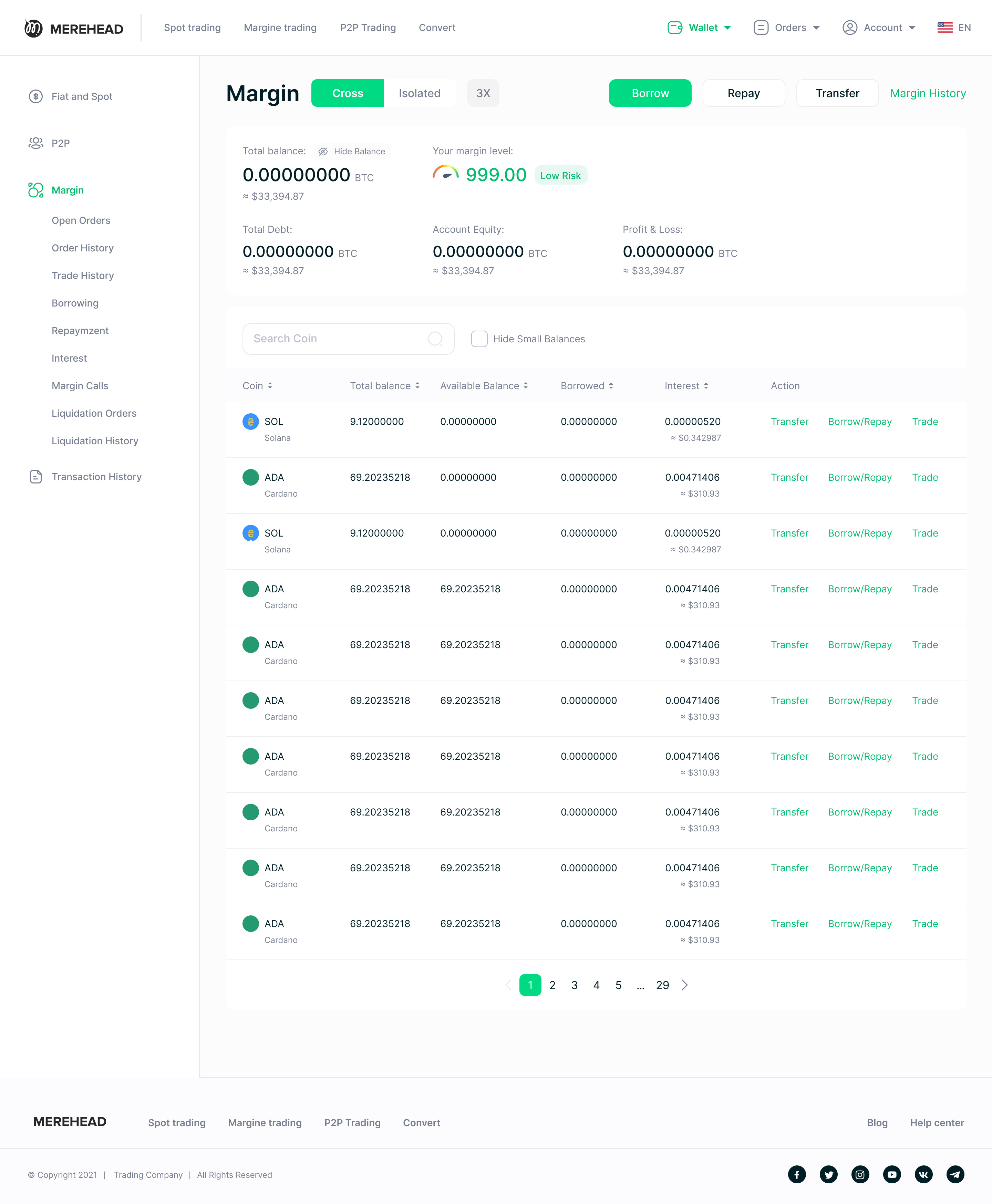
Margin trading adds leverage mechanics to the spot stack: borrowing, repayment, margin level tracking, and liquidation rules. Futures (derivatives) adds cross/isolated margin modes, open interest display, and a separate wallet management flow for futures positions. Both are available as part of the Standard and Advanced tiers without extra cost. Operators who want to run a standalone futures product can explore the white label futures platform configuration specifically built around derivatives.
The Spot Grid Bot module (included in the P2P tier) gives users a configurable grid trading interface: price range, pair selection, geometric or arithmetic grid spacing, and investment amount. The bot marketplace UI shows available bots with ROI, P/L, runtime, and follower count — a copy-trading lite format that increases platform engagement without requiring complex social trading infrastructure. For teams wanting deeper copy-trading mechanics (subscription model, trader profit sharing, signal subscriptions), that runs from $20,000 as a standalone module. The full technical considerations for building a copy trading platform go well beyond the exchange layer itself.
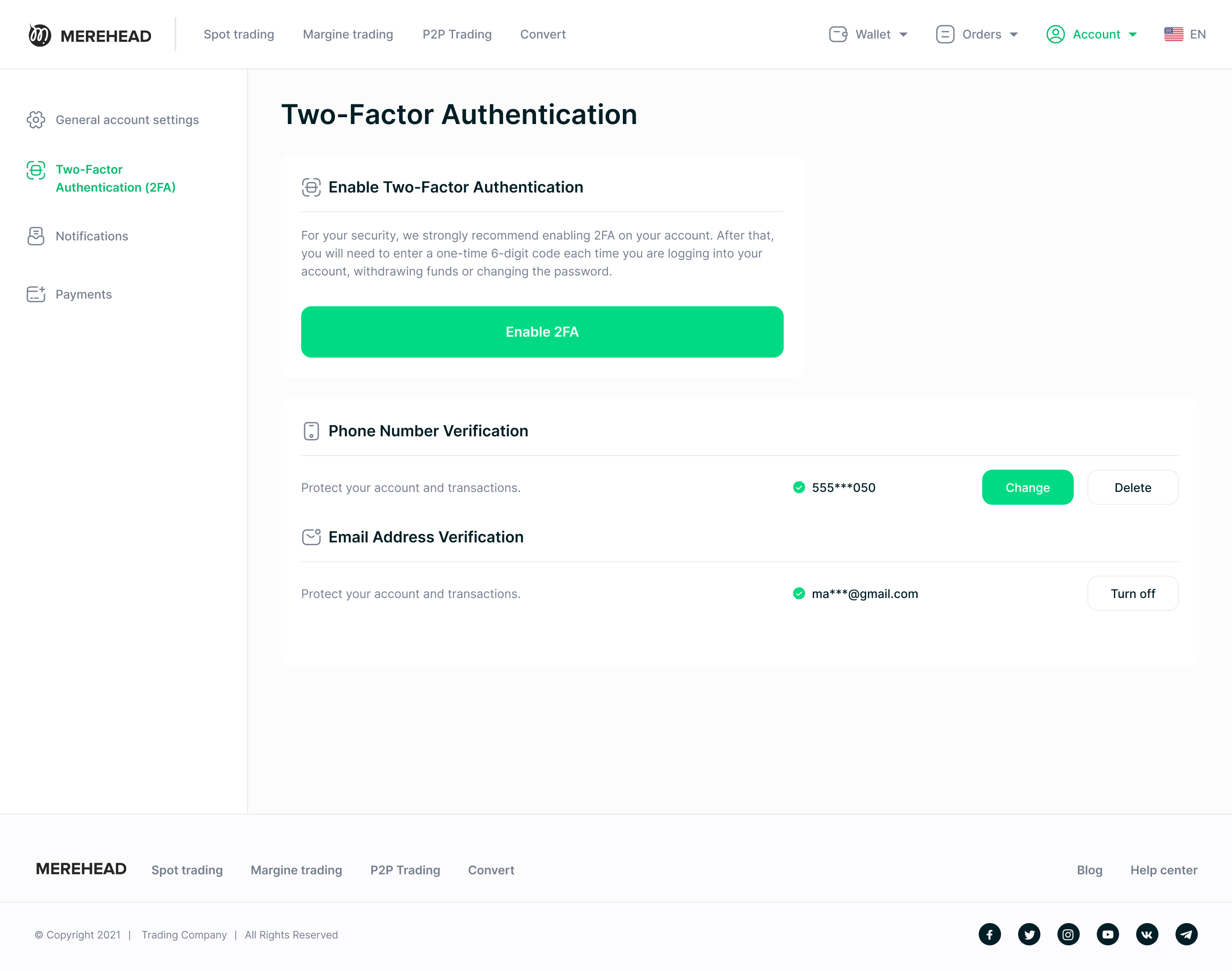
Security in crypto exchange development isn't a single feature — it's a stack of independently operating defensive layers. Removing any one layer creates an attack surface that bad actors actively probe. We ship the following as standard across all platform tiers:
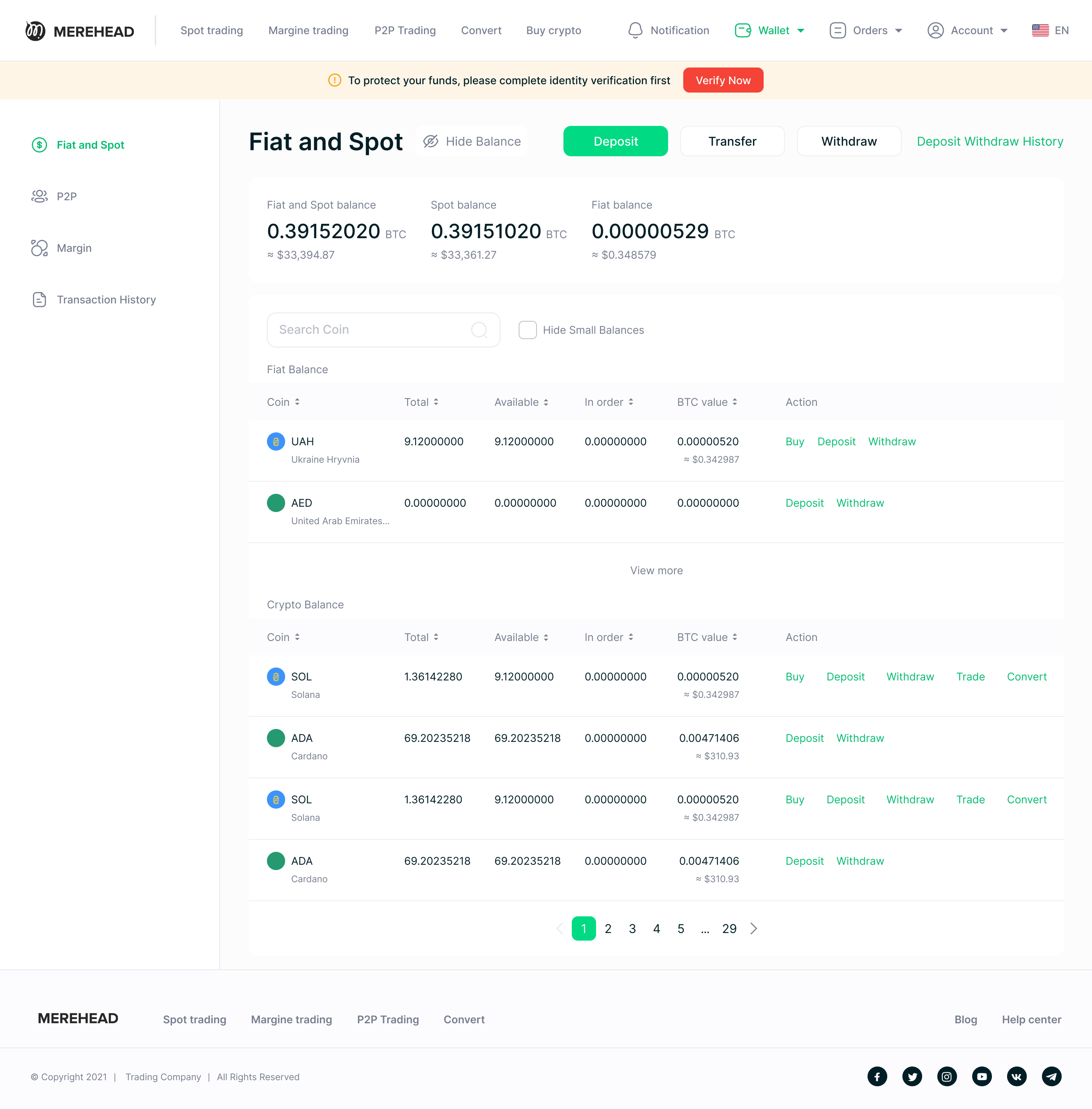
Hot/cold wallet ratio management deserves specific attention. Operators configure what percentage of platform funds stay in hot wallets (immediately available for withdrawals) versus cold storage (Ledger, Trezor, SecuX, KeepKey — all supported). The standard recommendation is to keep 5–10% in hot wallets and move the rest to cold daily. The operational discipline around this configuration determines actual fund safety more than any single security feature. A deeper look at the full threat model lives in our crypto exchange security guide.
After remediation (hardened headers, rate limiting on auth, admin IP restriction, withdrawal confirmation flow), the follow-up test returned zero critical findings. The audit documentation went directly into their license application package.
The stack we use across exchange projects has been stable for several years — not because we resist change, but because these tools have proven reliability under production load in financial applications:
| Layer | Technologies |
| Back-end | Laravel, Node.js, Symfony Components, Express.js |
| Databases | MySQL / PostgreSQL (transactional), Redis / Kafka (queues, cache, pub/sub), MongoDB (analytics) |
| Real-time | WebSockets via Socket.io, Pusher |
| Front-end | ReactJS, Redux Saga, NextJS, TypeScript, SCSS |
| Mobile | Kotlin / Java (Android), Swift (iOS), cross-platform option available |
| DevOps | Docker, Kubernetes, AWS (VPS/Cloud), Jenkins CI/CD, Linux, SSL |
| Charts | TradingView integration (standard across all tiers) |
| Management | Scrum + Kanban, Jira/YouTrack, Confluence, TestRail |
Redis covers two separate functions in the stack — session caching (to keep PostgreSQL load predictable) and pub/sub for real-time data delivery. Kafka enters the picture on Enterprise builds for event streaming between microservices where message ordering and guaranteed delivery matter more than raw speed. The Kubernetes layer handles horizontal scaling: under peak load, new pods spin up without platform downtime.
The timeline below assumes the client delivers branding assets and KYC provider credentials by week 2. Delays in those deliverables are the most common cause of launch slippage — not development velocity.
| Phase | Basic Tier | Standard Tier | Advanced Tier |
| Discovery (tech docs, User Flow, architecture, design) | ~1 month | ~1 month | ~1 month |
| Core development | 1.5–2 months | 2–3 months | 3–3.5 months |
| QA and testing | included | included | included |
| Total to launch | 2.5–3 months | 3–4 months | 4–4.5 months |
Discovery produces three deliverables: technical specification (all functional requirements documented), User Flow (every screen and state mapped), and architecture design (database schema, service boundaries, API contracts). Development doesn't start until all three are signed off. This slows the initial phase by 1–2 weeks compared to teams that skip documentation — but eliminates the scope creep and rework cycles that typically add 30–60% to development time on undocumented projects.
The market for white label exchange software has matured — but so has the number of vendors offering underdocumented, poorly maintained solutions with misleading timelines. Here's what to verify before signing:
A clone script replicates the surface UI of a specific exchange (Binance, KuCoin, etc.) and is typically a pre-packaged, lightly customizable product. A white label exchange is a purpose-built platform delivered with your brand, where the architecture is configurable from the contract stage — different trading modes, node configurations, and feature sets. The key difference is codebase ownership and the ability to modify core trading logic.
Yes — if it's built on a microservice architecture with proper WebSocket order book delivery and Redis-based message brokering. The bottleneck is almost always the matching engine and the node infrastructure, not the front-end. A monolithic architecture will hit scaling limits. Before deploying to production, load testing the matching engine at your target concurrent user count is non-negotiable.
A white label platform with P2P trading starts at $56,000 (our solution) for the Basic tier — that includes the escrow system, dispute resolution, user activity tracking, and P2P order management. P2P from scratch at the same tier starts at $82,000. P2P adds roughly 40–60% to the base exchange cost depending on the feature depth required.
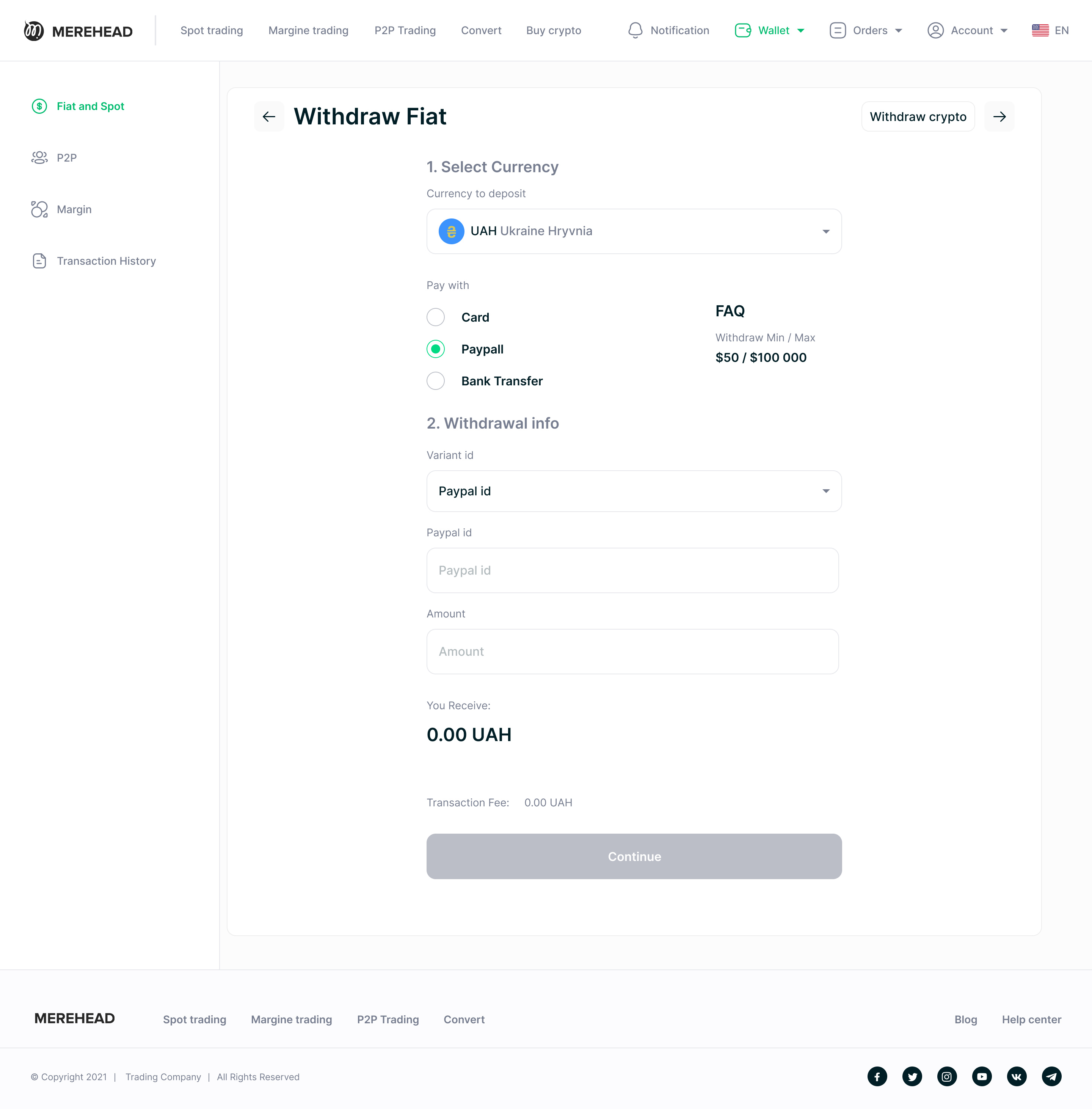
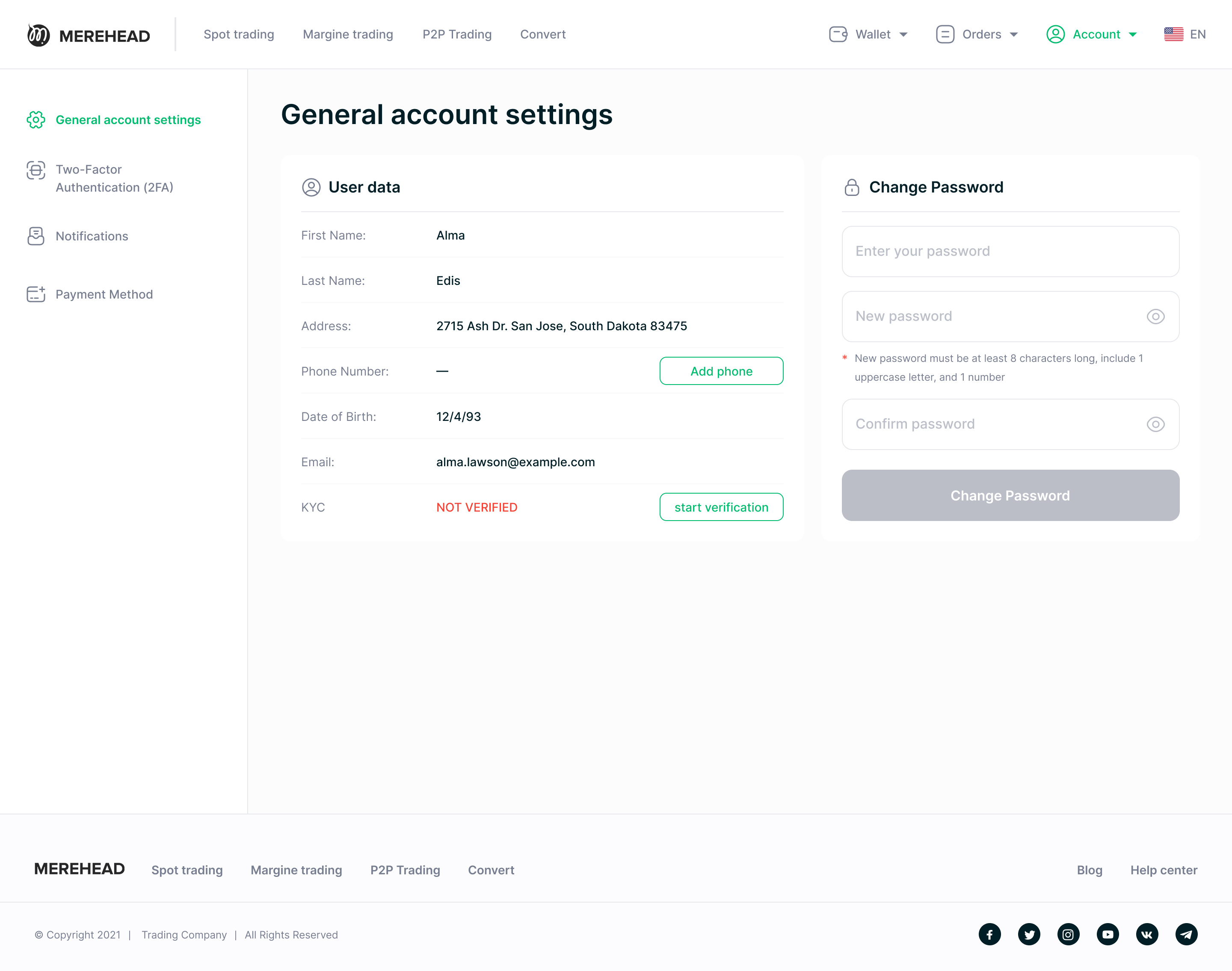
We integrate any third-party KYC/AML service via API — the integration cost is $1,600 per provider. Common choices include Sum&Substance, Sumsub, Jumio, and similar. The choice of provider depends on your target jurisdictions and the document types (passport, driver's license, selfie verification) you need to support for compliance.
Web-only launch is viable for most B2B and regional retail use cases, especially on the Basic tier. Native mobile (Android + iOS) adds $32,000–$54,000 depending on the tier. A cross-platform build runs cheaper ($20,000–$34,000 range) but delivers less native UX and performance. Most operators add mobile in phase 2, 3–6 months after web launch, once trading volume justifies the investment.
Three deliverables: (1) technical specification — all functional requirements in document form, (2) User Flow — every screen, state, and transition mapped, (3) architecture design — database schema, service boundaries, API contracts. Development doesn't start until all three are reviewed and signed off by the client. This phase takes approximately one month and is billed at 20% of total project cost.
No — staking is an add-on module that includes a smart contract, staking UI (list of currencies with APY rates, stake/unstake flow, portfolio of active stakes), and admin configuration. Cost starts at $7,000. Smart contract audit is recommended before production deployment and is priced separately. Launchpad/Launchpool (fixed-price sale, tiered participation) is a separate module starting at $10,000–$20,000.
All bugs and defects that appear after delivery are fixed at no cost for 90 days. Warranty covers defects in the delivered code — it does not cover new feature development, third-party API changes (e.g., a liquidity provider changing their API), or infrastructure issues outside the application layer. Post-warranty support and maintenance is a separate engagement priced monthly based on scope.