
What Is a Copy Trading Platform and Why Build One
A copy trading platform is a specialized fintech product that automatically replicates the trading operations of a signal provider (master trader) across the accounts of subscribers (followers) in real time — with proportional position sizing based on each follower's allocated capital. The technical challenge is not in the concept, but in its implementation: low-latency order synchronization, reliable exchange API integration, and a risk engine that works across dozens or hundreds of follower accounts simultaneously.
Modern copy trading software has evolved well beyond simple order duplication. Today's platforms are full ecosystems: trader ranking algorithms, drawdown-based risk controls, analytics dashboards, KYC/AML compliance layers, and social features that drive retention. Building one requires deliberate architectural decisions from day one.
This guide covers the complete development path — from platform architecture and exchange API integration to security standards, affiliate monetization mechanics, and real-world cost and timeline benchmarks drawn from our own fintech project experience.
Crypto Copy Trading vs. Mirror Trading: Key Differences
Before diving into architecture, it's important to clarify what you're actually building. The terms "copy trading," "mirror trading," and "social trading" are used interchangeably in the market but describe technically different systems.
| Feature | Copy Trading | Mirror Trading | Social Trading |
|---|---|---|---|
| Replication method | Per-trade, real-time sync | Strategy-level, rule-based | Manual follow + signals |
| Follower control | Set allocation %, stop-loss | On/off per strategy | Full manual control |
| Latency sensitivity | High — milliseconds matter | Medium | Low |
| Infrastructure complexity | High | Medium | Low |
| Typical use case | Crypto, Forex platforms | Institutional, Forex brokers | Community platforms |
Crypto copy trading specifically operates in the ecosystem of decentralized and centralized exchanges. The defining characteristics that make it architecturally distinct from Forex-based systems:
- 24/7 market — no maintenance windows, no graceful shutdown cycles;
- Multi-exchange execution — followers may hold accounts on different exchanges (Binance, OKX, Bybit, Bitget), requiring per-exchange API adapters;
- Volatile slippage — a large master trader's order can move the market before all follower orders are filled;
- Decentralized option — on-chain copy trading via smart contracts (higher transparency, lower execution speed).
How to Create a Copy Trading Platform: Core Architecture
Creating a copy trading platform for cryptocurrencies is not a feature you add to an existing exchange — it's an independent product with its own backend, data model, and execution pipeline. Below is the breakdown of the five core development blocks.
1. Trade Replication Engine
This is the technical heart of the platform. Its job: detect a new order on the master account → calculate proportional size for each follower → submit orders to all connected follower accounts within the minimum possible latency window.
The replication engine must handle the following edge cases in its business logic:
- Proportional sizing — if the master allocates 5% of their $50,000 portfolio to a BTC position, a follower with $2,000 must replicate 5% of $2,000, not the absolute dollar amount;
- Minimum order size enforcement — exchanges enforce minimum trade sizes; if a follower's proportional order is below the exchange minimum, the system must either skip, round up, or notify;
- Partial fills — when the master's order is partially filled, the engine must decide: wait for full fill, replicate partial, or cancel follower orders;
- Order modification and cancellation sync — if the master modifies a stop-loss or closes a position early, all follower positions must update within the same replication cycle;
- Message queue — a broker (RabbitMQ, Kafka, or Redis Streams) between the event listener and the order dispatcher is non-negotiable for platforms with 100+ simultaneous followers per trader.
The most common architectural mistake we see in copy trading projects is treating the replication engine as a simple webhook handler. The moment you have 200 followers on a single trader and a volatile news event triggers 50 simultaneous position opens — a synchronous handler collapses. You need async, queue-based dispatch from day one.
 Yuri MusienkoBusiness developer, Merehead
2. Technology Architecture: Monolith vs. Microservices
Choosing between a modular monolith and a microservices architecture is one of the first decisions that shapes your entire development timeline and infrastructure cost. There's no universally correct answer — the right choice depends on your expected load and team size.
Based on experience with enterprise-grade fintech infrastructure, the microservices approach is justified when the platform runs multiple independent high-load modules concurrently: a trading engine, payment processing, AML screening, and liquidity pool management. In one such project, the architecture covered 10+ blockchains (BTC, ETH, USDT ERC20/TRC20, Solana, Tron, Doge, BNB, BUSD, Cardano), automated AML checks on incoming transactions with return of high-risk operations, liquidity pool auto-balancing, multi-region server duplication, and daily backups of all instances. The result was zero downtime during regional failover events.
For a copy trading platform targeting up to 10,000 active subscribers, microservices is over-engineering at the start. Begin with a modular monolith with clearly separated domains — Order Replication Service, User Management, Analytics Engine, Payment Gateway Adapter — and decompose into microservices when real load requires it. This approach cuts time-to-market by 30–40% compared to building microservices from scratch.
Yuri MusienkoBusiness developer, MereheadThe recommended service boundaries for a mid-scale copy trading platform:
| Service / Module | Responsibility | Scale trigger |
|---|---|---|
| Order Replication Service | Event listening, proportional sizing, order dispatch | 500+ followers per trader |
| Exchange API Adapter | Per-exchange REST/WebSocket integration (Binance, OKX, Bybit, Bitget) | 3+ exchanges supported |
| Analytics Engine | Trader ranking, drawdown calculation, performance metrics | 10,000+ historical trades |
| Risk Management Service | Stop-loss enforcement, max allocation limits, volatility alerts | From day one |
| User & Auth Service | Registration, 2FA, KYC status, role management | From day one |
| Payment Gateway Adapter | Deposit/withdrawal routing, multi-gateway support | 2+ payment providers |
| Notification Service | Real-time alerts (trade opened/closed, stop-loss hit, drawdown warning) | From day one |
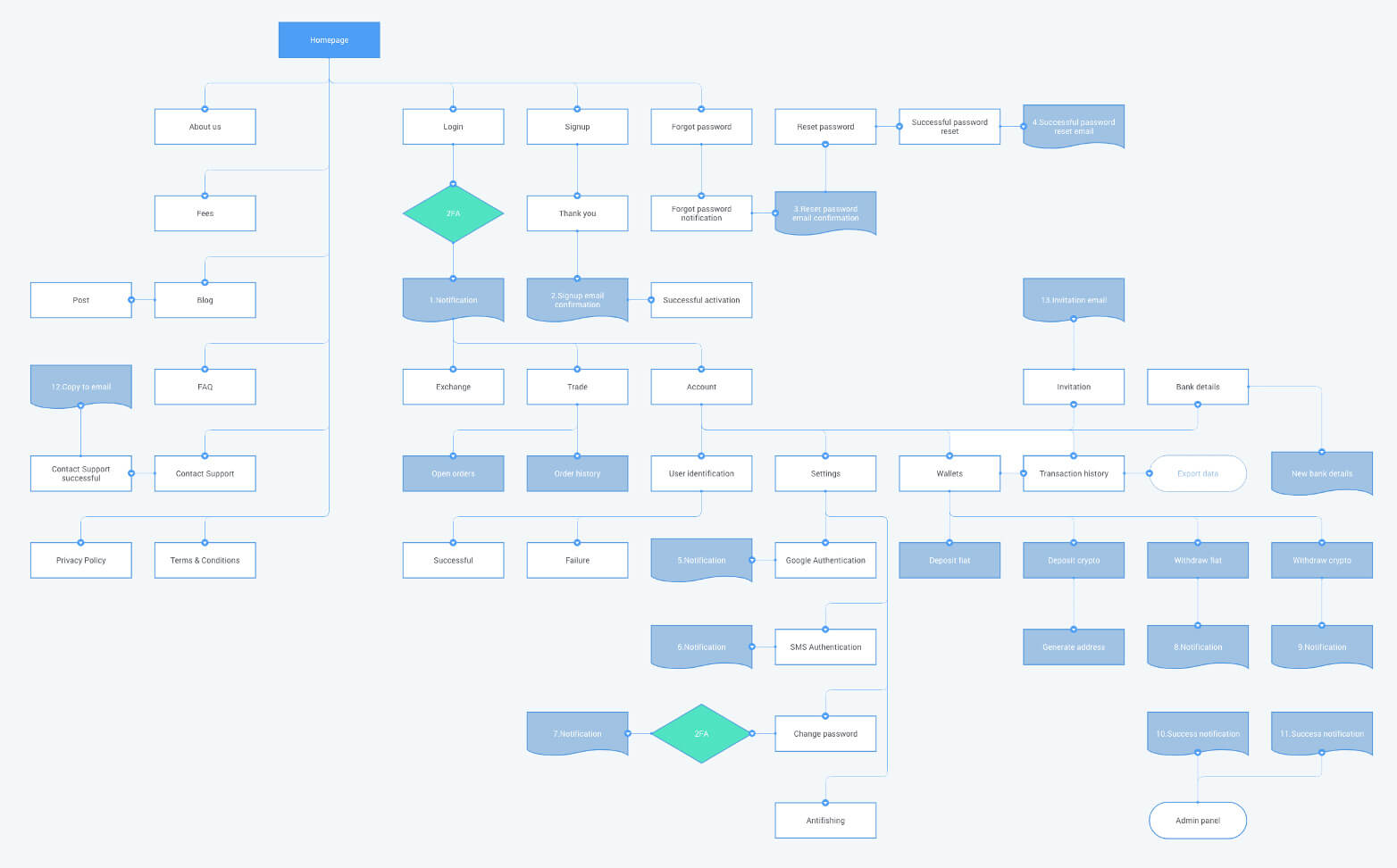
3. Exchange API Integration and Analytical Tools
The exchange integration layer is where most of the development complexity lives. Each exchange has its own REST and WebSocket API specifications, rate limits, authentication schemes, and order type support. A platform that integrates Binance, OKX, Bybit, and Bitget is not doing one integration four times — it's building four distinct adapters behind a unified internal interface.
Critical points in the exchange integration layer:
- WebSocket over REST for order events — polling REST endpoints for new master trades introduces 500ms–2s delays; WebSocket streams bring this under 50ms;
- API rate limit management — each follower account consumes rate limit quota on the exchange; for 500 followers on one trader, a single trade event generates 500 outbound API calls simultaneously. Rate limit pooling and queuing logic is essential;
- Testnet environments — all major exchanges provide sandbox environments; full integration testing must run on testnet before touching live accounts;
- Graceful degradation — if one exchange's API goes down, the replication engine must pause affected follower orders and resume without data loss when connectivity restores.
The analytics module runs as a read-side service consuming historical and real-time trade data. Core analytical components:
- Interactive TradingView charts (candlestick, RSI, MACD, Bollinger Bands) — embed via TradingView Charting Library or Lightweight Charts;
- Trader performance metrics: total return, max drawdown, Sharpe ratio approximation, win rate, average trade duration;
- Recommendation engine — ranks traders by risk-adjusted performance over rolling 30/90-day windows, not just raw profit;
- Portfolio analytics for followers: P&L per copied trader, allocation breakdown, realized vs. unrealized positions.
4. Security Architecture and API Key Protection
Copy trading platforms store exchange API keys on behalf of users — this creates a unique attack surface that standard web application security doesn't fully address. The platform has cryptographic access to users' trading accounts. If keys are compromised, so is their capital.
| Security Layer | Implementation | Priority |
|---|---|---|
| API Key Storage | AES-256 encryption + dedicated secrets vault (HashiCorp Vault or equivalent); keys never stored in plaintext in the application database | Critical |
| API Permissions Scope | Read + Trade ONLY. Withdrawal Access must be architecturally blocked — not just instructed to users | Critical |
| Two-Factor Authentication | TOTP via Google Authenticator for all roles: follower, master trader, admin. SMS as fallback, not primary | Critical |
| Role-Based Access Control | Strict separation: traders cannot access follower account data; admins cannot execute trades; investors cannot modify platform settings | Critical |
| IP Allowlist | Per-account list of authorized IP addresses; new-location login triggers verification + admin notification | High |
| KYC/AML Integration | Document verification via verified third-party provider; ongoing AML screening for transaction risk scoring | High |
| Data Encryption in Transit | TLS 1.3 for all API communication; certificate pinning in mobile clients | High |
| External Security Audit | Third-party code and infrastructure audit before launch and at minimum every 6 months post-launch | High |
5. User Interface and UX Design
The UI layer serves two fundamentally different user types with opposite mental models: master traders who need execution precision and performance analytics, and followers who need clarity, risk transparency, and minimal cognitive load. A single interface that serves both poorly is the most common UX failure in copy trading platforms.
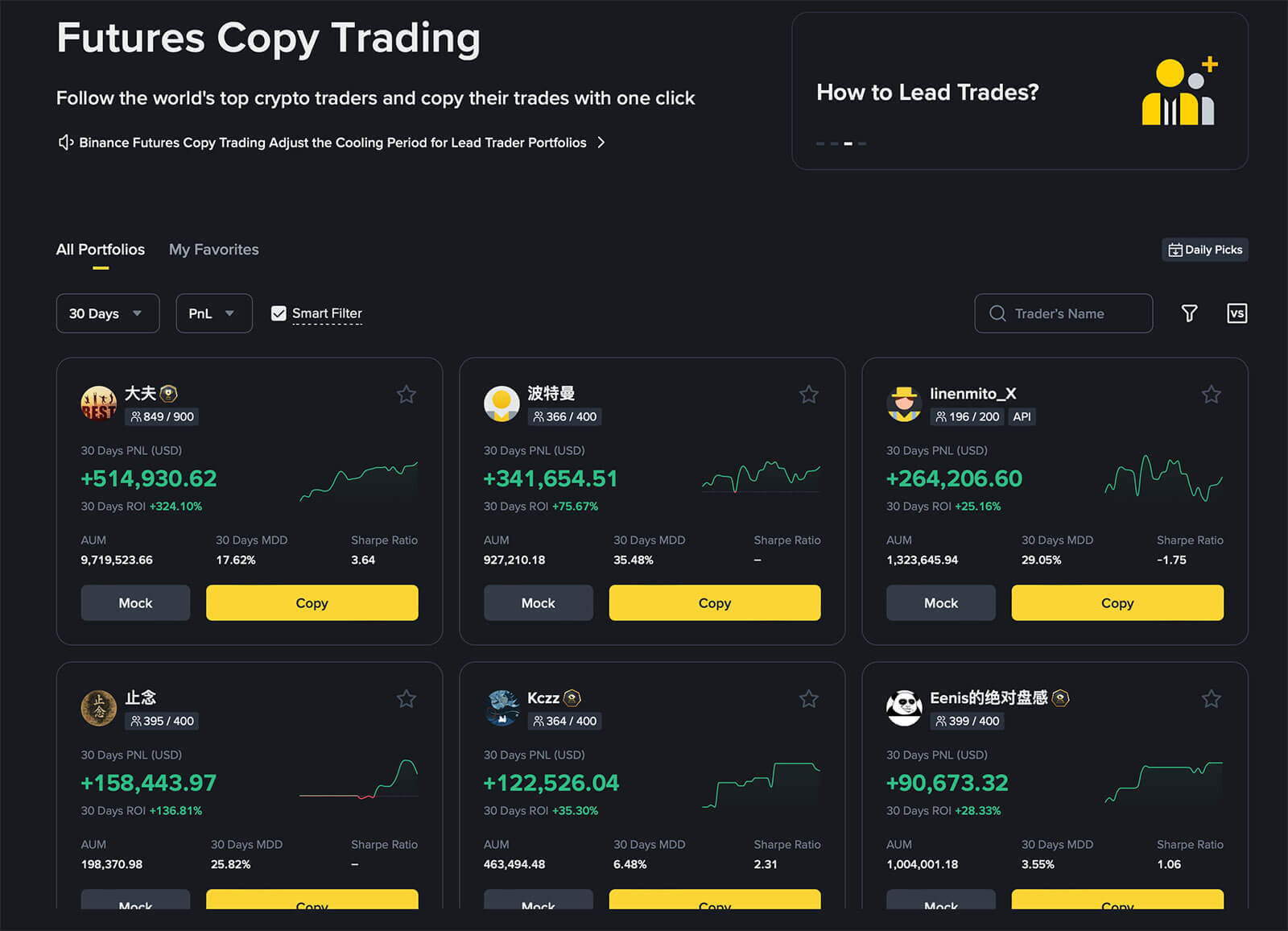
Core UI requirements by user role:
For followers:
- Trader discovery with sortable rankings (profit, drawdown, followers count, win rate) and readable performance history;
- One-screen copy setup: select trader → set allocation amount → set max drawdown limit → confirm. No more than 3 steps;
- Real-time portfolio dashboard: live P&L, open positions, stop-loss status, allocation breakdown per trader;
- Instant notifications on trade events: position opened, closed, stop-loss triggered, drawdown threshold reached.
For master traders:
- Advanced TradingView chart integration with full indicator support (RSI, MACD, Bollinger Bands) and multi-timeframe switching;
- Follower stats panel: total AUM under copy, number of active followers, follower P&L aggregate;
- Performance profile visible to followers: audited trade history, drawdown chart, monthly return breakdown.
Mobile parity is mandatory, not a "nice to have." The platform must deliver full trading and portfolio management functionality on iOS and Android without feature downgrade. Push notifications for order events must arrive in under 2 seconds.
6. Trading Functionality and Asset Coverage
The range of instruments and order types the platform supports directly determines which user segments it can serve and which traders will choose it as their primary platform.
| Functionality | Description | Priority |
|---|---|---|
| Spot copy trading | Replication of spot market orders across BTC, ETH, SOL, TON, and major altcoins | MVP |
| Futures / perpetual contracts | Leverage up to 100x, isolated margin mode, long/short replication, funding rate display | V2 |
| Multi-account wallets | Separate balances for spot and futures trading; inter-wallet transfer functionality | MVP |
| Demo account | Full copy trading simulation without real funds; accessible without registration for conversion | MVP |
| Order types | Market, limit, stop-limit; take-profit and stop-loss on all positions | MVP |
| Multi-strategy selection | Followers can copy multiple traders simultaneously with independent allocations per trader | MVP |
| Conservative / aggressive profiles | Predefined risk parameter sets to simplify setup for non-technical users | V2 |
From a practical standpoint, futures copy trading is significantly more complex to implement than spot: you must replicate leverage settings, handle liquidation risk for followers with smaller capital, and manage funding rate implications. It's a V2 feature, not an MVP requirement, unless your target market specifically demands it from day one.
Risk Management System: Technical Implementation
Risk management in a copy trading platform is not a UX feature — it's a core component of the business logic layer. Since followers' capital is directly exposed to the master trader's decisions, the platform must implement automated risk controls that operate independently of both the master and the follower.
Proportional allocation and capital limits
The platform must enforce a maximum allocation percentage per copied trader at the system level. In production implementations, a reasonable default is 20–30% of a follower's total balance per trader, with a hard system cap at 50%. This prevents scenarios where a single bad trade from one master wipes out a follower's entire portfolio. The allocation logic must recalculate on every trade event — not once at subscription setup — because the master's portfolio composition changes continuously.
Automated stop-loss and take-profit
Followers must be able to set independent stop-loss and take-profit levels that override the master's position management. If the master holds a losing position hoping for a reversal, the follower's stop-loss must fire automatically based on the follower's own risk tolerance — not the master's decision. This decoupling of follower risk controls from master behavior is architecturally critical and frequently underspecified in platform requirements.
Drawdown-based copy suspension
When a trader's drawdown exceeds a configurable threshold (e.g., 15% in a rolling 7-day window), the platform should automatically pause new copy orders for that trader — without terminating existing positions — and notify the follower. This mechanism prevents compounding losses during a trader's losing streak while giving the follower time to make an informed decision.
Real-time monitoring dashboard
The follower dashboard must display live metrics per copied trader: current open P&L, cumulative realized P&L, current drawdown, number of open positions, and remaining stop-loss buffer. Stale data (refreshed every 60+ seconds) is not acceptable for a live trading platform — WebSocket-driven real-time updates are the standard.
A risk management system is not optional for a copy trading platform — it's the primary trust mechanism. Platforms that treat stop-loss and drawdown controls as optional settings see significantly higher churn after the first volatile market event. Build the risk engine before you build the social features.
Yuri MusienkoBusiness developer, MereheadFrom White-Label to Custom: Development Timeline and Cost Reality
One of the most frequently asked questions when planning a copy trading platform is: how long does it take and how much does it cost? The honest answer: it depends entirely on how much custom business logic you need. Based on real project delivery data, there are two distinct development tracks.
The most common planning mistake is underestimating the API layer and order synchronization complexity. Clients often assume exchange integration is a week of work — in reality, stable trade replication requires a dedicated microservice with a message queue, proper rate-limit management, and a full QA cycle on testnet before going live.
Yuri MusienkoBusiness developer, MereheadTrack 1: White-label deployment
A white-label copy trading platform deployment involves taking a proven codebase and adapting it for a new client: brand identity (logo, color scheme, domain), payment gateway API key replacement (e.g., switching to client's Perfect Money and NowPayments accounts), market and trading pair configuration in the admin panel, SMTP and notification service setup, and language localization.
This scope is achievable in 1–2 weeks for a focused team. The key requirement: the base platform must already include all target functionality. Any addition of new business logic — custom trader ranking algorithm, unique copy mechanics, bespoke affiliate system — moves the project into Track 2.
Track 2: Custom platform development
A fully custom copy trading platform built from a discovery phase to production launch follows a phased structure:
| Phase | Deliverables | Timeline |
|---|---|---|
| Discovery | Technical documentation, user flows, architecture design, project specification | 2–3 weeks |
| Core backend | Replication engine, exchange API adapters, user/auth system, wallet infrastructure | 6–8 weeks |
| Risk & analytics | Risk management service, trader ranking, analytics dashboard, notification system | 3–4 weeks |
| Frontend | Follower UI, trader UI, admin panel, mobile-adaptive layout | 4–6 weeks |
| Security & compliance | 2FA, KYC integration, API key vault, AML screening, audit preparation | 2–3 weeks |
| QA & launch | Testnet integration testing, load testing, penetration testing, production deploy | 2–3 weeks |
Total realistic timeline for a custom copy trading platform: 4–6 months. Projects that attempt to compress this below 3 months consistently ship with critical security gaps or an unstable replication engine.
Adding futures trading, a built-in affiliate program, or multi-exchange support from launch extends the timeline by 4–8 additional weeks per major feature block.
Affiliate and Monetization System
A built-in affiliate program is a structural growth mechanism that most copy trading platform guides skip entirely — yet it directly impacts Customer Acquisition Cost (CAC) and the platform's ability to scale without proportional marketing spend increases. Based on real implementations of trading platforms with full affiliate modules, here is what the system architecture looks like in practice.
Affiliate module components
- Campaign management — affiliates create named campaigns with unique tracking links or promo codes; each campaign supports configurable offer types: revenue share (%), deposit share (%), volume share (%), monthly FTD-based conditions;
- Analytics dashboard — real-time metrics: visitors, registrations, CTR, First Time Depositors (FTD), total deposit volume, commission earned, commission on hold;
- Multi-currency affiliate wallet — balance tracking and withdrawal support for ETH, TRX, BNB, BTC, USDT; withdrawal approval flow with admin confirmation;
- Admin controls — promo code management (create, edit, activate/deactivate), user-level affiliate analytics, withdrawal approval queue, API connection to the main trading platform database.
Platform revenue models to design for
- Performance fee — platform takes a % of the master trader's profit (typically 10–30%); requires accurate P&L accounting per follower;
- Subscription fee — followers pay a monthly fee to copy a specific trader; simpler to implement, predictable revenue;
- Spread / commission markup — platform adds a small markup to the spread or charges per copied trade; requires exchange-level integration for fee transparency;
- Withdrawal fee — flat or percentage fee on follower withdrawals; configurable per payment gateway in the admin panel.
Social Features and Community Layer
Social mechanics in copy trading platforms serve a specific functional purpose beyond engagement: they reduce follower churn by creating investment in the community, improve trader quality through public accountability, and provide organic discovery channels for new traders.
The core social layer for a copy trading platform:
- Trader public profiles — verified performance history, audited trade log, risk rating, follower count, AUM under copy, investor reviews with verified-follower badge;
- Following and notification system — users can follow traders without allocating capital, receiving trade signals and performance updates as a pre-commitment step;
- Comments and trade discussion — traders can annotate their trades with reasoning; followers can comment and discuss strategies under specific positions;
- Leaderboards — ranked by risk-adjusted return (not raw profit) to surface genuinely skilled traders rather than high-risk gamblers;
- Educational content module — webinars, analytical reports, interactive risk management modules; increases long-term engagement and positions the platform as a learning environment, not just a tool.
Admin Panel: Core Management Capabilities
The admin panel is the operational backbone of the platform. Based on real-world platform implementations, the admin interface must cover the following functional areas:
| Admin Module | Key Functions |
|---|---|
| Dashboard | Total users, total trading volume, commission turnover, active positions count, deposit/withdrawal totals |
| User Management | User list, KYC confirmation, user profile view (balance, deposit/withdrawal history, authorized IPs), block/unblock |
| Markets Management | Enable/disable trading pairs, configure payout percentages (weekdays vs. weekends), manage futures pairs |
| Trader Management | Trader verification, performance audit, manual ranking override, suspension of copy permissions |
| Transaction Management | Deposit transactions list, withdrawal requests (approve/reject), withdrawal limits per payment gateway |
| Commission Management | Platform fee settings per revenue model, per-gateway withdrawal fee configuration |
| Administrator Management | Admin accounts list, role and permission editing, 2FA via Google Authenticator, new admin creation |
| Trading History | Open trades across all accounts, full trade history with filter by user/trader/date/asset |
Conclusion
Building a copy trading platform is a well-defined engineering challenge — not an ambiguous R&D project. The complexity is concentrated in four areas: the order replication engine (latency, proportional sizing, partial fill handling), exchange API integration (multi-exchange adapters, rate limit management, WebSocket event streams), security architecture (API key vault, scope enforcement, 2FA across all roles), and risk management logic (follower-independent stop-loss, drawdown suspension, real-time dashboard).
Everything else — UI, social features, affiliate system, analytics — is built on top of this foundation. Get the foundation wrong and no amount of polished UX will keep users on the platform after their first losing trade sequence.
The timeline and cost reality: a white-label deployment runs 1–2 weeks; a fully custom platform built to production standards requires 4–6 months. Projects that try to build custom functionality on a white-label budget consistently ship with critical gaps. Define your architecture clearly, scope your MVP honestly, and build the risk engine before you build the feed.
FAQ
The cost varies significantly based on scope. A white-label deployment (rebranding an existing platform, replacing payment keys, configuring markets) typically ranges from $5,000–$15,000 and delivers in 1–2 weeks. A fully custom copy trading platform with a proprietary replication engine, multi-exchange API integration, risk management system, and admin panel ranges from $80,000–$200,000+ depending on features like futures trading support, affiliate module, and mobile apps. The discovery phase, which produces the technical specification and architecture design, is the most reliable way to get an accurate estimate for a custom build.
A production-ready custom copy trading platform takes 4–6 months for an experienced fintech development team. This covers discovery (2–3 weeks), core backend with replication engine and exchange APIs (6–8 weeks), risk and analytics layer (3–4 weeks), frontend across web and mobile (4–6 weeks), security and compliance implementation (2–3 weeks), and QA with testnet validation (2–3 weeks). Adding futures trading or a full affiliate program extends the timeline by 4–8 weeks per major feature block. Timelines below 3 months for a fully custom platform should be treated as a red flag — they typically indicate skipped security layers or an unstable replication engine.
Yes — and there are two viable paths. A white-label deployment gets you a fully functional platform in 1–2 weeks by adapting an existing codebase to your brand and payment infrastructure. A custom platform gives you proprietary business logic, unique trader ranking algorithms, and full control over the architecture, but requires 4–6 months of development. The choice depends on whether your competitive differentiation lives in the product itself or in your trader community and marketing.
The minimum viable exchange coverage for a crypto copy trading platform targeting the US and global market is Binance, OKX, Bybit, and Bitget — these four cover the majority of active crypto traders. Each requires a separate API adapter (REST for account data, WebSocket for real-time order events) with independent rate limit management. Expanding to additional exchanges is straightforward once the adapter pattern is established, as each new exchange is a new adapter implementation rather than a new architecture.
For end users new to copy trading, the key criteria are: a one-screen copy setup flow (select trader, set allocation, confirm — no more than 3 steps), a demo account with full functionality available without registration, clear trader performance history with drawdown displayed prominently (not just profit), and automated stop-loss that operates independently of the master trader's decisions. Platforms that hide drawdown data or make risk controls hard to find are optimized for conversion, not for user outcomes.
The non-negotiable baseline: AES-256 encryption for stored API keys with a dedicated secrets vault, hard block on Withdrawal Access scope for all user-submitted API keys, TOTP-based 2FA for all account types (follower, trader, admin), role-based access control with strict permission separation, IP allowlisting with new-location verification, KYC/AML integration with a verified third-party provider, and an external security audit before launch. The most critical architectural requirement is the API key scope enforcement — the platform must reject any key submitted with withdrawal permissions, regardless of what the user was instructed.