

P2P crypto exchange software has become the infrastructure of choice for markets where centralized exchanges are inaccessible, over-regulated, or simply not trusted. In early 2026, P2P volume in emerging markets crossed 38% of total retail crypto transfers — not because P2P is experimental, but because it solves a real problem: how do people in Lagos, Jakarta, or Kyiv buy and sell crypto when their bank won't process the transaction?
The mechanics are straightforward. A seller posts an offer, specifying the asset, price, and accepted payment methods. A buyer accepts. The P2P exchange software locks the crypto in escrow. The buyer sends fiat through whatever method both agreed on — bank transfer, mobile money, cash deposit. The seller confirms receipt. Escrow releases the crypto. No custodian. No single point of failure. The platform never touches the funds.
For entrepreneurs and fintech companies, this architecture creates a genuinely attractive business model. Infrastructure costs don't scale linearly with volume the way a centralized exchange does. The platform earns from transaction fees, premium listings, and dispute resolution services — while users retain custody of their assets throughout. This guide covers everything about starting P2P crypto exchange software: the core architecture, escrow models, reputation systems, white-label vs custom development, and realistic costs and timelines from Merehead's experience across P2P and exchange projects.
What Is P2P Crypto Exchange Software?
A P2P crypto exchange is an online platform where people trade cryptocurrencies directly with each other — no banks, brokers, or centralized intermediaries involved. Instead of handing your assets over to the exchange, you negotiate terms with another user and complete the transaction securely through the platform’s built-in tools.
Most modern P2P exchanges include an escrow service. Think of it as a digital safety deposit box: when a deal is agreed upon, the crypto is temporarily locked until both sides fulfill their part of the bargain. This way, neither party has to rely on trust alone — the system ensures fairness.
These platforms typically support dozens of leading cryptocurrencies, from BTC, ETH, and BNB to popular stablecoins like USDT and USDC. Depending on the setup, a P2P exchange can operate as a centralized platform (CEX), where the main infrastructure runs on traditional servers but transactions still involve blockchain, or as a fully decentralized exchange (DEX) software, built entirely on blockchain technology.
Core Features of P2P Crypto Exchange Software
The exact features of your P2P platform will depend on its architecture and purpose, but some tools are essential for almost any setup:
- Direct crypto-to-crypto or crypto-to-fiat exchange – Users should be able to trade the most popular assets like BTC, ETH, USDT, USDC, BNB and other top coins or stablecoins.
- Escrow protection – Whether via a secure centralized account or blockchain-based smart contracts, escrow ensures that both sides fulfill their part of the deal before funds are released.
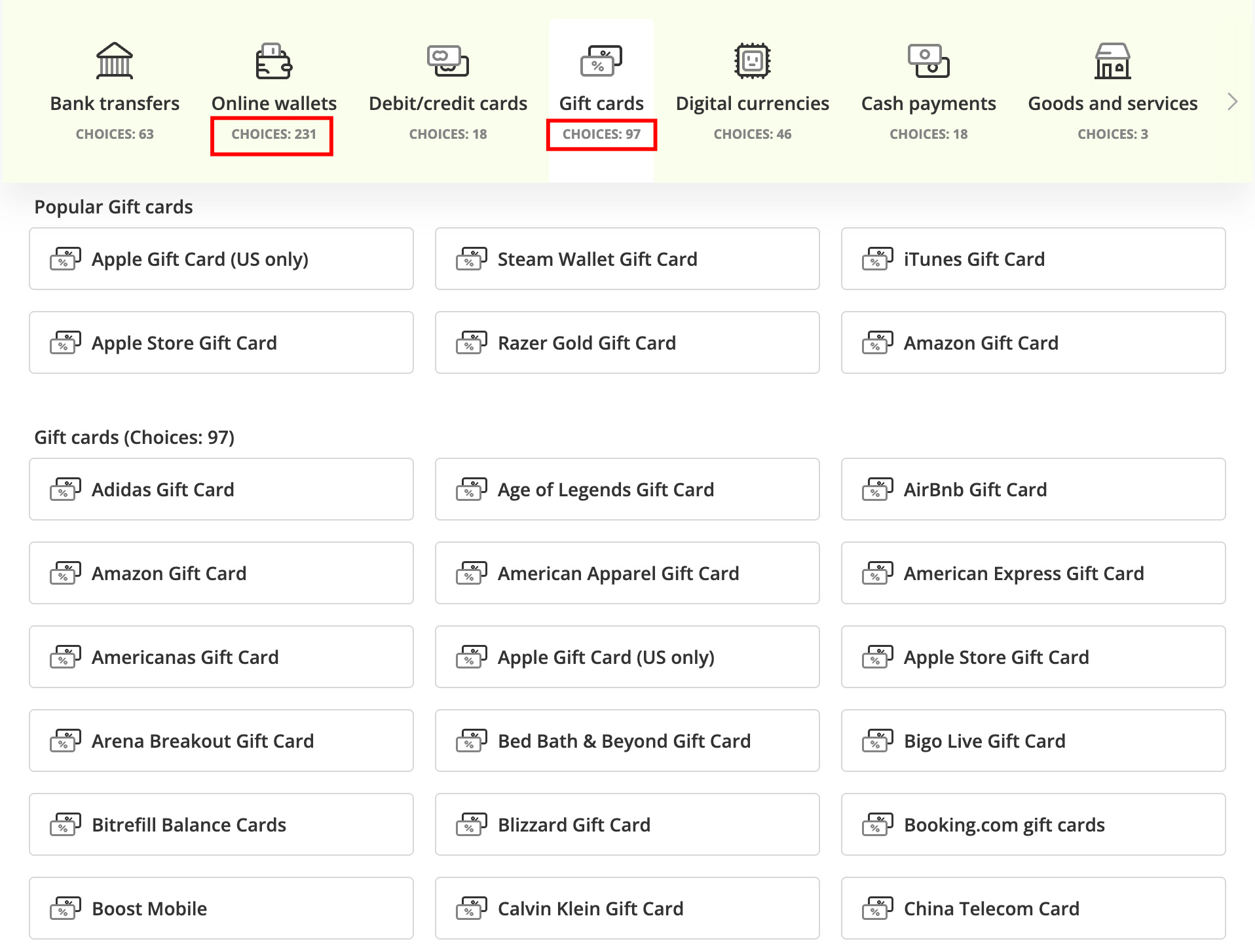
- Multiple payment methods – From bank transfers and cards to e-wallets like PayPal, Payeer, and AdvCash. Fiat support greatly expands your potential audience.
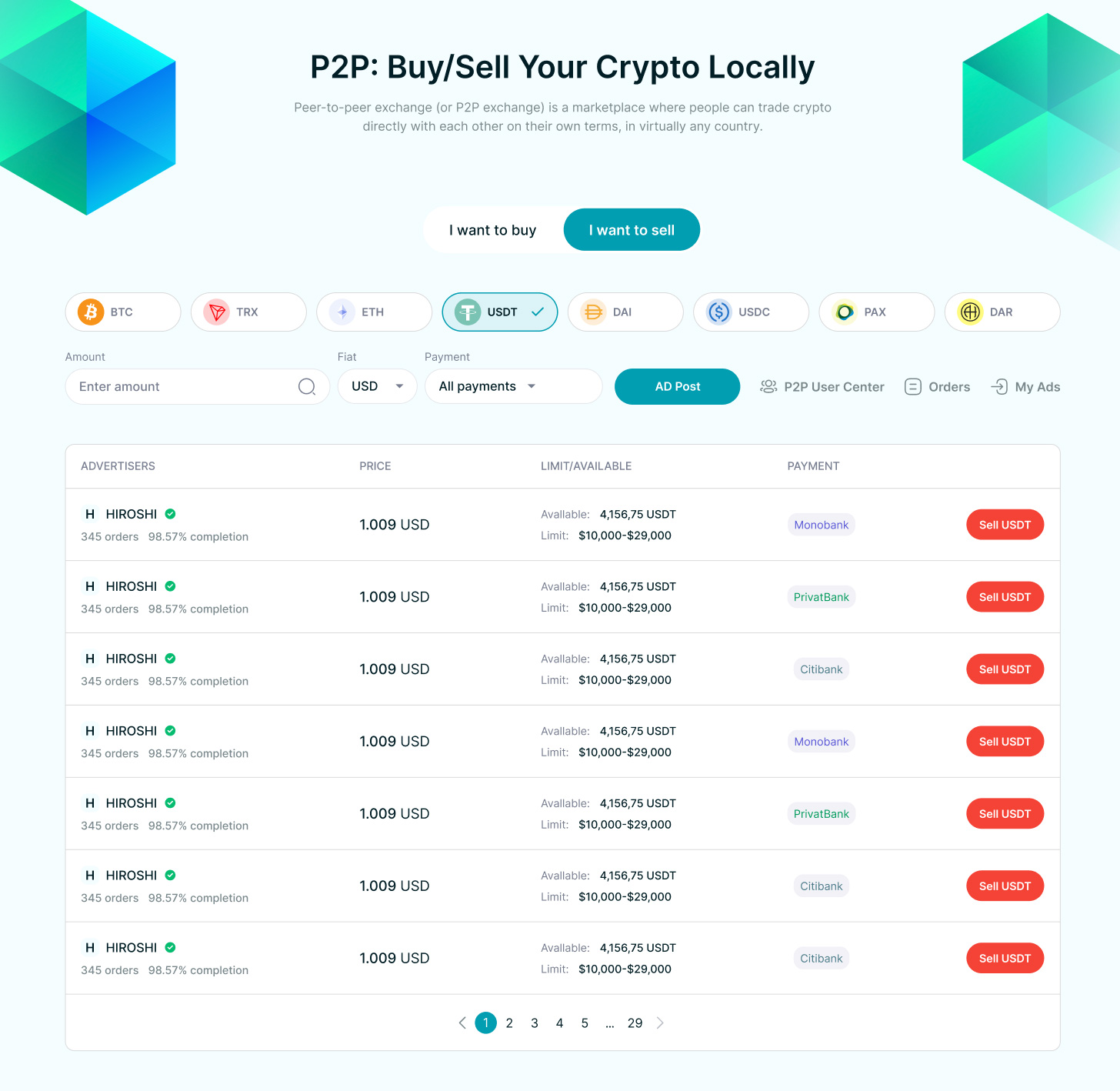
- User-friendly interface – Intuitive navigation, quick search for counterparties, filters by payment method, currency, and transaction size.
- Security tools – Two-factor authentication (2FA), anti-phishing protection, DDoS prevention, and optional KYC/AML compliance.
- Mobile access – A responsive mobile site and apps for iOS/Android to allow trading on the go.
Reputation System & Trust Score
The reputation system is the competitive moat of any P2P crypto exchange platform. Unlike a CEX where liquidity depth is the primary trust signal, P2P platforms live or die by whether buyers and sellers trust each other. A properly designed reputation system tracks: completed trade count, completion rate, average response time, dispute rate, and user-submitted ratings. These metrics combine into a visible trust score displayed on each trader's profile.
In our experience building P2P exchange platforms, the trust score algorithm needs careful calibration before launch. A seller with 200 completed trades and a 98% completion rate should be visually differentiated from a new user with 2 trades — not just by number but by a badge tier system that guides buyers toward reliable counterparties. Platforms that launch with flat reputation systems (simple star ratings only) consistently see higher dispute rates in the first 90 days because users can't distinguish verified reliable traders from newcomers.
Dispute Resolution Workflow
Dispute resolution is the feature that determines whether a P2P exchange software retains users after a bad trade — or loses them permanently. The standard escalation path: automated reminders when a trade window approaches expiry → buyer or seller initiates dispute → both parties submit evidence (screenshots, payment receipts, chat logs) → admin reviews and rules → escrow releases to the winning party.
The critical design decision is the evidence submission window and admin response SLA. In our P2P exchange builds, we've found that users tolerate delayed resolution far better than opaque resolution. A 48-hour response window with visible status updates generates significantly fewer support escalations than a 24-hour window with no visibility into the review process. Automated dispute triage — flagging trades with unusual payment amounts or first-time counterparties — reduces admin workload by 40-60% in production platforms.
Multi-Payment Method Integration
The breadth of payment methods supported is the primary acquisition driver for P2P cryptocurrency exchange software in emerging markets. A platform that supports bank transfers only captures maybe 30% of the addressable market. Adding mobile money (M-Pesa, MTN Mobile Money), cash deposits, gift cards, and local payment apps can expand the addressable market 3-4x in Africa, Southeast Asia, and Latin America.
Each payment method requires its own verification flow and dispute evidence requirements. Bank transfer disputes need SWIFT/SEPA reference numbers. Mobile money disputes need transaction IDs. Cash deposit disputes need branch and teller records. Building a generic evidence collection form that works for all payment types is technically straightforward — designing the admin review tooling to handle the diversity efficiently is where most platforms underinvest.
Building trust starts with functionality that feels fast, safe, and easy for both beginners and experienced traders.
Escrow Architecture in P2P Crypto Exchange Software
The escrow mechanism is the technical heart of any P2P crypto exchange software. Get it wrong and no amount of good UI saves the platform — a single escrow failure that loses user funds will destroy the trust that P2P exchanges take months to build. There are two architecturally distinct approaches, each with specific trade-offs:
Smart Contract-Based Escrow
Smart contract escrow deploys the locking logic on-chain — typically Ethereum, BNB Chain, or an L2 like Arbitrum or Polygon. When a trade is initiated, the seller calls the smart contract to deposit and lock the crypto. The buyer sends fiat off-chain. On seller confirmation, the contract releases to the buyer's address. If dispute is raised, the contract pauses release and waits for admin arbitration input.
The key advantage: the platform never holds the funds. The escrow contract is autonomous — even if Merehead's servers go down, a confirmed trade still settles. This removes the platform from the custody chain entirely, which is both a regulatory advantage (no money transmitter license required in many jurisdictions for non-custodial models) and a security advantage (no centralized wallet to hack).
The trade-off: gas fees. Every escrow operation — lock, release, dispute initiation — costs gas. On Ethereum mainnet, this adds $5-$50 per trade in friction. L2 deployment reduces this to $0.05-$0.50, which is why we recommend Arbitrum or Polygon for any P2P exchange software targeting high transaction frequency users.
Custodial Escrow
Custodial escrow holds funds in a platform-controlled wallet during the trade window. It operates like a traditional payment hold: the seller sends crypto to the platform's escrow wallet, the buyer pays fiat, and the platform's backend releases the crypto on confirmation. This model is simpler to implement, costs nothing in gas fees, and is often more understandable to non-crypto-native users in markets with low blockchain literacy.
The trade-offs: the platform holds custody, creating both regulatory exposure (typically requires money transmitter licensing) and security risk (the escrow wallet is a target). For P2P crypto exchange software targeting regions where users are more comfortable with institutional custody — similar to how they trust a bank's payment hold — custodial escrow with a clean audit trail and transparent balance reporting can actually build more user confidence than smart contract escrow that users don't understand.
Which Model to Choose
In our P2P exchange builds, we default to smart contract escrow for crypto-native audiences and developer communities, and custodial escrow for consumer-facing platforms in emerging markets. A hybrid approach — offering both models with user choice at trade initiation — captures both segments but doubles the complexity of the dispute resolution workflow. The right choice depends on your target geography, regulatory environment, and the average crypto literacy of your user base. We scope this decision explicitly during discovery before any escrow code is written.
Monetization Models for P2P Crypto Platforms
Monetization isn’t just about generating revenue — it’s a strategy that shapes the long-term stability, growth, and competitiveness of your P2P crypto exchange. The most successful platforms combine several revenue streams, creating a balance between profitability and user satisfaction.
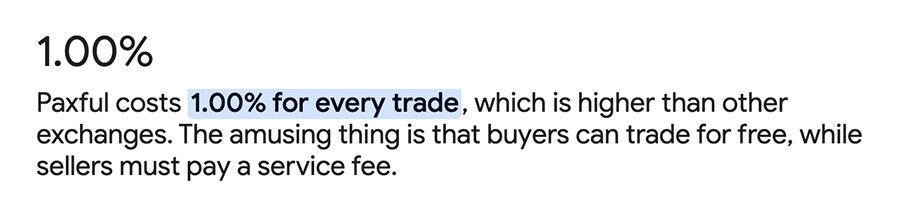
- Transaction Fees. This is the backbone of most exchanges’ revenue models. Fees are typically charged to the seller and can range from 0.2% to 1.5% depending on trade volume, platform type (CEX or DEX), and liquidity levels. For example, Binance P2P keeps fees minimal but offsets this with extremely high trading volumes.
- Paid Listing or Ad Placement. Premium listings allow traders to position their offers at the top of search results. Think of it as in-platform advertising — sellers are willing to pay for visibility, while you secure a consistent secondary income stream.
- Fiat Deposit and Withdrawal Fees. Particularly relevant for CEX platforms integrating crypto banking systems, card payments, or e-wallets. Users value speed and convenience and are generally willing to pay a transparent fee if it ensures fast and reliable processing.
- Spread-Based Earnings. Some platforms set their own buy/sell rates and earn from the difference between them. While less visible to the end user, this approach can generate significant revenue at scale.
- Additional Financial Services. Staking, crypto loans, arbitrage bots, futures trading — these services not only boost platform value for users but also introduce new commission-based income channels.
- Native Tokens and DeFi Mechanics. DEX platforms often issue their own tokens to pay for fees, grant governance rights, or offer staking rewards. This builds an internal economy and allows revenue growth through token capitalization.
Takeaway: A diversified monetization model makes your business resilient to market fluctuations. If one revenue stream slows due to changing trends, others can offset the dip. The key is finding the right balance between profitability and user accessibility to ensure sustainable long-term growth.
White Label P2P Exchange Software – Your Fast-Track to Launch
Imagine this: you have a solid business idea for a crypto exchange, but building everything from scratch would take months (and a fortune). Instead, you plug into a white-label P2P exchange — a ready-to-deploy platform where the heavy lifting is already done for you.
From secure escrow systems and KYC/AML modules to fiat payment gateways and clean UI/UX templates, all the essentials are built in. All that’s left is to brand it your way, fine-tune the features, and hit the launch button.
Why Businesses Love It
- Lightning-fast launch: Go live in weeks, not months.
- Lower risk & cost: Skip the expensive development phase.
- Proven stability: Core architecture tested in real-world exchanges.
What to Watch Out For
Since it’s pre-built, there might be limits when adding highly unique features or custom workflows. This is why many founders see it as a stepping stone, not the final destination.
Pro Tip: Start lean — use a white label to validate your idea, build a user base, and start generating revenue. Once your model works, upgrade to a fully custom platform to unlock total creative freedom.
Bottom line: Whether you choose white-label or custom, your platform’s survival will depend on security, compliance, and liquidity. Without them, even the best-looking exchange won’t last in the crypto arena.
Custom-Built P2P Exchange Development – When You Need More Than “Off-the-Shelf”
Some projects don’t fit into pre-made templates. Maybe you’re targeting a niche market with unique payment options, or you want to introduce trading features that simply don’t exist on other platforms. That’s when custom-built development becomes the smarter — and sometimes the only — choice.
With a fully bespoke P2P crypto exchange, you’re in charge of every detail:
- You decide how the user interface feels and looks.
- You choose which blockchains and tokens to support from day one.
- You design security layers that match the exact risks your users face.
This freedom comes with its realities. Building from scratch isn’t a quick sprint — it’s a long game. A realistic timeline is 6–12 months before launch, often longer if you’re adding complex DeFi tools or multi-chain interoperability. You’ll also need the right team: blockchain engineers, backend and frontend developers, UX designers, and legal advisors who understand crypto regulations in your target markets.
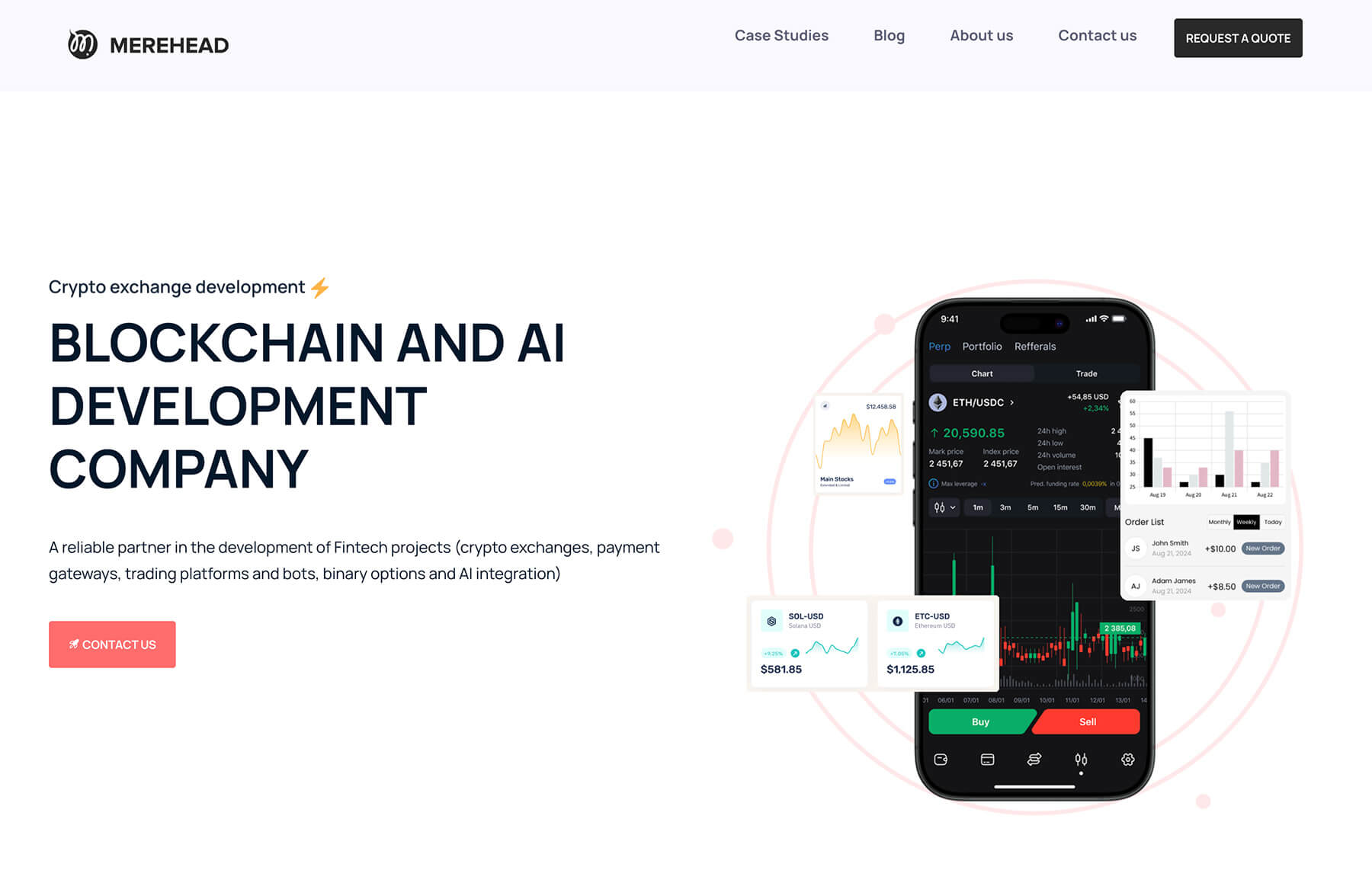
The biggest payoff? Long-term control. You’re not tied to someone else’s licensing terms or update schedule. If a new regulation rolls in or a competitor launches an innovative feature, you can pivot without waiting for a vendor to catch up.
A practical approach many founders take is to launch an MVP — a lean version of the platform with essential trading and security features — then expand in phases. This allows you to attract early users, generate revenue, and collect feedback while building the more advanced components in parallel.
P2P Crypto Exchange Software Development Cost
The cost of P2P crypto exchange software development varies significantly by approach:
| Approach | Cost | Timeline | Best For |
| White-label P2P software | $15,000–$60,000 | 4–10 weeks | Fast launch, market validation, proven architecture |
| Custom P2P platform (MVP) | $40,000–$90,000 | 3–5 months | Specific market focus, unique payment methods |
| Full custom P2P exchange | $80,000–$200,000+ | 6–12 months | Multi-region, advanced DeFi features, own escrow |
The most consistently underestimated cost items in P2P exchange builds: dispute resolution admin tooling (typically $10,000–$25,000 to build properly) and multi-payment method integration ($3,000–$8,000 per payment method beyond the first two). These are the operational components that keep the platform running — not features users see in demos, but infrastructure that determines whether you can handle 100 disputes per day without a support team of 20.
We've run the numbers across our P2P exchange projects: platforms that under-invest in admin tooling at launch spend 2-3x that amount in manual support labor within the first 6 months. Building it right the first time is almost always cheaper than retrofitting operations tooling after go-live.
Custom P2P crypto exchange development isn’t the fastest road, but for businesses with a clear vision and the patience to build it right, it can be the difference between just running another exchange and owning a market leader.
Security & Compliance Essentials – The Non-Negotiables of a P2P Exchange
In the world of P2P crypto trading, your platform’s reputation rests on two pillars: security and compliance. If either one cracks, the whole business is at risk.
Security starts with the obvious — protecting funds and user data — but goes much deeper. You’ll need multi-layer defenses:
- Escrow & Smart Contracts: Funds should only be released when both sides complete their end of the deal.
- Multi-Factor Authentication: Keep unauthorized logins out, even if a password leaks.
- DDoS Protection & Anti-Phishing Tools: The attacks will come; prepare for them before they do.
- Regular Security Audits: Independent code reviews to catch vulnerabilities early.
Then comes compliance — a topic many startups try to avoid until it’s too late. Depending on your target market, this might mean KYC/AML verification, licensing as a money service business, or working with regulators to meet evolving crypto laws. Skipping these steps might seem like a shortcut, but it’s usually the fastest way to get your exchange shut down.
Global P2P leaders like Paxful and Binance P2P have built trust not just by offering good rates, but by proving they can keep traders safe and meet legal standards across multiple countries.
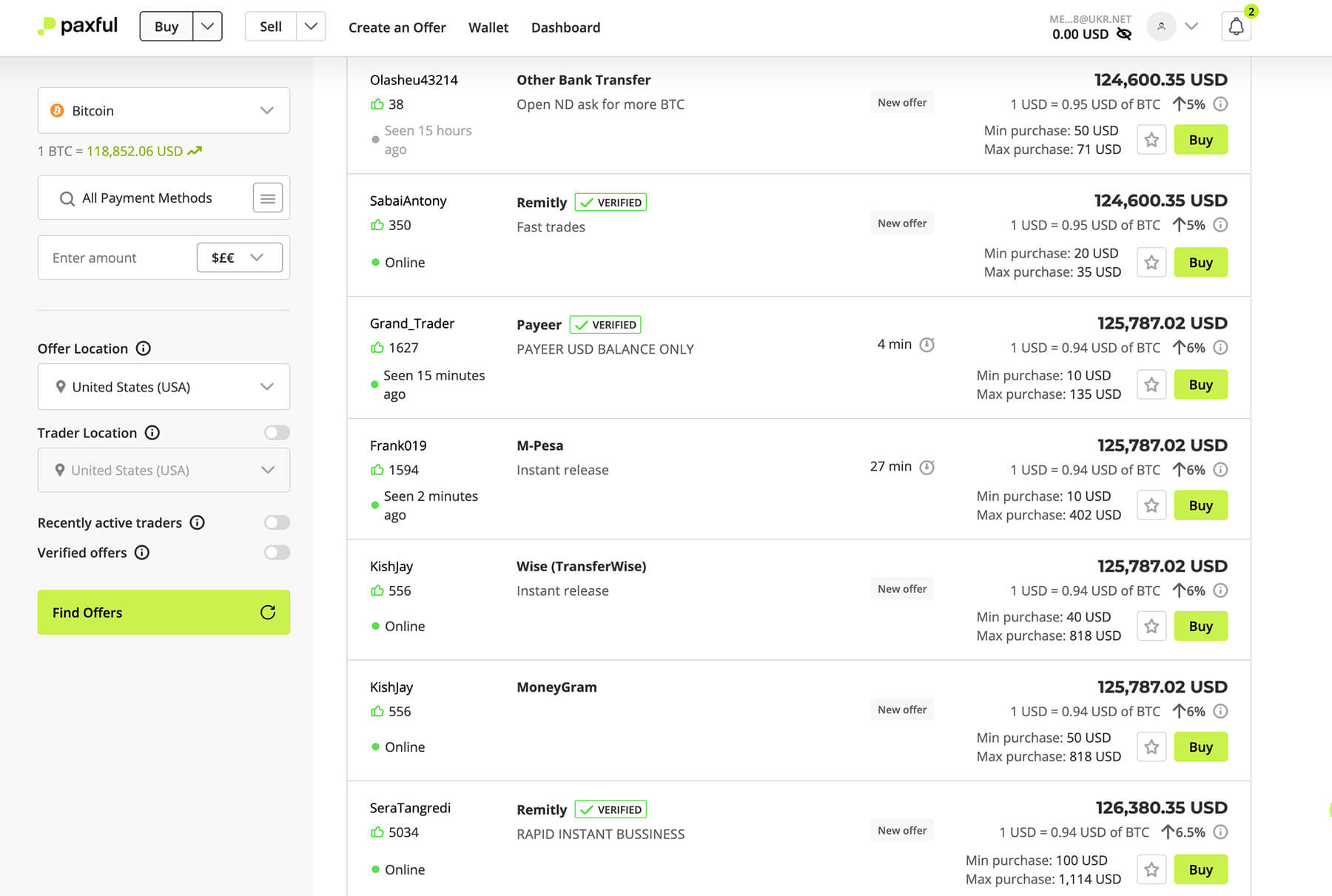
Insider Tip: Treat compliance as a selling point, not a hurdle. In regions with high scam activity, users actively choose platforms that verify counterparties and have clear dispute-resolution processes.
One security failure mode we see consistently across P2P exchange projects: teams that build excellent smart contract escrow but deploy weak admin panel access controls. The escrow is secure. The admin who can override dispute resolution — and therefore redirect funds — accesses the platform with a password and no 2FA. In a custodial model, the admin override function is the highest-value target on the entire platform. We implement hardware key requirements (YubiKey or equivalent) and multi-party approval for any admin action that affects fund release, regardless of whether the escrow model is on-chain or custodial. The smart contract may be immutable — the people who run it are not.
In short: technology attracts users, but security and compliance keep them coming back. Without these two, no amount of marketing will save a P2P exchange in the long run.
From Idea to Active User Base – Turning a P2P Concept into a Profitable Platform
Launching a P2P crypto exchange isn’t just about coding a website — it’s about building an ecosystem where users trust you with their trades, liquidity flows naturally, and the platform grows on autopilot. The process can be divided into two powerful stages: development and market entry.
1. Development – Building the Core
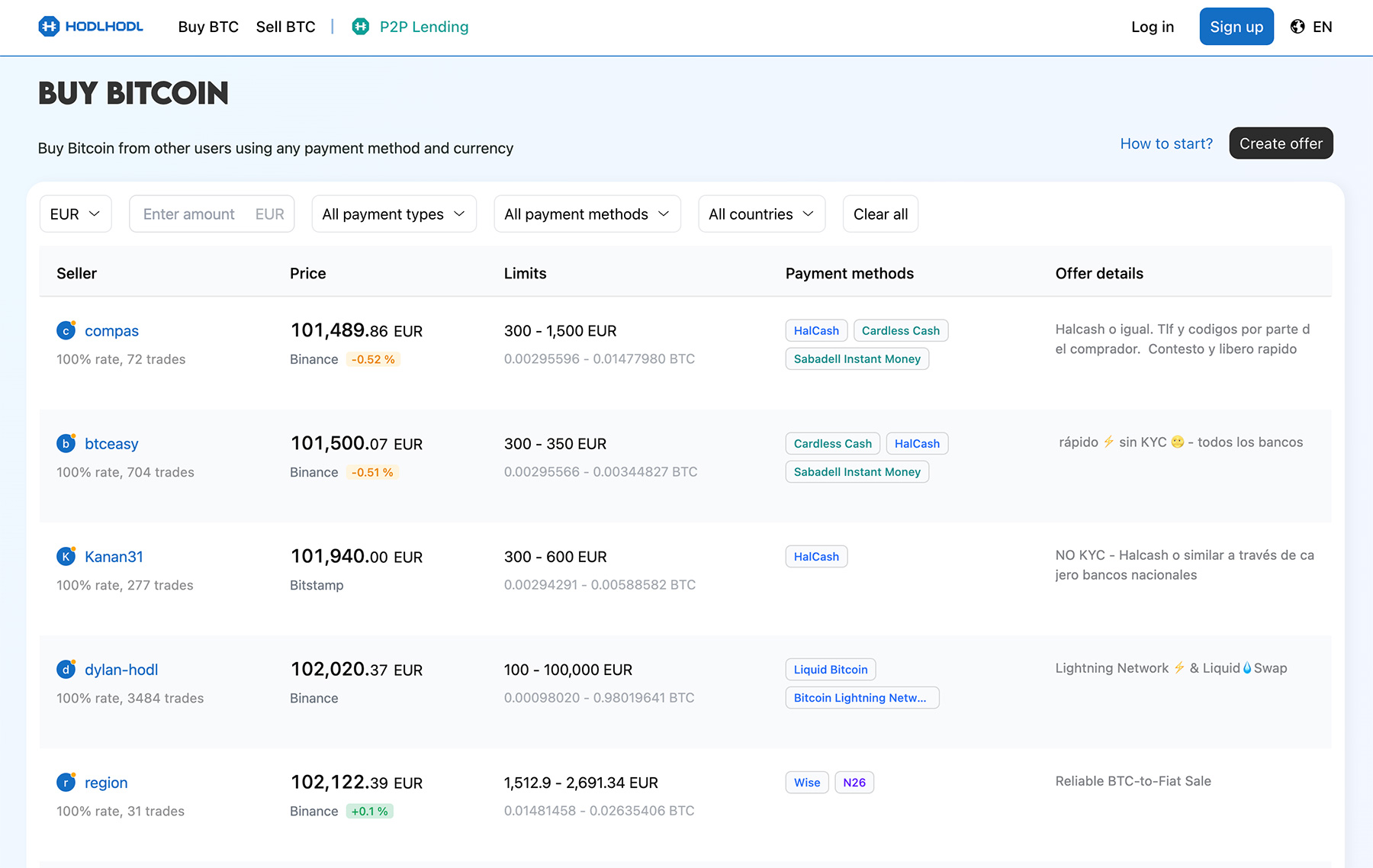
- Market & Competitor Research – Before you write a single line of code, know your battlefield. Study top players like Paxful, Binance P2P, or HodlHodl to understand what works, what frustrates users, and where your opportunity lies.
- Feature Planning – Prioritize features that bring instant trust: escrow system, multiple payment gateways, security layers (2FA, anti-phishing), and a smooth UI. For CEX, add fiat integration; for DEX, focus on bulletproof smart contracts.
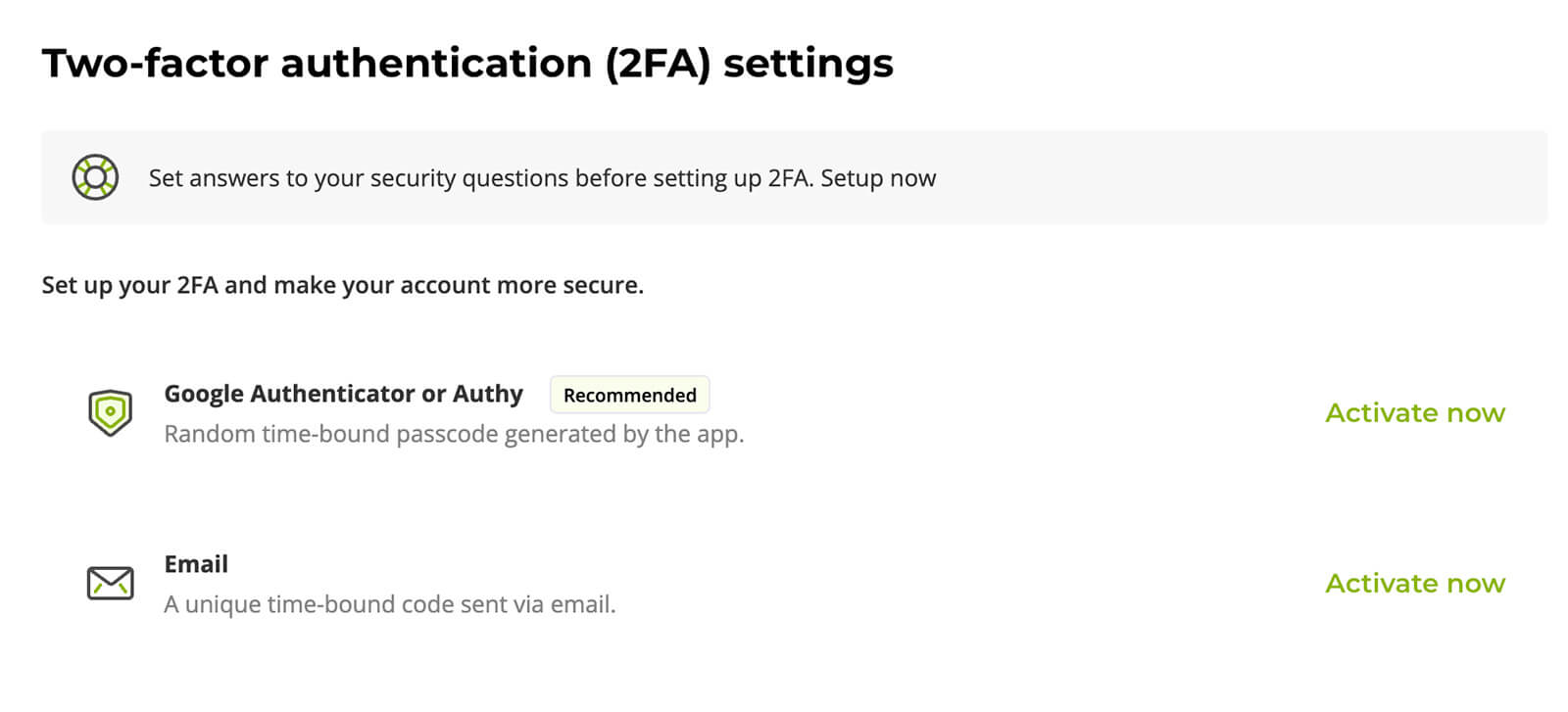
- Architecture & Tech Stack – Decide whether you’re going centralized, decentralized, or hybrid. This choice affects everything — from compliance to liquidity strategy.
- Security & Compliance – In crypto, a single vulnerability can kill a brand. Invest in regular code audits, penetration testing, and compliance mechanisms for your target markets.
- MVP Launch – Start with a Minimum Viable Product. Don’t wait for “perfect” — let early adopters test and shape your platform.
2. Market Entry – Gaining Traction
- Liquidity First – A P2P exchange without active offers is a ghost town. Seed your marketplace with verified traders or market makers to ensure users always find counterparties.
- Geo-Targeted Marketing – Focus on regions underserved by major exchanges or with high demand for P2P trading — such as areas with banking restrictions or high remittance activity.
- Incentives for Early Users – Fee discounts, referral programs, and reward campaigns can turn first-time traders into loyal advocates.
- Partnerships & Integrations – Collaborate with payment providers, DeFi protocols, or even local communities to expand your reach.
- Content & Education – Publish guides, videos, and case studies to help crypto beginners trade safely and efficiently on your platform.
Pro Tip: Your first 1,000 loyal users are worth more than 10,000 casual visitors. They provide feedback, boost liquidity, and act as your unpaid marketing team.
Bottom line: Successful P2P platforms aren’t built overnight — they evolve through iteration, market adaptation, and relentless focus on user trust. If you can combine rock-solid tech with a targeted growth strategy, your exchange won’t just launch — it will thrive.
Final Thoughts & Call to Action – Your Window of Opportunity in the P2P Market
The P2P crypto exchange space is no longer a wild experiment — it’s a proven, fast-growing segment of the global digital economy. Users are demanding more privacy, lower fees, and direct control over their assets, and P2P trading delivers all of that without relying on traditional financial middlemen.
Right now, the market is at a turning point. Regulatory frameworks are becoming clearer, blockchain infrastructure is more mature than ever, and global adoption of stablecoins is making cross-border transactions as easy as sending an email. This is the moment for bold entrepreneurs and fintech innovators to claim their share.
Whether you start with a white-label solution to validate your idea quickly, or go straight into custom development to build something truly unique, the key to winning is the same:
- Trust through security – Make your platform the safest place to trade.
- Liquidity from day one – Without active offers, even the best UI won’t save you.
- User-first design – Build for the real needs of your target audience, not just for feature lists.
The window won’t stay open forever. As more players enter the market, competition for users, traders, and liquidity providers will get tougher. Those who start now will have the first-mover advantage — stronger brand recognition, established user bases, and deeper market integration.
Let’s turn your vision into a working P2P platform. From concept validation and MVP launch to scaling a global marketplace, the path is ready — all it needs is your first step.
FAQ: P2P Crypto Exchange Software
P2P crypto exchange software is the platform infrastructure that connects cryptocurrency buyers and sellers directly — without the exchange holding funds or acting as a counterparty. The software manages trader matching, escrow locking during active trades, dispute resolution when parties disagree, reputation scoring to guide trust decisions, and payment method flexibility. Unlike centralized exchange software where the platform controls the order book and holds user funds, P2P exchange software acts as marketplace infrastructure — the funds flow between user wallets, not through the platform's treasury.
The cost of P2P crypto exchange software ranges from $15,000–$60,000 for a white-label solution to $80,000–$200,000+ for a fully custom platform. The primary cost drivers beyond core development: dispute resolution tooling ($10,000–$25,000), multi-payment method integration ($3,000–$8,000 per method), KYC/AML pipeline ($5,000–$20,000 depending on depth), and smart contract escrow audit ($5,000–$15,000 if on-chain escrow). Budget 30–40% above your core development estimate to cover these operational components — they determine whether the platform runs sustainably, not just whether it launches.
Smart contract escrow locks funds in an autonomous on-chain contract — the platform never holds the crypto, which reduces regulatory exposure and eliminates the platform wallet as a hack target. Gas costs add $0.05–$0.50 per trade on L2 networks. Custodial escrow holds funds in a platform-controlled wallet — simpler to implement, zero gas cost, more familiar to non-crypto-native users, but creates custody liability and regulatory obligations. The right choice depends on your target market's crypto literacy and your preferred regulatory structure. Most modern P2P crypto exchange platforms offer both models with user selection at trade initiation.
A white-label P2P exchange software deployment takes 4–10 weeks. A custom P2P exchange MVP takes 3–5 months — smart contract escrow, core trade flow, basic reputation system, and admin panel. A full-featured platform with multi-region payment methods, advanced dispute resolution, DeFi integrations, and mobile apps takes 6–12 months. The dispute resolution workflow and multi-payment method integrations are the components that most commonly extend timelines beyond initial estimates — both require more operational design than technical development.
The reputation system in P2P crypto exchange software is the trust infrastructure that replaces institutional credibility with user-generated signals. It tracks: trade completion count, completion rate percentage, average release time, dispute rate, and trader ratings submitted by counterparties. These combine into a visible trust score and badge tier displayed on trader profiles. A well-calibrated reputation system is the primary competitive moat of any P2P platform — it's what makes experienced traders stay rather than arbitrage-hopping to whichever platform has the best fee at any given moment.