
How to Build a Telegram Trading Bot: 6 Core Steps
- Set up the Bot: Create a bot account via Telegram’s BotFather and secure your unique API Token.
- Choose Tech Stack: Select Python (python-telegram-bot) or Node.js (Telegraf.js) for development.
- Connect Exchange APIs: Integrate CCXT library for CEXs or Web3.py / Ethers.js for DEXs (Raydium, Uniswap).
- Implement Core Features: Code the order execution logic, token sniping, and copy-trading algorithms.
- Secure User Data: Encrypt private keys and API credentials using AES-256 encryption.
- Deploy & Monitor: Host the bot architecture on a cloud server (AWS, DigitalOcean) with WebSockets connection for real-time latency minimization.
Telegram Bot Development Requirements (2026 Stack)
- Programming Languages: Python 3.11+, TypeScript, Node.js.
- Key Libraries: Pyton-telegram-bot, Web3.py, Pandas (for data tracking).
- Average Timeline: 4 to 8 weeks for a production-ready enterprise bot.
- Estimated Cost: Custom professional development starts from $10,000.
What Is a Telegram Trading Bot?
Trading bot in Telegram is a system for automating and simplifying trading, which is integrated into the popular messenger via its API. Using its functionality, you can make automatic trades according to predetermined parameters and selected strategies. Telegram trading bots are a simplified alternative to DeFi and Web3-wallets, as they have a simpler and clearer interface and allow even beginners to easily trade on popular decentralized crypto exchanges (DEX).
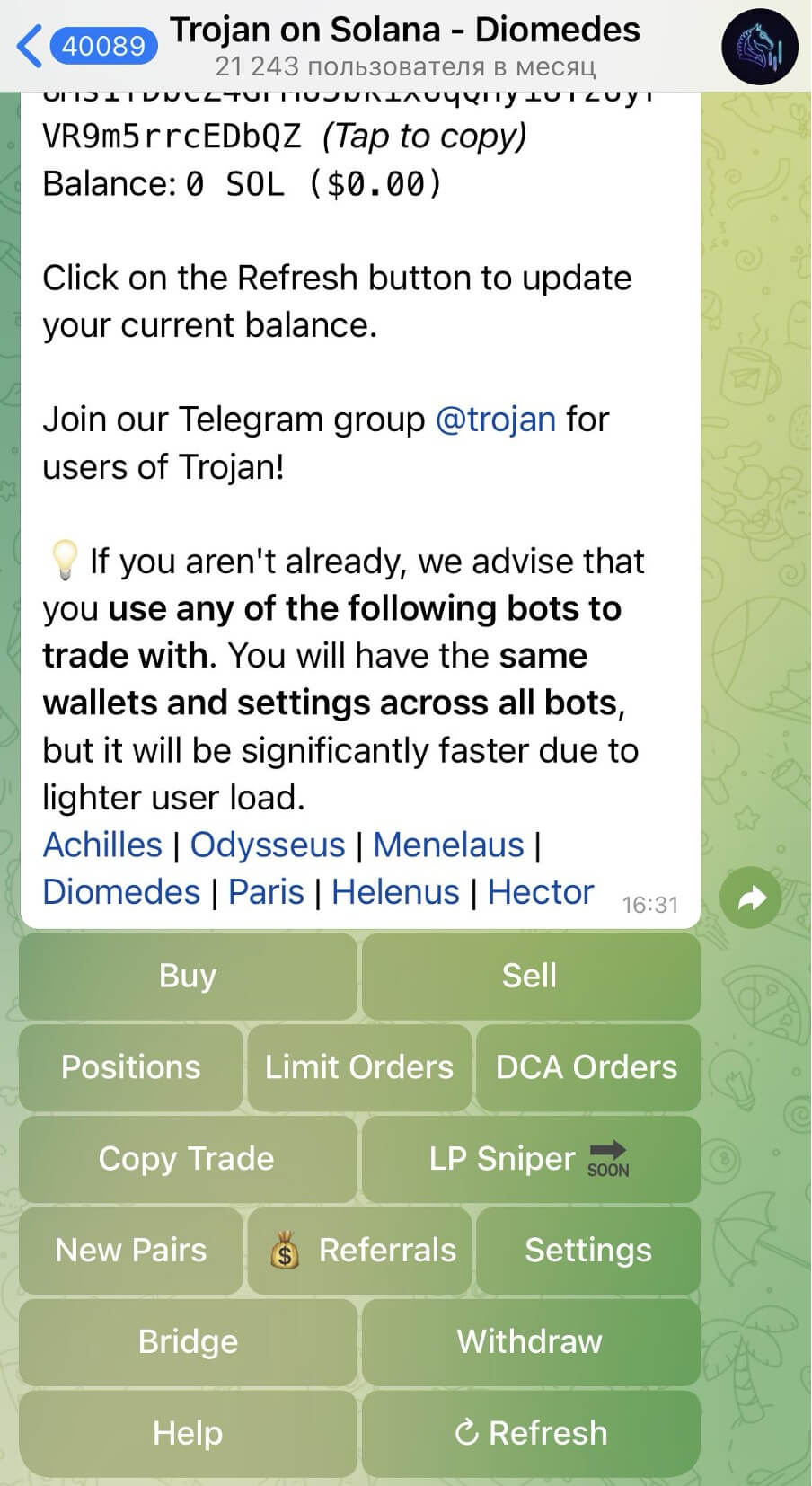
Users interact with the bot via chat, using simple commands or special buttons to make trades. The general flow:
- The trader opens the bot via Telegram.
- Sends the first command (
/start) to the general chat. - Using the menu that appears, connects a crypto wallet or generates a new one.
- The user funds the wallet.
- A menu appears where the trader can select the types of available trades and set parameters.
Security of the trader's personal data is managed through encryption, mandatory authentication, and secure connections. Traders are recommended to use a non-main wallet for bot trading to limit exposure.
Telegram Trading Bot Types: Three Distinct Categories
The best Telegram trading bots in 2026 fall into three main categories with distinct technical requirements:
DEX-native bots — handle on-chain sniping, token launch trading, and DEX swaps directly. Connect to Solana (Jupiter, Raydium, Orca), Ethereum (Uniswap, 1inch), and Base. Examples: Trojan, BonkBot, SolTradingBot.
CEX automation bots — connect to centralized exchanges via API keys and run grid trading, DCA strategies, or smart order execution. Use cases: automated portfolio rebalancing, arbitrage between exchanges, scheduled buy strategies.
Copy trading and signal bots — automate entries based on verified trader signals or wallet mirroring. The user follows a target wallet; the bot replicates its trades proportionally. Examples: Maestro (copy trading), Banana Gun (copy + sniping).
Core Functionality
Popular Telegram bots offer 3+ features and trading strategies. The most common ones are:
- Trading: buying/selling coins directly via messenger;
- Stop loss and take profit orders: automatically close positions at configured price levels;
- Copy trading: mirroring trades of other successful traders in real time;
- Sniping: instant purchase of tokens the moment they appear on a DEX;
- DCA (Dollar-Cost Averaging): scheduled buys at regular intervals;
- Farming Airdrops: automated participation in token distribution events.
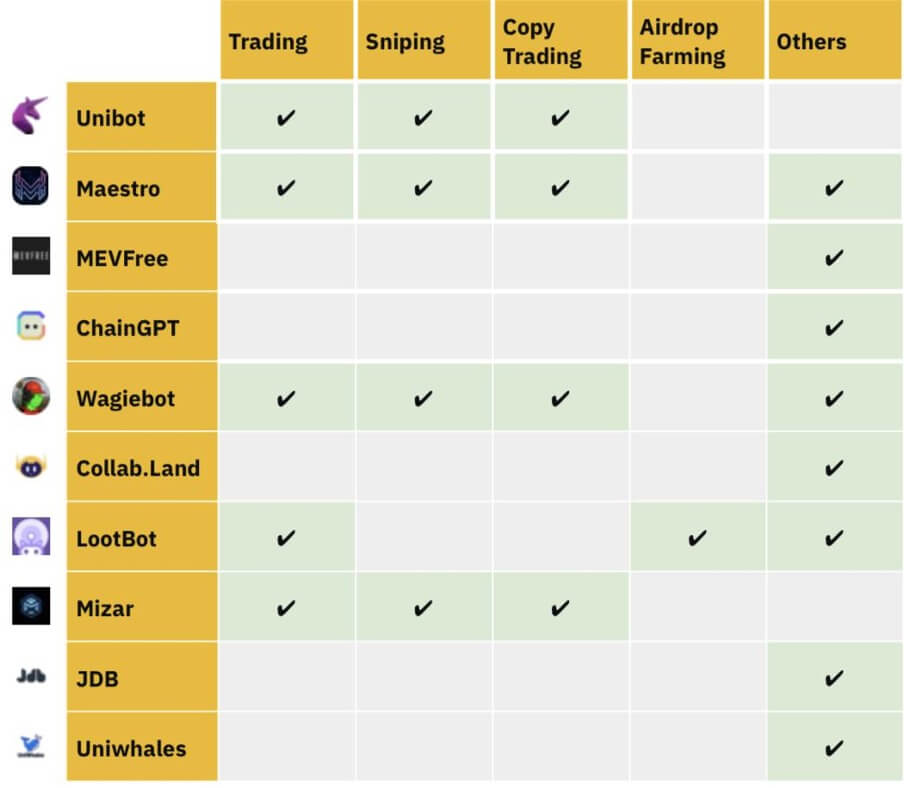
Additional features: MEV attack protection, crypto wallet tracker, NFT price tracking, anti-rug detection, and analytics dashboards.
Advantages of Telegram Trading Bots
- Instant swaps. The speed of buying/selling through a Telegram bot is dozens of times higher than placing orders manually on DEX. Trojan allows trades on Uniswap 6 times faster than through the website;
- Automated 24/7 trading. The bot trades according to pre-configured strategies continuously. Stop loss and take profit prevent large losses and eliminate emotional decision-making;
- Access to early-stage tokens. Orders are placed on DEXs before tokens reach CEX listings — particularly valuable for low-cap opportunities;
- Instant notifications. Real-time alerts about market moves, completed trades, and profits delivered directly to your Telegram;
- Technical indicator analysis. RSI, ADX, MACD, MA — the bot analyzes market trends and executes based on signals.
Telegram Bot Market 2026: Statistics and Top Platforms
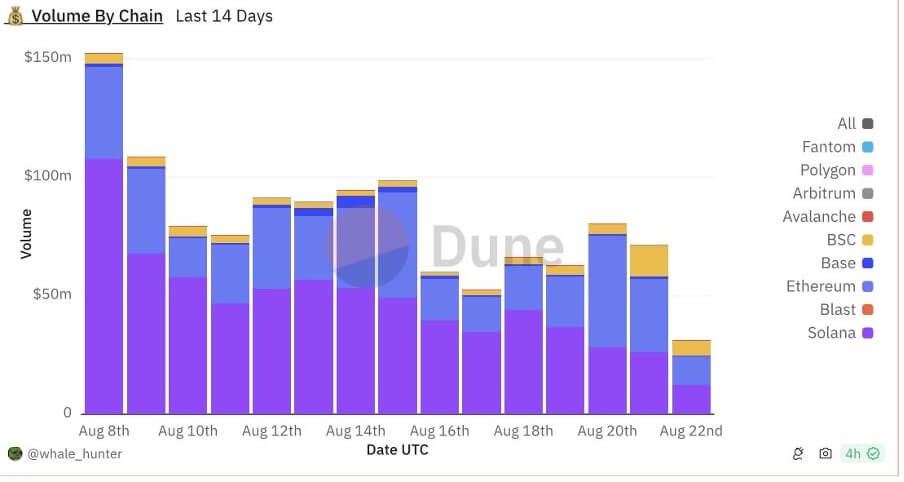
In 2024, the trading volume of Telegram bots reached $33.98+ billion, with 169+ million transactions. Solana bots have the highest volume figures, with Ethereum in second place.
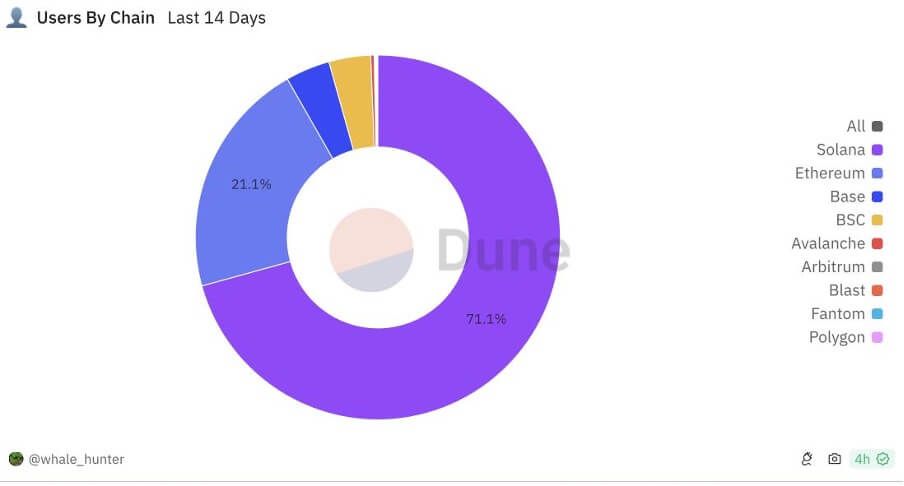
The distribution of users is uneven: 71% of traders use bots on Solana, 21.1% on Ethereum. This matters when selecting your target blockchain — building for Solana captures the largest existing bot-trading audience.
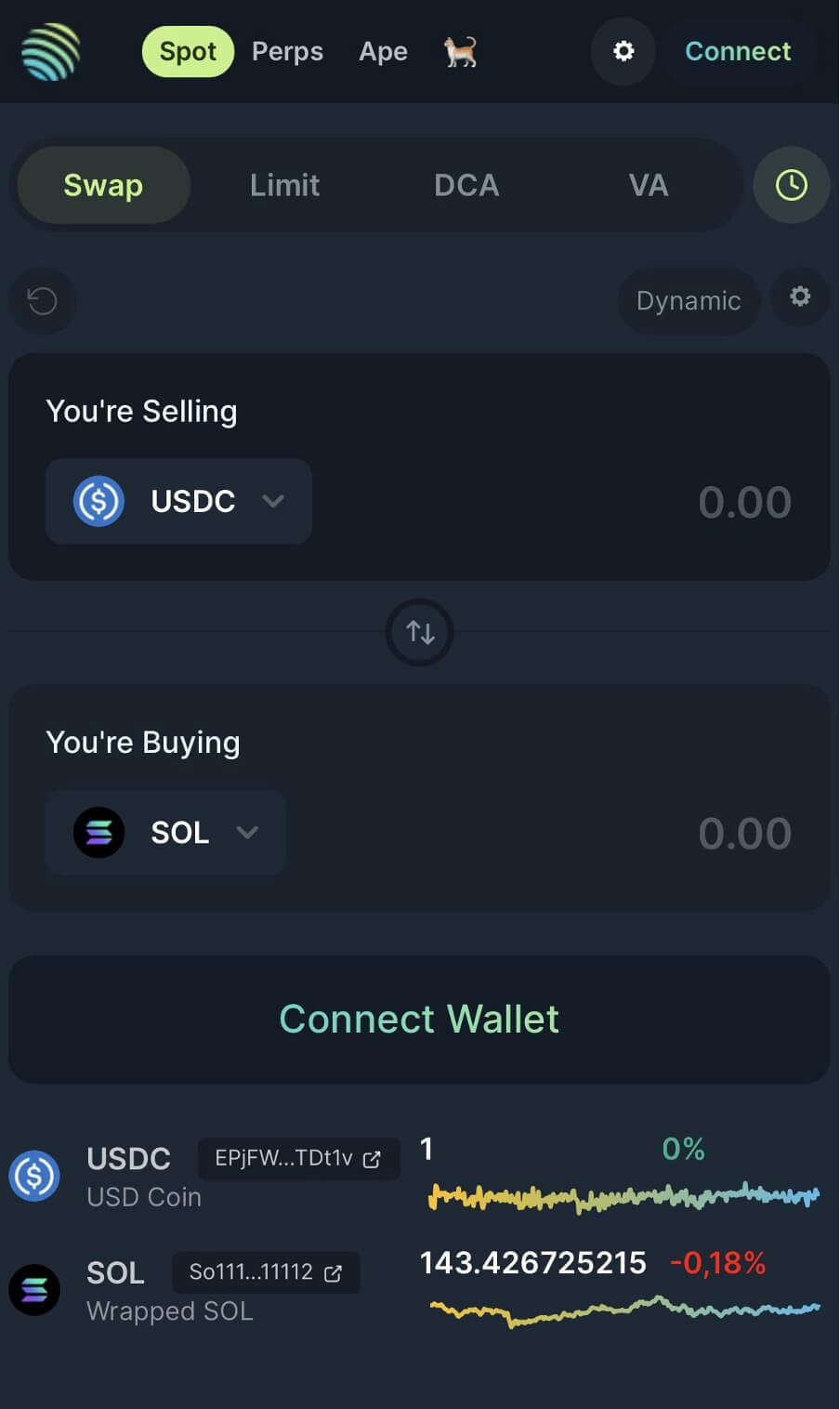
The Solana ecosystem anchors its dominance around Jupiter Station — the dominant DEX aggregator with limit orders, instant swaps, DCA, cross-chain transfers, and liquidity pools all accessible via Telegram bots.
Top Telegram Trading Bots: 2026 Comparison
| Bot | Blockchain | Lifetime Volume | Users | Key 2026 Update |
|---|---|---|---|---|
| Trojan | Solana, Ethereum | $23.4B+ | 1.7M+ | Trojan Terminal — browser-based web UI launched |
| BonkBot | Solana | $7.77B+ | 402K+ | Nighthawk sniper module added |
| Maestro | SOL, ETH, ARB, BSC, Base | $12.8B+ | 573K+ | Extended chain support |
| Banana Gun | SOL, ETH, Base, BNB | $5.93B+ | 241K+ | Unified multi-chain interface (March 2026) |
| SolTradingBot | Solana | $2.48B+ | 599K+ | MegaETH integration (February 2026) |
Trojan
Originally a rebrand of the popular Unibot system, Trojan is now Solana's largest trading bot by volume. It supports copy trading, limit orders, DCA, and cross-chain asset transfers between Solana and Ethereum. In 2026, Trojan launched Trojan Terminal — a browser-based trading interface that mirrors the Telegram bot's functionality, giving traders access from both Telegram and a full-screen web environment.
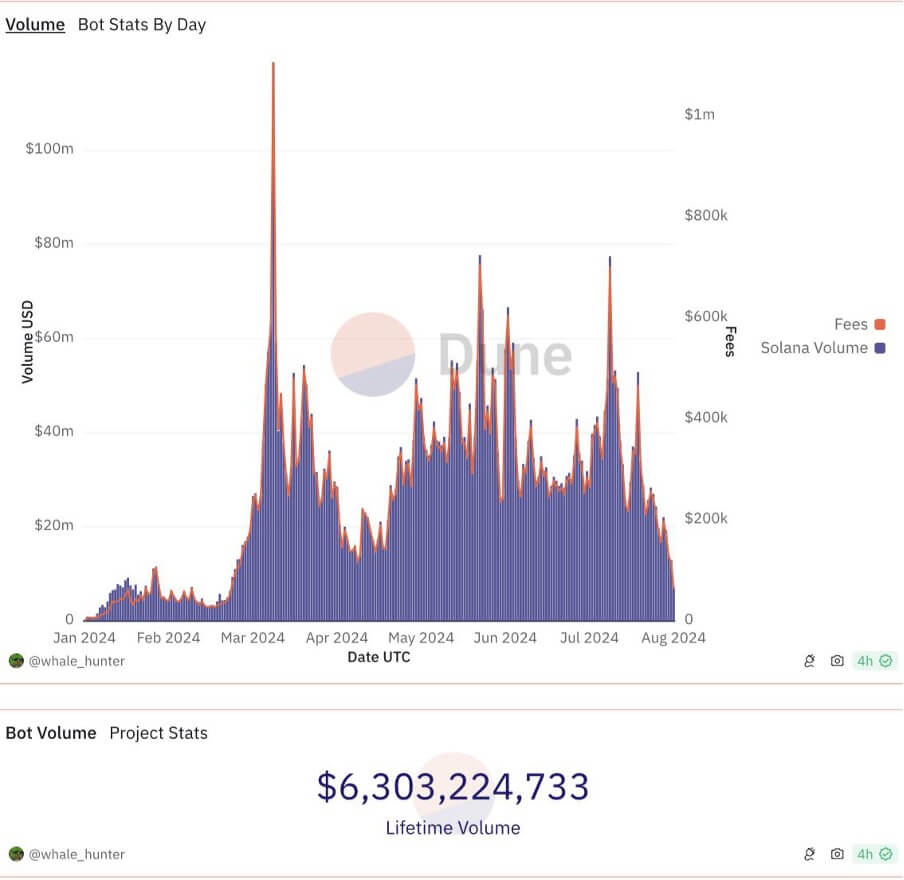
Commission: 0.9% with referral, 1% without. A referral program lets users earn a percentage of their referrals' trading commissions.
Banana Gun
Multi-chain sniping and trading bot covering Solana, Ethereum, Base, and Blast. Features: auto-sniping, private transfers, manual buy/sell, MEV and sandwich protection, anti-rug. In March 2026, Banana Gun unified all supported chains into a single bot interface — eliminating the previous need to manage separate bots per chain. Native BANANA token provides wallet slots and fee rebates.
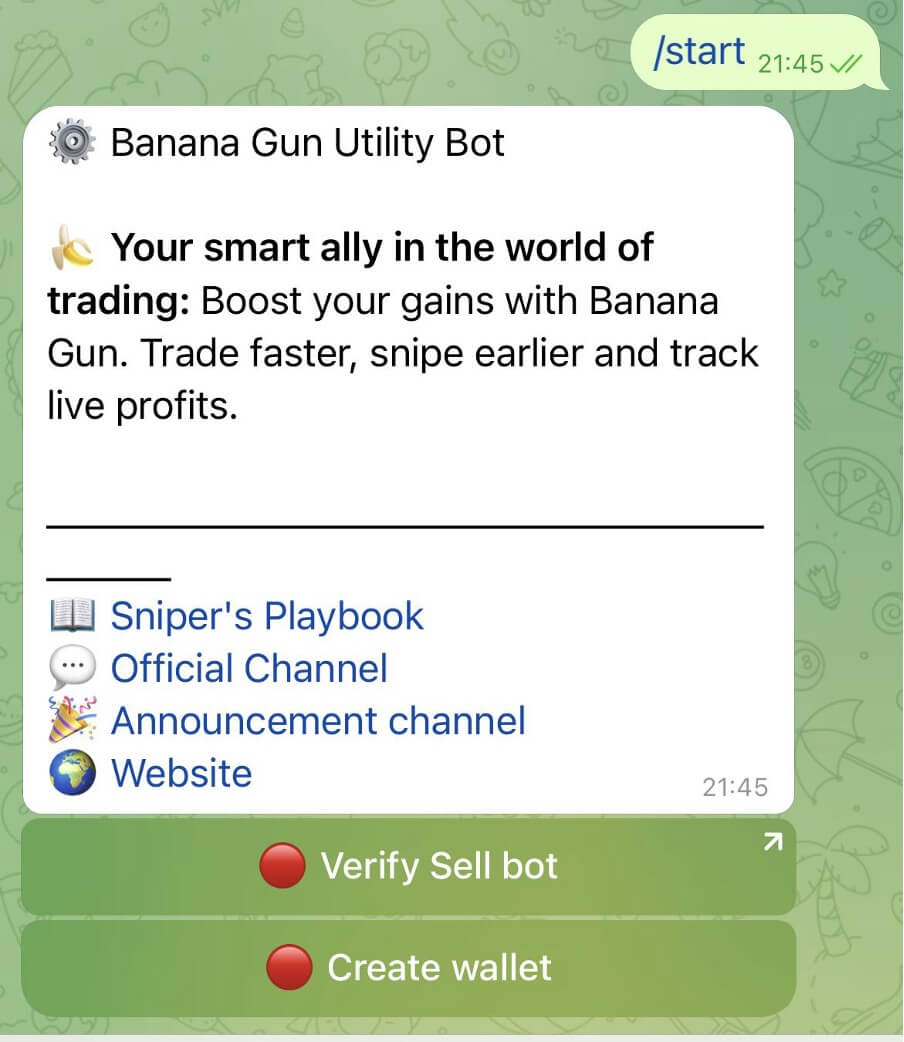
Fees: 0.5% manual orders and 1% sniping on Ethereum; 1% on Base, Solana, and Blast.
Maestro
Multi-network bot (Solana, Ethereum, Arbitrum, BSC, Base) with a comprehensive feature set: copy trading, sniping, autotrading, and multi-wallet management. Passive income via referral program: 25% of new users' commissions.
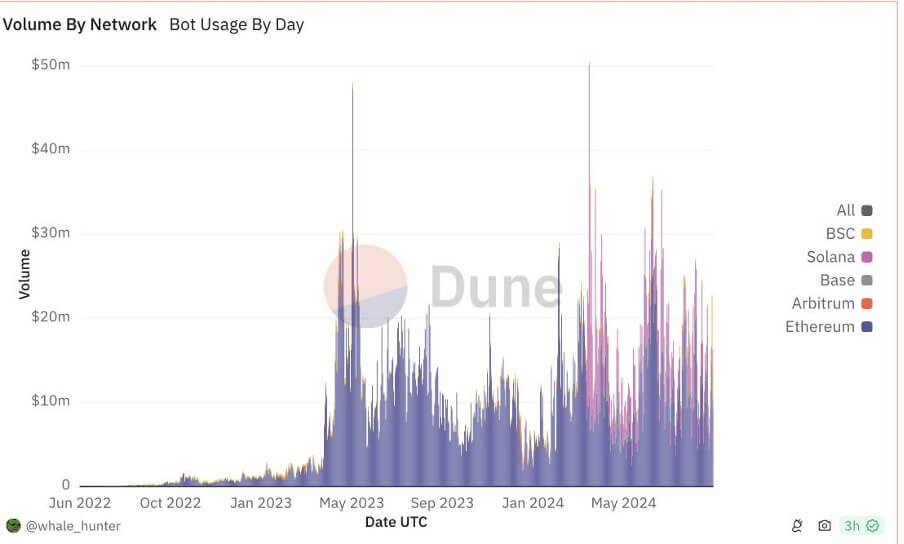
Commission: 1% on all buy/sell and sniping transactions. Minimum charge: 0.01 BNB/ETH.
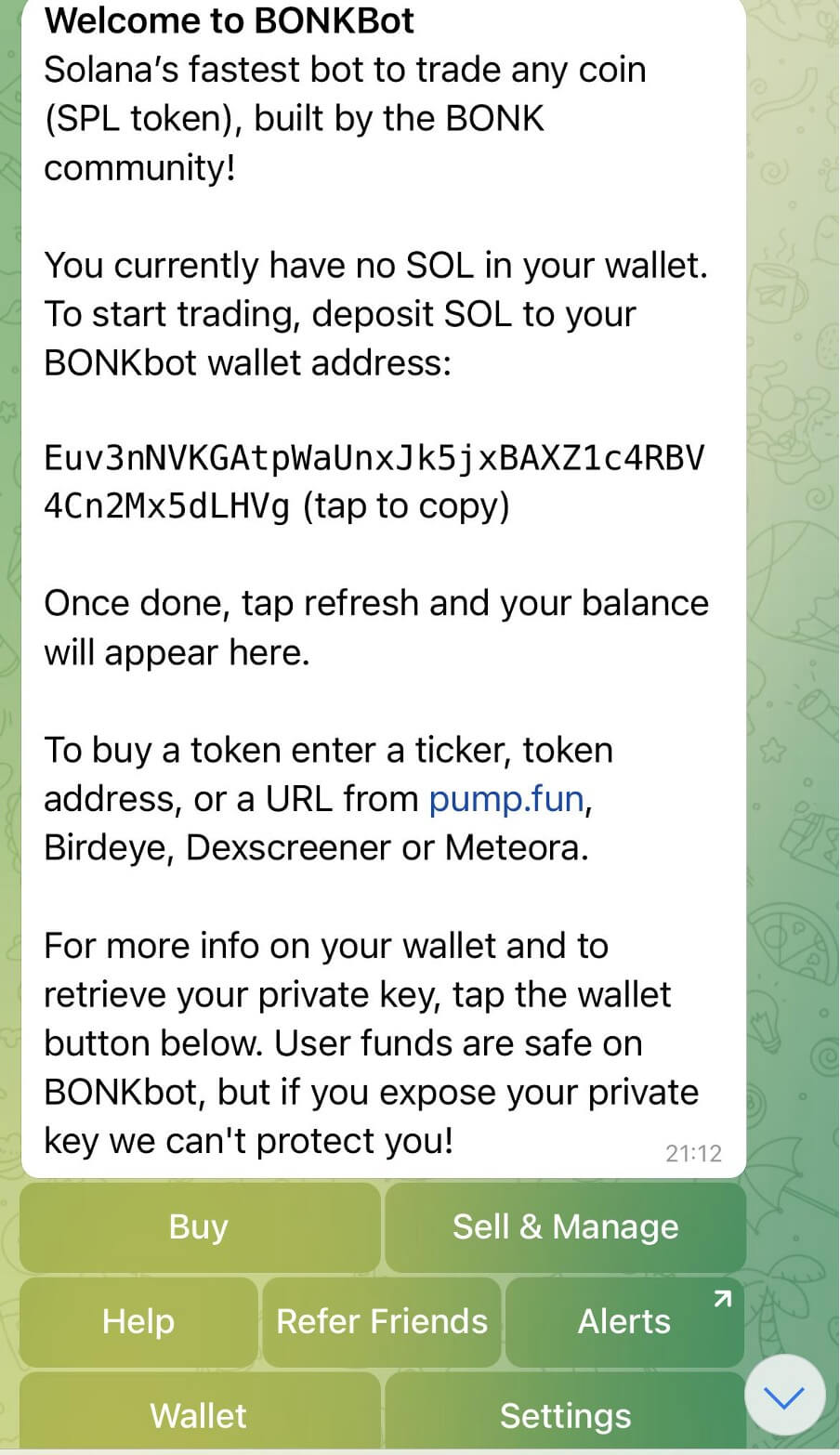
BonkBot
Solana-focused bot with a simple interface built around the BONK memecoin. Limit orders, position monitoring, and a built-in Buy-and-Burn mechanism where a portion of commissions buys and destroys BONK tokens — incentivizing bot usage for token holders. Referral program: 30% in month 1, 20% in month 2, 10% thereafter.
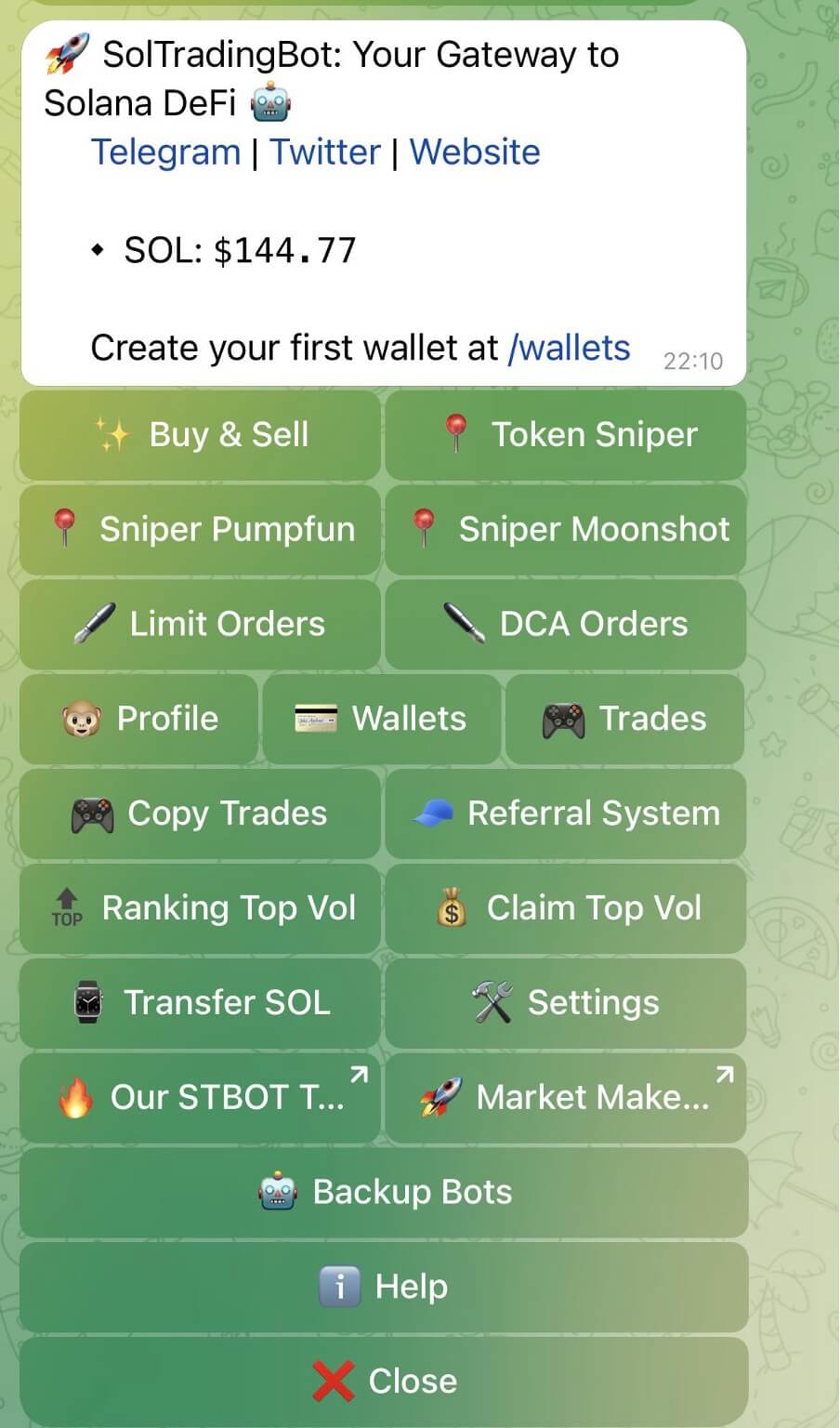
SolTradingBot
Solana-native bot connecting Jupiter, Raydium, and Orca. Features: WSOL Sniper, copy trading, DCA, limit orders, and a native STBOT token. First to integrate MegaETH in February 2026. Referral program: 30% of referred commissions. Some tokens ($MYRO, $JUP, $BONK, $WEN) trade commission-free.
How Telegram Trading Bot Owners Make Money
The main source of income is commissions charged from traders: typically 0.5–1% per trade. Some bots issue native tokens (BANANA, STBOT) with additional fee mechanics. In 2024 alone, Telegram trading bot owners collectively earned 15,500+ ETH from trading fees.
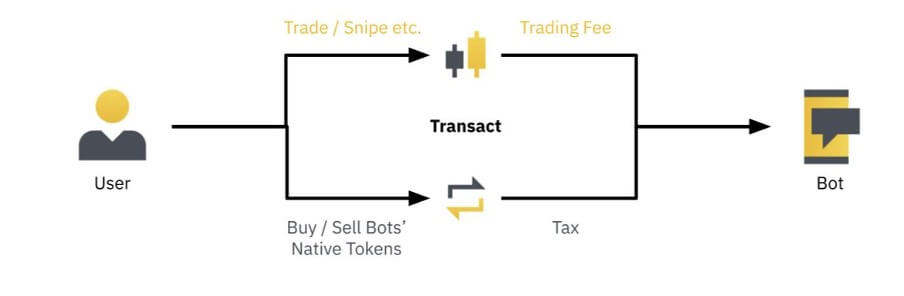
Revenue streams for a Telegram trading bot:
- Trading fee (0.5–1% per transaction) — the primary and most predictable revenue
- Native token mechanics — transaction fees, buyback/burn, or staking requirements
- Referral commissions — 25–30% of referred users' trading fees paid to referrers
- Premium tier features — additional wallet slots, advanced analytics, priority execution
The advantage of Telegram as a distribution channel is its 950 million monthly active users — and the fact that crypto traders are already using it for market discussion. A well-positioned trading bot doesn't acquire a new audience; it captures an existing one already looking for faster execution tools.
 Yuri MusienkoBusiness developer, Merehead
How to Build a Telegram Trading Bot: Step-by-Step
To create a full-fledged Telegram trading bot like Trojan or Maestro, you need both programming skills and an understanding of trading strategies and blockchain mechanics. You can also develop a crypto trading bot yourself — the key steps are discussed below. Alternatively, you can order a custom system from a specialized team.
Step 1 — Register Your Bot with BotFather
Open Telegram and search for @BotFather. Send /newbot, give your bot a name and a username ending in bot. BotFather returns an API token — copy it immediately and store it securely. This token is the only credential that identifies your bot to Telegram's API infrastructure.
Step 2 — Select a Programming Language and Framework
The language is selected based on the requirements of the Telegram bot: the key factors are speed and the ability to process large data sets. The system must place orders quickly, react to signals and market fluctuations. Popular choices are Python and JavaScript. JavaScript bots are good at handling simultaneous requests from multiple APIs, but Python code is easier to write and has more trading-specific libraries. In both cases, developers have access to a large number of libraries and an active community, simplifying the process of creating a crypto bot.
Popular frameworks to make creating a bot easier:
- python-telegram-bot for Python — simple and easy-to-use library for processing commands, sending messages, and managing bot state;
- Telegraf for JavaScript/Node.js — lightweight library with excellent middleware support and WebSocket connection handling;
- Go or Rust — for bots where execution latency is critical. The difference between 50ms and 200ms transaction submission can determine whether a snipe lands in the first block or misses the launch window entirely.
Step 3 — Integrate DEX and CEX APIs
Determine which exchanges the bot will use for trading operations, price data, and analytics. Exchanges are commonly chosen for liquidity and token variety. For Solana-based bots: Jupiter API for routing and swaps — it aggregates liquidity across Orca, Raydium, and other Solana DEXs. For Ethereum and Base: Uniswap V3 SDK or 0x API. Popular DEX options also include Serum and Orca.
The technical integration pattern for any DEX:
- Fetch a real-time price quote from the DEX routing API
- Build the unsigned transaction with configured slippage and gas parameters
- Sign the transaction with the wallet private key
- Submit to the network via RPC endpoint
- Poll for confirmation — and handle the ambiguous case explicitly
Step 4 — Implement Trading Strategies
The Telegram bot is based on algorithms according to which it makes transactions. At this stage, specify the entire functionality of the trading bot and its strategies. The more options available, the better — though some bots focus strictly on one niche.
Sniping: listen to blockchain node events for new liquidity pool creation. When a new pool appears matching configured criteria (minimum liquidity, no mint/freeze flags, contract structure checks), submit a buy transaction in the same block. Requires a direct WebSocket connection to a full node — public RPC endpoints are too slow and too rate-limited for competitive sniping.
Copy trading: subscribe to the transaction history of a target wallet address. Replicate trades proportionally within the same or next block. Requires real-time mempool monitoring or a fast transaction history API.
DCA: a scheduled buy at configurable intervals. Much simpler than sniping — a cron job that submits a fixed-size buy every N minutes or hours. Complexity is in handling failure gracefully.
Set up technical indicators for signal-based trading: moving averages, RSI for trend change probability, MACD for trend strength. Implement take profit, stop loss, and other risk management options.
Step 5 — Ensure Security Architecture
The biggest risk users fear is information leakage — traders provide wallet access to use the system. A mandatory point is two-factor authentication (2FA) and encryption of all keys provided by users.
Private key management — in order of security:
- Hardware wallet signing — most secure, adds signing latency
- HSM (Hardware Security Module) — institutional standard
- HashiCorp Vault — good balance of security and operational practicality for production
- Environment variables — minimum viable, acceptable for single-user bots
Non-custodial vs. custodial design: a non-custodial bot generates a wallet locally and never transmits the private key to your server. The bot only receives signed transaction requests. A custodial bot stores user private keys server-side — far simpler to build but creates a high-value attack target. Consumer-facing bots in 2026 use non-custodial by default.
The attack vector most bot developers underestimate: the referral system. Many bots offer 25–30% referral commissions. A poorly designed referral system can be exploited through self-referral loops or circular referral chains that generate phantom commissions. Implement referral cycle detection before any commission is credited — it is a two-hour implementation that prevents significant financial exposure at scale.
Yuri MusienkoBusiness developer, MereheadStep 6 — Test and Deploy
Multi-stage testing is required before launching. Test in three environments: local simulation with mock price data → devnet/testnet (Solana devnet, Ethereum Sepolia) → mainnet with minimal real funds.
The reason for the third phase: testnet behavior differs from mainnet in ways that matter — gas estimation, RPC reliability, mempool behavior under real congestion. Always test order submission and confirmation logic with real assets before going live with user funds.
Deployment: a Telegram bot is a long-running process that needs 24/7 availability. Standard deployment: Docker container on a VPS with a process manager (PM2 for Node.js, supervisord for Python) that restarts on crash. For production deployments serving external users: Kubernetes with health checks monitoring both the bot process and its blockchain node connections.
Architecture Deep Dive: What Makes a Bot Production-Ready
There is a significant difference between a Telegram trading bot that works in a demo and one that handles thousands of concurrent users without missing transactions.
Real-time data layer: most tutorial implementations poll prices via REST API every few seconds. Production bots use persistent WebSocket connections to both the blockchain node (for mempool events) and the DEX API (for price updates). REST polling introduces 200–500ms of additional latency per price check — which is the difference between winning and losing a token snipe.
Transaction queue and retry logic: in production, transactions fail for non-obvious reasons — gas estimation errors, RPC timeouts, and the "submitted but unknown" state that occurs during congestion. Without a transaction status database and explicit retry policies, you either double-submit trades or silently miss fills.
Build It Yourself vs. Order Custom Development
| DIY (Self-Build) | Order Custom Development | |
|---|---|---|
| Cost | $0 + developer time (200–800h) | $10,000–$120,000 |
| Timeline | 2–6 months (part-time) | 6–20 weeks |
| Technical requirement | Strong Python/JS + blockchain knowledge | None |
| Production reliability | Depends on developer skills | Battle-tested infrastructure |
| Security architecture | Self-designed | Reviewed as part of project |
| Best for | Individual traders, learning | Business-grade product for users |
Telegram Trading Bots from Merehead
Our company has been developing software for cryptocurrency trading for 9+ years. You can order the creation of a Telegram trading bot from scratch with support for various strategies and blockchains. Our developers help you choose a concept, the most suitable exchanges, and optimal functionality.
| Scope | Timeline | Cost |
|---|---|---|
| Basic signal bot (alerts, price tracking, no trading) | 2–4 weeks | $5,000–$15,000 |
| Simple trading bot (buy/sell, limit orders, 1 chain) | 4–8 weeks | $10,000–$25,000 |
| Full-featured bot (sniping, copy trading, DCA, multi-chain) | 8–14 weeks | $25,000–$60,000 |
| Enterprise bot (custom strategies, smart contract audit, referral system, 24/7 support) | 12–20 weeks | $60,000–$120,000+ |
Frequently Asked Questions
Register with BotFather (/newbot → get API token) → choose Python (python-telegram-bot library) or JavaScript (Telegraf) → integrate with a DEX API (Jupiter for Solana, Uniswap SDK for Ethereum) → implement your trading strategy as event handlers → implement private key security → test on devnet then mainnet with small amounts → deploy in a Docker container with 24/7 uptime monitoring. The full process takes 2–6 months for an experienced developer building solo.
DIY cost is your trading bot development time: 200–800 hours depending on complexity. Custom development: $5,000–$15,000 for a basic signal bot, $10,000–$25,000 for a simple trading bot (single chain, limit orders), $25,000–$60,000 for a full-featured multi-chain bot with sniping and copy trading, $60,000–$120,000+ for an enterprise product with smart contract audit and referral system.
Python for most use cases — easiest to work with, extensive trading libraries (ccxt, web3.py, solana-py), large community. JavaScript/Node.js for high-concurrency scenarios handling many simultaneous WebSocket feeds. Go or Rust if you need sub-100ms transaction latency for competitive sniping — the speed advantage can be the difference between landing a snipe or missing the launch block.
Solana for maximum market reach — 71% of Telegram bot trading volume, lowest gas fees, the largest DEX bot ecosystem via Jupiter. Ethereum plus L2s (Base, Arbitrum) for institutional liquidity and broader token coverage. Multi-chain support is standard for competitive bots — Banana Gun unified all four chains into a single interface in March 2026, which is now the expected baseline.
A sniping bot monitors the blockchain for new liquidity pool creation events. When a new token pair appears matching configured criteria — minimum liquidity, no mint/freeze contract flags — it automatically submits a buy transaction in the same or next block. Speed is the entire product. The technical requirement is a direct WebSocket connection to a full blockchain node, not a shared public RPC endpoint.
Non-custodial by default for consumer bots: the private key never leaves the user's device, the bot only submits pre-signed transactions. Private key storage for custodial components: HashiCorp Vault for production, environment variables for development only. Implement per-user rate limiting on trading commands from day one. Add referral cycle detection before any commission logic — circular referral chains are a common exploit vector that can be prevented with a two-hour implementation.
The main revenue stream is a percentage fee on each trade — typically 0.5–1% of transaction value. Secondary revenue: a native token with buyback/burn mechanics, referral commissions (25–30% of referred users' trading fees), and premium tier features like additional wallet slots or priority execution. In 2024, Telegram bot owners collectively earned 15,500+ ETH from trading fees across the major bots.
Non-custodial: the private key never leaves the user's device. The bot requests a signed transaction; the wallet signs locally. If your server is compromised, user funds remain safe. Non-custodial is the standard for all consumer-facing bots. Custodial: the bot stores user private keys server-side — simpler to build and easier to recover from user errors, but creates a concentrated attack target. Appropriate only for enterprise clients with specific compliance or operational requirements.