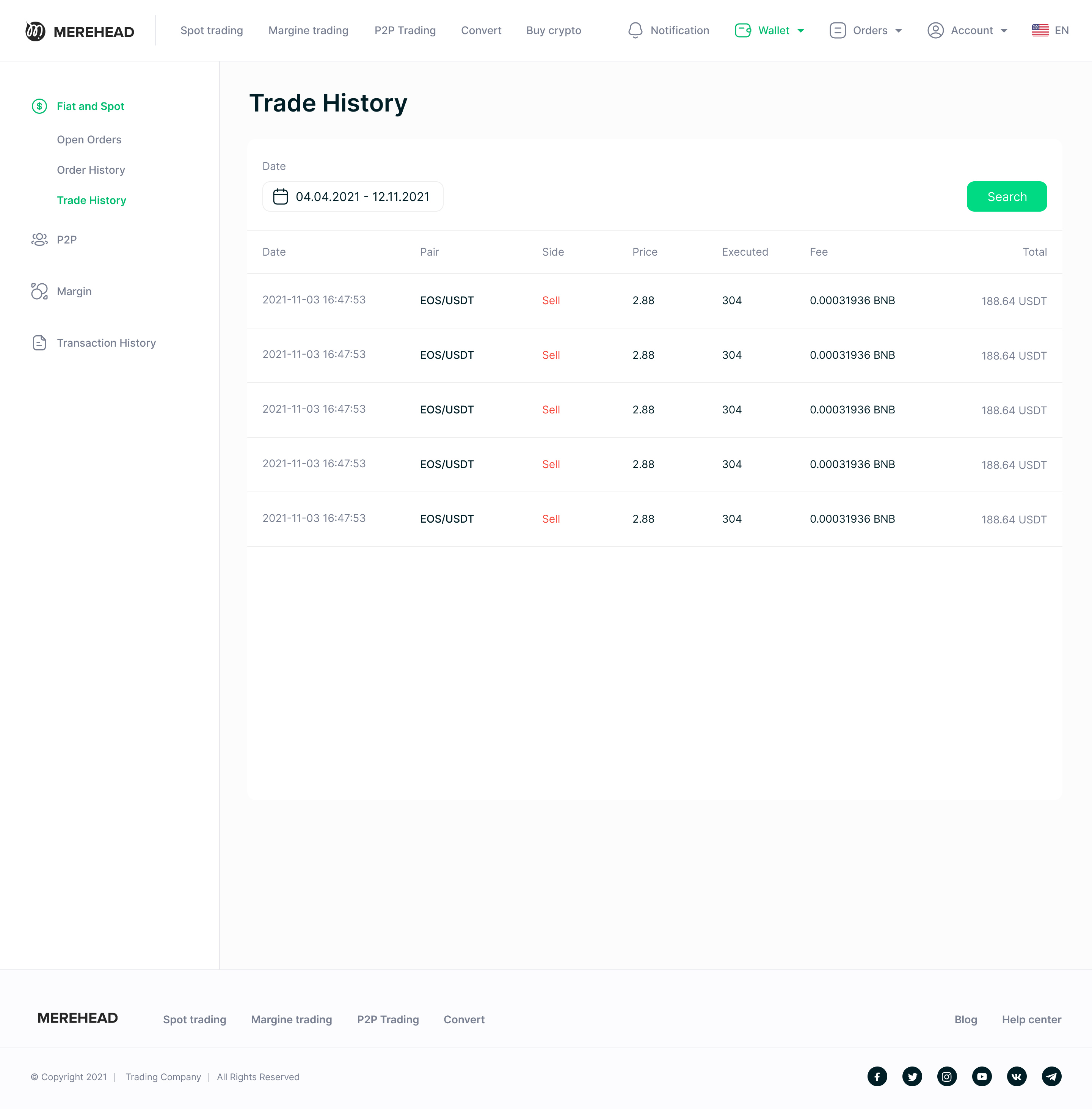
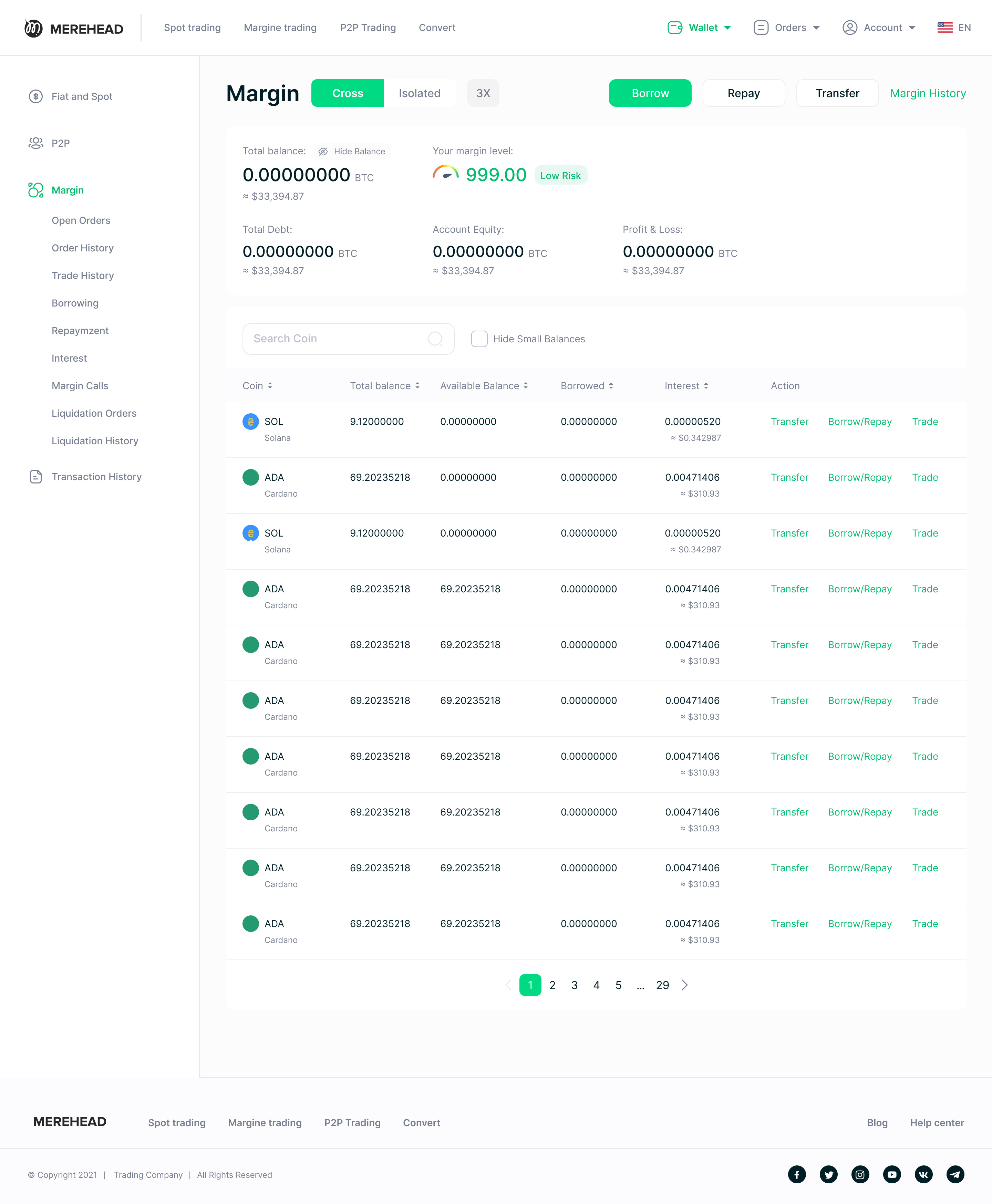
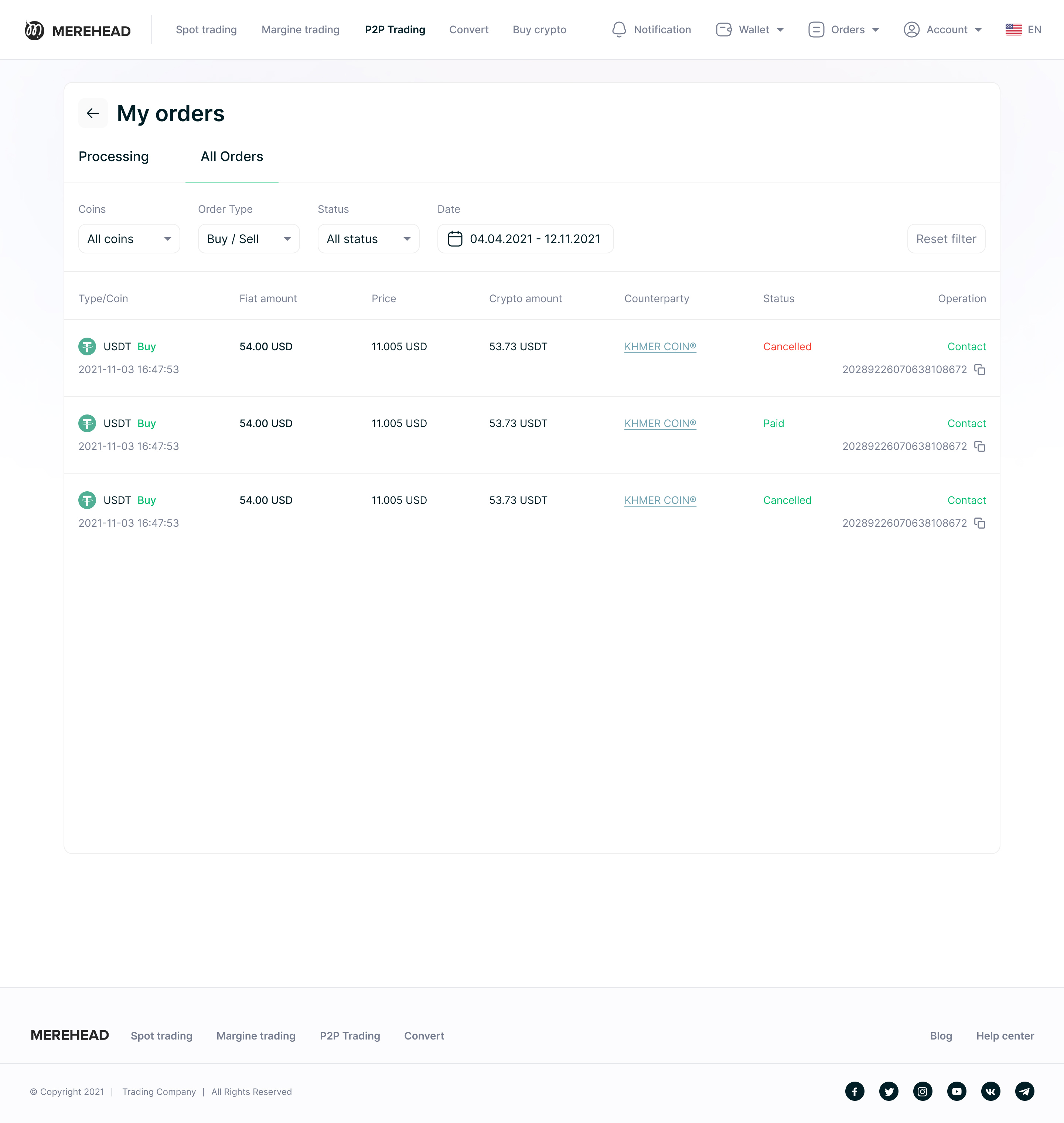
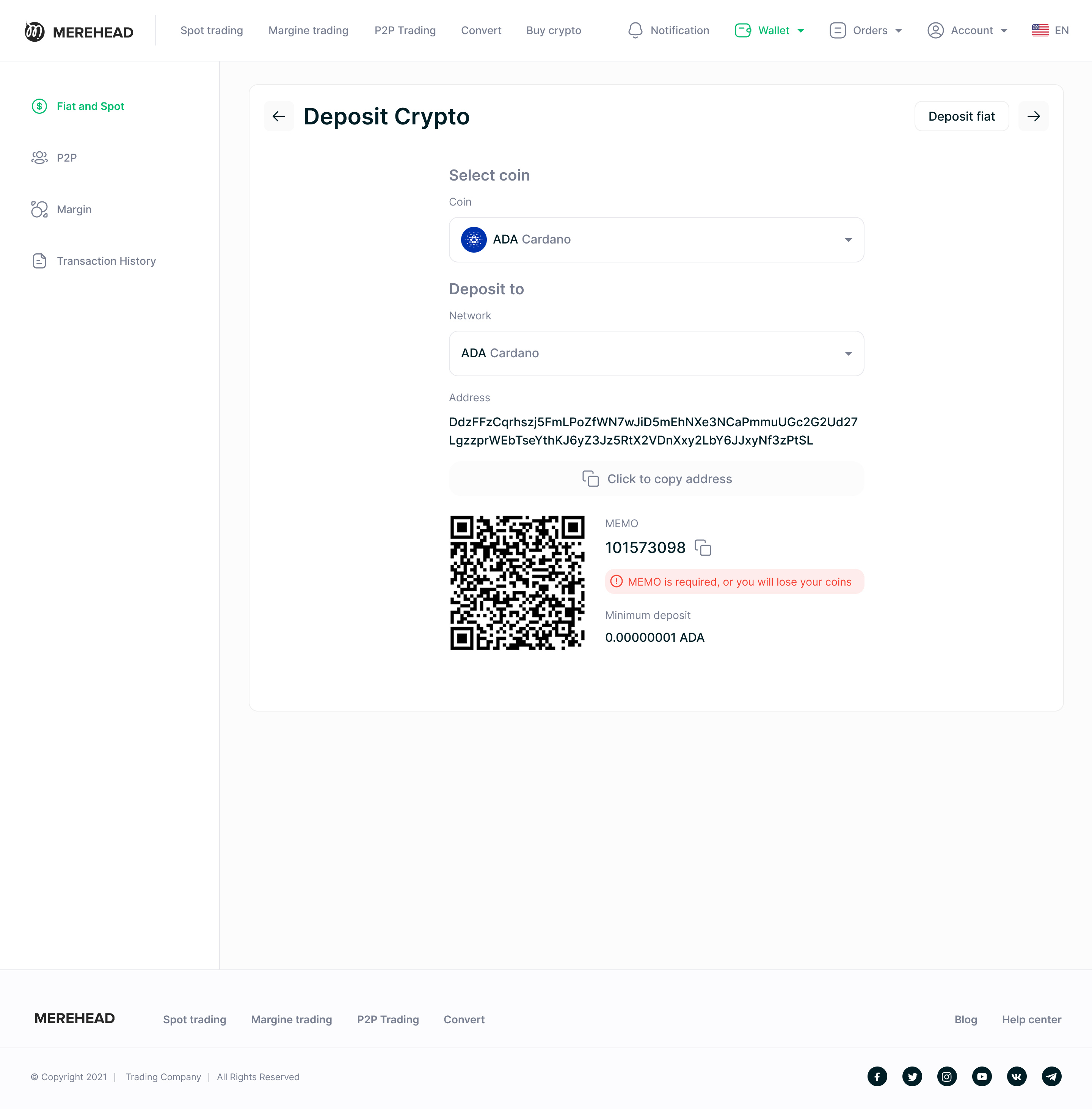
What Is a Kraken Clone Script and How It Works
A
Kraken Clone Script is a ready-made cryptocurrency exchange software package that allows you to launch a trading platform with the same core capabilities as Kraken — order matching, secure wallets, real-time trading, user management, and liquidity integration. Instead of spending months building complex exchange architecture from scratch, businesses use a clone script to get a
production-ready exchange foundation that can be customized and deployed much faster.
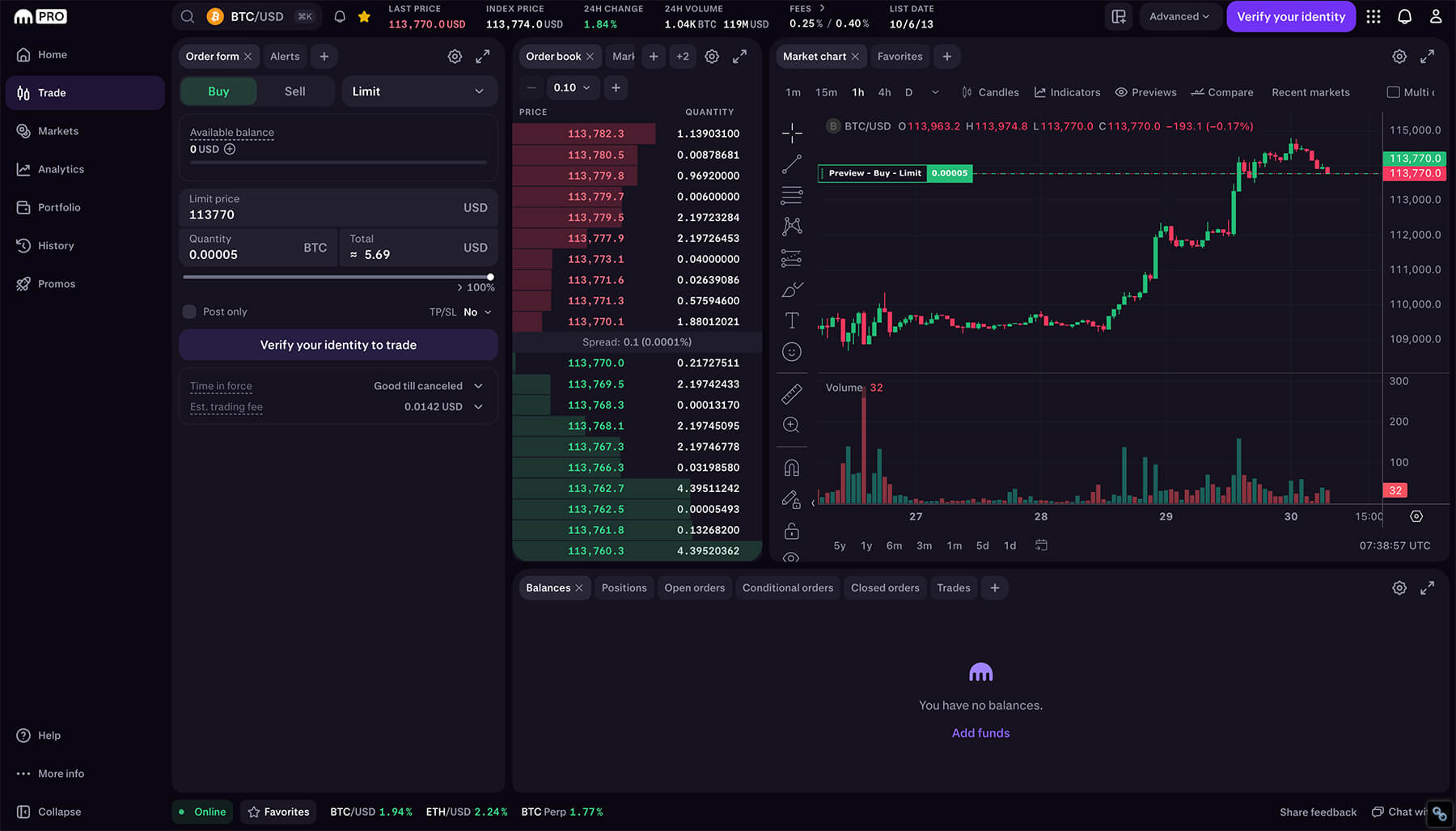
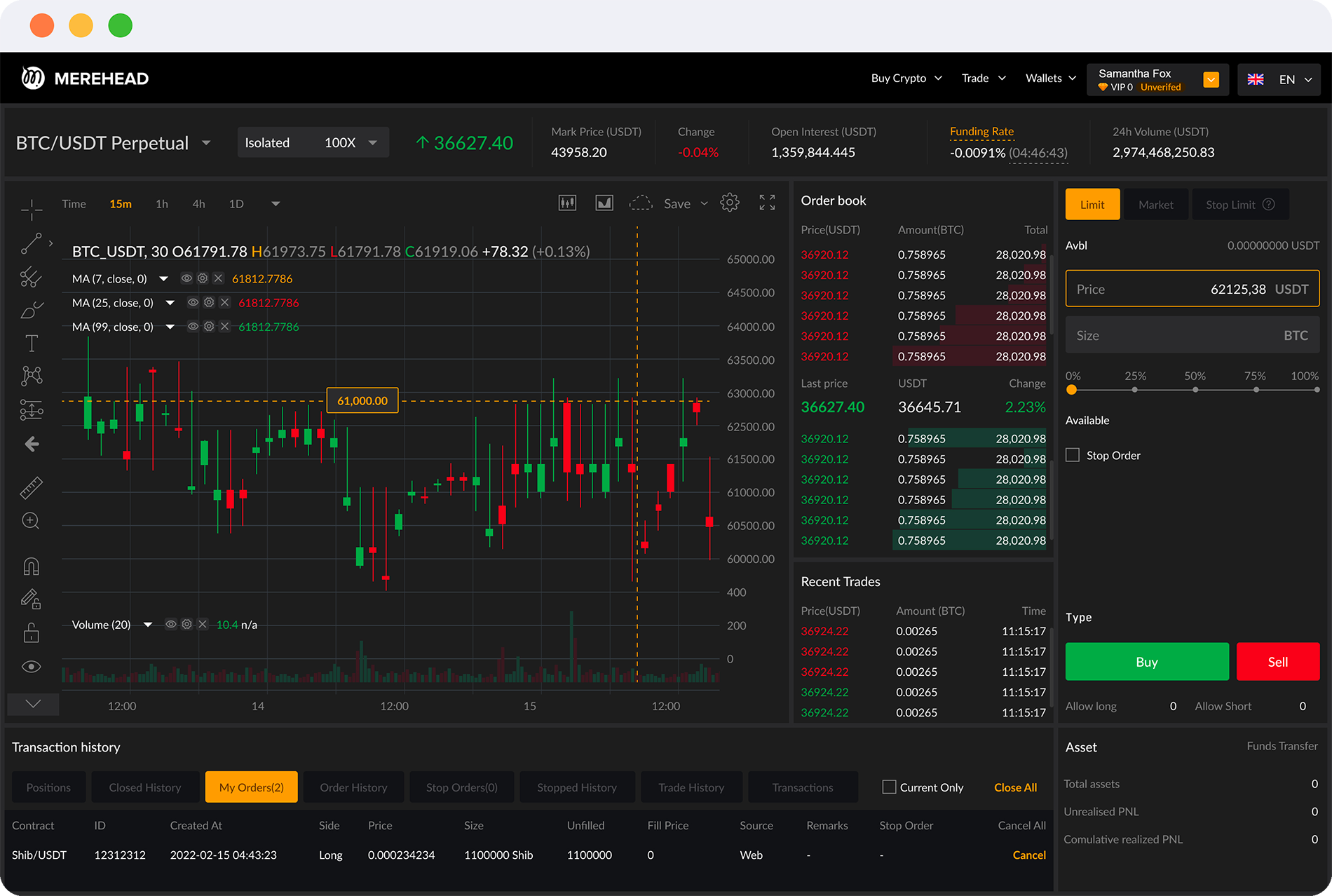
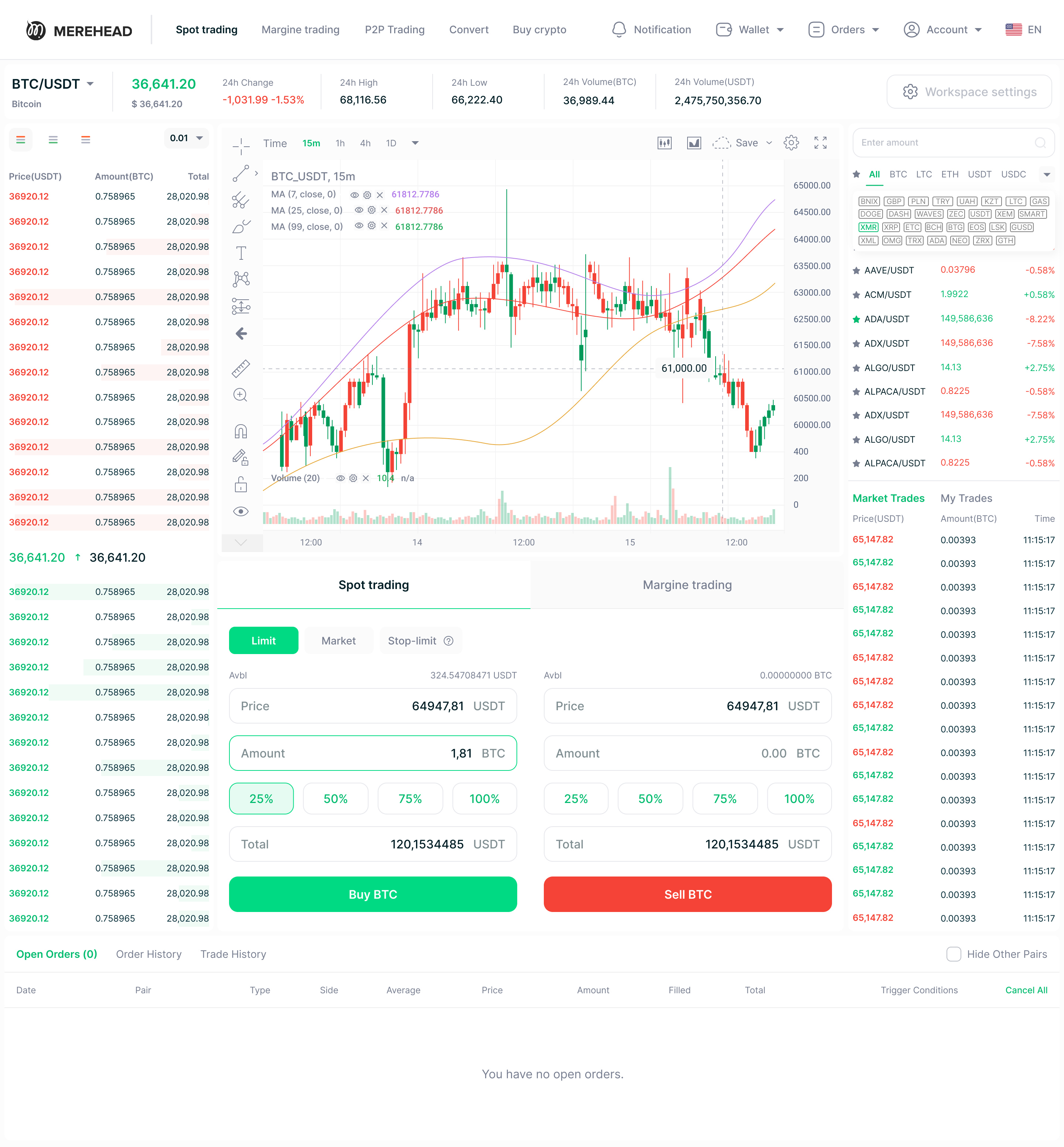
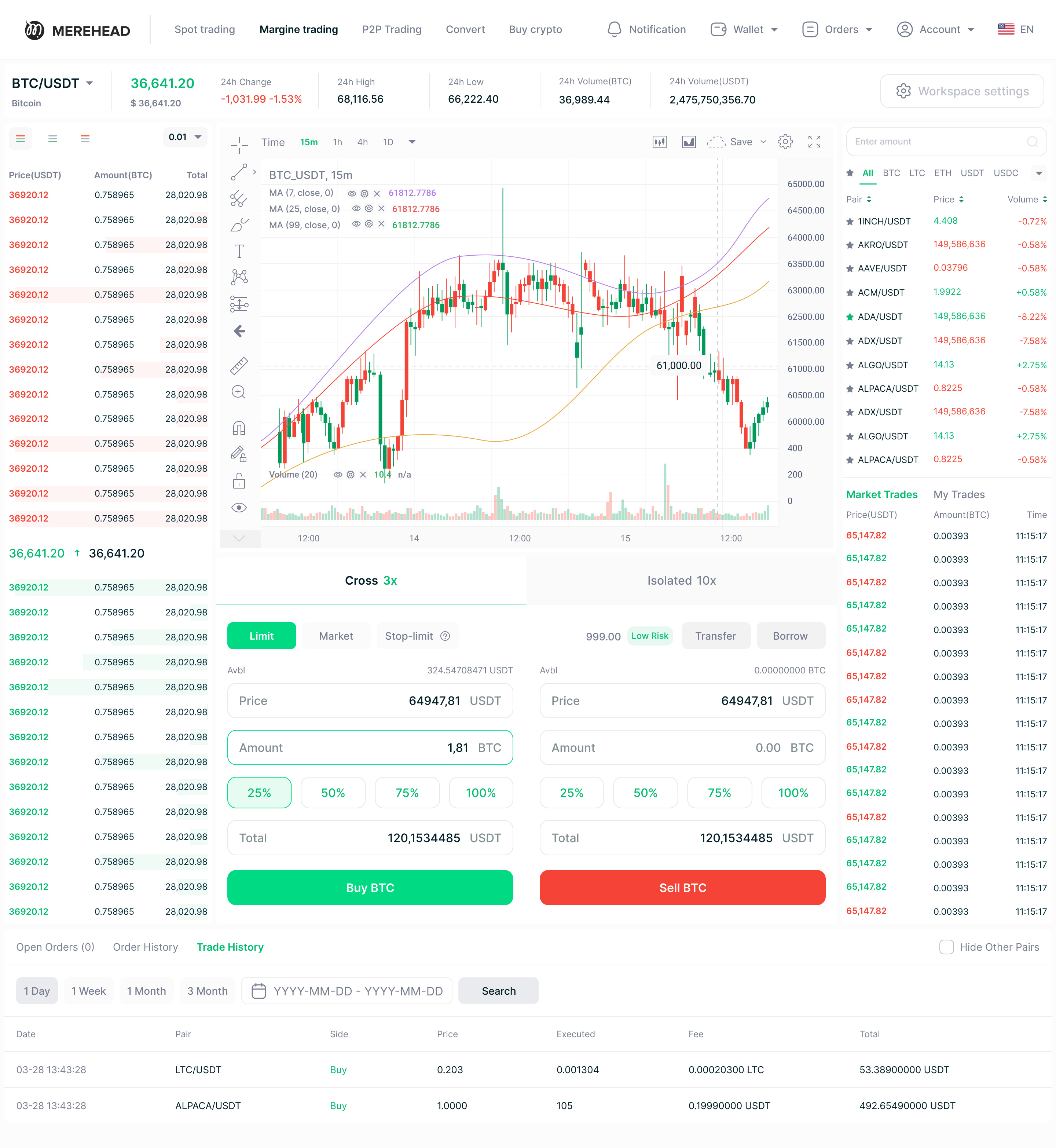
Kraken trading terminal
Despite the name, a Kraken clone is not a replica of the Kraken website. It is a white-label exchange solution, meaning it comes with essential backend logic and frontend components but allows full customization: interface design, trading pairs, liquidity sources, fee structure, and additional modules like staking or futures.
A Kraken Clone Script follows the same workflow as any centralized exchange (CEX):
- Users register and pass identity verification (KYC/AML)
- Funds can be deposited and withdrawn via crypto wallets or payment gateways
- Buy/sell orders are matched through a trading engine
- Order books update in real time
- Admins manage platform operations from a secure dashboard
The main advantage of this model is time to market. Building an exchange from zero typically takes 10–14 months and a large crypto development team. With a clone script, a fully branded exchange can be launched in as little as 30–60 days, depending on functionality and compliance requirements. This makes it one of the most practical options for startups, Web3 businesses, and fintech companies entering the crypto trading market.
Business Model Behind Kraken – How Crypto Exchanges Make Money
Before building an exchange like Kraken, it’s important to understand how these platforms actually generate revenue. The
business model of centralized exchanges (CEX) is simple in theory but extremely powerful in execution. Kraken has operated profitably for years using a flexible revenue system that scales with trading volume and user acquisition.
The primary income stream comes from transaction fees — commissions taken from every trade on the platform. Like most major exchanges, Kraken uses a maker–taker fee model: traders who place limit orders (makers) typically pay lower fees than traders who use market orders (takers). This encourages liquidity and active trading. While small traders may pay around 0.26% per transaction, high-volume accounts pay significantly less, making the platform attractive for professionals and institutions.
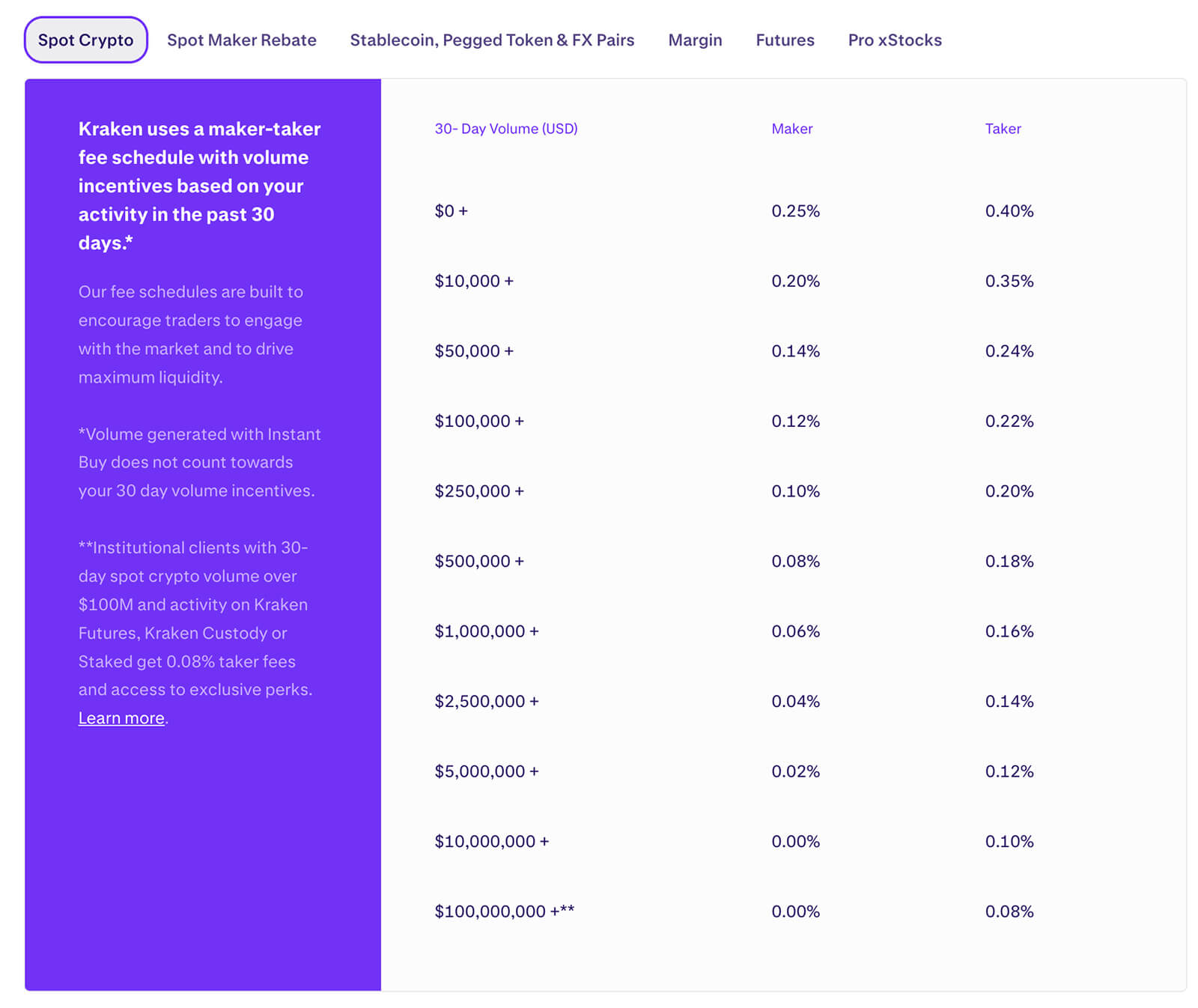
Kraken spot fees
Another major source of revenue is deposit and withdrawal fees. Even small percentage fees or fixed service fees generate steady income at scale. Kraken also earns through margin and futures trading, where traders borrow funds for leveraged trading and pay rollover fees. Additional monetization layers include staking services, listing fees for new tokens, API subscriptions, and institutional services for hedge funds and crypto businesses.
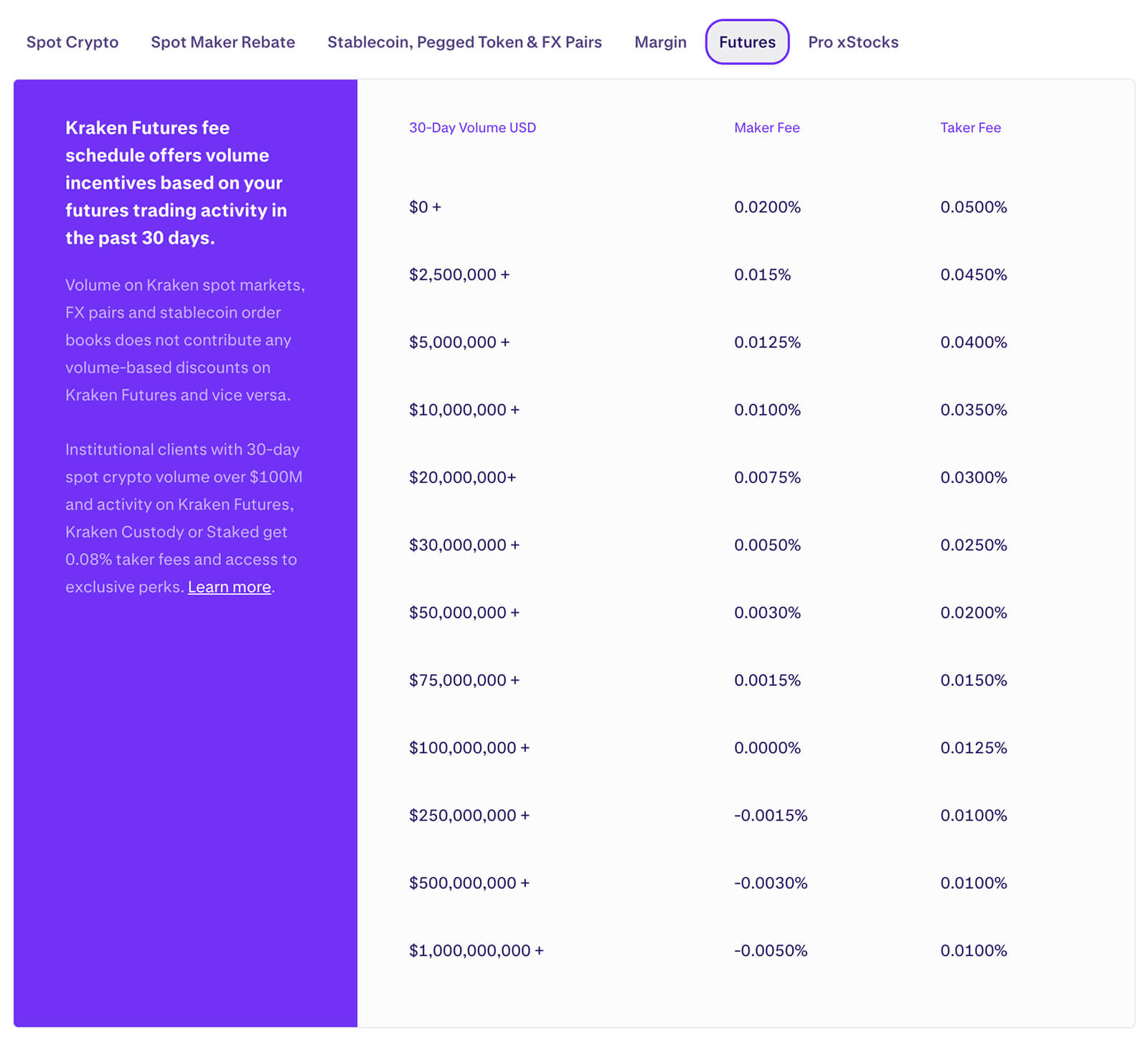
Kraken futures fees
What makes this business model so effective is that it scales automatically. Once an exchange has liquidity and active traders, each new user naturally drives more revenue without requiring significant extra operating costs. This is why Kraken remains profitable in both bull and bear markets — it is built on continuous transaction flow rather than market speculation.
A Kraken Clone Script allows your platform to adopt the same proven revenue model from day one. You can configure trading fees, withdrawals, liquidity spreads, and referral rewards according to your strategy, giving you full flexibility over how the business scales.
Core Exchange Features: Trading Engine, Liquidity & User System
A Kraken Clone Script includes all fundamental components required to operate a centralized exchange. While the interface and branding can be customized, the core functionality follows a battle-tested structure used by professional trading platforms. Below are the essential modules that define how a Kraken-like exchange works.
User Accounts & Authorization
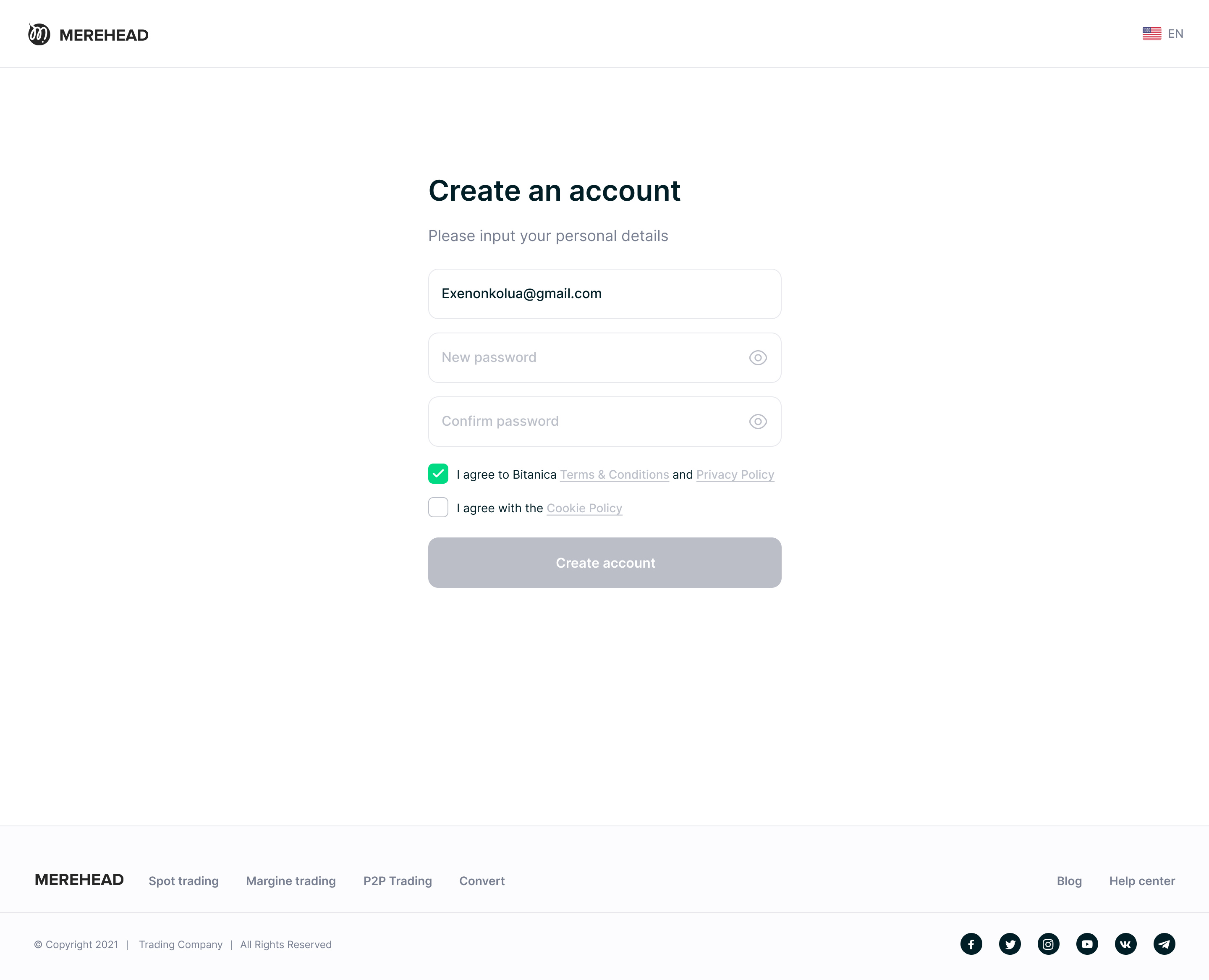
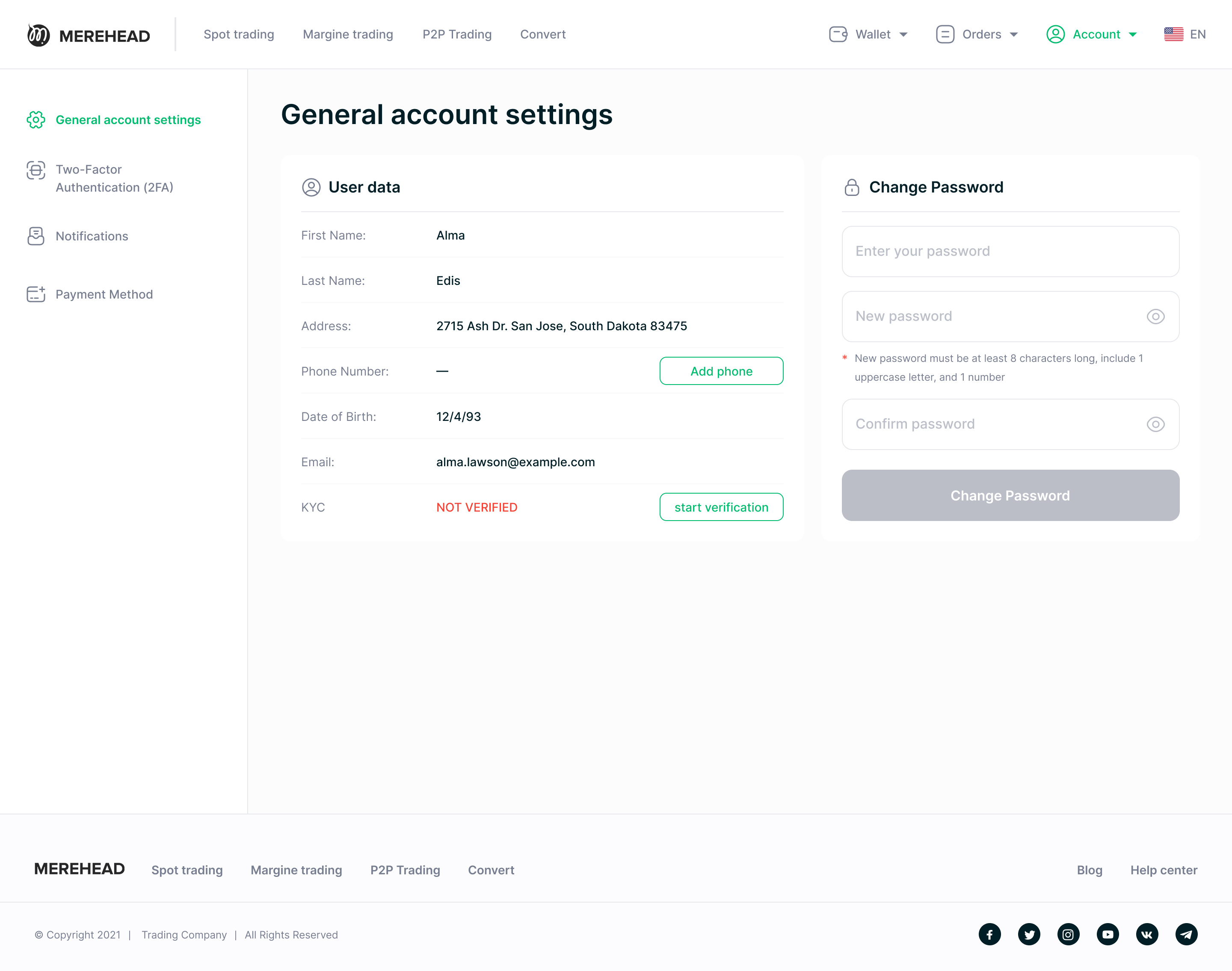
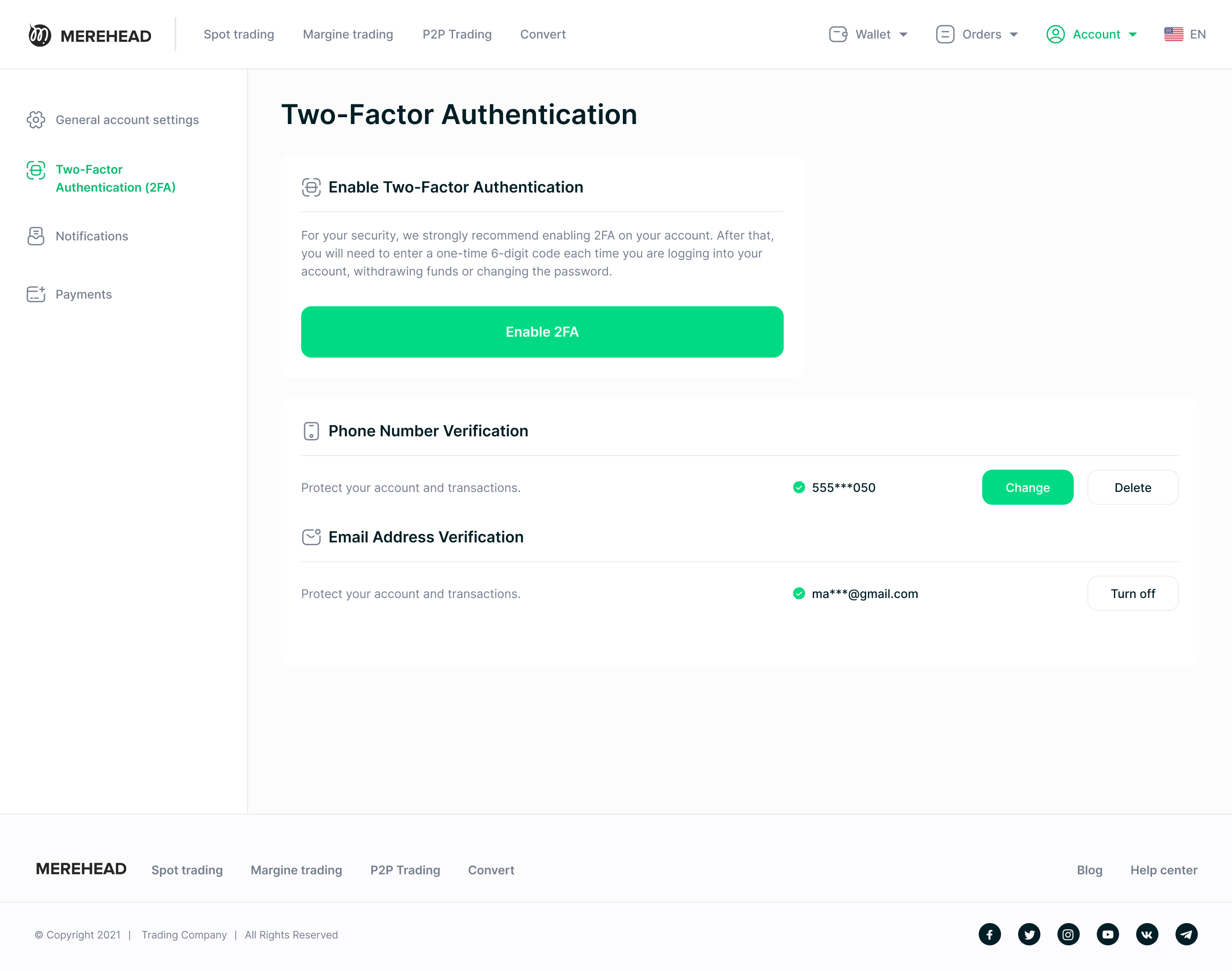
Every exchange begins with account creation and identity verification. Users register with an email or phone number, secure their accounts with 2FA, and complete KYC/AML verification to comply with regulations. This process builds trust and reduces fraud — a critical requirement for U.S. and European markets.
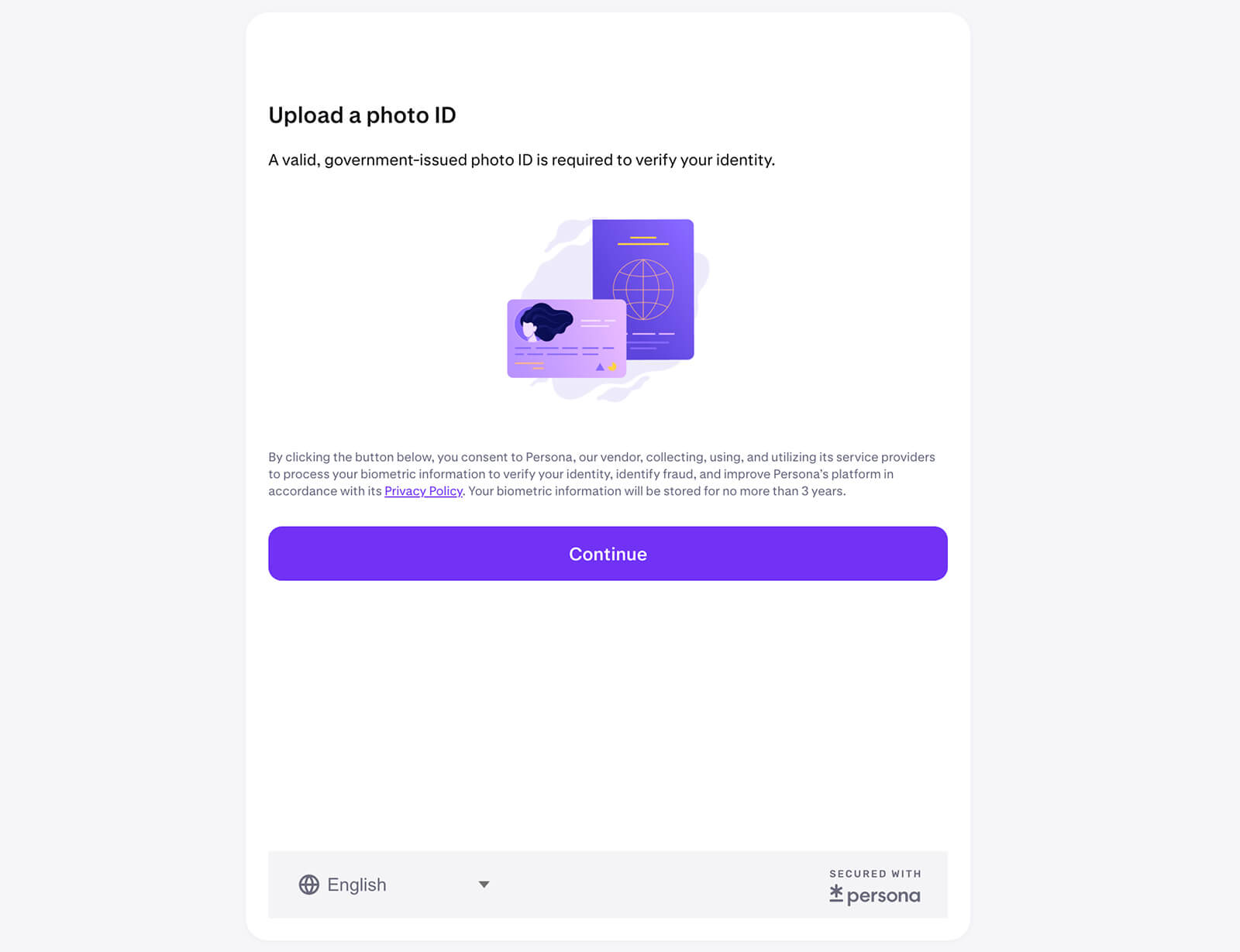
KYC Kraken feature
Wallet System (Hot/Warm/Cold Wallets)
The wallet infrastructure stores digital assets and manages deposits and withdrawals. Hot wallets handle active trading operations, while cold wallets store most user assets offline for security. A well-designed exchange automatically routes funds between these wallets to optimize security and liquidity.
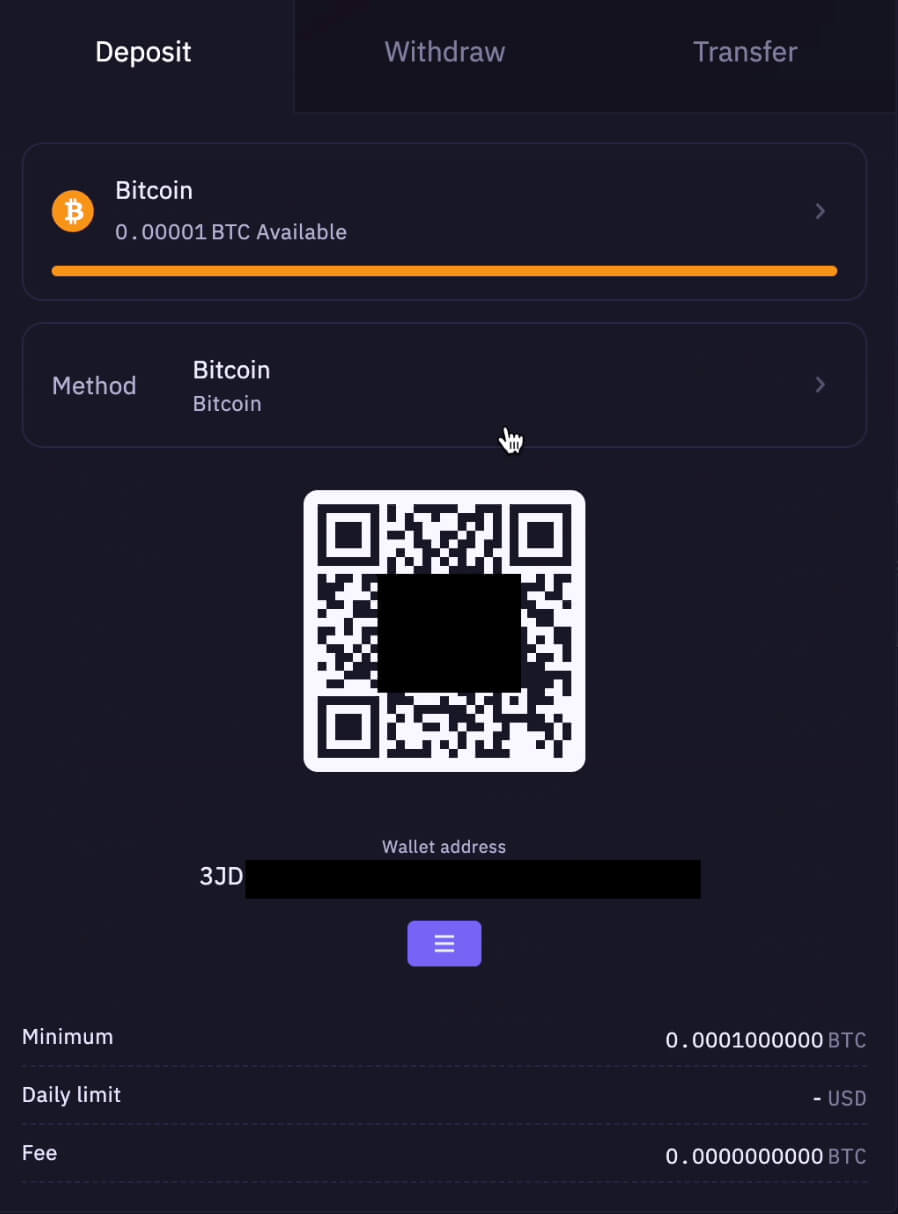
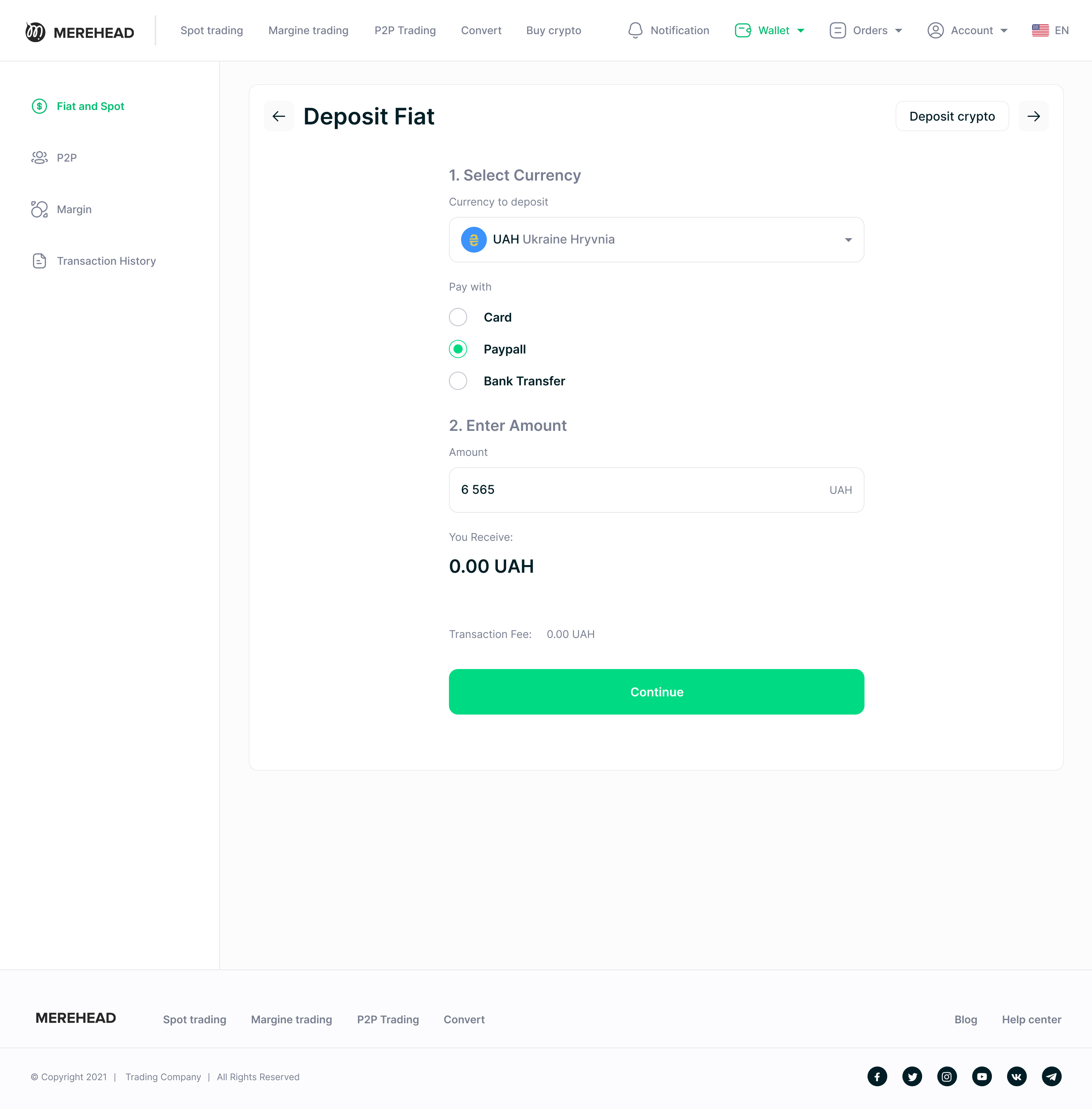
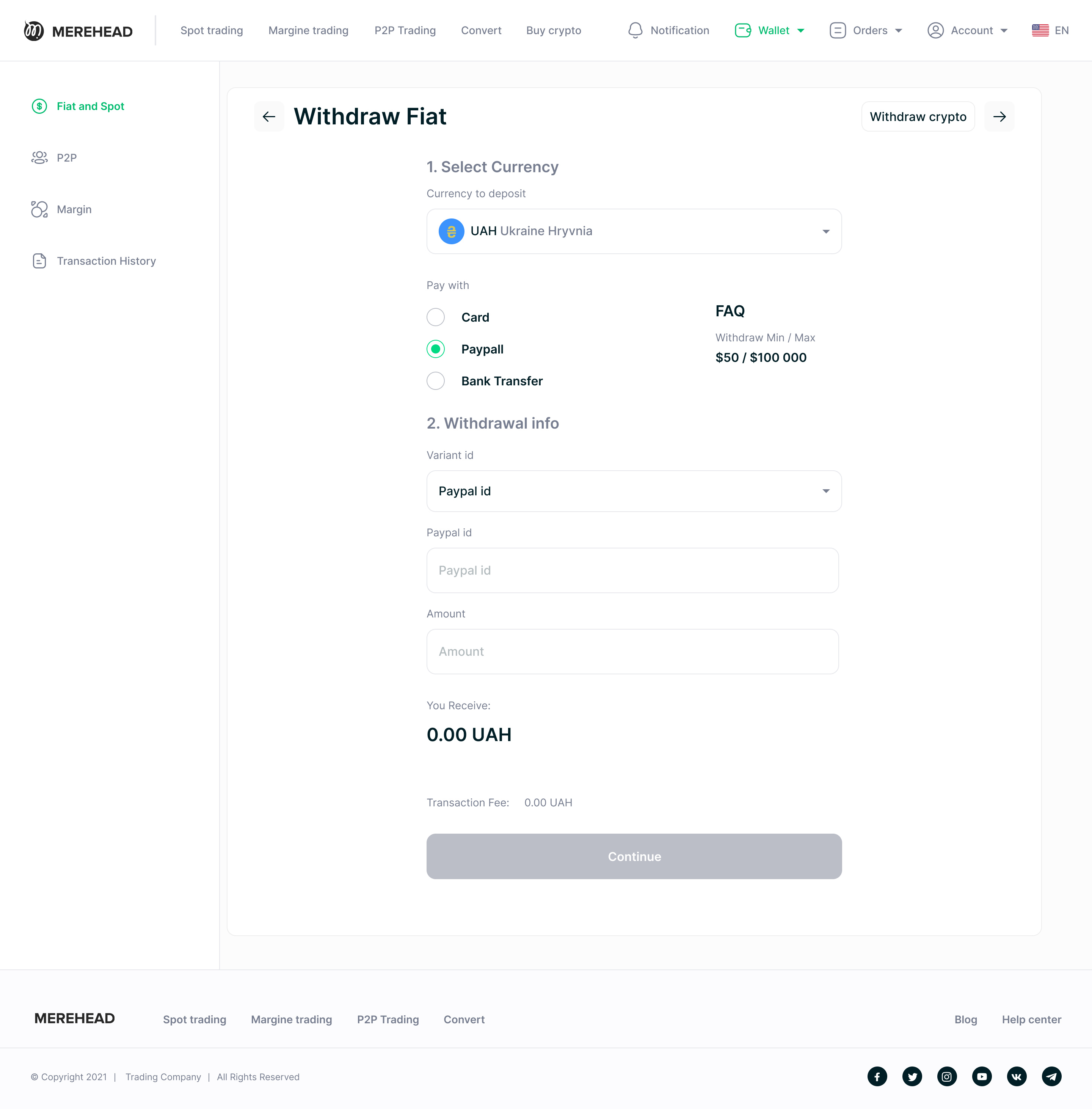
Kraken deposit feature
Why three tiers, not two
Most descriptions of exchange wallet architecture mention "hot and cold wallets". In practice, professional exchanges run three tiers — and the warm wallet layer is what makes operations manageable.
Hot wallets hold operational liquidity for instant withdrawals — typically 2–5% of total platform funds depending on daily withdrawal volume. They're connected to the system and exposed to the internet. Cold wallets hold the majority of funds air-gapped from any network, requiring manual or multi-party signing to move. The warm tier sits between them: automatically topped up from cold storage when hot wallet balances fall below thresholds, and acting as a buffer that limits how often cold storage needs to be touched.
The automated sweeper logic that moves funds between tiers is one of the most operationally critical pieces of exchange infrastructure. It runs continuously, reconciling per-asset balances, triggering cold-to-warm refills, and generating audit events for every movement. When it works correctly, hot wallets never run dry and cold storage stays minimally exposed. When it has bugs, operators discover them during high-volume withdrawal periods — the worst possible time.
We test sweep logic with real assets on mainnet before production launch — not on testnet, where transaction behavior differs from live network conditions. This is non-negotiable on any exchange we deploy.
Order Book & Matching Engine
This is the heart of every trading platform. The matching engine continuously compares buy and sell orders and executes trades based on price and time priority. In a Kraken Clone Script, this module supports:
- Market, limit, and stop orders
- Real-time order matching
- Partial fills and trade history
- High-frequency transaction handling
Without a fast and stable matching engine, a platform cannot attract serious traders.
Liquidity Management
Liquidity is what makes an exchange usable. Without it, users see empty order books and wide spreads — and they leave. There are three strategies used in clone-based exchanges:
- Internal liquidity pool – liquidity grows as users trade
- External liquidity via API – connection to bigger exchanges like Binance or Kraken
- Liquidity bots – simulate activity at launch to avoid empty markets
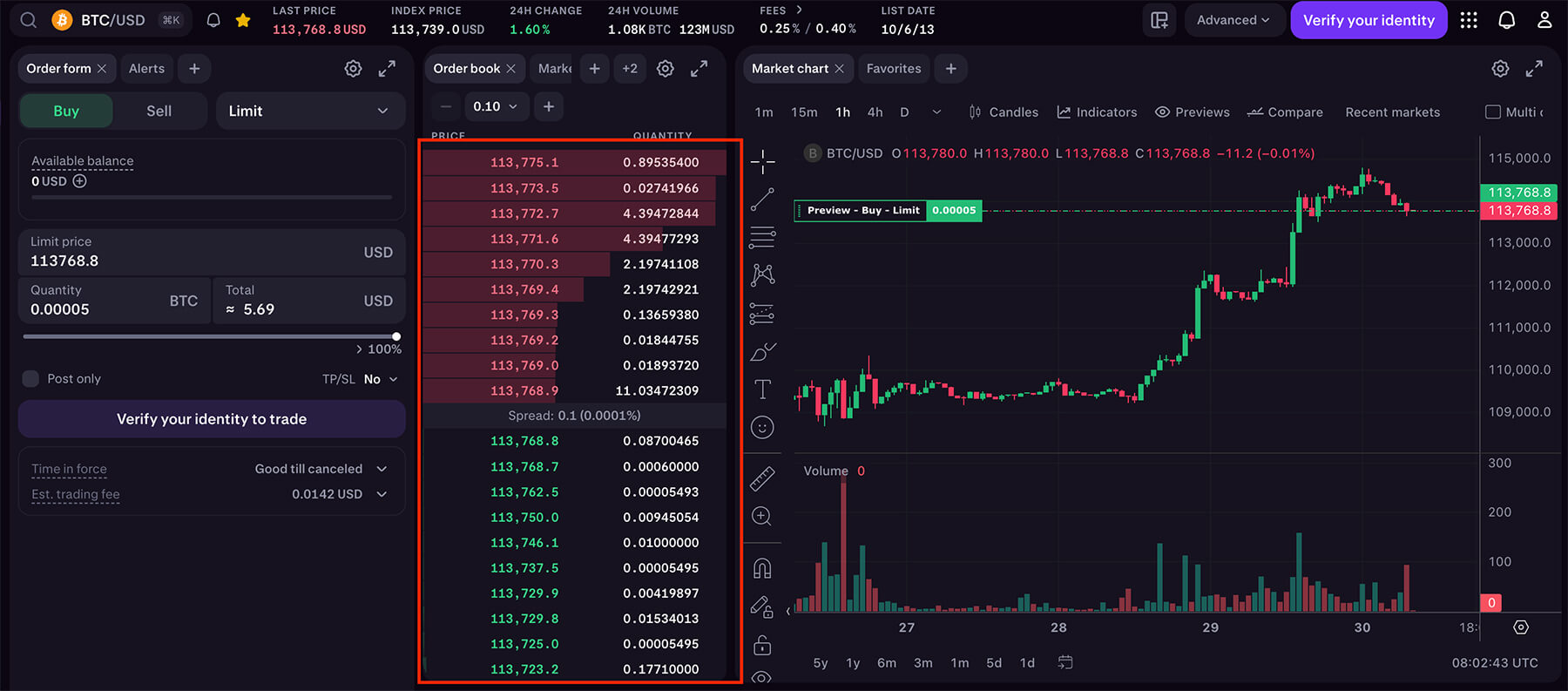
Kraken orderbook with full liquidity
Most real projects use a hybrid model: liquidity API + their own pool as volume grows.
OKX Liquidity Mirroring: How We Solve the Cold Start Problem
The liquidity cold-start problem kills more exchanges than bad UI or poor marketing combined. You launch, your order book is empty, the first users see spreads of 8–12%, and they never come back. External liquidity API connections help — but most implementations are passive: you display another exchange's order book and hope trades fill.
From our exchange deployments
One of the more sophisticated liquidity integrations we've built uses an OKX margin-borrow model. Here's how it works in practice: when a user places a sell order on your platform, the system simultaneously borrows the equivalent amount on OKX using 3x margin, executes the sell against OKX's live market, credits the user's balance, and then repays the OKX borrow once your platform's hot wallet settles. From the user's perspective, the trade executed instantly against a deep order book. Behind the scenes, your exchange is routing through OKX to source real liquidity.
This model solves the cold-start problem entirely. Your order book is populated from day one because it mirrors OKX's depth. The operational overhead: real-time monitoring of OKX margin utilization, borrow limits, and USDT collateral positions. We run Telegram and Slack alerts on all critical thresholds — if any component approaches a limit, the team knows before users notice. Without this monitoring layer, liquidity routing failures translate directly into failed user trades.
Deposit & Withdrawal Module
Supports both crypto transfers and fiat gateways (via Stripe, Adyen, Mercuryo, MoonPay, or bank wires). A proper clone script should include transaction status handling, blockchain confirmations, fee control, and withdrawal approval logic from the admin panel.
Admin Dashboard
If trading happens on the frontend, control happens in the backend. A secure admin panel allows platform owners to:
- Manage users and KYC levels
- Review suspicious activity
- Configure trading pairs and fee rules
- Control liquidity sources
- Resolve disputes
This is the operational brain of the exchange.
Security Architecture of a Kraken-Like Exchange
Security is not a feature you “add later”; it’s the foundation the entire exchange stands on. A solid Kraken Clone Script mirrors the layered defenses used by mature CEX platforms.
Account & Access Controls
- 2FA everywhere: login, withdrawals, API key creation, and sensitive settings.
- Session hardening: short-lived tokens, device binding, IP/geo heuristics, bot/abuse protection.
- Scoped API keys: separate read/trade/withdraw permissions, per-key rate limits, allow-lists.
Wallet & Custody Layer
- Hot–warm–cold segregation:
- Hot for operational liquidity and instant withdrawals.
- Warm for buffered operations (automated refills).
- Cold air-gapped storage for the majority of funds.
- Multi-sig / MPC approvals on treasury movements; no single operator can move funds.
- Automated sweepers that minimize hot wallet exposure and reconcile balances per asset.
Merehead software
Crypto Exchange
A ready-made solution with a wide range of functions. Software that can be installed in a couple of days. Launch your online trading platform!
Gallery
Start with us
Transaction Safety
- Withdrawal sanity checks: velocity limits, first-time address cooldowns, risk scoring.
- Address book with confirmations to prevent fat-finger sends.
- Chain monitors: confirm depth per network, fork/orphan handling, mempool anomaly alerts.
Infrastructure & Data
- Network defense: WAF + DDoS mitigation, private subnets, bastion access, zero-trust for admin tools.
- Secrets management: HSM/KMS for keys, no secrets in env files or repos.
- Data protection: encryption at rest (DB, backups, object storage) and in transit (TLS 1.2+), PII minimization, separate vault for KYC docs.
Fraud & Risk Controls
- Behavioral analytics: unusual login patterns, API abuse, wash trading, spoofing layers.
- AML heuristics: chain screening (e.g., flagged UTXOs/addresses), sanctions checks, case queues for compliance team.
- Market integrity: throttle self-trades, reject crossed orders, circuit breakers for abnormal spreads.
Operational Security
- Four-eyes in admin: dual approval for fee changes, pair listings, treasury moves.
- Audit trails: immutable logs for every admin/user action; time-synced and tamper-evident.
- Backup & DR: point-in-time DB recovery, cold backups, multi-region failover for matching and wallets.
Testing & Assurance
- Threat modeling per module (auth, engine, wallets, admin).
- Automated security tests in CI/CD + dependency scanning, SCA/SAST.
- External penetration tests and periodic smart custody reviews for wallet flows.
- Runbooks: incident response playbooks, on-call rotations, simulated drills.
Bottom line: a Kraken-like exchange isn’t “secure” because it has 2FA. It’s secure because multiple independent controls overlap—so a single failure doesn’t turn into a loss of funds.
What security looks like in production, not in a spec
The security architecture above describes what a system should have. What it doesn't capture is how security decisions play out in real exchange operations.
One example: forced wallet regeneration triggered by AML risk events. When a user's deposit address receives a flagged transaction — one that scores above the AML threshold — the system automatically generates a new deposit address for that user across all supported networks and retires the flagged address. Any future deposits to the old address are quarantined for manual review. The user receives a notification that their deposit address has been updated for security reasons. This breaks the chain of association without revealing the compliance trigger.
Another: admin access control in practice. We implement IP whitelist restrictions on the admin panel — the interface doesn't even render for requests originating outside approved IP ranges. Combined with 2FA, this means a stolen password alone cannot access administrative functions. In exchanges we've deployed, this single control has blocked multiple unauthorized access attempts that passed password authentication.
Security is the gap between architecture diagrams and operational reality. The diagram shows what you plan to build. The operational reality shows what happens when someone actively tries to break it.
Tech Stack & Development Approach
Building a crypto exchange sounds complex, but in reality, most professional platforms—including Kraken and other top CEXs—follow the same technical logic. A
Kraken Clone Script doesn’t limit you to a specific technology. Instead, it provides a
scalable architecture that can be customized based on performance, security and business goals.
The backend of such an exchange is usually built in Java, Go or Node.js — languages that handle financial transactions and concurrency without breaking under load. The trading engine works as a separate high-performance service that processes orders in milliseconds and keeps the order book synchronized in real time. For data storage, PostgreSQL or MariaDB are standard choices due to their reliability and strong transactional guarantees, while Redis is used to cache market data for faster order execution.
On the user side, the interface is developed with React or Vue, allowing real-time price updates and smooth interaction—for both beginners and experienced traders. Mobile trading is now a must-have rather than a bonus, which is why serious exchanges ship native apps for iOS and Android using Swift and Kotlin.
One of the most important parts of the stack is the wallet and node layer. This is where interaction with different blockchains happens: Bitcoin, Ethereum, Tron, Polygon and others. Exchanges can run their own blockchain nodes or connect through trusted third-party providers. The wallet system is divided into hot and cold storage to balance security and liquidity—most funds stay offline while a smaller portion is available for fast withdrawals.
Deployment and scaling are handled through Docker and Kubernetes, making updates safer and downtime minimal. Continuous deployment pipelines allow the platform to evolve without interrupting trading activity, which is essential for long-term operation.
In short, the tech stack behind a Kraken Clone Script isn’t a “black box.” It’s a transparent, modular system ready for customization—capable of supporting everything from a region-specific exchange startup to a global trading platform with institutional users.

Launch your crypto exchange
get a personal technical solution
Contact us
Infrastructure Reality: What Actually Runs Your Exchange
A tech stack list — React, Go, PostgreSQL, Redis, Docker — tells you what components an exchange uses. It doesn't tell you how they connect, how they fail, or what happens when they do.
From our exchange infrastructure experience
In one of our full exchange deployments, the production infrastructure migration involved 17 separate microservices, each needing to be containerized, connected to a Kubernetes cluster, and integrated with a HashiCorp Vault for secrets management. The Vault integration alone required designing a KV storage structure for 17 services, configuring ACL policies, and wiring GitLab CI pipelines to fetch secrets at build time rather than storing them in environment files.
Kafka (we used Redpanda) runs the message bus between services — order events, balance updates, notification triggers. The topology design matters: which services can write to which topics, read from which topics, and what happens when a consumer falls behind. Get this wrong and you get silent data loss during high-load events.
The horizontal scaling policy for Kubernetes pods also requires deliberate thinking. Not all services should autoscale the same way. Stateless services (API gateway, notification dispatcher) scale freely. Stateful services (wallet manager, matching engine) require careful scaling logic — spawning a second matching engine instance without coordination creates duplicate order fills. We configure HPA (Horizontal Pod Autoscaler) separately per service with explicit policies.
One practical note: Bitcoin full node synchronization takes 5–10 days on modern hardware. Ethereum and TRON sync in 1–3 days. If you don't start node sync on day one of the project — in parallel with development — you will hit "development complete" and wait on Bitcoin. We've seen this delay production launches by 10–14 days on projects that didn't plan for it. Our standard practice is to spin up nodes in week one, regardless of whether integration work has started.
Kraken Clone Script: Step-by-Step Deployment
Week 1–2: Architecture decisions and infrastructure setup
Lock trading modules (spot only vs. spot + margin + futures), blockchain selection, fee model. Start blockchain node synchronization immediately — Bitcoin takes 5–10 days, cannot be parallelized with other work. Deploy base infrastructure: cloud instances, database clusters, Redis, Kafka.
Week 2–4: Core platform configuration
Apply branding and UI customization (2–3 weeks for design adaptation). Configure trading pairs, fee structures, admin roles and permissions. Set up HashiCorp Vault for secrets management and integrate with CI/CD pipelines.
Week 3–5: Blockchain and wallet integration
Integrate nodes for each supported chain (BTC, ETH, USDT ERC20/TRC20/BEP20, TRX, BSC). Configure hot/warm/cold wallet architecture with automated sweep logic. Test deposit and withdrawal flows with real assets on mainnet — not testnet.
Week 4–6: KYC/AML and compliance setup
Integrate KYC provider (SumSub or document upload flow). Configure KYT transaction monitoring with AML scoring on every deposit. Set up forced wallet regeneration for risk-triggered events. Configure withdrawal velocity limits and first-address cooldowns.
Week 5–7: Liquidity integration and trading engine testing
Connect external liquidity provider APIs (Binance, Kraken, OKX). Configure order book display, routing logic, and fallback behavior. Test matching engine at 2x projected peak volume. Verify partial fills, order cancellations, and trade history accuracy.
Week 6–8: Security hardening and audit
Admin panel IP whitelist configuration. Penetration testing of critical flows: authentication, withdrawal, admin access. Review HSM/KMS configuration for wallet key management. Load test infrastructure at sustained high volume.
Week 7–10: Mobile apps, monitoring, and launch
Deploy iOS and Android apps (if in scope). Configure operational monitoring: Telegram/Slack alerts for node health, AML triggers, hot wallet balance thresholds, matching engine performance. Soft launch with controlled user group, then public launch.
From our production experience
The step that most often causes delays is not development — it's production infrastructure access. When the client's DevOps team hasn't provisioned server credentials or isn't available for coordination, development-complete work sits waiting for deployment. We now require infrastructure readiness milestones as explicit client deliverables with dates in the project contract. The second most common delay: Bitcoin node sync. Start it on day one.
Kraken Clone Script Cost in 2026 — What You Really Pay For
One of the most common questions from founders and
crypto businesses is:
How much does it actually cost to launch a Kraken-like crypto exchange? The short answer —
less than building from scratch, but more than what template script sellers promise.
The cost doesn’t depend on the script alone. It depends on what kind of product you want to launch — a minimal exchange MVP, a revenue-ready platform, or a fully compliant global exchange.
Realistic budgets for 2026 look like this:
- MVP Version — spot trading only, basic KYC, external liquidity via APIs.
$40,000 – $80,000: Good for testing a market idea and launching early traction.
- Growth Version — custom UI, mobile apps, staking or referral modules, better liquidity control.
$90,000 – $200,000: Works for startups aiming to generate real trading volume and revenue.
- Pro/Enterprise Version — fiat integration, banking rails, regulatory compliance & security hardening.
$220,000 – $500,000+: Designed for institutional projects or multi-region launch strategies.
So what do you actually pay for? Most of the budget doesn’t go to "the script". It goes to everything that makes an exchange a real business:
- Banking and payment integrations (USD, EUR, SWIFT, SEPA, ACH)
- Liquidity architecture (internal engine + external market connectors)
- Security and audits (because exchanges don’t get a second chance)
- Scalable cloud infrastructure (zero downtime expectation)
- Mobile apps (a must-have for growth)
- Legal setup (MSB, VASP, FinCEN, MTL depending on region)
Those who try to “save money” by buying a $3,000 script from GitHub or a random forum usually end up spending 5–10x more fixing vulnerabilities and broken logic. A crypto exchange is not a WordPress website — and the market quickly punishes weak engineering and weak security.
Kraken Clone vs Binance Clone vs Custom Exchange – Which One Makes Sense?
When planning to
launch a centralized crypto exchange, many founders compare three main options:
Kraken Clone Script,
Binance Clone Script, and
Custom Exchange Development. Each approach has a different strategy behind it, and the right choice depends on your business model, audience, and growth plan — not just the tech.
A Kraken Clone Script is typically chosen by teams that prioritize trust, security, and professional trading features over sheer trading volume. Kraken has built its reputation on regulatory stability and risk management, which attracts long-term traders, financial companies, OTC brokers, and compliant trading businesses. If you want to enter the market with a platform that feels reliable and technically solid, Kraken is a strong model to follow.
A Binance Clone Script, on the other hand, is usually more feature-heavy. Binance is known for wide token support, futures, margin trading, copy trading, NFT marketplace extensions, and aggressive liquidity strategies. Startups that want to move fast, cover many assets, and compete globally often choose Binance-style architecture — but it comes with higher operational complexity.
Custom Exchange Development is the longest and most expensive path. It gives you full control over the product — unique UX, custom trading mechanics, specific compliance logic — but development takes 10–18 months, and budgets easily go beyond $500,000. This route makes sense only if you’re building something truly unique or preparing for institutional investment and licensing from day one.
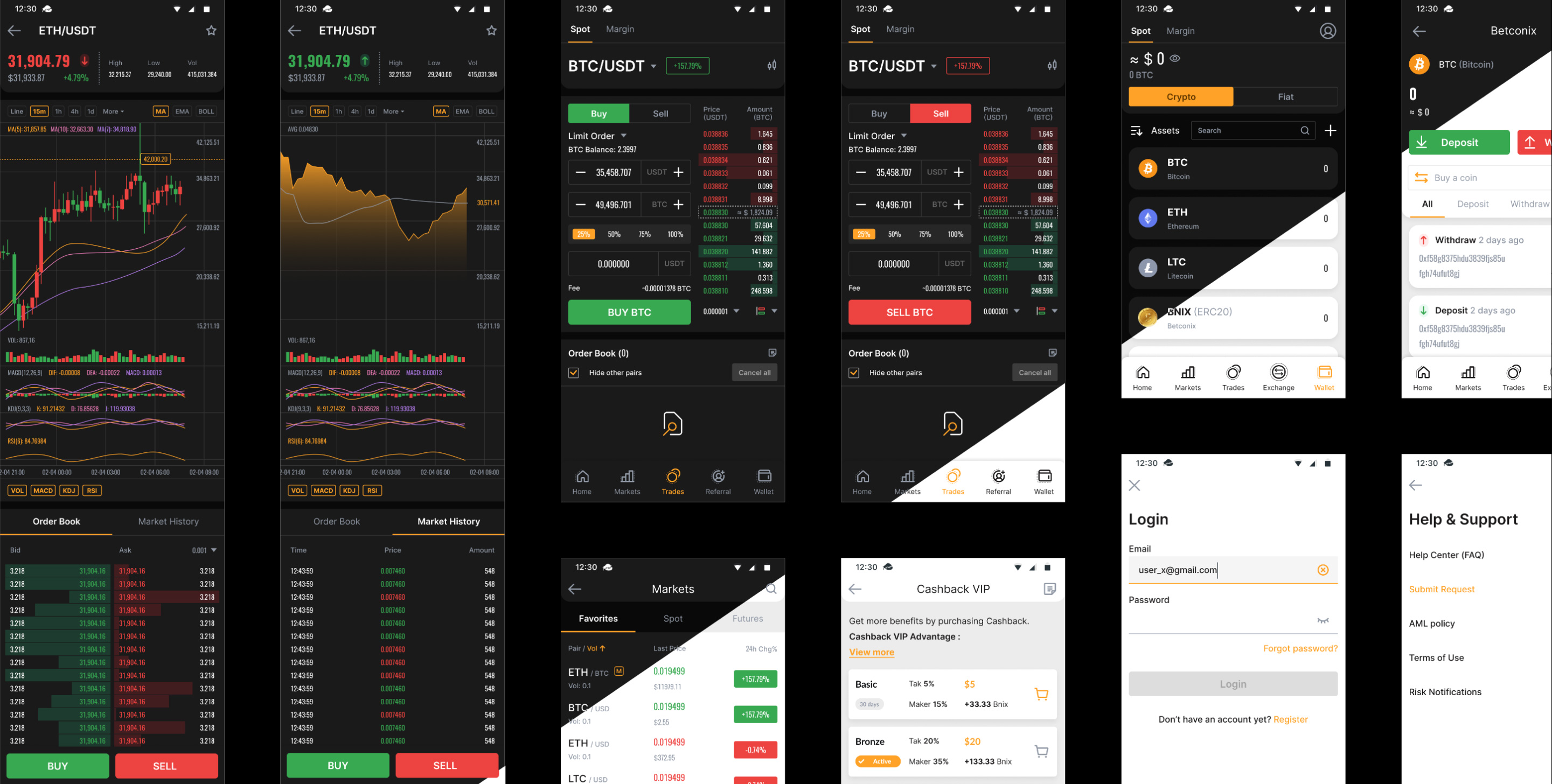
So which one should you choose?
- Choose Kraken Clone Script if you want a trusted, security-first exchange with high technical credibility.
- Choose Binance Clone Script if your strategy is high-volume trading + rapid feature rollout.
- Choose Custom Development only if your product vision cannot be implemented using a white-label base and you’re ready for enterprise budgets.
In most cases, clone-based development is not a shortcut — it’s simply the most efficient path to market without compromising quality.
Conclusion – Is a Kraken Clone Script Worth It?
Launching a crypto exchange today is no longer a tech challenge — it’s a
business strategy question. The market is still growing, trading volume continues to shift between regions, and users remain loyal to centralized exchanges that provide liquidity, security, and stability. The opportunity is real, but so are the risks if you build without a strong foundation.
A Kraken Clone Script offers the fastest and most practical path to launching a professional exchange without spending a year on development. You get control over your product, your revenue model, your brand, and your roadmap — while still relying on architecture that has already proven itself in real trading environments.
Whether you’re building a niche regional exchange, a compliant U.S.-first trading platform, or a startup with global ambitions, this approach lets you start lean and scale smart: launch early, validate your model, grow liquidity step by step, and move toward fiat integrations and regulatory licensing when the time is right.
In crypto, speed matters, but trust wins. The best exchange is not the one with the most features — it’s the one people feel safe using. If that aligns with your strategy, then a Kraken Clone Script is a strong foundation for building a long-term product.
Find out
how much it
costs to develop
your crypto exchange
Share your requirements with our Solutions Architect — we'll send back a per-module hour breakdown within 48 hours, at no cost.
Request an estimate
FAQ: Kraken Clone Development
Is a Kraken Clone Script legal?
Yes. A clone script is simply exchange software. Legality depends on how you operate — licensing, KYC/AML compliance, and local regulations in your target regions.
How long does it take to launch an exchange using a clone script?
A market-ready MVP can be launched in 6–10 weeks. Advanced versions with mobile apps and fiat integrations take 3–5 months.
Can I customize the design and add my own features?
Yes. The script is fully white-label. You control branding, UI, trading pairs, fees, liquidity strategy, and feature roadmap.
Do I need liquidity to start?
Yes — no exchange survives without liquidity. You can connect external liquidity providers through API or gradually build your own internal liquidity pool.
What’s the biggest hidden cost when launching an exchange?
Not development — compliance and operations. Legal setup, KYC providers, payment onboarding, and liquidity management are the real long-term costs.
What blockchains does a Kraken clone script support?
A production-ready clone supports Bitcoin, Ethereum, Litecoin, Tron, BNB Smart Chain, and USDT across ERC20, TRC20, and BEP20 networks. Each requires a separate full node running on your infrastructure. Important timing note: Bitcoin node sync takes 5–10 days; if not started at project kick-off, it becomes the critical path item delaying your launch.
How do you handle liquidity at launch when the order book is empty?
There are three approaches: connect external liquidity APIs (Binance, OKX, Kraken) to mirror their order books; deploy liquidity bots that simulate market maker activity; or negotiate with professional market makers to provide quotes from day one. Most production launches use a combination: API mirroring for depth display, plus at least one active market maker for tight spreads on primary pairs.
What's the difference between hot, warm, and cold wallets?
Hot wallets hold 2–5% of platform funds for instant withdrawals — internet-connected and fast. Cold wallets hold the majority air-gapped from any network, requiring manual signing. Warm wallets sit between them: automatically refilled from cold storage when hot wallet balances fall below thresholds. The warm layer reduces how often cold storage needs to be touched, which improves operational security without sacrificing withdrawal speed.
Can I add staking and earn products to my exchange?
Yes. Staking modules can be added in two forms: flexible (withdraw anytime, lower APR) and bonded (fixed lock-up period, higher APR). For fiat-like products, an overnight deposit staking model is also available — funds earn interest during off-hours based on per-currency rates configured in the admin panel.
What security audit should I expect before launch?
At minimum: smart contract audit if using on-chain components, penetration testing of critical user flows (authentication, withdrawal, admin access), and review of wallet key management infrastructure. We run automated security tests in CI/CD pipelines throughout development plus an external penetration test in the final week before launch.