What Is a White Label Binance Clone Script
Imagine you want to open a restaurant. You could spend a year building the venue, then finding suppliers, hiring a chef, developing a menu. Or you could buy a McDonald's franchise — get everything ready-made, just change the sign.
A Binance clone script is the same franchise model, but for crypto exchanges. You get a fully functional platform with all of Binance's features: trading engine, wallets, mobile app, security system. All that's left is to slap on your logo and launch marketing.
The key point: This isn't just a copied interface. It's a complete infrastructure that processes 100,000+ transactions per second. For comparison — VISA processes 65,000.
From Our Engineering Practice
When we deploy a crypto exchange from a white label base, roughly 60–70% of core infrastructure ships on day one — matching engine, wallet generation, basic order types, admin panel. The remaining 30–40% is always custom work: blockchain node configuration, liquidity provider tuning, and compliance modules specific to the target jurisdiction.
The node integration phase alone surprises most clients. Syncing a Bitcoin full node takes 5–10 days even on dedicated hardware. Ethereum and TRON are faster, but each blockchain has its own quirks — missed this in planning and your "launch in 6 weeks" easily becomes 10 weeks. We now build node sync time into every deployment timeline as a non-negotiable buffer.
How Crypto Exchanges Make Money
The crypto exchange business model is any entrepreneur's dream. You earn on every transaction, whether the market goes up or down.
Main source — trading fees. Binance takes 0.1% from each transaction. Seems small? With $76 billion daily volume, that's $76 million in profit. Every day.
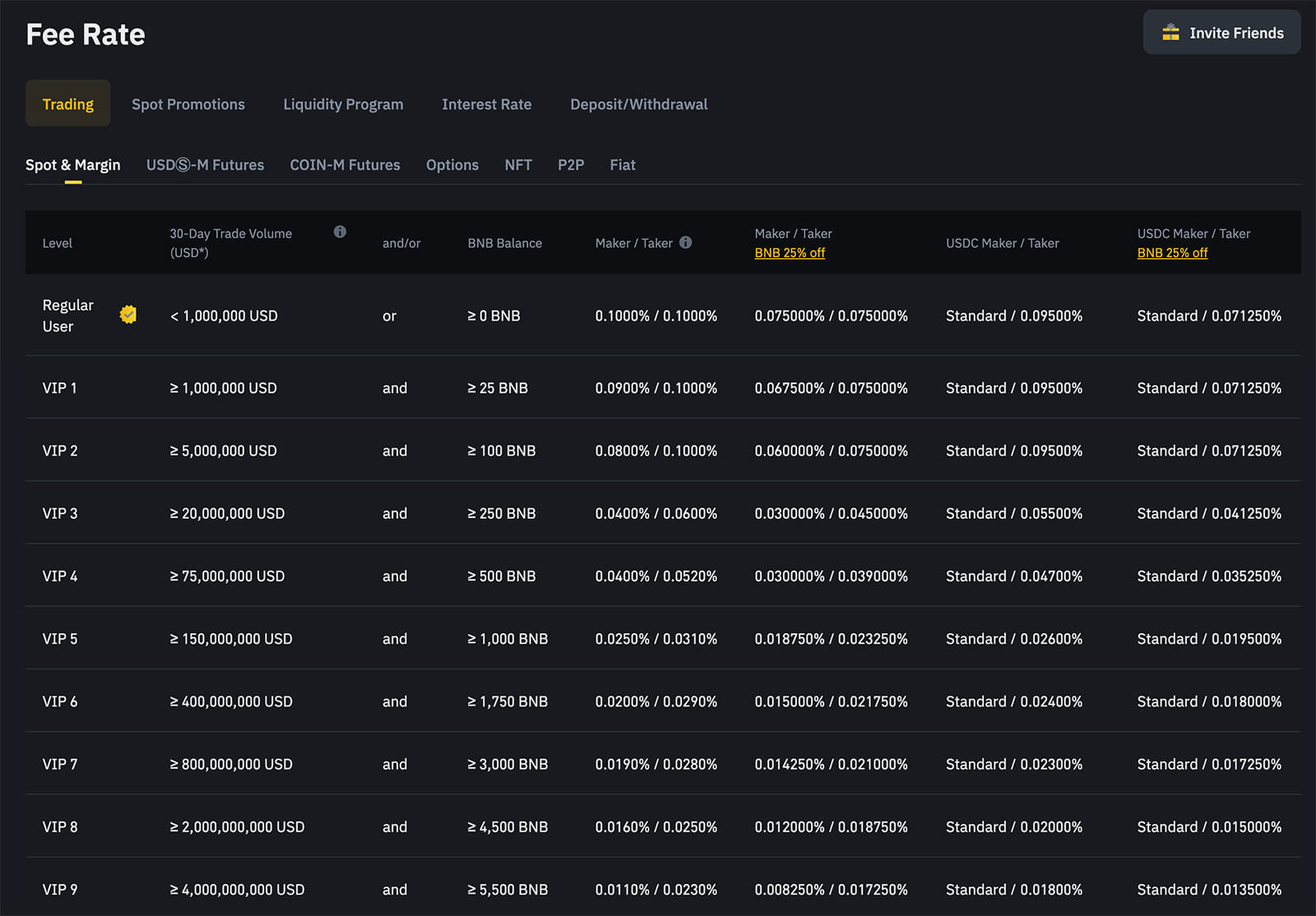
Even a small exchange with 5,000 active traders and $10 million monthly volume makes $10,000 just on fees. Plus there's withdrawal fees (0.0005 BTC per transaction), token listings ($20-50K per project), premium accounts ($10-50 per month per user).
The most interesting part — your own token. Binance issued BNB, which gives fee discounts. Users buy the token to save money. Token price goes up. Binance, holding 40% of the supply, gets richer. BNB grew from $0.10 to $600 in 7 years. Do the math yourself.
One of my clients launched an exchange in Nigeria. In the first year, reached $3.2 million monthly volume. With a 0.2% fee, that's $6,400 net per month just from trading. Plus $2,000 from withdrawals, $5,000 for listing local tokens. Almost $15K/month with a $45,000 investment. ROI — 3 months.
Crypto Exchange Development Cost: White Label vs Building From Scratch
Forget about millions of dollars. The real numbers are much nicer.
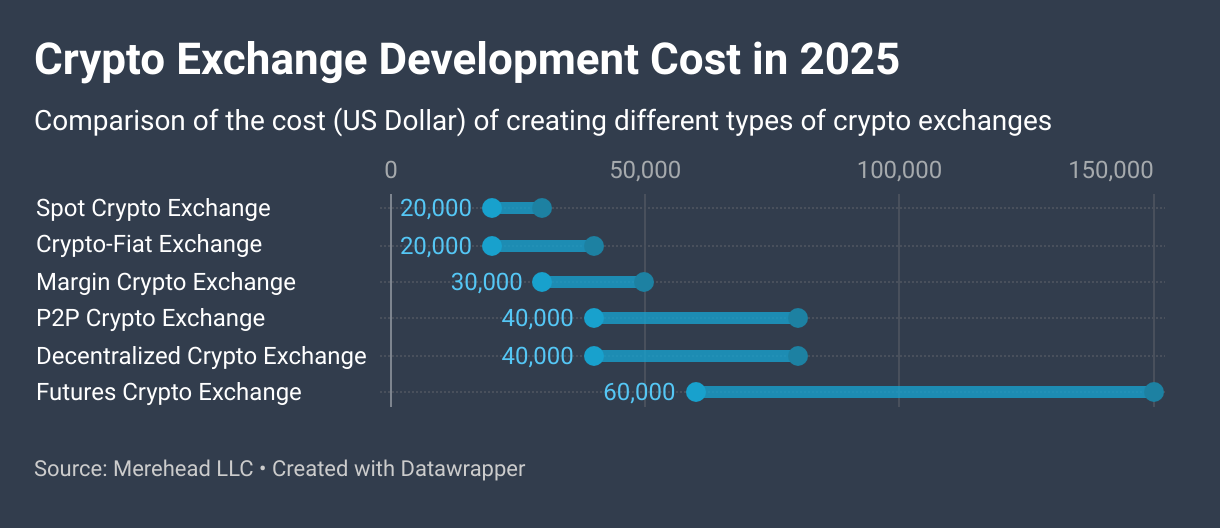
Basic option ($20,000-50,000) — this is like a Toyota Camry. Reliable, no frills, gets you where you need to go. You'll get spot trading, basic orders, simple mobile app. Perfect for starting in a regional market.
Advanced package ($50,000-150,000) — this is already a BMW 5-series. Margin trading with up to 10x leverage, copy trading, P2P platform, native mobile apps. You can compete with mid-tier exchanges.
Enterprise ($150,000+) — this is a Bentley. Futures, options, OTC desk for whales, your own token, ability to create sub-exchanges for partners. For those aiming for the top 20 global platforms.
Comparison with building from scratch: If you build the same exchange yourself, just the crypto exchange development team (15 people) will cost $100,000 per month. Plus a year of time. Plus risks that something will go wrong. Total — minimum $1.5 million and prayers that it'll work.
Binance Clone Script: Full Feature Checklist
When you buy a white label crypto exchange software, you don't just get code. It's like buying a ready business with all processes in place.
| Category | Core Features |
| Trading Modules | Spot trading, margin trading (up to 100x leverage), futures (perpetual + delivery), options (Black-Scholes model), instant swap/conversion, P2P trading, copy trading |
| Order Types | Market, limit, stop-limit, OCO, post-only, iceberg, TP/SL for open positions |
| Matching Engine | 100,000+ orders/second, written in C++ or Rust, sub-millisecond latency |
| Blockchain & Wallets | ETH, BTC, BNB Smart Chain, TRON, Litecoin; hot + cold wallet split (97% offline); multi-signature withdrawal (M-of-N); auto wallet generation per user per network |
| KYC / AML | Built-in KYC flow + SumSub integration option; KYT (Know Your Transaction) monitoring; AML scoring per deposit; forced wallet reset on risk triggers |
| Security | 2FA (Google Authenticator + SMS); IP whitelist for admin access; DDoS protection; brute-force rate limiting; JWT authentication; audit logs for all admin actions |
| Fiat Integration | SEPA (EUR/USD), bank transfer, payment gateway APIs |
| Liquidity | API integration with Binance, Kraken, OKX; order book mirroring; market maker support |
| Admin Panel | User management, withdrawal approval, fee management, trading pair configuration, balance overview, custom commission per user, compliance dashboard |
| Mobile Apps | Native iOS + Android; biometric login; push notifications; real-time balance/portfolio view |
| Analytics | User growth dashboard, trading volume metrics, fee revenue reports, 24h/7d trend charts |
| API | Private REST API for account management; WebSocket for real-time data feeds |
| Notifications | Email + Telegram/Slack operational alerts; minimum balance warnings; withdrawal confirmations |
What the Feature List Doesn't Tell You
Two things consistently trip up exchanges that look complete on paper:
Liquidity cold start. A beautiful order book means nothing if it's empty. In the exchanges we've deployed, we integrate at least two external liquidity providers (via API) before go-live. The technical work involves mirroring their order books, routing orders through them when internal depth is insufficient, and reconciling balances in real time. Without this, the first 100 real users will see spreads of 5–10% and never come back.
AML in practice vs. theory. Most scripts ship with KYC forms. Real compliance requires transaction monitoring that runs on every deposit — not just registration. We've implemented flows where a user's deposit triggers an AML score check; if the score exceeds a threshold, the system automatically locks the deposit and creates an admin review task. This is the difference between a compliant exchange and one that gets de-banked six months after launch.
Binance Clone Development: Step-by-Step Process
Step 1 — Architecture planning (Week 1)
Define your blockchain stack, trading modules, and compliance requirements. A crypto exchange serving Southeast Asian retail users needs different KYC flows than a B2B platform targeting institutional clients. This phase determines your entire technology stack and timeline.
Step 2 — Server infrastructure & node deployment (Weeks 1–2)
Deploy cloud infrastructure (multi-region for redundancy), begin blockchain node synchronization. BTC node sync alone takes 5–10 days — this runs in parallel with other work, not sequentially.
Step 3 — Platform configuration & branding (Week 2–3)
Apply design, configure trading pairs, set fee structures, connect your domain, configure admin permissions and roles.
Step 4 — KYC/AML & payment integration (Week 3)
Integrate your KYC provider (SumSub or equivalent), connect fiat payment rails (SEPA, local payment gateways), configure AML transaction monitoring rules.
Step 5 — Liquidity provider integration (Week 3–4)
Connect and test at least two external liquidity sources. This phase requires real fund testing — you cannot fully validate deposit/withdrawal flows in a sandbox environment. We test with small amounts of actual USDT on mainnet before go-live.
Step 6 — Security audit & load testing (Week 4–5)
Internal security review + optional third-party audit. Load test the matching engine at 2x your projected peak volume. Fix critical findings before launch.
Step 7 — Soft launch & monitoring (Week 5–6)
Beta launch with a controlled user group. Monitor node performance, transaction confirmation times, admin workflow. Address UX friction before public launch.
Our experience: The step where timelines slip most is Step 5. Exchanges often underestimate that testing crypto flows with real assets requires coordination with blockchain network conditions — high-fee periods, mempool congestion, and network syncing states all affect results. Building in one week of buffer here prevents the most common delay.
 Yuri MusienkoBusiness developer, Merehead
Why 90% of Exchanges Go Bankrupt (And How to Be in the 10%)
The main mistake — thinking technology solves everything. Bought the script, launched it, sit and wait for money. Doesn't work that way.
Mistake #1: Zero Liquidity
Imagine you come to a market to buy apples, and there's one seller with three apples at $100 each. That's an exchange without liquidity. Nobody will trade where there's nobody to trade with.
Solution: Connect at least 3 liquidity providers from day one. Costs $1,000-5,000/month, but without it the exchange is dead.
Mistake #2: Ignoring Mobile Traffic
Made a cool desktop, but mobile is like a 90s website through WAP. 70% of users will turn around at the door.
Solution: Mobile first, everything else second. Better to launch without desktop at all than without a proper app.
Mistake #3: Saving on Security
One successful hack and the exchange is dead. Not technically, but reputationally. Nobody will keep money where it's already been stolen from.
Solution: Security isn't an expense, it's an investment in the future. Minimum $5,000 for an audit before launch. Mandatory.
How Long Does It Really Take to Launch an Exchange
Forget about a year of development. With a white label solution, real timelines are:
Week 1-2: Deploy base platform, configure servers, connect domains. Exchange already works technically.
Week 3: Customize design, add your features, integrate KYC/payments. Ready to show beta testers.
Week 4: Load testing, bug fixes, connect liquidity. Ready to launch.
Week 5-6: Soft launch, first users, gather feedback, quick fixes.
After 6 weeks you have a fully functional working exchange. Not an MVP, not a prototype — a ready business.
Hidden Pitfalls Nobody Talks About
Regulation is no joke. Every country has its own rules. In Estonia, a license costs €10,000 and 3 months of waiting. In the USA — $500,000+ and a year of paperwork. In Seychelles — $15,000 and a month.
Banking services — banks hate crypto exchanges. Be prepared that opening an account will take months and 9 out of 10 banks will refuse.
Competition for users — just launching an exchange isn't enough. You need marketing. Budget at least 20% for promotion, otherwise you'll be the best exchange nobody knows about.
24/7 technical support — crypto doesn't sleep. If a user has a problem at 3 AM on Sunday, they expect an answer now, not Monday at 9:00.
The B-book vs. A-book decision nobody explains
Most Binance clone scripts default to B-book model for derivatives — meaning your platform takes the other side of user trades internally, rather than routing them to an external market. This is profitable when users lose, and expensive when they win big. A-book model routes trades externally, earning only the spread/fee.
This is a business model decision with major technical implications. We've built both. B-book requires sophisticated risk management logic and sufficient capital reserves. A-book requires deep liquidity API integrations and real-time position reconciliation. Choosing wrong costs you either money or the ability to scale.
The multi-instance scaling trap
Starting with a single backend that serves one frontend is fine at launch. Problems begin when you want to serve multiple regions or white-label the platform for sub-exchanges. We've rebuilt exchange architectures mid-life specifically to support multi-instance deployment across regions, with separate Kubernetes clusters per geography. It's possible to do post-launch, but it's 3x more expensive than planning for it upfront.
Should You Launch a Crypto Exchange in 2026
Short answer: yes, if you're ready to work, not wait for easy money.
The crypto market grows 45% annually. By 2030, they predict $11 trillion market cap. Now it's $3 trillion. There's room for everyone who comes with a quality product and clear positioning. Binance clone script is an opportunity to enter this market without million-dollar investments and years of development.
But it's not a "print money" button. It's a business that requires attention, work, and constant development. If you're ready to invest not just money but time — you'll succeed.
FAQ: Binance Clone Script
Absolutely. Using crypto exchange software is completely legal as long as you comply with regulations in your jurisdiction. The critical part isn't the software — it's getting the right licenses and ensuring KYC/AML compliance. A Binance clone script is just technology; what matters is how you use it legally.
A basic white label exchange starts from $20,000-$50,000 for essential features. Professional packages with margin trading and native apps range from $50,000-$150,000. Enterprise solutions with futures and institutional features go beyond $150,000. Compare this to building from scratch at $1.5+ million — the savings are obvious.
With a Binance clone script: 2-6 weeks for basic deployment, 2-3 months with heavy customization. Building from scratch takes 9-12 months minimum. Most of our clients go live within 30 days using the white label solution.
Trading fees (0.05-0.25% per trade), withdrawal fees (fixed or percentage), listing fees ($20K-500K per token), premium accounts ($10-50/month), and native tokens that offer fee discounts. Even small exchanges with 5,000 users and $10M monthly volume generate $10-15K per month.
White label is perfect for testing the market quickly (launch in weeks, costs $20-150K). Custom development is for established companies with proven traction who need unique features (takes a year, costs $500K+). Most successful exchanges start white label, then customize as they grow. It's not about which is "better" — it's about what fits your current stage and budget.
A production-ready Binance clone script supports at minimum: Bitcoin (BTC), Ethereum (ETH), BNB Smart Chain (BEP20), TRON (TRC20), and Litecoin. Each requires a separate full node running on your infrastructure. USDT across ERC20, TRC20, and BEP20 networks must be handled separately, since they're technically different tokens on different chains. The integration effort varies: TRON and BNB Smart Chain synchronize in 1–3 days; Bitcoin can take 5–10 days for a full node sync.
In B-book model, your exchange is the counterparty to user trades — you profit when users lose and pay when they win. Most clone scripts default to this for futures and margin. A-book model routes all orders to external markets, earning only the fee/spread regardless of outcomes. Most exchanges start with B-book for simplicity and migrate toward A-book or hybrid as volume grows.
Yes, a complete solution includes native iOS and Android apps with biometric authentication (Face ID / fingerprint), push notifications, real-time portfolio view, and full trading functionality. Mobile accounts for over 70% of trading activity on most exchanges — it's not optional.
The most commonly integrated providers are Binance, Kraken, and OKX (via their APIs). The technical flow involves mirroring their order books on your platform, routing user orders through them when your internal depth is insufficient, and reconciling positions in real time. Having at least two providers connected before launch is essential.
Yes, and it's one of the highest-ROI additions to a Binance-style exchange. A native token that offers fee discounts creates a buy-and-hold incentive — users buy your token to reduce fees, which supports the token price. The token can be issued on BNB Smart Chain or Ethereum (ERC20/BEP20), and the exchange admin panel can manage distribution, fee discount tiers, and vesting schedules.