- A Binance clone is a centralized cryptocurrency exchange (CEX) built using an existing platform architecture — covering spot trading, futures, margin, KYC/AML compliance, and admin panel.
- Development time ranges from 2 weeks (white-label, no custom features) to 2–4 months (configured base platform) to 12+ months (greenfield custom build).
- Core technical components: order book matching engine, multi-blockchain wallet infrastructure, liquidity provider integration, KYC/KYT compliance layer, and Kubernetes-based microservices deployment.
- The most common launch blocker: Bitcoin full node synchronization takes 5–10 days on modern hardware and must start on project day one — not after development finishes.
- White-label models reduce total cost by 60–80% vs. greenfield development and de-risk core trading mechanics through production-proven code.
When founders say "I want to build something like Binance," they're usually picturing the trading interface: charts, order book, a clean UI. What they're actually describing is one of the most technically complex products in fintech — a system that simultaneously manages real-time financial matching, multi-chain wallet accounting, compliance state machines, and infrastructure that must stay live during peak volatility when it's needed most.
This guide is not a surface-level overview. It covers the architectural decisions, infrastructure patterns, and production realities we've encountered across multiple exchange deployments — from the matching engine to compliance wiring to the cold-start liquidity problem that kills most new exchanges before they reach volume.
What "Binance Clone" Actually Means Architecturally
The term "Binance clone" covers a wide product spectrum. On one end: a white-label binary options platform with a single trading module and a NowPayments gateway, deployable in under two weeks. On the other: a full centralized exchange with spot, margin, futures, options, instant conversion, staking, and an affiliate system — each module with its own order management logic, wallet accounting, and risk engine.
In our experience with large-scale centralized exchange development, a production-ready CEX includes at minimum six distinct trading modules:
| Module | Core Complexity | Dependencies |
|---|---|---|
| Spot Trading | Order book matching, trade history, partial fills | Matching engine, WebSocket feed, wallet service |
| Margin Trading | Leverage positions, liquidation mechanics, interest accrual | Risk engine, price oracle, collateral manager |
| Futures (B-book) | Position management, funding rates, mark price | Price feed aggregator, liquidation engine |
| Options | Black-Scholes pricing, Greeks calculation, expiry settlement | Volatility surface data, pricing service |
| Instant Conversion | Best-rate routing, slippage control, quote locking | Liquidity provider APIs, rate cache |
| Admin Panel | Role-based access, KYC review, withdrawal approval | All backend services + audit log |
Each module is effectively a sub-product. Adding futures to a platform originally built only for spot isn't a feature addition — it's a separate risk model, a separate wallet namespace, and in the B-book case, a separate market-making engine.
The base platform, without custom extensions, takes 2–4 months to configure and stabilize in production. UI adaptation alone — applying a new brand identity to the existing interface — adds 2–3 weeks on top. These timelines assume infrastructure is provisioned and ready. If it isn't, plan accordingly.
The Matching Engine: Where Most Architecture Mistakes Happen
The matching engine is the heart of any exchange and the component most teams underestimate. At low volume, almost any implementation works. The problems surface when you're processing hundreds of concurrent order submissions during a volatility spike — which is precisely when your engine must be most reliable.
This sounds simple until you have thousands of orders at the same price level during a news event and need deterministic sequencing across a distributed system. The matching engine must also be the single source of truth for trade execution — no other service should make matching decisions.
All downstream services (wallet debits, trade history, notification dispatch) are consumers of matching engine events, not participants in matching logic. Separating these concerns is what makes the system auditable and recoverable after a failure.
For a deeper technical breakdown of throughput targets and architectural options, the dedicated analysis of matching engines — from Rust implementation to 1M+ TPS covers the performance engineering in detail.
In our deployments, we use an in-memory order book with a message queue (Redpanda/Kafka-compatible) for event persistence. Every state change in the order book produces an event that gets consumed by the trade ledger, wallet service, and WebSocket distribution layer. This architecture survives service restarts because the order book state can be reconstructed from the event log.
Microservices Architecture and Kubernetes Deployment
Running a crypto exchange on a single server is a development convenience, not a production architecture. At any meaningful volume, you need horizontal scaling, fault isolation, and zero-downtime deployments. These requirements point to microservices on Kubernetes — but the implementation details matter significantly.
In one of our production exchange launches, the infrastructure migration scope included 17 microservices rewritten as Docker containers, with Helm charts for each service, HashiCorp Vault integrated with GitLab CI/CD pipelines for secrets management, Horizontal Pod Autoscaler (HPA) configured per service, and Redpanda as the inter-service message bus.
The matching engine must be a singleton (or use leader election) because parallel instances would produce divergent order books. The wallet manager requires atomic balance operations that don't compose across instances without distributed transaction coordination. Define your stateful vs. stateless boundary before writing a single Helm chart. Discovering this constraint after you've deployed to production and configured autoscaling across all services is expensive to fix.
The practical pattern: HPA on everything stateless, StatefulSet with single replica + resource limits on the matching engine, and explicit capacity planning on the wallet service instead of autoscaling.
The message bus is what makes this architecture recoverable. When the notification service goes down during peak trading, orders still execute and balances still update — the notification events queue up in Redpanda and deliver when the service comes back. Without a persistent message bus, service downtime becomes data loss.
Blockchain Node Integration: The Timeline Item Nobody Plans For
Every Binance clone needs to accept deposits and process withdrawals across multiple blockchains. This requires running full nodes — and node synchronization is consistently the most underestimated item on project plans.
From our production experience across multiple exchange deployments:
| Blockchain | Full Node Sync Time | Notes |
|---|---|---|
| Bitcoin (BTC) | 5–10 days | Dedicated hardware; longer on shared/cloud infra |
| Ethereum (ETH) | 2–4 days | Archive node takes significantly longer |
| BNB Smart Chain | 1–3 days | Faster sync, larger state size |
| Tron (TRX) | 1–2 days | Witness node option for faster start |
| Litecoin (LTC) | 1–2 days | Follows BTC sync pattern, smaller chain |
The practical consequence: if Bitcoin node sync doesn't start on project day one — running in parallel with development, not sequenced after it — it becomes the critical path item blocking go-live. We've seen this delay production launches by a week or more on projects that treated node sync as an integration task rather than infrastructure. Our current practice is to spin up all required nodes in week one of any exchange project, before any integration work begins.
A non-obvious subtlety: testnet nodes and mainnet nodes behave differently in ways that matter for production. Transaction confirmation times vary with real mempool congestion. Fee estimation algorithms produce different results under real network conditions. Minimum withdrawal amounts enforced by network economics only surface with actual assets. We don't consider a deposit/withdrawal flow production-ready until it's been tested with real mainnet assets — real USDT, real BTC, real ETH — not testnet coins.
Solving the Cold-Start Liquidity Problem
Every new exchange faces the same problem on launch day: an empty order book. An empty order book means no trades, which means no users, which means the order book stays empty. This is the cold-start problem, and it's why most new exchanges fail before reaching sustainable volume — not because of bad technology, but because of this structural challenge.
There are three viable approaches to solving this, each with different risk profiles:
1. Liquidity provider mirroring (recommended for launch). Connect to an established exchange — OKX, Binance, Kraken — and mirror their order book depth. In one of our exchange deployments, we implemented OKX order book mirroring for the spot market using the following flow: when a user places a sell order, the system simultaneously borrows the equivalent amount on OKX using 3× margin, executes the sell on OKX's market, credits the user's USDT balance, and settles the OKX borrow when funds are available. From the user's perspective, they're trading against a live, deep order book from day one.
We run Telegram and Slack alerts on all critical thresholds as a non-negotiable baseline. Understanding your options across top crypto liquidity providers is essential before selecting a mirroring partner — fee structures, API reliability, and borrow limits vary significantly between providers.
2. Market making agreement. Partner with a professional market maker who commits to maintaining minimum bid-ask spreads and order book depth across your listed pairs. Costs money, but transfers the operational complexity to a specialist.
3. Internal market maker module. For platforms that need to stay tradeable when external market data isn't available — forex pairs on weekends, for example — a synthetic price generator within configured parameters (frequency, amplitude, drift bias per pair) is standard practice in the binary options and CFD space. Administrators configure this per pair and can switch between live data feed and synthetic mode. Without this, markets effectively shut down on weekends.
KYC, KYT, and the Compliance Architecture Nobody Talks About
Compliance in a production exchange is two distinct systems, not one — and most teams treat them as one, which creates real problems.
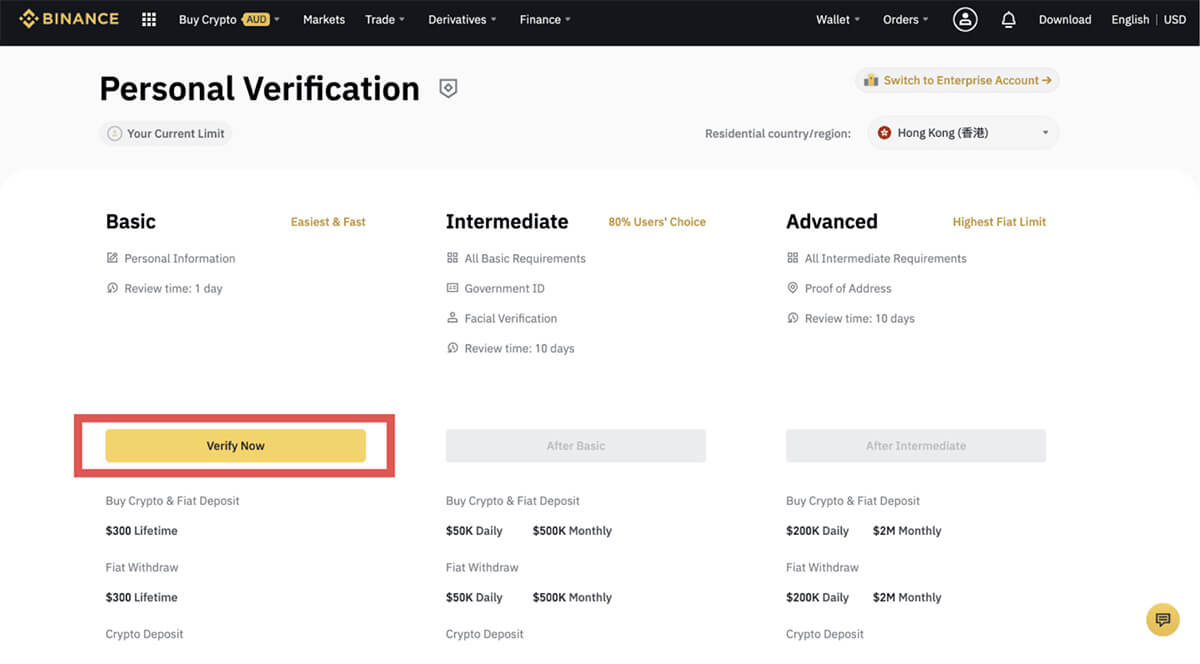
KYC (Know Your Customer) verifies identity at onboarding. This is the document upload flow, face match, and liveness check that most people think of when they hear "compliance." We implement KYC via SumSub in most deployments, including a dual-path configuration: international users go through the standard document upload flow, while users in markets with government digital identity infrastructure can verify via mobile identity app integration.
A user who starts verification on path A and abandons it must be able to resume on path B without creating a duplicate identity record or leaving a zombie verification session in your database. This edge case causes real support tickets and compliance audit failures if not handled explicitly. Design the state machine before you start integrating the SDKs. KYT (Know Your Transaction) is the second system — and this is where most teams cut corners. In our exchange deployments, KYT is wired to every inbound deposit: each transaction receives an AML risk score before the balance is credited.
When a score exceeds the defined threshold, the system creates an admin review task and freezes the deposit. The user sees a "pending" status, not a credited balance, until a compliance officer clears it. This is fundamentally different from running a KYC check at onboarding and trusting all subsequent transaction activity.
One of the more sophisticated AML features we've implemented is forced wallet address regeneration triggered by a risk event. When a user's deposit address is flagged — either by the AML scoring system or manually by a compliance officer — the system automatically generates new deposit addresses for that user across all supported networks and retires the flagged addresses. Any future deposits to old addresses are quarantined pending review. This breaks the address-to-user association that makes flagged addresses a compliance liability, without revealing the compliance trigger to the user. The notification reads: "your deposit address has been updated for security reasons."
For a technical overview of how blockchain properties interact with identity verification requirements, the analysis of blockchain KYC use cases covers the compliance architecture in broader context.
The Feature Roadmap Reality: What Launches vs. What Evolves
A common mistake in exchange development planning is treating the initial feature list as a delivery target rather than a starting point. In our experience, the most successful exchange products launch with a well-engineered core and evolve through rapid iteration based on real user behavior.
In one of our exchange projects, the initial scope was a baseline CEX. Over six to twelve months of live operation, the platform grew through seven distinct capability layers: multi-account types with VIP tiers (configurable fee structures per tier), AML-triggered forced wallet regeneration, custom per-user commission structures, OKX liquidity mirroring for spot, overdraft functionality for high-tier accounts, and fiat overnight staking with per-currency interest rates configurable from the admin panel.
None of this was in scope at contract signing. All of it accumulated from client feedback and competitive pressure.
Building for extension points is not over-engineering — it's the difference between a platform that stays competitive and one that accumulates technical debt faster than it ships features.
This iterative approach applies to trading instruments too. Many exchanges start with spot-only and add derivative instruments as user demand validates the investment. If you plan to add futures eventually, the white-label futures trading platform documentation covers the specific risk management and technical components that a futures module requires beyond the spot infrastructure — liquidation engines, funding rate mechanics, and mark price oracles are not trivial additions.
White-Label vs. Greenfield: The Technical Decision Framework
The build-vs-configure decision is not primarily about cost. It's about risk distribution and time-to-market. Here's how to think about it:
| Factor | Greenfield Build | White-Label / Configure |
|---|---|---|
| Timeline | 8–18 months | 2 weeks – 4 months |
| Cost | $300K–$1M+ | $30K–$150K |
| Core trading risk | High (untested matching logic) | Near-zero (production-proven) |
| Custom feature risk | Normal | Normal (custom on top of proven base) |
| Architecture control | Full | Constrained by base design |
| Vendor dependency | None on core | Depends on contract terms |
| Best for | Novel product with unique trading mechanics | Standard CEX with branded differentiation |
In one of our deployments, we went from signed contract to live platform in under two weeks. The scope: fork the existing codebase, apply the client's brand tokens (logo, colors, typography), configure payment gateway API keys, connect the domain with SSL, run smoke tests across critical user flows, hand over admin credentials. This is possible only because the underlying platform had already been running in production on other deployments — the matching engine, wallet accounting, KYC flows, and admin panel were all production-tested before this client's first user signed up.
The honest framing for clients who ask why they're paying for something that already exists: they're paying for the configuration, the customization, and the years of engineering embedded in the base product. The white-label model reduces total cost by 60–80% compared to a greenfield build and reduces risk on core trading mechanics to near zero. For a detailed breakdown of pricing variables, the white-label crypto exchange cost guide covers component-level pricing in 2026 terms.
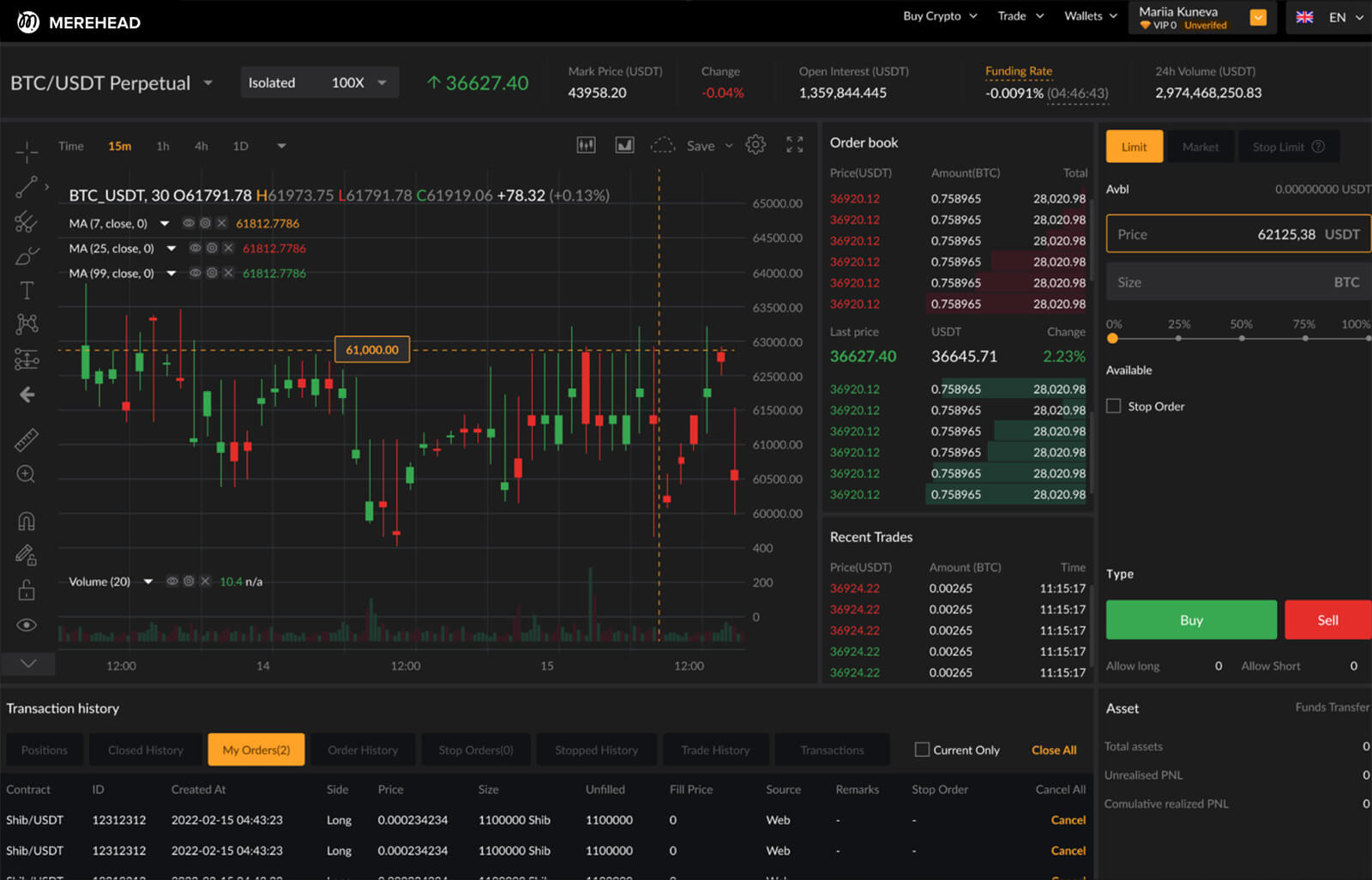
Where greenfield makes sense: when your exchange has a genuinely novel trading mechanism not covered by existing platforms, when you need full architecture control for regulatory reasons, or when your technical team has the capacity and track record to build a matching engine from scratch without a multi-year timeline.
Integrating Decentralized Infrastructure: DEX Modules and Perpetual Futures
The line between CEX and DEX is blurring in production products. Several of our recent exchange projects have integrated decentralized infrastructure components into otherwise centralized platforms — most commonly, perpetual futures trading powered by a DEX protocol rather than an in-house futures engine.
In one deployment, we integrated a perpetual futures module into an existing non-custodial crypto wallet application — iOS and Android — built on TrustWalletCore. The integration used HyperLiquid as the underlying perp DEX infrastructure, connecting to their API for order placement, position management, and funding rate data.
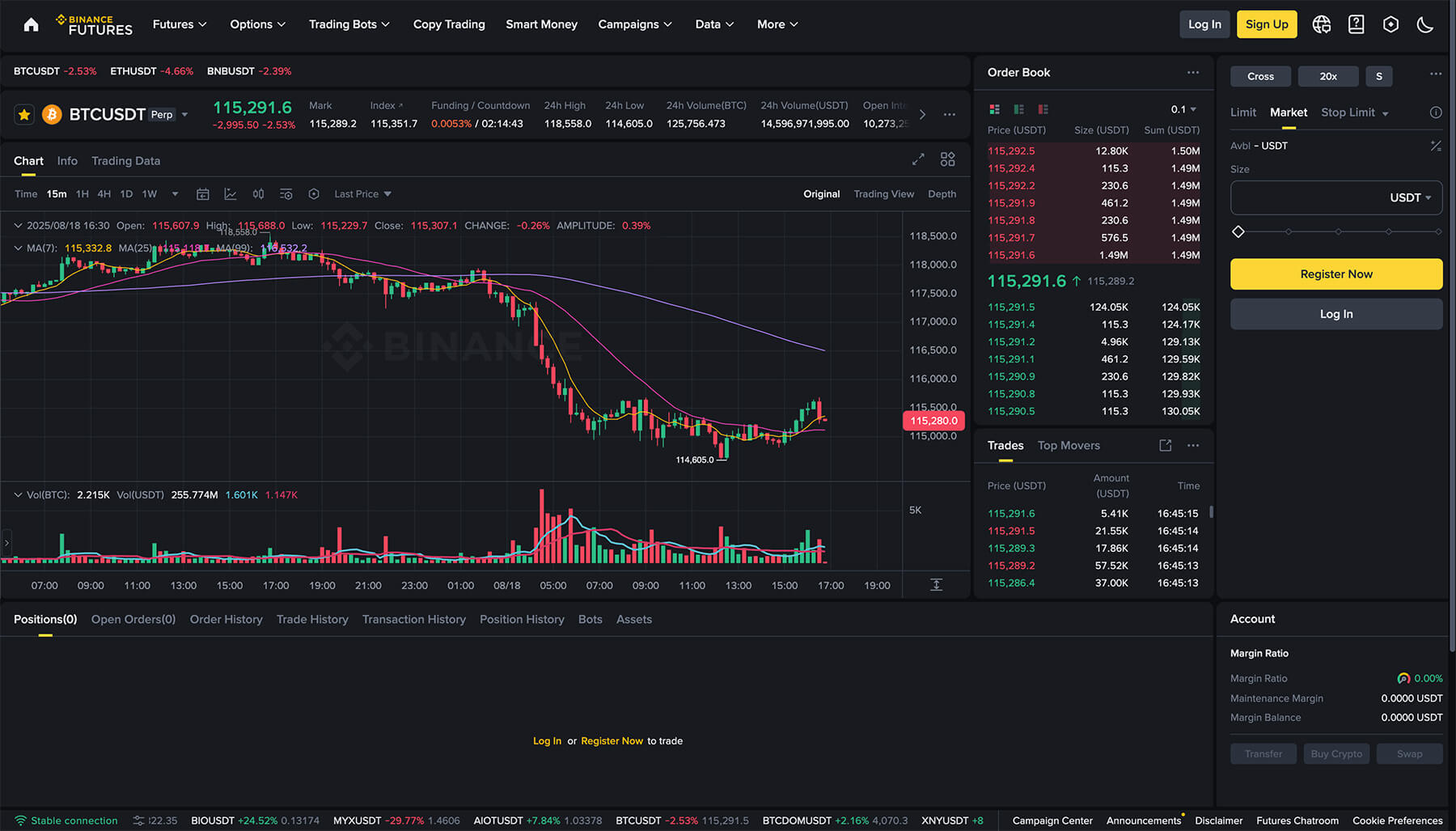
We implemented TradingView charting, a full order book display, limit/market/stop-limit order types, TP/SL orders, cross and isolated margin modes, and leverage selection. The entire feature set lives inside the wallet as a dedicated section — users never leave the app. Timeline: three months for the complete module.
For a mobile wallet use case where the client needed trading functionality without running their own validator set or indexer infrastructure, HyperLiquid was the right choice. The API is well-documented, latency is competitive with centralized exchanges, and liquidity depth on BTC, ETH, and SOL is sufficient for retail users. The tradeoff: you're dependent on HyperLiquid's infrastructure uptime rather than owning it.
For projects where operational independence is critical, dYdX v4's sovereign AppChain model is worth the additional complexity — the dYdX clone script architecture is a useful reference for understanding what that infrastructure commitment entails.
For teams evaluating a fully decentralized exchange as a standalone product rather than an integrated module, the cost and architecture breakdown for decentralized exchange development covers the full spectrum from AMM-based DEX to order book DEX with on-chain settlement.
Production Testing: The Phase That Gets Cut and Shouldn't
We don't consider a deposit or withdrawal flow production-ready until it has been tested with actual mainnet assets. Not testnet coins. Not mock transactions. Real USDT, real BTC, real ETH on the actual networks users will interact with.
The reasoning is practical: testnet behavior diverges from mainnet in ways that produce real production incidents:
- Fee estimation: Fee algorithms behave differently under real mempool conditions. Testnet transactions confirm quickly at low fees because there's no competition. Mainnet during a high-congestion period requires dynamic fee estimation — or your withdrawal transactions sit in the mempool for hours.
- Minimum amounts: Network-enforced minimums (dust thresholds, minimum UTXO sizes) only appear with real assets. Tests that work perfectly on testnet fail on mainnet because the withdrawal amount is below the economic minimum.
- Confirmation count logic: Your deposit crediting logic may require a specific confirmation count. On testnet, confirmations arrive every few seconds. On mainnet, a single Bitcoin confirmation takes ~10 minutes on average — and your UX must communicate this correctly.
Our final testing phase before any production launch involves funding test wallets with small amounts of real cryptocurrency and running full deposit → trade → withdrawal cycles on each supported network. It adds two to three days and a small cost in real assets. It is non-negotiable.
The full launch sequence — from licensing considerations to technical go-live checklist — is covered in the guide on how to start a crypto exchange in 2026, which includes the regulatory and operational prerequisites alongside the technical ones.
Real Technical Blockers: What Actually Delays Exchange Launches
Based on our delivery experience across multiple exchange projects, the most common launch delays are not code problems. They're infrastructure and coordination problems that no amount of development velocity can compensate for.
Second, Bitcoin node sync. As covered earlier: 5–10 days on dedicated hardware. If it isn't started on project day one, it becomes the critical path. Third, non-deterministic test failures. Crypto transactions depend on real-time network state — fee levels, mempool congestion, current confirmation counts. Test cases that pass in the morning sometimes fail in the afternoon because network conditions changed.
We treat this as normal infrastructure behavior and design test suites to distinguish infrastructure failures from application bugs. Teams that treat every non-deterministic test failure as a bug spend weeks investigating false positives.
Cost and Timeline: What a Real Budget Looks Like
Exchange development cost is highly scope-dependent, but the ranges are predictable once you understand the components. The crypto exchange development cost calculator provides a component-level breakdown with a free estimator — the ranges below are from our own production projects.
| Delivery Model | Timeline | Approximate Cost | Best For |
|---|---|---|---|
| White-label, no custom features | 1–2 weeks | $15K–$40K | Fast launch, standard trading mechanics |
| White-label with customization | 6–16 weeks | $50K–$150K | Branded product, custom payment gateways, additional modules |
| Semi-custom (base + extensions) | 3–6 months | $100K–$300K | Specific trading mechanisms, custom liquidity integration |
| Full custom build | 9–18 months | $350K–$1M+ | Novel product, proprietary matching logic, full architecture control |
These figures exclude licensing costs (jurisdiction-dependent, $15K–$500K+), infrastructure (cloud/dedicated hardware, $2K–$15K/month at scale), and third-party services (KYC provider, market data, SMS/email providers).
Before committing to a budget, it's worth building a proper business model. The crypto exchange business model and strategic plan framework covers revenue model options (maker-taker fees, spread, listing fees, staking yield) alongside the financial projections that determine whether a given investment in exchange infrastructure is recoverable at realistic volume assumptions.
Security Architecture: What Can't Be Retrofitted
Exchange security has two layers that most teams treat as one: infrastructure security (DDoS protection, server hardening, secret management) and application security (wallet key management, withdrawal authorization flows, admin access controls). Both matter, but application security is the one that's difficult to add after the fact.
The wallet architecture decision — hot/warm/cold split, multi-signature thresholds per tier, hardware security module (HSM) integration for cold storage keys — must be made before the first line of wallet service code is written. Changing the key management model after the service is in production requires migrating all existing keys, which is a high-risk operation with no clean rollback path.
In our production deployments, the standard wallet tiering looks like this: 2–5% of exchange funds in a hot wallet (available for automated withdrawals), 20–30% in a warm wallet (requires manual signing, available within hours), and 65–78% in cold storage (HSM-protected, requires multi-party signing ceremony for access). The exact thresholds depend on daily withdrawal volume, but the structural separation is non-negotiable.
The comprehensive breakdown of application and infrastructure security patterns for production exchanges is covered in the ultimate crypto exchange security guide, including specific recommendations on withdrawal flow authorization, admin privilege separation, and incident response procedures.
The Full Architecture: Pulling It Together
A production Binance clone is not a single application. It's a system of systems, each with its own data model, failure modes, and operational requirements. Understanding the crypto exchange architecture at scale — how the matching engine, wallet service, compliance layer, and market data distribution service interact under load — is essential before committing to any implementation approach.
The architectural patterns we've described — Kubernetes microservices with explicit stateful/stateless boundaries, event-sourced matching engine with message bus persistence, dual-path KYC with separate state machines, mainnet-only production testing — are not theoretical best practices. They're the patterns that have worked in production, learned through projects where the alternatives were tried and failed.
If you're at the stage of evaluating development approaches, we'd recommend starting with the component-level technical requirements before selecting a vendor or platform. Know what you need from a matching engine before evaluating matching engine implementations. Know what your KYT requirements are before selecting a KYC provider. Know whether your architecture needs to support fiat before designing your wallet service. The decisions made in the first two weeks of an exchange project shape the cost and timeline of everything that follows.
Frequently Asked Questions
How long does Binance clone development take?
Timeline depends entirely on delivery model. A white-label deployment with no custom features can go live in 1–2 weeks. A configured base platform with custom payment gateways, additional modules, and brand adaptation takes 6–16 weeks. A semi-custom build with proprietary trading mechanics takes 3–6 months. A greenfield custom build from scratch takes 9–18 months depending on team size and scope complexity.
What is the biggest technical risk in crypto exchange development?
Based on our production experience, the most common launch delay is infrastructure timing rather than code quality. Bitcoin full node synchronization takes 5–10 days on dedicated hardware and must start on project day one. Production environment access delays from the client's DevOps team can add 2–3 weeks to an otherwise-finished project. Both blockers are preventable with explicit infrastructure milestones in the project plan.
How do new exchanges solve the empty order book problem?
The most reliable pattern in production is liquidity provider mirroring — routing user trades through an established exchange (OKX, Binance, Kraken) while building native volume. This gives users a live, deep order book from day one. It requires real-time monitoring of your margin utilization and collateral positions on the provider side. Professional market-making agreements are an alternative if you prefer to outsource the operational complexity.
What's the difference between KYC and KYT in an exchange?
KYC (Know Your Customer) verifies user identity at onboarding — document upload, face match, liveness check. KYT (Know Your Transaction) monitors transaction activity post-onboarding, assigning AML risk scores to individual transactions. A production exchange needs both: KYC at registration and KYT on every inbound deposit before crediting the balance. Most teams implement KYC and skip KYT; this creates compliance exposure once the exchange reaches volume that attracts regulatory scrutiny.
Should matching engine services use Kubernetes autoscaling?
No. The matching engine must be a singleton (or use leader election) because parallel instances produce divergent order books. HPA is appropriate for stateless services — API gateway, notification service, WebSocket distributor. Stateful services — matching engine, wallet manager — require explicit capacity planning with resource limits, not autoscaling. Define this boundary before writing Helm charts; correcting it post-deployment is expensive.
Is a white-label Binance clone legally compliant out of the box?
The compliance tooling — KYC, KYT, AML, withdrawal controls — is built into the platform. The legal authorization to operate a cryptocurrency exchange in a specific jurisdiction requires a separate regulatory process: selecting a jurisdiction, applying for a license (VASP registration, MAS, FSA, etc.), and meeting their ongoing operational requirements. A white-label platform provides the technical compliance infrastructure; the legal compliance is the operator's responsibility.
How much does it cost to build a crypto exchange like Binance?
White-label with standard features: $15K–$40K and 1–2 weeks. White-label with customization: $50K–$150K and 6–16 weeks. Semi-custom build: $100K–$300K and 3–6 months. Full custom greenfield: $350K–$1M+ and 9–18 months. These figures exclude licensing ($15K–$500K+ depending on jurisdiction), infrastructure ($2K–$15K/month at scale), and third-party services (KYC provider, market data, communications).
Can I add a DEX or perpetual futures module to a centralized exchange?
Yes, and this is increasingly common. We've integrated perpetual futures powered by decentralized infrastructure (HyperLiquid protocol) into both standalone exchange platforms and non-custodial wallet applications. The integration approach — API-based DEX routing vs. in-house futures engine — depends on whether you need operational independence or prefer to outsource infrastructure uptime to an established protocol. Both are viable; the tradeoffs are infrastructure cost vs. counterparty dependency.