Launching a decentralized exchange is no longer just for industry giants — with the right DEX development services, any business or startup can build your own DEX tailored to specific markets and user needs. A decentralized exchange script provides the foundation for creating a secure, scalable, and user-friendly trading platform where users can swap cryptocurrencies without intermediaries, maintain full control of their assets, and benefit from transparent, blockchain-powered transactions.
Our team delivers decentralized exchange software that combines robust smart contract architecture, high liquidity potential, advanced security protocols, and an intuitive UI/UX. Whether you need a custom-built DEX from scratch or a white-label solution for a fast market launch, we ensure your platform meets the highest performance, compliance, and usability standards.
What is a Decentralized Exchange Script?
A decentralized exchange script (DEX script) is ready-to-deploy software that replicates the core functionality of a decentralized trading platform — token swapping, liquidity pools, automated market making — delivered as complete source code that you own and customize. It is the fastest way to launch your own DEX without building smart contracts, trading engines, and wallet integrations from scratch.
Unlike a fully custom DEX built from zero, a DEX exchange script comes with pre-written, pre-tested, and typically pre-audited smart contracts. The core protocol logic — AMM pricing, liquidity pool mechanics, fee distribution — is already implemented. Your development team focuses on customization: branding, blockchain selection, feature additions, and UI/UX adaptation. This cuts the launch timeline from 4–12 months down to 4–8 weeks.
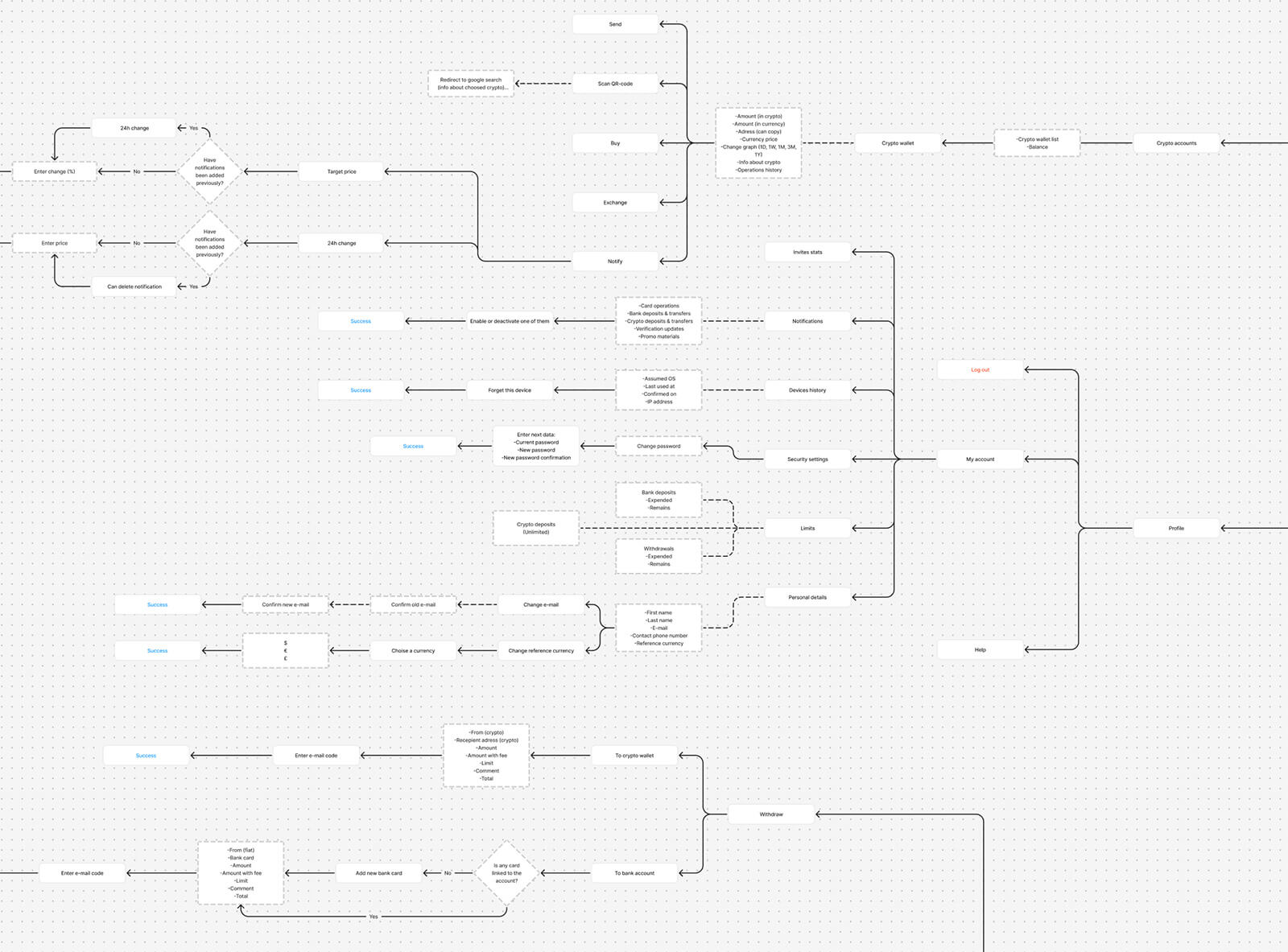
A crypto exchange script for DEX platforms can take several forms:
- White label DEX script: Pre-built platform with full branding customization. You receive complete source code and own the product entirely. Best for founders who want fast time-to-market without building from scratch.
- DEX clone script: A fork of an existing protocol — Uniswap, PancakeSwap, SushiSwap, or 1inch — customized for your blockchain and user base. Inherits the battle-tested architecture of the original platform.
- Custom DEX script: A purpose-built solution designed around your specific trading model, tokenomics, and target market. Higher cost and longer timeline, but complete architectural control.
In all cases, the script includes complete source code for smart contracts (Solidity for EVM chains, Rust for Solana), frontend interfaces, backend services, and documentation. This is fundamentally different from SaaS-based DEX platforms where you rent access to technology you do not own.
Who needs a DEX script: DeFi startups launching their first exchange. Crypto projects adding peer-to-peer trading to their ecosystem. Gaming or NFT platforms adding token swap functionality. Established businesses entering the decentralized exchange development space without a full in-house blockchain team.
Top DEX Clone Scripts: Build Your Exchange on Proven Architecture
A DEX clone script is the most cost-effective entry point into the decentralized exchange market. Rather than designing a new AMM protocol from scratch, you fork and customize a battle-tested codebase that has already processed billions of dollars in trading volume. Merehead develops custom clone scripts based on all major DEX protocols — adapted to your blockchain, branding, and specific feature requirements.
Uniswap Clone Script
Uniswap clone script replicates the automated market maker architecture of Uniswap v2 or v3 on any EVM-compatible blockchain. The core mechanism — constant product formula (x × y = k), concentrated liquidity positions, multi-fee tiers — is ported and customized for your deployment chain. Uniswap v3-style concentrated liquidity is particularly valuable for reducing impermanent loss for liquidity providers and improving capital efficiency.
Ideal for: EVM-compatible chains (Ethereum, Arbitrum, Base, Polygon, BNB Chain). Founders who want the most proven AMM architecture in DeFi.
Development timeline: 4–8 weeks for standard deployment. 8–14 weeks for v3-style with concentrated liquidity.
PancakeSwap Clone Script
PancakeSwap clone script brings the BNB Chain DEX model — low gas fees, farming, staking, and lottery mechanics — to your platform. PancakeSwap's model is particularly well-suited for markets where gas cost sensitivity is high (emerging markets, retail traders). The script includes AMM swap engine, yield farming pools, syrup pools for staking, and IFO (Initial Farm Offering) for token launches.
Ideal for: BNB Chain deployments. Projects targeting cost-sensitive retail traders. Platforms that want built-in token launch (IFO) functionality from day one.
Development timeline: 4–6 weeks for standard AMM + farming. 8–12 weeks with IFO and governance.
SushiSwap Clone Script
SushiSwap clone script extends the Uniswap v2 model with governance token infrastructure, BentoBox lending mechanics, and Kashi isolated lending markets. SushiSwap's SUSHI token distribution model — rewarding liquidity providers with governance tokens — was one of the first successful liquidity mining programs and remains a proven user acquisition strategy for new DEX launches.
Ideal for: Platforms that want a governance token with built-in utility (voting, revenue sharing). Projects building a DeFi ecosystem beyond pure token swaps.
Development timeline: 6–10 weeks for core DEX + SUSHI-style governance token.
1inch Aggregator Clone Script
1inch clone script builds a DEX aggregator — a platform that scans multiple exchanges to find the best price for any trade. Instead of competing with Uniswap on liquidity depth, an aggregator differentiates on price execution quality. The script implements pathfinder algorithms that route trades across multiple liquidity sources, split trades for optimal execution, and minimize slippage for large orders.
Ideal for: Platforms targeting active traders who prioritize price execution. Projects with access to multiple liquidity sources across chains.
Development timeline: 8–14 weeks depending on number of integrated liquidity sources.
Benefits of Professional DEX Development Services
Building a decentralized exchange is not only about writing code — it’s about creating a platform where traders feel safe, valued, and motivated to return. Professional DEX development services bring together technical skill, market insight, and design expertise to produce a product that works flawlessly and grows with your audience.
A reliable team will build security into every layer: multi-signature wallets, strong authentication measures, and ongoing smart contract audits ensure that user funds are always protected. This isn’t just a checklist — it’s the foundation of trust between you and your traders.
Engagement matters just as much as security. By integrating features like automated market makers, staking programs, cross-chain swaps, and liquidity pools, your DEX becomes more than a trading space — it turns into a vibrant hub for your community.
Time-to-market is also crucial. A white label decentralized exchange script can cut months from the development process, while a fully custom build allows you to create something truly unique. In both cases, a skilled team knows how to launch fast without sacrificing performance.
And the relationship doesn’t end at launch. Ongoing updates, performance improvements, and new features keep your platform competitive in the fast-changing DeFi landscape. This way, you can focus on building liquidity and attracting traders, knowing the technical side is built to last.
How to Launch Your DEX with a Decentralized Exchange Script — Step-by-Step
Launching a DEX with a decentralized exchange script follows a structured process that minimizes risk and gets you to market in 4–8 weeks. Here is the complete workflow:
- 1. Choose your DEX script type and blockchain. Decide between white label, clone script, or custom development — and select the deployment chain. EVM chains (Ethereum, Arbitrum, BNB Chain, Polygon, Base) use Solidity and share the largest developer ecosystem. Solana offers the highest throughput for performance-critical applications. Your blockchain choice determines gas economics for your users and the available liquidity you can integrate at launch.
- 2. Define your trading model and tokenomics. Specify whether you need an AMM, order book, hybrid, or aggregator model. If launching a governance token, design the distribution schedule, vesting, and utility mechanisms at this stage — not as a post-launch afterthought. Fee structure (trading fee, LP fee split, protocol treasury share) is encoded in smart contracts and requires governance votes to change post-launch.
- 3. Smart contract development and customization. The DEX script's core contracts — factory, router, pair contracts, liquidity pool logic — are customized to your requirements. At this stage: select supported token standards (ERC-20, BEP-20, SPL), configure fee tiers, implement governance modules if required, and integrate oracle feeds (Chainlink, Pyth) for price data.
- 4. Security audit — mandatory before deployment. Every DEX script must pass at minimum one external smart contract audit before mainnet deployment. Budget $5,000–$30,000 and 2–4 weeks for this step. Skipping or shortcutting the audit is the single most common reason DEX platforms suffer exploits in their first months of operation.
- 5. Frontend development and wallet integration. Build the trading interface, connect MetaMask, WalletConnect, and Trust Wallet, set up liquidity pool management UI, and integrate an on-chain analytics dashboard. If using the ready-to-deploy DEX script, most of this is pre-built — customization focuses on branding and UX preferences.
- 6. Testnet deployment and stress testing. Deploy to a public testnet (Sepolia for Ethereum, BSC Testnet for BNB Chain) and conduct load testing, attack simulations, and cross-chain bridge testing. Seed initial liquidity in test pools and verify all trade paths function correctly under simulated high-volume conditions.
- 7. Mainnet launch and liquidity bootstrapping. Deploy to mainnet with a guarded launch — limited trading pairs and deposit caps initially. Seed initial liquidity pools from treasury or founding team funds. Activate liquidity mining incentives to attract external liquidity providers. Monitor TVL, trading volume, and any anomalous transaction patterns in the first 30 days.
Custom vs White Label DEX Solutions
Choosing between a custom-built DEX and a white label decentralized exchange software is a bit like deciding between designing your own sports car from scratch or tuning a high-performance model that’s already road-ready. Both can win races — the difference lies in speed, cost, and how much control you want over the final build.
A white label script is the fast lane. The trading engine, smart contracts, and basic UI are already tested and ready to deploy. You can rebrand, adjust the look, tweak the features, and launch in weeks instead of months. This is perfect if you want to get into the market quickly, validate your idea, or start generating liquidity without a huge upfront investment. The trade-off? Your creative freedom is limited by the framework — adding something truly unique might require deeper modifications.
A custom DEX, on the other hand, is a ground-up build. You decide how trades are processed, how liquidity pools operate, and how the interface feels for your users. You can integrate niche features — like gamified staking, AI-driven market analytics, or multi-chain order routing — that simply aren’t possible in most prebuilt scripts. But this freedom comes with a higher budget and a longer runway to launch.
In short, white label is about hitting the market fast and efficiently, while custom development is about crafting a one-of-a-kind platform designed to dominate in the long run. The right choice depends on whether your priority is speed or absolute creative control.
Top Features to Include in Your Decentralized Exchange Script
A great decentralized exchange script is more than just code that swaps tokens — it’s the complete toolkit that turns a crypto platform into a place traders actually want to use every day. The features you choose define the experience, the trust factor, and ultimately, the growth of your DEX.
At the heart of any modern exchange is the Automated Market Maker (AMM) engine. It keeps trading smooth and fair, adjusting prices based on liquidity rather than waiting for an order book to fill. Add to that multi-chain support, and you give traders the ability to move assets seamlessly between networks like Ethereum, BSC, and Polygon without juggling multiple platforms.
Security is another non-negotiable. Integrated multi-signature wallets and regular smart contract audits protect user funds, while anti-front-running and anti-phishing tools make the platform resilient against bad actors. It’s the kind of invisible shield that keeps traders confident.
For engagement, nothing beats giving people ways to grow their holdings right on the platform. Staking, yield farming, and liquidity pool rewards turn passive users into active participants who help your exchange thrive. Combine that with cross-chain swaps and low-gas transactions, and you’ve got features that keep them coming back.
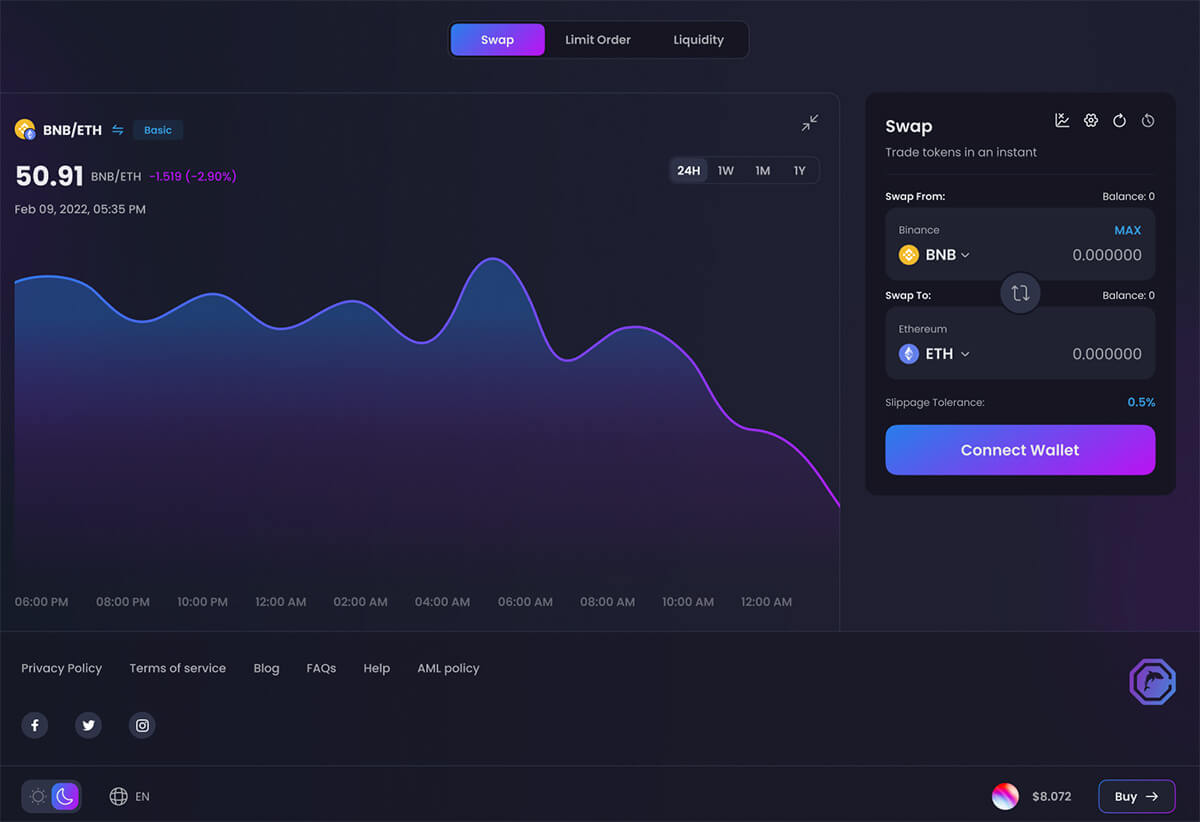
A polished UI/UX ties it all together. Filters to find the right trading pair, a clean portfolio view, real-time charts — every detail matters. When traders can navigate your exchange effortlessly, they stay longer, trade more, and bring their friends.
In short, the best features aren’t just functional — they make your DEX faster, safer, and more rewarding, turning it from a tool into a community hub.
Examples of Leading DEX Platforms to Learn From
Studying the market leaders is one of the fastest ways to sharpen your vision before you build your own DEX. Each top-performing exchange has its own formula for success — from the technology stack to the way it engages traders — and those insights can save you time, money, and trial-and-error.
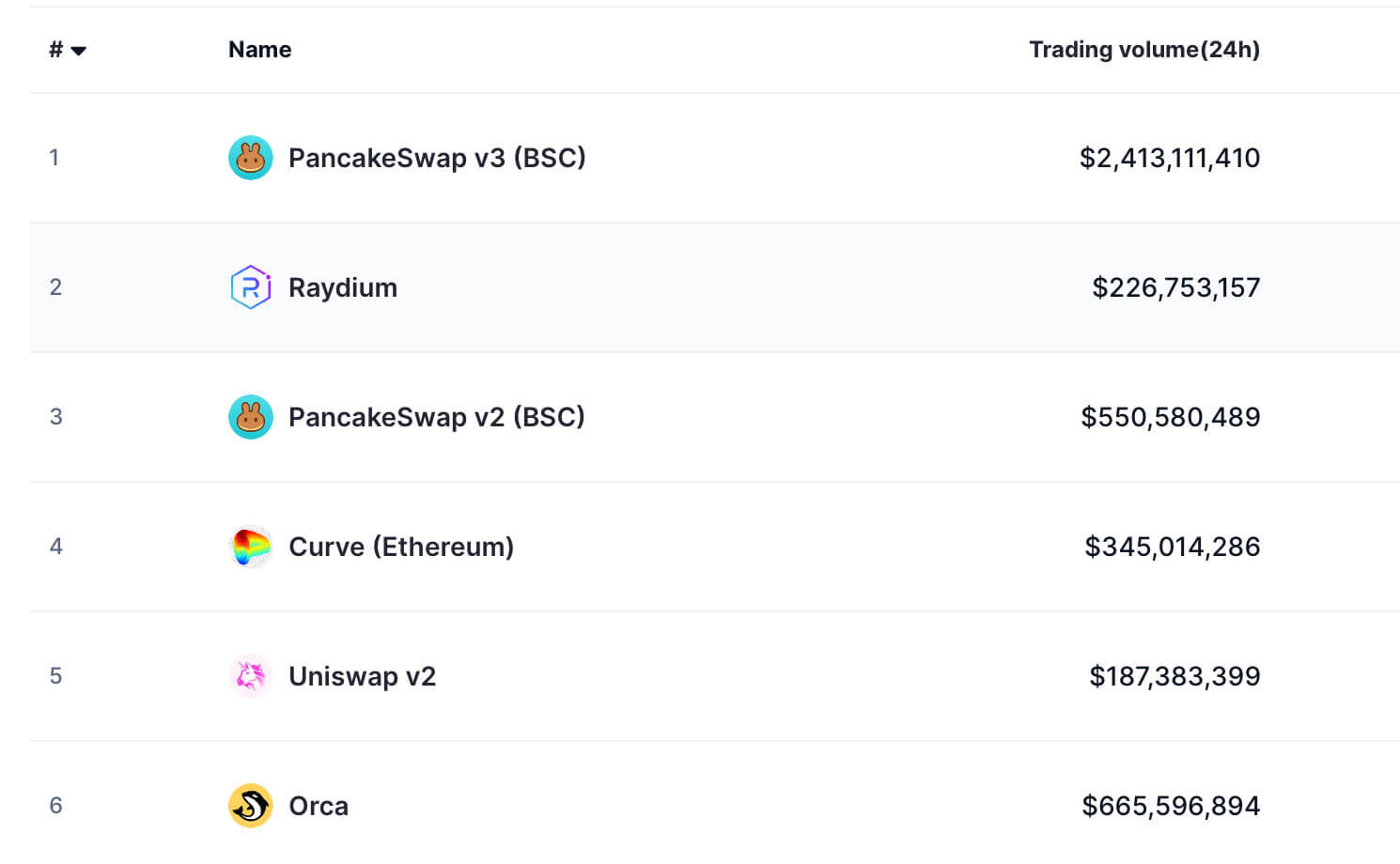
Uniswap remains the benchmark for AMM-based trading on Ethereum. Its simple interface, deep liquidity pools, and constant upgrades have made it the go-to for ERC-20 token swaps. If speed and scalability are your focus, PancakeSwap on Binance Smart Chain delivers low fees and quick confirmations, plus extra engagement through farming and lotteries. SushiSwap, a fork of Uniswap, added its own twist with governance tokens and more advanced yield farming options, proving that innovation can come from iteration.
Curve Finance built a niche by specializing in stablecoin trading with minimal slippage, while 1inch takes a different approach as an aggregator — scanning multiple DEXs to find the best swap rates for its users. IDEX blends decentralized security with centralized speed, offering limit orders and a smoother trading flow. And then there’s Balancer, which allows customizable liquidity pools with up to eight tokens, making it as much a portfolio tool as an exchange.
By analyzing these platforms — their liquidity strategies, tokenomics, UI design, and community engagement — you can decide which features belong in your own project and which gaps you can fill to stand out. The best inspiration often comes from understanding what’s already working in the market and finding your own edge.
DEX Script Development Cost & Launch Timeline
The cost of a decentralized exchange script depends on the development approach, number of supported blockchains, and feature scope.
Here is a realistic cost breakdown across all three development paths:
| Approach | Cost Range | Timeline | Best For |
| DEX Clone Script (Uniswap/PancakeSwap fork) | $5,000–$25,000 | 2–6 weeks | Fast market entry on proven architecture |
| White Label DEX Script | $15,000–$60,000 | 4–8 weeks | Full ownership, custom branding, no licensing |
| Custom DEX Script (single chain) | $20,000–$80,000 | 8–16 weeks | Unique trading model, specific features |
| Custom DEX Script (multi-chain) | $60,000–$200,000 | 4–8 months | Cross-chain, aggregator, institutional grade |
| Enterprise DEX with perpetuals + DAO | $150,000–$500,000+ | 6–12 months | Full protocol ecosystem, governance token |
Cost Breakdown by Component
For a custom DEX script mid-level build ($40,000–$80,000), the typical cost distribution is:
| Component | Cost Range | Notes |
| Smart contract development | $15,000–$35,000 | AMM core, governance, fee system |
| Security audit (mandatory) | $5,000–$25,000 | 1-2 audit cycles + remediation |
| Frontend (UI/UX) | $8,000–$20,000 | Trading interface, analytics, mobile |
| Backend & indexer | $4,000–$12,000 | The Graph subgraph, API layer |
| Infrastructure & DevOps | $2,000–$6,000 | RPC nodes, monitoring, CI/CD |
| Total (mid-level) | $34,000–$98,000 | Includes audit; excludes liquidity |
Hidden Costs to Plan For
- Liquidity bootstrapping: The most underestimated expense. Budget $30,000–$300,000 for initial pool seeding and liquidity mining incentives. A DEX without liquidity has no users — this is not optional.
- Ongoing infrastructure: $2,000–$10,000/month for dedicated RPC nodes, indexers, monitoring, and security patching.
- Marketing and community: $10,000–$50,000 for pre-launch community building, KOL partnerships, and initial trading incentive campaigns.
Why Choose Our DEX Development Services
In a market where dozens of new exchanges appear every month, choosing the right partner for your DEX development services can be the difference between a platform that quietly exists and one that leads its niche. We combine technical precision, deep DeFi expertise, and a business-first approach to deliver exchanges that don’t just launch — they thrive.
Our development process starts with understanding your goals, audience, and competitive landscape. This allows us to design architecture, features, and a liquidity strategy tailored specifically to your market position. Whether you need a rapid launch through a decentralized exchange script or a fully custom DEX with unique functionality, we provide a clear roadmap, realistic timelines, and transparent pricing.
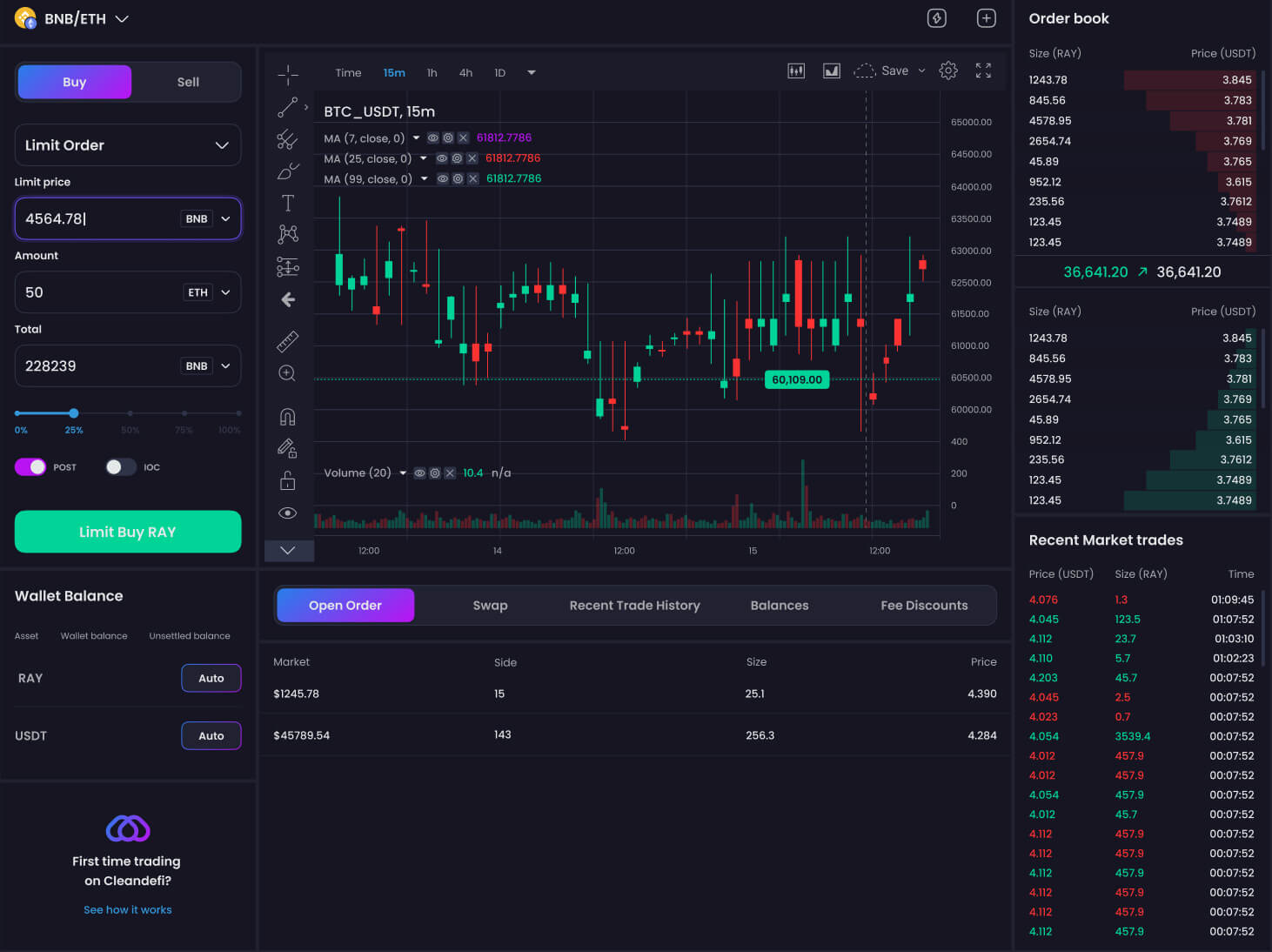
Security is at the core of everything we build. From multi-signature wallets and advanced authentication to comprehensive smart contract audits, we ensure your platform earns and keeps user trust from the very first trade. Our experience spans Ethereum, BSC, Polygon, Polkadot, Solana, and other leading blockchains, so multi-chain integration is never an afterthought.
But perhaps the most important reason to work with us is what happens after launch. We don’t disappear once your exchange goes live. Our team remains a partner in your growth — delivering updates, optimizing performance, and adding features to keep you ahead of market trends. In the fast-moving DeFi world, that kind of ongoing commitment is what turns a good exchange into a market leader.
FAQ: Decentralized Exchange Script
A DEX script is a general term for any pre-built software solution used to launch a decentralized exchange. A DEX clone script is a specific type of DEX script that replicates the architecture of an existing platform — most commonly Uniswap, PancakeSwap, or SushiSwap. Clone scripts inherit the original platform's AMM mechanics, security model, and smart contract patterns. A custom DEX script, by contrast, is built from scratch to a unique specification. Both deliver complete source code ownership — the key difference is whether you start from a proven template or a blank slate.
A DEX clone script (Uniswap or PancakeSwap fork) costs $5,000–$25,000 for a single-chain deployment including basic customization. A white label DEX script with full source code delivery runs $15,000–$60,000. A fully custom decentralized exchange script built for specific protocol requirements starts at $20,000 for a single-chain MVP and scales to $200,000+ for multi-chain enterprise platforms. The security audit — which is non-negotiable — adds $5,000–$25,000 to all development tiers.
A clone-script-based DEX launch takes 4–8 weeks for a single-chain deployment: 1–2 weeks for customization and branding, 1–2 weeks for security audit, and 1–2 weeks for testnet verification and mainnet deployment. A custom DEX script with unique features requires 8–16 weeks. Multi-chain platforms with cross-chain bridges extend the timeline to 4–6 months. These timelines assume a full-time dedicated team and a clear specification at project start.
Yes — with Merehead, every DEX script delivery includes complete source code for all smart contracts, frontend interfaces, backend services, and deployment scripts. You are not renting access to technology; you own it outright with no ongoing licensing fees or vendor dependency. You can modify, redeploy, or fork the codebase at any time without restriction. This distinguishes professional DEX script development from SaaS-based exchange platforms where the underlying code is not accessible.
The optimal blockchain for your DEX script deployment depends on your target user base and technical requirements. BNB Chain and Polygon offer the lowest gas fees and fastest transaction confirmation for retail traders. Ethereum mainnet or Arbitrum provide the deepest liquidity ecosystem and highest institutional trust. Base (by Coinbase) offers strong retail distribution through Coinbase's user base. Solana is the best choice for performance-critical applications requiring sub-second finality. Most projects in 2026 launch on a single Layer 2 network first and expand to additional chains based on user demand and trading volume.