When PancakeSwap launched on BNB Chain in 2020, few expected it to grow into one of the largest decentralized exchanges in the world. Yet in just a few years it attracted millions of users with low fees, simple design, and the promise of passive income through farming and staking. Today, it's a benchmark for anyone looking to build a successful DeFi business.
The problem? Recreating something on that scale from the ground up is brutally expensive. A full custom build means hiring blockchain developers, conducting endless smart contract audits, and maintaining a 24/7 technical team — a process that easily costs $1M+ and 12 months of work. Most startups simply don't have that kind of runway.
That's why many entrepreneurs are turning to the PancakeSwap Clone Script. Instead of reinventing the wheel, you start with a ready-made decentralized exchange development framework that already includes the essentials: AMM trading, liquidity pools, staking modules, yield farming, and even NFT integrations. You brand it, customize the features you need, and launch in weeks — not years.
In this 2026 guide, we'll break down how these clone scripts work, why demand for DeFi exchanges is still growing, the real cost of launching one, and how to avoid the mistakes that sink 90% of new projects.
What Is a PancakeSwap Clone Script?
Imagine you want to launch your own crypto exchange. One option is to spend a year hiring developers, auditing smart contracts, and running endless tests. The other option is to use a ready-made DEX script that already has everything built in, so you can focus on the business instead of the code. That's exactly what a PancakeSwap Clone Script is.
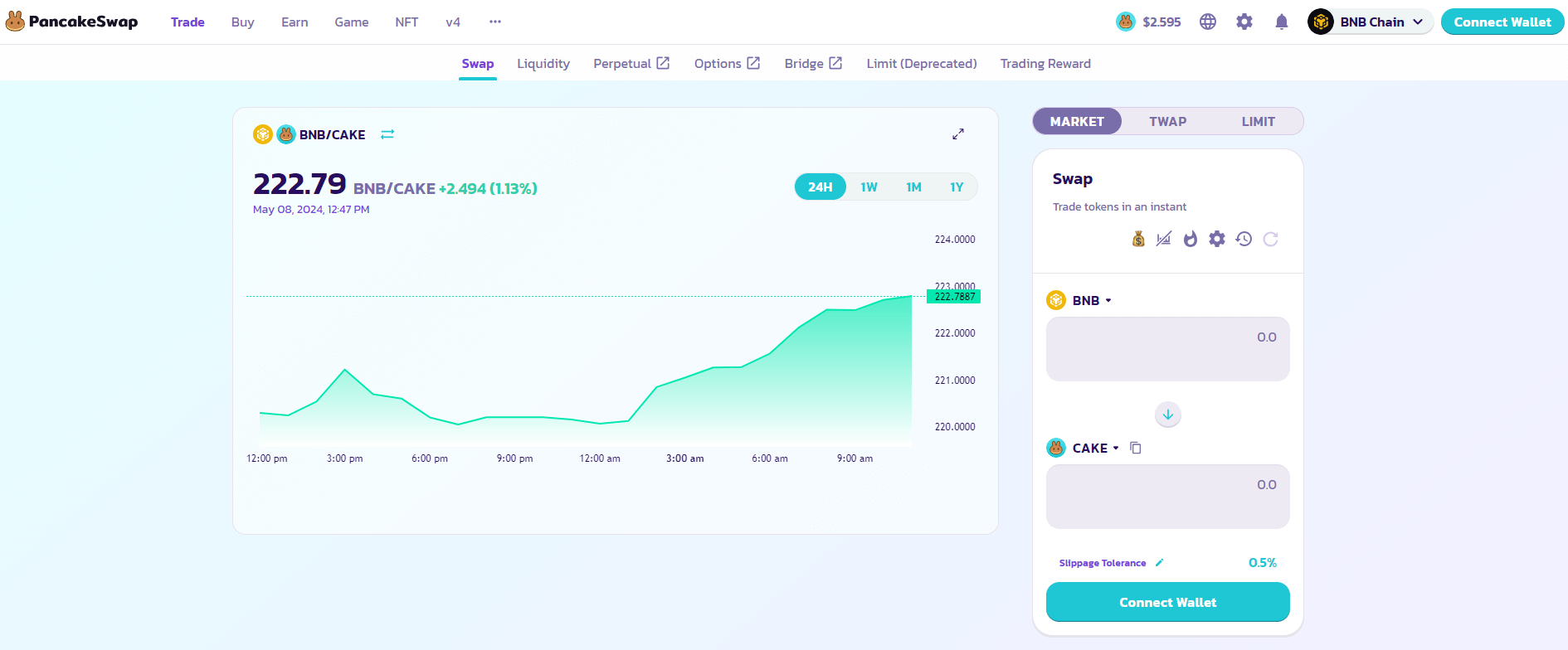
In practice, it's software that replicates the core mechanics of PancakeSwap: an automated market maker instead of an order book, liquidity pools where users earn a share of trading fees, and modules for staking or yield farming. On top of that, you get integrations with popular wallets like MetaMask or TrustWallet, and in many cases, a mobile app right from the start.
The most important part: it's not a "toy copy." These platforms are built for real scale and can handle tens of thousands of transactions per second. For a startup, that means one thing — instead of burning a year and millions on infrastructure, you can have your own exchange live in a matter of weeks and immediately start testing your market.
A PancakeSwap clone script gives you the AMM engine, liquidity pool mechanics, and farming modules that took PancakeSwap's team years to build — production-ready on day one. Your job is positioning, liquidity bootstrapping, and building the user base, not reinventing the protocol.
 Yuri MusienkoBusiness developer, Merehead
AMM v2 vs v3: Which Architecture Should Your DEX Use?
Most PancakeSwap clone scripts default to AMM v2 — the constant product formula (x × y = k) that PancakeSwap launched with in 2020. It works: liquidity is distributed evenly across all price ranges, swaps execute predictably, and the math has been reviewed by thousands of auditors.
PancakeSwap v3, launched in 2023, introduced concentrated liquidity — the same architecture as Uniswap v3. Here's the practical difference for your business:
AMM v2: A liquidity provider deposits $10,000 into a BNB/USDT pool. That liquidity spreads across all possible prices from zero to infinity. In reality, 99% of trades happen within a 10% price band — so most of the $10,000 sits unused, generating no fees for the LP.
AMM v3: The same LP concentrates their $10,000 within a specific price range, say BNB between $550 and $650. Within that band, they provide the equivalent liquidity depth of $200,000 in a v2 pool. Capital efficiency improves by up to 4,000x for stable pairs (USDT/USDC) and 10–100x for volatile pairs — LPs earn significantly more fees on the same capital deployed.
How DEX Exchanges Make Money
The beauty of running a decentralized exchange is that the business model is straightforward: you earn money whether the market goes up or down. Every swap, every LP deposit, every token launch through your launchpad — it all feeds your bottom line.
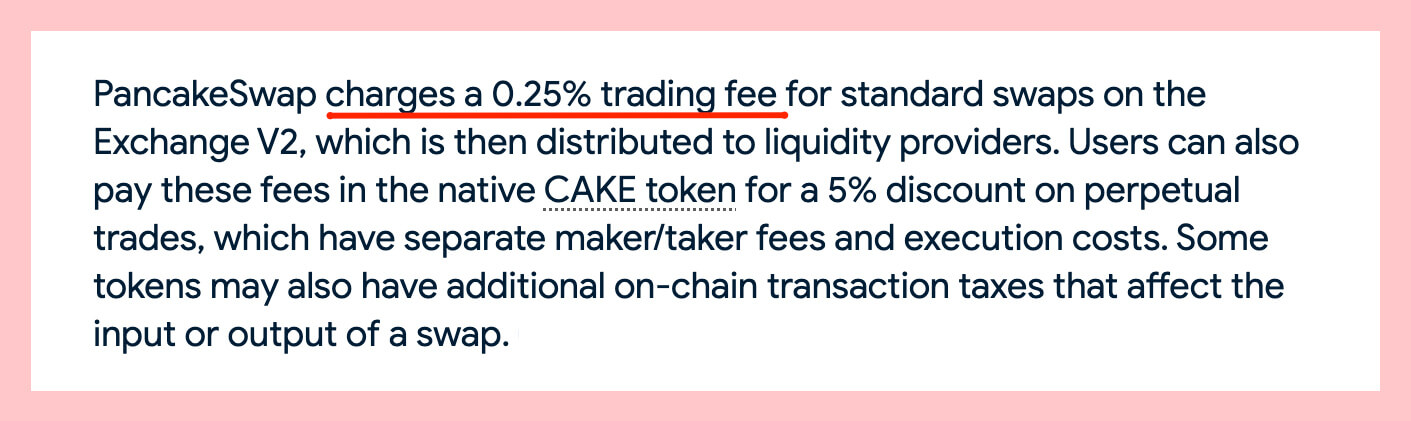
Trading fees are the core revenue stream. PancakeSwap's v3 fee tiers range from 0.01% to 1% depending on the pool. The exchange takes a portion of every swap fee. Even at 0.25% on a platform with $10 million monthly volume, that's $25,000/month in protocol revenue before token economics.
Native token emissions drive TVL growth. Your governance token is distributed to LPs and stakers as farming rewards. Higher APY attracts more liquidity, which reduces slippage, which attracts more trading volume. The flywheel: liquidity → volume → fees → token value → more liquidity.
Token listings and launchpad fees add direct revenue. Projects pay to launch through your IFO (Initial Farm Offering) facility. On mid-tier DEXes, IFO fees run $20K–$100K per project. On established platforms, significantly more.
Premium subscriptions and analytics bring recurring revenue at the margin. Traders pay for advanced charting, portfolio tracking, and API access.
You don't need Binance-scale volume to build a profitable DEX. A platform with $10M monthly volume at 0.25% average fee generates $25,000/month in protocol revenue. Add launchpad income and native token appreciation, and the economics work well before you reach mainstream scale.
Yuri MusienkoBusiness developer, MereheadFull Feature Checklist
Launching a decentralized exchange isn't just about putting a brand name on the homepage. What matters is whether the platform delivers the features DeFi users expect. Here's what a complete PancakeSwap clone deployment includes:
| Module | What's Included | v2 / v3 |
|---|---|---|
| Token Swap (AMM) | Instant BEP-20/ERC-20 token swaps; slippage tolerance settings; price impact warnings; multi-hop routing for best price | Both |
| Concentrated Liquidity | Custom price range selection for LPs; position NFT representation; fee tier options (0.01%, 0.05%, 0.3%, 1%) | v3 only |
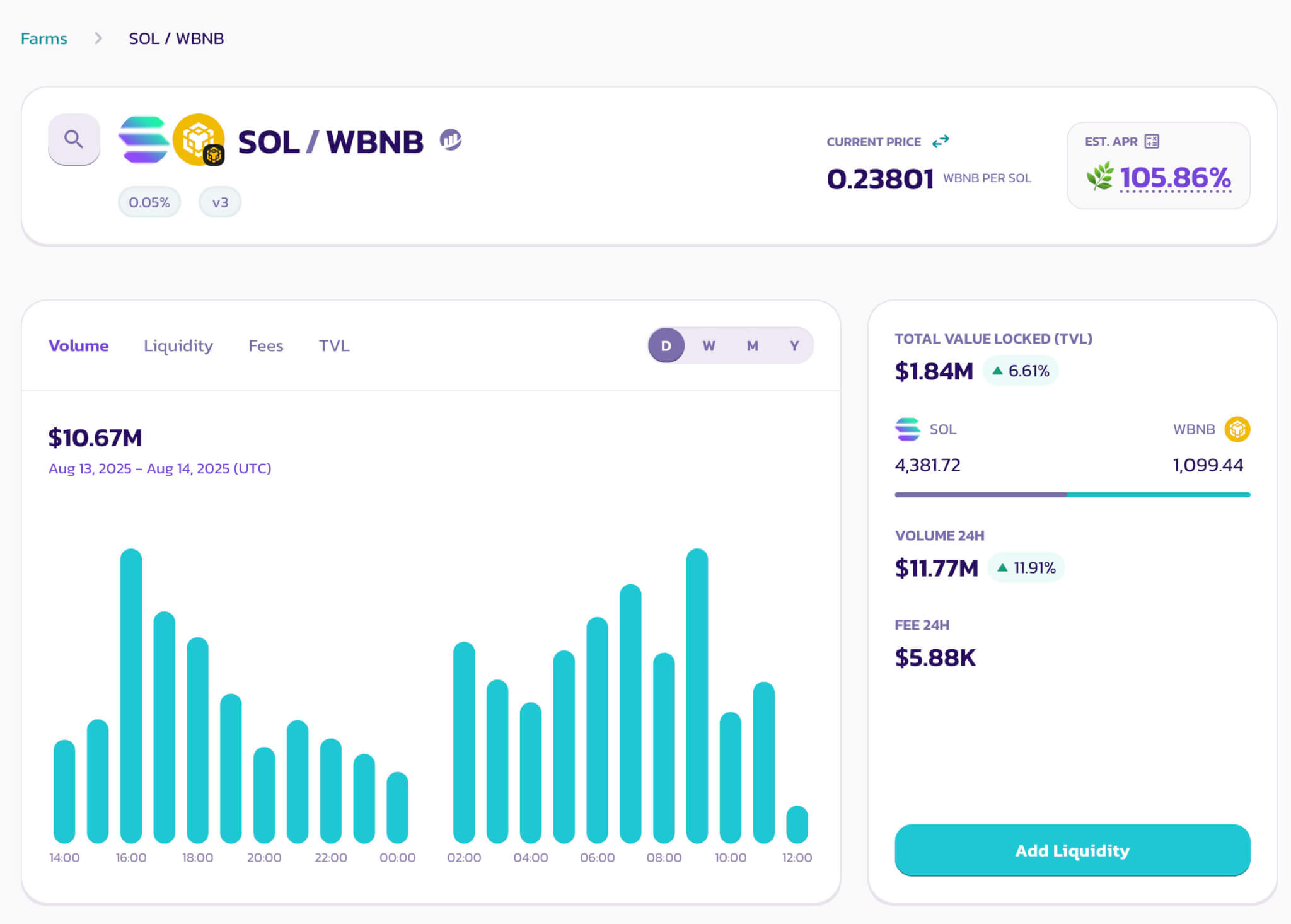
| Liquidity Pools | Add/remove liquidity; LP token minting; pool analytics (TVL, volume, APY); impermanent loss calculator | Both |
| Yield Farming | LP token staking for native token rewards; multiplier system per pool; auto-compound option; harvest all button | Both |
| Staking Pools | Flexible staking (withdraw anytime); locked staking (higher APY); auto-compounding pool; partner project reward pools | Both |
| Native Token | BEP-20/ERC-20 governance token; emission schedule; burn mechanism; fee buyback module; governance voting | Both |
| NFT Marketplace | Mint, buy, sell NFTs; collection management; royalty configuration; BEP-721/ERC-721 support | Optional |
| Launchpad (IFO) | Initial Farm Offerings for new token projects; whitelist management; vesting schedule; overflow fund return | Optional |
| Governance | On-chain proposal creation and voting; snapshot voting option; timelock on execution; quorum configuration | Both |
| Prediction Market | Binary price prediction (up/down); Chainlink oracle integration; round-based betting; prize pool distribution | Optional |
| Analytics Dashboard | TVL per pool; trading volume (24h/7d/30d); top pairs; LP position tracker; token price charts | Both |
| Wallet Support | MetaMask, TrustWallet, WalletConnect, Coinbase Wallet, Binance Wallet, Phantom | Both |
| Admin Panel | Pool management; farming emission configuration; fee settings; token listing; user analytics | Both |
| Mobile Apps | Native iOS + Android; biometric login; push notifications for position alerts; full swap/farm/stake functionality | Both |
| Smart Contracts | Router, Factory, Pair/Pool contracts; audited by third-party before mainnet; upgradeable proxy pattern (optional) | Both |
Multi-Chain Deployment: Beyond BNB Chain
A DEX that only runs on BNB Chain is at a significant competitive disadvantage in 2026. The DeFi liquidity landscape is fragmented across chains, and users — especially those with serious capital — don't want to bridge assets just to access your platform.
| Chain | Gas Costs | Main User Base | Best For |
|---|---|---|---|
| BNB Smart Chain | Low ($0.10–$0.50) | Retail DeFi, BEP-20 ecosystem | Yield farming, high-volume retail |
| Ethereum | Medium–High ($2–$20) | Institutional, blue-chip DeFi | High-value swaps, serious LPs |
| Polygon | Very Low (<$0.01) | Gaming, NFT-linked DeFi, APAC users | Micro-transactions, gaming assets |
| Base | Very Low ($0.01–$0.10) | Coinbase ecosystem, US retail | USDC liquidity, growing retail base |
| Arbitrum | Low ($0.10–$0.50) | Pro traders, derivatives | Advanced users, perps |
Smart Contract Architecture & Security Audit
For any DEX handling real user funds, smart contract security is not a line item you cut to save budget. It's the single most important investment in the project.
What a proper audit covers for a PancakeSwap clone:
The AMM router contract — which handles all swap routing logic — is the highest-risk component. A reentrancy vulnerability here doesn't expose one user; it exposes every user with funds in liquidity pools. Price oracle manipulation attacks are the second most common vector: if the DEX uses a manipulable spot price as its oracle, an attacker can drain pools within a single block transaction.
The yield farming and staking contracts require separate attention. Reward calculation logic has a long history of arithmetic overflow bugs that allowed users to claim disproportionate rewards or drain reward pools entirely.
Native Token & Governance: The CAKE Model for Your DEX
PancakeSwap's CAKE token is not an afterthought — it's the economic engine that drives the entire platform. Understanding how it works helps you design the token for your own DEX clone.
How the CAKE model works: CAKE is earned by liquidity providers and yield farmers as an additional reward on top of trading fee income. Users stake CAKE in Syrup Pools to earn other project tokens. The total supply is managed by governance votes and periodic emission reductions. CAKE holders vote on which farming pools receive emission allocations, what fee tiers to set, and which new features to prioritize.
This creates a flywheel: high yield farming APY attracts liquidity → more liquidity reduces slippage → better trading experience attracts volume → more trading fees → token value increases → higher APY in USD terms → more liquidity.
The most common mistake: launching with infinite emission and no buyback or burn mechanism. Token price collapses, early farmers dump, LPs leave, TVL drops, the flywheel runs in reverse. Design tokenomics before writing smart contracts — not after.
In exchange deployments with governance tokens, the ones that sustain LP interest long-term are those where the token has genuine platform utility beyond speculation — fee discounts, priority features, governance rights that actually matter. Emission alone is not a tokenomics strategy.
Yuri MusienkoBusiness developer, MereheadDevelopment Cost: White Label vs Building From Scratch
Here's the uncomfortable truth: building a serious DEX from the ground up isn't just about writing code. It's about paying for a team of 10–15 developers, smart contract auditors, security experts, and designers. Even at conservative estimates, that's $100,000 per month in payroll. Over a year, you're looking at $1.5 million — before marketing or audit costs.
A PancakeSwap Clone Script cuts that investment down dramatically. Instead of reinventing the wheel, you start with proven DEX software that already has core systems in place — AMM trading, liquidity pools, wallet integration, security modules — and adapt it to your needs.
Three realistic tiers for 2026:
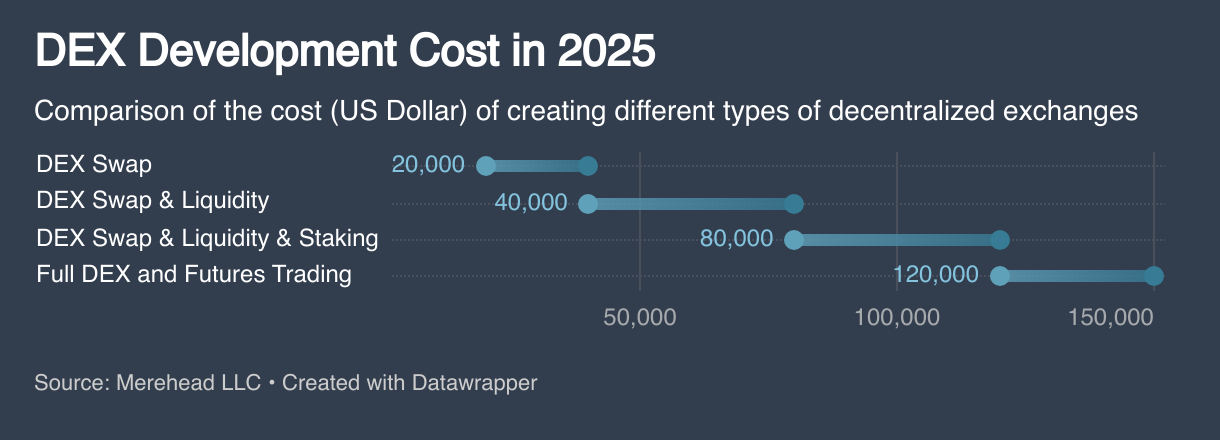
- Basic ($20,000–$50,000) — Single-chain AMM v2, farming and staking, essential wallet integrations, basic admin panel. Perfect for testing a regional market or niche community. Timeline: 4–6 weeks.
- Advanced ($50,000–$120,000) — Multi-chain deployment (2–3 networks), AMM v3 concentrated liquidity, native token launch, NFT marketplace, launchpad (IFO), mobile apps. Timeline: 8–12 weeks.
- Enterprise ($120,000+) — Full v3 architecture, governance module, prediction markets, futures integration, OTC desk, institutional-grade analytics, smart contract audit included. Timeline: 12–18 weeks.
Smart contract audit: add $8,000–$25,000 to any tier. Non-negotiable for mainnet deployment.
Compliance: Turning Regulations into Your Competitive Edge
Nobody launches a crypto project just to fill out SEC reports or check off MiCA boxes. For many founders, compliance feels like a "brake" on innovation. But at Merehead, we see it differently.
We build with a Compliance-by-Design philosophy. This means security and legal requirements are woven into your code's architecture from day one, not tacked on as a "patch" right before release.
How we help you sleep better at night:
- Seamless KYC/AML: We integrate solutions (like Sumsub or Onfido) so that verification doesn’t kill your conversion rate. Users shouldn’t feel like they’re under interrogation; they should feel secure.
- Headache-Free Travel Rule: Your platform will be ready for VASP-to-VASP standards. We automate the necessary data transfers between counterparties, keeping you in the clear without the manual overhead.
- Privacy vs. Transparency: We leverage ZK-proofs (Zero-Knowledge Proofs) whenever possible. This allows you to prove compliance to regulators (e.g., verifying a user isn’t on a sanctions list) without actually exposing their private sensitive data.
- Ready for Global Expansion: Whether you’re incorporating in Wyoming (USA) or Lithuania (EU), we adapt the architecture to meet local mandates (FinCEN, MiCA, etc.) seamlessly.
Your business should focus on growth, not just surviving audits. We create the technological foundation that makes your project transparent for banks, attractive to investors, and trustworthy for your users.
What DEX Development Looks Like in Practice
Most "case study" sections around the web feature round numbers and suspiciously perfect ROI timelines with no verifiable details. Here's what actual DeFi development looks like based on projects we've delivered.
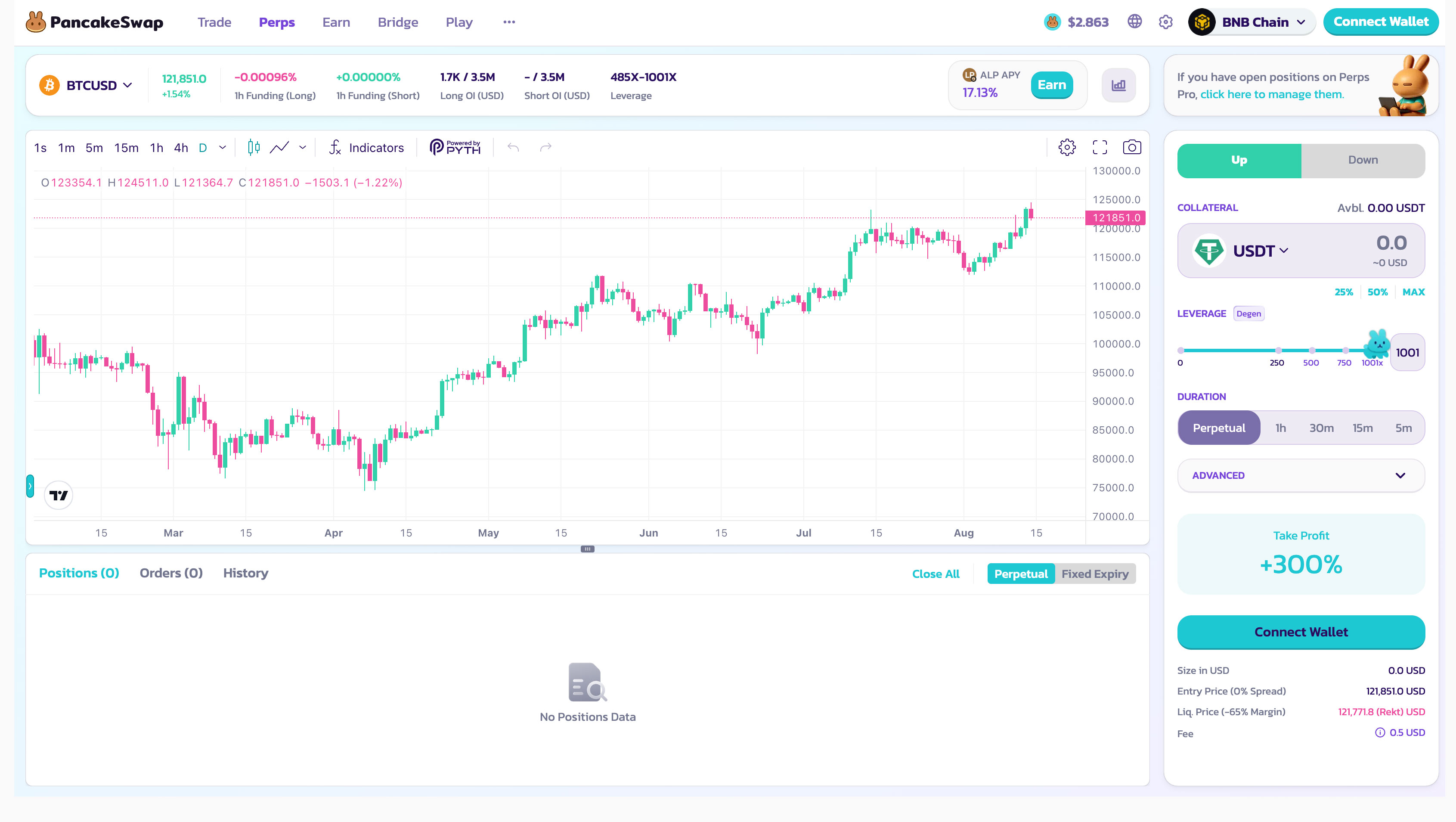
Integrating perpetual futures into a non-custodial mobile wallet. One of the technically demanding DeFi projects we've deployed was a perp DEX module integrated directly into an existing non-custodial crypto wallet — iOS and Android. The client already had a wallet with hundreds of thousands of users and wanted to add leveraged trading without redirecting users to an external platform.
We integrated a full perpetual futures layer inside the wallet: TradingView charting, order book display, limit/market/stop-limit orders, TP/SL, cross and isolated margin, and configurable leverage. The module sits as a native section inside the wallet — users never leave the app. Timeline: three months.
The most complex part wasn't the trading UI — it was the position management system that reconciles on-chain state with the wallet's local state when network conditions change. A mobile user closing a position during high gas periods needs deterministic UX behavior, not "transaction pending" with no feedback.
Why 90% of Crypto Exchanges Fail (and How to Be in the Successful 10%)
Here's the harsh reality: most new exchanges don't survive their first two years. Not because the market isn't big enough — it's bigger than ever — but because founders underestimate the operational challenges.
Mistake #1: No Liquidity. Launching a DEX without liquidity is like opening a supermarket with empty shelves. A user who places a swap and gets 15% slippage won't come back. The fix: partner with at least two to three liquidity providers from day one and incentivize early LPs with boosted farming rewards. Yes, it costs token emissions — but without this, your DEX looks dead from the first day.
Mistake #2: Forgetting Mobile Users. In 2026, more than 70% of DeFi interactions happen on mobile. Yet many new platforms launch with a desktop-only interface that's unusable on a phone. Your clone exchange must be mobile-first, with smooth native apps for iOS and Android — not a web wrapper.
Mistake #3: Skipping the Smart Contract Audit. Technology can be forked, but trust cannot. One exploited vulnerability is often fatal for a new DEX — users lose funds, the incident gets covered in crypto media, and no one deposits again. Budget for an audit before mainnet launch. It's $8,000–$25,000, not optional, and it pays back on the first day of real TVL.
The exchanges that survive are not those with the fanciest code — they're the ones that solve liquidity from day one, build for mobile users, and treat the smart contract audit as infrastructure, not an optional extra. Get these three right and you're already ahead of most new entrants.
Yuri MusienkoBusiness developer, MereheadHow Long Does It Really Take to Launch a DEX?
Many founders assume that creating a trading platform is a one-year marathon. That's true if you build everything from zero. It looks very different with a PancakeSwap clone script as the foundation.
A realistic 2026 launch timeline:
- Weeks 1–2: Architecture decisions — which chains, AMM v2 or v3, native token parameters, initial pool list. Deploy infrastructure. Begin smart contract deployment to testnet.
- Weeks 2–4: Branding, UI customization, wallet integrations. Configure farming pools, fee structures, and admin permissions. Begin smart contract audit in parallel.
- Weeks 4–6: Resolve audit findings. Deploy to mainnet with initial liquidity bootstrapping. Set up operational monitoring.
- Weeks 6–8: Soft launch with whitelist LPs, monitor pool behavior, fine-tune farming emissions. Onboard first IFO project if launchpad is in scope.
- Week 8+: Public launch with full liquidity incentive program running.
By the end of week eight, you operate a functioning DEX — not a concept, not a demo, but a live business generating trading fees. That's the real advantage of white-label DEX solutions: you save 12+ months and $1M+ in development, and start generating revenue while others are still writing contracts.
Frequently Asked Questions
Yes — the software itself is just a tool. PancakeSwap's smart contracts are open-source (MIT license), making them legally available to fork and deploy. What determines legality is where you register your company and whether you comply with local regulations. In most jurisdictions you'll need proper entity registration, and depending on your target market, KYC/AML procedures for users. The script gives you the technology; the compliance structure is your responsibility.
AMM v2 spreads liquidity evenly across all price ranges — simple, proven, and sufficient for most retail DEX use cases. AMM v3 (concentrated liquidity) lets LPs specify price ranges, earning equivalent fee income with up to 4,000x less capital deployed. v3 generates better yields for LPs, attracting more liquidity, which reduces slippage for traders. The tradeoff: v3 is 20–30% more expensive to develop and audit, and the LP interface is more complex. For a 2026 launch targeting experienced DeFi users, v3 is the standard.
A basic single-chain AMM v2 with farming and staking: $20,000–$50,000. Multi-chain deployment with AMM v3, native token, NFT marketplace, and launchpad: $50,000–$120,000. Full enterprise DEX with governance, prediction markets, and mobile apps: $120,000–$250,000. Smart contract audit adds $8,000–$25,000 to any tier and is non-negotiable for a public mainnet deployment.
Yes, and there is no honest way to answer otherwise. DeFi smart contract exploits have cost users billions of dollars — the majority from contracts that were never audited. An audit from a reputable firm costs $8,000–$25,000 for a standard PancakeSwap clone contract set (AMM, farming, staking). The audit report becomes a public trust signal — serious DeFi users check audit status before depositing meaningful capital. Budget for it from the start, and run it in parallel with frontend development to avoid delaying launch.
A standard deployment targets BNB Smart Chain natively (lowest gas costs, largest BEP-20 ecosystem), with optional expansion to Ethereum, Polygon, Arbitrum, and Base. Each additional chain requires separate contract deployment, oracle configuration, and liquidity bootstrapping. We recommend launching on two chains minimum — BNB Chain for farming and retail users, plus one Ethereum ecosystem chain for users with serious capital. Each additional chain adds 15–20% to total development scope.
A basic single-chain DEX: 4–6 weeks. Multi-chain with farming, staking, and native token: 8–12 weeks. Full platform with v3, NFT marketplace, launchpad, and mobile apps: 12–18 weeks. The smart contract audit adds 2–3 weeks to any timeline and runs in parallel with frontend development. The most common delay is tokenomics design — governance token parameters must be locked before contract deployment, not figured out during development.
When a liquidity provider deposits token pairs, price divergence between the tokens results in a different ratio at withdrawal compared to deposit — this is impermanent loss. If prices return to original levels, the loss disappears. For your DEX, farming APY must compensate LPs for impermanent loss risk, or they will withdraw. This is why native token emissions are calibrated to pool volatility: higher-volatility pairs need higher reward multipliers to attract and retain liquidity.
If speed and budget control matter — start with a white-label PancakeSwap clone. It's the fastest path to market and lets you validate your DEX concept before committing to a full custom build. If you have significant funding and need unique protocol mechanics that no existing clone script supports, building from scratch may be justified. In practice, many successful DEXes started as white-label deployments and evolved into fully independent protocols once their TVL and community justified the investment.