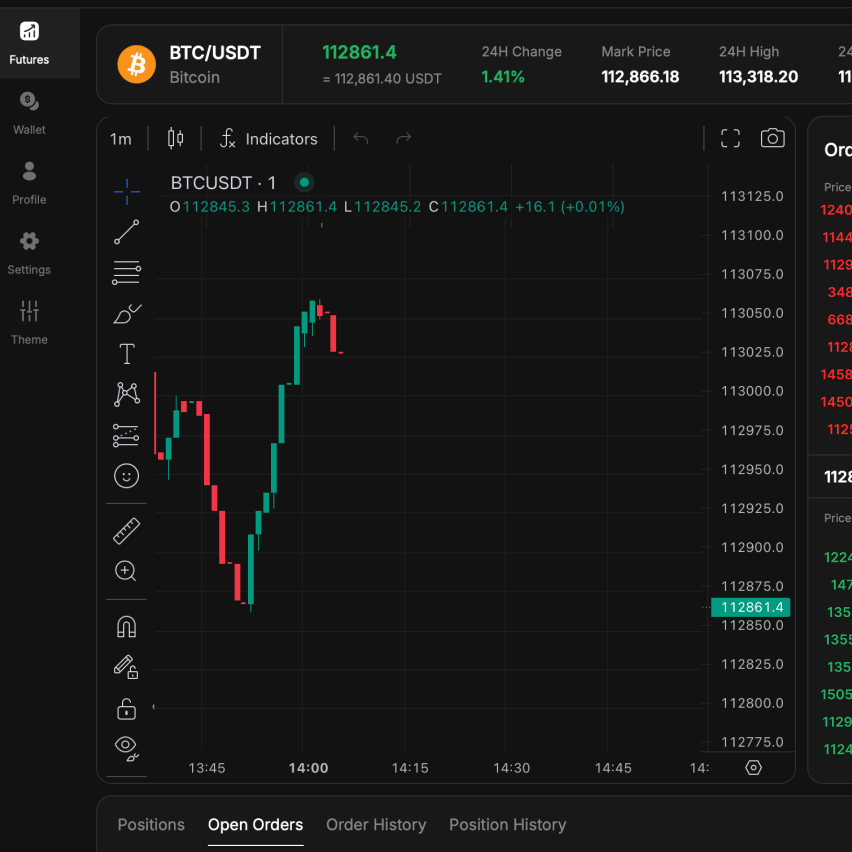
Launching a binary options business in 2026 means choosing between two fundamentally different paths: building a custom platform from scratch or deploying a white-label binary options software solution with UI customization. Both routes lead to a working product — but differ in timeline, budget, regulatory fit, and long-term flexibility. This guide covers the full scope: instrument mechanics, revenue models, platform architecture, KYC/AML compliance, payment stack, affiliate infrastructure, and the real cost breakdown — based on projects we have shipped.
What Are Binary Options
A binary option is a derivative financial instrument in which the trader predicts whether the price of an asset will rise or fall within a defined time window. The outcome is binary: a correct prediction delivers a fixed payout (typically 70–90% of the stake); an incorrect one results in a full loss of the bet amount. Settlement is automatic — at contract expiration, profit or loss is applied to the account without manual intervention.
Supported asset classes across modern platforms include:
- Forex currency pairs (EUR/USD, GBP/JPY, and 40+ others);
- Stock indices (S&P 500, NASDAQ, DAX);
- Cryptocurrencies (BTC, ETH, and altcoins);
- Precious metals (Gold, Silver);
- Commodities (Oil, Natural Gas).
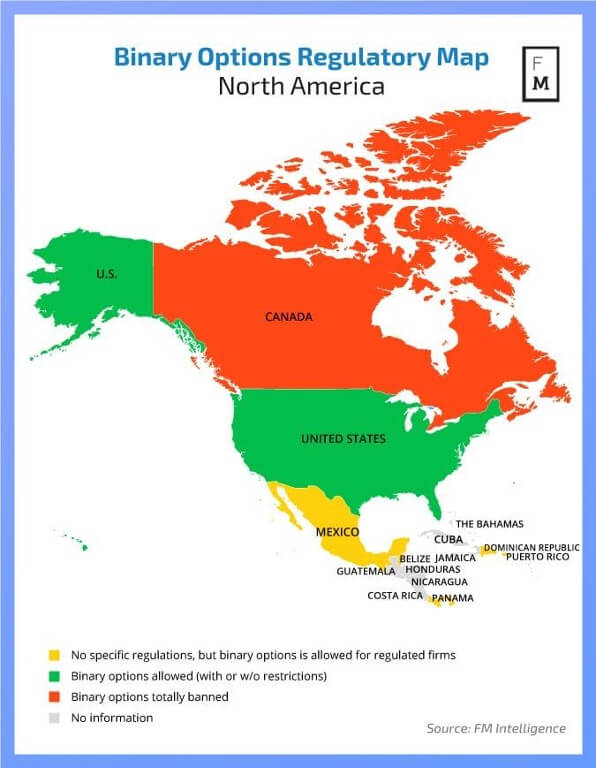
In the United States, binary options are regulated by the CFTC (Commodity Futures Trading Commission) and the NFA (National Futures Association). Legal platforms must operate on CFTC-designated exchanges. Unregulated offshore platforms are not permitted to accept US residents. In Europe, ESMA oversight applies; Canada has maintained a full ban since 2017.
Why Traders Choose Binary Options
Three structural properties drive consistent demand: defined risk (the maximum loss is known before the trade is placed), short contract durations (ranging from 60 seconds to 24 hours), and a low capital entry threshold (minimum trade amounts start at $1–$10 on most platforms). Experienced traders use binary options to hedge directional bets in their broader portfolio; newer traders are attracted by the simplified mechanics compared to CFDs or futures.
How Binary Options Platform Owners Generate Revenue
Before committing to a development path, it is essential to understand the business model mechanics. There are two primary revenue streams:
- Spread on payout ratios. The platform pays winning traders less than 100% of their stake (typically 70–85%), while retaining 100% from losers. If the platform's book is balanced — equal money on both sides of a trade — it earns the payout spread on every closed contract regardless of outcome. Example: two traders place opposing $100 bets on BTC price direction. One wins $80; the platform retains $20 from the loser's $100 — net platform margin: $20 per pair of opposing trades.
- Hedged position management. For consistently profitable traders, some platforms hedge positions against liquidity providers in real-time, allowing both the trader and the platform to profit when the prediction is correct. This model requires integration with an external liquidity feed and more sophisticated risk management logic in the trading engine.
Platform profitability in binary options is a function of payout ratio configuration and book balance — not just trade volume. An admin panel that allows the operator to set payout percentages per asset, per market session (weekday vs. weekend), and per trading pair is a core business tool, not just a backend feature. Build it with granular controls from day one.
 Yuri MusienkoBusiness developer, Merehead
Custom Build vs. White-Label: The Decision That Shapes Everything
This is the first architectural decision — and it has downstream consequences for compliance, scalability, and cost. Based on binary options projects we have delivered, the two paths break down as follows:
| Parameter | Custom Development | White-Label / Rent |
|---|---|---|
| Time to launch | 6 weeks – 4 months | 1–2 weeks |
| Upfront cost | $60,000 – $120,000+ | $0 upfront, monthly fee |
| Trading engine control | Full — modify payout logic, add instrument types, restructure data models | None — engine is fixed by the vendor |
| UI/UX customization | Full — design system, branding, UX flows built to spec | Limited — logo, color scheme, typography |
| CFTC/NFA compliance fit | High — architecture can be built to regulatory spec | Low — white-label solutions rarely satisfy US audit requirements |
| Scalability | Unlimited — microservices, horizontal scaling | Vendor-dependent |
| Affiliate program | Built to spec, API-connected to main platform | Available as module in premium tiers |
| Ideal for | Regulated markets, differentiated product, long-term business | Market testing, fast launch, non-US markets |
When clients ask whether they need an affiliate program at launch, the answer is almost always yes. In the binary options space, organic SEO takes 12–18 months to generate meaningful traffic — affiliate networks provide immediate, performance-based user acquisition from day one.
Yuri MusienkoBusiness developer, MereheadHow to Build a Binary Options Platform: Core Features
Regardless of the development path, the functional scope of a production-ready binary options platform covers five layers: authentication and user management, trading interface, analytics tools, payment infrastructure, and admin/operator controls. Here is the specification for each.
Authentication and User Onboarding
The registration and login flow is the first KYC checkpoint. A production implementation includes:
- Registration: email + password, optional Google OAuth, phone number collection for SMS verification via Twilio or equivalent;
- Two-Factor Authentication (2FA): Google Authenticator (TOTP) and/or SMS OTP — both enable/disable options must be available in user settings;
- KYC document upload: passport or government ID, proof of address — stored per user with an admin review queue;
- Password recovery: email-based token flow with expiry;
- IP session logging: all authorized IP addresses stored per user, accessible in the admin panel for fraud detection and AML audit trails.

For platforms supporting crypto deposits, the registration flow should include a crypto wallet binding step. A demo account mode — allowing users to trade with virtual funds without completing registration — is a proven conversion tool and should be included in the MVP scope.
Binary Options Trading Interface
The trading terminal is the product's core UX surface. Based on deployed projects, the required components are:
- TradingView chart integration: advanced charting library with configurable timeframes, chart types (candlestick, line, bar), and zoom controls. TradingView is the industry standard — its API is well-documented and trader-familiar;
- Entry point labeling: visual markers on the chart showing where the current open trade was entered;
- Trade placement controls: Up/Down direction buttons, stake amount input, timeframe selector, payout display (calculated in real-time before confirmation);
- Recent trades list: live feed of the last 10–20 trades across the platform (or per asset), showing direction, amount, and outcome;
- Multi-tab trading support: ability to monitor and trade multiple instruments simultaneously in separate browser tabs, with session state preserved per tab;
- Sound notifications: audio feedback when a trade wins or expires — a UX detail that measurably improves session engagement.
Option Types to Implement
| Option Type | Mechanics | Complexity to Build |
|---|---|---|
| Up / Down | Predict whether asset price will be higher or lower than entry price at expiration | Low — standard for all platforms |
| Touch / No Touch | Predict whether price will reach (or not reach) a specified level before expiration; Touch pays immediately on contact | Medium — requires real-time price monitoring against a target level |
| Spread | Predict both direction and magnitude of price movement (e.g., +20 cents); higher payout, higher risk | Medium — additional input validation and payout formula logic |
| Range / Boundary | Predict whether price will stay within defined upper/lower bounds until expiration; any breach cancels the trade | High — continuous boundary monitoring, complex settlement logic |
Additional tradeable instruments to consider for advanced platforms: Close Now (early exit at reduced payout before expiration) and Roll Over (expiration extension, typically costing a percentage of the original stake).
Analytics and Market Data
A trading platform without quality analytics tools loses users to competitors. The standard indicator set includes MACD (momentum/trend prediction), Moving Averages (MA, EMA for trend smoothing), ATR (volatility measurement), Stochastic Oscillator (overbought/oversold signals), and ADX (trend strength). These should be configurable per-user — defaulting to a clean chart view with indicators accessible but not mandatory.
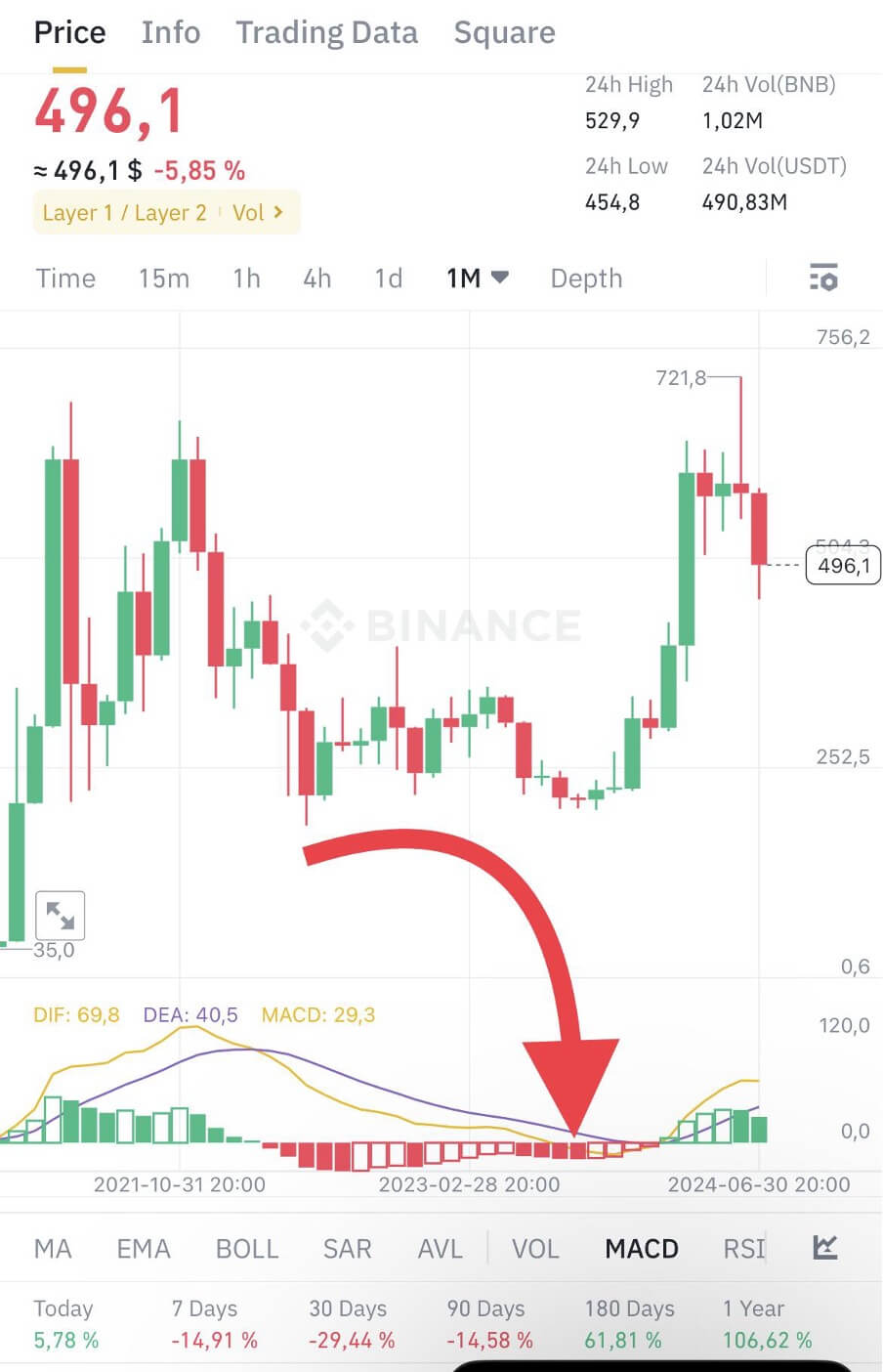
Asset coverage directly correlates with addressable audience size. The minimum viable set is Forex pairs + crypto. Adding indices, metals, and commodities expands appeal to experienced traders who diversify across asset classes.
Wallet Architecture and Dual-Account Model
A binary options platform requires a segmented wallet architecture — not a single user balance. Based on production deployments, the standard model is:
- Demo wallet: pre-funded virtual balance (e.g., $10,000) for practice trading; replenishable on request; completely isolated from real funds;
- Real (live) trading wallet: funded via deposit; used for actual trades;
- Futures wallet (for platforms offering futures trading): separate balance with inter-wallet transfer functionality.
Inter-wallet transfers (e.g., moving funds from futures balance to binary trading balance) must be explicit user-initiated actions with a confirmation step — never automatic — to maintain a clean AML audit trail.
Payment Infrastructure: What Actually Gets Integrated
The payment stack defines which geographies your platform can monetize. Offshore binary options platforms targeting non-US markets use the following proven combination:
- Perfect Money: widely used in Eastern Europe, Asia, and Middle East; supports USD and EUR; low friction for regions with limited card access;
- NowPayments: crypto payment gateway supporting BTC, ETH, USDT (TRC-20 and ERC-20), TRX, BNB; enables deposits and withdrawals directly to/from user crypto wallets;
- Bank card processing (Visa/Mastercard): requires a payment acquirer willing to onboard a binary options merchant — a non-trivial compliance step in most jurisdictions.
The admin panel must expose granular withdrawal limit controls: minimum and maximum per gateway, commission rates per gateway, and a manual approval queue for withdrawal requests. This is both a risk management tool and a regulatory requirement for AML compliance.
Real-Time Infrastructure: The Layer That Defines UX Quality
Binary options trading is inherently real-time. A WebSocket-based pub/sub layer is not optional — it is the architectural prerequisite for a functional trading terminal. In production deployments, Pusher is the standard solution for delivering live price feeds, trade result notifications, and balance updates to the browser without polling.
A platform that shows asset prices with a 1–2 second delay does not just create a bad user experience — it creates a liability. Traders can exploit stale price data. Real-time infrastructure must be part of the architecture specification, not retrofitted after launch.
Yuri MusienkoBusiness developer, MereheadThe full real-time event stack on a binary options platform covers: live price ticks per asset (sourced from a market data provider like TradeMate), trade placement confirmations, contract settlement notifications (win/loss + amount), and balance change events. All of these must reach the client browser within 200–500ms of the server event.
Software Architecture for a Binary Options Platform
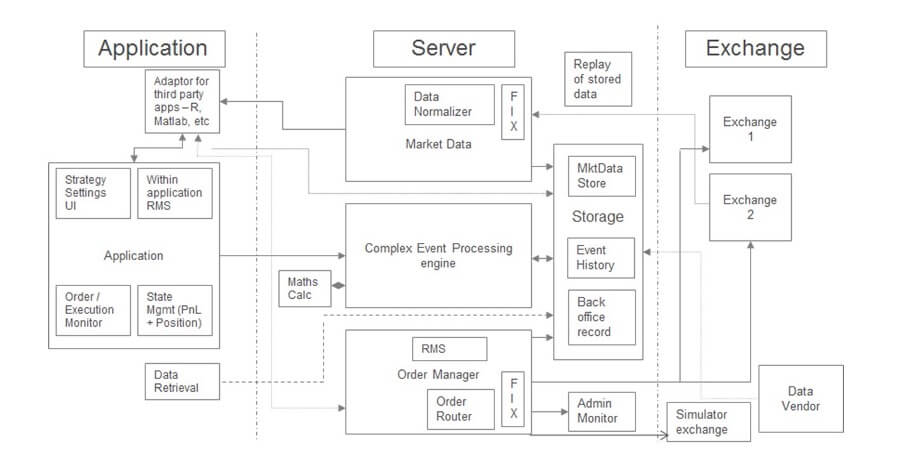
| Component | Function | Key Requirements |
|---|---|---|
| Trading Engine | Real-time asset price tracking, order matching, contract settlement, payout calculation | Sub-500ms latency; horizontal scalability; configurable payout ratios per asset and session |
| Market Data Feed | Live price ingestion from liquidity provider (e.g., TradeMate, Reuters, Refinitiv) | WebSocket or FIX protocol; failover handling; tick normalization per asset class |
| API Layer | Internal service communication + external integrations (payment gateways, KYC providers, analytics) | REST + WebSocket endpoints; API key management; rate limiting |
| User Interface (Frontend) | Trading terminal, account management, wallet, history views | JavaScript framework (React/Vue); TradingView widget integration; responsive design |
| Backend Server | Authentication, session management, database operations, transaction processing | Python/Node.js/Java; PostgreSQL or equivalent; Redis for session caching |
| Admin Panel | Platform operations: user management, KYC queue, market controls, withdrawal approvals, reporting | Role-based access control (RBAC); 2FA mandatory for all admin accounts; audit log |
Blockchain deployment (e.g., on Ethereum or BNB Chain) is an option for platforms seeking to offer provably fair trading mechanics — the smart contract serves as a transparent, auditable settlement layer. This adds development complexity but can be a meaningful trust signal for crypto-native audiences.
Trading Protocol Development
The trading protocol defines the interaction rules between the client interface and the backend engine: how bets are submitted, validated, locked, and settled. Protocol implementation requires developers with expertise in network security and low-latency systems. Critical testing parameters are scalability under concurrent load, resistance to replay and timing attacks, and settlement accuracy under edge conditions (e.g., price feed interruption at contract expiration).
KYC/AML Implementation: What It Looks Like in Production
Regulatory compliance in binary options manifests in specific technical components that must be architected into the platform — not added as an afterthought:
- Document upload interface: passport/ID + proof of address, with file format validation and size limits;
- KYC review queue in admin panel: operator sees uploaded documents with approve/reject actions; user account is restricted (deposit only, no withdrawal) until KYC is approved;
- IP session log per user: all login events logged with IP, device, and timestamp — accessible in the admin user profile view;
- Withdrawal request approval flow: two-step process — user submits request, operator reviews and approves or rejects. All actions are timestamped and logged;
- Admin reporting dashboard: total users, total fund turnover, commission volume, transaction count, deposit sum, withdrawal sum — the minimum dataset required for AML reporting.
UI Development and Design

The trading terminal UI requires particular attention to information hierarchy: asset price and direction are primary; stake input and timeframe selector are secondary; indicators and analytics are tertiary (accessible but not dominant). Color scheme must support both light and dark modes — a non-negotiable UX requirement for trading platforms where users spend hours per session. Smooth animations on trade placement and settlement reinforce responsiveness. If a mobile application is in scope, a separate UI pass for the mobile viewport is required — the desktop trading terminal layout does not translate directly to a 375px screen.
Frontend and Backend Stack
Frontend is built in JavaScript (React or Vue), CSS, and HTML. Backend is developed in Python, Node.js, C#, or Java depending on team composition and performance requirements. Mobile applications (iOS/Android) require additional native or cross-platform frameworks (React Native, Flutter) and a separate build/release pipeline. Data synchronization between web and mobile versions must be handled at the API layer — not at the client level.
Affiliate Program: The Acquisition Infrastructure Most Guides Skip
The affiliate program is not an optional add-on — it is the primary user acquisition channel for binary options platforms in the first 12–18 months before organic SEO generates consistent traffic. A production-grade affiliate system built into the platform includes:
- Campaign management: affiliates create campaigns with a name, offer type (revenue share / deposit share / volume share / turnover share), and custom promo code; campaigns can be enabled/disabled independently;
- FTD-based analytics dashboard: real-time table tracking visitors, registrations, CTR%, First-Time Deposits (FTD count and sum), total deposits, commissions earned, and amounts on hold;
- Multi-currency crypto payouts: affiliate balance withdrawable in ETH, TRX, BNB, BTC, or USDT — eliminates banking friction for international affiliate networks;
- Isolated affiliate admin panel: connected to the main platform via API; allows the operator to manage users, approve withdrawals, configure promo codes (with start/end dates), and review analytics — without access to the core trading admin.
Binary Options Platform Development: Stages and Timeline
| Stage | Deliverable | Typical Duration |
|---|---|---|
| Requirements and architecture | Functional specification, system architecture diagram, tech stack selection, integration list | 1–2 weeks |
| UI/UX design | Wireframes → high-fidelity mockups → animated prototype covering core trading flows | 2–3 weeks |
| Frontend development | Trading terminal, account pages, wallet interface, TradingView integration | 3–5 weeks |
| Backend development | Trading engine, API layer, authentication, database schema, admin panel | 4–6 weeks |
| Integrations | Payment gateways (Perfect Money, NowPayments), market data feed, Pusher, Twilio, SMTP | 1–2 weeks |
| QA and protocol testing | Load testing, settlement accuracy, security audit (authentication, DDoS resistance), UAT | 1–2 weeks |
| Total (custom, full scope) | Production-ready platform with affiliate program | 6 – 10 weeks |
White-label deployment with UI customization compresses this to 1–2 weeks: the trading engine, API, and admin logic are pre-built; the scope covers rebranding, credential updates (payment gateways, SMTP, market data API keys), domain configuration, and front-end style adaptation.
Licensing and Regulatory Requirements for the US Market
The United States has the strictest regulatory framework for binary options. The CFTC has explicitly classified binary options as commodity futures contracts — any platform offering them to US residents must be registered as a Designated Contract Market (DCM) or a Swap Execution Facility (SEF). Operating without this registration is a federal violation.
Practical compliance checklist for US-market platforms:
- DCM or SEF registration with the CFTC;
- NFA membership and adherence to NFA compliance rules;
- Full AML program compliant with FinCEN requirements (BSA);
- KYC for all users (identity verification before any trading or withdrawal);
- Segregated client funds — user deposits cannot be commingled with operating capital;
- Regular financial reporting to regulators.
For non-US markets, offshore jurisdictions (Mwali/Comoros, Vanuatu, SVG) offer faster and lower-cost licensing paths. However, these licenses do not grant access to US or EU users — and banking relationships for platforms with offshore licenses are increasingly difficult to maintain. Factor jurisdiction selection into the business plan before choosing a legal structure.
Yuri MusienkoBusiness developer, MereheadBudget Breakdown: What a Binary Options Business Actually Costs
| Cost Item | White-Label (monthly rent) | Custom Build (one-time) |
|---|---|---|
| Platform (core trading) | $500 – $3,000/mo | $40,000 – $80,000 |
| Affiliate program module | Included in premium tiers or +$500/mo | $10,000 – $20,000 |
| UI/UX customization | $1,000 – $5,000 (one-time) | Included |
| Mobile app (iOS + Android) | Not available in most white-label products | $15,000 – $30,000 |
| Licensing (offshore) | $5,000 – $20,000 (one-time) + annual fees | Same |
| Marketing (Year 1) | $20,000 – $60,000+ (affiliate commissions, PPC, SEO) | |
| Total Year 1 estimate | $30,000 – $70,000 | $90,000 – $200,000+ |
Marketing is a mandatory budget line — not an optional one. The binary options niche is mature and competitive. Platforms without an active affiliate program and a funded traffic acquisition budget do not reach sustainable trader volume.
Conclusion
Starting a binary options business in 2026 requires making an explicit choice between speed-to-market (white-label, 2 weeks, monthly cost) and product control (custom build, 6–10 weeks, $60K–$120K upfront). The right answer depends on your target market, regulatory jurisdiction, and growth horizon. For regulated US-market entry, a custom build aligned with CFTC requirements is the only viable path. For offshore market testing, a white-label deployment with a strong affiliate program is the faster and more capital-efficient approach.
The non-negotiable elements in either case: a real-time WebSocket infrastructure (Pusher or equivalent), TradingView chart integration, granular payout configuration in the admin panel, a KYC/AML-compliant user flow, and a multi-currency crypto payment stack. These are the components that determine whether traders stay on the platform — and whether the business survives regulatory scrutiny.
If you are evaluating development options, the most useful next step is a scoped technical specification that maps your specific market requirements to a realistic feature list and budget range. The cost difference between a properly scoped project and one that grows out of an underdefined brief is typically larger than the difference between white-label and custom binary options development.
The minimum entry point using a white-label platform with monthly licensing is approximately $15,000–$30,000 for the first 3 months, including licensing, UI customization, payment gateway setup, and initial marketing. A custom-built platform starts at $60,000 for core functionality without a mobile app or affiliate program. Neither estimate includes the cost of obtaining a trading license, which adds $5,000–$20,000 depending on jurisdiction.
Yes, but the regulatory bar is high. Any binary options platform accepting US residents must be registered with the CFTC as a Designated Contract Market (DCM) or operate through one. Offering binary options to US users without this registration is a federal violation subject to criminal and civil penalties. Most offshore binary options businesses explicitly exclude US residents from their terms of service to avoid CFTC jurisdiction.
A white-label platform is a pre-built product you deploy and brand as your own — the core trading engine, settlement logic, and admin infrastructure are fixed by the vendor. You control the brand identity and front-end styling. A custom-built platform is developed to your specifications: you own the codebase, can modify the trading engine, add instrument types, restructure the data model, and build compliance features required by specific regulators. White-label is faster and cheaper to launch; custom is the only option for regulated markets or differentiated product strategies.
A full custom build covering binary options trading, admin panel, KYC flow, payment integrations, and affiliate program takes 6–10 weeks with an experienced team. White-label deployment with UI customization and domain/credential configuration can be completed in 1–2 weeks. Timeline is primarily determined by the integration complexity of payment gateways, market data feed setup, and the scope of the affiliate program.
The standard payment stack for offshore binary options platforms combines Perfect Money (fiat deposits for Eastern Europe and Asia) and NowPayments (crypto deposits: BTC, ETH, USDT, TRX, BNB). Bank card processing via Visa/Mastercard requires a high-risk payment acquirer — onboarding is difficult and frequently declined for binary options merchants. Platforms targeting US or regulated EU markets need payment infrastructure aligned with their specific compliance framework.
In practice, yes. Organic search traffic takes 12–18 months to build for a new binary options domain in a competitive market. Without an affiliate program, the only acquisition channels are paid media (expensive, restricted on most ad networks for binary options) and direct outreach. A built-in affiliate system with FTD-based commission tracking, crypto payouts, and campaign analytics is the standard user acquisition infrastructure for new binary options platforms and should be scoped into the initial development, not added post-launch.