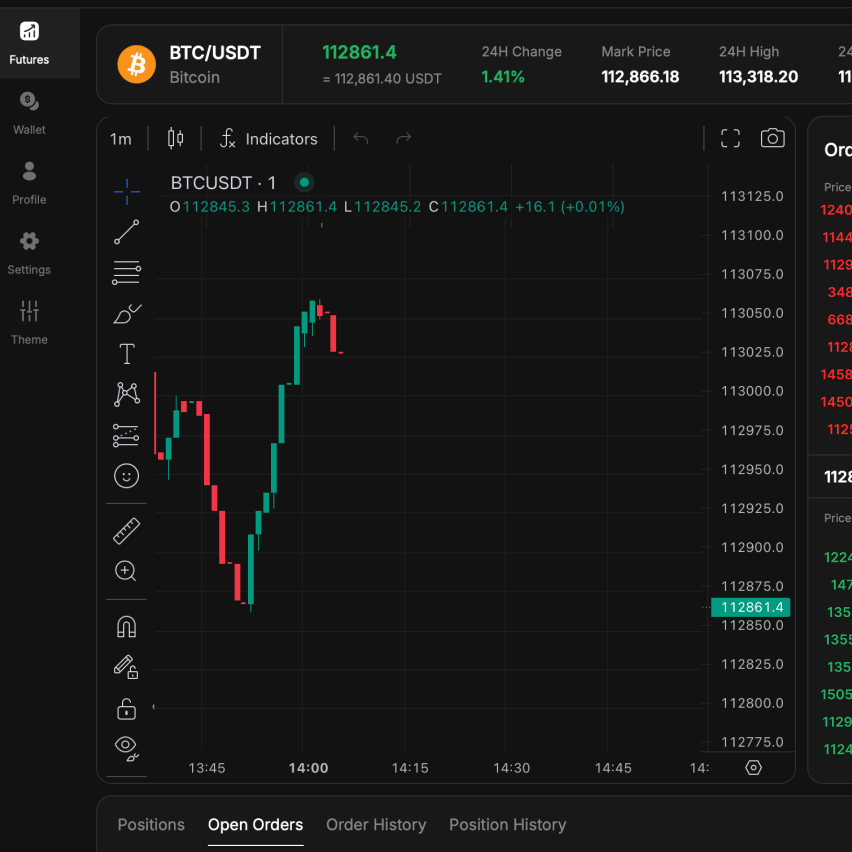
Binary options trading remains one of the most accessible entry points into financial markets — a simple up/down mechanic, low minimum deposits (often $1 per trade), and exposure to currencies, crypto, stocks, and commodities from a single interface. For entrepreneurs and fintech teams, that simplicity on the surface conceals a serious engineering challenge underneath: building a platform that handles real-time data feeds, executes trades in milliseconds, stays compliant with regulators like the CFTC or FCA, and doesn't fall apart under load.
This guide covers the full development path — architecture decisions, feature scope, licensing requirements, payment integrations, and the real-world choice between custom builds and white-label solutions — based on our hands-on experience delivering binary options platforms to clients across Europe and beyond.
What Is a Binary Options Platform?
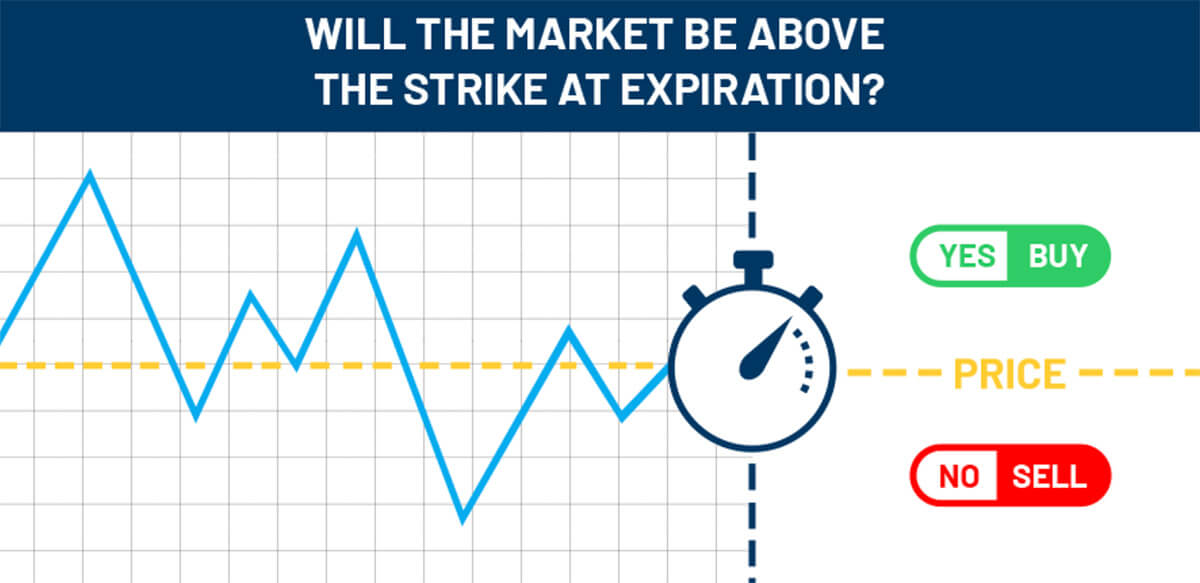
A binary options platform is a trading environment where participants predict whether an asset's price will be higher or lower than its current level at a specific expiry time. If correct, the trader receives a fixed payout (typically 70–90% of the stake); if wrong, the stake is lost entirely. The "binary" principle — all or nothing — is what makes these platforms both simple to use and high-risk by nature.
Tradable assets typically span five categories:
- Currency pairs (Forex): EUR/USD, GBP/USD, USD/JPY — popular platforms offer 35–40 pairs;
- Stocks: AAPL, TSLA, AMZN, NFLX — scope varies from 30 to 100+ instruments;
- Cryptocurrencies: BTC, ETH, SOL — typically 10–20+ assets;
- Indices: S&P 500, NASDAQ 100, DAX 30 — usually 10–20 options;
- Commodities: gold, silver, oil, wheat — 5–10+ instruments.
Most competitive platforms open access to multiple markets simultaneously — stocks + crypto + indices — allowing traders to diversify within a single account. Contract durations range from 60-second turbo options to 24-hour end-of-day contracts.
How Binary Options Platforms Generate Revenue
Before designing your monetization model, it helps to understand the mechanics clearly. Platform revenue is not purely speculative — it's structural.
- House edge on losing trades. The core model: when a trader's prediction is wrong, the platform retains 100% of the stake. The payout rate to winning traders (e.g., 85%) is always less than 100%, creating a built-in margin on every trade regardless of outcome;
- Withdrawal fees. Most platforms charge 1–3% per withdrawal or a flat fee per transaction, particularly on fiat payment methods;
- Spread-based revenue on underlying assets. For currency pairs, spreads are often 0.5 pips and above; for crypto, up to 2%; for commodities, up to $0.50 per unit;
- Inactivity fees. Common across established platforms — typically $10–$30 after 60–90 days without any trades;
- Affiliate program commissions. Revenue-share and CPA models with third-party traffic partners. Properly structured, this channel can become a significant acquisition driver — which is why building an affiliate module directly into the platform architecture is worth serious consideration from day one.
Binary Options Platform Development: Stage by Stage
Launching a binary options platform is a multi-discipline project: market analysis, feature definition, legal compliance, system architecture, integrations, and a structured QA process — each stage feeding into the next. Below is the realistic development path, based on what we actually ship.
Stage 1: Market and Audience Analysis
Before writing a single line of code, define who your platform is for. This decision shapes every subsequent architectural and UX choice.
Beginner-focused platforms prioritize onboarding clarity: demo accounts, interactive tutorials, limited option types, AI chatbot support. Professional-grade platforms emphasize depth: advanced charting, technical indicators (MACD, RSI, ATR, ADX), multi-asset dashboards, and margin/futures capability alongside binary options.
Geographic focus matters equally. The US market requires CFTC/SEC licensing — a narrow, well-defined compliance path. European markets operate under CySEC or FCA frameworks. Emerging markets (Brazil, Southeast Asia, parts of MENA) have high demand but looser regulatory oversight, which cuts both ways.
Useful tools for competitor and audience research: SimilarWeb for traffic and demographic data, SEMrush / Ahrefs for keyword and SEO landscape, Google Analytics (once you have an MVP) for behavioral data.
Stage 2: Legal Requirements and Licensing
Binary options regulation is strict, territory-specific, and non-negotiable. Operating without the appropriate license exposes operators to criminal liability in most jurisdictions. Plan for 6–12 months from application to approval in most regulated markets.
| Jurisdiction | Regulator | Key Requirements | Typical Timeline |
|---|---|---|---|
| USA | CFTC + SEC | CFTC license, regular audits, fraud protection systems, AML compliance | 9–12 months |
| UK | FCA | FCA registration, AML policy, GDPR-compliant data handling | 6–12 months |
| EU (Cyprus) | CySEC | CySEC license, MiFID II compliance, segregated client funds | 6–9 months |
| Australia | ASIC | AFSL license, ongoing compliance reporting | 3–6 months |
| Germany | BaFin | BaFin authorization, retail investor restrictions apply | 9–12 months |
KYC and AML systems are not optional add-ons — they're required by every regulator listed above. Build document verification (passport, proof of address), identity matching, and suspicious activity reporting into the platform from the architecture stage, not as a post-launch patch.
Stage 3: Defining Option Types and Core Features
Your feature set defines your market position. A minimum viable binary options platform must include High/Low options — this is the baseline that all other option types extend from. From there, you can layer in more complex instruments based on your target audience:
- High/Low. The trader predicts whether the price will be above or below the current level at expiry. Mandatory for any platform;
- One Touch / No Touch. Prediction of whether the price will reach a specific level at any point before expiry;
- Range (Boundary). The trader predicts whether the price stays within or breaks out of a defined price range;
- Ladder Option. Multiple price levels — the trader predicts which levels the price will or won't reach;
- Turbo Options. High-frequency, 60-second contracts. High engagement, high churn risk — use carefully in UX design;
- Pair Options. The trader predicts which of two assets will outperform within a given timeframe.
Risk management tools (available as paid features or bonuses) that measurably improve trader retention: Close Now (early exit from open positions), Roll Over (extend contract duration), Double Up (double the stake mid-contract).
Analytics tooling for traders: TradingView chart integration is the current industry standard. Implement customizable timeframes, drawing tools, and a full suite of technical indicators. This is not a differentiator anymore — its absence is a dealbreaker.
Stage 4: Architecture and Tech Stack
The infrastructure of a binary options platform must handle real-time data at scale, execute trades with sub-second latency, and remain operational under high concurrent load. These are not aspirational goals — they're baseline functional requirements. A slow trading engine is a non-functional trading engine.

The four core system components:
- Trading Engine. The central component responsible for real-time market data processing, trade execution, profit/loss calculation, and position management. Latency here directly impacts trader trust. Languages: C++ or C# for order processing logic, Python for market trend models (with TensorFlow/scikit-learn). Key infrastructure: Apache Kafka for event streaming, Redis for in-memory state management;
- API Layer. Handles integrations with liquidity providers, real-time data feeds, payment gateways, and third-party services (KYC providers, SMS/2FA). Languages: Python (FastAPI), Node.js, or Java (Spring Boot). Databases: PostgreSQL for transactional data, MongoDB for user activity logs;
- Client Interface. The trading terminal — the UI layer traders interact with every session. Must be fast, responsive, and optimized for both desktop multi-tab trading and mobile single-screen sessions. Charting: TradingView Lightweight Charts or HighCharts. Avoid Chart.js for production trading UIs — it lacks the performance needed for real-time tick rendering;
- Backend Server. Manages authentication, session handling, account state, payment processing, and admin operations. Framework options: FastAPI or Django (Python), Express.js (Node.js), Spring (Java). Scalability is the primary constraint — design for horizontal scaling from day one.
Stage 5: Payment Gateway Integration
Payment infrastructure is the operational backbone of the platform. A binary options platform that traders can't fund or withdraw from is not a platform — it's a demo. The integration scope is wider than it appears.
| Gateway Type | Examples | Integration Considerations |
|---|---|---|
| Crypto payment processors | NowPayments, CoinGate | Multi-currency support (BTC, ETH, USDT, TRX, BNB); webhook reliability critical |
| E-wallets / alternative payments | Perfect Money, Skrill | Common in EU and emerging markets; fast settlement, lower KYC friction |
| Bank card processing | Stripe, via PSP | Requires financial license in many jurisdictions; chargeback risk management essential |
| Local payment methods | PIX (Brazil), PromptPay (Thailand) | Mandatory for high-volume regional traffic; requires local entity or partner |
Each gateway requires independent API key management, separate withdrawal limit configuration, and distinct fee logic in the admin panel. Consolidate these into a single gateway management interface — not separate integration silos — or operational complexity becomes unmanageable as you scale.
Stage 6: Affiliate Program Module
Most articles on binary platform development skip this section entirely. That's a mistake. For platforms targeting growth through paid and partner traffic, the affiliate module is a revenue-critical system component — not a marketing tool bolted on after launch.
From our production experience: a properly built affiliate system is effectively a separate SaaS product running on top of the trading platform. It requires its own authentication layer, an independent dashboard with FTD/CTR/deposit analytics, campaign and promo code management, and a crypto withdrawal module — all connected to the main platform via a dedicated API integration with the core database. Build it as an isolated service from day one; retrofitting it into a monolithic trading backend is consistently one of the most expensive rework scenarios we encounter.
 Yuri MusienkoBusiness developer, Merehead
Minimum viable affiliate module scope:
- Affiliate dashboard: visitors, registrations, FTD count, total deposits, revenue share accrued, pending balance;
- Campaign management: named campaigns, offer types, promo codes with start/end dates;
- Payout models: revenue share (%), CPA, hybrid — configurable per offer;
- Withdrawal module: crypto payouts (ETH, TRX, BNB, BTC, USDT) with balance history;
- Admin oversight: user list, per-user analytics, payout approval/rejection, promo code CRUD.
Stage 7: Custom Build vs. White-Label — The Real Decision
This is the first architectural decision you should make, not an afterthought. The difference in timeline, cost, and operational control is substantial.
| Custom Development | White-Label Solution | |
|---|---|---|
| Timeline | 6–10 weeks (MVP scope) | 1–2 weeks to launch |
| Cost model | Fixed project cost ($60K–$120K+) | Monthly rental fee |
| Tech ownership | Full — you own the codebase | None — dependent on vendor |
| Customization | Unlimited | Limited to vendor's config options |
| Scalability | Architect as needed | Constrained by vendor infrastructure |
| Time to revenue | Longer | Immediate post-setup |
| Best for | Long-term market entrants, regulatory compliance, unique feature sets | Market validation, fast launch, limited initial capital |
Stage 8: Platform Testing
Testing a financial trading platform is categorically different from testing a standard web application. The consequences of an undetected bug in production are immediate and financial — for traders, and for your platform's reputation.
Non-negotiable test categories before any launch:
- Trading algorithm verification. Every option type must be independently tested: payout calculation accuracy, expiry logic, position closure at exact contract end time. Test with edge cases: exactly at strike price, network interruption mid-trade, simultaneous high-volume expiries;
- Load and stress testing. Simulate peak concurrent user load. Measure: order processing latency (target <100ms), database query response time, WebSocket connection stability under load;
- Security testing. SSL/TLS configuration audit, DDoS resistance simulation (CloudFlare or equivalent should be configured before testing, not after), 2FA bypass attempt testing, SQL injection and XSS testing on all input surfaces;
- Payment flow end-to-end testing. Every gateway, every currency, every withdrawal path — test with real (small) transactions in staging before production;
- KYC/AML workflow testing. Document upload, review queue, approval/rejection notification — tested across all supported document types and file formats;
- Beta testing with real users. Closed beta with a small group of actual traders. Bug reports from real trading behavior surface issues that synthetic testing consistently misses.
Custom Build vs. White-Label: What the Numbers Actually Look Like
Cost estimates for binary options platform development vary widely depending on scope, team location, and feature depth. Based on our project experience, these are realistic ranges:
| Scope | What's Included | Estimate | Timeline |
|---|---|---|---|
| MVP (binary only) | High/Low options, 2 asset classes, basic admin, 1–2 payment gateways, KYC | $30K–$60K | 6–8 weeks |
| Full platform | Multiple option types, futures module, affiliate program, full admin, 3+ gateways | $80K–$120K+ | 10–16 weeks |
| White-label launch | Deployment, domain setup, API key replacement, branding | Monthly rental | 1–2 weeks |
The $60K–$120K range for custom development reflects realistic market rates for a production-grade platform with proper security architecture, scalable infrastructure, and the admin tooling operators actually need to run the binary options business. Significantly lower quotes typically involve offshore development with minimal QA, no compliance architecture, and limited post-launch support — which creates costly problems precisely when the platform starts getting real user volume.
FAQ
A focused MVP with binary options trading, basic admin panel, KYC, and 1–2 payment gateways takes 6–8 weeks with a dedicated team. A full-featured platform including futures trading, affiliate program, and extended asset coverage runs 10–16 weeks. White-label deployment — where you're launching on an existing codebase — is achievable in 1–2 weeks, including server setup, API key migration, and branding.
Yes — in every major jurisdiction. In the US, you need CFTC authorization and SEC registration depending on the instruments offered. In the EU, CySEC or national regulators (FCA for the UK, BaFin for Germany) require licensing before you can accept clients. Operating without a license in regulated markets carries criminal liability. Budget 6–12 months for the licensing process and include KYC/AML systems in your platform architecture from day one — regulators require them.
Custom development gives you full ownership of the codebase, unlimited customization, and the ability to architect for any regulatory or technical requirement — at a higher upfront cost ($60K–$120K+) and longer timeline. White-label is a pre-built platform you deploy and brand as your own, typically on a monthly rental model, with a launch timeline of 1–2 weeks. White-label is best for market validation or fast entry; custom is the right choice for long-term market participants who need full control and compliance flexibility.
The most common combination is crypto payment processors (NowPayments, CoinGate) for USDT/BTC/ETH deposits and withdrawals, plus an e-wallet option (Perfect Money, Skrill) for traders who prefer non-crypto methods. Platforms targeting specific regional markets often add local payment rails (PIX for Brazil, PromptPay for Thailand). Bank card processing is technically possible but requires additional licensing in most jurisdictions and comes with significant chargeback risk management overhead.
If partner/affiliate traffic is part of your acquisition strategy — yes, build it from the start. Retrofitting an affiliate module into an existing trading platform architecture is consistently expensive because it requires a dedicated API connection to the core database, independent authentication, and its own analytics infrastructure. Scoping it as an isolated service from day one costs significantly less than rebuilding it into a monolithic backend after launch.
Three areas cause the most production problems: (1) trading engine latency under load — if order processing slows during peak trading periods, traders notice immediately and trust erodes fast; (2) payment gateway misconfiguration, especially after API key replacement in white-label deployments — silent failures here directly affect deposits and withdrawals; (3) KYC/AML gaps that pass internal testing but fail regulatory audits. All three are preventable with thorough pre-launch testing, but they require specific test scenarios that generic QA checklists often miss.