More and more companies in the world of blockchain and cryptocurrencies want to create their own NFT-marketplace. Developing such a platform from scratch, however, can be a very complicated task that requires a lot of time and resources. There is another, simpler and more affordable option - white label for launching your own Polygon NFT-marketplace. In this article we will consider how much it costs to develop your own white label solution for launching NFT-marketplace.
What is NFT-marketplace? How it works?
NFT-marketplace is a platform for buying, selling and storing digital assets that are issued in the NFT (Non-Fungible Token) format. NFT is a unique and non-fungible token run on a blockchain-based network that confirms ownership of a specific digital object, such as a photo, video, music track, text or in-game item.
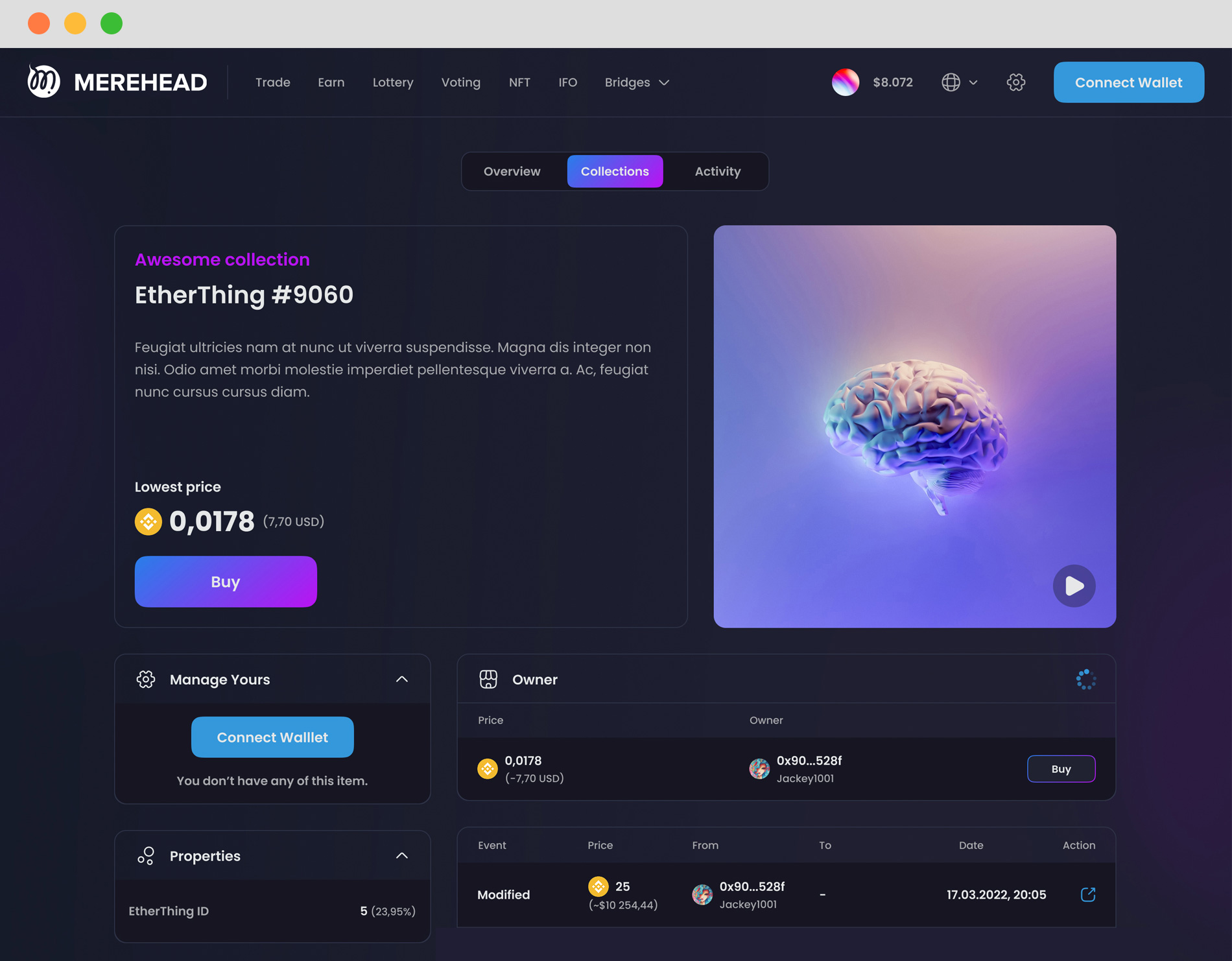
For the average user, an NFT marketplace works just like any other marketplace, such as Amazon or eBay: the user logs into the platform, where he sees a list of available digital NFT assets. He can select the asset he is interested in, read its description, images and price. If the asset meets his needs, the user can place a bid or buy it for a specified price. After the transaction is completed, the NFT is transferred to the user's wallet, which now becomes its rightful owner.
What is a White Label solution for launching NFT-marketplace?
A white label is a ready-made product or service created by one company and allowing another company or brand to use it under their name and brand. This approach allows partner companies using white labels to enter the market quickly and expand their business without much effort to create their own product, as they can use a completely ready-made solution and without spending time and money on software and design development.
In case of launching an NFT-marketplace like Opensea clone script with a white label you immediately get a ready to use website and/or mobile application, where you only need to customize the operation of some functions and design. Whereas the white label provider is responsible for functionality development, design, integration with third-party services, setting up payment systems, etc., and it's also responsible for backend maintenance.
The main advantages of using a white label include:
- Saving time. Developing an NFT marketplace from scratch is a time-consuming and resource-intensive process. With a white label, you can save time and effort because most of the work is already done. This means you can create your NFT launchpad and marketplace much faster and with less hassle.
- Strong budget savings. Using white-label software can significantly reduce costs. You can avoid the cost of developing and maintaining your own platform by using an existing one.
- High scalability. As your NFT market grows, your company will need to scale its technology to handle more traffic and transactions. White label shifts this problem from the shoulders of the metaverse NFT marketplace host to the shoulders of the white label solution provider.
- Third-party integrations. With an NFT marketplace running with a white label, you can easily integrate with other third-party services such as payment gateways, social media platforms, and analytics tools. This means you can provide a better experience for your users and make it easier for them to use your marketplace.
- Security. A white label solution can provide a high level of security for your marketplace. These platforms have built-in security features such as encryption and secure data storage.
What "ready in a day or two" actually means in practice
Some white label vendors promise marketplace launches in 24–48 hours. Here's what that covers: deploying pre-built smart contracts to a testnet or mainnet, configuring a hosted frontend with your logo and colors, and pointing a domain. What it doesn't cover: custom fee structures, specific royalty splits, multi-chain integration, KYC for compliance-sensitive use cases, or any feature that deviates from the template.
From our NFT marketplace deployments
A realistic white label launch timeline — one that results in a marketplace you can actually grow a business on — is 3–6 weeks for a standard configuration and 6–12 weeks for a platform with real estate tokenization, gaming asset integration, or multi-chain support. The timeline depends less on development work and more on decisions: which chains to support, how royalties split between creator and platform, whether KYC is required for high-value transactions, how secondary market fees are structured.
We've found that clients who come with those decisions already made — even rough answers — launch 40% faster than clients who treat them as things to figure out during development.
White Label NFT Marketplace: Step-by-Step Deployment
Week 1: Decisions and configuration
Lock the following before any code is written: target blockchain(s), NFT standard (ERC-721, ERC-1155, or both), fee structure (platform commission percentage, royalty split), auction types (English auction, Dutch auction, fixed-price), KYC requirements (none, soft verification, full KYC for high-value transactions), and primary use case focus (art, gaming, real estate, ticketing, or multi-vertical).
Week 1–2: Smart contract deployment and testing
Deploy NFT, marketplace, royalty, and escrow contracts to testnet. Conduct initial testing of minting, listing, bidding, and purchase flows. Begin smart contract audit in parallel.
Week 2–3: Frontend configuration and branding
Apply brand identity: logo, color system, typography, domain configuration. Configure marketplace categories, featured collections section, search and filter parameters. Connect wallet providers (MetaMask, WalletConnect, Coinbase Wallet, Phantom for Solana).
Week 3–4: Payment integration and IPFS setup
Configure crypto payment acceptance (ETH, MATIC, SOL, USDC depending on chains). Set up IPFS pinning for metadata storage. If fiat payments are required (credit card purchase of NFTs), integrate Stripe or MoonPay — this adds 1–2 weeks to timeline.
Week 4–5: Smart contract audit resolution and security review
Implement audit findings. Review frontend transaction flows for approval phishing risks. Load test for concurrent minting events (drops create sudden traffic spikes that can overwhelm standard hosting).
Week 5–6: Admin panel configuration and launch
Configure admin capabilities: collection approval workflow, fee override per collection, featured placement management, creator verification. Run end-to-end tests on mainnet with small amounts. Launch with limited creator invitations before public launch.
The most common launch delay: clients underestimating how long collection curation and creator onboarding takes. The platform can be technically ready in week 4. If you launch with zero collections and zero verified creators, you have a technically functional but commercially empty marketplace. Build creator pipeline in parallel with platform development.
White Label NFT Marketplace Use Cases in 2026
The NFT market of 2026 looks different from 2021. Speculative digital art collecting — the use case that drove OpenSea to $3B+ monthly volume — has contracted sharply. What's growing is utility: NFTs that represent access, ownership, or rights to something real.
Here are the six use cases where white label NFT marketplace deployments are generating real traction in 2026:
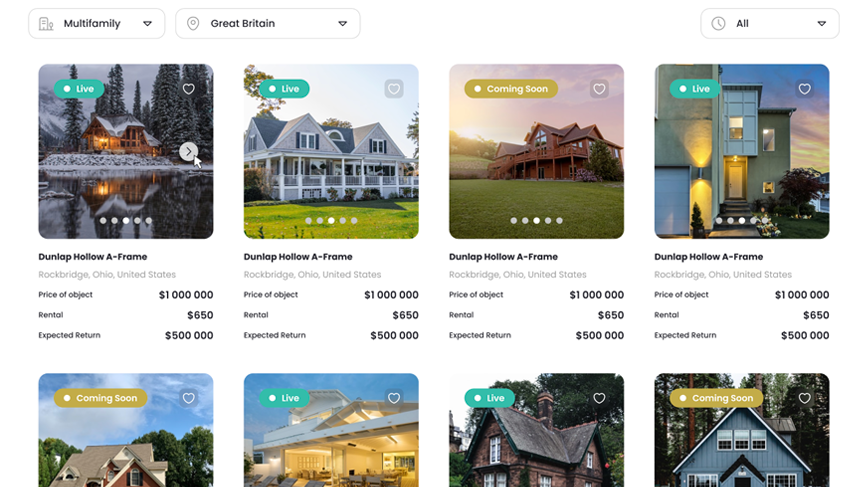
Real estate tokenization. Fractional ownership of property assets via NFTs — each token represents a percentage stake in a property, with on-chain records of ownership, rental income distribution, and transfer history. The marketplace handles minting, secondary trading, and compliance documentation. This is architecturally different from art NFTs: you need identity verification at the token level, not just the user level, and redemption flows that connect on-chain tokens to off-chain legal documents.
Event ticketing. NFT tickets that are transferable, expirable, and verifiable on-chain — solving the secondary market fraud problem that plagues traditional ticketing. The marketplace includes redemption mechanics (QR code scan → on-chain verify → mark as used), royalty splits on resale to the event organizer, and expiration logic built into the smart contract.
Gaming assets. In-game items, characters, and land parcels represented as NFTs — tradable on a marketplace independent of the game itself. The technical requirement is game-to-marketplace API integration and ERC-1155 support for fungible-within-collection items (100 identical swords) alongside unique items (one legendary weapon).
Music rights. Artists tokenizing streaming royalties or master rights as NFTs — buyers receive a percentage of future revenue from a specific track or catalog. Requires integration with royalty accounting systems and automated distribution from streaming revenue to token holders.
Brand loyalty programs. NFT-based membership tiers that grant access to exclusive content, discounts, or experiences — Starbucks Stars on blockchain, essentially. The marketplace handles minting on purchase, redemption of benefits, and tier-upgrade mechanics.
Digital collectibles for brands. Limited-edition digital products tied to physical purchases or milestones. Lower technical complexity, highest consumer brand familiarity. Good entry use case for brands testing NFT strategy.
From our tokenization experience
In one of our NFT marketplace projects focused on real estate, the most technically demanding aspect wasn't the marketplace itself — it was the legal-technical interface. Each NFT needed to reference a specific legal document (property deed, share certificate) stored off-chain, with a hash of that document embedded in the token metadata. If the document changed, the hash changed, the token became invalid.
Building this document integrity system alongside the marketplace was the work that distinguished the platform from a generic NFT marketplace. It's the difference between "NFTs as collectibles" and "NFTs as legally meaningful ownership records".
Technical Architecture: What's Under the Hood
A white label NFT marketplace isn't just a website with a "mint" button. Here's what a production-grade deployment actually includes:
Smart contracts layer
The core of any NFT marketplace is its smart contract set. A complete deployment includes: an NFT contract (ERC-721 for unique tokens, ERC-1155 for semi-fungible), a marketplace contract handling listings, bids, and sales, a royalty contract implementing EIP-2981 (the standard for on-chain royalty enforcement), and an escrow contract for auction mechanics. Each contract gets audited before mainnet deployment — this isn't optional when users are transacting real value.
Metadata and storage
NFT metadata (the name, description, image, and attributes linked to a token) needs to live somewhere that won't disappear. Centralized servers are a single point of failure. The production standard is IPFS for decentralized storage with Pinata or NFT.Storage as pinning services, ensuring metadata persists even if the marketplace shuts down. For enterprise use cases with compliance requirements, a hybrid model works: public attributes on IPFS, sensitive documents in encrypted centralized storage with hash references in the token.
Indexer infrastructure
Blockchains don't have databases. To display "all NFTs owned by this wallet" or "sales history for this collection," you need an indexer that reads on-chain events and writes them to a queryable database. Without an indexer, every frontend query hits the blockchain directly — which is slow, expensive, and rate-limited. We use The Graph protocol or a custom indexer depending on the chain.
Multi-chain architecture
Supporting multiple blockchains means deploying separate smart contract sets on each chain, maintaining separate indexers, and building a frontend that switches context based on which chain the user's wallet is connected to. The UX challenge: users switching from Ethereum to Polygon shouldn't feel like they're on a different platform. The technical challenge: gas costs, confirmation times, and NFT standards differ significantly across chains.
From our multi-chain deployment experience
The first multi-chain NFT marketplace we deployed supported Ethereum and Polygon. The technical work was approximately 40% additional beyond a single-chain deployment — not double, because the core marketplace logic reuses across chains, but the indexer, gas abstraction layer, and cross-chain bridge UI are additive work. Each additional chain after the second adds roughly 15–20% to development scope. We build with chain-agnostic architecture from the start so clients can add Solana or Base later without a rewrite.
What influences the development cost: the main factors and their description
In this section we look at the main technological and business factors that can affect the cost of developing a solution for
building NFT music marketplaces and give practical examples.
Technology Requirements
Technology requirements play a key role in determining the cost of developing white label NFT marketplace solutions. The more complex and diverse the functionality required from a marketplace, the higher the development cost. For example, if a marketplace must support multiple cryptocurrency wallets, as well as have integration with multiple blockchain platforms, development costs can increase significantly.
Another important factor that can affect development costs is the choice of technology stack. Some technologies and tools may be more expensive than others and may require more time and effort to develop. For example, the use of smart contracts may require a greater level of expertise from developers and increase nft marketplace development costs.
Location of Developers
The location of developers can also have a significant impact on the cost of developing a solution to
build a NFT art marketplace. Developers in different countries may offer different prices for their services, depending on the level of salaries and the cost of living in their region. For example, a company located in the United States may offer a higher development cost than a company in Ukraine or India, where developer salaries may be much lower.
In addition, the location of developers can affect the speed and efficiency of work. If the team is in the same time zone as the customer, it can speed up communication and problem resolution. However, this is not true in all cases. If the developer has good communication with customers in other time zones, then working with that team can be a more efficient and cost-effective solution.

Design and user interface
The usability and attractiveness of a platform for users depends on how well the UI/UX design of a project is thought out. This in turn affects its popularity and consequently the success of the business. An example is OpenSea - one of the most popular NFT-marketplace. It has an intuitive and aesthetically pleasing interface that makes the process of buying and selling NFT assets accessible to a wide audience.
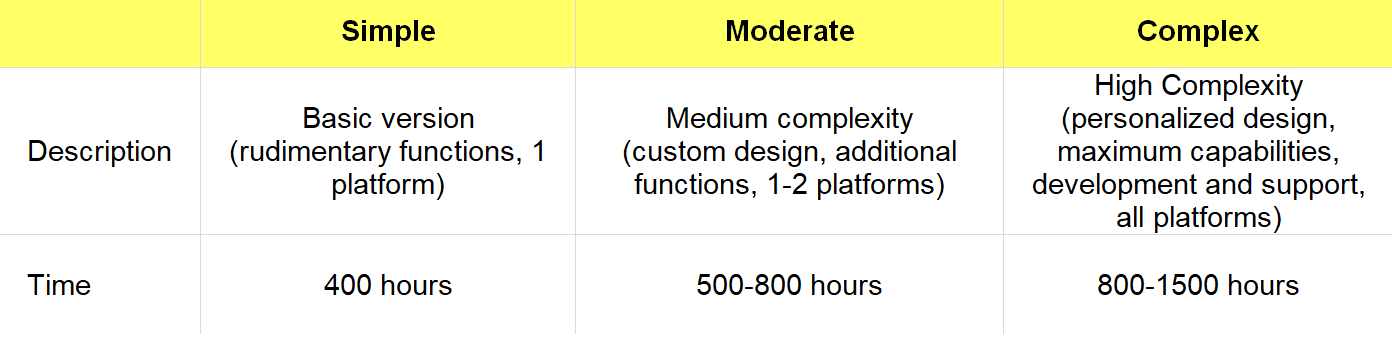
Developing an equally effective UI/UX design with customizability will require an experienced design team and a lot of time, and therefore a lot of money. Roughly, white label NFT marketplace design development can take anywhere from a few weeks to a few months, depending on the complexity and design requirements. For example, a simple design for a small marketplace can be developed in a few weeks, while a more complex design can take several months.
A set of basic and advanced features
Functionality is another major factor influencing the cost of developing a marketplace. The more functionality you need to implement, the more time and resources you will need to develop it. For example, if a marketplace must have the ability to create and sell NFT assets, support multiple blockchains, and work with auctions and pre-orders, then launching such a white label may take a significant amount of time and require a large development team. On the other hand, if a future white label will allow launching storas designed to sell a certain type of NFT, such development will be faster and cheaper.
Besides, it is worth keeping in mind that the cost of implementing the functions in a white label solution for launching an NFT marketplace can vary depending on many factors, such as the level of implementation complexity, the amount of work required and the availability of ready-made modules that can be used to implement them. However, in general, implementing the entire functionality of a white label solution to run an NFT marketplace will cost you between $25,000 and $70,000.
Core Trading Features
| Feature |
Details |
| NFT Minting |
Standard minting (upfront gas) + lazy minting (gas-free until first sale) |
| Sale Types |
Fixed price, English auction (ascending), Dutch auction (descending), bundle sale |
| Bidding System |
Timed auctions, reserve price, automatic bid extension, outbid notifications |
| Royalties |
EIP-2981 on-chain royalty standard; configurable % per collection; automatic distribution on secondary sales |
| Collections |
Creator-defined collections; collection-level royalty settings; collection analytics |
| NFT Standards |
ERC-721 (unique), ERC-1155 (semi-fungible), Metaplex (Solana) |
| Search & Discovery |
Category filters, rarity ranking, price range, chain filter, trending/new sort |
| Offers & Bids |
Make offer on unlisted NFTs; offer expiration; counter-offer mechanics |
Multi-Chain & Wallet
| Feature |
Details |
| Chains Supported |
Ethereum, Polygon, BNB Chain, Solana, Base — configurable at deployment |
| Wallet Support |
MetaMask, WalletConnect, Coinbase Wallet, Phantom, Ledger (hardware) |
| Token Payments |
Native tokens (ETH, MATIC, SOL) + stablecoins (USDC, USDT) |
| Fiat On-Ramp |
Credit card purchase via Stripe/MoonPay/Transak (optional module) |
| Cross-Chain |
Bridge integrations for multi-chain asset movement (Wormhole, LayerZero) |
Creator & Admin Tools
| Feature |
Details |
| Creator Dashboard |
Portfolio view, sales history, royalty earnings, collection management |
| Verification System |
Creator verification badges; collection approval workflow |
| Admin Panel |
Fee management, featured placements, user management, analytics, collection moderation |
| Platform Analytics |
Floor price tracking, volume charts, active users, top collections, revenue dashboard |
| Bulk Minting |
Upload multiple assets with CSV metadata; batch mint for gaming/ticketing use cases |
| Token-Gating |
Restrict content or access based on NFT ownership (membership use cases) |
Technical Infrastructure
| Feature |
Details |
| Smart Contracts |
Audited ERC-721, ERC-1155, marketplace, royalty, escrow contracts |
| Metadata Storage |
IPFS via Pinata/NFT.Storage; hybrid on-chain/off-chain for compliance use cases |
| Indexer |
On-chain event indexer for fast queries (The Graph or custom) |
| Notifications |
Email + in-app: sale completed, bid received, outbid, drop announcements |
| Mobile |
Responsive web (all devices); native iOS/Android apps as add-on |
| API |
REST API for external integration (game engines, loyalty systems, ticketing platforms) |
White Label vs Custom vs SaaS
|
White Label (Merehead) |
SaaS NFT Platform |
Custom Build |
| Timeline |
3–6 weeks |
1–2 weeks |
4–12 months |
| Cost |
$25,000–$80,000 |
$500–$5,000/month |
$100,000–$500,000+ |
| Ownership |
Full — your server, your contracts |
Rented, no ownership |
Full |
| Customization |
High |
Limited to plan |
Unlimited |
| Smart contract control |
Yes — audited, yours |
Shared contracts |
Yes |
| Chain flexibility |
Choose at deployment, add later |
Provider-limited |
Unlimited |
| Monthly cost ongoing |
Hosting only (~$500–$2,000) |
Platform fee + hosting |
Hosting only |
| Best for |
Businesses wanting full control at reasonable cost |
MVPs, testing concept |
Unique product vision |
Integrations with other platforms
As the number of integrations increases and the integration process with other services becomes more complicated, the more time and effort it takes to develop. Some of the platforms to integrate with include payment systems,
white label crypto exchange platforms, data storage services, etc.
An example of integration could be the integration of an NFT marketplace with a cryptocurrency exchange to exchange NFT assets for cryptocurrencies or fiat money. To implement this integration, it is necessary to create a special module that will process token exchange and transfer requests, interact with the cryptocurrency exchange API and ensure transaction security. Depending on the complexity and required functionality, the development cost of such integration can be from several thousand to several tens of thousands of dollars. That may include the development of necessary API, setting up a connection between the marketplace and trading platform software, testing and debugging of the system.
Here is a list of the most popular white label integrations of the NFT-marketplace with external services and platforms:
- Integration with cryptocurrency exchanges (e.g., Binance, Coinbase, Kraken). Allows Marketplace users to manage their funds and make transactions on exchanges directly from the Marketplace interface.
- Integration with cryptocurrency wallets (e.g. MetaMask, Trust Wallet, Ledger). Allows Marketplace users to manage their cryptocurrency assets from the Marketplace interface.
- Integration with IPFS and other data stores. Allows you to store NFTs and their metadata on decentralized storage, which provides a higher degree of storage security and reliability.
- Integration with social networks and messengers (e.g. Twitter, Discord, Telegram). Will allow Marketplace users to easily communicate with other community members and share information about NFT.
- Integration with analytics and reporting services (e.g. Google Analytics), allowing marketplace owners to get detailed statistics on site traffic, user behavior, conversions, etc.
- Integration with financial services (e.g. PayPal or Stripe). It will allow users to buy and sell NFT using credit cards or other electronic payment methods.
The cost of each integration can vary depending on the complexity and time required to implement it. Typically, developers estimate the cost of the integration separately from the cost of the underlying project development.
Security and Data Protection
This is another important factor affecting the cost of a white label solution to launch an NFT marketplace. After all, users will trust the NFT platform with valuable assets that can be worth millions of dollars. As part of the development, you need to ensure the security of asset storage and data transfer. This requires developing encryption, authentication and authorization algorithms, as well as establishing mechanisms to detect and block suspicious activity.
Security in NFT marketplaces: what matters and what doesn't
Most security sections in NFT articles list "2FA" and "SSL encryption" — baseline web security that has nothing specifically to do with NFTs. The actual security risks in an NFT marketplace are different:
Smart contract vulnerabilities. The most expensive security failures in NFT history (multiple $10M+ exploits) happened not through hacked admin panels but through smart contract logic errors — reentrancy attacks, integer overflows, improper access control. A pre-audit deployment to mainnet is how you lose user funds. Every smart contract in our deployments goes through automated analysis (Slither, MythX) and manual review before mainnet.
Metadata manipulation. An NFT's value is partly its metadata — the image, attributes, rarity. If metadata is stored on a centralized server that the platform operator controls, the operator can change what the NFT points to after sale. This is why IPFS storage is a trust requirement, not just a technical preference.
Approval phishing. The most common attack vector against NFT users is tricking them into signing a malicious transaction that approves an attacker's contract to transfer their NFTs. Marketplace design can reduce this risk through clear transaction previews, approval limit recommendations, and explicit signing prompts that display what the user is authorizing.
From our smart contract audit process
In every NFT marketplace we deploy, the smart contract audit is a mandatory pre-launch gate — not an optional add-on. We've caught reentrancy vulnerabilities in auction contracts, fee calculation errors that would have sent royalties to the zero address, and access control gaps that could have allowed unauthorized minting. Catching these before mainnet costs nothing compared to a post-launch exploit. Post-launch exploits in NFT contracts can't be reversed — there is no "undo" on the blockchain.
Legalization and Regulation
The last factor that has a big impact on the cost of creating a white label NFT marketplace is its registration. Different countries have different rules and laws regarding cryptocurrencies and NFT, so it is necessary to consider local laws and standards in each country where the marketplace will be launched.
For example, in the US, NFTs are considered securities, which means they can be regulated by the Securities and Exchange Commission (SEC). Thus, when bulding a marketplace in the US, it is necessary to adapt the future b2b marketplace software for the SEC rules and other laws, which may take additional time and resources to develop.
The cost of such adaptation depends on how much the existing features of the marketplace need to be changed to comply with the legislation and whether it needs to be done for a single country or for several countries at once. For example, it may require changes to the user identification system, tax settings and intellectual property rights notices.
White label NFT marketplace cost

The table shows the development of a standard NFT marketplace. As you can see, the cost differs by region, but it differs even more from the features that need to be integrated. Our NFT marketplace development company has experience in creating NFT marketplaces. We can confidently say that the minimum cost of developing NFT marketplaces starts at $20,000. More complex solutions can reach a price of $80,000. It all depends on the functions, for example, whether there will be a promotional system, whether the user will be able to mint their NFTs, how many networks will be connected, what features need to be integrated into the admin panel for the platform owner. A project that looks like OpenSea will cost $300,000 or more.
FAQ: White Label NFT Marketplace
What chains does a white label NFT marketplace support?
A production deployment supports Ethereum, Polygon, BNB Chain, and Solana as the primary four. Base (Coinbase's L2) is increasingly standard. Each chain is configured separately at deployment — you choose which to enable at launch, and additional chains can be added post-launch without rebuilding the platform. Supporting multiple chains from day one gives your marketplace access to significantly larger NFT liquidity pools.
What's the difference between ERC-721 and ERC-1155?
ERC-721 is the standard for unique, one-of-one NFTs — every token is distinct. ERC-1155 supports "semi-fungible" tokens: items where multiple identical copies exist (100 identical game swords) alongside unique items. Most enterprise use cases need both: ERC-721 for unique collectibles or property deeds, ERC-1155 for gaming items, event tickets, or loyalty points. A complete white label solution supports both standards.
What is lazy minting and why does it matter?
Lazy minting means the NFT smart contract isn't called — and gas fees aren't paid — until someone actually purchases the NFT. The creator uploads metadata and signs a voucher off-chain; the minting transaction only executes at first sale. This eliminates upfront gas costs for creators and lowers the barrier to listing. For marketplaces targeting individual creators rather than enterprises, lazy minting is the standard expectation.
How are royalties enforced on secondary sales?
Via the EIP-2981 royalty standard embedded in smart contracts: every time an NFT is transferred through a compliant marketplace, the contract automatically routes the royalty percentage to the creator's address. The enforcement only works on marketplaces that respect the standard — some high-volume platforms (Blur notably) made royalties optional, which is a known industry tension. Our deployments implement both on-chain royalty contracts and marketplace-level enforcement for maximum creator protection.
Do I need a smart contract audit before launch?
Yes, and this isn't negotiable if real user funds will be at risk. Smart contract exploits in NFT marketplaces have resulted in losses ranging from thousands to tens of millions of dollars. The audit process involves automated analysis (Slither, MythX) plus manual review. Standard audit for a marketplace contract set takes 1–2 weeks. We include audit resolution as a mandatory pre-launch gate in all our NFT marketplace deployments.
What does white label NFT marketplace cost?
A standard white label with single-chain deployment, core trading features, and basic admin panel: $25,000–$40,000. Multi-chain support (2–3 chains), lazy minting, royalty system, creator dashboard: $40,000–$65,000. Enterprise configuration with real estate tokenization, advanced compliance, gaming asset integration, or custom auction mechanics: $65,000–$120,000. Custom development from scratch starts at $120,000 and routinely reaches $300,000+ for OpenSea-scale platforms.
How long does deployment take?
3–6 weeks for a standard white label configuration. 6–10 weeks for multi-chain with real estate or gaming integration. The clock starts after key configuration decisions are locked — blockchain selection, fee structure, use case focus. Projects where these decisions are made before development begins launch significantly faster.
Can I add fiat payment support so users can buy NFTs with credit cards?
Yes, via fiat on-ramp integrations (MoonPay, Transak, Stripe). The flow: user selects card payment → on-ramp provider handles card processing and compliance → crypto is delivered to user's wallet → purchase executes. This adds 1–2 weeks of integration time and ongoing per-transaction fees from the on-ramp provider (typically 2–4%).