Why White Label Crypto Banking Solutions Are Rewriting the Rules of Fintech in 2026
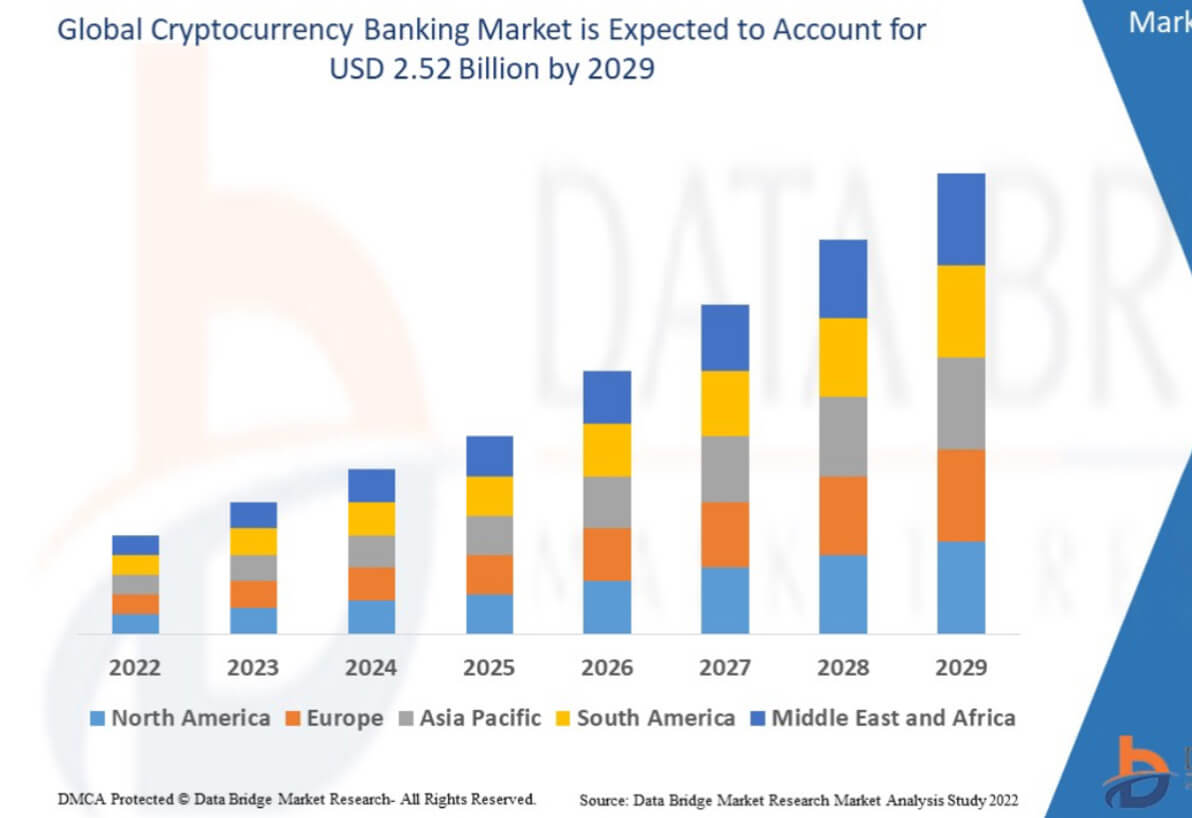
The crypto banking market hit
$4 trillion in total capitalization in 2025. Stablecoins alone processed
$46 trillion in transactions — more than Visa and Mastercard combined. Over
560 million people worldwide now hold or actively use digital assets. And the majority of them expect a single platform where they can store, swap, lend, and spend — with the same UX they get from a traditional bank.
For businesses, the question stopped being whether to build a crypto banking product. It became: how fast can you launch one that actually works? That's exactly where white label crypto banking solutions entered the mainstream — and why they've become the default entry strategy for fintech startups, neobanks, and financial institutions across the US and EU.
This guide covers what separates production-grade platforms from MVP experiments: architecture decisions, compliance requirements, real build timelines, and the monetization models that actually generate revenue at scale.
What Is a White Label Crypto Banking Platform?
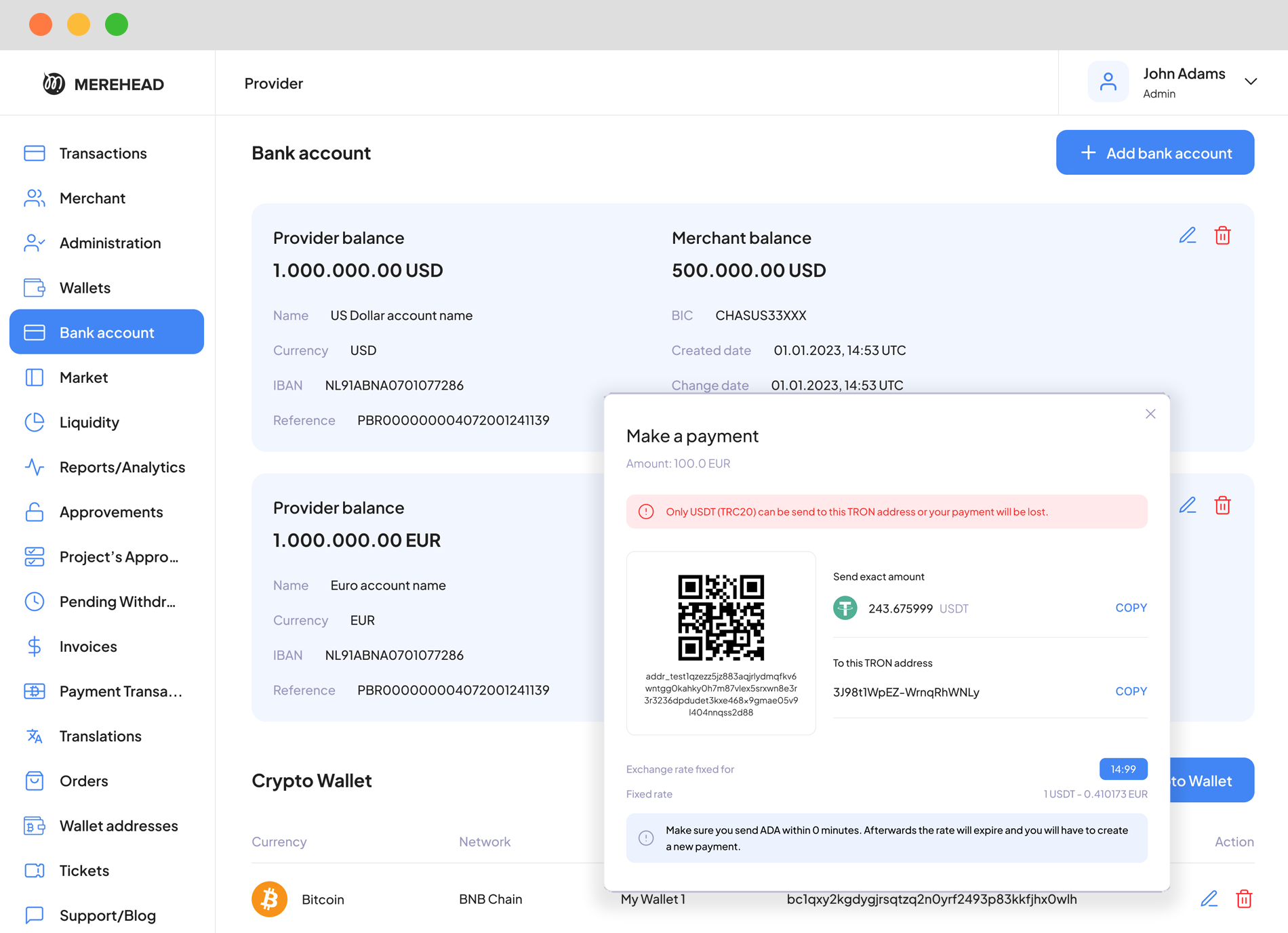
A white label crypto banking platform is a pre-built, production-tested infrastructure that a business deploys under its own brand — without writing the core from scratch. The vendor provides the engine; the client provides the brand, the market focus, and the compliance layer for their jurisdiction.
In practice, a mature white label crypto banking solution ships with:
- Core banking modules — multi-currency wallets (custodial and/or non-custodial), transaction engine, account management
- Fiat-crypto rails — payment gateway integrations, IBAN support, SEPA/SWIFT where applicable
- Compliance infrastructure — automated KYC/AML flows, transaction monitoring, reporting tools
- Exchange functionality — swap module, liquidity provider integrations, order routing
- Admin panel — user management, fee configuration, partner/project hierarchy
- API layer — for third-party integrations, exchange connectivity, and mobile app backends
The distinction between white label and SaaS matters here: SaaS means you rent access. White label means you own the brand experience and, depending on the provider, the codebase itself. That distinction becomes critical when you need jurisdiction-specific compliance configurations or want to integrate proprietary DeFi modules.
For businesses targeting the US market, a white label crypto bank must additionally account for FinCEN registration, state-level Money Transmitter Licenses (MTL), and — depending on the asset types offered — potential oversight from the SEC or CFTC. EU-focused platforms must align with the MiCA framework, which standardized licensing requirements for crypto-asset service providers across member states.
What Shapes a White Label Crypto Banking Product in 2026
Not every white label crypto banking platform looks the same — and the differences are rarely cosmetic. Architecture decisions made at the design phase determine whether the platform can scale, stay compliant across jurisdictions, and support new asset types without a full rebuild.
Two factors drive product shape: target user segment and regulatory environment.
Some products aim to replace a bank entirely — fiat accounts, multi-chain wallets, and crypto debit cards under one roof. Others focus on a specific vertical: instant fiat-to-crypto conversion for a regional market, DeFi-powered lending for institutional users, or a trading-first platform with perpetual futures and advanced order types. The platforms that succeed in competitive markets are almost always those built around a specific user problem, not a generic feature list.
The biggest mistake when launching a crypto banking business is trying to build “everything at once.” Platforms that win the market start with one strong vertical and expand it. We see this in every project where there is real growth.
Core Features of a Production-Grade Crypto Banking App
If a crypto banking app wants to compete in 2026, it needs to function as a real crypto-friendly bank — not a wallet with a polished interface. Users demand speed, transparency, and full financial control in a single UI. Here's what the baseline looks like:
- Secure multi-currency wallets — support for both custodial and non-custodial models, with cold storage for custodial funds
- Instant fiat-crypto swaps — no third-party confirmation delays; swap routing via own liquidity pools with fallback to external providers
- Crypto debit card integration — linked to crypto or fiat balances, usable for everyday purchases and ATM withdrawals
- Lending and borrowing — crypto-collateralized loans without selling holdings; floating rates tied to market conditions
- Staking and yield features — Smart Yield-type options, AutoInvest, access to liquidity pools with APY metrics
- Advanced trading modules — TradingView charts, perpetual futures with cross/isolated margin, configurable leverage, order history
- Portfolio analytics — real-time balance overview, transaction history, P&L tracking across assets and chains
- Multi-chain support — BTC, ETH, BNB, USDT (ERC-20/TRC-20), Solana, Cardano, and others via a unified interface
Architecture note: non-custodial wallet extensions
One of the more technically nuanced builds in our portfolio involved extending an existing non-custodial wallet (iOS + Android, built on TrustWalletCore) with a perpetual futures trading module — integrated via HyperLiquidity after an initial Orderly Network scope was replaced mid-project due to client requirement changes.
The core challenge wasn't the futures logic itself — it was the parallel workflow: the client's own dev team was actively building on the same codebase simultaneously. The solution was a private fork of their Bitbucket repository, with our team developing in isolation and submitting pull requests reviewed and approved by the client's tech lead. No direct vendor attribution in commit history.
Delivered within the module scope: TradingView chart integration, full orderbook, limit/market/stop-limit orders with TP/SL, cross and isolated margin modes, configurable leverage, position management, and a referral program. Timeline: 3 months.
Key takeaway for white label builds: the "white label" model applies not just to branding a ready-made product — it also describes how development itself can be structured to remain invisible inside the client's product ecosystem. For businesses that want to launch features without exposing their technology vendor, this parallel-fork model is a proven approach.
Regulation and Security: The Non-Negotiables for US and EU Markets
No white label crypto banking platform survives without trust — and in 2026, trust is built on two pillars:
regulatory compliance and
security architecture.
For custodial platforms targeting the US market: FinCEN registration is mandatory, state-level MTL licensing varies by jurisdiction, and depending on whether the platform offers securities-linked products, SEC and/or CFTC oversight may apply. The GENIUS Act (stablecoin framework, 2026) adds another compliance layer for platforms that issue or process stablecoins at scale.
For EU-focused platforms: MiCA provides a unified licensing framework for crypto-asset service providers. Germany additionally requires BaFin licensing for custodial operations. Even non-custodial platforms face growing AML/KYC obligations when they integrate fiat gateways — regulators are actively closing that gap.
Recent NYDFS enforcement actions underscore a critical principle: outsourcing to a white label provider does not transfer compliance responsibility. The operating business remains accountable for AML, KYC, and sanctions enforcement — regardless of what the platform vendor provides out of the box. This is why compliance architecture must be audited, not assumed.
On the security side, these are the non-negotiable baseline components for any production platform:
- Multi-factor authentication — Google Authenticator + SMS as dual-option mandatory (not optional add-on)
- Cold storage for custodial funds — segregated from hot wallet infrastructure
- Smart contract audits — for any DeFi or swap module built on Solidity
- Encrypted storage — for user credentials, KYC documents, and transaction data
- Active threat monitoring — real-time anomaly detection at the transaction level
- Server infrastructure redundancy — duplicated across geographically separate regions with automatic failover routing
How compliance was built into a crypto processing platform — not bolted on
One enterprise-grade project involved building a full crypto processing engine for a European fintech operator: microservices architecture, multi-chain transaction handling across BTC, ETH, USDT (ERC-20/TRC-20), BNB, Solana, Dogecoin, and Cardano — simultaneously.
AML wasn't a third-party API overlay. It was embedded into the processing core: incoming transactions were scored for risk before finalization, and high-risk operations were returned automatically without triggering significant financial exposure for the business. Ongoing automated counterparty checks ran in parallel with live operations.
KYC on the client-facing side was equally integrated: document upload flows, admin-side verification queues, and per-user approval status directly gated deposit/withdrawal permissions. The same compliance architecture covered both the main trading interface and a separate affiliate portal — two distinct user bases, one unified compliance layer.
Infrastructure: all server instances duplicated in geographically separate regions with automated routing failover; daily backups across all nodes. The three-tier admin hierarchy (project → partner → super-admin) allowed fine-grained control of available currencies, payment systems, fee structures, and compliance configurations per partner — without affecting other tenants on the platform.
White Label Crypto Banking Revenue Models
Understanding how a crypto banking platform generates revenue matters both for operators building their own product and for evaluating white label providers — since the monetization architecture must be built into the platform, not added as an afterthought.
| Revenue Stream |
Typical Range |
Notes |
| Fiat deposit fee |
1–3% |
Crypto deposits usually free; fiat onramp carries processing cost |
| Crypto/fiat exchange fee |
0.1–2% |
Competitive pressure pushing toward 0% on stablecoin swaps |
| Withdrawal / fiat conversion |
0.3–1% |
Per-asset variation; BTC network fee passed through or absorbed |
| Lending/deposit spread |
2–6% net margin |
Lower deposit APY, higher loan rate — standard interest model |
| Account/custody fees |
Fixed monthly |
Applied to premium tiers (e.g. $9.99–$29.99/month) |
| Trading tools / signals access |
Subscription or tier-gated |
Advanced analytics, AutoInvest, portfolio diversification tools |
| Native token issuance |
Variable |
Token used for staking, reduced fees, loyalty — creates platform lock-in |
| Liquidity pool / staking share |
% of yield generated |
Platform takes a cut of staking rewards and DeFi pool returns |
One structural consideration: high competition in crypto-to-crypto swaps means many platforms attract users with zero-fee stablecoin transactions and monetize deeper in the funnel — through lending spreads, premium tiers, and native token utility. Building this model requires the fee configuration to be granular at the platform level: per partner, per project, per asset type.
White Label vs. Custom Development: The Real Tradeoffs
The build-vs-buy decision in crypto banking isn't about preference — it's about
what your timeline and risk profile actually allow.
White label crypto banking platforms offer a pre-built, tested infrastructure that can be customized and deployed in 2–8 weeks. You get compliance modules, exchange functionality, KYC/AML flows, and an admin panel — without writing a line of core infrastructure code. The tradeoff: limited architectural control. If your product requires deep customization of the transaction engine, proprietary DeFi modules, or a non-standard compliance setup for a specific jurisdiction, white label hits a ceiling.
Custom development is for businesses with a defined long-term product strategy. You control the full stack: unique UI/UX, tailored DeFi integrations, bespoke compliance architecture for multiple jurisdictions, and unlimited scalability. The cost is time — 6–12+ months minimum for a production-grade platform — and significantly higher initial investment.
We recommend white label where the hypothesis has not yet been tested by the market. Once the product has found a PMF and has traction, custom development becomes the only right way to scale.
There's also a hybrid path that's increasingly common: start with a white label to validate the market, then migrate specific modules to custom builds as the product matures. This approach — used by several of our clients in the fintech space — reduces time-to-market risk without locking the business into a vendor's architecture permanently.
Rule of thumb: if speed and budget efficiency are your constraints, start with white label. If you're building a crypto banking platform designed to dominate a niche or region, invest in custom development from the start — or plan the migration before you write the first line of white label customization.
What Does It Cost to Launch a White Label Crypto Banking Platform?
Cost is a function of three variables:
scope,
compliance complexity, and
deployment model (white label vs. custom). Here's what the market looks like in 2026:
| Platform Type |
Scope |
Timeline |
Cost Range |
| White Label — Basic |
Wallet, fiat-crypto swap, card integration, KYC/AML |
2–5 weeks |
$20,000–$40,000 |
| White Label — Mid-tier |
+ P2P payments, multi-currency accounts, portfolio analytics, exchange integrations |
5–10 weeks |
$40,000–$80,000 |
| White Label — Enterprise |
Full crypto processing core, multi-chain, lending/staking, liquidity pools, super-admin hierarchy |
10–16 weeks |
$80,000–$160,000+ |
| Custom — Mid-tier |
Unique architecture, DeFi modules, bespoke compliance |
6–9 months |
$80,000–$150,000 |
| Custom — Enterprise |
Full-stack build, multi-jurisdiction licensing support, trading engine |
9–18 months |
$150,000–$400,000+ |
What's not in these numbers: marketing, post-launch support, third-party compliance tooling (e.g. Chainalysis for AML), and exchange API costs. For platforms targeting US users, state-level MTL licensing fees add $10,000–$50,000+ depending on the number of states covered.
Cross-platform development (iOS + Android + Web) costs more upfront but is the correct default for any platform expecting significant user volume — the reach advantage compounds over time and avoids a costly rebuild later.
Inside a Production Build: What Enterprise Crypto Processing Architecture Looks Like
Case: Enterprise crypto processing platform — microservices, multi-chain, multi-partner
One of the most technically demanding projects in our portfolio involved building a full crypto processing platform from discovery to delivery for a European fintech operator. The core requirement: a microservices architecture capable of handling multi-chain transactions across BTC, ETH, USDT (ERC-20 and TRC-20), BNB, Solana, Dogecoin, and Cardano — simultaneously, with no single point of failure.
Liquidity pool management. The platform automatically drew from own liquidity pools for exchange operations, with fallback routing to third-party pools when reserves were insufficient. Priority logic and pool usage costs were configurable per partner from the super-admin panel — no hardcoded routing rules.
AML embedded at the infrastructure level. Incoming transactions were scored before finalization. High-risk operations were returned automatically without triggering significant financial exposure. This wasn't a Chainalysis API wrapper — it was built into the processing core, with ongoing automated counterparty checks running in parallel.
Three-tier admin hierarchy. Super-admin → partner → project. Each level had granular control over available cryptocurrencies, payment systems, fee structures, and compliance configurations — without affecting other tenants. Adding a new blockchain required configuration at the super-admin level, not a code deployment.
Infrastructure redundancy. All server instances duplicated in geographically separate regions. Automatic routing failover. Daily backups across all nodes. Non-negotiable for a payment-grade platform handling partner funds.
Timeline: 3–4 months. The result was a B2B crypto processing engine capable of supporting multiple partner organizations, each operating independently under the same infrastructure with full tenant isolation.
Building a DEX Swap Platform That Scales: Architecture Decisions That Matter
Swap functionality is now a baseline expectation in any crypto banking product. But building a swap module that handles real load — with own liquidity, external provider fallback, and slippage protection — requires architectural decisions that most white label vendors don't make transparent.
From a DEX platform build in our portfolio: the client's hard requirement was unlimited concurrent users, 24/7. The architecture decisions this drove:
- Uniswap V3 as primary liquidity provider — routing own pool liquidity first, external pools as fallback
- Microservices throughout — each functional domain (swap, pool management, token registry, admin) deployed independently; no monolithic bottlenecks
- Slippage tolerance + partial fill — user-configurable per swap, with gas level controls exposed in advanced settings
- Admin token management — activation/deactivation of trading pairs, approval queue for user-submitted tokens, fee configuration per swap and per pool
- Native token issuance — built into the platform from the start, not retrofitted; used for staking, reduced fees, and pool incentives
The most common mistake on swap platforms is underestimating the complexity of liquidity management. It’s not enough to connect Uniswap and call it a DEX. You need your own pool prioritization logic, otherwise the platform will lose on spreads under any load.
The Solidity smart contracts governing pool creation, liquidity provision, and token approval were audited before mainnet deployment. Admin-side controls allowed blocking/unblocking pools without contract redeployment — a critical operational requirement for a live platform responding to market conditions.
Ready to Launch Your White Label Crypto Banking Platform?
The infrastructure to build a competitive crypto banking product exists today. The compliance frameworks — MiCA in the EU, FinCEN/GENIUS Act in the US — are clarifying, not closing doors. The demand from 560 million crypto users for better banking products isn't going anywhere.
What separates the platforms that scale from those that stall is execution quality: the right architecture decisions at the start, compliance built into the core, and a product focus sharp enough to win a defined market segment before expanding.
At Merehead, we build both — from white label crypto banking solutions deployable in weeks to custom enterprise-grade platforms with full ownership of architecture and IP. Our team has delivered crypto-friendly banking products across custodial wallets, crypto processing engines, DEX platforms, and trading infrastructure — for clients across Europe and North America.
If you're planning a launch or evaluating your current architecture, start with a technical consultation — we'll map your requirements to the right build model and give you an honest timeline and cost estimate before any commitment.
FAQ: White Label Crypto Banking Solutions in 2026
What is a white label crypto banking solution?
A white label crypto banking solution is a pre-built, customizable platform that businesses deploy under their own brand. It includes core banking modules (wallets, swap, KYC/AML, admin panel, API layer) without requiring the operator to build the infrastructure from scratch. The vendor provides the engine; the operator owns the brand and the user relationship.
Is it legal to launch a crypto banking platform in the US?
Yes — but compliance requirements are substantial. FinCEN registration is mandatory for custodial platforms. State-level Money Transmitter Licenses (MTL) are required in most states where you operate. Depending on asset types offered, SEC and/or CFTC oversight may apply. The 2026 GENIUS Act adds stablecoin-specific requirements. Non-custodial platforms face lighter regulation but are increasingly subject to KYC/AML obligations when integrating fiat gateways.
How long does it take to launch a white label crypto bank?
A white label solution can be live in 2–8 weeks depending on customization scope. Custom platforms take 6–18+ months depending on architecture complexity, compliance requirements, and the number of supported features and chains. The white label path saves 5–6x development time compared to building from scratch.
What features are non-negotiable for a competitive platform?
Minimum viable: multi-currency wallets (custodial or non-custodial), instant fiat-crypto swap, KYC/AML compliance flows, 2FA (Google Authenticator + SMS), and a functional admin panel. Competitive edge comes from: multi-chain support, perpetual futures or lending modules, crypto debit card integration, native token issuance, and staking/yield features.
What are the main technical risks in crypto banking development?
Three categories dominate: (1) Compliance gaps — AML/KYC not embedded in the core but bolted on via API, creating coverage gaps under regulatory scrutiny. (2) Liquidity architecture — swap modules without fallback routing collapse under load or during low-liquidity periods. (3) Infrastructure redundancy — single-region deployments without failover are a critical vulnerability for payment-grade platforms. Each of these requires architectural decisions at the discovery phase, not as post-launch patches.
White label or custom — which path for a US-market launch?
If you're testing market fit or need speed to capture a window, start with white label. If you have a defined product thesis, a target niche, and a 12–18 month roadmap, custom crypto banking development gives you the architectural control you'll need at scale. The hybrid approach — white label for launch, custom for specific modules as you grow — is increasingly common and reduces risk on both ends.
How does a white label crypto bank generate revenue?
Primary revenue streams: exchange fees (0.1–2%), fiat deposit fees (1–3%), lending/deposit spread (2–6% net margin), premium account tiers, and native token utility. Platforms with DeFi integration earn a percentage of staking yields and liquidity pool returns. Fee structures should be configurable per partner and per asset type — not hardcoded — to allow monetization strategy to evolve without code changes.
How do I make my platform competitive against established players?
Don't compete on breadth — compete on depth for a defined audience. The platforms that win in 2026 are those that solve one specific pain point better than anyone else: faster fiat offramp for a regional market, better rates on crypto-collateralized loans, or a superior UX for a specific trading vertical. Pick your niche, build it deeply, then expand.