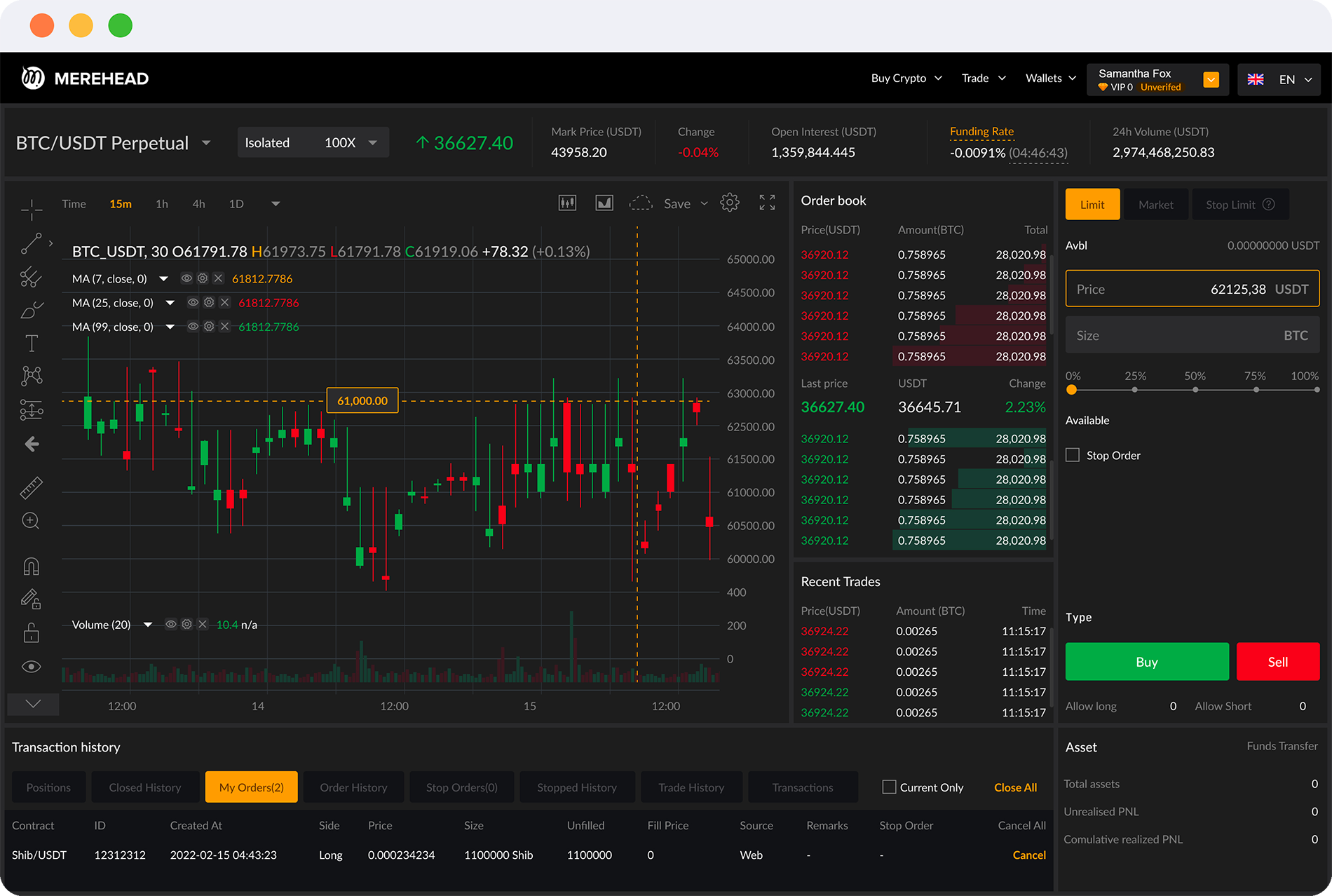
A white label Bitcoin exchange platform is a ready-made, fully branded trading infrastructure that lets entrepreneurs launch a Bitcoin exchange in 4–14 weeks — without building a matching engine, wallet system, or compliance layer from scratch. In 2025, spot Bitcoin trading volume on centralized exchanges reached approximately $9 trillion, with BTC accounting for 43–50% of the total crypto spot market. With trading fees ranging from 0.1% to 0.5% on that volume, the revenue potential for exchange operators is clear — and white label development is now the fastest route to capture it.
Using proven software, such as that from Merehead, allows you to launch in 4-14 weeks (as opposed to 4-9+ months when creating a product from scratch).
The standard White Label package includes a complete, ready-made technology stack, from a trading engine to a wallet management system tailored to BTC specifics (integration of Bitcoin nodes, Lightning Network for instant payments, etc.). The ready-made solution remains flexible in terms of customizing the interface design or setting up risk management systems, but the depth of this depends on the developer.
Below, we'll discuss what to look for when choosing a reliable White Label BTC exchange provider, which modules are essential for a modern platform, and the steps involved in the launch process.
What Is a White Label Bitcoin Exchange Platform?
White Label Bitcoin Exchange is a ready-made platform consisting of a set of standalone modules that are already integrated. Unlike
custom crypto exchange development, where a team is hired to write code from scratch (core, API, connectors), with White Label, a startup purchases the right to operate a ready-made product. This can be through a SaaS lease (cloud solution) or an on-premise license (installation of software on the company's own servers).
What's important for business: In White Label, the architecture of each block has already proven its effectiveness in real trading volumes, and the basic interface mechanics are familiar to users, making the platform intuitive.
The Standard Package for CEX (centralized exchanges) includes:
- Matching Engine: A module responsible for the instant execution of buy/sell orders. In the white-label Bitcoin trading platform, it is optimized for high loads of 10,000-100,0000+ transactions per second (TPS), eliminating system freezes during sharp fluctuations in the BTC price and ensuring minimal latency.
- Liquidity Gateway: Ready-to-use APIs for connecting to major exchanges (Binance, Kraken, etc.). This ensures liquidity right from the start.
- Multi-tier Wallet System: Multi-tier wallet management system with automatic transaction signing.
- Admin Panel: Technical interface for managing users, limits, verification (KYC), and monitoring transaction security.
Customization allows you to adapt a white-label bitcoin exchange to your brand and specific business logic. This can include customizing the frontend (design, logos, section layout), fee structure, and more. It also allows you to integrate external modules, such as integration with local banks for fiat payments.
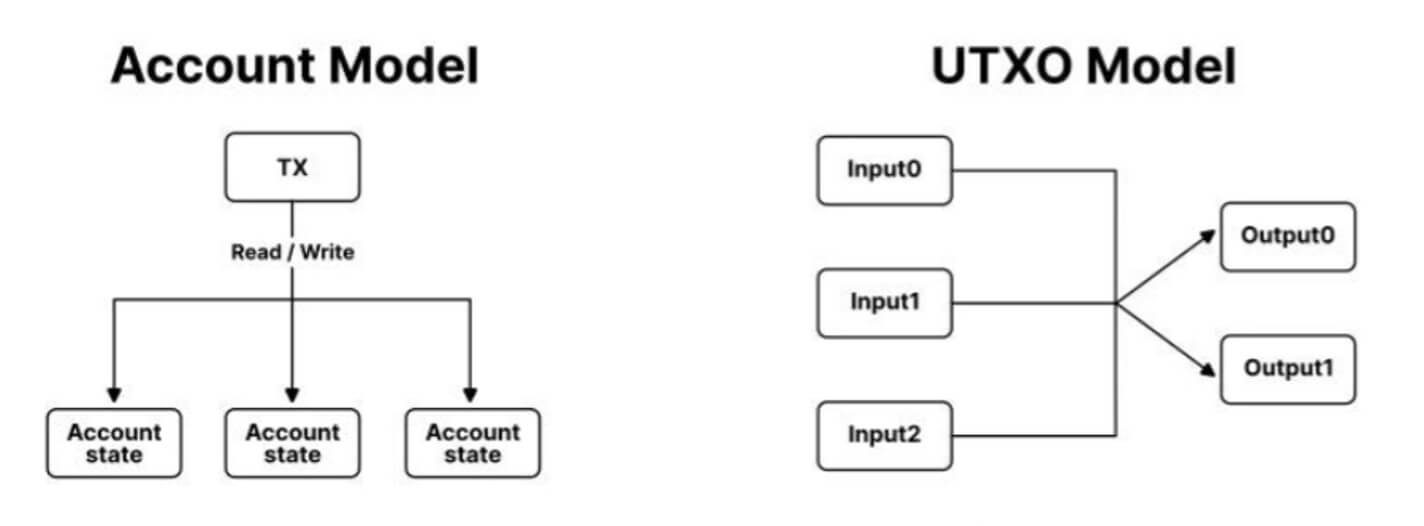
Important: Not every platform that supports BTC is a fully-fledged Bitcoin exchange. A common mistake is launching an ETH clone with a Bitcoin trading pair. Technically, this is an attempt to impose the logic of one network on a completely different architecture. For an exchange to function correctly and without limitations, a white-label solution must take into account the specifics of the Bitcoin protocol at the architectural level.
| Parameter |
Bitcoin-native (White Label) |
ETH-based clone |
Impact on business |
| Wallet model |
Bitcoin-native wallet architecture (UTXO wallet) |
Account (account balance) |
UTXO eliminates confusion in balances and errors in calculating "change" and network fees. |
| Infrastructure |
Own Bitcoin node |
Often external API gateways |
Our nodes guarantee fast deposits without dependence on external providers. |
| Speed and price |
Lightning Network integration & SegWit |
Mainly on-chain operations |
Lightning & SegWit support reduces transaction costs for customers, increasing the exchange's competitiveness. |
| New markets |
BRC-20 support |
Standard BTC only |
Allows you to earn on trending assets within the Bitcoin ecosystem. |
Key Features of a White Label Bitcoin Exchange Platform
To ensure the White Label Bitcoin Exchange Platform provides traders with security, high speed, and minimal transaction costs, it must have a modern technology stack adapted to Bitcoin at the protocol, transaction, and management levels. Required Bitcoin-specific features include:
- UTXO Wallet Architecture and Management: This is an algorithm for selecting entries for a transaction. When a user submits a BTC withdrawal request from an exchange, the engine must scan the platform's database of all incoming transactions as quickly as possible (100-300 ms), select the number of transactions for the withdrawal amount, and transfer the remaining amount to a new exchange account without errors. Minimizing "entries" reduces the transaction weight, which reduces the exchange's miner fees by 30-50%.
Best practice: Implement background UTXO consolidation. This makes future payouts to users during peak hours 2-3 times cheaper.
- Bitcoin Node Management: This is a direct connection to the Bitcoin network through your own server. The Bitcoin RPC API guarantees complete autonomy: the exchange itself verifies the validity of coins, ensuring instant balance updates without delays from third-party services. A private node allows the administrator to manage payout priorities.
Practical recommendation: Avoid using third-party APIs. Running your own node is the only way to guarantee wallet independence from third-party services and explorers.
- SegWit (Segregated Witness): This is an address standard that separates signatures from transaction data. The system should generate SegWit addresses by default for all new users. By separating signatures into a separate data block, the physical size of the withdrawal transaction is reduced. As a result, the transfer takes up less space on the blockchain, allowing the exchange to save up to 30-35% on miner fees.
Practical recommendation: Set Native SegWit as the default format for your hot wallet to process bulk withdrawals as quickly as possible with minimal gas costs.
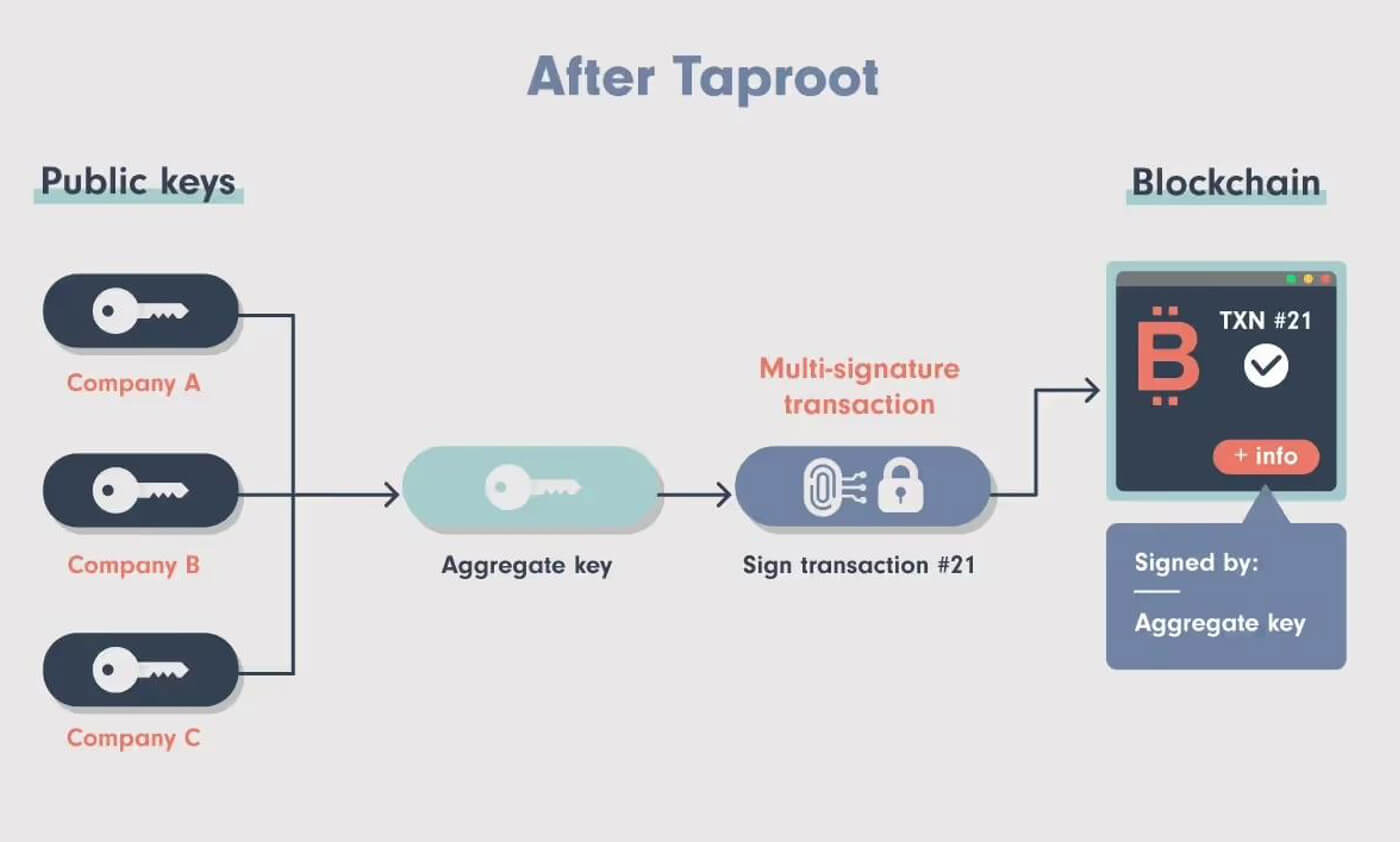
- Taproot Support: This is the modern standard for Bitcoin hot/cold wallet separation, allowing for combining multiple signatures into one. Taproot reduces network fees by an additional 10% compared to standard SegWit.
Our recommendation: Use Taproot to move funds to cold storage. This further enhances exchange privacy by hiding your internal security protocols from outside observers.
- Lightning Network Integration: This is a module for instant micropayments outside the main blockchain. The software allows users to deposit and withdraw BTC instantly, without waiting for block confirmation. For businesses, this is a way to eliminate miner fees for small transactions.
Tip: Implement automated channel liquidity management. This will prevent withdrawal errors when the exchange temporarily lacks sufficient capacity to process the payment immediately.
- BRC-20 Token Support: This is an additional indexer for BTC CEX (including BRC-20 token exchange). It is designed to support tokens issued on the Bitcoin network. The software must clearly distinguish between regular Bitcoin and BRC-20 tokens to prevent the client from accidentally spending valuable assets on network fees.
Implementation note: Separate the indexer database and the node balance. This will allow the trading core to process tokens instantly.
Important: Platform owners are also encouraged to implement standard exchange features, but with deep integration into the network mechanics.
The Hot/Cold Wallet Split's "Bitcoin twist" is the use of UTXO logic, which allows hundreds of small balances to be combined into a single transfer (automated sweep) to a cold wallet, where 95%+ of all funds are supposed to be stored, for free.
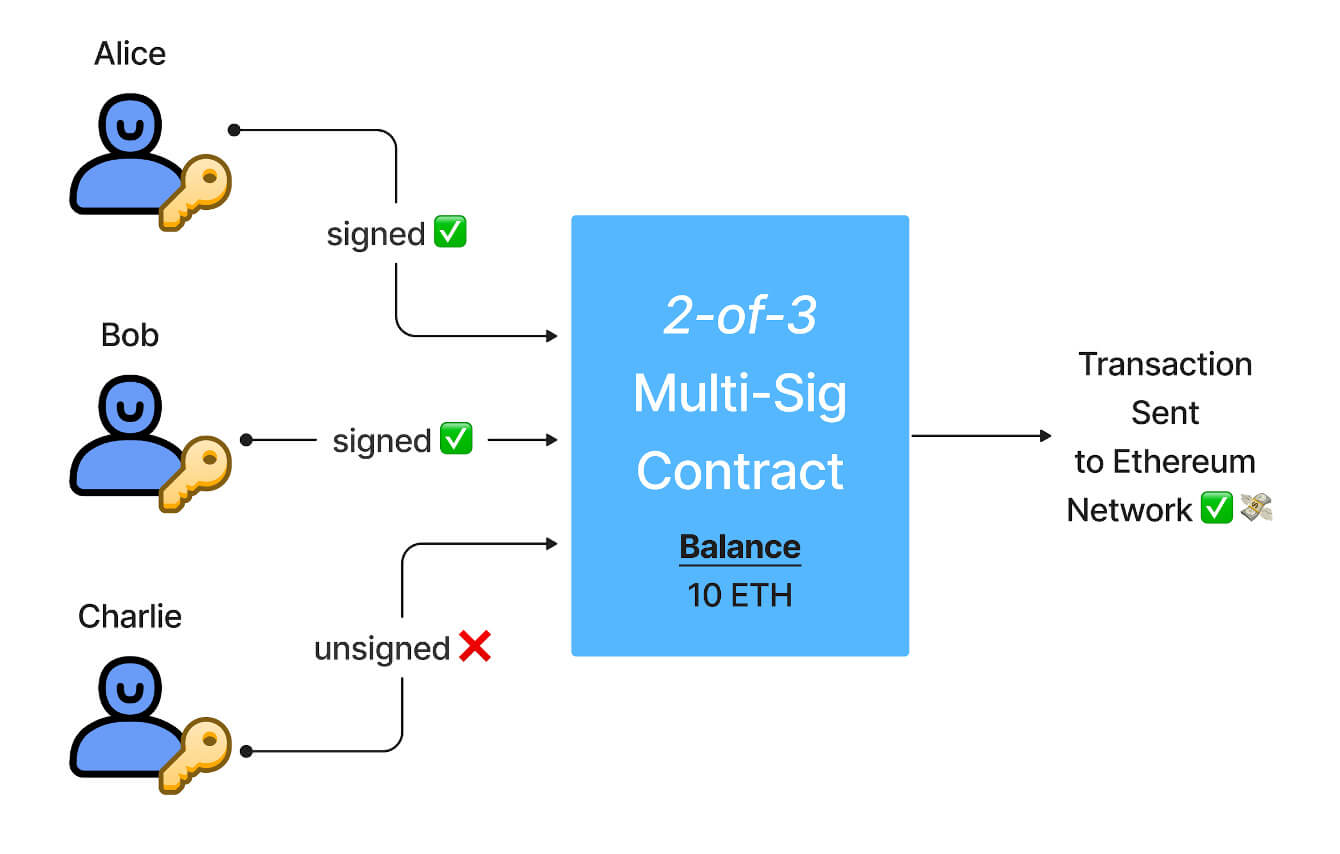
Multi-sig Withdrawal Approval in the context of BTC CEX is a native protocol feature that requires large withdrawals to be authorized by multiple admin keys. This approach eliminates a "single point of control."
Bitcoin Fee Estimation focuses on the Bitcoin mempool: a fixed fee leads to transaction "hanging" with any queue spike. Therefore, in the BTC model, the platform displays dynamic estimates (slow/standard/fast) when confirming a withdrawal. The goal is to allow traders to choose the current market price for speed. This eliminates the risk of funds getting stuck and user complaints about slow withdrawals.
Top White Label Bitcoin Exchange Platform Providers in 2026
Merehead
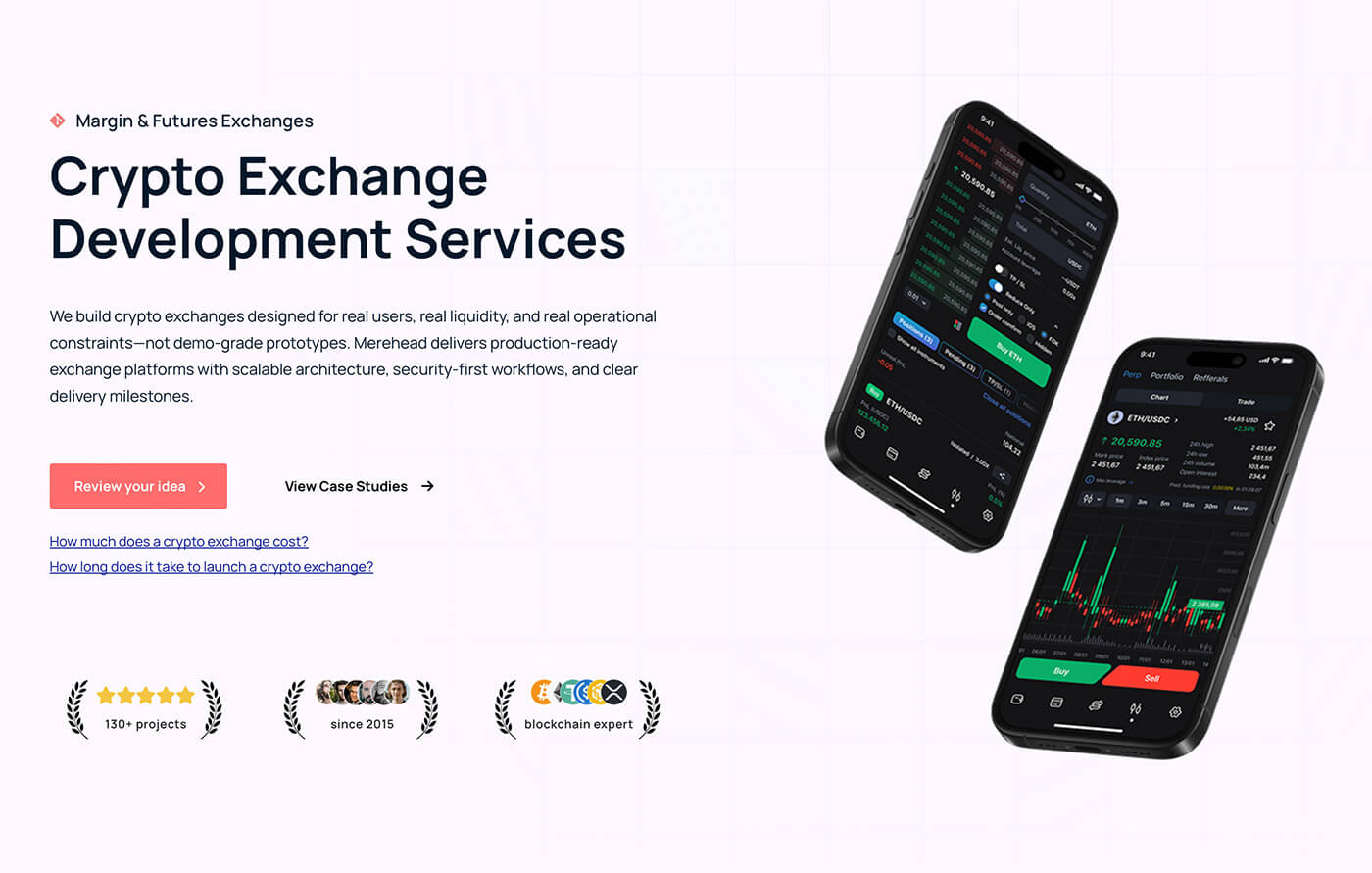
Merehead is an international blockchain company specializing in developing complex fintech ecosystems and custom trading cores, as well as White Label CEX with deep customization.
Important: Unlike most competitors, Merehead transfers full rights to the source code, eliminating vendor dependency after launch and monthly licensing fees.
The provider offers deep Bitcoin-specific features: native nodes, BRC-20 support, and advanced UTXO management. It's suitable for both a quick start with an MVP and large-scale enterprise projects (custom solutions).
Blockchain App Factory
Blockchain App Factory is a large Indian developer known for its white-label solutions and
ready-made crypto exchange scripts for popular exchanges (clones of Uniswap/Binance). It allows for quick deployment with minimal investment.
Important: The company offers the use of template code, which often limits the possibilities for unique branding and deep technical customization for specific needs.
Clarisco
Clarisco is a dedicated blockchain studio focused on multi-chain platforms and scalable white label solutions. Their software effectively handles mempool analytics.
Important: When scaling to very high loads (over 100,000 RPS), the architecture may require significant infrastructure investments. It's important to factor this into your development plan from the early stages.
Openware (OpenDAX)
Openware (OpenDAX) is an American IT company offering a
high-performance open-source core for tech companies and institutional players. It offers a powerful technological foundation, including the powerful OpenFinex engine.
Important: This is an open-source "constructor", and customizing Bitcoin-specific features and security audits will require a strong in-house development team, which increases the overall implementation budget.
Coinsclone
Coinsclone is a technology company focused on rapid development and providing ready-made scripts for crypto startups. It's ideal for validating hypotheses via the Lightning Network and quickly launching projects.
Important: The delivery format (often encrypted code or a strict license binding) may create difficulties if in the future it is necessary to completely change the development team or radically restructure the system architecture.
| Provider |
Target Audience |
Bitcoin-specific features |
Source Code |
How much bitcoin exchange platform cost |
Deployment |
| Merehead |
Fintech, Sratrups & Enterprise |
UTXO Optimization, Native Nodes, BRC-20, SegWit |
Full Code Ownership |
$20K (MVP) - $80K+ (custom Bitcoin infrastructure) |
4-8 weeks |
| Blockchain App Factory |
Budget Startups |
SegWit, Taproot, Clone Scripts |
Optional License |
$13K – $35K |
2-4 weeks |
| Openware |
Tech Teams |
OpenDAX Cloud, Liquidity Ads |
Open Source |
$80K - $200K+ (implementation costs are taken into account, since working with an open-source kernel requires an in-house team of engineers). |
3-6 months |
| Clarisco |
Growth Startups |
Mempool Analytics, Multi-chain, hot and cold storage Bitcoin |
Under License |
$15K - $80K |
3-5 weeks |
| Coinsclone |
Fast MVP Launch |
Lightning Network, 2FA/Multi-sig |
Encrypted/License |
$10K - $40K |
1-2 weeks |
Important: “Buying bitcoin exchange software” does not always mean getting full rights to CEX. It's crucial to pay attention to the ownership model. Popular options include a hosted SaaS solution or full source code delivery.
Most providers operate on a subscription model (SaaS). This means the exchange is deployed on their servers. The advantage is that this allows for faster launch. However, the main disadvantage is that it creates a critical dependency on the vendor (vendor lock-in). The client doesn't own the intellectual property and cannot make changes to the core system.
Merehead is fundamentally different in that it transfers the complete source code to the client. After the project is handed over, the client gains complete autonomy:
- no monthly license fees;
- the ability to conduct independent security audits;
- the ability to scale the infrastructure on your own without the developer's approval.
How to Launch a White Label Bitcoin Exchange Platform – Step by Step
Successful Bitcoin exchange development in 2026 requires starting with strategic design: selecting an ownership architecture, defining a custody model, and launching the licensing process. Mistakes in sequencing, such as developing software before regulatory requirements or choosing a closed SaaS stack, will necessitate a complete API overhaul, a change of AML provider, and a database migration.
Such fixes cost $30,000-$100,000 in additional expenses and delay the project for 4-8 months. Our development team recommends the following steps:
- Step 1 – Choose an exchange model: CEX, non-custodial, hybrid, or Lightning-first. This choice determines the legal risks and technical stack. Non-custodial models (users retain keys) reduce regulatory burdens because the exchange doesn't store other people's funds. Lightning-first models, however, benefit from instant micropayments. Keep in mind that a hybrid model, which uses hot/cold wallet separation, requires complex authorization logic but offers the following advantages: 95%+ of funds are stored offline in a cold, hack-proof environment, while the hot wallet ensures instant payouts. This allows for a balance between institutional security and service speed.
- Step 2 – Determine your jurisdiction and begin licensing (VASP, MSB, or MiCA). Begin legal preparations immediately: obtaining a license and opening bank accounts for BTC/fiat takes 3 to 6 months. In 2026, the MiCA standard in the EU requires strict reporting, and a VARA license in Dubai opens access to global capital. Having a license directly influences the choice of payment gateways.
Our recommendation: for a quick start, consider offshore licenses (Seychelles, St. Vincent), as they have minimal capital requirements and can be launched in 4-6 weeks.
However, for reputation and fiat, Poland or Lithuania (VASP) are better options for entry into the EU; VARA (UAE) is for working with institutional investors and tax optimization.
- Step 3 – Choose a white-label provider with a focus on source code ownership. Evaluate developers based on their native UTXO architecture and full nodes, avoiding those that only work through third-party APIs (e.g., BitGo). It's crucial to obtain full source code, like Merehead, to eliminate monthly fees and vendor dependency. Keep in mind that if a provider doesn't support RBF (Replace-by-Fee), the exchange will face the problem of stuck transactions.
- Step 4 – Configure Bitcoin network parameters to manage risks and fees. Set dynamic fee levels based on the mempool state, allowing users to choose between speed and cost. Set up automatic sweeps (transferring surplus funds) to cold storage and use a multisig Bitcoin wallet to authorize all large transactions. Set a minimum of three network confirmations for deposits: this eliminates the risk of transaction reversals during block rebuilding and ensures that funds are permanently committed to the network before being credited.
- Step 5 – Provide liquidity through market makers or aggregators. For tight spreads on BTC/USDT pairs, the new platform requires a market depth of $500,000 to $2 million. Connect to institutional providers like B2C2 or Wintermute via the FIX protocol or API to broadcast their liquidity. Without this, early traders will leave due to massive price slippage, making trading unprofitable.
- Step 6 – Conduct a security audit and launch Soft Launch with limits. Check the multi-sig signature logic and the anomalous withdrawal monitoring system (audit budget: $15,000-$40,000). Begin with deposit limits (e.g., up to $5,000) and manual payout confirmation. Pay special attention to setting Bitcoin confirmation times: in the first 30 days, it is recommended to wait for more network confirmations than usual. This will help identify hidden architectural bugs and protect your capital from blockchain attacks.
White Label Bitcoin Exchange Platform Cost in 2026
The
crypto exchange development cost directly depends on the technical complexity and the chosen code ownership type. Options:
- White-label MVP (BTC only) is the cheapest option, which is relevant if the goal is to quickly capture a narrow niche or test marketing hypotheses with minimal investment;
- Bitcoin exchange software white label with The Lightning Network is necessary if the main target audience is mass users and micropayments, where instant transaction speeds with near-zero fees are important.
- Custom Bitcoin exchanges are the choice of companies seeking full stack control, support for specific protocols, and a unique user experience.
- The Enterprise Bitcoin platform is designed for institutional players who require the highest level of compliance, custodian integration, and sophisticated distributed storage systems.
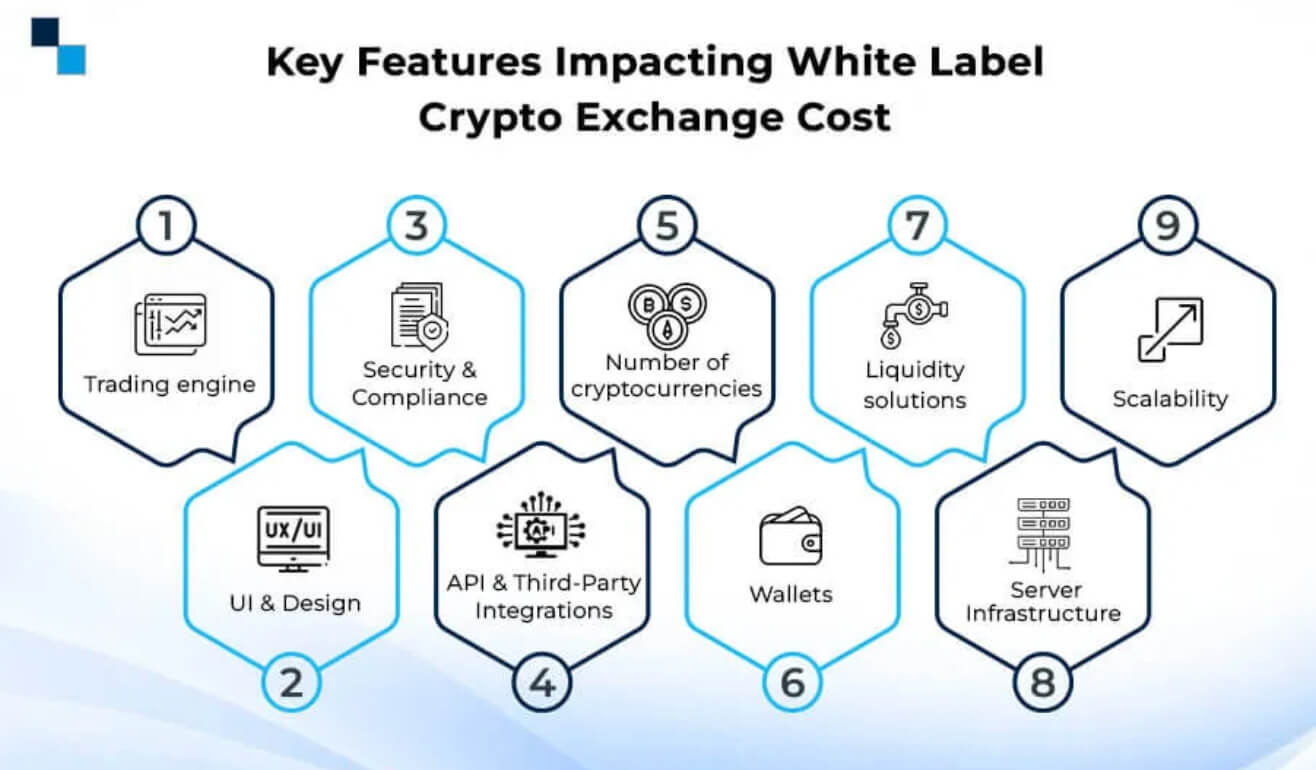
The table below shows the current price range for launching a Bitcoin exchange, depending on the solution you choose:
| Solution Type |
Cost Range |
Timeline |
Bitcoin-specific inclusions |
| White-label MVP (BTC only) |
$20,000-$50,000 |
4-8 weeks |
UTXO wallets, basic node integration, KYC |
| White-label with Lightning Network |
$40,000-$80,000 |
6-12 weeks |
+ Lightning node, channel management |
| Custom Bitcoin exchange (full) |
$80,000-$180,000 |
4-6 months |
+ BRC-20, Taproot, custom fee engine |
| Enterprise Bitcoin platform |
$150,000-$400,000+ |
6-12 months |
+ Institutional custody, multi-sig, compliance |
One expense that's consistently underestimated in Bitcoin white label exchange projects is Bitcoin node infrastructure. Running a full Bitcoin node requires a dedicated server with over 600 GB of storage for the entire blockchain, a stable 24/7 connection, and ongoing maintenance.
Important: Providers using third-party Bitcoin API services (BlockCypher or similar services, such as BlockCypher) instead of their own node create a dependency that becomes a problem when scaling. API rate limits during periods of high trading volumes cause withdrawal delays, which undermines user trust.
At Merehead, we enable the installation of our own Bitcoin full nodes by default in every project. This ensures stable transaction processing even during peak network loads.
White Label vs Custom Bitcoin Exchange Development
Both development models are effective, but the choice depends on the business goal. White label is the best option for quickly testing hypotheses and launching within a tight timeframe with a minimal budget. Custom development is necessary when a project requires technological independence, unique mechanics, and the ability to scale without restrictions from a third-party provider.
| Factor |
White Label Bitcoin Exchange |
Custom Bitcoin Development |
| Time to launch |
4-10 weeks |
4-9 months |
| Cost |
$20,000-$80,000 |
$80,000-$400,000+ |
| Bitcoin node |
Shared or configured |
Dedicated, custom RPC |
| UTXO management |
Standard configuration |
Custom optimization (consolidation of small balances, batch processing, etc.) |
| Lightning Network |
Add-on module |
Custom implementation (channel architecture, auto-balancing, etc.) |
| BRC-20 support |
Available on request |
Fully custom (indexation, atomic swaps, etc.) |
| Source code ownership |
Depends on provider |
Always full ownership |
What do founders choose more often: White Label or Custom Bitcoin Development? Most founders in 2026 start with a ready-made solution to test product-market fit, and then, as they scale, migrate individual components (trading core, wallet architecture) to custom development.
Merehead supports both models and can migrate white-label installations to custom architectures without completely redesigning the system.
Conclusion
To launch a Bitcoin exchange profitably, it's important to focus on three aspects. First, native Bitcoin infrastructure is essential: native full nodes and optimized UTXO inputs. Second, parallel licensing: legal preparation should begin simultaneously with development to ensure the software doesn't sit idle after it's ready. Third, liquidity is a critical issue during the first week, which can be addressed by setting up market making even before release. Choose a provider focused on BTC CEX that takes these nuances into account in its architecture.
FAQ: White Label Bitcoin Exchange Platform
What is a white label Bitcoin exchange platform?
White Label Bitcoin Exchange is a ready-made software solution for launching an exchange, built on proven core and wallet templates and customizable to your brand. It takes into account the specifics of BTC (UTXO architecture, SegWit/Taproot configuration, full node integration) and allows for flexible customization of the interface and trading parameters.
How much does a white label Bitcoin exchange platform cost?
The average launch price for a White Label Bitcoin Exchange ranges from $20,000 (White-label MVP (BTC only) to $150,000-400,000 (Enterprise Bitcoin platform).
What is the difference between a Bitcoin exchange and a crypto exchange?
The White Label Bitcoin Exchange Platform features deep UTXO model integration for fee control, dedicated node infrastructure for independence from intermediaries, Lightning Network support for fast transactions, and a Multi-sig and Taproot architecture for security specifically on the Bitcoin network.
Does a white label Bitcoin exchange support Lightning Network?
This is an optional module, as it requires a separate liquidity setup, but in 2026, its presence in the Bitcoin Exchange White Label is critical: without Lightning, the exchange loses out to competitors due to high fees and slow transactions.
How long does it take to launch a white label Bitcoin exchange?
The launch of a White Label Bitcoin Exchange takes, on average, 4 to 10 weeks.
Is a white label Bitcoin exchange platform legal?
Legality depends on the jurisdiction where you operate. In the EU, Bitcoin exchanges must register as VASPs under MiCA. In the US, operating requires an MSB license from FinCEN plus state-level Money Transmitter Licenses. Offshore jurisdictions like Seychelles or St. Vincent offer faster licensing with minimal capital requirements. A white label provider delivers the technical infrastructure — legal compliance and licensing remain the operator's responsibility.
What is the difference between a white label Bitcoin exchange and a Bitcoin exchange script?
A Bitcoin exchange script is a standalone codebase — typically a clone of an existing exchange — sold as a one-time purchase with limited support. A white label Bitcoin exchange platform is a modular, production-tested system with ongoing vendor support, compliance updates, and customization depth. Scripts are cheaper ($3K–$15K) but carry higher technical debt and security risk; white label solutions cost more but provide a faster, safer path to a production-ready product.