
Dubai has turned into one of the hottest destinations for crypto entrepreneurs. Over the past few years, the city has gone from flashy real estate and luxury shopping to something bigger — a global hub for digital assets. With forward-thinking regulations through VARA (Virtual Assets Regulatory Authority), specialized crypto-friendly free zones like DMCC and DIFC, and a government that openly supports blockchain innovation, Dubai is now on the shortlist for anyone serious about launching a crypto venture.
But while the opportunity to start a crypto business in Dubai is huge, the process isn't as simple as just registering a company. You'll need to understand how to get a Dubai crypto license, pick between DMCC crypto license or VARA license Dubai options, secure proper approvals, and set up the technology and compliance systems that make investors feel safe. Done right, you could be running a legally recognized crypto exchange, wallet service, or blockchain company in Dubai within 4-8 weeks — in one of the most tax-friendly jurisdictions on the planet.
This guide walks you through everything you need to know about starting a crypto business in Dubai in 2026: why the city attracts global players like Binance and Crypto.com, what types of Dubai blockchain licenses exist, how much a VARA license costs, step-by-step process to get licensed, and what running a crypto company in Dubai will actually cost you.
Why Dubai Is Becoming the #1 Global Hub for Crypto Business
Starting a crypto business in Dubai in 2026 means operating under Federal Decree Law No. 6 of 2025 — the updated legal framework that governs all virtual asset activity in the emirate. VARA has moved from early-stage licensing to active enforcement: in March 2026, the authority issued a formal warning against KuCoin for serving Dubai residents without authorization. The message is clear — licensed operators get protected market access, while unlicensed competitors get shut out. For founders deciding where to start a crypto business, that enforcement dynamic is as valuable as the tax benefits.
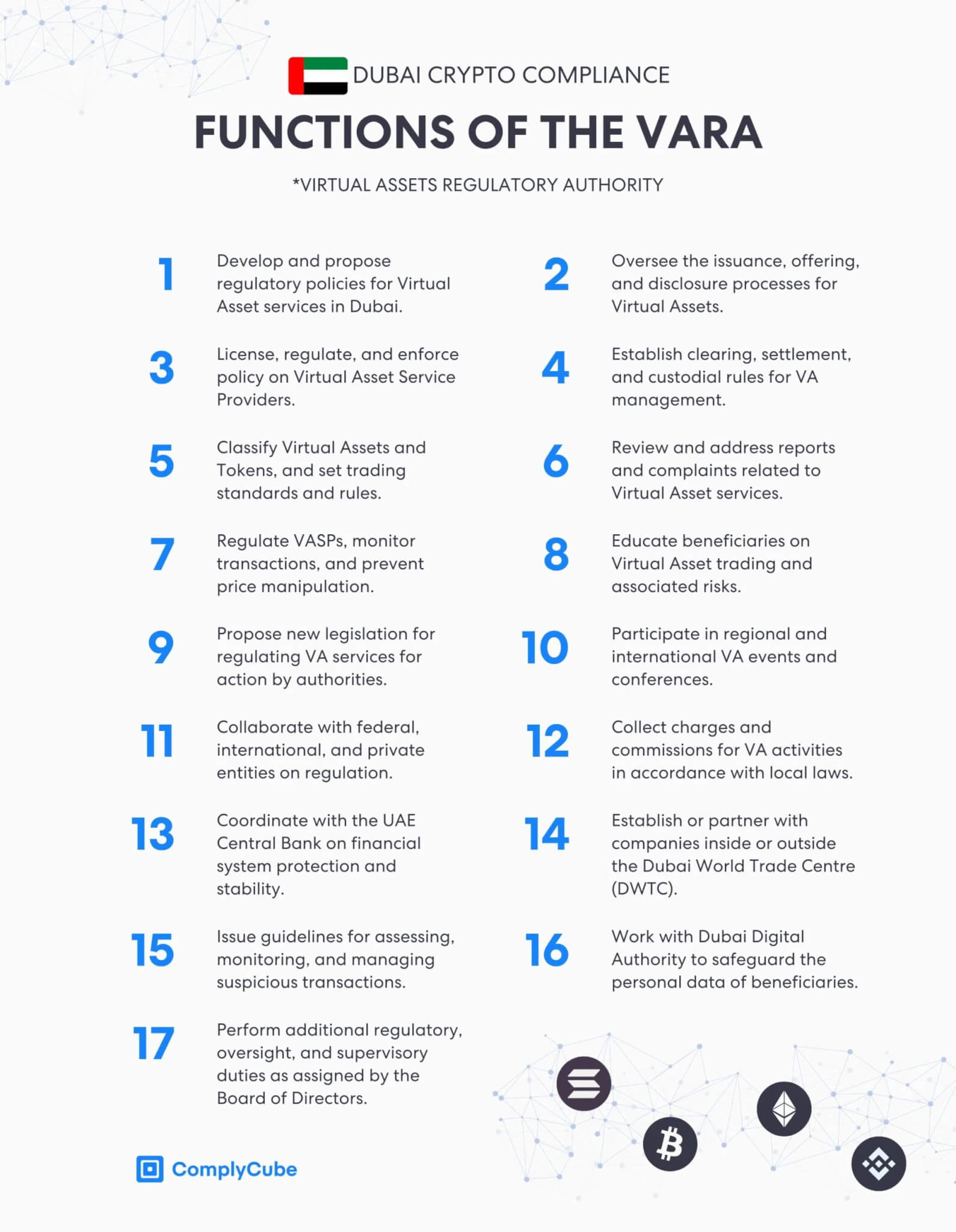
If there's one city that has leaned all the way into blockchain, it's Dubai. The government launched the Dubai Blockchain Strategy back in 2016, aiming to put all public services on the blockchain by 2030. Since then, the city has doubled down with VARA — the first regulator in the Middle East dedicated exclusively to digital assets and crypto licensing in Dubai.
Add to that zero personal income tax, a strategic location between Asia and Europe, and an international reputation as a business-friendly hub, and you get a recipe that keeps pulling crypto founders from London, Singapore, and Silicon Valley to start their crypto business in Dubai.
Big names have already moved in — Binance got their VARA license, Crypto.com set up regional headquarters, Bybit launched operations — because Dubai offers something few other cities can: regulatory clarity for crypto businesses. Instead of fighting vague or hostile rules, entrepreneurs here get a transparent framework through VARA regulations that actually encourages innovation.
For investors and startups looking to establish a crypto company in Dubai, the message is simple: Dubai doesn't just tolerate crypto. It's building an entire ecosystem around it, from Dubai crypto licenses to banking partnerships specifically for digital asset firms.
Types of Crypto Licenses in Dubai: VARA vs Free Zone Options
One of the first real decisions you'll face when starting a crypto business in Dubai is choosing the right license. This isn't just paperwork — it shapes what your crypto company can actually do. Dubai offers several tracks through VARA and free zones like DMCC, DIFC, or IFZA, and each Dubai crypto license type fits a different business model.
VARA License Dubai Categories:
Exchange License ($135,000 - $200,000): Run a full crypto exchange in Dubai with spot, margin, and derivatives trading. Requires $2-5M proof of capital.
Broker-Dealer License ($100,000 - $150,000): Act as intermediary for crypto trades. Popular for OTC desks. Needs $1-2M capital proof.
Custody & Wallet License ($85,000 - $135,000): Store and manage digital assets for clients. Essential for institutional services.
Advisory & Portfolio Management ($50,000 - $85,000): Provide crypto investment advice and manage portfolios. Lower capital requirements.
Free Zone Crypto Licenses:
DMCC Crypto License ($15,000 - $30,000): Good for proprietary trading and basic crypto activities. Processing time: 2-3 weeks.
DIFC Innovation License ($20,000 - $40,000): Perfect for fintech and DeFi projects. Includes testing sandbox access.
IFZA Blockchain License ($12,000 - $25,000): Flexible option for Web3, NFT, and metaverse projects.
The key takeaway? Each Dubai blockchain license comes with different costs, requirements, and timelines. VARA licenses offer full regulatory coverage but cost more. Free zone licenses work great for smaller operations and faster setup. Choosing the wrong one could delay your crypto business launch by months, so match your business model to the right legal framework from the start.
Step-by-Step: How to Start a Crypto Business in Dubai in 2026
Starting a cryptocurrency business in Dubai follows a structured process controlled by VARA and free zone authorities. The steps below reflect the actual sequence — including where most applications stall and how to avoid the most common delays.
Step 1: Define Your Crypto Business Model
Before choosing a license, map your activities precisely. VARA issues category-specific authorizations — and many crypto businesses in Dubai require multiple licenses if they combine activities. An exchange that also offers custody needs both an Exchange License and a Custody License. A platform that advises clients on portfolio allocation needs the Advisory License on top.
Define: what services you offer, who your customers are (retail or institutional), whether you hold client assets, and which blockchains or tokens you support. This activity map becomes the backbone of your business plan and determines which VARA rulebooks apply to your operation.
Step 2: Choose Between VARA or Free Zone Licensing
This is the most consequential decision when you start a crypto business in Dubai. VARA licenses cover all of mainland Dubai and most free zones — they're required for any business serving retail customers or operating an exchange with public access. Free zone licenses (DMCC, DIFC, IFZA) work for narrower activities: blockchain development, Web3 consulting, NFT projects, or operations that don't directly handle client assets at scale.
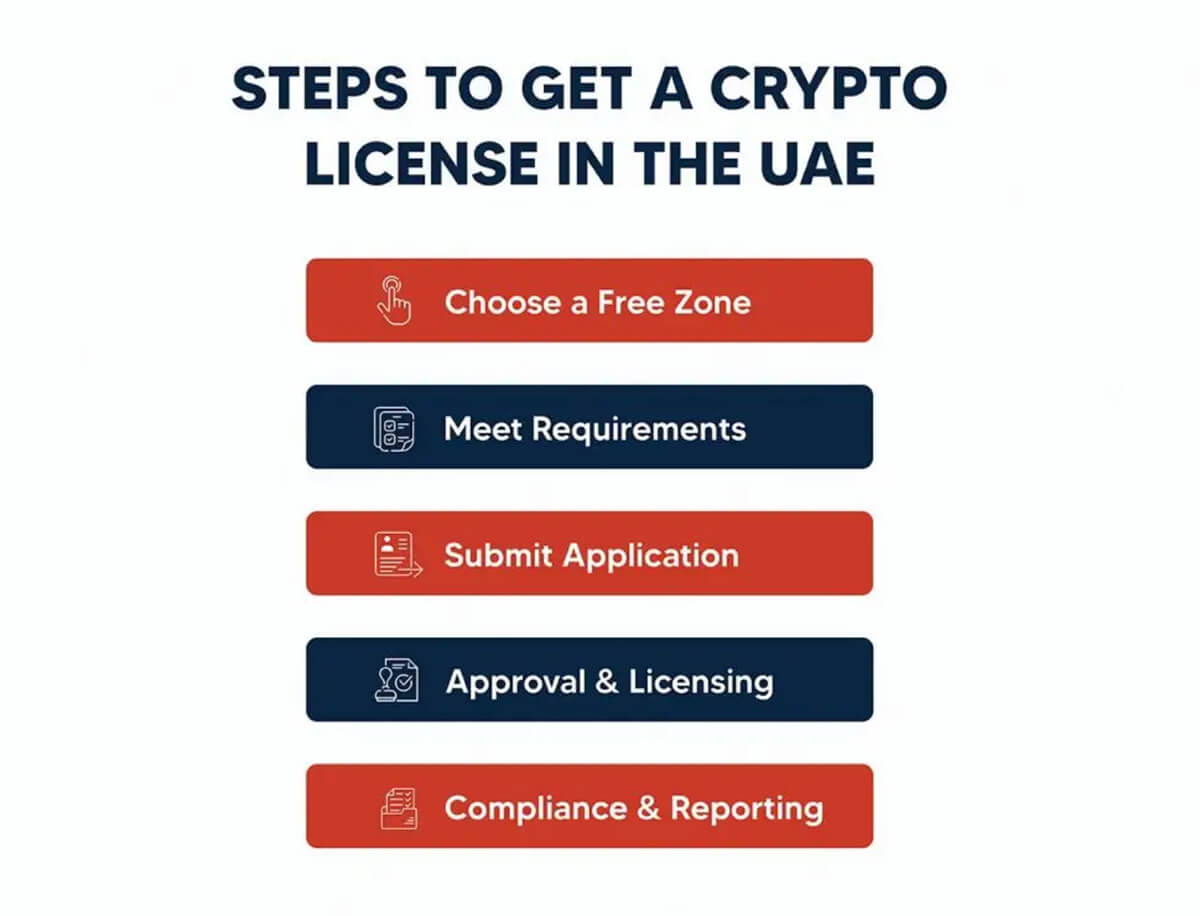
The practical rule: if you're building a product that regular users will trade on, you need VARA. If you're building infrastructure, providing consulting, or operating B2B-only with professional counterparties, a free zone license may suffice — and at a fraction of the cost and timeline.
Step 3: Prepare Your Documentation Package
Documentation quality is the primary reason VARA applications get rejected or delayed. VARA's review team reads hundreds of applications — the ones that move quickly are detailed, internally consistent, and demonstrate that the founding team understands what it's actually building.
Required for all VARA applications:
- Business plan with 3-year financial projections: revenue model, user acquisition assumptions, cost structure
- AML/KYC procedures manual: specific to your activity type; VARA's AML Rulebook sets the minimum standard
- Proof of capital: $50K minimum for free zones, $500K–$2M for VARA depending on activity
- Technical architecture document: mandatory for exchange and custody applications
- Compliance officer appointment: must be a named individual with verifiable credentials, not a placeholder
- UBO declarations: all beneficial owners with 10%+ must be disclosed and screened
Step 4: Set Up Your Corporate Structure
For a VARA-licensed crypto company in Dubai, you need a UAE legal entity — typically a Free Zone Company (FZC) or Limited Liability Company (LLC). The entity must have a physical registered address in Dubai (not just a virtual office for VARA applications), a UAE bank account, and local directors or a local compliance function.
Most founders use the DMCC Free Zone for company formation even when applying for a VARA license — DMCC and VARA work in close coordination. The crypto business setup in Dubai timeline at this stage: 2–4 weeks for company incorporation, then parallel VARA application submission.
Step 5: Submit Your VARA License Application
VARA's licensing process follows a two-step structure. First: the Initial Disclosure Questionnaire (IDQ) submitted through the Department of Economy and Tourism or the relevant free zone. On approval, you receive Approval to Incorporate (ATI) — this authorizes company formation but not virtual asset activities. Second: the full VARA license applicationpackage, submitted after incorporation.
| License Type | Processing Time | Key Requirement |
| VARA Exchange License | 3–6 months | $2M+ capital proof, full technical audit |
| VARA Broker-Dealer License | 3–5 months | $1–2M capital, AML systems |
| VARA Custody License | 3–5 months | Segregated wallet architecture |
| VARA Advisory License | 2–4 months | Lowest capital threshold |
| DMCC Crypto Trading License | 2–3 weeks | Simpler compliance, limited scope |
| DIFC Innovation License | 4–6 weeks | Sandbox access, fintech/DeFi focus |
Step 6: Build Banking & Compliance Infrastructure
Banking is the hardest operational challenge when you start a crypto business in Dubai. Only 4–5 banks currently service crypto businesses reliably: Emirates NBD, Mashreq, RAK Bank, ADIB, and a small number of international banks with UAE presence. Expect 3–6 months for account approval, $50K–$200K in minimum deposit requirements, and detailed due diligence on your VARA license, AML policies, and ultimate beneficial owners.
Compliance infrastructure that must be in place before launch: transaction monitoring system (Chainalysis, Elliptic, or equivalent), OFAC and UN sanctions screening, Travel Rule compliance for transfers over $1,000, and dedicated compliance officer with documented VARA reporting workflow. VARA conducts monthly reporting requirements and quarterly audits — build for this from day one, not as an afterthought.
Step 7: Launch Your Crypto Operations
With banking and compliance in place, your Dubai crypto business can go live. VARA requires a phased launch approach for exchange operators: start with limited user access, demonstrate stable operations and clean transaction reporting for 90 days, then apply for full public access. This guarded launch model reduces the risk of compliance failures at scale.
Key milestones in the first 90 days: onboard first 50–100 clients under full KYC, demonstrate transaction monitoring is functioning correctly, submit first monthly VARA report, and begin building the market-making relationships that will provide exchange liquidity. For founders partnering with crypto development companies like Merehead, the technical platform can be ready in parallel with licensing — so your go-live date is determined by the regulator, not the code.
Real Costs of Starting a Crypto Business in Dubai (2026 Pricing)
Launching a crypto company in Dubai requires serious capital, but the investment varies dramatically based on your business model and chosen license type.
Small-Scale Crypto Business (Trading, Advisory, Blockchain Development):
- Free zone company setup: $8,000 - $15,000
- Crypto trading license (DMCC/IFZA): $12,000 - $25,000
- Office and visa costs: $10,000 - $20,000/year
- Banking and compliance setup: $5,000 - $10,000
- Total initial investment: $35,000 - $70,000
Mid-Tier Crypto Operations (OTC, Brokerage, Wallet Services):
- VARA provisional license: $50,000 - $85,000
- Company formation and legal: $25,000 - $40,000
- Compliance systems and audits: $30,000 - $50,000
- Working capital requirement: $100,000 - $500,000
- Total budget needed: $200,000 - $700,000
Full Crypto Exchange in Dubai:
- VARA full exchange license: $135,000 - $200,000
- Legal and consultancy fees: $50,000 - $100,000
- Technology infrastructure: $200,000 - $500,000
- Proof of capital: $2,000,000 - $5,000,000
- First-year operations: $500,000 - $1,000,000
- Total required: $3,000,000 - $7,000,000
Hidden costs many overlook when starting crypto business in Dubai:
- Ongoing VARA compliance audits ($20,000 - $40,000/year)
- Professional indemnity insurance ($15,000 - $30,000/year)
- Local sponsor fees for mainland licenses ($10,000 - $20,000/year)
- Banking relationship deposits ($50,000 - $200,000 locked)
Why Global Crypto Companies Choose Dubai: Beyond Just Taxes
Dubai wasn't always on the radar for crypto founders. A decade ago, the city was known mostly as a hub for trade, real estate, and tourism. But step by step, it built a reputation for something else: a place where digital assets aren't treated as a threat, but as an industry worth regulating and supporting through proper crypto licensing.
One of the big reasons crypto businesses flock to Dubai is regulatory clarity. Instead of the vague laws you see in the US or parts of Europe, Dubai set up VARA to issue clear crypto licenses, define what's legal, and give businesses a framework they can actually work with. For startups, that removes a huge layer of uncertainty about operating a crypto company legally.
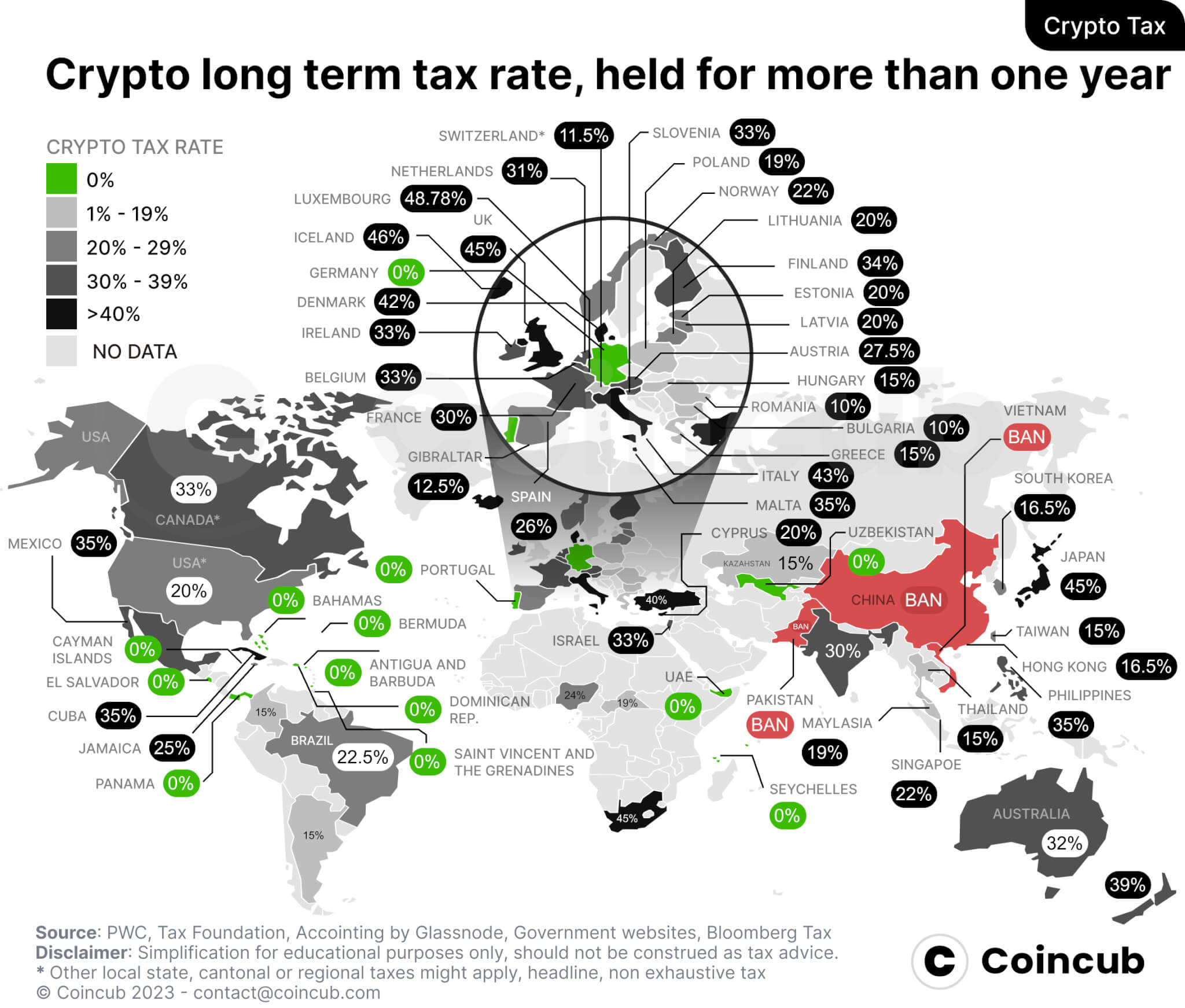
Another factor pulling crypto companies to Dubai is the financial advantage. No personal income tax, 9% corporate tax (with exemptions for free zones), and crypto activities that can operate with fewer financial burdens than in other countries. For a small team building a crypto business, that can be the difference between burning out in the first year and having enough capital to expand.
The city's location also matters for crypto businesses targeting global markets. From Dubai, you can fly to Mumbai, London, or Nairobi in under 8 hours. That makes it easier for exchanges, wallets, and payment startups to build partnerships across Europe, Asia, and Africa simultaneously.
And then there's the community. Over 600 crypto and blockchain companies now operate in Dubai. Developers, compliance lawyers, designers, and investors from all over the world are moving here. Events like Dubai Crypto Expo, TOKEN2049, and Future Blockchain Summit run throughout the year. Instead of crypto being seen as a fringe activity, it's openly encouraged through government initiatives and VARA licensing programs.
Business Models That Thrive with Dubai Crypto Licenses
Dubai's regulatory framework through VARA covers eight distinct virtual asset activities — which means almost any crypto business model can be legally structured and launched here. The five models that generate the most traction in 2026:
Crypto Exchange Operations
Running a crypto exchange in Dubai under a VARA Exchange License is the highest-revenue model and the most demanding to license. Licensed exchanges can offer crypto-to-crypto and crypto-to-fiat trading to retail and institutional clients. Revenue comes from trading fees (0.1–0.5% per trade), withdrawal fees, and token listing fees ($10K–$200K per project).
At $10M monthly trading volume with 0.2% average fee, a licensed Dubai exchange generates approximately $20,000/month in fee revenue — before listing income and institutional services. VARA's enforcement against unlicensed foreign platforms creates a structural advantage for licensed operators: KuCoin's March 2026 warning means their Dubai user base is now actively looking for licensed alternatives.
Custody & Institutional Services
The crypto custody business is growing faster than exchanges in Dubai as institutional capital enters the market. A VARA Custody License allows you to hold digital assets on behalf of clients in segregated wallets, offer staking services under VARA's 'Staking from Custody' framework, and serve as custodian for tokenized real-world assets (RWAs). Capital requirement: $500K–$1M. Primary clients: family offices, hedge funds, and token issuers requiring regulated custody.
Payment & Remittance Solutions
Dubai processes enormous cross-border payment flows between Asia, Africa, and Europe — and stablecoin-based payment infrastructure is increasingly preferred over traditional correspondent banking. A crypto payment business in Dubai can be licensed under VARA's Broker-Dealer or Exchange License depending on whether you're facilitating conversions or pure transfers. The UAE's AE Coin (dirham-backed stablecoin, launch expected 2026) will expand the addressable market significantly for payment operators already licensed in the jurisdiction.
Web3 & Metaverse Projects
NFT marketplaces, DeFi protocols, GameFi platforms, and tokenization projects that don't hold client assets directly can often operate under a DMCC or IFZA blockchain license in Dubai without the full VARA licensing burden. This makes Dubai one of the most accessible jurisdictions for Web3 founders: $12,000–$25,000 for a free zone setup versus $135,000–$200,000 for a full VARA exchange license. The trade-off is scope — free zone licenses limit what activities you can offer to end users.
Crypto Consulting & Infrastructure
Blockchain development firms, crypto consulting companies, and technical infrastructure providers can operate in Dubai under a standard IFZA or DMCC technology license — no VARA license required if you're not handling client assets directly. This is the lightest-weight entry point: $12,000–$30,000 setup cost, 2–4 weeks to incorporate, and access to Dubai's crypto ecosystem for business development. Merehead operates its blockchain development practice from this model — serving exchange and DeFi clients globally while maintaining UAE business presence for client relationships.
In practice, many Dubai crypto businesses mix models. An exchange might add custody services. A payment company could launch NFT capabilities. Dubai's regulatory framework through VARA and free zones is broad enough to let founders innovate, as long as they maintain compliance and security standards.
 Yuri MusienkoBusiness developer, Merehead
Challenges of Running a Crypto Business in Dubai
Dubai looks like the promised land for crypto, but it isn't without obstacles. Many startups arrive with big plans only to hit walls they didn't expect when setting up their crypto company.
The first hurdle is banking for crypto businesses. While Dubai is becoming friendlier to crypto, not every bank is ready to open accounts for digital asset companies. Expect extra paperwork, 3-6 month approval times, higher deposit requirements ($50K-200K), and detailed questions about your compliance processes. Only 4-5 banks currently accept crypto businesses reliably.
Then there's the issue of capital requirements for serious licenses. For advisory or consultancy, the bar is low. But if you're aiming to run a full exchange with a VARA license, regulators require proof of $2-5M in reserves. Underestimating this is why 40% of crypto license applications fail.
Competition is another factor. Dubai's welcoming stance means global players are already here — Binance, OKX, Crypto.com all have VARA licenses. Breaking into that space requires not just a Dubai crypto license but also a clear niche and serious marketing budget (typically $50K-100K/month for exchanges).
And finally, ongoing regulatory compliance. VARA may be supportive, but it's also thorough. Monthly reporting, quarterly audits, and strict KYC/AML checks are mandatory. The penalty for non-compliance? Fines start at $30,000 and can result in license revocation.
The bottom line: Dubai offers huge opportunities for crypto businesses, but only for teams prepared to play by the rules, budget realistically, and build long-term trust. Those who treat it like a quick money grab usually don't last a year.
Conclusion: Is 2026 the Right Time for Your Dubai Crypto Business?
Few places have gone all-in on digital assets the way Dubai has. While some governments hesitate or push back, this city has opened the door, set clear crypto licensing rules through VARA, and invited entrepreneurs to step through. That combination — regulatory clarity, zero income tax, and a global network — explains why over 600 crypto companies already call Dubai home.
Still, getting a Dubai crypto license doesn't guarantee success. A license alone won't bring users or investors. What does? A business model that actually solves problems, compliance systems regulators can trust, and a team willing to play the long game in one of the world's most competitive crypto markets.
For founders who get those pieces right, the payoff is huge: access to one of the fastest-growing crypto hubs on the planet, a gateway to $3 trillion in regional wealth, and a regulatory framework that actually wants you to succeed.
If you've been waiting for the "right time" to start your crypto business in Dubai, 2026 might be it. The infrastructure is ready, the rules are clear, and early movers still have room to establish themselves before the market gets saturated. Dubai isn't just watching the crypto future unfold — it's building it. The only question left is whether you'll be part of it.
FAQ: How to Start a Crypto Business in Dubai
It depends on your activity. Any business that provides virtual asset services to the public in Dubai — exchange, custody, brokerage, advisory, lending — requires a VARA license. Businesses focused on blockchain development, Web3 consulting, or B2B infrastructure without direct client asset handling can often operate under a free zone technology license (DMCC or IFZA) without VARA authorization. When in doubt, request a preliminary consultation with VARA through their official portal — they provide activity classification guidance before you file a full application.
The cost to start a crypto business in Dubai ranges from $35,000–$70,000 for a small-scale free zone setup (trading, advisory, blockchain development) to $3M–$7M+ for a full crypto exchange with VARA Exchange License, technology infrastructure, and required proof of capital. Mid-tier operations (OTC desk, brokerage, wallet services) require $200,000–$700,000 in total initial budget. The single largest cost for exchange operators is the $2M–$5M capital reserve VARA requires — this is locked, not spent on operations.
Timeline depends on the license type. A DMCC crypto trading license takes 2–3 weeks. A DIFC Innovation License takes 4–6 weeks. Full VARA licenses — Exchange, Broker-Dealer, Custody — take 3–6 months of processing, with multiple rounds of documentation review. The biggest delay factor is documentation quality at submission: incomplete business plans or AML procedures trigger back-and-forth that can add 2–4 months. Working with a compliance consultant familiar with VARA's specific requirements significantly reduces this risk. Total timeline from decision to launch: 6–12 months for a fully licensed crypto business in Dubai.
Yes — Dubai allows 100% foreign ownership for companies in most free zones, including DMCC, DIFC, and IFZA. There's no requirement for a UAE national partner or sponsor for free zone entities. For mainland VARA-licensed companies, the same 100% foreign ownership applies under UAE's 2021 FDI law reforms. You'll need a UAE-registered legal entity, a physical office address in Dubai (virtual offices are not accepted for full VARA applications), and at least one compliance officer who is either resident or regularly present in Dubai. Starting a crypto company in Dubai as a non-resident is fully viable — and common, given the global composition of Dubai's crypto community.
A VARA license is issued by the Virtual Assets Regulatory Authority and covers the full scope of virtual asset services in Dubai — including retail-facing exchanges, custody, and OTC desks. It comes with higher capital requirements, longer processing times, and mandatory ongoing compliance reporting. A DMCC crypto license is issued by the Dubai Multi Commodities Centre free zone and covers a narrower set of activities — primarily crypto trading, blockchain consulting, and non-custodial services. DMCC is faster (2–3 weeks), cheaper ($12,000–$25,000), and more appropriate for crypto businesses in Dubai that don't handle client assets at scale. Many founders start with DMCC to get operational, then add VARA licensing as they grow.