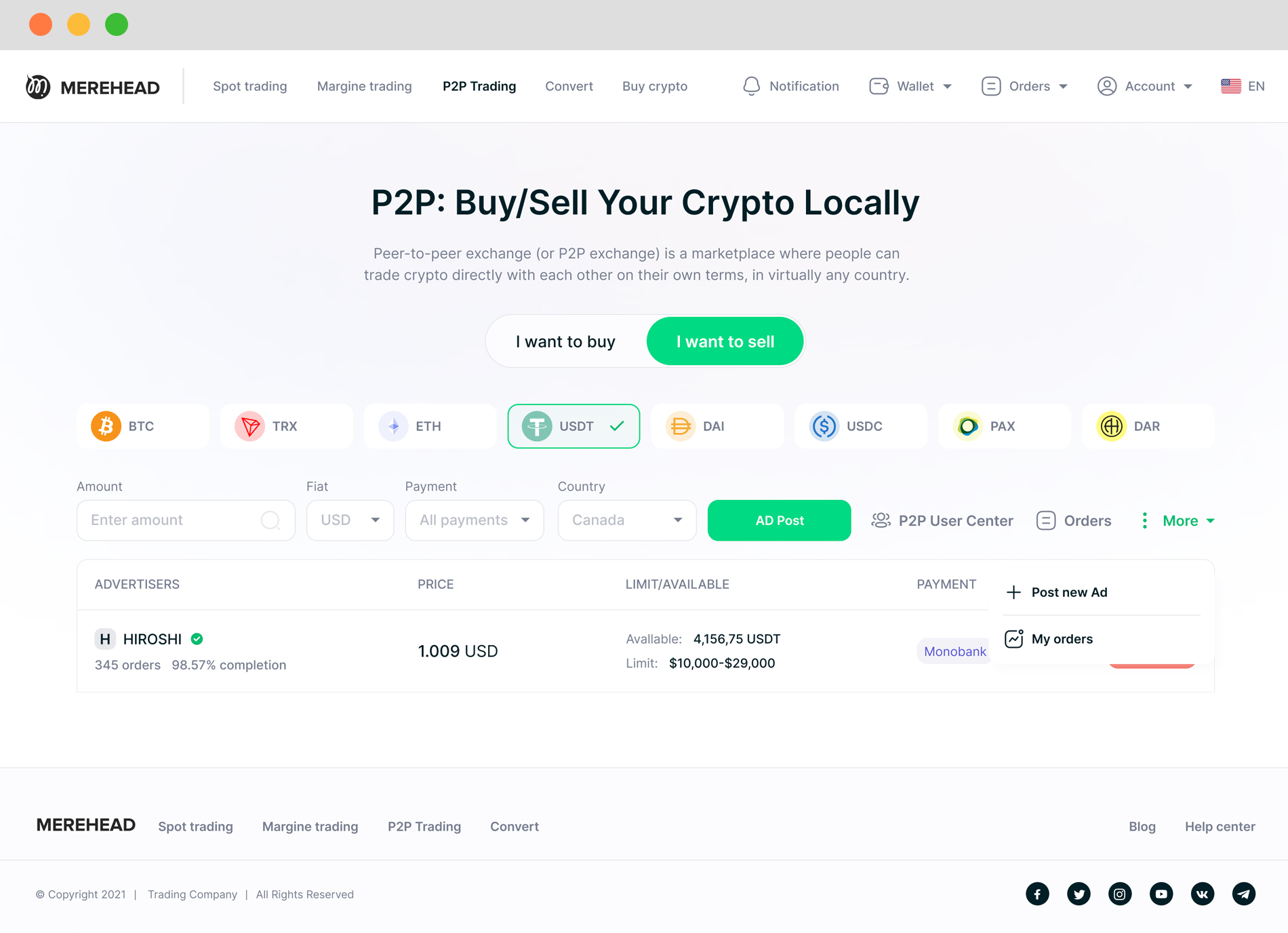
Most guides on white label P2P lending software describe what these platforms do. This one focuses on what they actually cost to get right — architecturally, from a compliance standpoint, and in terms of realistic deployment timelines. The difference matters because the gap between a demo-ready platform and a production-ready one is where projects fail.
We've built and deployed multi-role fintech platforms, P2P trading and lending modules, and white-label exchange products across multiple client engagements. What follows is drawn directly from that work: the architectural decisions that aren't obvious until you're mid-build, the compliance requirements that can't be deferred, and the deployment metrics that separate realistic timelines from sales promises.
What "White Label" Actually Means for a P2P Lending Platform
White label in the lending context is not a theme swap on top of a generic SaaS product. At the infrastructure level, it means deploying a production-tested codebase — with loan origination logic,
borrower/lender matching, escrow mechanics, dispute resolution workflows, and compliance flows — under your brand identity, with your payment gateway credentials, KYC provider API keys, and domain.
The distinction matters because the core risk engine, KYC state machines, and fund custody logic are not components you want to build from scratch for your first deployment. These are the components where untested behavior under edge cases — a failed KYC webhook, an AML-triggered freeze mid-transaction, a dispute escalation under time pressure — can create real financial and regulatory exposure.
The reuse model cuts development cost by 60–80% compared to building from scratch. But what clients are actually buying isn't the code — it's the production-tested logic that has already encountered edge cases in live money environments: failed webhook payloads, dual-state KYC machines, fund freeze mechanics that don't break concurrent transactions. That's the real asset being transferred.
The practical implication: when evaluating white label P2P lending solutions, the right questions are about what has already been deployed in production — not about what can be built. A platform that exists as a demo is not white label software; it's a proposal.
Core Architecture: Multi-Role Design and the Decisions That Define It
A P2P lending platform has three distinct actor types that must coexist in a single product without UX collision or permission leakage: the borrower (submits loan requests, monitors repayment schedule), the lender (browses offers, funds positions, tracks return on deployed capital), and the platform operator (configures limits, resolves disputes, manages compliance triggers and admin overrides).
Each role requires separate permission sets, separate views into transaction state, and different approval responsibilities on the same underlying transaction object. This is the same multi-actor architecture we implement in B2B payment platforms where the sender creates the transaction, the receiver can track but not initiate, and the agent has approval responsibility without visibility into pricing — and the implementation complexity is comparable.
The key architectural decision that shapes everything downstream is whether lender-to-borrower fund flow passes through a platform-controlled escrow wallet or routes directly between user wallets. The escrow model gives you dispute resolution leverage, AML checkpoints on fund movement, and the ability to freeze mid-transaction without touching either party's personal wallet. The direct model reduces custody liability and simplifies the accounting model but removes your ability to intervene in a disputed transaction before funds move.
In production implementations, this choice affects four distinct system components: your wallet accounting model (escrow requires a separate ledger entry type for "held" funds), your blockchain node integration requirements (escrow requires platform-controlled hot wallet infrastructure), your compliance reporting (custodied funds appear differently in AML reports), and your dispute resolution flow (escrow freeze is one API call; reversing a direct transfer requires a separate repayment transaction). This is not a feature toggle you can change post-launch without significant rework.
The right default for a US-market P2P lending software is escrow. The regulatory expectation — particularly under state money transmission licenses — is that the platform has control and accountability over fund movement. The escrow model makes that accountability technically enforced rather than policy-only.
Wallet Architecture: Account Types and Balance Segregation
P2P lending platforms require balance segregation at the account level, not just at the UI level. A user participating in both lending and borrowing activity needs separate balance contexts for their available lending capital, their committed (escrowed) funds, their pending loan repayment obligations, and their withdrawable earnings — each with different liquidity characteristics and different visibility rules for admin.
In one of our exchange deployments, we implemented a similar multi-context wallet structure — spot balance, margin balance, futures balance, P2P balance, and staking balance — with internal transfer functionality between contexts. The admin panel required a separate frozen balance view, the ability to freeze individual balance types independently (freeze P2P without freezing spot), and manual balance adjustment capability restricted to super-admin with full audit logging of every change: user ID, before/after values, reason code, timestamp, and the admin ID who made the change.
Designing this as a unified wallet system with context-typed sub-accounts — rather than separate wallets per product — is the architecture that allows clean internal transfers, consolidated reporting, and role-based freeze controls without creating reconciliation problems between isolated wallet databases.
Account Tiers and Commission Structures
Production P2P lending platforms need account tier management that drives real behavior — not just a label on a profile. In one of our deployments, we implemented a tier system (Regular, VIP, Gold) with two distinct transition mechanisms: manual assignment by admin (for relationship-based upgrades) and automatic transition based on trading volume thresholds (e.g., account auto-upgrades to VIP when cumulative transaction volume exceeds a defined threshold).
The critical implementation detail: when a tier change occurs, the system must atomically apply the new tier's commission and limit parameters — not on the next login or the next transaction, but immediately. Implementing this as a separate "apply tier parameters" step that runs asynchronously creates race conditions where a freshly upgraded user executes a transaction under the old commission structure. The tier change and parameter application must be a single database transaction.
The P2P Module in Production: What the Full Feature Scope Looks Like
When we scoped the P2P module for a
full exchange platform, the client's initial feature list was three lines. The actual implementation scope was twelve distinct functional components — and that was before dispute resolution and admin tooling.
Based on production implementations, here is what a complete P2P lending/trading module actually contains — as opposed to what's typically described in product demos:
| Component |
User-Facing Functionality |
Admin Functionality |
Key Technical Requirement |
| Offer Creation |
Create offer (amount, rate, term, payment method), set KYC gate |
Approve/reject offers, set global offer parameters |
KYC status check must run at offer placement, not at funding |
| Offer Matching |
Browse active offers, filter by amount/rate/term/payment method |
Monitor active order book, manual override |
Real-time offer status updates via WebSocket |
| Fund Escrow |
Confirm funding, see escrow confirmation |
View escrow positions, force release/freeze |
Atomic: deduct lender balance + create escrow entry in single TX |
| In-Platform Chat |
Counterparty communication within the platform |
Access to full chat history for dispute context |
All communication stored server-side; no external channels |
| Repayment Flow |
Repayment schedule, partial repayment, early repayment |
Repayment history, manual status override |
Grace period timer logic with automatic escalation triggers |
| Dispute Resolution |
Open dispute, upload evidence, see status |
Dispute queue, evidence review, fund release decision |
Escrow funds remain frozen until admin decision is recorded |
| Offer History |
Full history with status, counterparty, amounts, dates |
Platform-wide transaction history with export |
Immutable audit log — no edits to completed records |
| Commission Engine |
See fee at transaction time, fee breakdown |
Set commission by user tier, transaction type, amount range |
Commission must be calculated and displayed pre-confirmation |
| Payment Methods |
Select supported bank/e-wallet for fiat leg |
Add/remove supported payment methods, set per-method limits |
Payment method list must be per-currency, not global |
| User Limits |
See personal limits in profile |
Set global and per-user limits, override for VIP |
Limit enforcement at offer creation AND at funding step |
| Admin Dispute Tools |
— |
Freeze P2P balance independently, add compliance notes, escalate |
P2P freeze must not affect spot/margin/futures balances |
| Notification System |
Offer matched, payment due, dispute opened, decision made |
Broadcast system notifications, configure triggers |
Notification delivery must be confirmed (not fire-and-forget) |
The admin tooling is consistently the most underspecified component in initial project scoping. Building it as an afterthought — bolted onto the user-facing flows after they're complete — costs significantly more than building it in parallel. Admin dispute resolution, in particular, requires access to data structures (escrow state, chat history, KYC status, transaction timeline) that must be designed in from the start for the admin views to be useful.
KYC and AML: The Compliance Layer You Cannot Defer
P2P lending platforms operating in the US market face
Bank Secrecy Act obligations,
FinCEN registration requirements, and — depending on the loan structures offered — potential SEC registration considerations. The technical architecture needs to support compliance from day one, not as a retrofit after launch.
KYC at offer placement, transaction-level AML scoring, and admin-controlled fund freeze are not features to plan for a future sprint. They are the capabilities that determine whether your banking partners, payment processors, and institutional lenders will work with you. A platform that doesn't support AML-triggered escrow freeze is not launchable in the US market — it's a prototype.
Dual-Path KYC: The Architecture Most Platforms Get Wrong
In production implementations, we wire KYC as a dual-path flow with independent state machines per provider — not a single KYC state shared across providers. The reason is that each verification provider (SumSub, Ondato, Persona) has different webhook payload structures, different status values, different retry behavior on network failures, and different event sequences for the same verification outcome. A single KYC state machine that tries to normalize all providers creates subtle bugs where a webhook from Provider A advances the state incorrectly because the field mapping was built for Provider B.
The correct architecture: each provider has its own state machine with its own status transitions. A unified KYC status resolver layer reads from all active state machines and produces the canonical user KYC status that the rest of the platform consumes. When you add or swap a KYC provider, you add a new state machine and update the resolver — existing flows are unaffected.
For US-market lending platforms, KYC must gate offer placement (not just account creation). A user can register and browse offers without KYC. They cannot place or fund an offer until KYC is verified. This is a permission check that must happen server-side at the offer placement API endpoint — not just in the UI — because client-side permission checks are not compliance controls.
KYT: Transaction-Level AML Scoring
KYT (Know Your Transaction) is the component most teams plan to add post-launch. In production, we wire it to every inbound deposit and every significant P2P fund movement: each transaction receives an AML risk score from the scoring engine before the balance is credited or the escrow is released.
When a score exceeds the configured threshold, the system creates an admin review task, freezes the relevant balance, and — critically — does not update the user-facing balance display until a compliance officer clears the transaction. The user sees a "pending" state with a support contact prompt; they do not see a risk score or know their transaction has been flagged. This is different from running a KYC check once at registration and trusting all subsequent activity, which is the most common implementation error.
The forced wallet address rotation mechanic is a related AML capability that production platforms need: when a user's deposit address is flagged by the AML system or manually by a compliance officer, the system automatically generates a new deposit address for that user, retires the flagged address, and notifies the user that their address has been updated for security reasons — without revealing the AML trigger. Any deposits to the retired address are quarantined for admin review rather than auto-credited.
Compliance Architecture Summary
The minimum viable compliance architecture for a US-market P2P lending platform includes:
(1) Dual-path KYC with independent state machines per provider, unified canonical status resolver, and server-side permission enforcement at offer placement.
(2) Transaction-level AML scoring on all inbound deposits and P2P fund movements, with configurable risk thresholds, admin review queue, and balance freeze that does not surface the compliance trigger to the user.
(3) Forced deposit address rotation capability (for crypto P2P) with quarantine handling for deposits to retired addresses.
(4) Full audit log of all compliance-related admin actions: who froze what, when, with what reason code, and what action was taken.
(5) SLA-driven dispute escalation — disputes not resolved within a configured time window automatically escalate to senior compliance review without manual intervention. This is not an exhaustive compliance framework; it is the technical floor below which a platform should not launch.
SLA Timers and Time-Based Workflows: The Mechanics of Automated Escalation
In multi-party financial transactions, time is a risk variable. An offer that isn't funded within its validity window should expire and release the seller's collateral automatically. A borrower who misses a repayment window should trigger a defined escalation path — not a manual support ticket that may take 48 hours to process. A dispute that isn't resolved within the configured SLA window should automatically escalate to senior admin review.
We've implemented SLA-driven workflow architecture in multi-party B2B payment platforms where each transaction stage — offer submission, counterparty confirmation, agent selection, payment execution, delivery confirmation — has a defined time window and an automatic consequence when the window closes: escalation, cancellation, or status change that affects all parties' views simultaneously.
The key design principle: SLA parameters must be admin-configurable, not hardcoded. Lending platforms iterate on these values frequently based on market feedback — the grace period on a consumer loan repayment is a product decision, not an engineering constant. Build the timer infrastructure once as a configurable service; expose the parameters to admin as a configuration screen rather than a deployment change.
| Workflow Stage |
Timer Trigger |
On Expiry: Automatic Action |
Admin Override? |
| Offer validity |
Offer publication |
Offer expires, collateral released to creator's available balance |
Yes — extend, cancel, or reactivate |
| Funding confirmation |
Offer matched |
Match cancelled, funds returned to lender's available balance |
Yes — extend confirmation window |
| Payment confirmation |
Borrower marks payment sent |
Auto-escalate to dispute queue if lender doesn't confirm within window |
Yes — force-confirm or force-dispute |
| Repayment grace period |
Repayment due date |
Late fee applied, borrower notified, lender notified |
Yes — waive late fee per user |
| Dispute resolution SLA |
Dispute opened |
Escalate to senior compliance review; send notification to both parties |
Yes — resolve manually at any time |
| Admin review SLA |
Dispute escalated |
Flag to platform management; generate compliance report entry |
Yes — override at any stage |
The in-platform communication requirement connects directly to SLA enforcement: all counterparty communication must happen inside the platform, not via external channels. This is not a UX nicety — it's what makes the dispute resolution process function. An admin resolving a dispute between two parties who communicated exclusively via Telegram has no evidence context. An admin with full in-platform chat history between the parties, timestamped and immutable, can make a defensible decision. The communication layer is compliance infrastructure.
White Label Deployment: Real Timelines and What Actually Drives Variance
The fastest white-label platform deployment we've executed — from signed contract to live production — took under two weeks. The scope: deploy the existing codebase to a dedicated server, configure the client's domain with SSL, replace all third-party API credentials (payment processor, KYC provider, SMS gateway, email service), apply brand identity (logo, color scheme, typography tokens), run smoke tests across critical user flows, and transfer admin credentials.
This timeline is only achievable when three conditions hold: the underlying platform is production-tested (not staging-only), the deployment process is documented step-by-step (not knowledge in someone's head), and the client's infrastructure is ready on day one (server provisioned, domain DNS accessible, third-party accounts created). The two-week timeline is not a shortcut — it's what becomes possible when the product is mature and the process is documented.
For P2P lending specifically, the configuration scope extends beyond a standard exchange deployment. Before go-live, you need: loan category parameters defined (consumer, business, crypto-collateralized), supported fiat payment methods configured per currency, KYC tier requirements set for offer placement, dispute escalation SLA windows configured, commission structures defined per account tier, and deposit address generation tested on mainnet (not testnet — confirmation behavior differs).
Budget 2–4 weeks for a standard white-label P2P lending deployment. The variance is almost never about platform readiness; it's almost always about client-side infrastructure readiness and decision-making speed on product parameters.
The three most common deployment blockers from our experience:
(1) Production server access delays — development is complete and staging tests pass, but the client's infrastructure team hasn't provisioned production credentials. We've seen this add 2–3 weeks to otherwise finished deployments. Our contracts now list infrastructure readiness as a client deliverable with defined dates.
(2) KYC provider onboarding — KYC providers have their own onboarding timelines (sometimes 2–3 weeks for business verification). Start this on day one of the engagement, not after the platform is built.
(3) Payment processor approval — US payment processors require compliance documentation. Apply before development starts; approval timelines are outside your control.
Custom Development vs. White Label: When Each Is Right
White label P2P lending is the right choice when your business model uses standard loan origination patterns, your compliance requirements are addressed by existing KYC/AML integrations, and your differentiation is in your market positioning, borrower/lender network, or pricing — not in a fundamentally novel fund flow architecture. The 60–80% cost reduction and near-zero risk on core mechanics are real and meaningful advantages.
Custom development is justified when your business model requires architecture that no existing platform supports: novel collateral types (tokenized real estate, invoice financing with multi-party confirmation, DeFi-collateralized loans with on-chain liquidation), jurisdiction-specific regulatory structures that require non-standard KYC flows, or integration with proprietary underwriting models that must be embedded in the origination engine rather than called as an external API. These are real differentiators — but they require building from scratch because they genuinely can't be configured onto an existing base.
Crypto vs. Fiat P2P Lending: Where the Architectures Diverge
Crypto and fiat P2P lending look similar at the product level — borrower requests funds, lender provides them, platform facilitates — but the technical implementation diverges significantly at the settlement and custody layers.
Crypto P2P lending requires blockchain node integration for deposit and withdrawal flows, with on-chain confirmation tracking before balance credit. Node synchronization timelines matter: a BNB Smart Chain or Tron node syncs in 1–3 days; a Bitcoin full node takes 5–10 days on dedicated hardware. If node sync isn't started on day one of the project — in parallel with development — it becomes the critical path blocker at go-live. This is a consistently underestimated infrastructure timing problem in crypto lending deployments.
Fiat P2P lending requires bank transfer or card processing integration with different settlement windows. SEPA instant and SEPA standard, for example, have different fund availability timelines — the platform needs to handle pending fiat deposits separately from confirmed balances. Mixing these in the same balance accounting model creates reconciliation problems that are expensive to fix post-launch. The two settlement types need separate accounting states that consolidate at the reporting layer, not at the balance layer.
The practical implication for a combined crypto/fiat platform: the wallet accounting model must support distinct asset types with distinct settlement state machines, unified at the commission calculation and reporting layer but separate in the balance credit logic. Building this as a single "balance" table with a currency column — the tempting shortcut — creates compounding reconciliation issues as transaction volume grows.
Admin Panel: The Component That Determines Operational Viability
An under-built admin panel is the most common reason a technically sound P2P lending platform fails in production. The platform may trade correctly, KYC flows may work, and the user experience may be polished — but if compliance officers can't manage disputes efficiently, if risk managers can't apply targeted freezes without affecting unrelated account activity, and if finance teams can't export clean transaction data for reconciliation, the platform is not operationally viable at scale.
Minimum admin panel requirements for a production P2P lending platform:
| Admin Function |
Why It Matters |
Common Implementation Gap |
| Granular per-user action blocks |
Block P2P access without affecting spot/savings; block withdrawals without blocking deposits |
Platforms implement a single "block account" flag that affects all activity types |
| Dispute queue with SLA tracking |
Compliance officers need to work disputes by priority, not FIFO |
Disputes surface as generic support tickets without escrow context |
| AML review queue with freeze controls |
Flagged transactions need a structured review path, not an ad-hoc process |
AML flags generate emails; there's no structured workflow for resolution |
| Balance adjustment with audit log |
Technical corrections require traceable admin actions |
Balance adjustments are done directly in the database; no audit trail |
| In-platform chat access for disputes |
Dispute resolution requires communication history as evidence |
Chat history is not surfaced in the dispute management interface |
| Commission configuration by tier and pair |
Commission structures change frequently based on product decisions |
Commissions are hardcoded or require a deployment to change |
| Per-user KYC status management |
Manual KYC overrides required for edge cases and re-verification |
KYC status is read-only from the admin panel; changes require API calls |
| Full transaction export |
Finance reconciliation requires raw transaction data, not dashboard summaries |
Export function produces UI-formatted data instead of raw records |
The 2FA requirement on specific admin actions deserves separate mention: high-risk admin operations — balance adjustments, forced fund releases, KYC status overrides, account deletions — should require 2FA confirmation from the admin performing the action, independent of the session-level 2FA. This is an auditing requirement as much as a security requirement: the 2FA confirmation creates an unambiguous record that a specific human authorized a specific action at a specific time.
Metrics: What to Measure Before and After Launch
Technical metrics that matter for a P2P lending platform in production:
| Metric |
Target Range |
What It Indicates |
| Offer-to-funding conversion rate |
> 60% within 24h |
Market liquidity; low values indicate rate mismatch or trust deficit |
| KYC completion rate |
> 75% of initiated flows |
Onboarding friction; below 60% usually indicates UI or provider issues |
| Dispute rate as % of completed transactions |
< 2% |
Platform trust and UX clarity; above 5% indicates systematic UX problems |
| Dispute resolution time (median) |
< 24 hours |
Admin efficiency; drives user trust and repeat usage |
| AML false positive rate |
< 3% of flagged transactions |
Scoring threshold calibration; high false positives create compliance workload |
| Repayment on-time rate |
> 85% |
Borrower quality and onboarding filter effectiveness |
| Admin response time to AML queue |
< 4 hours (business hours) |
Operational capacity; drives whether KYT is a real control or theater |
| API latency (offer placement) |
< 300ms p95 |
Platform responsiveness under load; above 1s creates user trust issues |
Summary: What to Verify Before Signing a White Label Agreement
When evaluating white label P2P lending platforms, the technical due diligence checklist should cover:
Architecture: Escrow model vs. direct transfer — understand which and why. Multi-role permission system with independent action blocks per account type. Wallet accounting model that supports concurrent balance contexts without reconciliation risk.
Compliance: Transaction-level AML scoring (not just registration KYC). Dual-path KYC with independent state machines per provider. Forced address rotation and quarantine handling for flagged deposits. Full audit log of all compliance actions.
Operations: Admin dispute queue with escrow context and SLA tracking. Commission configuration without deployment changes. Balance adjustment with audit trail. Raw transaction export for reconciliation.
Deployment: Evidence of production deployments (not staging demos). Documented deployment process with client-side prerequisite checklist. KYC and payment processor onboarding timeline built into project plan from day one.
The platforms that fail post-launch almost never fail because the trading mechanics were wrong. They fail because the compliance layer wasn't designed in, the admin tooling wasn't built until too late, or the deployment prerequisites weren't planned from day one. Get those three things right and the rest is configuration.
FAQ
How long does it take to launch a white label P2P lending platform?
A standard white-label deployment — covering branding, payment gateway configuration, KYC provider integration, domain and SSL setup, and smoke testing across critical flows — typically takes 2–4 weeks from contract to live production. The variance depends almost entirely on client-side infrastructure readiness (server provisioned, third-party accounts created, DNS accessible) rather than platform readiness. Deployments requiring modifications to core loan matching logic, escrow model, or custom compliance flows should budget 2–4 months. The most common hidden delay is KYC provider business onboarding — start this process on day one, not after the platform build is complete.
What is the difference between white label P2P lending and custom development?
White label reuses a production-tested codebase — loan origination logic, wallet accounting, KYC/AML flows, dispute resolution, and admin panel — with brand, configuration, and integration customization on top. Custom development builds these components from scratch. White label cuts cost by 60–80% and eliminates risk on core mechanics that have already been validated in production. Custom development is justified when your business model requires an architecture that no existing platform supports: novel collateral types, jurisdiction-specific regulatory flows, or deeply integrated proprietary underwriting models. For most P2P lending startups and fintech operators, the differentiation that matters is in market positioning and network quality — not in the underlying transaction mechanics.
Is KYC/AML compliance included in white label P2P lending solutions?
It depends entirely on the provider — and the right questions are specific. A production-grade solution should include: automated KYC gated at offer placement (not just registration), dual-path KYC supporting multiple verification providers with independent state machines, transaction-level AML scoring on every deposit and fund movement (not just at onboarding), admin-controlled balance freeze by account type (P2P freeze without affecting spot or savings), and full audit logging of all compliance actions. Verify that the KYC integration supports US-compliant providers (SumSub, Ondato, Persona) and that AML operates at the transaction level. A platform that only checks KYC at registration and applies no transaction-level scoring is not compliant for US lending operations.
What admin capabilities does a production P2P lending platform require?
At minimum: granular per-user action blocks (deposit, withdrawal, P2P, trading independently), a dispute resolution queue with escrow context and SLA tracking, an AML review queue with balance freeze and unfreeze controls, commission configuration by user tier without deployment changes, KYC status management with manual override capability, full transaction history with raw data export for reconciliation, and balance adjustment with immutable audit log restricted to super-admin. The admin panel is consistently the most underspecified component in initial scoping — building it as an afterthought costs significantly more than designing it in parallel with user-facing flows.
Can a white label P2P lending platform support both crypto and fiat?
Yes, but the architecture diverges at the settlement layer and the two types must not share the same balance accounting model. Crypto P2P requires blockchain node integration with on-chain confirmation tracking before balance credit — node sync timelines (5–10 days for Bitcoin full node) must be planned from project day one. Fiat P2P requires bank/card processor integration with different settlement windows (SEPA instant vs. standard, ACH same-day vs. next-day). The correct architecture maintains separate accounting state machines for each asset type that consolidate at the reporting layer. Mixing them in a single balance table creates reconciliation problems that compound with transaction volume.
What are the most common technical failure points in P2P lending platform launches?
From production deployments: (1) Admin panel built as an afterthought — dispute resolution and compliance workflows require data structures designed in from the start, not surfaced later. (2) KYC provider onboarding not started on day one — providers require business verification with 2–3 week timelines that are outside your control. (3) Single-threaded balance accounting that doesn't support multi-type freezes — adding granular freeze capability post-launch requires significant database architecture changes. (4) No SLA enforcement on disputes — unresolved disputes that accumulate without automatic escalation create both user trust problems and regulatory exposure. (5) In-platform communication not implemented — disputes without communication history are unresolvable; external chat creates evidence chain gaps.