

A decentralized dating app is a business alternative to the classic Tinder model. This approach focuses on two core principles: cryptographically verified user profiles and a reputation system that can't be reset by simply creating a new account. Why have startups begun considering web3 dating app development?
Tinder's classic model has proven viable and scalable, but as it grows, it faces systemic limitations. Fake profiles reduce user trust and increase moderation and support costs, while centralized data storage poses a risk of leaks, which directly impacts reputation.
Scaling Tinder apps is also becoming increasingly costly. High competition increases user acquisition costs (CAC), and pay-to-match mechanics limit the experience of users who want to connect and interact without paying extra. Additionally, there's the issue of significant investment at launch: without an active user base, a dating product doesn't generate enough interactions. At the same time, operational costs, such as fraud prevention, moderation, and support, are rising.
In this context, Web3 dating apps offer an alternative approach at the architectural level. Instead of increased control, payment restrictions, and marketing costs, they utilize cryptographic authentication, reputation mechanisms, and more distributed data management. They also reduce reliance on centralized systems and manual moderation.
Merehead team explains what to consider when developing Web3 apps and which tech stack will provide the greatest competitive advantage.
What Is a Web3 Dating App?
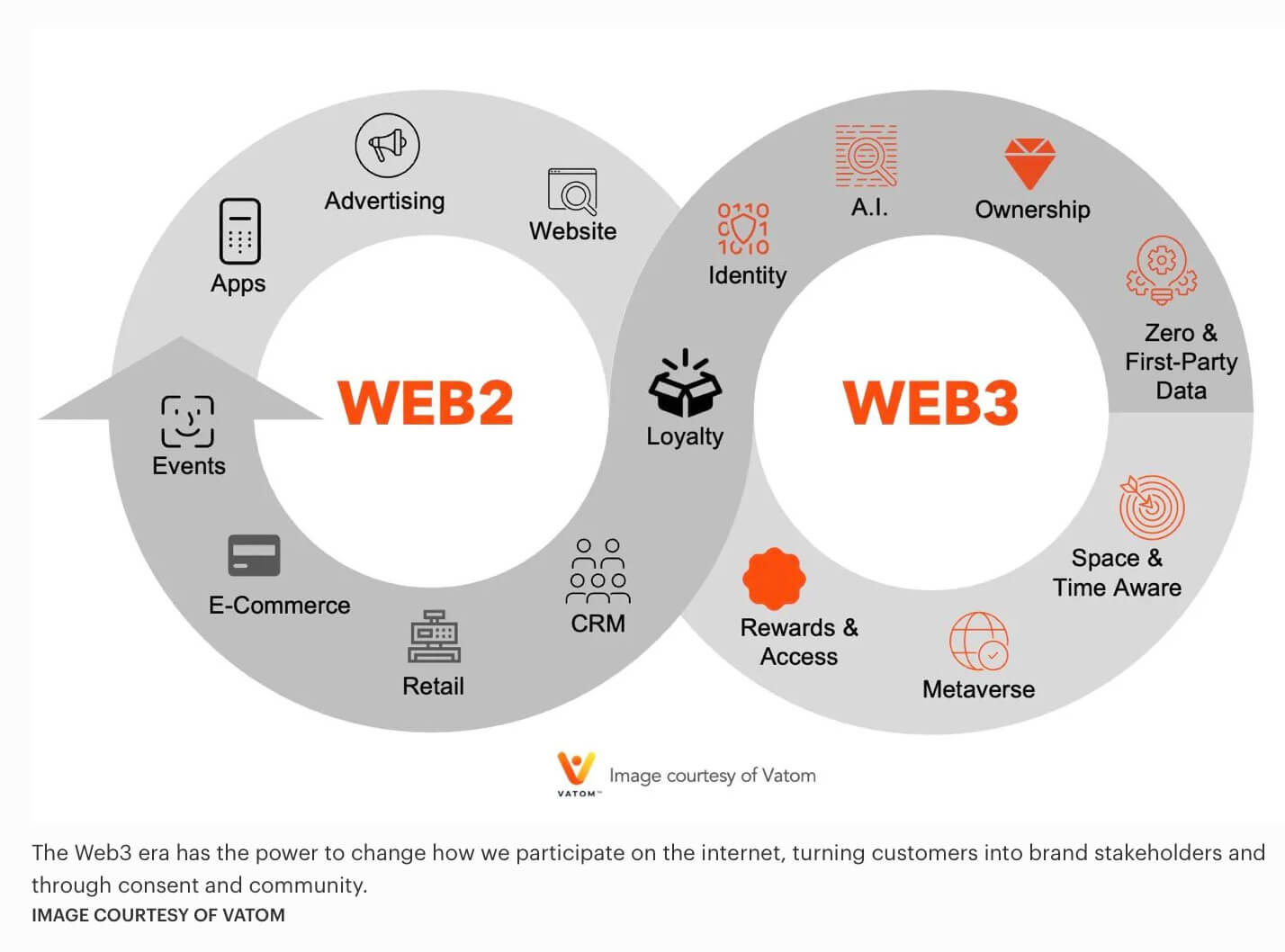
To understand the difference between Web2 and Web3, it is necessary to uncover their technical architecture:
- Web2 dating apps are centralized platforms where user profiles, conversations, and behavioral data are stored in the company's cloud database, while all product logic (matching, recommendations, monetization) is processed on the server.
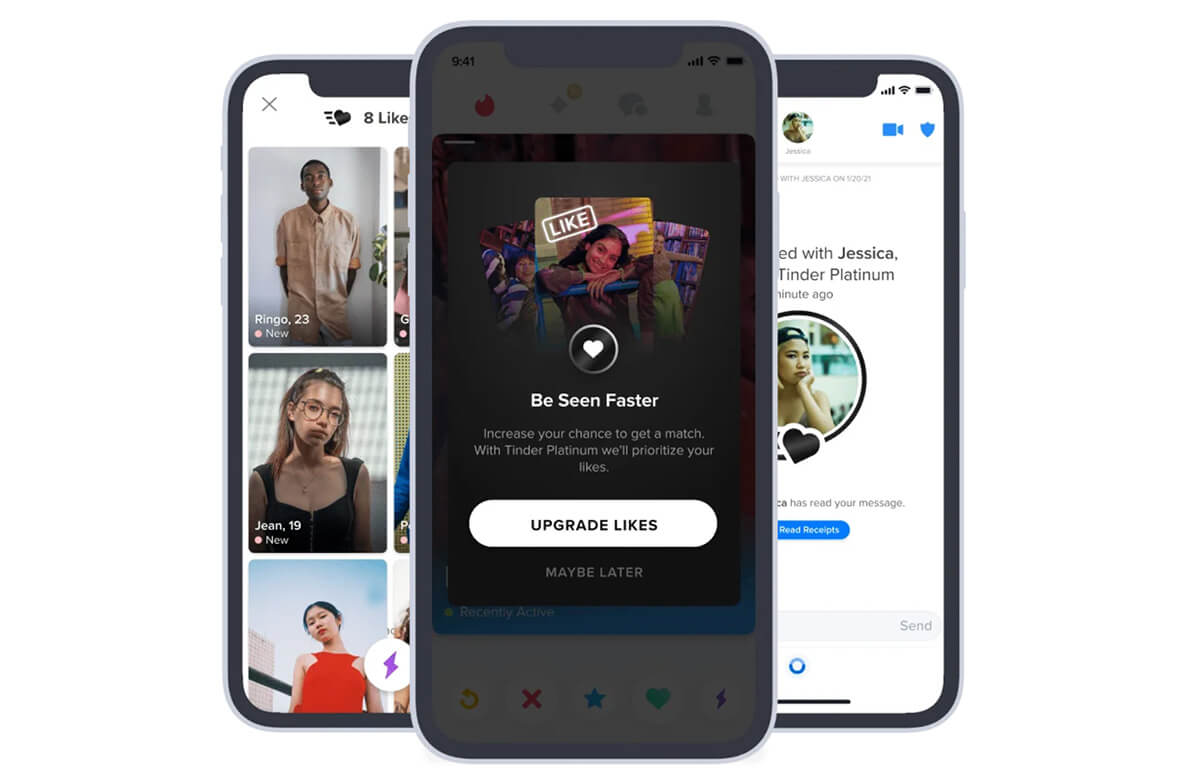
- Web3 dating apps are a model in which some user data and identity are moved outside of a single database. The user's identity is linked to a crypto wallet, and individual actions and records can be recorded on the blockchain. Meanwhile, the interface and core logic of the app remain in the backend infrastructure.
Let's look at the key differences between Web2 and Web3 and what they offer to businesses.
Identity and reputation
Web2: The account is created within the app (using email or phone number) and can be easily recreated after being blocked.
Web3 uses several mechanisms:
- Wallet-based identity: login via crypto wallet as a permanent identifier;
- NFT profile verification: digital confirmation that a profile has been verified and belongs to a real user;
- On-chain reputation: recording user behavior (complaints, matches, activity) in an immutable system.
| Web2: What problems does it create? | Web3: What problem does it solve? |
| Re-registrations and bypassing blocks | It is more difficult to create a new account from scratch |
| Rising costs for antifraud and moderation | The number of fakes and violations is decreasing |
| Decreased user trust, as it is possible to accidentally contact a previously blocked user several times | User behavior becomes cumulative |
Matching and behavior
Web2 gives unlimited swipes and likes.
Web3 uses token-gated matching mechanics—some actions require tokens or conditions. For example, a user reserves tokens for an interaction and receives them back upon completion (match, response, dialogue).
Important: Token-gated matching does not mean that the selection algorithm itself operates on the blockchain. Matching and recommendations typically remain off-chain (in the backend), and the blockchain is used only to record the terms of the interaction (reservation, return, or write-off of tokens).
| Web2: What problems does it create? | Web3: What problem does it solve? |
| Massive random swipes and spam | Low-quality activity is reduced |
| Low quality matches | Increased awareness of interactions |
| Falling engagement | Improved user experience |
Monetization and growth
Web2 uses subscriptions, boosts, and paid features.
Web3 is introducing tokens as an additional mechanism. They are awarded for activity and used within the product.
| Web2: What problems does it create? | Web3: What problem does it solve? |
| A limited experience without payment reduces user engagement and, consequently, app ratings. | Additional motivation for participation |
| Dependence on paid traffic | Organic growth is increasing |
| CAC growth | Pressure on marketing budgets is reduced |
Data and Security
Web2 uses centralized data storage in the cloud.
In Web3, some data is stored in blockchain or distributed systems and accessed through a wallet.
| Web2: What problems does it create? | Web3: What problem does it solve? |
| Single point of data leakage | The risk of large-scale incidents is reduced |
| Reputational and legal risks | Decreases dependence on one database |
| High costs of protection | The load on security infrastructure is reduced |
Web3 dating apps essentially move away from centralized control to a system where identity, reputation, and interactions are captured at the architecture level. This reduces dependence on moderation and paid growth, while simultaneously improving user quality and business sustainability.
Why Build a Web3 Dating App in 2026?
For dating startups in 2026, the Web3 model is becoming increasingly relevant, as it can provide a competitive advantage in three areas: lower acquisition costs and increased trust among a more privacy-sensitive audience + reducing dependence on the subscription model.
Web3 provides specific tools for this:
- Wallet-based login eliminates the dependence on email and phone numbers as easily re-created identifiers.
- Additional verifications, such as Proof of Humanity or Worldcoin, allow you to confirm that a profile belongs to a real person, if necessary, without storing the user's personal data within the app.
- By storing data outside of the server infrastructure (for example, in IPFS), access is determined by the user's key rather than by database permissions. This systematically reduces the risks of centralized storage.
- The implementation of token-gated matching instead of a fixed subscription shifts payment from a "feature access" model to a "participation in interaction" model. This increases user engagement and creates an ecosystem around a specific application.
- Linking a user's reputation to a wallet rather than an account within a single app allows for interaction history to be shared across multiple products. This reduces reliance on a single platform when launching and scaling.
Important: Web3 doesn't solve the problem of matching compatible people; that still depends on the effectiveness of algorithms. However, such apps establish a stricter and more verifiable layer of trust between users and users + startups.
Key Features of a Web3 Dating App
In Web3- dating applications key functions are being implemented through a bundle of frontend (Web3 provider + wallet), backend (off-chain logic ) and Smart contracts. Specific functions are listed below :
- Login via wallet and DID layer: For the user, this involves connecting a wallet (MetaMask, WalletConnect – more often for crypto users; solutions like Privy or link – for easier login without having to install a separate wallet) and signing a login message. No passwords are required, as the wallet address becomes the identifier.
Recommendations for developers: For transaction signing, we recommend using standard Web3 libraries (e.g., ethers.js is preferred , but web3.js makes sense if the project is already on an older stack or requires deep compatibility with legacy dApps). For mobile scenarios, the basic wallet connection method is WalletConnect. The identity layer can be optionally extended via ENS and the Lens Protocol .
- Token-gated matching. For the user, this looks like sending a match request with a "reserved" amount of tokens. If the match is mutual, the tokens are returned or used within the scenario. Otherwise, they are returned based on a timer.
Recommendations from our Merehead team: it's better to use a stable utility token (helps avoid volatility) + matching logic should remain off-chain + for UX, it's critical to use L2 to reduce fees (Polygon, Base, etc.).
- Profile verification via NFT. For the user, this is a "verified profile" badge, which is not issued directly by the platform but is linked to their wallet. In practice, when the user passes verification (Proof of Humanity/Worldcoin), they are minted an NFT, which is stored in the wallet and used as proof. Important: this is not KYC in the traditional sense, as the data is not stored on the server.
Recommendations : It is better to make NFTs non-transferable (soulbound) to avoid resale of “verified” profiles.
- On-chain reputation (SBT). A user develops a reputation based on their behavior (activity/complaints/quality of interactions). This reputation is displayed in their profile and influences their trust with other users. Technically, the developer needs to implement the issuance of soulbound tokens (SBT), which record events (e.g., successful matches). The data can be stored in the token's metadata or indexed through the backend.
Recommendations: make tokens non-transferable to avoid manipulation + do not store all logic on the blockchain + use indexers (e.g. The Graph).
- Storing profiles in IPFS. Profile photos and descriptions are not stored on the app server. The user uploads data, and it remains accessible over the distributed network. In practice, the developer needs to integrate file uploads into IPFS (via Pinata/Infura).
Recommendations: use pinning services for stable access to data + store only links (CID), not the files themselves.
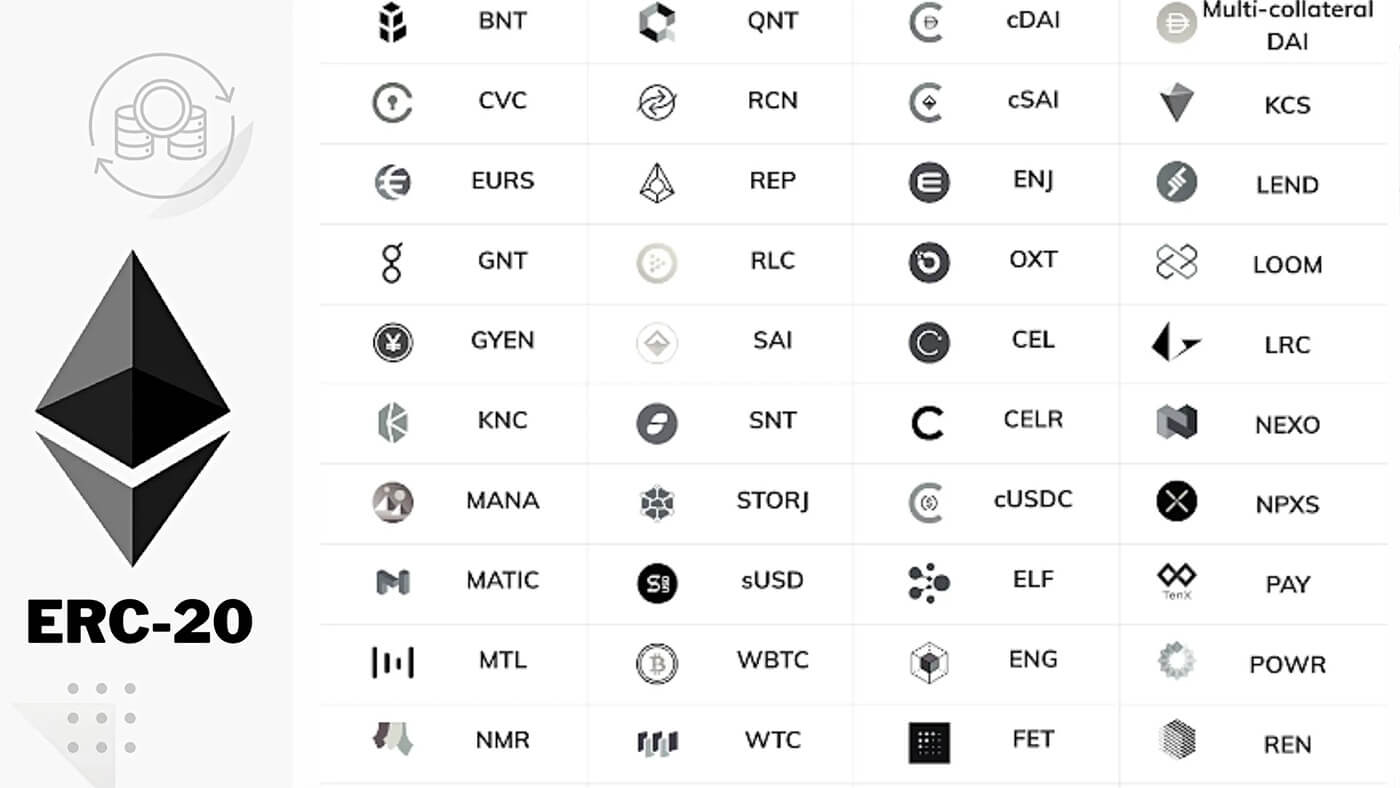
- Token rewards for activity. Users receive tokens for targeted actions (responding to messages, confirming meetings, etc.). Tokens are used within the app to access features or increase visibility. In practice, this requires developing an ERC-20 token, a smart contract for its issuance/distribution, and backend logic that records user actions and initiates token accrual.
Recommendations: It is important to introduce restrictions and checks on actions to prevent activity manipulation.
The app can also implement standard dating features, but enhanced through Web3 mechanics. For example, smart contract escrow for virtual dates (payments for premium features, from video calls to events, are locked in a smart contract and transferred only upon mutual confirmation).
Another popular option is DAO governance, where token holders participate in governance. This requires issuing a governance token and implementing a DAO (e.g., through Snapshot and smart contracts to enforce decisions).
The third popular option is Multi-chain support, when different networks are used for different tasks: L2 (Polygon, Base) for frequent micro-actions, Ethereum for valuable records (reputation, certifications).
Web3 Dating App Tech Stack
The choice of technology stack in Web3 dating apps is critical because it determines the fees users pay when sending tokens for matching, recording reputation, or receiving rewards, the speed of user interactions, and the product's scalability. The recommended technology stack is presented in the table.
| Level | Technology | Why this choice |
| Blockchain | Polygon or Base (L2) | Both networks are optimal for dating, which involves frequent microtransactions, as fees remain fractions of a cent, enabling an unlimited on-chain economy. Polygon is better for mature products: stable infrastructure, multiple tools, and predictable fees. Base is better for new applications: lower transaction costs, faster ecosystem growth, and easier onboarding through Coinbase. |
| Smart contracts | Solidity + OpenZeppelin + ERC-20/SBT/ERC-721 | Solidity is the EVM's underlying language, ensuring compatibility with the entire Web3 infrastructure. OpenZeppelin is suitable for secure audited contracts for tokens and reputation. ERC-20 is used for the internal economy, SBT for fixed user reputation, and ERC-721 for NFT profile verification. |
| Framework | Hardhat or Foundry | Hardhat is more convenient for development and frontend integration. Foundry is faster and more powerful for smart contract testing. They are used for local development, testing, and network deployment. |
| Frontend | React Native + wagmi | React Native is a cross-platform mobile-first approach (iOS + Android without two codebases). wagmi is a standard layer for working with Web3 (wallets/transactions/contract state), eliminating the need to manually write blockchain integrations. |
| Wallet integration | WalletConnect + RainbowKit | WalletConnect is a universal protocol for connecting any wallet (especially mobile). RainbowKit is a UI layer that simplifies wallet connection and reduces friction when logging into the app. |
| Storage | IPFS via Pinata | IPFS allows storing photos and data off of centralized servers. Pinata is used as a pinning service to ensure continuous file availability and storage stability in production. |
| Identity | ENS or Lens Protocol | ENS provides a readable identity instead of wallet addresses. Lens adds a social layer (subscriptions/connections/content) that can be transferred between apps, building a user's external reputation. |
| Backend | Node.js + PostgreSQL | Node.js is the logic layer for the web3 dating platform (matching, chat, etc.), where speed is paramount, not on-chain commits. PostgreSQL is used to store all structured data (profiles, interaction history), which does not require a blockchain. |
| Messaging | XMTP or encrypted custom | XMTP is a decentralized messaging service linked to wallets without a centralized server. An alternative is a proprietary messaging system with end-to-end encryption, which provides greater control over the user experience and communication logic. |
Important: An error at the architecture level directly leads to increased fees, poor UX, and limited functionality.
How to Build a Web3 Dating App – Step by Step
In a blockchain dating app, matching mechanisms still play a key role for users, but it's crucial to consider the tokenomics architecture from the design stage. If this isn't designed from the start, it will be expensive and difficult to redesign the architecture to suit the project's economic model.
Therefore, we recommend the following order of application design.
Step 1 – Define token economics first
Tokenomics is a system that predetermines what users earn tokens for, what they spend them on, and what actions are beneficial. Therefore, it directly determines the matching logic, anti-spam mechanisms, and monetization. Define the token's utility (what it's used for), the distribution model (how users obtain it), and anti-inflation mechanisms (how you prevent token dumping).
Important: reworking tokenomics after launch costs approximately 3 times more than having the system right from the start.
Step 2 – Smart Contract Architecture
The minimum on-chain layer you should design should contain a token contract (ERC-20), a reputation contract (SBT), and, if necessary, an NFT verification contract. However, do not include matching as an on-chain process, as it is economically impractical due to gas costs. This mechanism should be considered an off-chain process.
Step 3 – Identity and wallet UX
Since most dating app users do not trade cryptocurrency, onboarding should include creating an in-app wallet.
Tip: Consider embedded solutions (such as Magic.link or Privy) instead of using MetaMask. This approach can increase conversion rates by 3-5x (according to consumer Web3 app data).
Step 4 – Matching Algorithm (Off-Chain)
The matching algorithm should run on the backend, not on the blockchain, but use a hybrid model: on-chain data (reputation, token balance, NFT badges) and classic compatibility signals. This combination allows for gas cost control and the use of Web3 data to assess user reliability.
Step 5 – Messaging and privacy
Consider end-to-end encryption of messages, for example via XMTP – a decentralized protocol where messages are tied to wallet addresses, encrypted with user keys, and stored off-chain without the need for a phone or email.
Step 6 – Security audit + testnet
Plan for product testing (matching, UX) during the testnet stage, followed by a mandatory smart contract audit before launching on the mainnet. This is important, as code errors can lead to vulnerabilities (token balance/reputation manipulation, etc.). Estimated budget: $8,000–$20,000.
Our recommendation: Before the final launch of the app, deploy the blockchain dating app to a testnet (e.g. Polygon Mumbai or Base Sepolia) + conduct 4-6 weeks of testing in real conditions.
Step 7 – App Store Compliance
A blockchain dating app is subject to the rules for crypto apps in the Apple App Store and Google Play. Important: Tokens cannot be used as a substitute for built-in Apple/Google payment systems. Before submitting your app, be sure to review Apple's policies (Section 3.1.1) and Google Play's financial services policy.
Recommendation: When using tokens for governance and reputation, avoid directly purchasing premium features with tokens.
Web3 Dating App Development Cost
The cost of building a web3 dating app is determined by the depth of implementation: from a minimal set of Web3 functions to a full-fledged ecosystem with its own economy and multi-platform architecture.
| Scope | Cost | Timeline | Key Inclusions |
| MVP (token + wallet + basic matching) | $40,000–$70,000 | 3–5 months | ERC-20 token, wallet login, basic profiles, matching |
| Full-featured Web3 dating app | $80,000–$140,000 | 5–8 months | SBT reputation, NFT verification, DAO, IPFS storage |
| Cross-platform iOS + Android | $140,000–$200,000+ | 7–10 months | Native mobile, embedded wallet, full Web3 feature set |
The choice of implementation level depends on the stage of the project:
- MVP – if you need to quickly enter the market with basic functionality;
- A fully-featured blockchain dating app – when the model has already been proven and it is important to scale the product;
- A cross-platform solution is when audience growth and reach across both iOS and Android become a priority.
Which components have the greatest impact on a web3 dating platform's budget? Based on our experience developing web3 mobile apps, it's not smart contracts that have the greatest impact, but the wallet user experience.
Info: Embedded wallet solutions (Magic.link, Privy) add $8,000–$15,000 to the budget, but are essential for a consumer dating app.
The alternative is to require users to install MetaMask before registering, but this significantly reduces conversion, as we've already observed with several projects. If your blockchain dating app requires users to download a crypto wallet as the first step, you're already losing 70-80% of potential users.
Merehead's Experience with Web3 Mobile Development
At Merehead, we've been working in mobile development since 2015 and Web3 platforms since 2018. Web3 dating is a combination of these two areas.
Market research and our launch experience have shown that the best results come from Web3 projects that focus on a simple mobile UX rather than blockchain technology. Why? For users looking for a relationship, the following are a priority:
- easy registration;
- high swipe/match search speed;
- nice interface.
The blockchain should act as an invisible trust infrastructure that does not require them to learn new technology or take additional complex steps.
We analyzed user behavior and found that embedded wallets (like Privy or Magic.link) convert 3-5 times better than requiring external wallets. We now recommend them as the standard option for any Web3 consumer apps targeting non-crypto users.
We can also warn clients about the most common mistake in Web3 dating: turning tokenomics into a core product before the effectiveness of matching has been proven.
In practice, a token layer with poor matching will only cause user churn. Therefore, first test the matching algorithms and evaluate user retention metrics, and only then add Web3 mechanics as a strengthening layer.
Conclusion
Web3 dating apps that maintain a simple and familiar interface like Tinder but increase user trust through blockchain and cryptographic mechanisms gain a competitive advantage.
Convenient login via the embedded wallet without installing MetaMask or other external wallets is crucial, as is well-thought-out tokenomics built into the architecture. When developing a Web3 application, to ensure it's scalable, fast, and cost-effective for a startup, it's also crucial to clearly separate off-chain logic (matching, UX) from the on-chain layer (trust, reputation, tokens).
FAQ: Web3 Dating App Development
A decentralized dating app is a dating platform built on a blockchain infrastructure, where login and verification are performed via a crypto wallet, there's an on-chain trust layer with reputation mechanisms, a matching algorithm, and an off-chain interface. The main difference from Web2 is that the user's identity, reputation, and data are not linked to a single centralized account.
The development cost depends primarily on the type of implementation: a standard full-featured Web3 dating app will cost $80,000-140,000, and a full-featured Web3 dating app with cross-platform support (iOS/Android) will cost $140,000-200,000.
On average, web3 dating app development takes 5 to 8 months. However, if cross-platform compatibility is important, the process can take 7-10 months. The fastest way to get an MVP for testing is in 3 months.
To launch a Web3 dating app, it's better to use L2 networks: Base or Polygon rather than the main ones. They'll allow you to save on fees and perform quick micro-actions (matching, etc.).
If you approach the development of a decentralized dating app correctly, the user will be able to launch a crypto wallet through the app interface without having to install Metamask or other crypto software on their smartphone.