
Forget the old "build it and they will come" mentality. By 2026, launching a crypto exchange isn't just a tech play - it’s about building a legitimate financial institution from the ground up. The market has moved past the "Wild West" phase into a highly regulated ecosystem where transparency (think Proof of Reserves) and RWA (Real World Assets) integration aren't just perks—they’re survival requirements. This business plan is designed to turn your tech stack into a profitable asset. Working with an experienced crypto exchange development company ensures you avoid common pitfalls.
Types of Crypto Exchange Models
Before creating a full crypto exchange business plan, you must first decide what type of platform you want to build. Each model serves different user needs, comes with its own technical complexity, and aligns with specific regulatory requirements.Cryptocurrency exchanges can be broadly categorized into centralized exchanges and decentralized exchanges, each offering distinct features and benefits for users.
1. Centralized Exchange (CEX)
This is the most common model. We offer end-to-end centralized exchange development with institutional-grade matching engines. CEXs offer high liquidity, faster transactions, and customer support but require rigorous KYC/AML compliance and licensing (e.g. FinCEN or MiCA). Examples include Binance and Coinbase.
Best for: Startups focusing on ease of use, fiat integration, and faster user growth.
2. Decentralized Exchange (DEX)
These platforms operate without a central authority. Our decentralized exchange development focus is on high liquidity and low slippage. Funds remain in user wallets, and trades are executed peer-to-peer. While DEX platforms offer increased privacy and security, they often face issues like low liquidity and limited customer support.
Best for: Projects that target privacy-focused users or DeFi-native communities.
3. Hybrid Exchange
This model combines the strengths of both centralized and decentralized systems — aiming to deliver liquidity and usability while offering non-custodial control. Building a hybrid crypto exchange is technically more complex but can differentiate your platform in saturated markets.Best for: Teams with solid development capacity and long-term vision to scale globally.
By understanding these models early on, you’ll be better positioned to define your target audience, technical requirements, and go-to-market strategy.
Business Plan Structure for a Crypto Exchange
Launching a successful crypto exchange startup begins with a solid, investor-ready business plan. A comprehensive cryptocurrency business plan and a customizable crypto business plan template are essential tools for crypto businesses, providing a structured approach to planning and launching your venture.It not only aligns your internal strategy but also helps attract partners, investors, and regulators, as a clear plan attracts investors by demonstrating your business’s potential and thorough preparation. A well-structured crypto exchange business plan should clearly outline the vision, financial expectations, and operational blueprint. Be sure your crypto business plan covers all the key sections to ensure nothing is overlooked.
Executive Summary
Briefly introduce your exchange concept, target audience, competitive edge, and monetization model. Clearly define your business goals and identify your target market to guide your strategy and attract investors. Mention if you'’re building a niche solution (e.g., B2B crypto settlement, regional fiat gateway) or a global trading hub.Market Analysis
Use real data to show demand for your platform. Analyze the crypto market and cryptocurrency market to gain valuable insights into the broader crypto space, helping you understand trends and opportunities. Identify market trends, user personas, competitor gaps, and regional growth opportunities. Tools like Messari or CoinMarketCap can help validate volume potential and market saturation levels.
Business Model
Detail how your crypto exchange will generate revenue. Introduce your primary revenue streams and outline your pricing strategy, specifying how different fees and charges will be structured to maximize profitability and remain competitive.Typical streams include trading fees (maker/taker), transaction fees collected from each trade, withdrawal fees for both cryptocurrencies and fiat, margin trading fees from leveraged trading activities, withdrawal commissions, token listings, premium accounts, and optional services like OTC desks or margin trading. Clearly defining your service offerings in your business model is essential to showcase your unique value proposition and attract customers.
Technical Architecture Overview
Summarize whether you'll use a white-label crypto exchange, build a custom platform, or leverage an open source cryptocurrency exchange stack. When considering your approach to crypto exchange development, evaluate the role of blockchain technology in enabling secure, transparent, and decentralized trading infrastructure.This decision affects costs, time to market, and control. As part of your technical architecture, it is essential to implement advanced security measures such as SSL encryption, anti-DDoS protection, and regular security audits to protect your platform and users.
Legal and Compliance Roadmap
Identify which jurisdictions you’ll serve and what licenses you’ll need. Be clear about KYC/AML, crypto regulation standards (e.g. FinCEN, MiCA), and data protection obligations like GDPR. Ensure that compliance requirements are fully integrated into your business operations to support effective management and decision-making.Financial Projections
Include a detailed budget for development, compliance, liquidity provision, staffing, marketing, and maintenance. Effective financial planning is essential to prepare accurate projections and ensure your business plan is comprehensive. Show 1–3 year revenue expectations and break-even point.Go-to-Market Plan
Map out your marketing and user acquisition strategy (covered in detail later). Effective marketing strategies are essential to reach your target market and drive user growth. Include target user count, CAC assumptions, and retention goals.A complete plan shows you understand the complexity of building and running a crypto exchange business — and that you're prepared for both growth and risk.
Revenue Models: How to Actually Make Money
Most newcomers leave money on the table by only thinking about trading fees. A resilient business model needs to be a bit more creative.The Maker-Taker Dynamic: This is your bread and butter. We recommend a "tiered" approach. Maybe you offer -0.02% (rebates) for the makers who provide liquidity and charge a sliding scale (from 0.1% down to 0.02%) for the takers who eat it.
Staking-as-a-Service (SaaS): This is a massive passive income stream. You’re essentially taking a cut (usually 5-15%) of the rewards users earn just for keeping their coins on your platform.
HFT & Premium API Access: If you’ve got a fast engine, professional algo-traders will pay a premium for dedicated WebSocket channels and low-latency access.
The Listing Game: Charging projects to get their token on your platform. A solid audit and listing fee can bring in anywhere from $10k to $100k a pop.

CAPEX vs. OPEX: The Real Costs of Staying Alive
Understanding the Total Cost of Ownership (TCO) is what separates successful founders from the ones who go bust in six months.CAPEX (The Upfront Sticker Price)
The License Paperwork: An offshore VASP might cost you $10k, but if you’re eyeing a US MSB or a European license, you’re looking at $120k+ in legal fees alone.The Initial Audit: Don’t skip this. A CertiK-level security audit will run you $5k–$20k, but it’s the only way to get people to trust you with their keys.
OPEX (The Monthly Burn Rate)
Infrastructure: AWS or Azure isn't cheap when you need 99.99% uptime. Budget $1,500 to $5,000 every month. My recommendation at the first stage is to use Hetzner, where the cost is 3-5 times cheaper.KYC/AML: You’re looking at $1.00 to $2.00 for every single user you verify. If you go viral, this bill grows fast. By the way, we offer partnership terms with Sumsub. This way, KYC will cost you less.
Legal Retainers: You’ll need a legal team on standby to keep up with the constant regulatory "surprises." Budget at least $3k–$7k a month. Using an outsourcing company will also give you the opportunity to save up to 60% of your budget.
Technology Stack: White-Label, Custom, or Open Source?
The core of any crypto exchange software is its backend architecture — the engine that powers trading, handles transactions, and manages wallets. Building a robust crypto trading platform requires a solid backend to ensure seamless performance, security, and accessibility for users. Choosing the right stack is crucial for high-frequency trading. Understanding the crypto exchange architecture helps in planning for millions of transactions per second.Modern platforms require more than just a buy/sell button. To create a trading platform for cryptocurrency, you need integrated charting tools and deep order books.
White-Label Crypto Exchange
A white-label crypto exchange is a ready-made software solution you can license, customize, and deploy under your brand. It’s the fastest way to go live — ideal for startups with limited dev resources or tight deadlines.Pros:
- Fast deployment (2–6 weeks)
- Lower upfront development cost
- Comes with built-in trading engine and wallet system
Cons:
- Limited control over core functionality
- Long-term reliance on the vendor
- Some providers cut corners on security
While custom builds offer flexibility, many startups choose ready-made solutions. Check our guide on white label crypto exchange cost for budget planning.
Best for: MVP launches or local niche projects.
Custom-Built Exchange
This option involves building everything from scratch — from the trading engine to the KYC system. It offers maximum control but requires significant time, budget, and technical capacity.Pros:
- Full control over architecture, performance, and features
- Tailored UX/UI and integrations
- Easier to scale for high-frequency trading or unique markets
Cons:
- Expensive (often $150,000+)
- 6–12 months to deploy
- Requires ongoing dev team support
Best for: Long-term enterprises or exchanges targeting institutional clients.
Open Source Cryptocurrency Exchange
Platforms like Peatio or OpenDAX offer free, community-driven codebases that can be used as a foundation for your exchange.Pros:
- No license fees
- Transparent codebase
- Strong developer communities
Cons:
- Requires heavy customization
- Community support only
- Security audits are your responsibility
Best for: Tech-savvy teams looking for budget control with technical freedom.
Your choice of crypto exchange software will shape everything from security posture to update cycles. Evaluate it based on your launch speed, regulatory needs, and budget.
Security and Compliance Strategy
In 2026, building a crypto exchange without a robust security and legal framework is a shortcut to disaster. Both users and regulators expect platforms to implement advanced safeguards against hacks, fraud, and money laundering.The crypto industry sets especially high standards for security and compliance, given its competitive and highly regulated nature. Your compliance and cybersecurity setup must be built into the core of your crypto exchange software — not added later.
KYC/AML Implementation
Know Your Customer (KYC) and Anti-Money Laundering (AML) procedures are mandatory in most jurisdictions. You'll need to:- Collect and verify user IDs and addresses
- Monitor suspicious transactions
- Maintain audit logs for regulators
- Use third-party KYC services (e.g., Sumsub, Onfido)
This isn’t just a checkbox. Proper KYC/AML reduces risk, improves trust, and speeds up your licensing process.
Regulatory Compliance
Depending on where you operate, licensing will differ:- United States: Register as an MSB with FinCEN, comply with SEC/CFTC rules
- European Union: Align with MiCA (Markets in Crypto Assets) framework
- Ukraine: Follow NBU and FATF guidelines for crypto platforms
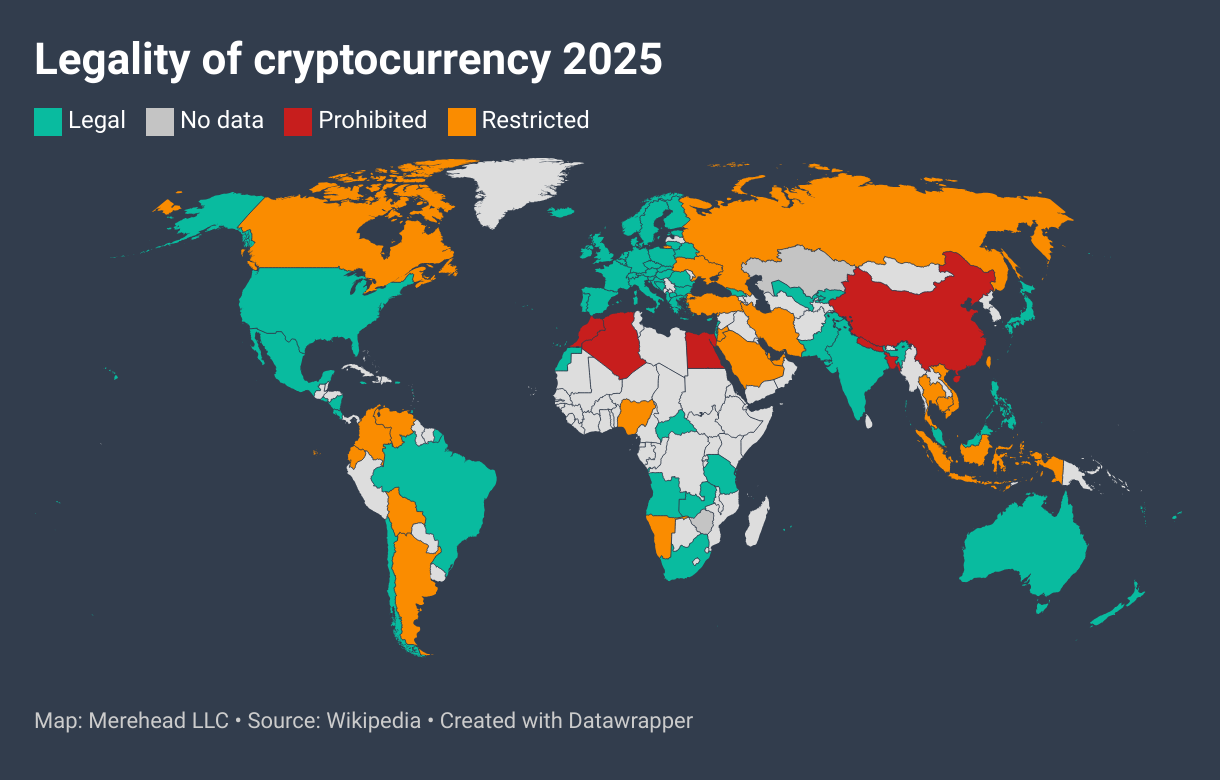
Working with crypto-friendly banks and legal advisors early can prevent shutdowns later.
Security Measures
Your platform must defend against technical, financial, and social engineering attacks. Key protections include:- Two-Factor Authentication (2FA) and biometric logins
- Cold wallet storage for most assets
- Withdrawal whitelists and transaction velocity checks
- Penetration testing and continuous code audits
- SOC 2 and ISO 27001 standards compliance
You should also consider bug bounty programs and disaster recovery plans. Remember — users will forgive downtime, but not loss of funds.
Security and regulation are not areas where you cut corners. Treat them as your platform’s foundation — not overhead.
Risk Mitigation: What Keeps Founders Up at Night
A business plan without a "plan B" is just a wish list.Regulatory Pivot: Laws change. We build with a modular architecture so you can swap KYC providers or geofence certain countries in hours, not weeks.
The Liquidity Gap: Don't rely on one market maker. We integrate with 2-3 independent providers simultaneously. If one goes offline, your exchange doesn't turn into a ghost town.
Security Architecture: We stick to a 96/4 split. 96% of assets stay in "Cold Storage" (offline, MultiSig), and only 4% stays in the "Hot Wallet" for daily trades. Even if the hot wallet gets poked, the bulk of the house is safe.
Marketing Strategy and Go-to-Market Plan
Even the most secure and feature-rich crypto exchange platform will fail without users. In the fast-evolving crypto world, crypto businesses face unique challenges in marketing and must find ways to stand out in the competitive crypto space. In a crowded market, your marketing strategy must do more than just “make noise” — it should attract the right audience, build trust, and reduce acquisition costs.Define Your Niche
Before running ads or hiring influencers, define your target segment. Are you serving:- Retail traders in emerging markets?
- Institutions seeking fiat on/off ramps?
- A DeFi-native audience that needs a hybrid crypto exchange?
- Local users in regulated regions (e.g. Ukraine, UAE)?
Niche positioning reduces competition and improves retention.
Build Pre-Launch Momentum
Start generating interest before your platform goes live:- Create a waitlist or private beta
- Publish SEO-driven content on topics like crypto exchange business plan or crypto regulation
- Partner with local fintech influencers
- Launch referral campaigns and airdrops (if compliant)
Key Channels for Growth
Your user acquisition strategy should combine organic and paid channels:| Channel | Purpose |
| SEO & Blogging | Long-term traffic, brand authority |
| Influencer Deals | Trust transfer & rapid reach |
| Telegram/Discord | Community building |
| Paid Ads (PPC) | High-intent conversions (be cautious!) |
| Affiliate Program | Scalable user inflow with low CAC |
Focus on LTV (lifetime value) over pure user count. Many crypto users churn quickly — so quality matters.
Retention and Trust
To retain users:- Offer 24/7 multilingual support
- Onboard with educational tutorials
- Use email/SMS nudges for return visits
- Highlight security certifications (ISO, SOC) on-site
A successful go-to-market plan balances user acquisition, trust building, and regulatory alignment — not just hype.
Unit Economics: When Do You Actually Break Even?
You need to know your CAC (Cost per Acquisition) vs. your LTV (Lifetime Value).The Math: If your daily volume hits $5M and your average take is 0.08%, you're grossing $4,000 a day.
The Finish Line: Most well-managed exchanges hit the break-even point around month 8 to 12, assuming a base of roughly 5k–10k active traders.
Scalability: The beauty of this business? Once you hit that break-even mark, your costs don't scale 1:1 with your revenue. Every new dollar is mostly profit.
GTM Strategy: Winning the Liquidity War
Marketing in 2026 isn't about buying banner ads; it’s about winning the "trust war."Liquidity Rebates: Pay the big fish to fill your order books. It’s the cheapest way to make your exchange look professional.
Affiliate 2.0: Don’t just give a one-time bonus. Offer lifetime commission splits. It turns your users into your sales force.
Cross-chain Frictionless Entry: Use bridges so users can jump from Solana or Base directly to your exchange without five different steps. The development will cost a lot, but it's worth it.
Licensing and Legal Considerations (US & EU)
Operating a crypto exchange without proper licensing is no longer an option in 2026. Regulatory authorities in the United States and the European Union have tightened enforcement, and failure to comply can lead to shutdowns, fines, or even criminal charges.Understanding your crypto regulation obligations from day one — and aligning your legal roadmap with them — is essential for securing investor confidence and building long-term trust.
United States: FinCEN, SEC, and State-Level Compliance
To operate in the U.S., you must register as a Money Services Business (MSB) with FinCEN. This includes:- AML compliance program
- Regular suspicious activity reporting (SARs)
- Appointing a compliance officer
- KYC for all users
Depending on your services (e.g. offering staking, margin trading, token listings), you may also fall under SEC or CFTC jurisdiction — especially if your exchange lists tokens that could be considered securities.
Some U.S. states also require money transmitter licenses (MTLs) — which can take months to obtain and vary widely by region (e.g. New York BitLicense).
European Union: MiCA Framework
The EU's Markets in Crypto-Assets (MiCA) regulation, entering full effect in 2026, provides a unified framework across all member states.To comply, your exchange must:
- Register as a Crypto Asset Service Provider (CASP) in an EU member state
- Implement strict KYC/AML checks under 5AMLD
- Maintain segregated client funds and capital reserves
- Provide risk disclosures and clear fee transparency
- Undergo regular audits and incident reporting
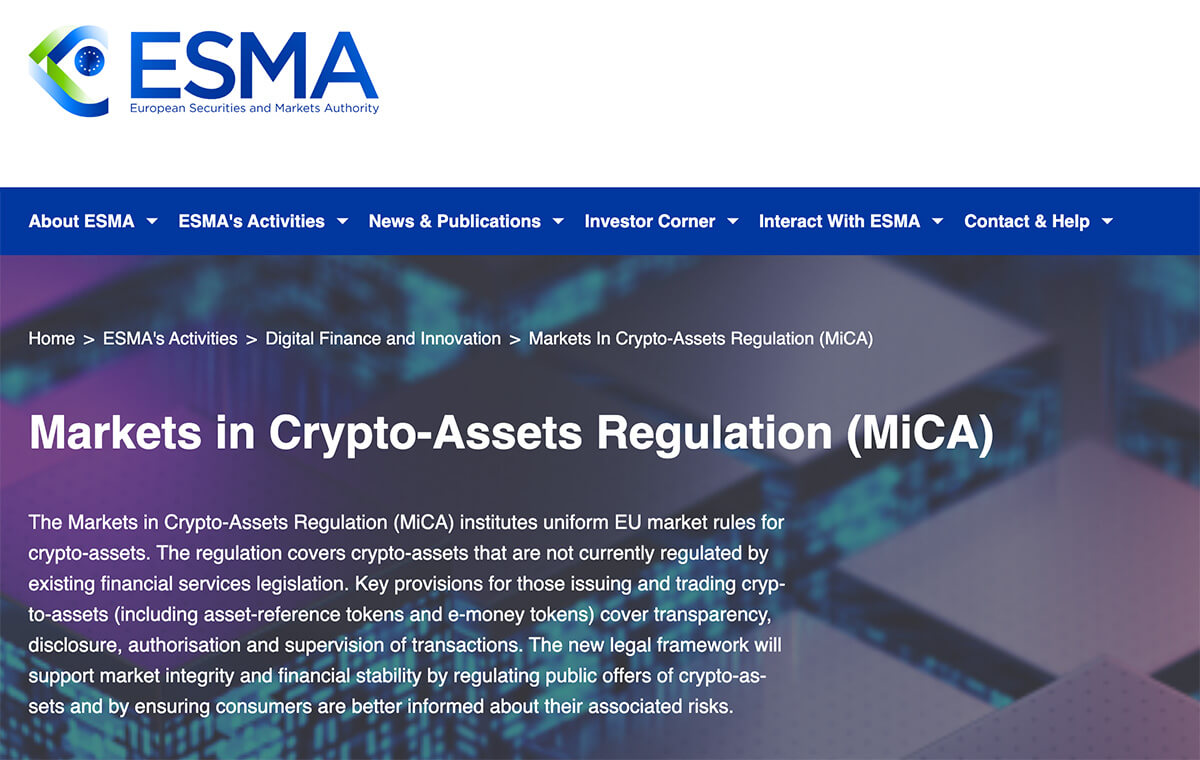
MiCA is designed to support innovation while enforcing stability — a strong compliance strategy gives your platform a long-term edge in the European market.
Legal Best Practices
- Work with crypto-native legal counsel in each jurisdiction
- Build compliance infrastructure into your crypto exchange software from the beginning
- Use third-party solutions for KYC, transaction monitoring, and reporting
- Prepare documentation early: business model, source of funds, risk mitigation policies
Licensing isn't a one-time step — it's an ongoing responsibility. A well-documented legal roadmap will protect your crypto exchange business and accelerate time-to-market.
Startup Costs and Ongoing Expenses
Launching a crypto exchange business requires significant investment — not just for development, but also for compliance, operations, and marketing. A major portion of the budget will go toward crypto exchange development, including the technical infrastructure and the choice between custom or white-label solutions.In 2026, transparency around costs is key to attracting partners and avoiding budget pitfalls.
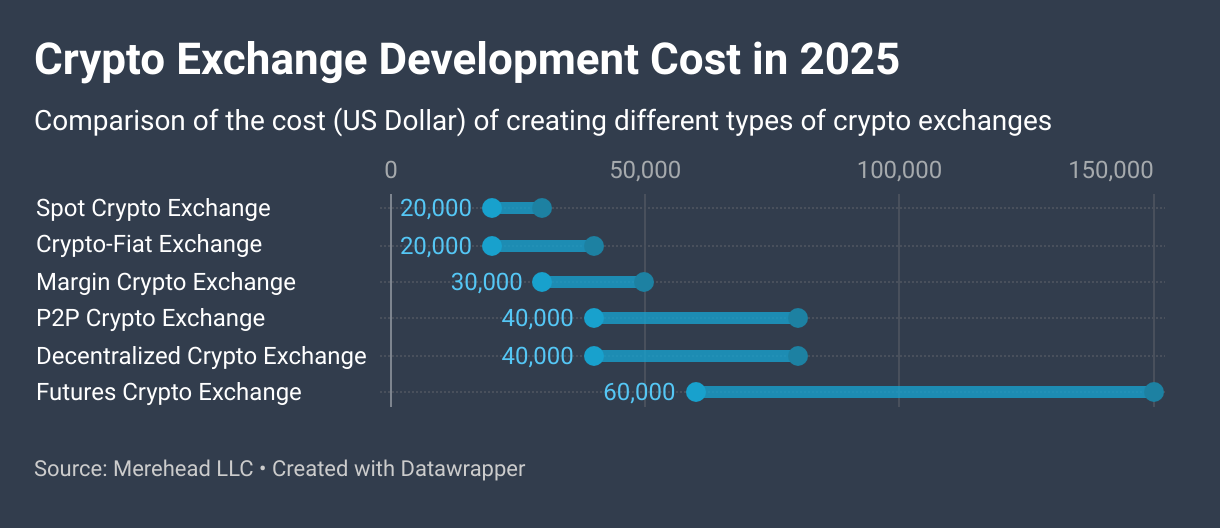
Here’s what you need to plan for:
Initial Development Costs
| Option | Estimated Range | Notes |
| White-label crypto exchange | $15,000 – $60,000 | Fast to deploy, limited customization |
| Open source solution | $10,000 – $80,000 | Depends on internal dev resources |
| Custom-built platform | $120,000 – $350,000+ | Full control, high-quality infrastructure |
Your crypto exchange software cost will vary based on features (liquidity bridges, wallets, mobile apps) and team location.
Licensing and Legal Fees
- US FinCEN/MSB registration: $5,000 – $20,000 (legal setup + compliance support)
- EU MiCA registration (CASP): $25,000 – $50,000+ (depending on country and legal assistance)
- Ongoing legal advisory: $2,000 – $5,000/month
These numbers include documentation, audit preparation, and regulator communication.
Operational & Infrastructure Costs
- Cloud hosting & devops (AWS, GCP): $1,000 – $5,000/month
- Security audits (penetration testing, smart contract review): $10,000 – $30,000 per audit
- KYC/AML providers (Sumsub, Jumio): ~$1–3 per verification
- Liquidity provisioning: variable; from $50,000+ initial reserve or LP partnerships
Marketing and User Acquisition
- SEO content + PPC ads: $3,000 – $15,000/month
- Influencer campaigns: $5,000 – $50,000+ (depending on market)
- Referral bonuses and promo funds: $10,000+
Early-stage CAC (Customer Acquisition Cost) in crypto is often high. Focus on long-term LTV and organic growth.
Team Salaries (Initial 5–10 people)
| Role | Monthly Range |
| Blockchain Dev | $6,000 – $12,000 |
| Frontend/UX Engineer | $4,000 – $8,000 |
| Compliance Officer | $5,000 – $10,000 |
| CTO / Tech Lead | $8,000 – $20,000 |
| Marketing Lead | $4,000 – $9,000 |
You can offset some costs by outsourcing or using equity-based incentives early on.
A realistic budget for a lean but compliant exchange launch in the US or EU ranges between $150,000–$500,000. Planning this upfront is essential to avoid cashflow gaps post-launch.
Revenue Models and Monetization Options
A sustainable crypto exchange business must be built on diversified revenue streams — not just trading commissions. Much like a stock exchange, a crypto exchange serves as a platform for crypto trading, enabling users to buy, sell, and trade a wide range of digital assets, including both established cryptocurrencies and emerging tokens.In 2026, platforms that survive and scale typically mix core monetization with value-added services tailored to their niche and user base.
Trading Fees (Maker/Taker)
The most common model — users are charged a small fee for each trade.- Maker fees: incentivize users to provide liquidity (e.g. 0.1%)
- Taker fees: charged to users who consume liquidity (e.g. 0.2–0.3%)
- Discounts can be applied for high-volume traders or token holders.
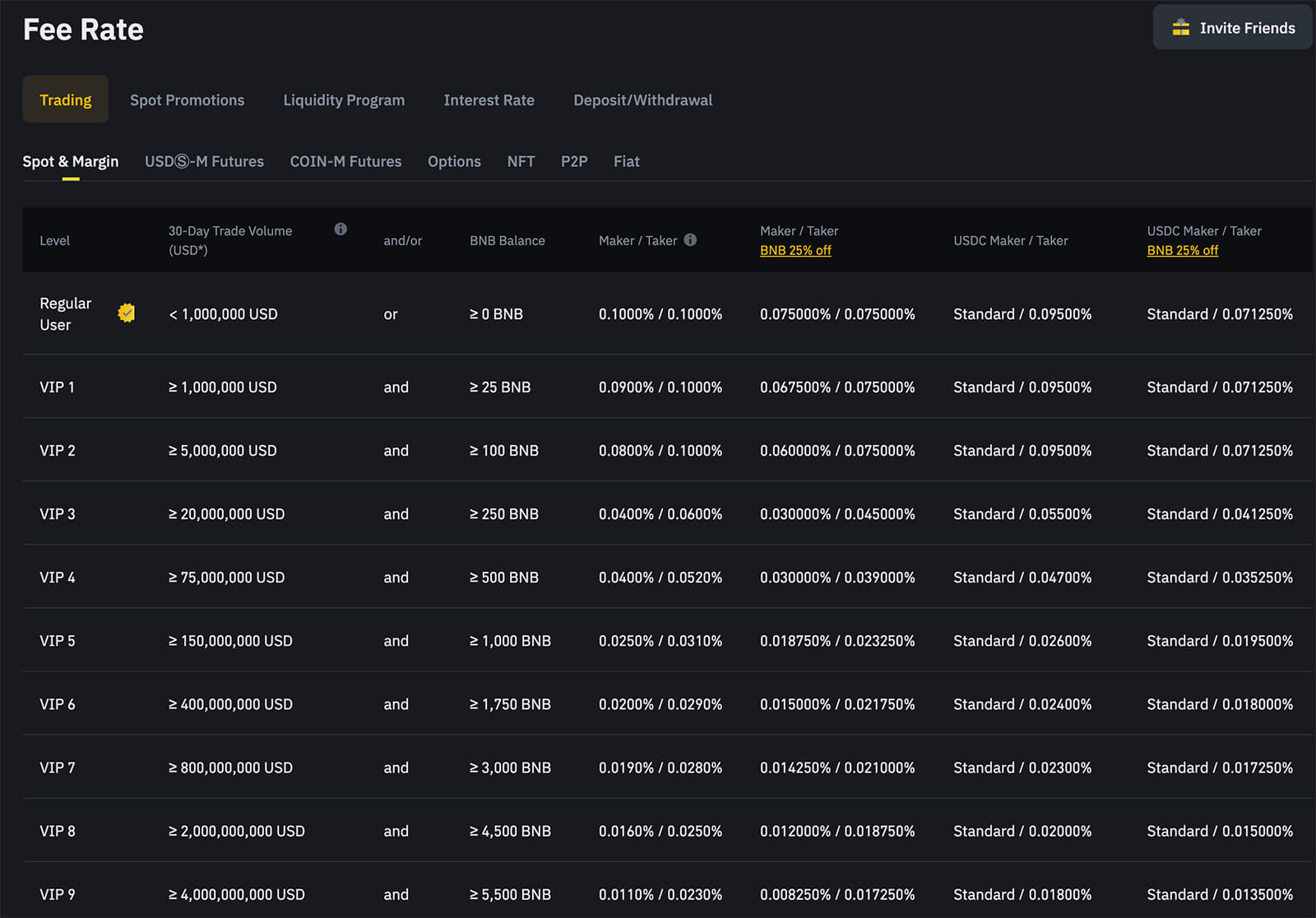
This model is predictable and scales with volume — but depends heavily on initial liquidity and user base.
Withdrawal and Deposit Fees
Many exchanges charge flat or dynamic fees for crypto or fiat withdrawals. This not only covers network costs but can generate reliable passive income.Tip: Be transparent with fees — unclear pricing damages trust and churn.
Token Listing Fees
Emerging crypto projects often pay to get listed on reputable platforms. Listing fees can range from $5,000 to over $100,000, depending on exchange reputation and volume.Note: Ensure your listing process complies with crypto regulation, especially in the U.S. (SEC scrutiny).
Native Token Utility
Creating your own utility token (like Binance Coin or OKB) allows for:- Trading fee discounts
- Staking and yield rewards
- Governance voting
- Cross-product integration
This adds stickiness and enhances platform economics, but it requires proper legal review — especially under MiCA or SEC rules.
Premium Features and Subscriptions
For institutional or power users:- API access tiers
- Priority withdrawal processing
- Exclusive market reports or analytics
- White-glove support
This monetization model increases LTV without inflating user acquisition costs.
Other Revenue Streams
- Margin lending (if legally permitted)
- NFT trading modules or integrations
- Branded OTC desks
- SaaS model (licensing your white-label crypto exchange to others)
Multiple revenue channels protect your platform from market volatility and support long-term growth.
Risks, Challenges, and Contingency Planning
Running a crypto exchange isn’t just about growth — it’s about survival. The most successful platforms are those that anticipate risks and prepare proactive mitigation plans. Whether it's market crashes, hacks, or regulatory shifts, having a contingency strategy is critical.Equally important is having a clear plan in place to address these risks and challenges, ensuring your exchange can respond effectively and maintain stability.
Regulatory Risk
Regulations evolve rapidly. A license today doesn’t guarantee legal operation tomorrow.Mitigation:
- Build legal flexibility into your crypto exchange business plan
- Monitor updates from FinCEN, MiCA, and local regulators
- Diversify operational presence (multi-region strategy)
- Maintain a legal advisory partner on retainer
Liquidity Risk
Low liquidity leads to poor user experience, price slippage, and reputation damage — especially in the early days.Mitigation:
- Integrate with external liquidity providers or exchanges via APIs
- Bootstrap volume using market-making bots
- Offer incentives for high-volume traders (e.g., lower trading fees)
Cybersecurity Threats
Exchanges are prime targets for DDoS attacks, phishing, and wallet breaches. A single vulnerability can cause irreversible loss.Mitigation:
- Store 90%+ of funds in cold wallets
- Conduct regular penetration testing
- Offer bug bounty programs
- Comply with ISO 27001 and SOC 2 frameworks
- Maintain a 24/7 monitoring and incident response team
Financial Risk & Burn Rate
Unexpected costs (like legal battles or system reengineering) can drain resources quickly.Mitigation:
- Maintain 12–18 months runway
- Track burn vs. CAC & revenue
- Prioritize high-ROI marketing channels
- Delay optional features that don’t impact user retention
Market Volatility
A 30% BTC crash can wipe out user confidence or halt trading activity. Volatility affects revenue, sentiment, and capital inflow.Mitigation:
- Offer stablecoin pairs and fiat options
- Build messaging systems to educate users during drawdowns
- Use product-market fit as a core metric — not just speculative hype
Proactive risk management is what separates hobby exchanges from regulated, investor-backed ventures. Address these threats in your crypto exchange business plan to show you’re building for resilience — not just speed.
Real-World Examples
While building a crypto exchange can seem overwhelming, many successful startups have paved the way. By analyzing real-world launches, you can extract patterns, avoid costly mistakes, and gain tactical insights into what works.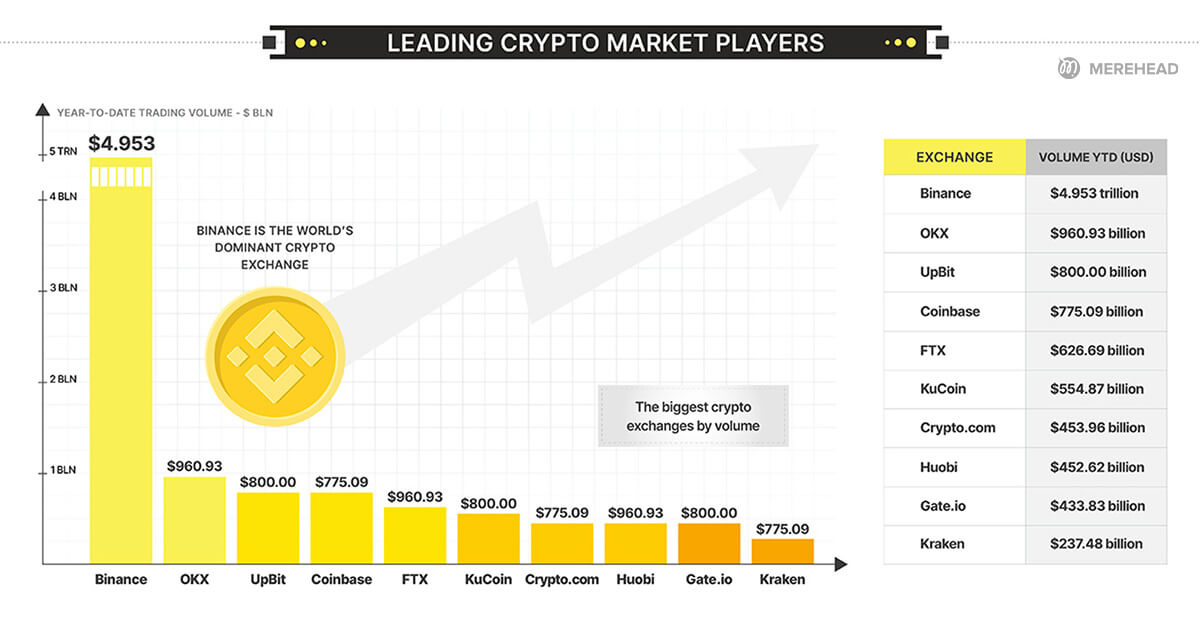
Real-World Case Studies
- Binance Launched in 2017, Binance achieved rapid global adoption by offering low trading fees, a native token (BNB), and fast user onboarding. They began with an MVP, strong branding, and aggressive marketing — including referral bonuses and influencer partnerships.
Takeaway: Start lean, scale aggressively. Use incentives and localize your growth.
- Kraken One of the earliest U.S.-based exchanges, Kraken focused on regulatory compliance and fiat gateways from the beginning. Their commitment to security (SOC 2, penetration testing) and their legal-first approach positioned them as a trusted partner for institutions.
Takeaway: Compliance and transparency are monetizable features — especially in the U.S. and EU.
- Bitvavo (EU market) Bitvavo launched as a white-label crypto exchange tailored to Dutch and Belgian users, offering EUR pairs, local bank integrations, and a simplified interface. Despite starting in a small market, they captured loyalty through localization and fast support.
Takeaway: Regional focus can outperform global ambition if executed well.
Conclusion: Is This Business Right for You?
Building a crypto exchange business in 2026 is both an ambitious and high-stakes venture. The opportunities are massive — new markets, evolving regulation, and growing user demand — but so are the challenges.To succeed, you’ll need more than just a technical team or a flashy interface. You’ll need:
- A clear crypto exchange business plan
- A secure and scalable crypto exchange software stack
- Licensing and regulatory alignment in either the US (FinCEN) or EU (MiCA)
- Smart user acquisition strategy and product-market fit
- A real budget and a resilient risk management plan
This isn’t a side hustle. It’s an infrastructure play — one that demands leadership, capital, and vision.
If you're ready to treat this like a real business, surround yourself with the right talent, and execute consistently — the path to becoming a trusted crypto exchange is still wide open.
FAQ
What ongoing operational expenses should I plan for when starting and running a crypto exchange?
In 2026, the monthly operating costs for a crypto exchange consist of server infrastructure - $500-5,000, AML/KYC compliance - $1-2 per user, technical team - $2,000-$10,000. Overhead costs can range from $3,000-$20,000 per month and depend on the scale of the platform, the number of active users. Expert Insight: costs can be reduced by using alternative server solutions such as Hetzner and technical support from Eastern European countries.
What cryptocurrency exchange development services do I need to start my own branded crypto trading platform?
A competitive branded exchange needs to have a high-performance matching engine, blockchain nodes on its own servers, custom UI/UX design, a reliable liquidity provider, integration of cold and hot wallets, third-party APIs and fiat payment gateways. Expert Insight: Every branded exchange needs to scale, we recommend using a microservice architecture right away and focusing on speed using REST/WebSocket and C++ in the back-end mode.
What is the step‑by‑step process to open a crypto exchange, from business registration to platform launch?
The process of starting a cryptocurrency exchange: 1. Business registration and licensing (MiCA, SEC, VARA etc); 2. Technical architecture development; 3. Deployment for blockchain node integration; 4. Liquidity and KYC/AML integration; 5. High-load testing; 6. Audit and security enhancement. A mandatory step in 2026 is obtaining a VASP (Virtual Asset Service Provider) license. Expert Insight: Our experience shows that the launch of a crypto exchange should be carried out softly with a minimum number of users. This will give time and opportunities to adapt processes and the crypto exchange to a high load.
How can I launch a regional trading platform using an open source cryptocurrency exchange and comply with regulations?
To launch a regional open-source crypto exchange (e.g. Merehad), the following mandatory steps must be completed: 1. Add local language; 2. Integrate local liquidity provider; 3. Integrate regional currencies; 4. Comply with local legislation (e.g. GDPR). Expert opinion: Using open source offers the advantages of fast launch and flexible adaptation to your region. It is important that the architecture is scalable and has a high level of security.
Which white label crypto exchange software offers the most liquidity and trading pairs for a new crypto business?
In 2026, the best white label providers are those that have been around for a long time and offer highly secure solutions: Merehead, B2Broker, or Soft-FX. Their platforms offer access to liquidity from Binance, Coinbase, or Kraken, instantly providing the ability to trade on over 100 crypto trading pairs.


