×
Services
Exchange & Trading Infrastructure
DeFi & Web3 Core
NFT Ecosystem & Multi-Chain
Tokenization & Fundraising
Crypto Banking & Fintech
AI Development
Exchange & Trading Infrastructure
Create a centralized crypto exchange (spot, margin and futures trading)
Decentralized Exchange
Development of decentralized exchanges based on smart contracts
Stock Trading App
Build Secure, Compliant Stock Trading Apps for Real-World Brokerage Operations
P2P Crypto Exchange
Build a P2P crypto exchange based on a flexible escrow system
Centralized Exchange
Build Secure, High-Performance Centralized Crypto Exchanges
Crypto Trading Bot
Build Reliable Crypto Trading Bots with Real Risk Controls
DeFi & Web3 Core
DeFi Platform
Build DeFi projects from DEX and lending platforms to staking solutions
Web3 Development
Build Production-Ready Web3 Products with Secure Architecture
NFT Ecosystem & Multi-Chain
NFT Marketplace
Build NFT marketplaces from minting and listing to auctions and launchpads
Tokenization & Fundraising
Real Estate Tokenization
Real estate tokenization for private investors or automated property tokenization marketplaces
Crypto Banking & Fintech
Build crypto banking platforms with wallets, compliance, fiat rails, and payment services
Build Secure Crypto Wallet Apps with a Production-Ready Custody Model
Crypto Payment Gateway
Create a crypto payment gateway with the installation of your nodes
AI Development
AI Development
We build production-ready AI systems that automate workflows, improve decisions, and scale

  Decentralized Exchanges

DeFi Development Services

We offer DeFi development for building decentralized financial protocols powered by smart contracts. Our focus includes liquidity mechanisms, tokenomics, and secure on-chain execution.


130+ projects
Experience
since 2015
Experience
blockchain expert
image

  Services

DeFi Development Services

Our DeFi development services cover the full lifecycle of decentralized financial products, from protocol design to production deployment. Each solution is tailored to your business model, target users, and market conditions.

01

Custom DeFi Protocol Development

We design and build custom DeFi protocols aligned with your economic model and use case. Protocols are developed for real-world usage and long-term scalability.
02

Smart Contract Development

We develop secure smart contracts that power core DeFi logic such as lending, swaps, and rewards. Our contracts are structured to be audit-ready and upgradeable.
03

DeFi Lending & Borrowing Platforms

We build decentralized lending and borrowing platforms with automated interest rate models. These systems enable users to supply and borrow assets without centralized control.
04

Decentralized Exchange Solutions

Our team develops DEX components as part of broader DeFi ecosystems. These exchanges are designed to integrate seamlessly with other DeFi protocols.
05

Yield Farming & Staking Solutions

We implement yield farming and staking mechanisms that incentivize liquidity and long-term participation. Reward systems are designed to balance growth and sustainability.
06

Liquidity Pool & Tokenomics Design

We design liquidity pools and tokenomics models that align incentives between users and the protocol. This supports stable liquidity and predictable economic behavior.
07

DeFi Dashboard & Web3 Frontend Development
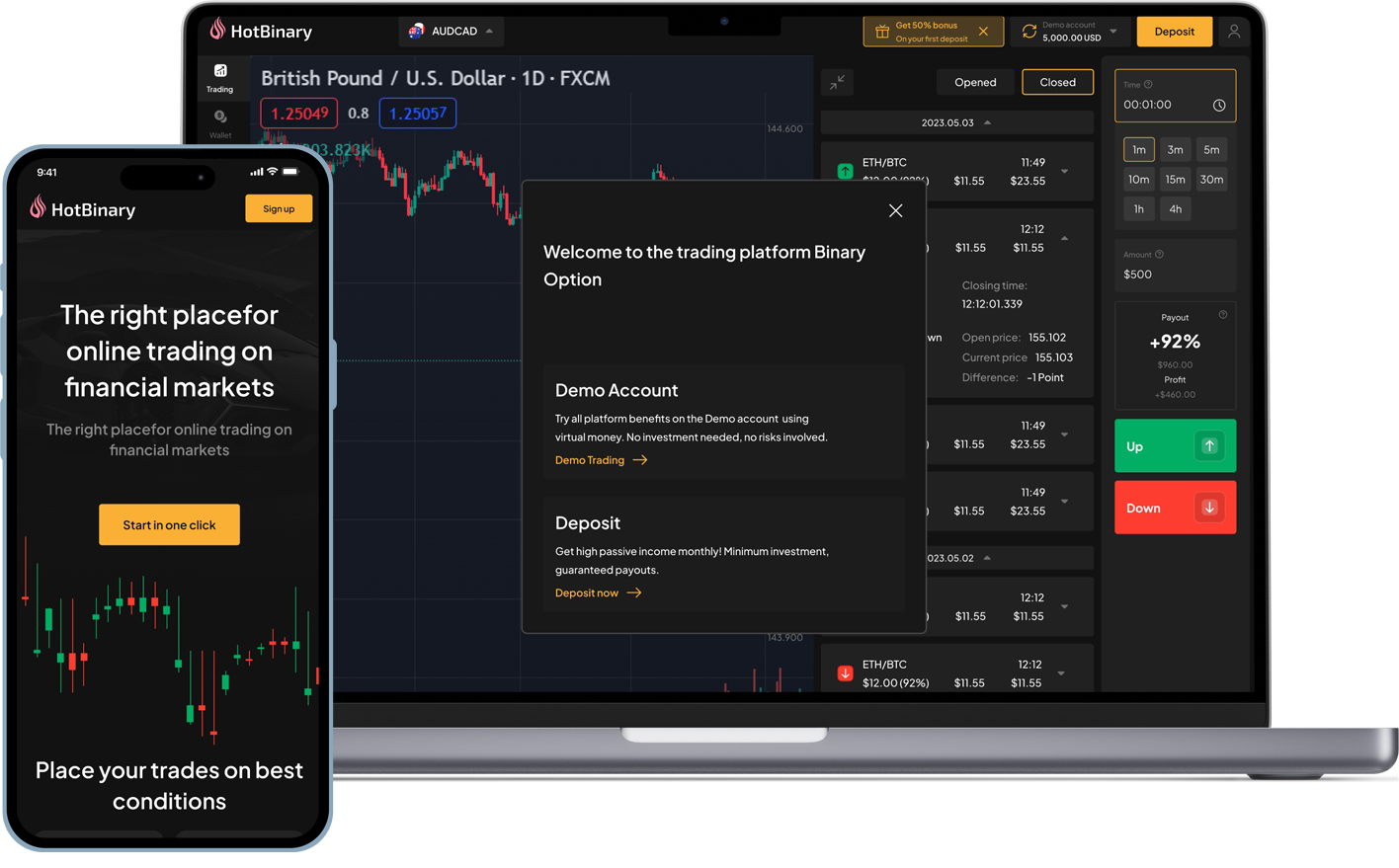
We create intuitive Web3 dashboards for interacting with DeFi protocols. Interfaces are optimized for usability, transparency, and wallet-based access.

  About

What Is DeFi (Decentralized Finance)?

Decentralized Finance (DeFi) is more than just a trend; it is a programmable financial stack that replaces legacy banking intermediaries with autonomous, high-performance smart contracts. Unlike traditional FinTech, DeFi protocols operate in a non-custodial environment where the "code is law". This ensures that asset management, lending, and exchange processes are fully transparent, immutable, and verifiable on-chain, eliminating the counterparty risks inherent in centralized systems.
The true power of DeFi lies in its atomic composability—the ability to interlink various protocols like financial Lego bricks within a single transaction block. Our approach to DeFi development focuses on creating "money legos" that can seamlessly interact with DEX aggregators, yield optimizers, and cross-chain bridges. For businesses, this means deploying capital-efficient systems that operate 24/7 with zero downtime and global accessibility.
Today’s DeFi landscape is shifting towards institutional-grade primitives, including Real-World Asset (RWA) tokenization and sophisticated derivatives protocols. At Merehead, we bridge the gap between complex mathematical modeling and production-ready code. During our latest DeFi project, we optimized smart contract logic to reduce gas consumption by 15% compared to standard OpenZeppelin implementations.
1/3

  Step-by-Step

How DeFi Applications Work

DeFi applications execute financial logic through smart contracts deployed on blockchains. Users interact directly with these protocols using their crypto wallets.

Wallet Connection & Access
Users connect their crypto wallets to the DeFi application without creating accounts or transferring custody. This establishes a direct, permissionless connection between the user and the protocol.
Oracle Data Integration
Decentralized oracles supply external data such as asset prices to the protocol. This ensures accurate calculations and fair execution of financial operations.
Liquidity Pool Utilization
Liquidity pools provide the assets required for trading, lending, or yield generation. Users can supply liquidity and earn rewards based on protocol incentives.
On-Chain Asset Management
User assets are managed directly on-chain according to protocol rules. Funds remain under user control while interacting with the DeFi application.
Smart Contract Interaction
All actions such as lending, swapping, or staking are executed through smart contracts deployed on the blockchain. These contracts define the rules and automate financial logic without intermediaries.
Automated Settlement & Transparency
All transactions are settled automatically on-chain and recorded transparently. This allows anyone to verify protocol activity and outcomes independently.
Modern DeFi applications function as a network of interconnected smart contracts governed by game theory and algorithmic equilibrium, where we define everything from yield optimization to how DeFi lending works. In an AMM (Automated Market Maker) model, for instance, we implement concentrated liquidity logic and custom price curves to minimize slippage for high-volume traders. Our experience in building high-speed dApps on Solana allows us to ensure that when a user interacts with the protocol, our contracts handle the atomic swap, rebalance the liquidity pools, and distribute fee rewards—all while protecting the transaction from front-running and sandwich attacks through advanced MEV-mitigation techniques.

  Features

Core Features of DeFi Applications

Intro
Core DeFi features are designed to ensure transparency, security, and open access. These features distinguish DeFi from traditional financial systems.
Token-Based Incentives
Tokens are used to reward users for providing liquidity, staking, or participating in governance. Incentive mechanisms align user behavior with protocol objectives.
Non-Custodial Architecture
DeFi applications allow users to retain full control over their assets at all times. Funds are managed through smart contracts rather than centralized custodians.
Permissionless Access
Anyone can access DeFi applications without approval or registration. This enables open participation regardless of location or institution.
On-Chain Transparency
All transactions and protocol rules are recorded on the blockchain. This allows users and auditors to independently verify system behavior.
Composable Protocol Design
DeFi protocols are designed to interact with other on-chain applications. This composability enables rapid innovation and ecosystem growth.

  Architecture

DeFi Architecture We Build

Our DeFi architectures are modular, secure, and designed for protocol evolution. Each layer supports scalability and composability.


01
Smart Contracts Layer
The smart contracts layer contains the core business logic of the DeFi protocol, including asset flows, permissions, and state transitions. Contracts are designed using proven security patterns to minimize attack surfaces and unexpected behavior. We structure smart contracts to support audits, upgrades, and long-term protocol maintenance.
02
Liquidity & Protocol Logic
Liquidity and protocol logic define how assets are supplied, utilized, and incentivized within the DeFi system. This layer controls interest rates, rewards, swaps, or allocation rules based on on-chain conditions. Proper design ensures capital efficiency and predictable economic behavior.
03
Web3 Frontend & Wallet Integration
The Web3 frontend connects users directly to the DeFi protocol through their wallets. We design interfaces that clearly reflect on-chain actions, risks, and transaction outcomes. Wallet integration ensures non-custodial interaction and secure user auth.
04
Indexing, Analytics & Monitoring
Indexing and analytics layers aggregate on-chain data into readable formats for users and operators. Monitoring tools track protocol activity, performance metrics, and potential risk indicators.
Governance & Upgrade Mechanisms. Governance mechanisms allow protocol participants to propose and approve changes without centralized control. Upgrade logic ensures that new features or fixes can be introduced safely without disrupting existing contracts.

  Cost

Cost of DeFi Development

The investment for a DeFi project is directly proportional to the complexity of its economic model and the security requirements of its smart contracts. A simple fork of a popular protocol requires significantly less R&D than a custom-engineered lending platform with cross-margin functionality or a synthetic asset exchange. The primary cost drivers are the development of custom oracles, the integration of subgraphs for real-time data indexing, and the engineering of a secure, non-custodial frontend.
Cost Estimates
Lending & Borrowing Platforms: $20,000 - $60,000
Asset Tokenization: $30,000 - $60,000
Decentralized Exchanges: $40,000 - $80,000
Yield Aggregators: $60,000 - $150,000
In the post-exploit era of DeFi, security audits are the most critical budget line item. We strongly recommend at least two independent audits from top-tier firms (like Trail of Bits or CertiK) for any protocol managing substantial TVL. Furthermore, for US-based projects, incorporating compliance modules like geo-fencing or optional "know-your-transaction" (KYT) layers is a necessary investment to ensure long-term regulatory sustainability.

Typically, a robust, custom-engineered DeFi protocol with full-stack integration starts from $40,000 to $80,000. Our methodology is transparent and proven; follow our step-by-step guide to DeFi app development to see how we bring projects from concept to mainnet.

Merehead follows an "Audit-Driven Development" lifecycle. By utilizing formal verification and property-based testing (fuzzing) early in the cycle, we reduce the time and cost associated with the final external audit. We focus on building a resilient "V1" core that is upgradeable through decentralized governance, allowing you to scale features as your community and liquidity grow.

Our team has over 10 years of experience in developing scalable projects and we have a good understanding of how all types of DeFi platforms work. We will be happy to discuss your idea for successful implementation.
Contact Expert  

Who Should Launch DeFi Platform

top crypto fintech startups
blockchain-based enterprises
crypto-native businesses
DAO and Web3 communities

  Reason

Why Choose Us as Your DeFi Development Company

Merehead is a team of blockchain-native engineers who live and breathe decentralized protocols. With over 10 years in the space, we have transitioned from early Ethereum dapp development to architecting complex, high-throughput systems on L2s and alternative L1s like Solana and Avalanche. We don't just write Solidity; we understand the underlying EVM architecture and Rust primitives required for high-frequency on-chain operations, specializing in the creation of non-custodial decentralized exchange (DEX) solutions and autonomous liquidity protocols.
0+ years on the market
0+ completed projects
Our competitive edge lies in our ability to solve the "DeFi Trilemma": balancing decentralization, security, and capital efficiency. We specialize in building MEV-resistant protocols and implementing advanced tokenomics that prevent "death spirals" and encourage long-term protocol health. Our codebase is designed to be "Clean & Audit-Ready", following the highest industry standards for smart contract security.

We help businesses transition from traditional models to core DeFi solutions for modern fintech, ensuring transparency and automation. We act as your technical co-founders, not just vendors. From the initial mathematical modeling of your AMM curves to the deployment of NFT-based real estate tokenization or a robust DAO for protocol governance, we provide end-to-end support. We understand the nuances of the DeFi market—such as liquidity bootstrapping and incentive alignment—ensuring your project is technically sound and economically viable from day one.
Write to an expert  
Real Experience in DeFi Development
We have experience building DeFi solutions across multiple use cases. This allows us to anticipate real challenges.
Production-Ready DeFi Protocols
Our protocols are designed for real users and volume. We focus on long-term viability.
Security-First Engineering Approach
Security is embedded at every stage of development. This reduces operational risks.
Scalable & Upgradeable Architecture
Architectures are built to evolve over time. Scaling does not require redesign.

The team built 8 custom DeFi platforms. We use expertise in Uniswap V3 concentrated liquidity. Team of senior Rust/Solidity devs with 5k+ hours in blockchain dev.

  FAQ

Have questions in mind?

Answers to the most frequently asked questions from our clients

DeFi development involves building decentralized financial protocols using smart contracts. These systems operate without intermediaries.

Development usually takes 3–6 months depending on scope. Security requirements impact timelines.

Costs vary based on complexity and features, often starting from mid five figures. Final pricing depends on requirements.

Yes, we design fully custom DeFi protocols. Each solution is tailored to business goals.

Security depends on design and testing. We follow best practices to minimize risk.
Talk to an expert
We are ready to answer all your questions
Top expert
10 years of experience

  Security

Security in DeFi Development

Secure Smart Contract Design
Secure smart contract design ensures that all financial logic behaves predictably under normal and edge-case conditions. Well-structured contracts reduce attack surfaces and simplify audits.
Exploit Prevention & Testing
Comprehensive testing helps identify vulnerabilities such as reentrancy, oracle manipulation, and logic flaws. Early exploit prevention significantly reduces protocol risk before launch.
Audit-Ready Architecture
Audit-ready architecture allows independent security firms to efficiently review protocol logic. This increases trust among users, investors, and partners.
Security in DeFi is an ongoing arms race, requiring an institutional-grade crypto exchange architecture to withstand sophisticated threats. Our dev-stack includes Foundry and Hardhat for rigorous testing, combined with static analysis tools like Slither and Mythril. We focus on preventing the most common DeFi exploits, including flash loan attacks, oracle price manipulation, and reentrancy. To protect user funds, we implement non-custodial and MPC wallet connectivity alongside multi-signature admin controls (Gnosis Safe) and timelocks for all protocol upgrades, ensuring that the "trustless" nature of the platform is never compromised.

  Tokenomics

Tokenomics & Liquidity Strategy

Token Utility & Incentive Design
Token utility determines how users interact with the protocol beyond speculation. Proper incentive design aligns user behavior with protocol growth.
Liquidity Bootstrapping Models
Bootstrapping models attract early liquidity and participants. These mechanisms help DeFi protocols gain traction at launch.
Emissions & Reward Control
Controlled emissions prevent excessive token inflation. Balanced reward distribution supports sustainable liquidity over time.
Why is this important?
A protocol without sound tokenomics is destined for failure. We design incentive structures that align the interests of LPs, traders, and token holders. Whether it’s implementing ve-tokenomics (vote-escrowed) to encourage long-term locking or designing deflationary burn mechanisms, we ensure your token has real utility beyond speculation. We also assist with liquidity bootstrapping, integrating with aggregators like 1inch or Paraswap to ensure your protocol has deep liquidity from the start.

  Management

Governance & Protocol Management

To achieve true decentralization, we implement robust DAO frameworks. We utilize audited OpenZeppelin Governor contracts or integrate with Snapshot for gasless voting. This allows your protocol to be community-driven, where token holders can vote on fee adjustments, treasury allocations, and smart contract upgrades. Our goal is to build a self-sustaining ecosystem that can evolve through decentralized consensus without reliance on any single entity.
Write to an expert  
Governance Tokens
Governance tokens grant stakeholders the right to influence protocol decisions. This creates alignment between users and long-term protocol goals.
Voting & Proposal Systems
Voting systems allow transparent approval of protocol changes. Proposals formalize upgrades and parameter adjustments.
On-Chain Parameter Control
On-chain controls enable protocol settings to be updated through governance actions. This ensures flexibility without relying on centralized operators.
Do you have a project idea?
Send
Yuri Musienko
Business Development Manager
Yuri Musienko specializes in the development and optimization of crypto exchanges, binary options platforms, P2P solutions, crypto payment gateways, and asset tokenization systems. Since 2018, he has been consulting companies on strategic planning, entering international markets, and scaling technology businesses. More details