
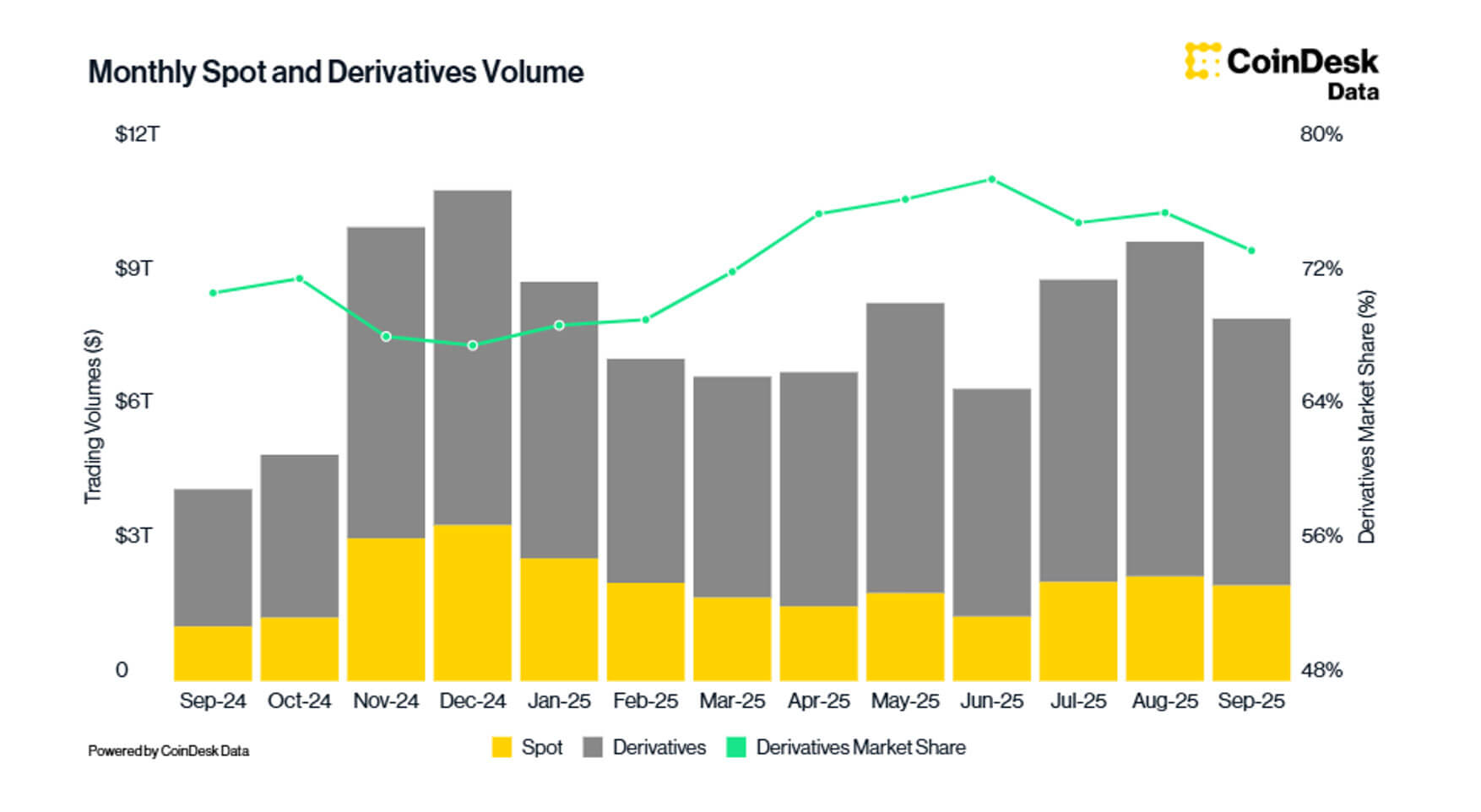
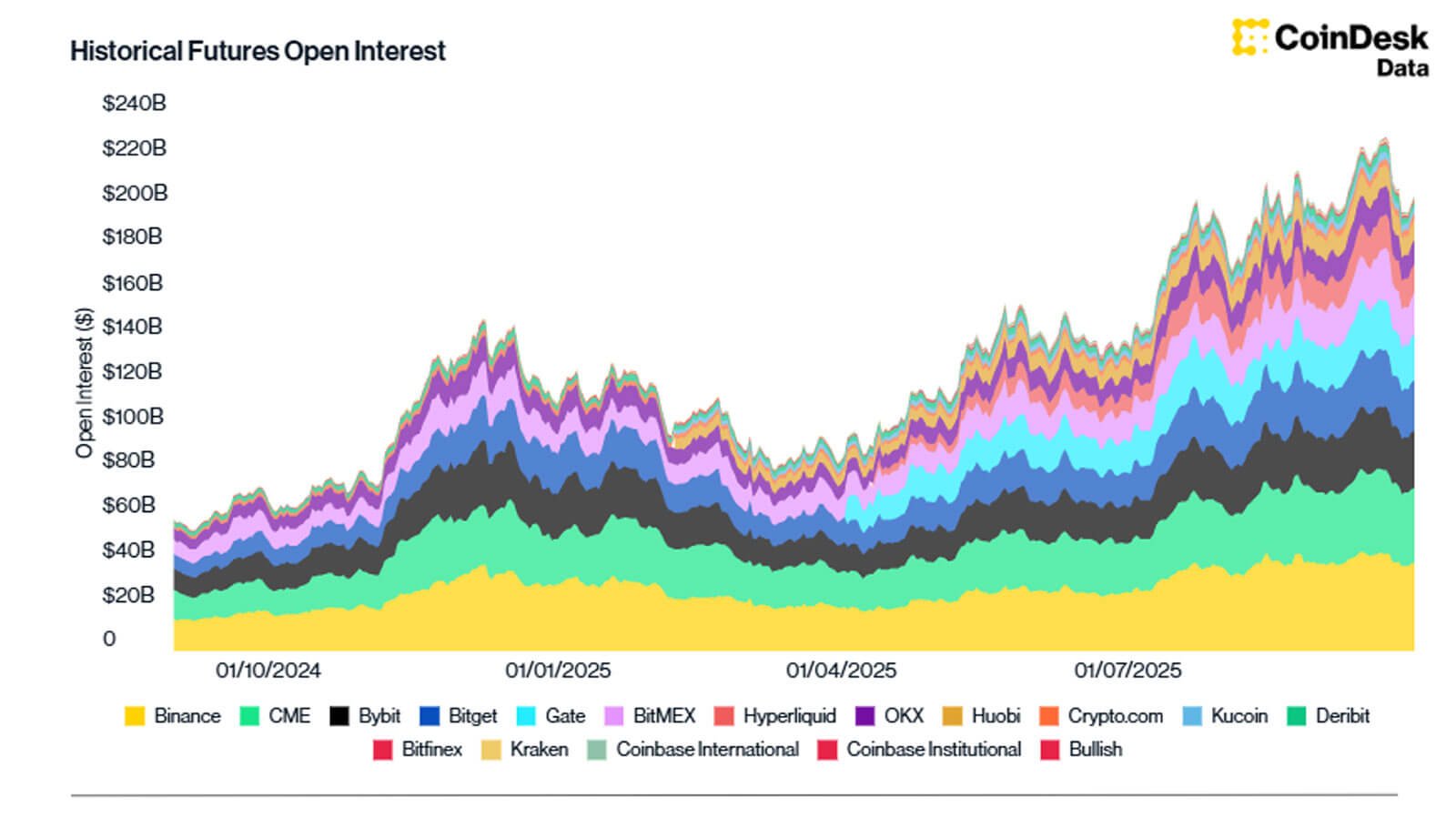
Modern trading platforms are capable of processing trillions of dollars per quarter. They connect retail traders, institutional investors, and developers worldwide. In 2025 alone, centralized exchanges recorded record levels: spot and derivatives trading volumes grew to nearly $10 trillion in a single month, marking one of the most active periods in the recent history of the crypto market.
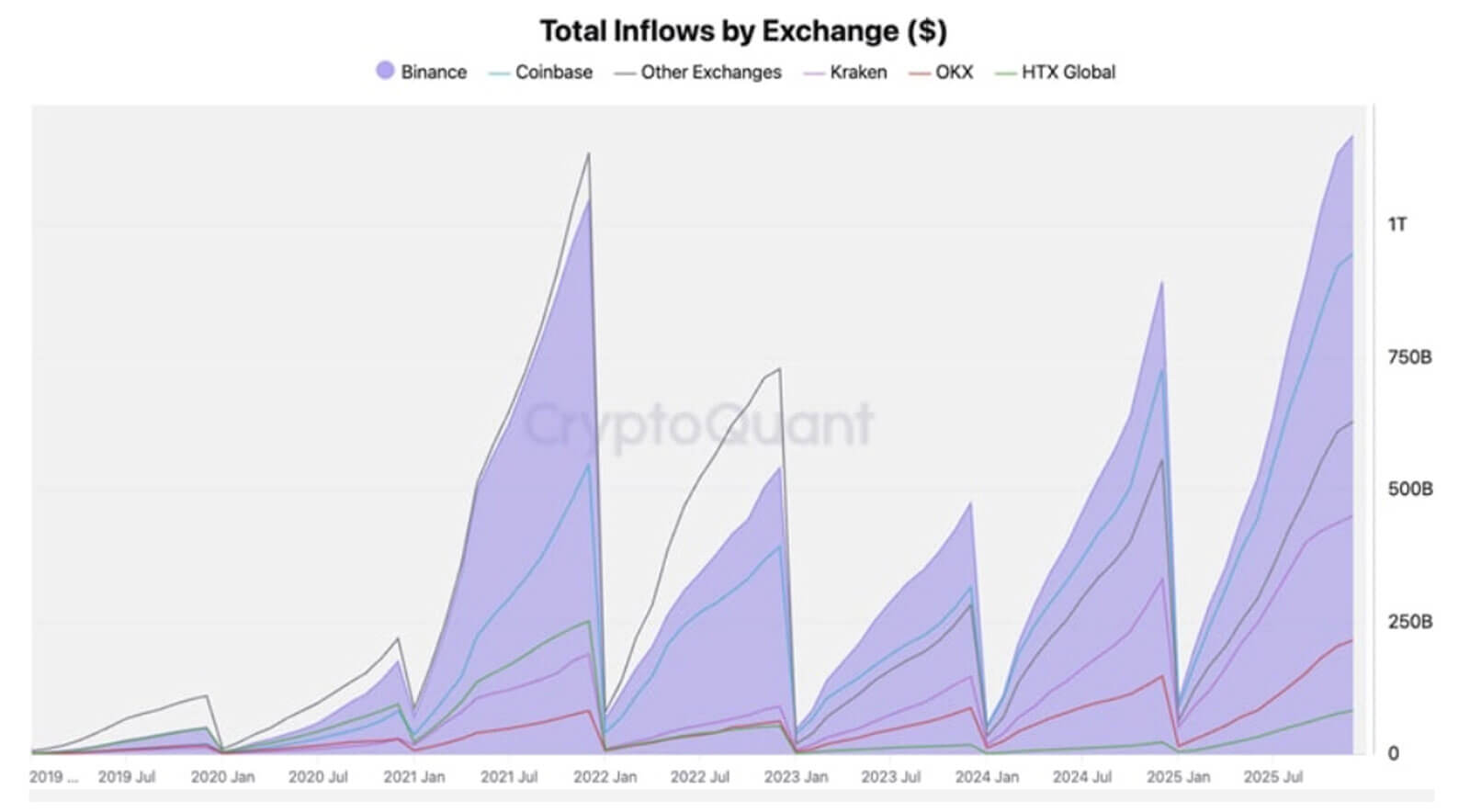
Powerful exchanges like Binance and Coinbase have taken their ecosystems to the next level. Binance has reported spot trading volumes of over $7 trillion and futures trades of $25 trillion by the end of 2025, while Coinbase has demonstrated consistent year-on-year growth.
How is a modern crypto exchange built?
It's truly akin to assembling a high-performance engine. Every component must work harmoniously and, most importantly, quickly. Have you ever wondered how global trading platforms like Binance, Coinbase, or OKX handle millions of transactions daily?
This is real magic, and its main secret is consistency. Next, we'll discuss the architecture of cryptocurrency exchanges and examine the key components that power modern, scalable platforms for trading virtual assets.
The main components of a crypto exchange architecture
So, what are the key components that determine the creation of an effective cryptocurrency exchange architecture? Let's take a closer look at each one.Trading Engine vs. Order Matching Engine
The fundamental basis of any cryptocurrency trading platform is the trading engine and order matching mechanism.Order matching mechanism:
- compares buy and sell orders in real time;
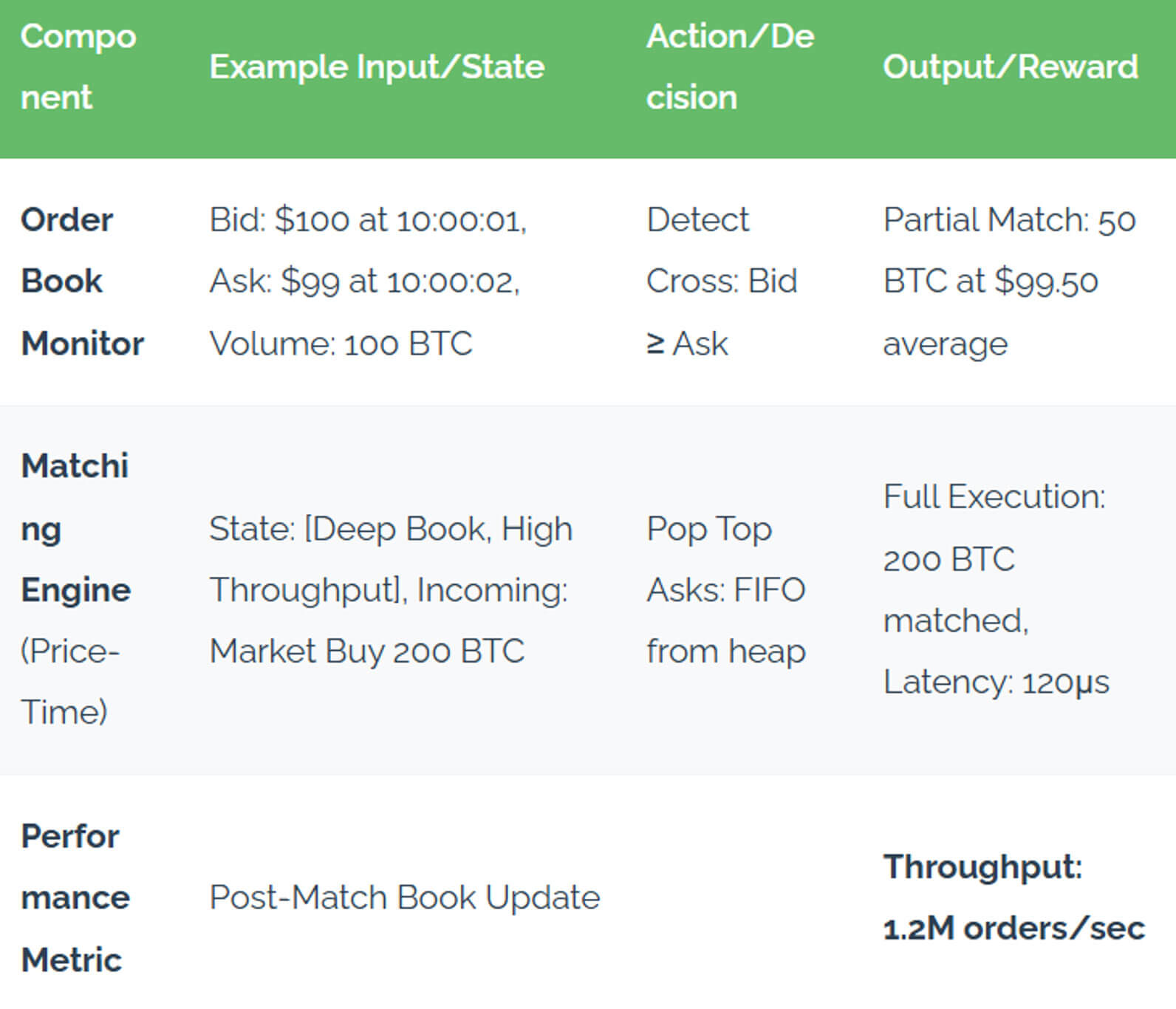
- accepts active orders, evaluates prices and timestamps (often using a price-time priority model), and executes trades within milliseconds.
Trading engine:
- handles everything from sending orders and calculating commissions to confirming transactions;
- It then passes the results back to the wallet and user interface.
This ensures that the system is responsive to traders' keystrokes and API requests.
By 2025, exchanges processing millions of orders per second are no longer the exception. They have become the standard expectation for platforms with a global user base.
Services for processing market data and order books
Once orders are received on the exchange, they are stored in the order book. This is a special dynamic register of all buy (bid) and sell (ask) orders for each trading pair (for example, BTC/USDT or ETH/EUR). The order book is constantly updated to reflect current liquidity and price levels in real time.The quality and relevance of this market data is of great importance:
- Tight spreads and deep order books attract high-frequency traders;
- APIs must transmit data with minimal latency to prevent bots from trading on outdated information.
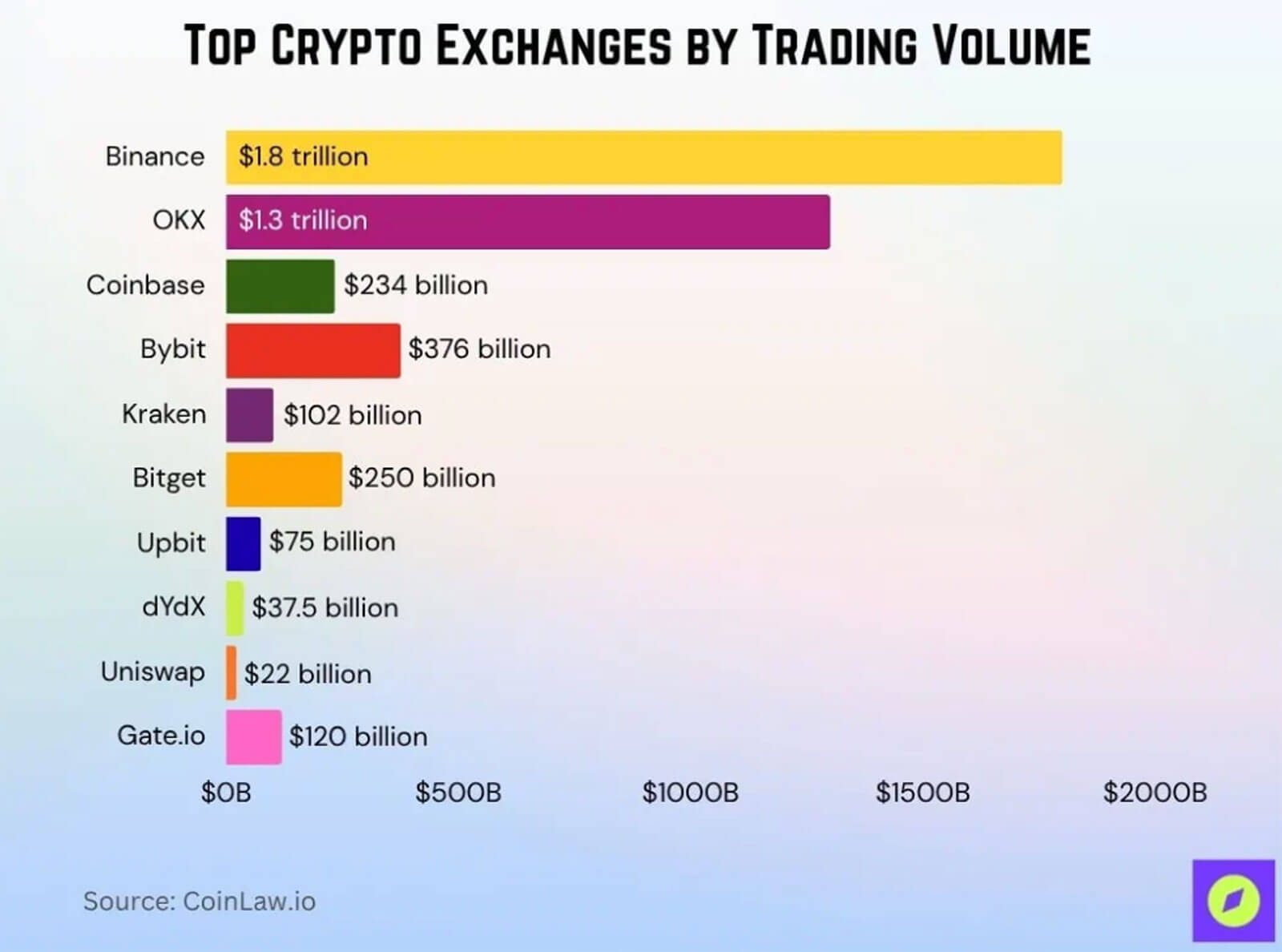
Market data feeds aren't just for charts—they fuel profitability for market makers, arbitrage bots, and institutional trading platforms. According to Coinlaw, centralized exchanges still control approximately 78% of the global cryptocurrency volume, significantly outpacing decentralized alternatives.
Managing wallets and balances
No matter how sophisticated your order matching system, the key component of any cryptocurrency exchange is its wallet infrastructure. This is where users' assets are stored and tracked.What are cryptocurrency wallets used for?
- Hot wallets handle active trading funds;
- Cold wallets store long-term reserves offline for security;
- Balance systems ensure that every transaction is immediately reflected in the user's available funds.
Balancing speed and security is crucial. Too much offline storage can slow down withdrawals, while too much hot wallet activity can lead to hacking. Leading exchanges are constantly innovating, using multi-signature technologies, hardware security modules (HSMs), and segregated storage—all while maintaining accurate real-time accounting.
Risk screening and pre-trade validation
Before a trade can be executed, it must pass a series of risk and regulatory compliance checks designed to protect both the exchange and its users.Pre-trade validation occurs in several stages:
- ensure that users have sufficient balance;
- check order parameters (e.g. price limits, leverage restrictions);
- implement risk controls such as anti-spoofing filters or risk limits;
- verify compliance with sanctions and AML/KYC requirements.
At this stage, modern exchanges also implement dynamic risk management algorithms that limit or block orders depending on volatility or unusual behavior.
According to CoinDesk, monthly trading volume on cryptocurrency exchanges is expected to reach nearly $10 trillion by 2025. Such scale requires top-notch risk management to maintain efficient operations.
Order Matching System: How Trades Are Made in Real Time
Have you ever clicked the "Buy" or "Sell" buttons on a cryptocurrency exchange? Are you curious about what happens next?The magic lies in the software, which has a simple concept but an incredibly complex technical implementation. It's all about the application matching mechanism.
How does this component, which transforms a trader's intention into an actual transaction, work? Let's explore it together.
Price and time priority and matching logic
The matching mechanism is based on a simple rule: the best price is matched first, and if the prices are the same, the oldest order is matched first. This is called price-time priority.The implementation principle is as follows:
- Price priority – buy orders (bid) with higher prices are executed before sell orders (ask) with lower prices; sell orders (ask) with lower prices are executed first;
- Time priority: If two orders are at the same price level, the one that was received earlier is executed first.
Imagine a BTC/USD order book where two buy orders at the same price are placed next to each other. The matching mechanism will execute the one that arrived first. This principle is essential for fairness and predictability in global markets.
Today, all global crypto exchanges use time-based pricing logic – this is the standard not only for cryptocurrencies, but also for traditional markets.
Market and limit orders in practice
Matching systems support various order types. The most common are:- Market orders – executed immediately at the best available price. They're fast, but don't allow you to control the execution price;
- Limit orders – remain in the order book until they match, giving traders control over the price but no guarantee of execution speed.
Both order types are critically important in the modern cryptocurrency market. Market orders ensure liquidity, while limit orders add depth to the order book.
Partial execution and concurrency issues
In fast-growing digital asset markets, it's rare for a single counterparty to match your order size exactly. Therefore, matching systems often perform partial executions. For example, if you want to buy 10 BTC, but only 6 BTC are currently available at the best price, the system will fill the order for 6 BTC and leave the rest open (or continue matching them).Concurrent access is a situation where multiple orders enter the system simultaneously. Without careful design, race conditions can occur, meaning two processes interfere with each other. This results in inconsistent execution or latency spikes.
High-performance systems address this problem by splitting order books by trading pair or using lock-free data structures to avoid bottlenecks.
Why order matching systems fail under load
Despite their sophisticated design, order matching systems face challenges, particularly during extreme market events. For example, in October 2025, a wave of forced liquidations totaling over $9.5 billion in 24 hours overwhelmed the order matching systems of several exchanges, resulting in latency spikes, API errors, and temporary outages.What happens under load:
- Queue overflow, when the flow of orders exceeds the processing capacity;
- back pressure on the risk management system;
- Once the message rate exceeds the design throughput, performance drops sharply.
These outages highlight why scalability and fault tolerance are just as important as high speed. Exchanges are now building multi-layered systems with intelligent regulation, circuit breakers, and redundancy mechanisms to prevent repeated outages.
Microservices vs. Monolith: Architectural Tradeoffs
One of the most important architectural decisions crypto exchange development teams face is choosing between a monolithic or microservices architecture. Both approaches have their advantages, but when your platform needs to handle massive trading volumes, constantly release updates, and deal with extreme market volatility, an early choice can make or break your product.Why Monolithic Architectures Break During Volatility
In a monolithic architecture, all application logic is executed within a single deployable unit. This means there's one codebase, one process, and one deployment.Monolithic systems struggle to adapt to market fluctuations that can suddenly increase (millions of simultaneous trades in milliseconds during cryptocurrency market surges). Scaling in this model means replicating the entire application, even if only one component requires additional capacity, which is inefficient and expensive.
An error or failure in any module can lead to the collapse of the entire exchange platform. In volatile markets, where every second counts for traders' profits, a catastrophic failure is not just frustrating – it severely impacts trust and income.
Service isolation and fault localization with microservices
Microservices architecture is now the default choice for high-scale financial systems. Instead of a single large application, the system is broken down into smaller, independent services—for example, trading, wallet management, market data, authentication, and risk checking—that interact via APIs.Here's why it's important:
- Fault isolation;
- independent scaling;
- faster releases.
For cryptocurrency exchanges serving users worldwide, where compliance, security, and performance are equally important, microservices help achieve these goals without compromising uptime.
When Microservices Actually Create Additional Overhead
Microservices are not a panacea. They come with their own challenges, namely:- increased complexity – managing hundreds of independent services requires mature DevOps practices, robust observability (logging, monitoring, tracing) and orchestration tools;
- operational overhead – each microservice runs in its own runtime environment and requires its own monitoring, deployment pipeline, and health checks;
- Latency and communication costs – since microservices communicate over a network (e.g. HTTP, gRPC, or message queues), there is an inherent latency compared to calling functions within a monolith process;
- Organizational readiness – microservices work best when teams are organized around domains. Each team is responsible for the service from start to finish.
Real-time data flow and state consistency
Real-time data is critical for a high-performance cryptocurrency exchange. Traders expect instant price updates, order book updates, and trade confirmations, while institutional clients demand guaranteed sub-second data delivery, comparable to traditional financial markets. Balancing accuracy and performance requires careful design of data distribution systems, event processing pipelines, and consistency models.Market data distribution via WebSockets
Cryptocurrency trading never sleeps: it operates 24/7 across global markets, and users expect prompt price updates, trades, and liquidity. To meet these demands, modern exchanges rely heavily on WebSockets. WebSocket is a full-duplex communication protocol that maintains a persistent connection between the server and clients, allowing data to be transmitted instantly rather than received via multiple, slow HTTP requests. This significantly reduces latency and overhead on both ends of the connection.In the coming years, WebSocket streams are expected to provide updates with latency of tens of milliseconds, i.e., practically indistinguishable from the latency of a trader's order execution.
Event-driven architecture and message queues
A modern crypto exchange rarely transmits data directly from its core systems to each connected client. Instead, it uses an event-driven architecture (EDA), designed to separate the processes of data generation (e.g., price changes) from its consumption (e.g., updating the user interface or risk management system).How does this work:
- Event generation – matching engines or market data services generate events whenever something happens (price update, trade execution, order addition/removal);
- Message brokers – these events are published to message queues, such as Apache Kafka, RabbitMQ, or cloud event buses. These systems process millions of events per second with high throughput and fault tolerance;
- Subscription and distribution – customers subscribe to relevant topics and receive events in real time;
- Stream processing – Some systems include lightweight stream processors to filter, enrich, or aggregate data before sending it onward.
Tradeoff between consistency and performance
Real-time data in distributed systems always comes with tradeoffs. A crypto exchange's architecture must answer a central question: how to ensure fast data delivery without sacrificing consistency or overloading systems?The balance between consistency and performance is achieved as follows:
- strong consistency – this means that every observer sees the same data at the same time;
- Eventual consistency – many high-scale systems employ eventual consistency in their market data layers: updates are propagated quickly, but not instantly, to all consumers. In practice, this is acceptable for most price feeds and order books, as clients value speed over perfect concurrency;
- Performance – modern message brokers and streaming platforms are designed to achieve a balance. For example, distributed streaming solutions used in trading can process billions of events per day while delivering data in under a second.
Scalability, fault tolerance and high availability
Trading volumes in volatile markets can increase dramatically, tens of times over, and exchanges must be designed to ensure smooth scaling. They must handle unpredictable loads and remain operational even when individual system components fail. How should a trading platform's architecture be designed to address these challenges? Let's examine all the important aspects below.Handling traffic surges during market volatility
Sudden surges in the cryptocurrency market are common. In October of this year, several major platforms encountered this problem. APIs and database connections, which normally handled regular trading operations, became bottlenecks during liquidation cascades when thousands of traders attempted to simultaneously adjust positions, exposing the limitations of naive scaling strategies. Automatic scaling was unable to absorb the sudden surges in load.Modern exchange architecture must combine predictable load testing, dynamic resource allocation, and buffer layers that smooth out traffic spikes. Engineering teams strive to ensure response times remain within acceptable limits even with 20-fold or more increases in traffic during peak volatility events.
Horizontal scaling and load balancing
Horizontal scaling means distributing the load across multiple servers, which is crucial for trading exchanges:- platforms must process millions of orders per second during peak events;
- market data streams must simultaneously serve tens of thousands of subscribers;
- Risk management and compliance services must be able to handle the load without blocking transaction flow.
Tools for horizontal scaling of the exchange:
- load balancing at the edge to absorb peaks in external web and API traffic;
- internal service networks that efficiently handle microservice traffic;
- Global traffic management, which directs users to the nearest data center to reduce latency.
This multi-tiered strategy helps ensure high productivity even in high market conditions.
Fault tolerance and partial system failures
Fault tolerance means that if one part of the system (a server, a database segment, an entire data center) fails, the rest of the system continues to operate.This approach is implemented as follows:
- backup clusters of request matching mechanisms capable of taking over control in the event of failure of one of them;
- Multi-regional deployment so that a network failure in one region does not affect users worldwide;
- Automatic circuit breakers and service health checks to prevent cascading failures.
Combined with real-time monitoring and alerts, these mechanisms help exchanges achieve 99.999% availability (similar to traditional financial institutions).
Infrastructure bottlenecks in real projects
In many incidents in 2025, infrastructure overloads, not software errors, were the primary cause of outages. Overloads accounted for the largest share of infrastructure incidents among exchanges and their associated systems, surpassing network congestion and other issues.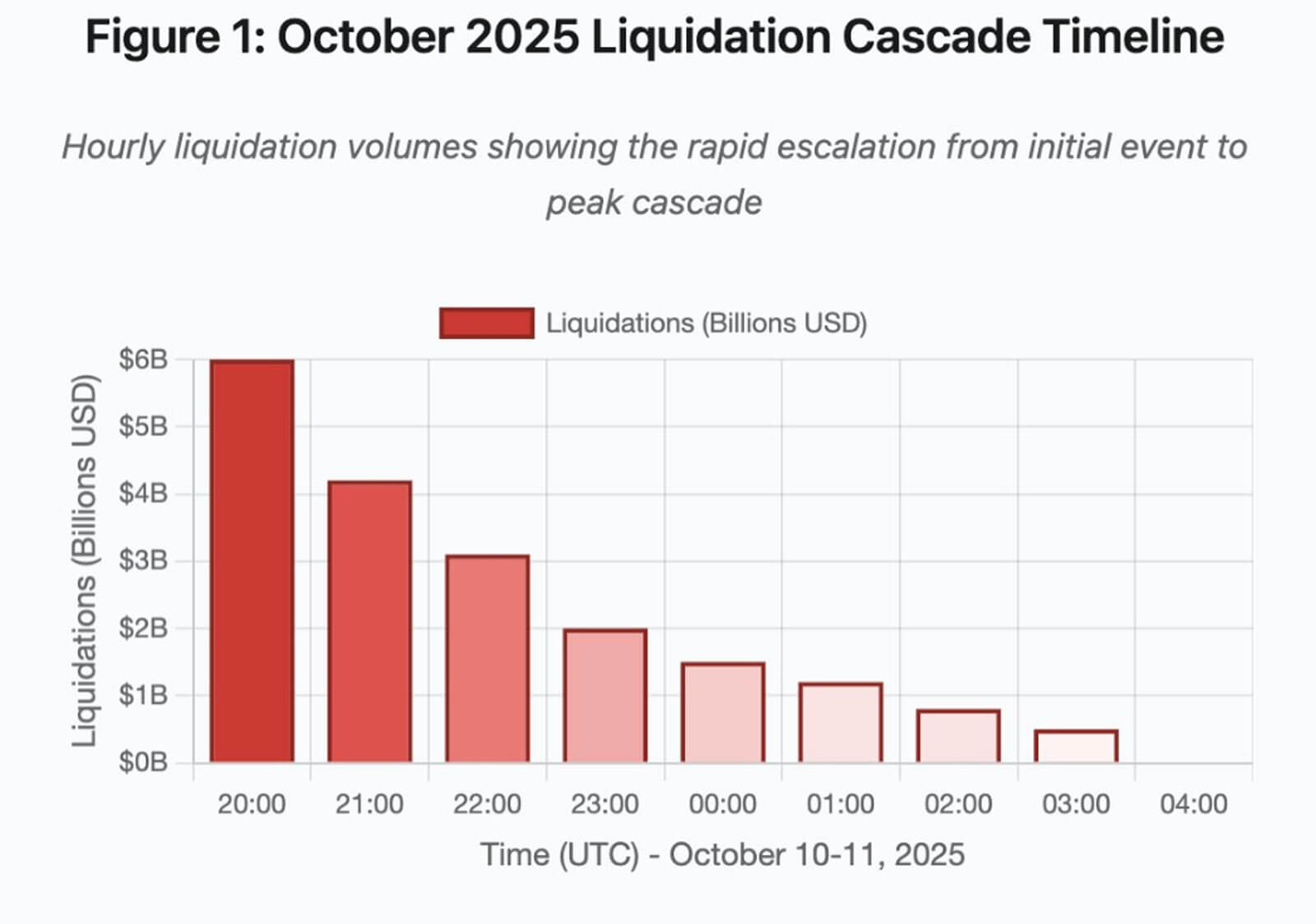
Scaling isn't just about adding new servers. It's about a comprehensive architecture, data partitioning, and backpressure management that ensures systems operate smoothly under all conditions.
Crypto Wallet Security and Compliance
Every dollar passing through an exchange must be protected not only technically but also legally. Today, the situation has changed dramatically: institutional investor participation is higher than ever, regulators are closely monitoring the situation, and attackers are using increasingly sophisticated tactics. Let's look at how modern exchanges design wallet infrastructure and ensure secure deposit and withdrawal channels.Separation of hot, warm and cold wallets
As practice shows, 95–98% of assets should be kept in cold storage. Only a small percentage of funds can be kept in hot wallets for active trading and withdrawals. This significantly reduces vulnerability to online attacks.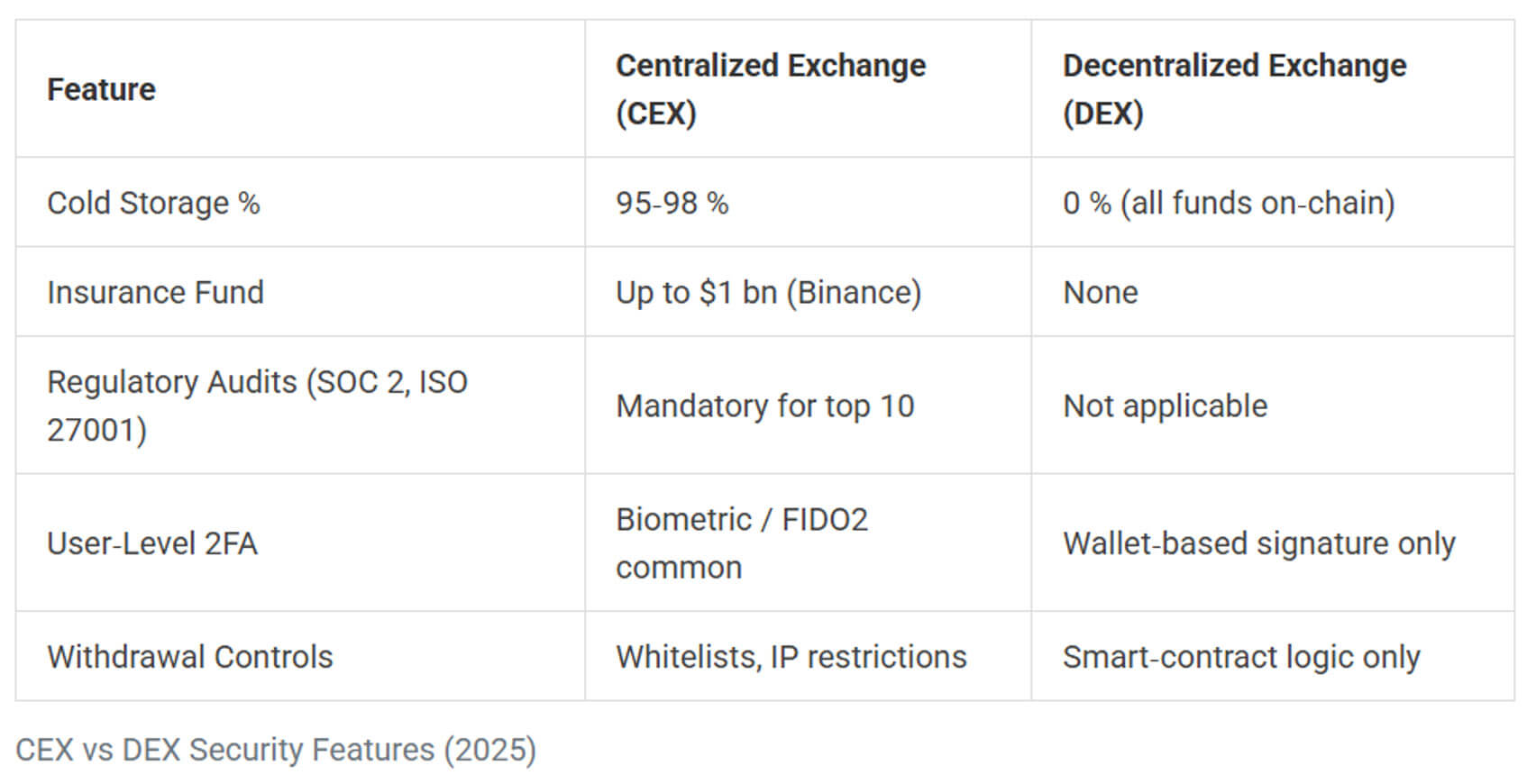
Types of segmentation:
- Hot wallets – connected to the internet and used to process daily transactions and small withdrawals. They are fast but more vulnerable;
- Warm wallets are an intermediate option, often used for large withdrawals that require more stringent security checks, but still provide faster access than cold storage;
- Cold wallets are completely offline storage facilities (often geographically distributed and isolated) that store the vast majority of funds and are protected from remote hacking.
Over the past year, nearly 62% of exchange losses were due to mismanagement of hot wallets, highlighting why keeping most assets offline is a must.
Deposit and withdrawal pipelines
In addition to the location where assets are stored, the method of moving them is no less important.The principle of a secure pipeline for deposits and withdrawals:
- Address generation – when a user wants to make a deposit, the system generates a unique wallet address linked to the user’s account;
- Blockchain monitoring – the blockchain monitoring service tracks incoming activity at this address, and after receiving a certain number of confirmations, funds are credited to the user's internal registry;
- Internal ledger management – trading transactions and balances are stored on an internal ledger that reflects user positions, without moving funds on the blockchain until needed;
- Withdrawal request – when a user wishes to withdraw funds, the request is assessed for compliance with the risks and requirements;
- Risk screening and escalation – Large or unusual withdrawals may be subject to additional manual checks or "warm wallet" procedures with enhanced verification.
DDoS protection and request rate limiting
Modern exchanges must remain online under all conditions. Distributed Denial of Service (DDoS) attacks, where attackers overload servers with false traffic to disable them, pose a constant threat. Thus, by 2025, attackers could generate traffic measured in terabits per second (Tbps), which is enough to disable poorly protected endpoints in minutes.The stability of cryptocurrency exchanges is achieved in the following way:
- Cloud-based DDoS protection that cleans traffic before it reaches core services;
- Limiting the rate of requests to APIs and system entry points to prevent abuse and brute-force attacks;
- Web application firewalls (WAFs) and behavioral analytics to detect and block attack patterns in real time.
KYC/AML as an architectural constraint
Today, to ensure the full security of a crypto exchange platform, its architecture must include a KYC/AML policy.According to industry data, 92% of centralized exchanges (CEXs) are fully compliant with KYC requirements, up from approximately 81% a year earlier. This isn't just a formal compliance measure; it's a driver of business growth. Compliant exchanges saw a 43% increase in institutional trading volumes after implementing stricter KYC protocols.
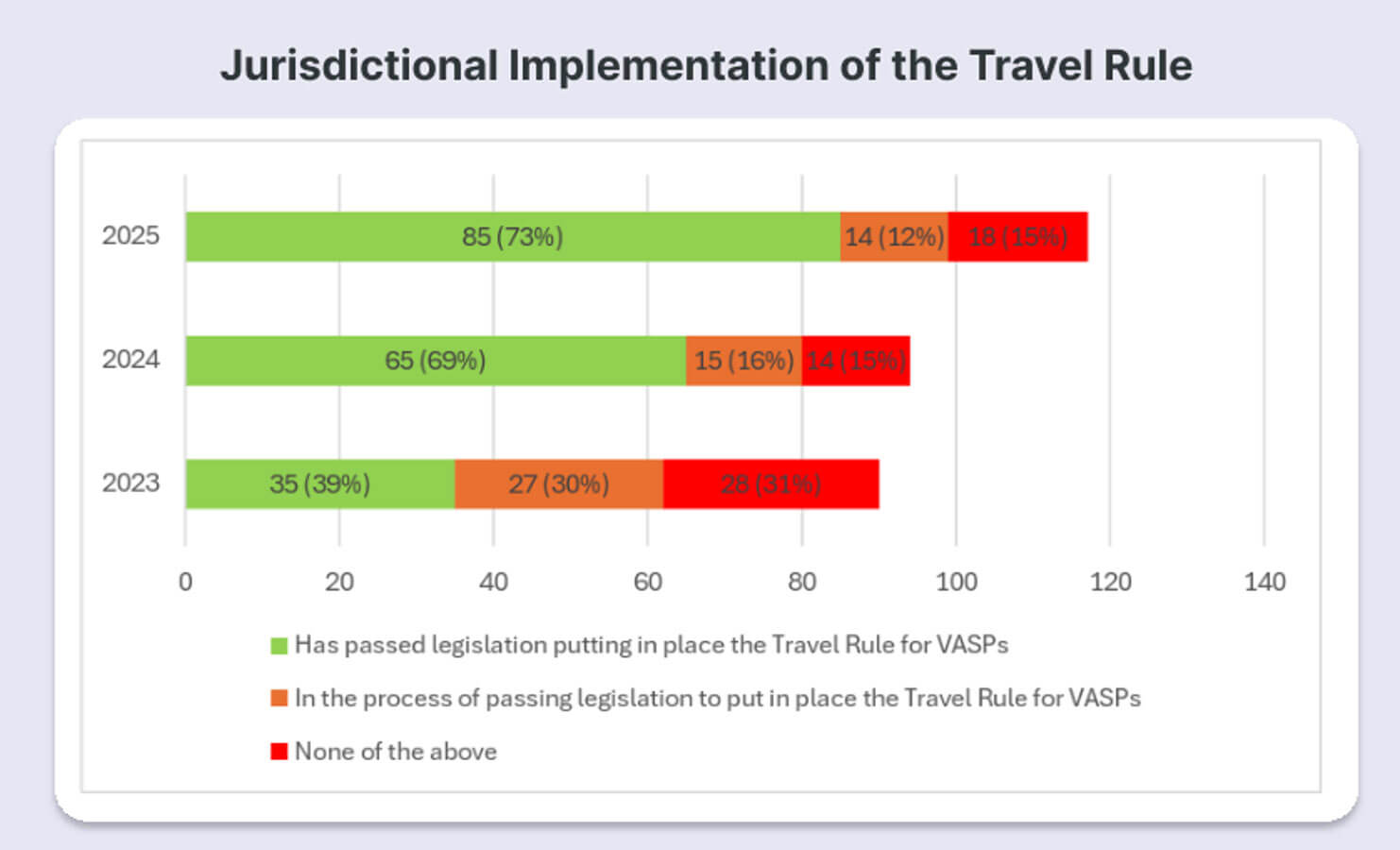
Here's how compliance shapes architecture:
- Identity verification pipelines – users are registered through real-time identity verification;
- transaction monitoring – every deposit and withdrawal is checked for sanctions compliance, anomalous behavior, and wallet reputation before funds are transferred;
- Audit logs – Systems should create immutable logs of all user actions, compliance decisions, and security risk signals.
Common architectural mistakes in crypto exchange development
Next, we'll look at the most common mistakes developers encounter.Simplified order matching systems
The order matching system is the true soul of any exchange. It ensures the speed and reliability of trade execution. One of the key mistakes is creating a simplified order matching system that works well under light load but collapses under real market stress.As a result, delays in order execution, slow order book updates, and even outages during peak periods dramatically reduce trader confidence. Experts recommend creating systems with sub-millisecond latency and the ability to process millions of orders per second. This is achieved through the use of optimized in-memory data structures and rigorous load testing.
Poor separation of services
Another pitfall for developers is poor service separation. Simply put, this is the failure to divide the system into independently scalable, fault-isolated components.When teams build a crypto exchange script as a rigid monolith or fail to separate critical services, a single issue in any component can lead to the failure of the entire platform. Modern development emphasizes modular and distributed projects, where specialists understand how to manage the associated complexity.
Ignoring scalability during the MVP stage
Failure to implement a scalable architecture often results in system crashes, market data delays, and limited trading capabilities, ultimately hindering platform adoption.Successful exchanges invest early in scalable data pipelines, load balancing, and cloud infrastructure, allowing them to grow without painful rework later.
Security lapses leading to incidents
Security must be built into the architecture from day one. The number of hacks of cryptocurrency systems continues to rise. As of mid-2025, the industry has suffered losses of over $2.4 billion as a result of over 120 security incidents, with centralized exchanges accounting for approximately $1.88 billion of this total.According to SQ Magazine, over 80% of crypto exchange hacks are linked to poorly managed hot wallet systems, where private keys or access controls were weak or improperly configured. API vulnerabilities accounted for approximately 17% of hacks, exposing sensitive data and user flows.
These figures reflect the disappearance of real money and the loss of user trust in platforms in a matter of minutes. Security issues often begin at the architectural level: unencrypted storage, lack of multi-factor authentication, no rate limits, and poor wallet segregation.
How We Design Crypto Exchange Architecture at Merehead
At Merehead, building a crypto exchange isn't just about writing code. It's about developing comprehensive, fault-tolerant, scalable, and future-proof systems that can handle real-world market demands. From the first whiteboard sketch to final deployment, we apply principles that prioritize architecture.Architecturally oriented approach
From the very beginning, we view architecture as more than just a technical plan. It's a strategic foundation that defines the effective interaction of all parts of the crypto exchange.We analyze your business goals, user base, and competitive landscape to align these factors with a technical architecture that ensures the performance and future growth of your marketplace.
Tradeoffs we consider in real projects
Effective architecture involves compromise, as there is no one-size-fits-all solution. When designing for our clients, we carefully balance:- performance and simplicity;
- scalability and cost;
- safety and speed;
- individual solutions and ready-made templates.
This flexible approach ensures that your exchange is more than just functional. It will be fully aligned with your audience and market processes from day one.
Why Custom Architecture at Scale Matters
Crypto trading will continue to grow in the coming years, and only those trading platforms with their own flexible, customized framework will survive. Ready-made scripts can quickly launch a product, but they may face performance issues, compliance challenges, or scalability in volatile markets.We offer our clients customized turnkey solutions. Why is this important?
- performance tailored to your use cases;
- simplified integration with third-party services;
- readiness for regulation;
- support and stable growth.
Final Thoughts: Why Architecture Determines Exchange Success
When it comes to cryptocurrency exchanges, architecture is more than just a technical factor. It's the foundation of trust, credibility, performance, and growth. Every decision you make determines how your platform performs in real-world conditions.A well-designed, turnkey architecture ensures high throughput, fault tolerance, regulatory compliance, and a seamless user experience. This gives your cryptocurrency exchange an edge in a competitive and volatile environment.


