
Here are the numbers you've been looking for. But behind them lies a complex architecture of choices: where to skimp at the start, and where to avoid them completely. Where to source ready-made modules, and where to develop from scratch. And why the difference between "cheap" development in Asia and high-quality development in Eastern Europe isn't just a price tag, but a matter of your business's survival 18 months from now. As a leading crypto exchange development company, we focus on building architectures that don't just launch but scale under heavy market loads.
| PARAMETER | MVP ($20k–$40k) | Scalable product ($200k–$400k) | Enterprise ($500k+) |
| Development period | 2-3 months | 4–6 months | 8–12 months |
| Types of trading | Spot (simple) | Spot + Margin + Futures | Spot + Margin + Futures + Options + OTC |
| Matching Engine | Basic (Node.js) | Optimized (Node.js + C++) | High- frequency (C++ / Rust) |
| Number of simultaneous users | Up to 1,000 | Up to 50,000 | 100,000+ |
| Blockchain nodes | External providers (QuickNode) | Hybrid (external + internal) | Own nodes on AWS |
| KYC/AML | Absent or basic level | SumSub / Onfido | Enterprise solutions + manual verification |
| Safety | Basic (2FA, encryption) | Advanced (HSM, audits) | enterprise -level protection |
| Liquidity | Absent (market) maker bot) | Liquidity aggregator | Direct connections to major exchanges |
| Server infrastructure | Hetzner ($100–$200/ month) | Hetzner → gradual transition to AWS | AWS / Google Cloud ($5,000+/ mo) |
| Interface customization | Minimum | Full customization | White-label + unique features |
While centralized platforms offer high liquidity, many founders today also explore P2P crypto exchange development to provide users with direct trading capabilities without intermediaries.
How do we evaluate the budget?
We don't just pull numbers out of thin air. Our methodology is a discovery phase, where we decompose the project into epics:- Security (authentication, basic encryption, 2FA)
- Core (matching engine , order processing, balances)
- UI/UX (trading interface, personal account , admin panel)
Security isn't just a feature; it's a foundation. For a comprehensive list of protections your platform needs, read our ultimate guide to crypto exchange security 2026.
Each epic is assessed individually. If the client's budget is fixed, we help set priorities: we eliminate complex order types (stop-losses, trailing stops) at the start, leaving only basic market and limit orders. This allows us to stay within budget without losing key functionality.
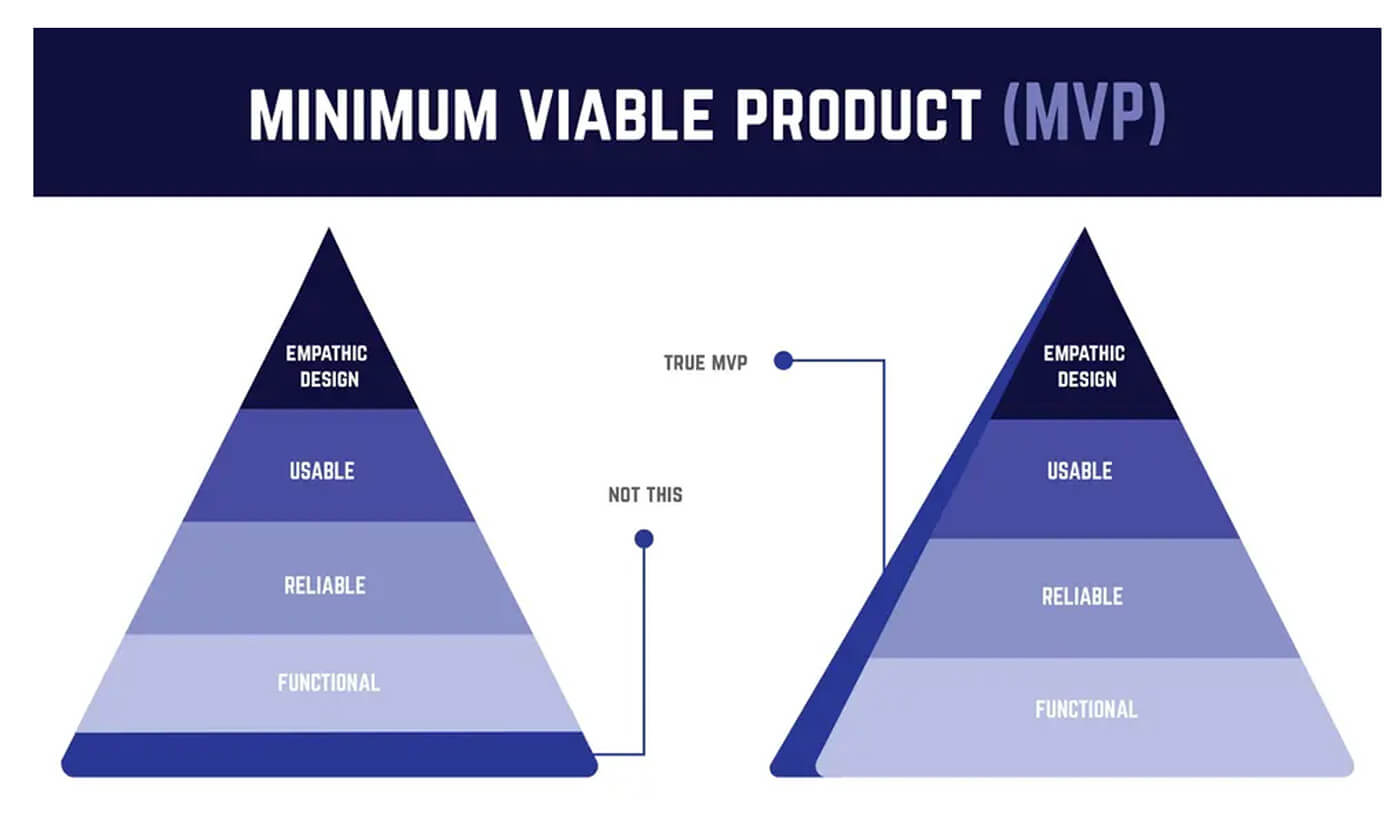
MVP ($20,000–$40,000): Hypothesis Test, Not a Rocket
A minimum viable product (MVP) isn't a "stripped-down exchange". It's a strategically designed platform with a minimal set of features that work perfectly. No bugs. No lag. No "we'll finish it later".What's included:
- Basic spot trading (buy/sell)
- A simple analytics dashboard (conversion, activity, basic metrics)
- Integration with 3-5 major cryptocurrencies (BTC, ETH, USDT, BNB, SOL)
- External nodes via QuickNode (no proprietary blockchain servers)
- Hetzner servers ($100–$200/month)
- Minimal or deferred KYC
Don't integrate 50 coins at the start. Start with the top 5. Savings on wallet infrastructure and maintenance are $15,000–$25,000 in the first year.
In our experience, at this stage, it's crucial to focus on simple functions that work clearly and smoothly. We recommend adding a minimal analytics dashboard —this will allow you to monitor whether your business model is working for your audience from the very beginning.
Scalable Product ($200,000–$400,000): Ready for Load
This is where real engineering begins. The architecture shifts from a monolith to microservices. Margin trading, futures, and liquidity aggregators emerge.What is added:
- Full-fledged matching C++ engine for high-frequency trading
- Margin and futures trading
- Integration with KYC providers (SumSub, Onfido)
- Own nodes for major blockchains (transition from QuickNode)
- Microservice architecture
- Advanced risk management system
Enterprise Platform ($500,000+): Playing in the Big Leagues
Coinbase, Kraken, and Binance level. Requirements: 99.99% uptime , processing 100,000+ transactions per second, full regulatory compliance , and proprietary liquidity.Components:
- High-frequency trading engine (Rust/C++)
- Full range of derivatives + options
- Own nodes on AWS/GCP with a global CDN
- Enterprise KYC with manual verification
- Direct integrations with banks for fiat transactions
- Licenses to operate in the USA (MSB/MTL), EU (MiCA), Asia
Core Infrastructure: Build vs. Buy Matching Engine
Matching The engine is the technical heart of the exchange. This is where founders are most often tricked into spending extra money, selling either overpriced ready-made solutions with critical limitations or a "unique development" that fails under load. We've seen both scenarios. One client bought a "ready-made engine" for $80,000, which crashed during the first Bitcoin pump when the load increased fivefold. Another paid $300,000 for a "custom" engine in Python”, which could not process even a thousand orders per second.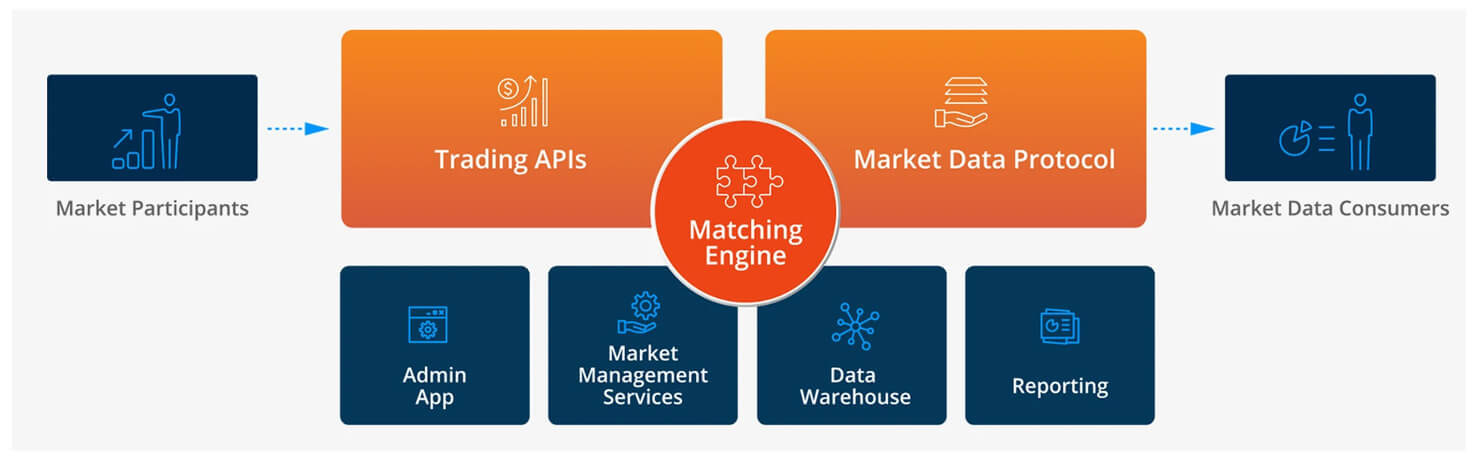
The problem is that matching An engine isn't a single module. It's a distributed system where every millisecond of latency costs money, and every bug in the execution logic costs reputation. Reddit The crypto community is full of stories of developers who underestimated the complexity: "We thought it was just sorting orders by price. Six months later, we realized we hadn't accounted for partial execution, self-trading. prevention, margin calls and races conditions under high volatility".
Three Difficulty Levels: From Spot to Derivatives
- Level 1: Spot Engine - I think Simple. The user wants to buy Bitcoin at the market price or place a limit order. The system finds a counterparty, executes the trade, and updates balances. In reality, even this has its pitfalls: partial order execution (when you don't buy the entire volume at once), time priority at the same price, order cancellation, and transaction rollbacks in case of errors. Basic spot The Node.js engine with Redis for queues processes 100-500 orders per second. Development costs are $30,000-$50,000. This is sufficient for an MVP, but not for a pump.
- Level 2: Margin Engine – adds a complexity dimension. The system must now monitor the collateral value of positions in real time and calculate liquidation price, execute margin calls when the price moves against the trader. Every price point in the market triggers the recalculation of thousands of positions. A delay in calculations means cascading liquidations, unpaid debts, and exchange bankruptcy. Here, Node.js can no longer handle the math. C++ or Rust is required for the calculation core, with Node.js remaining for the API and coordination. Throughput: 1,000-10,000 orders per second. Cost: $80,000-$150,000.
- Level 3: Derivatives/Futures is higher Pilotage. Perpetual swaps, options, complex structures with expiration. Funding Rate calculations are performed every eight hours. Insurance funds cover liquidation shortfalls. Cross-margining between different instruments. Latency requirements drop to microseconds. Throughput is 50,000+ orders per second. C++ or Rust, FPGAs for critical paths, and a distributed architecture are essential. Cost: $200,000-$400,000 for the engine alone, plus the same for infrastructure and testing.
Why One Language is the Path to Failure
Our experience shows that the choice of technology stack determines the fate of a project. And a single backend language isn't enough. The frontend can be a single language - React or Vue.js. But the backend requires a polyglot approach.Node.js - our choice for APIs, real-time updates via WebSocket, and integration with blockchain nodes. The JavaScript ecosystem provides development speed, a huge community, and ready-made libraries for Web3. However, Node.js does not handle CPU- bound tasks well. Complex mathematical calculations, cryptography, and matching logic - here he chokes.
Redis works in conjunction with Node.js as a cache for sessions, order queues, and pub/sub for real-time updates. We see that this combination shows excellent results for hot data. However, Redis is not a database for storing data. It loses data on restart unless persistence is configured.
PHP - for admin panels, CRM, and operational interfaces. Microsecond speed isn't required here, but rather development speed. Laravel provides a ready-made infrastructure for CRUD, authorization, and reporting.
Python - for AI bots, analytics, machine learning models. If you need trading algorithms based on predictive analytics, sentiment News analysis, market making optimization – Python is indispensable.
C++ - For kernels. Matching engine, margin calculation, execution orders, market maker bots. Every microsecond counts here. C++ provides memory control, eliminating garbage collection, collection of pauses, possibility of optimization for specific hardware.
Build vs. Buy: Our Verdict
Buying a ready-made engine only makes sense for MVPs with minimal volumes. The price is $50,000 - $150,000. Risks: you don't control the code, the vendor may disappear or stop updating the product, and scaling is limited by the vendor's architecture. We've seen cases where white-label vendors demanded a percentage of revenue—after two years, this turned out to be more expensive than custom development.Building your own engine is the only way for a serious exchange. Yes, it's more expensive at the start. Yes, it takes longer. But you control the latency, can optimize for your specific requirements, and don't pay vendor fees. When scaling, custom engine turns out to be cheaper: you pay only for the infrastructure, not for licenses.
A hybrid approach is our recommended path for most clients. We take a proven open-source core for basic functionality (for example, a modified LMAX Disruptor pattern), customize critical paths for the specifics of the crypto market, and add unique features. This reduces time-to-market from 12 to 4-6 months, while maintaining flexibility and control.
A cryptocurrency exchange is a high-load system. Writing it in a single language is illogical and inefficient. Leverage the strengths of each tool: JavaScript for development speed, C++ for critical path performance, Python for analytics, and PHP for operational interfaces. This is the only way to build a crypto exchange that will survive not only the first month, but also the first real market pump.
The “Hidden” Costs: Licenses and Jurisdiction
90% of articles about development costs fail to mention this: without a license, your exchange is simply an expensive $50,000–$500,000 script that cannot be legally used. Legal support and compliance can cost more than the code itself.Three Jurisdiction Scenarios: Numbers and Reality.
Offshore (Seychelles, Cayman Islands, Belize)
| License cost | $15,000–$50,000 |
| Receipt time | 2–4 months |
| Capital reserve | $0–$50,000 |
| Annual renewal | $5,000–$15,000 |
| Cost of a compliance officer | $0 (not required) |
The advantages are obvious: cheap, fast, minimal requirements. The disadvantages are more serious: low user trust (registration conversion rates are 2-3 times lower than those of licensed EU exchanges), problems with banking partnerships (70% of European banks refuse service), and the risk of sanctions and FATF blacklisting. Suitable for MVPs, hypothesis testing, and regional markets with a turnover of up to $1,000,000 per month.
Europe (Lithuania, Estonia, Poland)
| License cost | $50,000–$150,000 |
| Receipt time | 6–12 months |
| Capital reserve | €125,000–€350,000 ($135,000–$380,000) |
| Annual audits | $20,000–$50,000 |
| Cost of a compliance officer | $60,000–$120,000 / year |
| Annual renewal + fees | $15,000–$30,000 |
Requirements include MiCA Compliance (since 2024), regular audits, cyber risk insurance ($50,000–$100,000/year). Pros: market trust (conversion rates are 40–60% higher than offshore ones), SEPA access (savings of 2–3% on each fiat transaction), and regulatory clarity. Suitable for serious mid-sized exchanges with a monthly turnover of $1,000,000–$50,000,000.
USA (MSB + MTL by state)
| Licensing costs | $250,000–$1,000,000+ |
| Receipt time | 12–24 months |
| Capital Reserve by State | $100,000–$5,000,000 (NY demands the most) |
| MTL licenses | 48 of the 50 states require a separate license. |
| Cost of a compliance officer | $150,000–$300,000 / year |
| Annual audits + lawyers | $100,000–$300,000 |
| Insurance | $200,000–$500,000 / year |
Requirements include FinCEN MSB (registration costs $5,000–$10,000, but that's just the beginning), MTL in each state ($5,000–$50,000 per state plus reserves), regular regulatory exams, and a mandatory AML officer with CAMS certification. Plus, access to the most liquid market ($40 trillion economy) and maximum institutional trust (deposit conversion rates for deposits > $100,000 are 5–10 times higher than offshore). Suitable only for enterprise platforms with institutional capital of $10,000,000+ and monthly turnover of > $100,000,000.
Integrating Legal Requirements into Code
We don't just "do KYC". We integrate legal requirements into the platform's architecture to minimize risks and operational costs.Geoblocking at the infrastructure level saves $50,000–$100,000 per year in fines. The module identifies the user's country by IP + GPS (99.2% accuracy), automatically blocks registration for sanctioned regions (North Korea, Iran, Crimea), and configures flexible rules: allow viewing exchange rates but not trading, or block completely. Implemented at the CDN level (Cloudflare) Workers), latency adds < 5ms.
Smart KYC Flow increases conversion by 40–60%. Traditional onboarding KYC screens out 60–70% of users. Our solution: deferred KYC. A user registers → trades up to $1,000 or for 30 days → KYC is required only upon withdrawal or first fiat transaction. Result: higher engagement, lower abandonment rates. Implementation cost: $15,000–$25,000; acquisition savings: $100,000+ in the first year.
Automatic transaction monitoring (KYT) reduces the risk of fines by 90%. Integration with Chainalysis ($50,000–$150,000/year depending on volume), Elliptic, or Crystal. Each transaction receives a real-time risk score of 0–100. Automatic freezing at scores >80, manual verification at scores >50–80, and skipping at scores <50. False positives: 0.5–2%, which is 3–5 times better than cheaper solutions.
Security as a Non-Negotiable Investment
In crypto, skimping on security is a direct path to losing reputation and money. We've seen exchanges with $50M+ in turnover shut down due to hacks that could have been prevented with basic measures costing $200,000–$300,000. The cost isn't just money, but also recovery time: 6–18 months to regain user trust after an incident.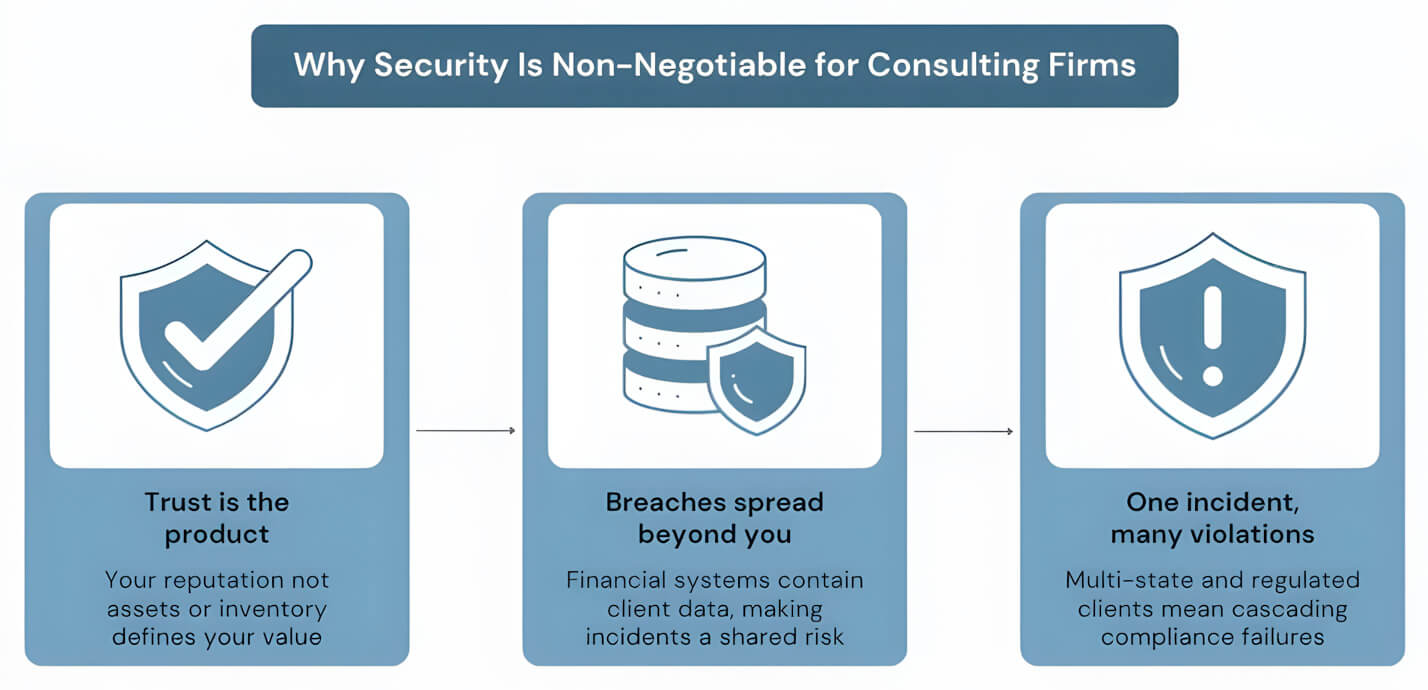
Security Stack: Numbers and Priorities
Infrastructure level: $30,000–$80,000 per year. DDoS protection with Cloudflare Enterprise or similar costs $2,000–$5,000/month. WAF with custom rules for crypto-specific attacks (order flooding, order manipulation) book) — another $1,000–$3,000/month. Separating environments: production, staging, and development on physically isolated servers adds 30–40% to infrastructure costs, but reduces the risk of compromise by an order of magnitude.Data level - $50,000–$150,000 first year. Encryption at rest (AES-256) and in Transit (TLS 1.3) - basic hygiene. Hardware Security Modules (Thales, Utimaco) for private keys - $10,000–$50,000 one-time plus $5,000–$15,000/year for maintenance. Backups based on the 3-2-1 rule (3 copies, 2 different drives, 1 offline) - $5,000-$20,000/year depending on volume.
Access level: $15,000–$40,000/year. Mandatory 2FA (TOTP + SMS backup) — integration: $5,000–$15,000. YubiKey hardware keys for administrators: $50–$100/ unit; for a team of 10–20 people: $1,000–$2,000/year. RBAC (Role - Based Access Control) with separation: the developer has no access to keys, the admin has access to the code, and DevOps has access to user data. Implementation: $10,000–$25,000, savings from insider threats: potentially millions.
Audits and testing: $85,000–$310,000/year. External smart contract audit: $15,000–$50,000. Platform penetration testing: $20,000–$60,000 every 6–12 months. Bug Bounty program: $50,000–$200,000 reserve for rewards, average payout for a critical bug is $10,000–$50,000. Statistics: 70% of critical vulnerabilities are found through bugs, bounty, not internal commands.
Post-Launch Reality: OPEX and Maintenance
Development accounts for only 30–40% of the total costs of the first two years. The rest are operating expenses, which most contractors don't mention. We call this the "second launch cost": after release, the platform requires constant maintenance, and these costs need to be factored in upfront.Infrastructure is the servers your exchange runs on. At the start (MVP), you can get by with an inexpensive German Hetzner: $100–$200 per month. Once you reach 1,000 active users, you'll need to upgrade to a hybrid with AWS: $500–$1,500 per month. With 10,000+ users, only the powerful AWS or Google Cloud will cost you: $2,000–$5,000 per month.
Blockchain nodes are a different story. We start with ready-made solutions (like QuickNode): $100–$500/month. Then we move on to our own nodes. Compare: one node on AWS costs $300–$500/ month, while on Hetzner it's $60–$100. For 3–5 nodes, the difference is colossal: $900–$2,500 versus $180–$500. Our advice: stick with Hetzner until your monthly turnover reaches $100,000, saving 70–80%.
KYC is a fee for verifying each user. SumSub charges $1.35–$1.85 per user. For 1,000 users, it's $1,350–$1,850 per month. For 10,000 users, it's $13,500–$18,500. We partner with SumSub and offer a 20–50% discount: $0.70–$1.30. For large volumes, that's a net savings of $5,000–$10,000 per month.
Support team costs from $1,000–$2,000/month for an MVP (one DevOps + part-time developer) to $10,000–$20,000 for growth (3–5 people). A large exchange requires 10–20 specialists on a 24/7 basis: $50,000–$200,000/month.
Marketing is the biggest expense, accounting for 30–50% of the total budget. One active user costs $50–$200, 10,000 users requires $500,000–$2,000,000. Marketing is essential, otherwise the exchange will be empty.
White-label vs. Custom: The Cost of Scalability
The most common question founders ask is: "Why not just buy something ready-made"? The answer depends on where you see your exchange in 2-3 years. This choice affects not only your starting budget but also your ability to scale.White-label is like renting someone else's house. You move in quickly, the furniture is in place, and everything works. Price: $50,000–$150,000 for a license and basic setup. Up and running in 1–2 months. But the walls can't be moved, the kitchen is uncomfortable, and in a year the landlord might raise the rent or kick you out completely. If you are looking for a rapid market entry, our white label CEX software offers a cost-effective way to launch with a proven codebase.
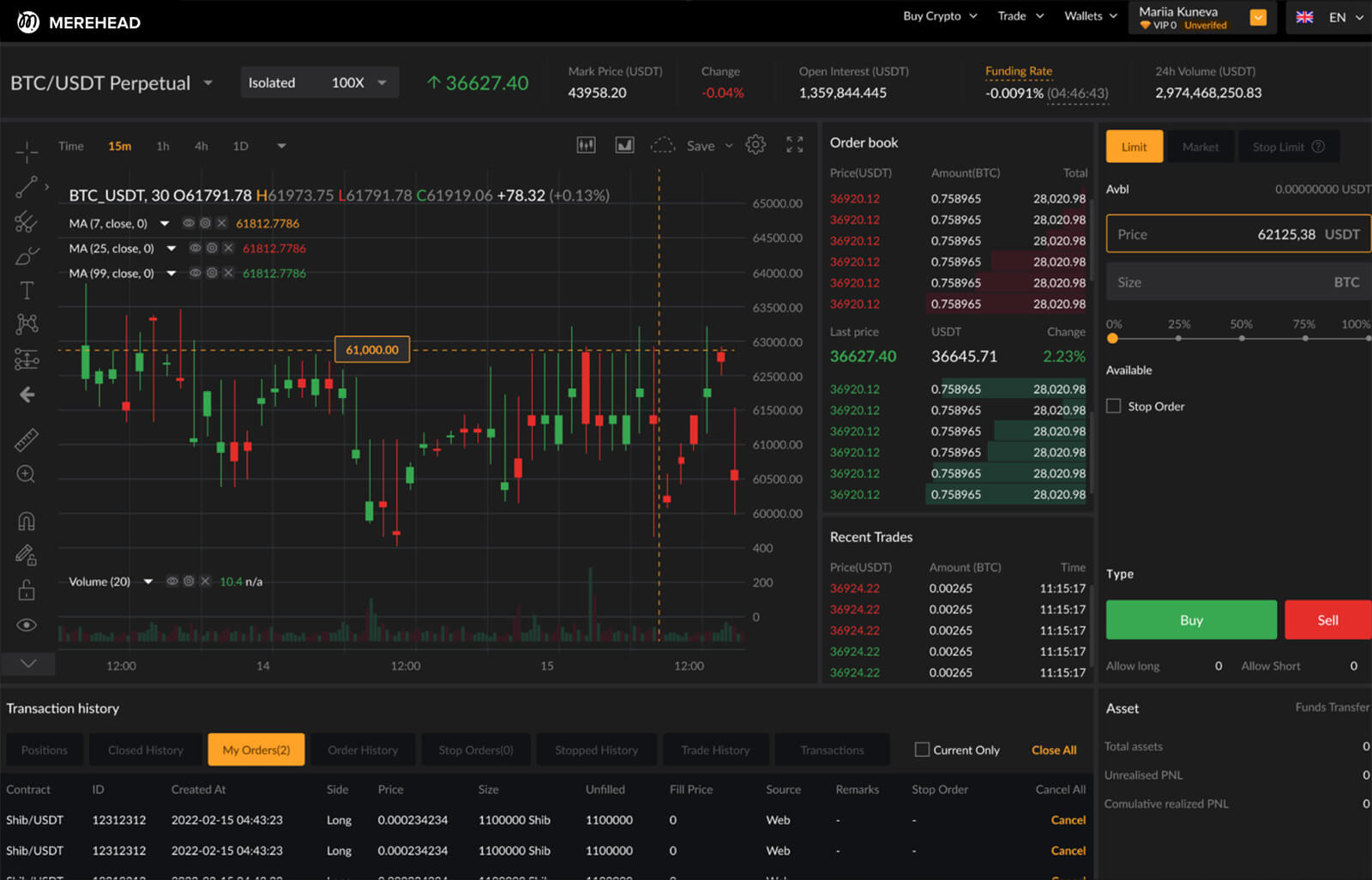
Specific risks: Limited customization—want a unique interface or a specific order type? An additional $20,000–$50,000 fee, if the vendor agrees at all. Third-party liquidity—often synthetic, "drawn" by the vendor; there's no real money behind it. Dependence on updates—critical bugs are fixed according to the vendor's schedule, not yours. Hidden fees: 30–50% of white-label vendors charge 0.1–0.5% of turnover, which after two years exceeds the cost of custom development.
Custom — building from scratch. Expensive upfront: $200,000–$500,000+. Lengthy: 6–12 months. But the house is yours, the layout is customized to your needs, and the foundation can support any floor.
Why It Works
Our codebase isn't a "box we sell to everyone". It's a living organism that has evolved through 30+ projects, each with its own unique requirements. When a client needs integration with a rare bank in Nigeria, we already have a payment gateway module, and a new connector can be added in 2-3 weeks, not 2-3 months. When a new derivative type is needed, we take an existing risk management core and add the calculation logic, rather than writing it from scratch.Pro Tip from Our Team: Don't pay for white-labeling if you're planning $10M+/month in revenue in 18 months. Vendor fees will eat into your margins. Don't build from scratch if time-to-market is critical—competitors will carve out your niche within 8-12 months of development. A hybrid solution offers optimal speed and control.
Our Case: US client came to us with a requirement: launch within 3 months, spot and futures, integration with 3 local banks, and a regulatory license. Pure development was impossible. White-label vendors wouldn't have allowed customization for banks. We used a hybrid approach: our core software + custom banking connectors, and launched it in 14 weeks. The first 1,000 users were reached after just one week of active marketing. This isn't our only success story. Check out how we built a crypto exchange with own token to see how custom tokenomics can drive user acquisition.
FAQ
What are the main factors that influence the development cost of a custom cryptocurrency exchange?
Most affects the overall budget: matching engine (speed of transaction processing and security), security architecture (increasing multi-factor authentication, cold/hot security with MPC support and protection from DDoS attacks), regulatory compliance (integration of automated KYC/AML systems), including blockchain integration (a new measure adds costs for the development and testing of nodes).
What is the minimum development cost to launch an MVP version of a cryptocurrency exchange?
The minimum viable product in 2026 consists of spot trading, integration of 2-3 blockchain nodes, a wallet system and dashboard. White-label MVP: From $15,000 to $30,000. This is the fastest route to market (2-4 weeks). Custom MVP: $40,000 to $60,000. It involves the development of a unique interface and a basic trading core. Development time: MVP takes about 2-3 months and depending on the liquidity provider and the number of blockchain nodes.
How does the choice of features like spot trading, futures, and staking affect crypto exchange development costs?
Spot trading is included in all basic developments, including MVP. Futures and margin trading add $20,000-$50,000 and 2-3 months of development. This requires the development of a liquidation system, leverage management. Staking and Earn solutions add $10,000-$25,000 and about 1 month of development. Costs include integration with protocol smart contracts and automation of reward distribution.
How can I reduce the overall development cost of a new crypto exchange without compromising security?
Using more budget cloud infrastructure such as Hetzner. This saves $1,000 - $3,000 monthly. Use a popular technology stack that scales easily and allows integration with external providers. For example, node.js and react.js. Use proven open-source libraries. If you use a ready-made solution as a basis, you can save up to 30% of the budget and time. Engage an experienced outsourcing company that already has ready-made solutions, a code base, and reliable liquidity providers. They will be able to save up to 30% of the budget and development time.
How much startup capital do I need to open a crypto exchange that can compete in a local market?
Development of a crypto exchange in the local market from $30,000 to $70,000. Technical support from 2,000 dollars per month. Legal services and licensing: $10,000 – $50,000. Marketing and User Acquisition: $20,000 – $100,000+ to generate initial liquidity and brand awareness. Total: the optimal starting capital is $80,000 - $250,000.
Which factors most influence the total cost of ownership for a white label crypto exchange platform?
License payments: monthly or annual subscription fee for using the software. Revenue Share: Some providers take 5-15% of your trading revenue. Cost of Customization: Any design change or addition of a non-standard feature is charged separately. Support and Updates: Mandatory payments for security updates and maintaining compliance with new blockchain standards.


